L.S. Author shares honest reflections on their writing journey, discussing growth, mistakes, and insights from each book they've written.
Key Takeaways
- Honest self-critique is essential for growth as a writer.
- Early works may be imperfect but serve as important learning steps.
- Writing style and thematic focus can evolve significantly over time.
- Balancing dark themes with hope can create more meaningful stories.
- Publicly sharing the writing process can inspire and help other writers.
What the video covers
- The author openly critiques their books, highlighting both strengths and weaknesses.
- Frozen Wrath was written during a health crisis, reflecting an amateurish style with poetic prose attempts.
- Retaliation Mountain, the sequel, suffers from split focus and thematic unevenness.
- Vipers in Red Rocks marks a turning point with improved prose and a more hopeful tone influenced by fatherhood.
- Fire in the Tall Grass is the author's most proud work, praised for strong characters, themes, and prose.
- Gunlaw is viewed as unsatisfactory and unfulfilled by the author.
- The author emphasizes growth over time and the importance of honesty in self-review.
- Themes evolve from dark and edgy to hopeful and heroic.
- The video aims to offer insights and lessons to other writers.
- The author is publicly documenting their journey to improve and connect with readers and writers.
Full Transcript — Download SRT & Markdown
Speaker A
This video is potentially a very bad idea, I might be urged to take it down, we will see. I just think that maybe this could be helpful to another writer out there, maybe offer some insight, be a little cool.
Speaker A
But I want to talk about the books I've written, give you my very, very honest reflections, thoughts, kind of reviews on them.
Speaker A
And I'm going to be as honest as I possibly can, this is not just going to be me selling you on the book, I'm going to roast these books up as necessary.
Speaker A
You know, give my critiques where necessary, because I don't think I'm a great writer yet.
Speaker A
I'm in process, I'm trying to become a good writer and and I'm doing that publicly, obviously, so I'm willing to put myself out there.
Speaker A
I'm willing to, you know, point the finger at myself as well, and that's what we're going to do here.
Speaker A
I want to just go through these and offer maybe the insights and lessons that you as a writer could think about and and apply to yourself.
Speaker A
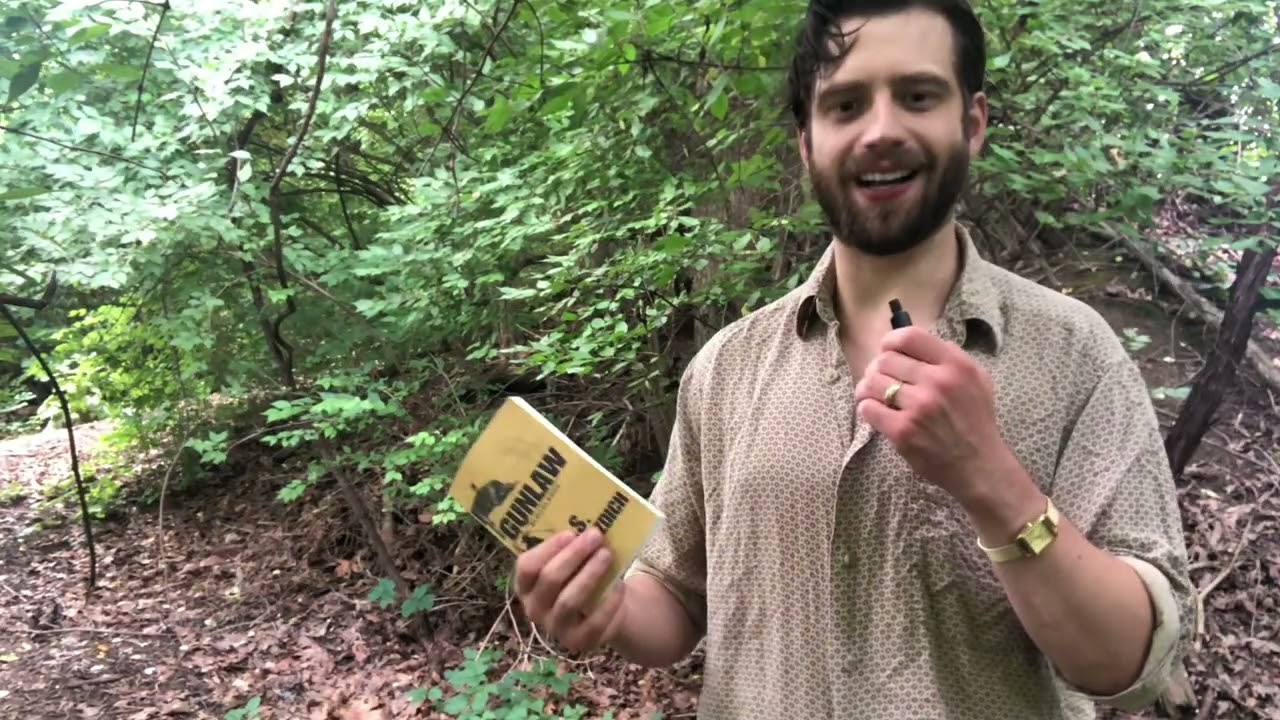
So the first book, I don't have the cool updated copy, I have the first crummy edition.
Speaker A
The cover is not good, and I think the cover itself kind of speaks to the main issue with Frozen Wrath.
Speaker A
Is that I was a bit too amateurish, I didn't quite know what I was doing.
Speaker A
But if you know me, I have this heart condition, there was this health crisis that really pushed me to want to write this book at that time.
Speaker A
And say, you know, in case I don't make it, I really want to have been a writer in my time.
Speaker A
I really want to have put something out.
Speaker A
So, a bit before I was ready, a bit before I was prepared, a bit before I had the skill set.
Speaker A
I set out on this journey and I put out Frozen Wrath.
Speaker A
And I think, overall, I'm okay with this book, and, uh, you know, there was a time where I hated it and I wanted to take it down.
Speaker A
But thematically and the characters within it, I'm cool with.
Speaker A
It's the language itself that falls short for me.
Speaker A
I think I was trying too hard to be poetic and trying too hard to be edgy.
Speaker A
You know, thinking I was Cormac McCarthy or Taylor Sheridan or something, when I'm not.
Speaker A
So that was kind of the biggest issue is not being, uh, a just solid enough writer yet.
Speaker A
My prose was not there yet.
Speaker A
So, that's that one.
Speaker A
Retaliation Mountain is the sequel to Frozen Wrath.
Speaker A
Picks up right where it leaves off.
Speaker A
And this one, the issue with this one is that it is a short book, right?
Speaker A
Just like Frozen Wrath.
Speaker A
But Frozen Wrath is very singularly focused, it's it's Dante Gibbs trekking into the woods to find a boy, um, who has gone missing in the town.
Speaker A
That's linked to the motorcycle club that he was, uh, that he founded back in the day.
Speaker A
So it's very singularly focused and that helps build out the thematics.
Speaker A
Helps build the character study, helps everything kind of cohesively work together.
Speaker A
But for Retaliation Mountain, it's like I I discovered a character within this, Hunter Moss, that I ended up liking a bit more than I'm liked my main character.
Speaker A
So the focus gets a bit split and it gets a little uneven and it gets a little unfocused.
Speaker A
So I think I hurt this book thematically, um, and its kind of impact by splitting the focus.
Speaker A
And if I were to do that correctly, this book would have to be double the size, you know what I mean?
Speaker A
If it's going to be this narrow, you got to be, you got to be on it with what you're talking about.
Speaker A
You can't just jump over here, oh, maybe this over here, maybe a little bit of this.
Speaker A
Are they paralleled?
Speaker A
I don't know.
Speaker A
I think it's a bit messy, a bit unfocused.
Speaker A
But I think probably a a slight improvement prose-wise from Frozen Wrath.
Speaker A
But not much, because it wasn't too long after that I wrote this.
Speaker A
Um, so I think that's still kind of in that amateur.
Speaker A
Not quite ready to write a book phase.
Speaker A
It's not until Vipers in Red Rocks, this third book that I wrote, that I think prose-wise I started to come into my own.
Speaker A
Again, I I claim not to be a great writer.
Speaker A
I'm I'm not saying I am, that's not what I'm saying.
Speaker A
But I think this is when I kind of got up to code and up to standard for myself at least.
Speaker A
Looking at it now, I can still be like, okay, yeah, that works.
Speaker A
Maybe I'll look at it in five years and go, wow, the writing's terrible.
Speaker A
Get away from me.
Speaker A
We'll see.
Speaker A
But I think writing-wise, I finally kind of came into my own with the prose.
Speaker A
And with this one, again, it's back to being a bit more focused.
Speaker A
It's like Frozen Wrath, I think it's almost like me re-attempting to do Frozen Wrath with a different style.
Speaker A
Because I've talked about this in the past, there was a metamorphosis that happened with me between these two books and this one.
Speaker A
Where I had a child, I had a son, and I looked back at these two books.
Speaker A
That I had written trying to be too edgy and too dark and and pretending to be Cormac McCarthy.
Speaker A
And I was like, look, I want to add something a little more hopeful, a little more optimistic, a little more heroic into my son's life.
Speaker A
I want him to pick up my books and not get the impression the world is just dark, bleak sadness.
Speaker A
I want him to pick up the book and see people fighting out of love and fighting, um, with a code.
Speaker A
And if you, you know, if you read this book and take away that there is hope and, um, light in the world.
Speaker A
That's better for me than, you know, picking this up and being like, do, wow.
Speaker A
The world is really, really, really dark, um, and bad people have to do bad things.
Speaker A
And good people have to do bad things.
Speaker A
Like I didn't want to go down that route too much.
Speaker A
So this one is kind of a bridge into a new style of writing for me where I wanted to discuss that, fighting out of love, fighting for love.
Speaker A
Um, and being overall more hopeful, more optimistic, more in line with something you'd read in in Louis L'Amour.
Speaker A
Something classically, uh, heroic, but not afraid to touch on the darker aspects of life.
Speaker A
Because we don't want to be naive to that, right?
Speaker A
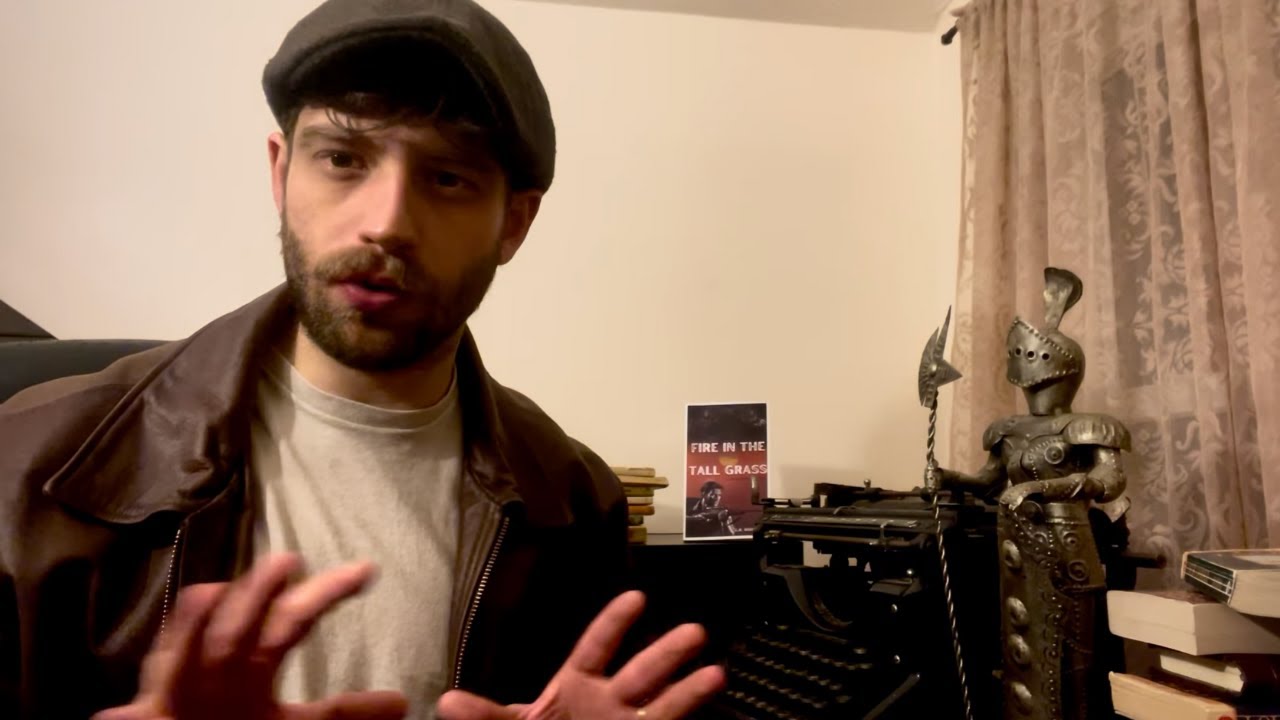
Well, that brings us to Fire in the Tall Grass.
Speaker A
And this is the book that I'm most proud of.
Speaker A
This is the one book that I think I fully, like, I look at and I have no real complaints, no real issues with.
Speaker A
I'm just happy with.
Speaker A
I'm fulfilled with this one.
Speaker A
Um, I think it hit the marks thematically, I think that the character is well, well realized and well drawn.
Speaker A
And I think that my prose was finally to a level that is up to standard, up to code, you know what I mean?
Speaker A
Again, not claiming I'm a great writer or anything.
Speaker A
But I think this one, this works.
Speaker A
As a whole, I'm overall very satisfied with this.
Speaker A
This is why this is the one I pitched to everybody.
Speaker A
And I'm like, hey, you if you're going to read anything I've ever written.
Speaker A
Read Fire in the Tall Grass.
Speaker A
Um, and if you haven't read it, Noah Redford is kind of this, um, he's a former World War I pilot.
Speaker A
He's out in Africa doing some hunting and this mother and her son come up to him.
Speaker A
And ask if if he will be willing to help them find, uh, the kid's father.
Speaker A
Because he's been missing in this very dark area of the Congo that's not safe.
Speaker A
And they need an escort.
Speaker A
And so he, this good man, with solid values and virtues, and he's not going to let them, uh, you know, suffer when he can help.
Speaker A
He does have the ability to help.
Speaker A
So he does, he goes and helps, but when he gets there, he realizes he was not told the full truth.
Speaker A
And what ensues is a very uncharted, Mummy with Brendan Fraser, Indiana Jones type high pulp adventure.
Speaker A
Um, that I am happy with and satisfied with overall.
Speaker A
But that brings me to to this last book.
Speaker A
And I know Nathaniel, my co-host for the Men's Adventure Fiction podcast is screaming at me.
Speaker A
I just have to be honest with everybody here and myself.
Speaker A
Gunlaw, I'm just not satisfied with.
Speaker A
And I don't, I'm not going to sit here and say like, I'm not going to try to roast it too too harshly.
Speaker A
Because I know there was a time where I did that to Frozen Wrath, where I hated it more than I ended up hating it, if that makes sense.
Speaker A
I just want to say that it doesn't feel fulfilled to me.
Speaker A
There's something wrong, and I think the takeaway from writing's writer's perspective is that.
Speaker A
There was so much going on in my time in my life at the time I was writing this.
Speaker A
We were putting on a film festival, I we were shooting and writing and editing and doing all of our own production work for our short film that would be in the short film festival we were hosting.
Speaker A
We were putting out like 10 books from 10 different authors at that time.
Speaker A
I was doing the formatting, the editing, the the KDP listing, I was doing all of that for for that at the time.
Speaker A
I was on a trip in uh to Disney with my family at the time.
Speaker A
I was in a position, in no position, rather, to be writing.
Speaker A
Um, this book and trying to get it out when I got it out.
Speaker A
I was unfocused and chaotic and sporadic with my writing.
Speaker A
So that really hurt this one, I think.
Speaker A
What I wanted this to be was kind of the Lone Ranger elevated a bit.
Speaker A
Like I wanted to give an updated modern, uh, example of a supremely high adventure Western.
Speaker A
And I think I did give a high adventure Western, there's so much action, there's big set pieces.
Speaker A
But where I'm upset with this book, where I feel like it's not fulfilled is unlike Frozen Wrath, unlike Fire in the Tall Grass.
Speaker A
Unlike, um, Vipers in Red Rocks, and unlike Retaliation Mountain, for the first time ever, I feel like there's not a deeply drawn character.
Speaker A
Um, Cole Hartnett is kind of just cardboard to me.
Speaker A
He's kind of just flat and unremarkable.
Speaker A
He's kind of generic.
Speaker A
I don't know.
Speaker A
And that's the one thing I'm I'm very unhappy with that.
Speaker A
And so it's at this situation, at this juncture, uh, or whatever, as a writer, what do you do?
Speaker A
With a book that you look back on, you go, oh, no.
Speaker A
I dropped the ball.
Speaker A
Because I think of someone like Sylvester Stallone, who I greatly admire and look up to.
Speaker A
And he's inspired my writing career in so many ways.
Speaker A
He's had some stinkers, right, he's got some movies that he looks back on and goes, oh, why did I do that?
Speaker A
What did I do?
Speaker A
Um, so it's like, how do you handle that?
Speaker A
How do you handle a book that you don't like?
Speaker A
Do I take it down off KDP?
Speaker A
Do I, do I let the people who enjoy it just enjoy it and step back?
Speaker A
I don't know.
Speaker A
But I find it interesting, and I think, you know, this is what sparked me wanting to do this whole run.
Speaker A
Because I've had some interesting back and forth with with my beliefs and understanding about myself as a writer.
Speaker A
Like I said, there was a time where I almost took down Frozen Wrath and Retaliation Mountain entirely.
Speaker A
And just let start fresh from Vipers.
Speaker A
It's weird.
Speaker A
I don't know.
Speaker A
But ultimately, as a writer, you have to be willing to grow, um, to make mistakes, to fall and fail even in front of the public eye.
Speaker A
If you're going to be putting out books.
Speaker A
So that's what happened here, I think, I think.
Speaker A
I know Nathaniel and other people might disagree, they might have had some fun with this book.
Speaker A
I just feel like it was ultimately unfulfilled, it's left something to be desired.
Speaker A
It was just a bit more hollow than I would like.
Speaker A
Um.
Speaker A
But it it's good, every every one of these things I said, it's all good, it all helps me learn and understand better what I want to do with my work.
Speaker A
And and how I want to execute properly on on the next novel.
Speaker A
And that's where, uh, the next thing I'm putting out is Noah Redford, too.
Speaker A
I'm putting out a sequel there.
Speaker A
Uh, technically a prequel.
Speaker A
And I'm really happy with it so far.
Speaker A
And I'm learning from my mistakes, and I'm not going to repeat some of the the issues that I've seen in my past work.
Speaker A
So you're always getting better, hopefully, if you're able to look back with a critical eye.
Speaker A
With an honest eye and and look at your writing truthfully.
Speaker A
And so that's kind of it, I don't want to go on too much longer.
Speaker A
And my kids are waking up anyway.
Speaker A
I hope you got something out of this.
Speaker A
Maybe you did, maybe you did not.
Speaker A
But thank you for watching.
Speaker A
And if you want to check out any of these books, I will link my Amazon author page down below.
Speaker A
And, uh, till next time, I will see you guys.
Speaker A
On the Men's Adventure Fiction podcast every Wednesday.
Topics:writing journeyauthor reflectionswriting growthself critiquebook reviewswriting insightsL.S. Authorcreative processliterary developmentwriting advice