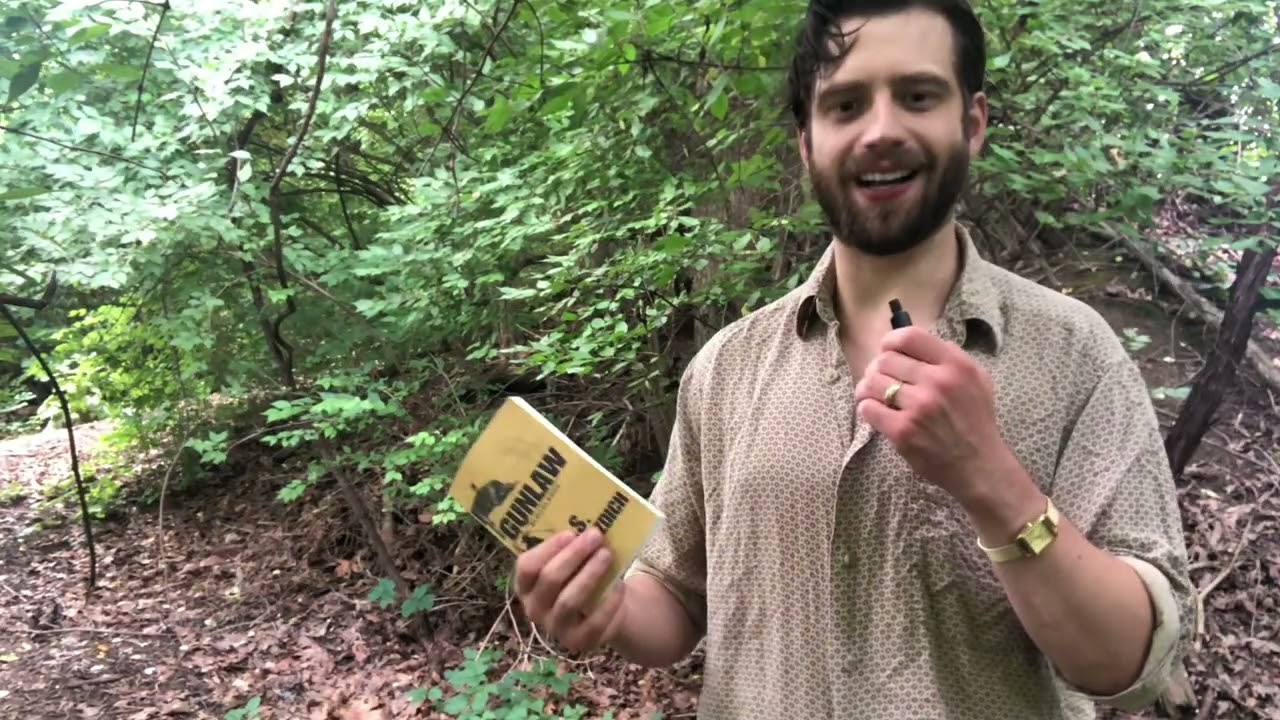
A man shares his heart failure diagnosis and how he overcame limiting beliefs to reclaim his identity as a boxer and writer.
Ask about this video. Answers come from its transcript only — with the timestamp, so you can check them.
Generated from the transcript and can be wrong — check the timestamp.
Key Takeaways
- Medical diagnoses do not have to define your identity or limit your passions.
- Beliefs and self-narratives strongly influence behaviors and life choices.
- It is possible to reclaim and redefine oneself by challenging limiting beliefs.
- Engaging with a supportive community can aid in overcoming personal challenges.
- Acting 'as if' can help embody the identity you want to live.
What the video covers
- The speaker was diagnosed with a congenital heart defect and told heart and liver failure are inevitable.
- He was advised to stay on blood thinners for life and possibly face transplant by age 40.
- This diagnosis initially made him believe he could no longer box, causing him to stop training.
- He reflects on how beliefs and identity shape behavior and how he let the diagnosis define him.
- He encourages questioning limiting beliefs and redefining identity beyond medical or external limitations.
- He compares this to writers who hesitate to call themselves writers without publication.
- He decides to return to boxing by training and engaging with the community within safe limits.
- The video emphasizes the power of mindset in overcoming adversity and reclaiming passions.
- The speaker shares a personal, vulnerable story to inspire others facing challenges.
- He advocates acting 'as if' to embody the identity one desires despite obstacles.
Full Transcript — Download SRT & Markdown
Speaker A
I'm going to start here with a story that two years ago, I walked into my heart doctor.
Speaker A
For an appointment that I thought was going to go this way, I thought they were going to tell me.
Speaker A
Look, your clots are cleared out, you're good to go, we're going to take you off the blood thinner.
Speaker A
Yes, you're clear to go back to boxing, live your life as you were.
Speaker A
Boom.
Speaker A
Because I I was born with this congenital heart defect and it hadn't affected me.
Speaker A
And and up until like around 2019, 2020, when I got those clots.
Speaker A
So I was a boxer, I loved that.
Speaker A
And so I thought, you know, going into this appointment.
Speaker A
That's what I was going to hear.
Speaker A
And at that appointment, about two years ago.
Speaker A
I was not told that.
Speaker A
Uh, in fact, it was the kind of the opposite of that.
Speaker A
I was told, you're going to stay on Eloquis for life, the blood thinner for life.
Speaker A
And uh.
Speaker A
Heart failure is inevitable.
Speaker A
Also, liver failure is inevitable.
Speaker A
Essentially, they told me by the age of 40, I might be looking to be on transplant.
Speaker A
Plan list for both.
Speaker A
Uh.
Speaker A
And that was a fundamental switch for me.
Speaker A
That that moment, leaving that heart doctor where she laid all that on me.
Speaker A
And she was like, look, you're you're of the age now, I tell you're going to the heart doctor appointments by yourself.
Speaker A
You're a grown man, you need to hear this stuff, this is the truth of what you have.
Speaker A
Like.
Speaker A
Oh, such a heavy thing.
Speaker A
And, you know, I appreciate her doing that, of course, but.
Speaker A
Regardless, it was heavy and I took it hard.
Speaker A
And uh, especially when it comes to boxing.
Speaker A
And this is kind of the lesson I wanted to hopefully bring to you guys.
Speaker A
And hopefully encourage you all with.
Speaker A
Um, even if you're not struggling with anything medical.
Speaker A
I think this can be applied to anything.
Speaker A
This is just about the way beliefs and our identity get wrapped up into our.
Speaker A
Behaviors.
Speaker A
Right?
Speaker A
So, I I took this information in.
Speaker A
Like, you're never going to box again.
Speaker A
And I really started to believe internally.
Speaker A
You're not a boxer.
Speaker A
You're never going to be a boxer.
Speaker A
And so, I I went from thinking that about myself.
Speaker A
I'm this boxer.
Speaker A
To now you're never going to be able to box.
Speaker A
And I turned away from the sport.
Speaker A
I stopped going to the gym that this gym, uh, South Park boxing.
Speaker A
That I loved and that was like, you know, a second church for me.
Speaker A
I stopped going.
Speaker A
I stopped boxing on my own.
Speaker A
I would sometimes shadow box, I would sometimes hit the bag down here.
Speaker A
That's it.
Speaker A
That was it.
Speaker A
Because I I fundamentally believed about myself.
Speaker A
No, you're not a boxer.
Speaker A
And that's never going to happen.
Speaker A
Um.
Speaker A
And I find this interesting.
Speaker A
And I want us to all ask ourselves.
Speaker A
Like, you know, I want to question myself.
Speaker A
What other beliefs do I have?
Speaker A
You know, how am I defining myself and saying, you are this.
Speaker A
Or you are not this.
Speaker A
And how has that affected my behaviors?
Speaker A
Because I didn't realize until today, going to the appointment and just thinking about all this.
Speaker A
How much I let her words bring that out of me.
Speaker A
Bring me away from something I loved.
Speaker A
Um, just because, you know, I can't get in the ring and spar and and go contend.
Speaker A
Be a contender or something.
Speaker A
That doesn't mean I can't act as if I can't go to the gym.
Speaker A
I can't train like a boxer, right?
Speaker A
There's nothing keeping me from that other than my mind.
Speaker A
Um.
Speaker A
Same thing with like, I'm a writer.
Speaker A
And a lot of writers, it's like, they don't even want to call themselves writers.
Speaker A
Because they haven't published anything.
Speaker A
But like, if you're putting words on the page, you're a writer.
Speaker A
And start telling yourself, you are a writer.
Speaker A
Because it is what we tell ourselves.
Speaker A
It's the stories, the narratives, the the beliefs, the identities that we have.
Speaker A
That's going to that's really going to impact how you act.
Speaker A
And.
Speaker A
So yeah, I I hope that wasn't too rambly.
Speaker A
My mind always just turns to mush after I have a heart doctor appointment.
Speaker A
I have so many thoughts flooding in and smashing into one another.
Speaker A
So I hope this was coherent.
Speaker A
What I'm trying to get at is that.
Speaker A
I almost let uh, I almost allowed this uh, this diagnosis and and this circumstance.
Speaker A
To define me and tell me what I could do with the sport of boxing.
Speaker A
And I I almost could have let my whole life.
Speaker A
Um, leaving behind that old friend.
Speaker A
And now I'm I'm realizing I'm not going to do that.
Speaker A
I'm going to act as if.
Speaker A
I'm going to do every single thing that I can in boxing.
Speaker A
Uh.
Speaker A
You know, push it to the absolute limit where I'm not hurting myself, but going back to that sport.
Speaker A
Going back to the gym, training, being in that community.
Speaker A
Being in that world.
Speaker A
And fully boxing again.
Speaker A
Like, I'm going to do that.
Speaker A
Because that's who I want to be.
Speaker A
You know, tell yourself who you want to be and then do what you must.
Topics:heart failurecongenital heart defectboxingidentityself-beliefmindsetovercoming adversitychronic illnessmental healthpersonal growth