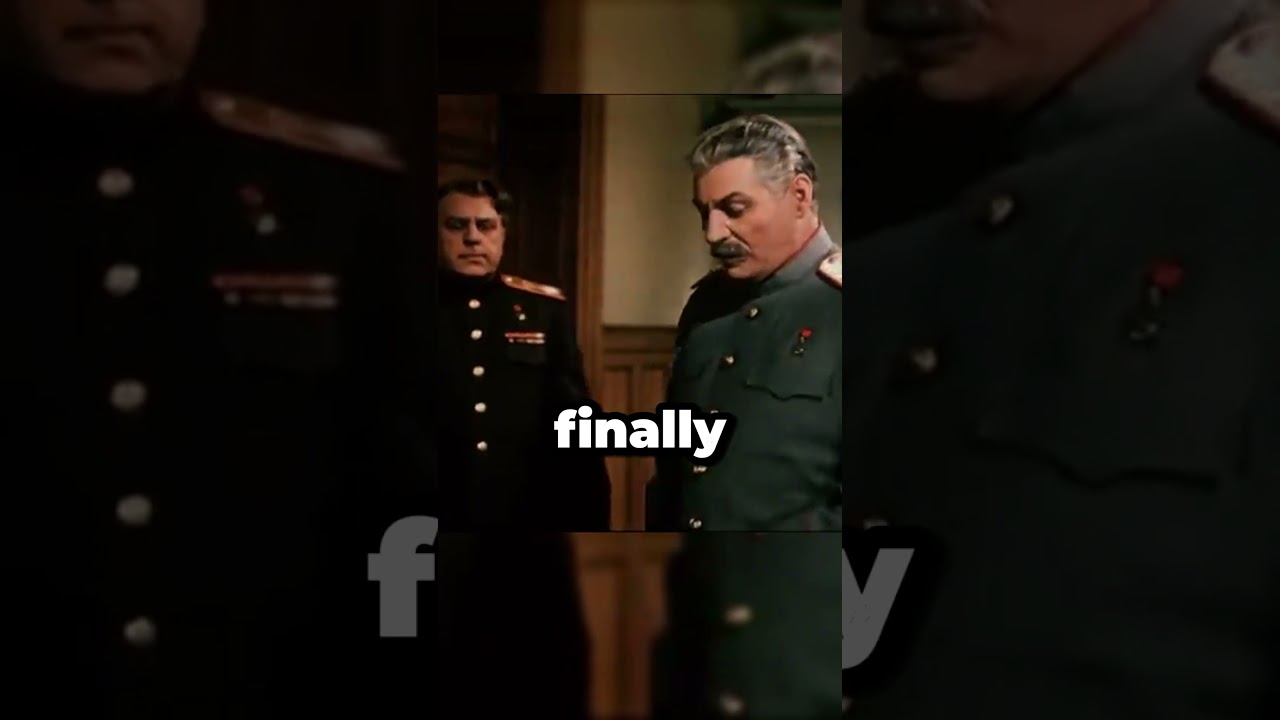
A humorous Soviet-era joke featuring Stalin questioning his chauffeur about happiness after the workers' revolution.
Key Takeaways
- Soviet jokes often used humor to comment on political and social issues.
- Stalin is a common figure in Soviet-era jokes, symbolizing authority and control.
- The workers' revolution is a central theme in Soviet narratives and humor.
- Humor served as a subtle form of critique during oppressive regimes.
- The video provides cultural context through storytelling and jokes.
What the video covers
- The video features a Soviet joke set in the 1950s involving Stalin and his chauffeur.
- Stalin asks his chauffeur if he has become more or less happy since the workers' revolution.
- The joke reflects on the social and political atmosphere of the Soviet Union during Stalin's era.
- It uses humor to critique or highlight the realities of life under Soviet rule.
- The content is presented by Soviet Stories with Yuri, focusing on Soviet jokes and anecdotes.
- The video is in English and tagged with #sovietjokes, #sovietstories, and #soviets.
- The joke format is a dialogue, typical of Soviet humor that often involved political figures.
- The video aims to entertain while providing cultural insight into Soviet history.
Full Transcript — Download SRT & Markdown
Topics:Soviet jokesStalinworkers' revolutionSoviet UnionSoviet humorpolitical jokesSoviet StoriesYuri1950s USSRhistorical anecdotes