Skip to content

How to Trade Prop Firms Like a Quant (Even If You’re Not One)

Learn how to trade prop firms like a quant with tested strategies, risk management, and mindset habits to survive and thrive in evaluation challenges.

Key Takeaways

  • Always trade with a tested and proven edge, not just a feeling or untested strategy.
  • Seek disconfirming evidence before entering a trade to avoid biased losses.
  • Manage risk using units and expectancy, not emotional dollar amounts.
  • Size positions according to your account and prop firm rules, not trade confidence.
  • Avoid large drawdowns to preserve capital and enable compounding returns.

What the video covers

  • JJ Simon shares his experience making over a million dollars trading on prop firms using quantitative trading principles.
  • He emphasizes the importance of having a tested edge rather than relying on gut feelings or unproven setups.
  • Traders should avoid strategy hopping after a single drawdown and instead backtest and prove their strategies over time.
  • Before risking real money, traders should try to prove their trade ideas wrong to avoid biased decisions.
  • Risk management should focus on expectancy and units, not dollar amounts, to reduce emotional trading.
  • Using a 1 to 1.5 risk-to-reward ratio tailored to prop firm evaluation rules can increase the chance of passing.
  • Position sizing must be based on the account balance and prop firm rules, not confidence in a trade setup.
  • Large drawdowns are the main threat to compounding returns and long-term success in prop firm trading.
  • JJ provides examples of continuation and reversion trades with a 67% win rate and 1.44 risk-to-reward ratio.
  • The video encourages adopting quantitative habits to outlast market unpredictability rather than trying to predict it.

Answers

Questions about this video

What does JJ Simon mean by trading prop firms like a quant?

He means treating each trade like a quantitative portfolio, focusing on tested strategies, risk management, and surviving market unpredictability rather than trying to predict market moves.

Why is it important to have a tested edge before trading with real money?

A tested edge ensures your strategy has positive expectancy over time, reducing the chance of losses from unproven setups and avoiding costly strategy hopping.

How should traders manage risk according to this video?

Traders should think in terms of expectancy and units rather than dollars, sizing trades based on their account and prop firm rules to avoid emotional decisions and large drawdowns.

Full Transcript — Download SRT & Markdown

00:00
Speaker A
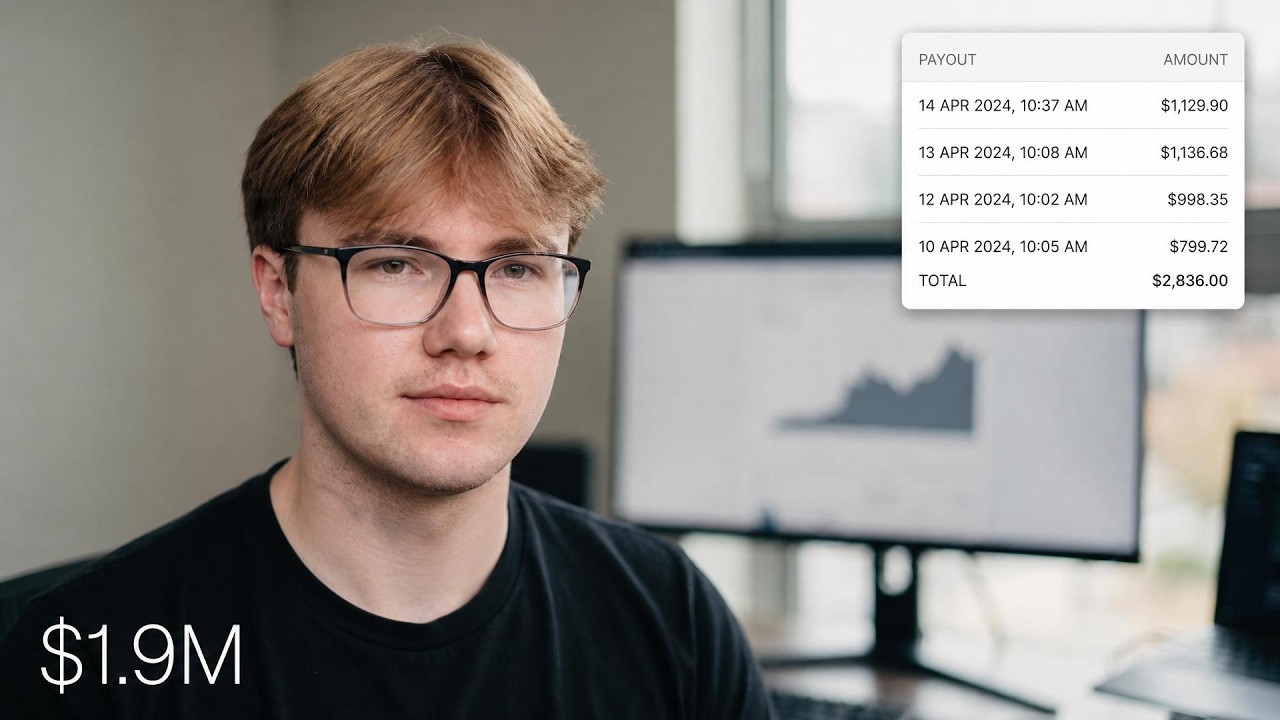
I've made over a million dollars trading on prop firms, and I want to start with the proof because everybody in this space talks and almost nobody shows.
00:06
Speaker A
Now, the part that's going to annoy a few people: I don't trade the way most prop firm gurus tell you to. They tell you to find a clean setup and just trust it in the long run. I do the opposite. I
00:13
Speaker A
treat every single position like a quantitative trader treats a portfolio, and I'm not even an institutional quant.
00:18
Speaker A
I studied quantitative finance in college, but you don't really need the degree for any of it. A quant does not predict the market. They survive it. And once you see the five habits that make it possible, you're
00:26
Speaker A
not going to trade prop firms the same way ever again. So, I'll walk you through all five starting with the one that ends most traders' challenges before they even place a single trade.
00:34
Speaker A
You need to have a tested edge, not just a feeling. If you watch a video on YouTube, the setup looks clean, you're going to try it once, maybe on your evaluation account, and then it loses.
00:40
Speaker A
Are you instantly ready to strategy hop to the next one? Hopefully not. If you hop off a strategy the instant it has a drawdown, then you're never going to realize your positive expectancy over time. And hopefully you're not blowing
00:49
Speaker A
evaluation fees just taking one attempt at a bunch of random strategies.
00:59
Speaker A
You need to test it over time. A quant never will trade a fresh idea with real size. Obviously, it starts out as a hypothesis, and they're going to test it
01:08
Speaker A
over time to prove that it works before even using real money with it. So, what you should do is pick one setup, prove it works on a prop firm, backtest it,
01:18
Speaker A
and then execute it real time.
01:28
Speaker A
Now, to be honest, testing is not going to make it work every time. Obviously not. Nothing's going to work 100% of the time. You need to have it proven over time in the background before you even run it on real capital or prop firm
01:37
Speaker A
capital. At that point, you need to let it run over multiple trades just so you can realize your expected value. If you've tested something and it works in the past, most likely it's going to work in the future, especially on prop firms.
01:45
Speaker A
So, make sure you let it run over time. Don't automatically switch to a new prop firm or a new challenge or a new strategy after just one fail. Pretty much, just find out that the setup has an edge over time and then execute it
01:49
Speaker A
over time. You're on your own. However, a tested edge is literally worth nothing if you're not going to execute it when it comes to time. That's where the second habit comes in. You should try to prove yourself wrong
01:58
Speaker A
before you even risk a dollar. You have a bias, long or short for your trade.
02:06
Speaker A
You go looking for reasons that it's right, not reasons that it's wrong. And honestly, that's why you're going to lose that trade and your eval. A quant does the opposite. Before they even risk anything on that trade, they look for
02:16
Speaker A
proof that their idea is wrong.
02:26
Speaker A
So, when I'm testing my strategy before I enter a trade, I look at the chart and I see, is there anything that can make this fail right now? If there is, then I
02:39
Speaker A
won't take the trade. If it's good, then I'm all good to go. Pick one setup, prove it on past data before you even implement it in real time. Today, I take a continuation, I take a reversion, take continuation,
02:49
Speaker A
take a reversion, take a reversion, and take another reversion. Thursday, I take a continuation, I take a reversion. Wednesday, I take a continuation, a reversion, a reversion.
02:59
Speaker A
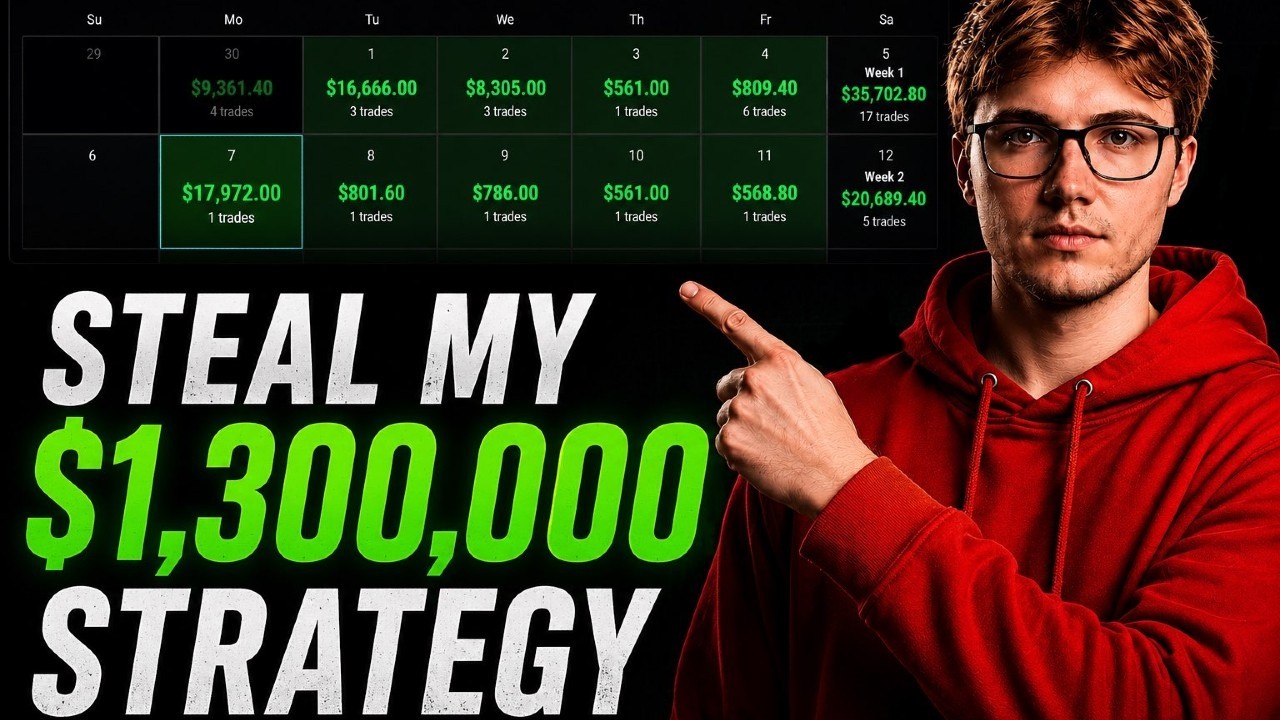
FOMC, continuation and a reversion. Tuesday, I take a continuation and part of a reversion. Monday as well, continuation and then half of a reversion. For the month of May, I had a 67% win rate with a 1.44 risk-to-reward
03:06
Speaker A
ratio. And here's an example of when I would not take a trade. The market opened here, and there was a drop all the way down here. Some people would consider a reversion, but news is what caused this move down. This means
03:14
Speaker A
there's a new fair price down here, and I would not look to revert. Most prop firm traders never ask this. Every time they're placing a trade, they're asking, "How am I right?" Conversely, you should be asking yourself, "How am I wrong?"
03:22
Speaker A
The bad trades are honestly going to filter themselves out before it even costs you money. So, if you have a tested edge and you've stress tested it, now the real question is, how much do you risk? And honestly,
03:33
Speaker A
everybody thinks about this wrong. This next part is honestly the most important part of the video, but before we get into it, one quick thing. If you want the full version of this, the exact strategy, the exact risk, and someone
03:41
Speaker A
checking over your trades, then that's what my mentorship is. The link's down below if you want it, but if not, all good. The rest of the video still carries the same weight. Let me get back into it. You need to be thinking in
03:51
Speaker A
terms of expectancy and units, not dollars. When you're trading and you see your profit at $400, you get scared that this is real money, you want to cash it out, and you exit early. Conversely, if you're in drawdown, you're down $400,
04:04
Speaker A
maybe you'll exit early because you don't want to lose more, and then you revert straight. Honestly, just leads to a very bad pattern. A quant trader does not feel the dollars. They think in terms of expectancy, basically the average
04:17
Speaker A
outcome that you're expected to achieve over time of placing trades. And then, for their risk, they'll do it in terms of units, not dollars. So, when you're trading on prop firms, you should stop counting dollars and you should start
04:29
Speaker A
tracking units. Because the prop firm evaluation is a 1 to 1.5, meaning $2,000 of stop to $3,000 of profit target to pass, because it's a 1 to 1.5, I will split up my trades into 1.5 risk to reward trades on evaluation because it
04:42
Speaker A
can greatly increase the chance that I pass given how the drawdown trails. Here's a good example. With a 1 to 1.5 risk to reward, you will perform very well on the Apex accounts, the rapid, growth, select, flex accounts as well,
04:52
Speaker A
creating positive expected value per attempt. Whereas on funded accounts like these instant funded accounts, you will not perform well because with a 1 to 1.5 that is tailored to your evaluation,
05:01
Speaker A
hence why it does not perform well on the instant funded accounts. To get from 0 to plus 3,000 before minus 2,000 with 1 to 1.5 risk to rewards, a good risk to start with is $500 worth of risk and $750 worth of profit. That's because this is a 1 to 1.5 and it will still
05:11
Speaker A
give you four attempts before you lose. So, if you lose four in a row, then you will lose your account. It's a very good approach for beginners to take because they will be able to realize their expected value when they have at least
05:20
Speaker A
four attempts of drawdown left over. Of course, this can be optimized as you get better at trading prop firms, but this is a very good approach in general for beginners. So, if you think about it from that point of view, from units,
05:30
Speaker A
when you lose, you only lost one unit. You're not losing $1,000 or $500. You're just losing one unit. It's great because you stop trading on emotions and you start trading on an edge. Now, units can only protect you if they correlate to
05:40
Speaker A
your exact account. The math is honestly more brutal than most traders realize. You need to size to the account's math, not your confidence. Maybe you see an A+ setup, you feel certain, so you load up and you take more contracts. It is a
05:50
Speaker A
very natural move and it's honestly the one that ends most traders' challenges. Now, on prop firms, the way the drawdown works, it's okay to be wrong as long as you don't hit the max drawdown. Large drawdowns are pretty much the only enemy
05:59
Speaker A
of compounding returns over time in a quantitative portfolio and in a prop firm portfolio. Your size on every single trade should be based on your account balance and what prop firm you're trading on, not by how good you
06:08
Speaker A
think the trade is. This is the habit that
06:18
Speaker A
[music] On Tuesday, I saw a good displacement back towards fair price. It started moving in my direction originally, but I moved my stop to break even once it broke structure against my trade. The reason for exiting here is because a
06:29
Speaker A
break of structure is my usual entry criteria, and if it's going against me when it is close to my break even, then I find it plus EV in the long run to exit break even and then use that
06:37
Speaker A
attempt somewhere else. Passing a prop firm challenge was never a prediction problem. It was a survival problem. The trader who predicts it best does not pass. The trader who survives the drawdown the longest does pass. That's why a smart, disciplined person will
06:48
Speaker A
beat a gambler every single time when trading on prop firms. You don't need to be a quant, you just need to trade like one, which basically means you just refuse to let a feeling or a dollar number dictate your emotions. So, to sum
06:57
Speaker A
it up, all five habits are basically one wearing all hats together. Once you take the math seriously, the market is going to stop being something that you keep trying to predict and something that you just try to outlast. That's the whole
07:06
Speaker A
thing. I don't pass prop firms by predicting, I pass them by surviving. A tested edge, a trade I've tried to break, risk counted in terms of units, size set by the account math, and exits based on my read. So, if you want the
07:17
Speaker A
whole system, the exact setup I run, the testing, the strategy, the risk management, and for me to review your trades, then the mentorship is a great place for you. It's not for everybody. I keep it very small. The application link
07:26
Speaker A
is in the description if you are interested. And if you're not there yet, that's fine. Start with a tested strategy, a tested edge, one unit, and make sure your account survives. I'll see you in the next one.
Topics:prop firm tradingquantitative tradingrisk managementtested trading strategytrade evaluationprop firm evaluationrisk to rewardposition sizingtrading psychologyJJ Simon

Get More with the SozAI App

Transcribe recordings, audio files, and YouTube videos — with AI summaries, speaker detection, and unlimited transcriptions.

Or transcribe another YouTube video here →