Skip to content

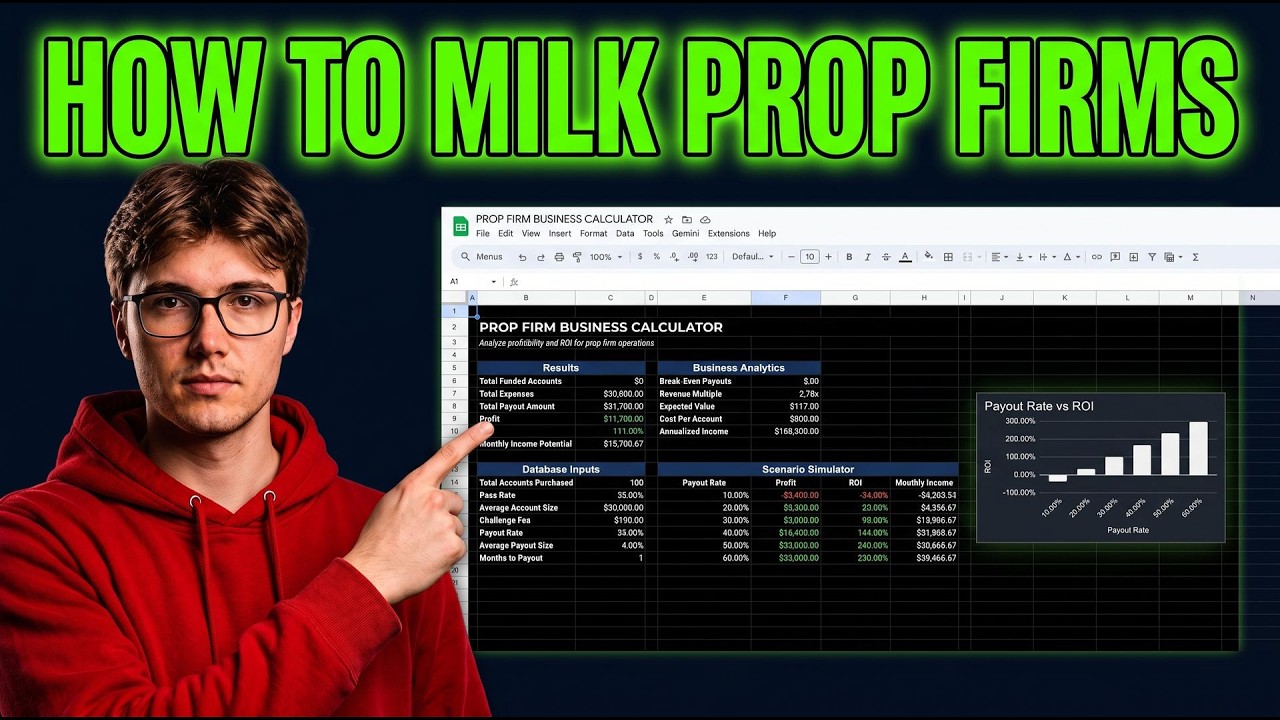
How I Scaled To $1.8M In Prop Firm Payouts

JJ Simon reveals how he scaled to $1.8M in prop firm payouts by optimizing strategies to beat prop firms, not the market.

Key Takeaways

  • Focus on beating the prop firm’s evaluation rules, not the market.
  • Maximize payout volume while keeping evaluation fees low to ensure profitability.
  • Strictly adhere to all prop firm rules to avoid disqualification.
  • Scale accounts only after proving consistent profitability with sufficient data.
  • Tailor strategies to each prop firm’s unique payout caps and risk parameters.

What the video covers

  • JJ Simon shares proof of $1.8 million in payouts from multiple prop firms including E8, Topstep, and TradiFi.
  • He explains that success in prop firms depends on beating the prop firm’s rules and payout structure, not the market itself.
  • The evaluation process is about meeting specific profit and loss constraints, not maximizing returns or win rates.
  • Understanding and strictly following all prop firm rules is crucial to avoid disqualification due to rule violations.
  • The main goal is to maximize payout volume while minimizing evaluation fees to ensure positive ROI.
  • JJ uses a high risk-to-reward strategy tailored to each prop firm’s payout caps and drawdown limits.
  • Scaling involves moving from smaller accounts (e.g., $50k) to larger accounts (e.g., $150k) to increase payout potential.
  • He emphasizes spending more on evaluations to earn proportionally larger payouts rather than just increasing ROI.
  • Statistical confidence from sufficient trading samples is needed before scaling up account sizes.
  • Psychology and risk management are critical when handling large prop firm accounts and payouts.

Answers

Questions about this video

What is the key to succeeding with prop firm trading according to JJ Simon?

The key is to beat the prop firm’s evaluation rules by optimizing your strategy to meet their constraints, rather than trying to beat the market itself.

How does JJ Simon recommend scaling prop firm accounts?

He suggests starting with smaller accounts like $50k and scaling to $150k accounts only after proving consistent profitability with a sufficient sample size, typically after spending more than $5k.

Why is understanding prop firm rules important?

Because many evaluation failures are due to rule violations rather than bad trades, knowing all the hidden and explicit rules helps avoid disqualification and maximize payout chances.

Full Transcript — Download SRT & Markdown

00:00
Speaker A
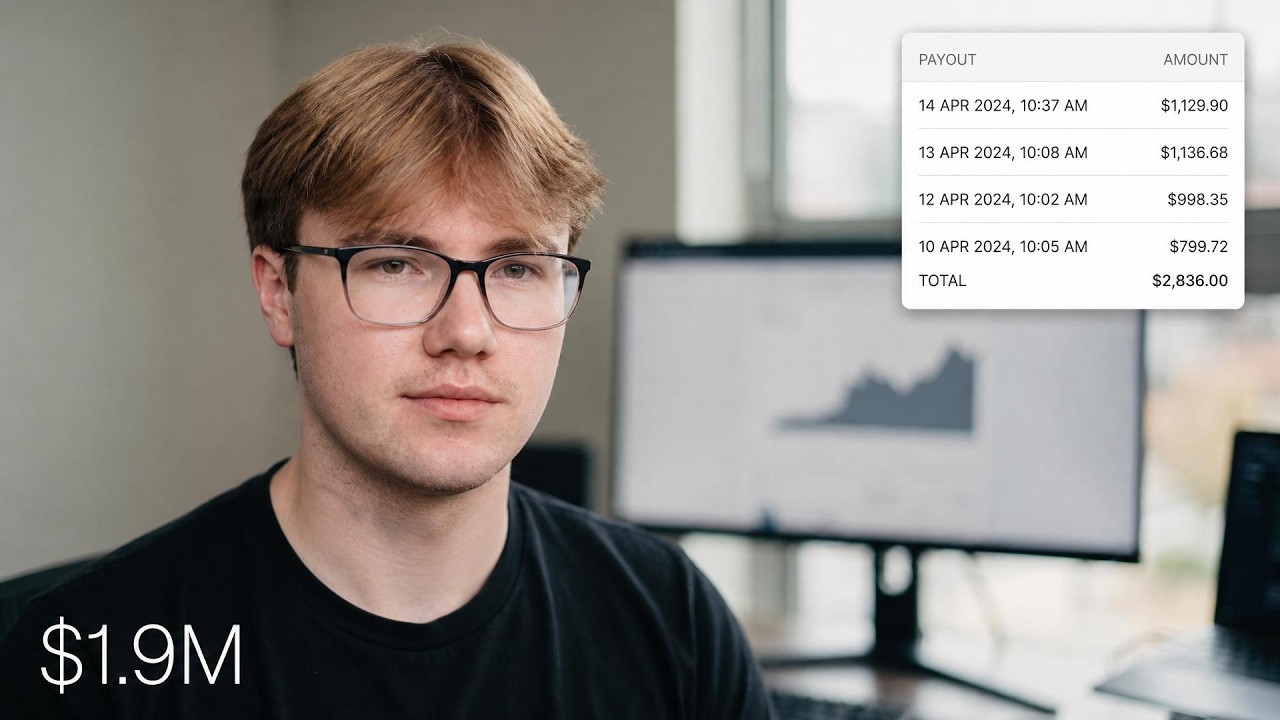
All right, so here's how I scaled to 1.8 million dollars worth of prop firm payouts. But first, before I get into that, I'm going to show you proof of all my payouts. Here from E8, we have $256,000 worth of payouts. From Topstep,
00:11
Speaker A
I'll refresh the screen, $295,000 worth of payouts. TradiFi, I'll also refresh for every single one of these pages.
00:17
Speaker A
I have $180,000 of payouts with TradiFi. You can see here in the lifetime payouts. Lucid, just took a payout from the live accounts, so I'm at about $145,000 worth of lifetime payouts. You can see at the top there. Funded Next, $167,000 worth
00:31
Speaker A
of lifetime payouts. Then, we have Alpha Futures, which has paid me about 75k. Apex has paid me about 70k. And then lastly, Hola Prime, 55k. There are quite a few more firms that I use that are much smaller, but
00:44
Speaker A
I'm not going to waste your time with that. Let's get into the video. Now, let's start with lesson one. You need to beat the prop firm, not the market. All right? So, I'm going to go a few different ways with this. The first and
00:53
Speaker A
the most important thing that you have to understand is how does a prop firm make money, okay? Imagine this piece of prop firm. Money comes into the prop firm, and money goes out from the prop firm. How does money go in? Okay, evals.
01:03
Speaker A
How does money go out? Payouts. So, if a prop firm wants to make money, they need to make more off the evals, and they need to pay less people out. Or of course, still pay people out, but just
01:11
Speaker A
less expected value of payout chance. So, now we understand how a prop firm works and how a prop firm makes money from the eval fees. The eval is a rule set. It is not a profit contest, okay?
01:21
Speaker A
So, you have to solve for the constraints that you are given. It does not matter how much money you make. It does not matter your win rate. It does not matter your equity curve. The only thing that matters is how often,
01:30
Speaker A
percentage wise, you can hit plus 3,000 before minus 2,000. That is the only goal on the evaluation. Of course, they might have consistency rule or winning days, but what is your percentage chance of reaching this before this? That is
01:40
Speaker A
pretty much the only thing you have to do with evaluation, and that is what you should be optimizing for. So, that is what you should backtest for.
01:46
Speaker A
Next, most blown evals are not bad trades. It is rule violations. Before you even trade with the prop firm, you should read their entire help center because I promise you there are hidden rules that you did not see. There are
01:55
Speaker A
rules that are not shown on their advertisements, all that sort of stuff. So, make sure you know every single rule because a rule is just an easy way for them to get you to hit that max drawdown without you even knowing that you did.
02:05
Speaker A
And then, you have to understand that your product is not returns. It does not matter how much money you make on the eval. It does not matter how much money you make on the funded account. Your only goal in a prop firm environment is
02:14
Speaker A
to generate as much payout volume as possible while keeping your spend decently low, of course. So, your only need is that your payouts are bigger than your eval fees. That means you made money. It doesn't matter what balance
02:27
Speaker A
your funded account hit or what balance your eval hit. All that really matters is what happens in your bank account.
02:32
Speaker A
Nothing that you see on these screens over here matters, okay? It does matter a little bit, of course, in terms of expected value, but this is not your main optimization. This monthly P&L is not your optimization. Your entire optimization is how can I get my
02:43
Speaker A
payouts the largest? How can I get my eval fees the lowest? Once you have a positive ROI, even if it's 2x ROI, that's an insane ROI. That is not like not possible in an actual market. Even if you have a 2x ROI, what if you spent
02:55
Speaker A
50k per month and you withdraw 100k per month? That seems like damn, that dude's spending 50k on evals, but oh [ __ ] that dude made 50k. That's a 2x return on his investment. That is insane. So, so many
03:07
Speaker A
people are thinking about prop firms wrong. You just have to make money in the environment. You have to fit your strategy and you have to fit your risk management, your profit targets to the specific rules that you're given.
03:16
Speaker A
Then, here's a little bit about what that looked like for me on this account back here. Obviously, this is a video starting from zero, so I have some stuff from last year in October.
03:25
Speaker A
47.5k, but it doesn't really matter, right? Because it's sim money until they paid me $45,000.
03:33
Speaker A
This is from an earlier account. I even had another payout from this account, so pretty huge payouts when you're given the opportunity by these prop firms.
03:39
Speaker A
See, this one's from E8. Of course, they've changed their rules since their max payout is now $3,000, so no more 45k payouts, unfortunately. But, what I did on this specific account was fit my approach specific to their rules,
03:50
Speaker A
maximize my expected value specific to the rules. In this case, there was no payout cap. So, I was going to use my highest risk to reward strategy, which is why you can see I'm targeting one to five. So, my highest risk to reward
03:59
Speaker A
because that is generating me the most expected value with my strategy in this specific prop firm environment. Of course, every prop firm is its own environment. Next, now that you know you are supposed to beat the prop firm, not
04:10
Speaker A
the market, let's talk about when you scale to 150k accounts. You should probably be starting with a 50k accounts, but as soon as you're making good money, it is definitely time to get on the 150k accounts.
04:19
Speaker A
Usually, just because you can spend more money. Now, I know that sounds kind of weird, but if you're spending 10k and you're getting back 30k, what what is the next thing that goes through your mind? For me, if I spend 10 and get back
04:30
Speaker A
30, my goal is not spend 10 next month and get back 40. That's not my goal. An extra 10k is nice, right? But, that's not my goal. This is a 3x, by the way.
04:37
Speaker A
So, that's not my goal. My goal is to spend 30, and now I want 90, okay? So, it's the same return, but I'm spending more. It's not like I'm trying to increase my ROI. It's how can I fit the prop firm environment
04:49
Speaker A
specifically while spending more, if that makes sense? Right? There's no point in getting this number here to a 40, when you could just rip this 30 down over here and turn that into 90. Of course, your strategy and your rules
05:00
Speaker A
need to fit within a 30 to 90 simulation, if that makes sense, rather than a 10 to 30, but this should be your goal instead of this. So, if you could spend three times as much, then you are
05:10
Speaker A
likely to be going to get about three times as much money back, just because the payout caps are larger and you are given more drawdown. Of course, when do we size up though? That's a very good question. Well, it's usually when you
05:21
Speaker A
have statistical as large of a statistical sample to actually believe that you are profitable, profitable on the prop firm environment. I would say, if you spent more than 5k and you have a positive return, then you know you are
05:32
Speaker A
going to be positive on the prop firm environment. Here's a little bit about what that looked like for me.
05:37
Speaker A
Um so, I started in February of 2025 on prop firms. March 5th was my first payout on a 150k account, so you You the payout down here for 5k on Topstep and I was taking the exact same trades. Of
05:50
Speaker A
course, this was not optimized at all. Now it's a lot more optimized, but I was taking pretty much the exact same trades. See, this is this is my account from March.
05:57
Speaker A
And yeah, so pretty much same thing as I'm doing now. You can see here's news.
06:02
Speaker A
There's fair price below news right here. There's a quick move up and then I'm just going to revert it. So, I've been trading the same strategy for 18 months now, I guess since February of last year.
06:11
Speaker A
And pretty consistent results. Also over here, this was taken May 10th 2025. Um had I guess you can kind of see my start in February 15K profit, March 37, maybe 40 and then this one 46. And then of course it was taken at the start of
06:28
Speaker A
May,
06:39
Speaker A
All my money was in cash cuz I was playing poker, but my bank account was really poor. Anyways, first month I ever traded prop firms, I made $15,000 of profit. Uh just cuz I knew I had the math on my side, so I felt pretty good
06:49
Speaker A
to use a large sum of my poker bankroll to fund that. But after my first month, I turned five into fifth five into 17.
06:56
Speaker A
And then at that point, I was ready to go to 150K accounts. So, that is why I got straight into the 150K accounts.
07:01
Speaker A
Technically in the end of February cuz you can see this account has Feb in it.
07:05
Speaker A
Uh so, I guess I got there even sooner than than I probably recommend you to do, but oh well.
07:10
Speaker A
So, once you've spent about $5,000 and you receive a positive return, then statistically it is likely that you're going to make money on the 150K accounts. Of course, you want your risk of ruin to be as low as possible, so I
07:18
Speaker A
would simulate that as well. Preferably have your risk of ruin lower than 0.5%, but of course, simulate that on your own. Now, something important that most people don't understand is that your strategy has to scale, all right? The
07:29
Speaker A
reason why is on a 50K you get two contracts and on a 150K you get three contracts max. This is like the average across most firms. So, when you're only allowed one more contract, but your drawdown goes from 2K to 4,500,
07:41
Speaker A
this is a 1.5x increase. This is more than a 1.5x increase, so it is not linearly scaling your drawdown to the amount of contracts that you have. Same thing with the payout caps. Payout caps go from 2K to 5K. Sometimes they go from
07:53
Speaker A
two to three. On that on that account it's fine to trade the exact same, but most are going to go from two to five or maybe four. Obviously depending on the firm, but when your payout caps are not
08:02
Speaker A
scaling linearly with your contract sizing, you're going to need to take longer trades. So, if you have a strategy that's really good for taking 30, 40, 50 point trades, all of a sudden you go to the 150K's, that's not going
08:12
Speaker A
to generate as much expected value as it would on the 50K's. So, you would need a strategy that takes longer trades. Uh this one you can see here, 130 point trade, right? Next, the psychological jump is real. I had a very good
08:23
Speaker A
psycholo- psychology base from playing poker. Uh we'll see in in a lesson three, my little story about that. Uh I had a very good base psychology, I guess you could say, from playing poker. Um just practical experience in in actually
08:36
Speaker A
getting randomized against. Uh so, I was fine trading 50K accounts seeing that amount of money wasn't really too big of a deal, but when I got to 150K's, you'll see in a minute. Uh and then you could also run a couple 150K's alongside your
08:47
Speaker A
50K's. So, there's no need to like delete all of your 50K's and only trade 150K's as soon as you start making money. Do sort of a rough not a rough, a slow transition from between the two.
08:58
Speaker A
Next, remove emotional trading. Like I said, we're going to go over this picture over here, which is a pretty bad picture. Um but oh well, prop firm money feels fake until it doesn't. I even say now like prop firm money is fake. Like I
09:09
Speaker A
say it a lot, it's simulated capital. The only thing at risk is your evals, but that's not 100% true, so I apologize for saying that. What I mean by that is it is real in the sense where you will
09:19
Speaker A
get payouts from it. There is an inherent expected value to money in a sim account.
09:23
Speaker A
But, until you're making that money, it's not real. So, that's what I mean. Prop firm money is real, so once you're generating expected value, it is real.
09:30
Speaker A
So, um basically, do not let emotions get the best of you once your accounts are in profit. Just don't tilt them, basically. Next, payout anxiety.
09:39
Speaker A
Um I used to have this, to be honest. I'm not sure why I did. Um but, as soon as you're close to a payout, your expected value goes way up. Okay? So, you need to be trading the most
09:48
Speaker A
optimally at that point in your career, or in your account's life cycle. And then, lastly, boredom is underrated. Uh a lot of people talk about fear, FOMO, greed, but to be honest, I get really bored, and I place a a ton of trades
10:02
Speaker A
that I probably shouldn't be trading. Um just layering in intense amount of time. But anyways, here's my story.
10:09
Speaker A
Um this was when I had about 100 200k to my name. I had 200k to my name. This was a an Apex account. I had qualified it for a payout, and you know what I decided to do? Started a 50k
10:22
Speaker A
account. I ran it up to 110k. It was ready for a payout. I could have just sat there and taken out a 60k payout when I had 200k to my name.
10:32
Speaker A
And then, and I decided to let it run for a record payout. Uh and then, you can see what happened with this trade here.
10:38
Speaker A
So, lost 23.7k in one trade, and then just kept sending in more trades consecutively.
10:44
Speaker A
Uh yeah. These wins were likely break-even things, but just kept on sending that [ __ ] in until it eventually lost all $60,000 in one day, when unfortunately my net worth was 200k, so pretty large chunk of that.
10:57
Speaker A
And this was a very good lesson that I learned. Most people, thankfully, learn it a lot earlier than me. Instead of blowing 60k, they're blowing like 3 4k, but it was a good one to learn anyways.
11:06
Speaker A
Everyone's going to learn it at some point. And it definitely built the plan for following two lessons to be not hard lessons that I had to learn. This was obviously a hard lesson to learn. It kind of prepared me for these, and where
11:18
Speaker A
I didn't have to learn it in a hard way, which of course brings me to lesson four, scale horizontally. All right.
11:23
Speaker A
What do I mean by horizontally? Well, instead of pushing one account up as much as possible, keep the same conservative plan, but spread it out, okay? So, basically, here's what I mean.
11:32
Speaker A
If you have 10k on account, do not get that [ __ ] up to 50k.
11:36
Speaker A
Okay? Don't prioritize maxing out one account at a time. Instead of doing this, where you're adding 40k, just do 4k on 10 accounts. You made the same amount of money, but now you have $4,000 on 10 accounts, and you are going
11:48
Speaker A
to get a $2,000 payout from all of them, which is going to be $20,000 payout.
11:52
Speaker A
Whereas this thing up here is only going to get a 2k payout, all right? So, if you want to make 40k, why wouldn't you put 40 Why wouldn't you put 20k in your pocket? What when you get Like you're
12:00
Speaker A
going to put 20k in your pocket and you're going to put 2k in your pocket?
12:02
Speaker A
It's up to you. Um but my personal opinion is that you should not push these accounts to their limits, and you should do a conservative plan across all of your accounts. So, um okay, nope, don't do same trade. I
12:12
Speaker A
should not have wrote that. Um but similar trades, layering trades, same strategy idea, same risk per account, but it's multiplied, not copy trading, of course.
12:20
Speaker A
Rule changes, payout delays, or firm going under only hits part of your stack. Um basically, this means like diversify across firms. Once you're making good money, obviously, this video is for how I scale my 1.8, so I guess
12:31
Speaker A
you can classify this as like 0 to 15, then this one's probably 15 to 50.
12:36
Speaker A
This one's [laughter] uh minus money. Okay, so now we're at like 50 to 500k. So, how do we go from 50k to 500k?
12:46
Speaker A
That's probably what this one's best to describe, is you need money spread out across a ton of accounts. If you have your whole net worth in Topstep, for whatever reason, maybe you got 4k on five accounts, that's 20k, it's a good
12:58
Speaker A
amount, but any rule changes that ruin your be there. Any payout delays, any bans, any firm going under, that's going to hit your entire net worth. So, your risk of ruin goes up if you have exposure to that.
13:10
Speaker A
Obviously, you don't want that. You only want a huge delay, rug pull, rule change, whatever, to only hit part of your stack, right? Same thing up here.
13:18
Speaker A
Do you want to get rug pulled or accidentally break a rule on your $50,000 account? That's 50k in profit, by the way. Or would you rather have it happen to like two of these?
13:27
Speaker A
Obviously, the second one. So, diversifying so that you are getting less variance from these things right here. Here's a little bit about what that looked like for me.
13:38
Speaker A
Um just diversifying, getting the same uh same edge, but just across a ton of accounts. So, instead of getting 40K on one account, I get 4K on 10 accounts.
13:46
Speaker A
So, over here in July of 2025, first $100,000 month. So, very very glad to have that happen from prop trading. Oh, [ __ ] I guess May was 83K. I thought it was 51, but 53 83.
13:59
Speaker A
Uh this one's probably 50K and then $125,000. Um here's June, which likely contributed to this July.
14:06
Speaker A
Here's July, which also likely contributed to this July. And this is I don't know when this is. This is just on my board. Um anyways, uh I know this is this is not all Topstep. This is Top One Futures, if you know of them. This
14:20
Speaker A
is Top One Futures. They used to have Project X, so that is why you're seeing this here.
14:25
Speaker A
Um but anyways, just diversifying, right? Like I'm having $4,600 max wins here, $1,700 max wins, 2,400. So, obviously, my specific profit target is switching as the expected value of my account changes. So, you see, when I first started the account, 24 24 24.
14:39
Speaker A
Now, my account is worth a different amount. 46 46 46. Uh okay, I don't know what that is. Now, my account is worth a different amount.
14:46
Speaker A
17 17 17 17 17. All right? So, I'm changing my profit targets based on the expected value of my account.
14:54
Speaker A
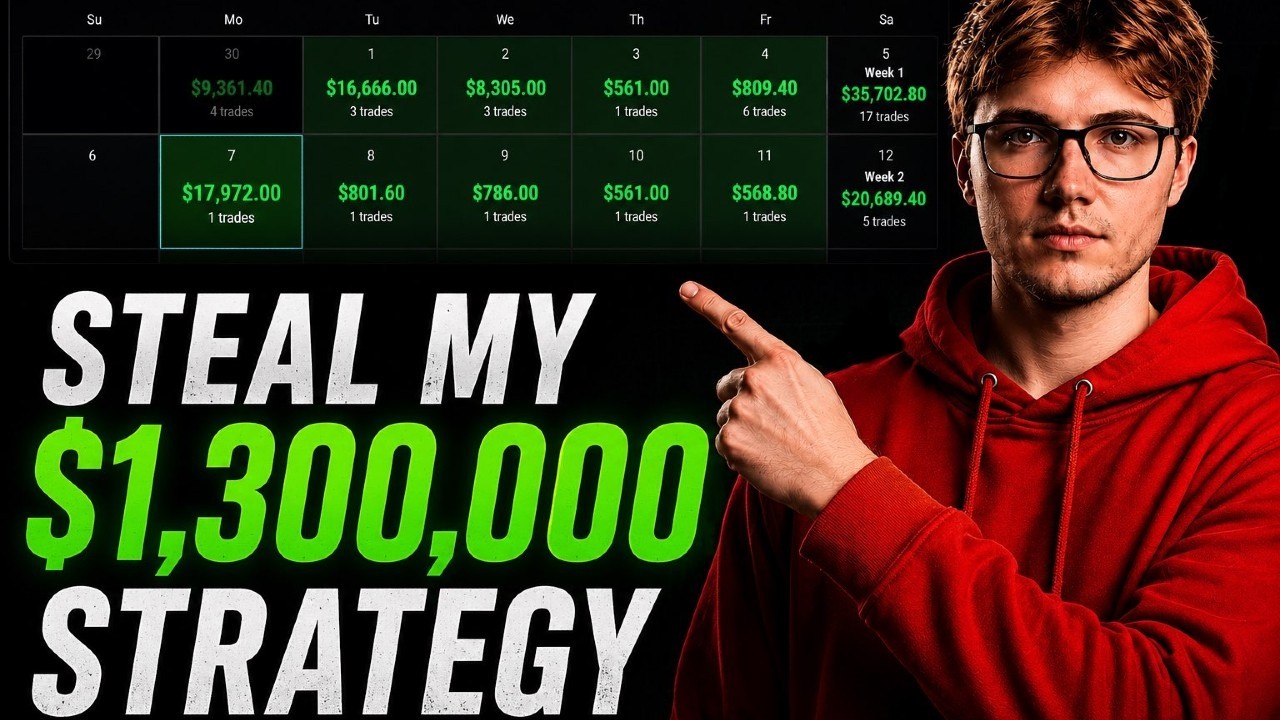
Next, July 2025. I guess it's the same, but this is obviously Topstep. This is Top One Futures. Um pretty good week on Topstep. Same thing with Top. Um changing it a little bit based on the EV of my account. So, I started with 9K,
15:06
Speaker A
16.6, 8K. So, started with three big wins, and then small days to register for my payout, and then obviously took the payout after 5 days. Then another huge day to build the buffer back up.
15:16
Speaker A
Small day, small day, small day, small day, small day. So, again, like I said, changing my profit target based on the expected value of my account. I don't know what this is doing here.
15:24
Speaker A
Um this is just another example, maybe from the month after or something like that.
15:29
Speaker A
I don't know. Um but just to show pretty good returns on Topstep and the other Project X accounts definitely allowed me to hit six-figure months. Uh thankfully I have been above six figures a month for every single month onwards
15:41
Speaker A
from July of 2025 and that will bring us to lesson five. Lesson five is kind of what I just referenced but a little bit more in-depth, spreading risk out. Uh so it goes a little bit deeper than real
15:53
Speaker A
changes payout delays and firms going under. Uh I'll get into that in a second. But you have to understand, at this point I'm going for 500k to 1.8 million.
16:04
Speaker A
Um so it's pretty much doing the exact same thing that got me from 50 to 500 but on a larger scale and insane consistency.
16:12
Speaker A
Insane consistency every day doing the exact same thing every single day. And you have to understand, I had to understand, even a real edge has losing streaks. There isn't insane variance in trading, especially when your sample size is humongous. So
16:25
Speaker A
when you're trading for 18 months, you could have a horrible losing streak and that is totally understandable within your strategy.
16:31
Speaker A
Next, running huge numbers on one firm is going to get you flagged or moved to live. Um so basically as soon as you start making a ton of money, you don't really want to go live and you don't
16:39
Speaker A
really want to get restricted from the props. I haven't had too much problems with that um just cuz I'm at 1.8 now.
16:45
Speaker A
Uh so not too many problems at all with being banned, moved to live, restricted, all that sort of stuff. Uh just two main firms that everybody knows does that.
16:53
Speaker A
Next, you need a smooth equity curve. So no huge hero trades. Um boring is what actually got me to 1.8 million and hopefully it's what's going to get you to 1.8 million. So extreme boredom, extreme consistency. One step at a time.
17:07
Speaker A
Take what you're given, turn it into the positive EV play, the most positive EV play that you can make from that specific scenario and spread your risk. Um so kind of the same thing here, spreading risk across accounts, spreading risk across prop
17:19
Speaker A
firms as well. And then you can see uh, there was there was the July one at 126 September new record month by What is that? $500 or so?
17:29
Speaker A
So, slight new record month in September. This one was still above 100k, thankfully. Always stayed above 100k since then as well. And then here, might as well just show you something from this month so you know uh, I wasn't
17:39
Speaker A
the goat back then. I fell off. Here is August from 2026. That's all supposed to be on Instagram.
17:46
Speaker A
Every single payout I take there is recorded. Anyways. Um, so far, 87k there and then 797.
17:52
Speaker A
So, over 100k this month already. 30k still pending. More to come cuz the month's not over. So, definitely excited for that. Hopefully, these lessons have spoken to you a little bit about how I specifically was able to get up towards
18:05
Speaker A
1.8 million in prop firm payouts. Uh, it's been 18 months now. So, definitely excited to hit that $2 million mark.
18:11
Speaker A
Maybe push for 2.5 before the 2-year anniversary of prop firm trading, but we'll see. And to sum it up, you have to spread your risk across different firms as soon as you start making money because you don't want to get banned.
18:22
Speaker A
You don't want to get moved to live. Next, scale horizontally. Instead of getting one account to huge balance, you're not going to realize that expected value. Spread your edge across a ton of accounts.
18:31
Speaker A
And of course, dial in your psychology because it's going to get absolutely crazy when you have hundreds of thousands of dollars in prop firm accounts. And I know I'm going backwards, but when do you scale to 150k accounts? Remember, once you have 5k
18:41
Speaker A
plus like you spend 5k and you got back more than 5k from that investment, then you know, all right, I'm profitable. Even if it's a [ __ ] investment, I'd probably run it again on 50ks, but if it's decently
18:52
Speaker A
positive, then you know, it's ready to go to the next one. And then of course, to start it off, the most important thing that you should ever take away from this video and any concepts I post is that you need to beat the prop firm,
19:00
Speaker A
not the market. Why would you trade on a live account when you need $5 million to make 24% a year, which is 2% a month, making you 100k a month, when you could trade on a prop firm and pretty easily
19:09
Speaker A
spend 40k and take out 140k? Would you rather risk 5 million or would you rather risk 40k? Some people tell me 5 million and I don't know why they're saying that, but nonetheless six figures a month from prop firms
19:19
Speaker A
should be pretty doable. I've been doing it every month for the last 12 months straight, recording as much as possible.
19:24
Speaker A
I do my trade recaps on YouTube, Instagram, day in the life, all that sort of stuff.
19:28
Speaker A
Anyways, just wanted to let you know exactly how I scaled to 1.8. And of course, biggest takeaway you need to beat the prop firm, not the market. Stop focusing so much on the strategy and focus more on how can my strategy
19:37
Speaker A
generate the most amount of expected value on the prop firm specific environment because there are so many rules and if you don't understand what the rules do to your EV, then you're probably minus EV. That is all I have for you today. If you're
19:48
Speaker A
interested in working with me specifically to learn a lot more in depth, have my exact scaling roadmap plan. I tell you which accounts to use, which accounts to buy, which firms to use, how to risk on every single trade,
19:58
Speaker A
profit target, stop loss, contract sizing, all that sort of stuff. How to maximize expected value if you do get moved live.
20:04
Speaker A
Uh, pretty well rounded. Uh, if you're interested, I do have a mentorship. If there is a link in the description, then the mentorship is open and I would love to have you. If not, then I will see you
20:12
Speaker A
in the next YouTube video.
Topics:prop firm tradingJJ Simonprop firm payoutsscaling trading accountsTopstepevaluation rulestrading strategyrisk managementtrading psychologyfunded trading accounts

Get More with the SozAI App

Transcribe recordings, audio files, and YouTube videos — with AI summaries, speaker detection, and unlimited transcriptions.

Or transcribe another YouTube video here →