Skip to content

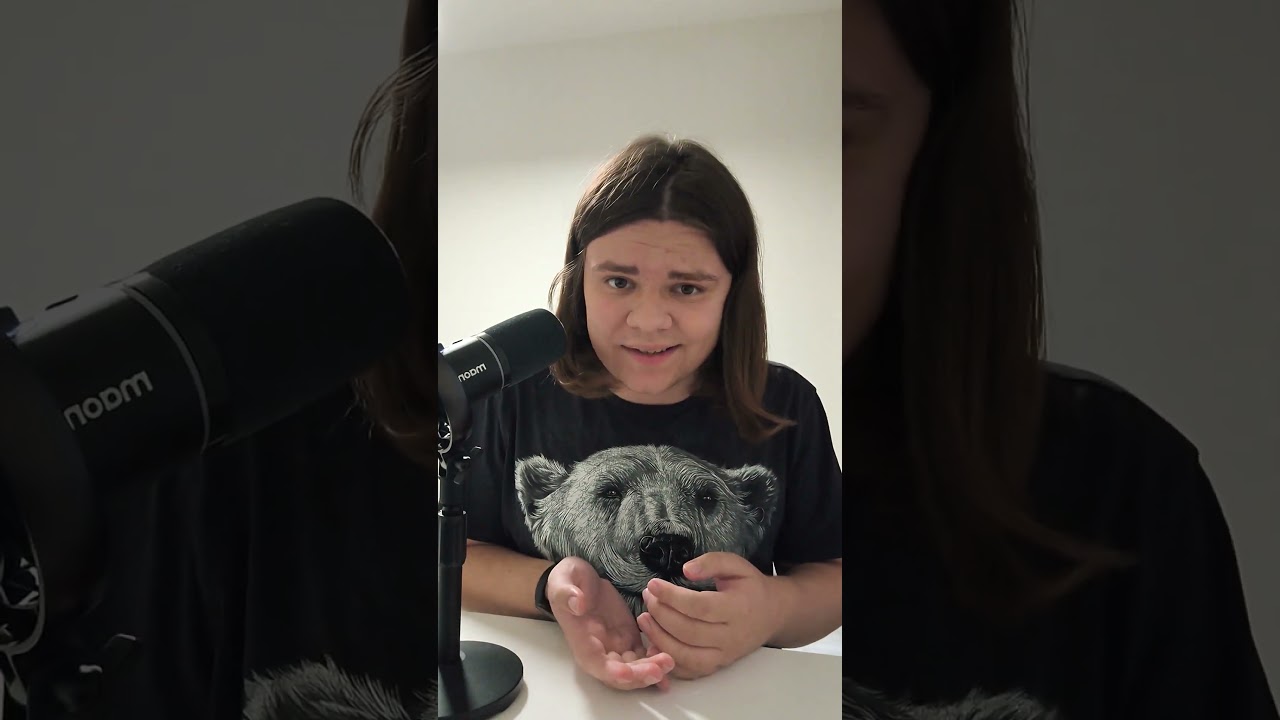
You can progress more in 6 minutes than you would in a month | Daniel Coyle

Daniel Coyle reveals how talent grows through environment, deep practice, and learning from mistakes rather than individual magic.

Key Takeaways

  • Talent is largely shaped by environment and social connections, not just innate individual ability.
  • Deep practice, characterized by deliberate mistakes and focused correction, dramatically increases learning speed.
  • Mistakes should be reframed as critical feedback rather than failure.
  • Creating environments that encourage reaching limits and learning from errors accelerates skill development.
  • Effective leadership fosters collaborative growth and conditions conducive to talent flourishing.

What the video covers

  • The common perception of talent as a magical individual gift overlooks the environmental and relational factors that nurture it.
  • Great performers like Hemingway, Jordan, and Baryshnikov thrived in elite environments that fostered growth through connection and culture.
  • Deep practice involves deliberately making and correcting mistakes to push learning velocity and skill development.
  • Clarissa’s six-minute intense practice session exemplifies how focused, mistake-driven practice accelerates progress more than long, passive practice.
  • Talent hotbeds worldwide share common features: spartan environments focused on craft, a positive relationship with mistakes, and intense motivation.
  • Mistakes are not verdicts but valuable information guiding where to reach next in learning.
  • Learning velocity varies by environment; active, error-driven contexts like skateboarding foster faster learning than passive ones like traditional classrooms.
  • Brazil’s success in soccer stems from a unique, error-rich game called futebol de salão that develops skill through constant challenge.
  • Optimal learning occurs when mistakes happen about 20% of the time, balancing challenge and success.
  • Leadership should focus on creating conditions for collective growth rather than controlling individuals.

Answers

Questions about this video

What is deep practice according to Daniel Coyle?

Deep practice is a focused form of practice where individuals deliberately make mistakes, sense those errors, and then correct them to push their skills to the edge of their ability, increasing learning velocity.

How does environment influence talent development?

Talent develops best in elite environments that foster social connections, encourage learning from mistakes, and create conditions where people can grow together rather than focusing solely on individual effort.

Why does Brazil produce so many talented soccer players?

Brazil’s success is linked to futebol de salão, a fast-paced, error-rich indoor soccer game that forces players to constantly learn from mistakes and develop skills rapidly, rather than just climate or cultural love of soccer.

Full Transcript — Download SRT & Markdown

00:00
Speaker A
We live in this moment of peak individualism. And so, whenever we see achievement, we focus on that individual. We focus on what makes them special. We focus on their habits, their behaviors. We just see them. If you were to look at Hemingway and look at him through the lens of individualism, you would say, "Well, what makes you great?" And it would be about his hard work. It would be about his particular gift, his talent. And that's a very sexy story to tell. It's a very beautiful story to tell that he's sort of a magical person. And that Steve Jobs is a magical person. That Michael Jordan is a magical person. [music] That Baryshnikov is a magical person.
00:17
Speaker A
We get kind of addicted looking at things through this individualistic lens. But when we do that, we're blind to all the other forces that are actually, truthfully, generating that talent. Generating that performance. Generating that fulfillment. I'm Daniel Coyle. I write about the science of human potential. I'm the author of The Talent Code, The Culture Code, and my new book Flourish.
00:31
Speaker A
Thank you for watching Big Think. If you'd like to support our work, we encourage you to join our members community. As a member, you'll receive our quarterly print magazine, a beautifully designed collection of the ideas and interviews that matter most. Big Think is for curious people who want to take deep dives into big ideas. To support the media you want to see in the world, go to bigthink.com/membership. And now, back to the interview.
00:36
Speaker A
Where talent actually comes from. When you actually scratch the surface of a great performer, when you actually look into what made a Hemingway or a Jordan or a Baryshnikov, what you will invariably find is an elite environment. A bunch of relationships, a bunch of connection. Oh, who Mr. Hemingway? He's a great writer. Well, who taught him to love words? What models served him as he began to develop? What kind of environment was he in? And when you begin to take this environmental lens and put it on, it opens up new opportunities for leadership. It's really, in the end, about creating conditions where people can grow together. There's a great saying in the Tao Te Ching, where there's a good leader, people say, "What a good leader that is." But where there's a great leader, people say, "We did it ourselves."
00:52
Speaker A
That's not how we typically have thought about leadership in the past. We often focus on control, we often focus on results, we often focus on sort of treating people as if they're separate from others. But when we take this more ecological approach, it opens up opportunity. It opens up new ways to create more growth. So I spent five years visiting talent hotbeds all over the world, like places that produced impossible numbers of talented performers.
00:58
Speaker A
A Russian tennis club that produced more top 25 players than the entire United States or a Bulgarian chess club. And the places that I visited had a sort of common features in their environment that I saw over and over again. The first thing is that they were kind of junky. I started to call them chicken wire Harvards. You know, you'd go to the music camp and there'd be like cinder blocks holding up the stairs and the camp hadn't been repaired in a long time.
01:11
Speaker A
They didn't put their attention on creating a luxurious environment. They explicitly did not. They actually kept it very spartan. An elite development environment is not one where every luxury is given to you. It's a place of work. It's a place of craft. The second thing I noticed is that they really had a different relationship to mistakes. There's something called learning velocity and the best story I know to get a handle on that is a story about Clarissa. Clarissa was a 15-year-old musician. She was part of the study done by a psychologist named Gary McPherson.
01:23
Speaker A
And McPherson tracked her study for months and he identified one segment, one brief segment, six-minute segment where she progressed more than she did in a month of normal practice. And the question is, what did that look like? Well, Clarissa's sitting down, she's wearing a hoodie, she's got her clarinet, and she's looking at the music really intently, looking at it just ferociously intently, and then she plays a little snatch of a song. It's called The Golden Wedding, and she plays the first couple bars. It's a jazzy little tune. And then she makes a mistake and she stops. She feels that mistake, and then she reads the notes again and she goes back and she hums it to herself. And then she goes back and she plays a little bit further and she makes another mistake and she stops. If you picture what the wires of her brain are doing in that moment, she's reaching. She's sensing that failure and then reaching again. And that's called deep practice. It's when you get to the edge of your ability to increase learning velocity.
01:38
Speaker A
When you deliberately make mistakes in order to build skill. That's what deep practice is. And when I visited these talent hotbeds, they were all practicing like a bunch of Clarissas. They were all keenly focused on pushing themselves to the edge of their ability, sensing that mistake, and then reaching again. And deep practice is all about that moment of reach. That moment of reach where our learning velocity goes up. And really, it's a moment of reinterpreting what mistakes are.
01:54
Speaker A
You know, we walk around thinking mistake is a verdict. Mistake is a sign. This isn't meant for me. But in fact, a mistake is information. It's information over where you should reach next. And that combination of this intense desire plus this intense reaching, it's like this engine, right? You've got this high motivation fuel, reaching into this zone.
02:10
Speaker A
And when we think about who the fastest learners in the world are, well, for my money, the fastest learners in the world are probably, uh, like 12-year-old kids on their skateboards. They learn really, really fast. They get good really, really fast. Who are the slowest learners in the world? Well, maybe those same kids in their algebra class. What's happening in those cases? What for look at them through a Clarissa lens. In the skateboard, the skateboard is showing them the environment of that skateboard is showing them where the mistakes are. They feel it.
02:24
Speaker A
They feel that moment and they can correct and adjust. They can make mistakes and fix. In the algebra classroom, they're sort of sitting passively and knowledge is washing over them. The learning velocity of certain environments, by tweaking the environment, you can massively impact the learning velocity. And that's the lesson of these talent hotbeds.
02:34
Speaker A
They tweak the environment to create those reaches to improve learning velocity. Like, for example, at that same music school, Meadowmount School of Music, they would take a sheet of music that they're learning, and this is a place where some of the top musicians on the planet have trained. They would take their sheet music and cut it into strips, each line. Cut it up and mix them up in a bowl. Pull one out, play it, and try to learn bit by bit, chunk by chunk.
02:51
Speaker A
One of the places that I saw that was really good at generating errors was Brazilian soccer. You know, there's a mystery. Why does Brazil produce so many brilliant soccer players? And the answer to that mystery is usually, well, it's Brazil. It's warm and they play on the beach and it's really inviting and they love soccer. And that explanation makes a little bit of sense, but when you think about it more deeply, there's a lot of places that are warm. There's a lot of places that love soccer. And until the '50s, Brazil wasn't actually that good. They were beaten by Hungary in the World Cup, which is not exactly a beach nation. So, what happened to make Brazil good? They became addicted to this strange little game.
03:00
Speaker A
It's called futebol de salão, soccer in the room. And it resembles soccer if you fed soccer amphetamines and shoved it in a phone booth. Like, it's
03:17
Speaker A
that they really had a different relationship to mistakes. There's something called learning velocity and the best story I know to get a handle on that is a story about Clarissa. Clarissa was a 15-year-old musician. She was part of the study done by a psychologist named Gary McPherson.
03:33
Speaker A
And McPherson tracked her study for months and he identified one segment, one brief segment, 6-minute segment where she progressed more than she did in a month of normal practice. And the question is, what did that look like? Well, Clarissa's sitting down, she's wearing a hoodie,
03:49
Speaker A
she's got her clarinet, and she's looking at the music really intently, looking at it just ferociously intently, and then she plays a little snatch of a song. It's called The Golden Wedding, and she plays the first couple bars. It's a jazzy little tune. And then she makes a mistake and she
04:04
Speaker A
stops. She feels that mistake, and then she reads the notes again and she goes back and she hums it to herself. And then she goes back and she plays a little bit further and she makes another mistake and she stops. If you picture what the wires of her brain are doing in that moment,
04:19
Speaker A
she's reaching. She's sensing that failure and then reaching again. And that's called deep practice. It's when you get to the edge of your ability to increase learning velocity.
04:32
Speaker A
When you deliberately make mistakes in order to build skill. That's what deep practice is. And when I visited these talent hotbeds, they were all practicing like a bunch of Clarissas. They were all keenly focused on pushing themselves to the edge of their ability, sensing that mistake,
04:49
Speaker A
and then reaching again. And deep practice is all about that moment of reach. That moment of reach where our learning velocity goes up. And really, it's a moment of reinterpreting what mistakes are.
05:00
Speaker A
You know, we walk around thinking mistake is a verdict. Mistake is a sign. This isn't meant for me. But in fact, a mistake is information. It's information over where you should reach next.
05:11
Speaker A
And that combination of this intense desire plus this intense reaching, it's like this engine, right? You've got this high motivation fuel, reaching into this zone.
05:22
Speaker A
And when we think about who the fastest learners on in the world are, well, for my money, the fastest learners in the world are probably uh like 12-year-old kids on their skateboards. They learn really, really fast. They get good really, really fast. Who are the slowest learners in the world?
05:38
Speaker A
Well, maybe those same kids in their algebra class. What's happening in those cases? What for look at them through a Clarissa lens. In the skateboard, the skateboard is showing them the environment of that skateboard is showing them where the mistakes are. They feel it.
05:50
Speaker A
They feel that moment and they can correct and adjust. They can make mistakes and fix.
05:54
Speaker A
In the algebra classroom, they're sort of sitting passively and knowledge is washing over them.
05:59
Speaker A
The learning velocity of certain environments, by tweaking the environment, you can massively impact the learning velocity. And that's the lesson of these talent hotbeds.
06:09
Speaker A
They tweak the environment to create those reaches to improve learning velocity. Like for example, at that same music school, Meadowmount School of Music, they would take a sheet of music that they're learning, and this is a place where some of the top musicians on the planet have trained.
06:23
Speaker A
They would take their their sheet music and cut it into strips, each line. Cut it up and mix them up in a bowl. Pull one out, play it, and try to learn bit by bit, chunk by chunk.
06:34
Speaker A
One of the places that I saw that was really good at generating errors was Brazilian soccer.
06:39
Speaker A
You know, there's a there's a mystery. Why does Brazil produce so many brilliant soccer players?
06:43
Speaker A
And the answer to that mystery is usually, well, it's Brazil. It's warm and and they play on the beach and it's really inviting and they love soccer. And that explanation makes a little bit of sense, but when you think about it more deeply, there's a lot of places that are warm.
06:58
Speaker A
There's a lot of places that love soccer. And until the '50s, Brazil wasn't actually that good. They were beaten by Hungary in the World Cup, which is not exactly a beach nation. So, what happened to make Brazil good? They became addicted to this strange little game.
07:13
Speaker A
It's called futebol de salão, soccer in the room. And it resembles soccer if you fed soccer amphetamines and shoved it in a phone booth. Like, it's intensely fast. The The space is about as big as a basketball court. The ball is small, smaller center of gravity, five-a-side. It's passing lanes
07:32
Speaker A
are very narrow. The game is very fast. There's no space. You have to make decisions right now.
07:37
Speaker A
It forces you into the sweet spot over and over again. There's no room. The ball's small, difficult to control. So, the vision that creates, the pressure that creates, it puts people into that zone of development, into that clearest spot. Brazil is uniquely addicted to futebol do salão.
07:57
Speaker A
There were, until about 2009, I think there were 39 international championships and Brazil had won 38 of them. It's played all over the nation. And when you look at the biographies of great Brazilian players, they all spent a huge portion of their youth doing this, playing this game.
08:12
Speaker A
That's what surprised me about those those talent hotbeds, that they were not making each other comfortable. They were tipping their environment so that they could get into that clearest zone, so they could make more mistakes, so they could build more skill. And I call it the rule of 20%.
08:30
Speaker A
If you're making mistakes about 20% of the time, you're probably in the sweet spot. If you're not making any mistakes, you are not learning. If you're making 80% percent mistakes, you're not in the sweet spot. That's pretty sour to be there. And the great irony of the sweet spot is that it
08:45
Speaker A
feels kind of bitter. It's really hard to hang out making 80% success and 20% mistakes. It's hard.
08:52
Speaker A
So, it takes that extra bit of focus. It takes that, what they would call, deliberate practice.
08:57
Speaker A
There was this embrace of struggle, where the struggle was validated, the struggle was expected, the struggle was noble. I saw it really vividly at Spartak. Spartak is a tennis club outside of Moscow. It has produced more top 25 women players than the entire United States in the 1990s and the
09:17
Speaker A
early 2000. And when you get to Spartak, you start to wonder why, because it's it's like in the middle of this huge park, and it's like an old Quonset hut. It looks like something ancient from World War II. And when I walked there, I felt like I had gone to the wrong place, because it was
09:34
Speaker A
sort of looked kind of deserted. There was a tiny door. I remember opening the door, but I didn't hear tennis balls. I kind of expected to hear tennis balls, but I didn't hear tennis ball.
09:42
Speaker A
And the reason I didn't hear is that they were all swinging without the ball. They were all in a line, almost like dancers swinging slowly. And the teacher, whose name was Larissa Preobrajenska, she was 79 and it was this was her routine. She would not let them begin to compete until they had
10:00
Speaker A
perfected the stroke. She was incredulous. How can you start to compete unless you build the stroke?
10:06
Speaker A
And so what she was doing with that slow motion practice, almost like dancers moving through the stroke, fixing their wrist, fixing their elbow, having them repeat it and repeat it until it was absolutely built and grooved, then they could go to compete. It really for me captured that sense
10:22
Speaker A
of of focus and and focus on building that happens in these places. They're not sort of rolling out the balls and saying, "Go hit balls and see who's who has magical talent." They're saying, "Wait a minute, we have to start from the ground. We have to start from the most basic transfer of
10:38
Speaker A
power from the most basic movement of your body. And let's focus on that and struggle through that until we've got it." And they build it piece by piece by piece by piece.
10:49
Speaker A
I mean, the rule of 10,000 hours has been both elevated and trashed in in recent years. And in some ways I think we've landed on this sort of medium area where it's not a hard and fast rule.
11:00
Speaker A
You can't just go do 10,000 hours of something and be world class. And yes, it's depends on which skill you're trying to do. If you're doing high jump, um genetics play a bigger role on that.
11:10
Speaker A
If you're doing the 100-meter sprint, genetics play a bigger role on that. But for most skills, it's a pretty good rule of thumb to say you need to deep practice, you need to deep practice a lot, and you need to build that circuitry. That's sort of a non-negotiable. You need to build
11:25
Speaker A
that circuitry and that takes that takes time. So there's not a sort of a a a shortcut or a hack to get to this. Spending time building those fundamentals, building those circuits, making those mistakes, reaching past where you currently are on the edge of your ability,
11:44
Speaker A
and doing that over and over again. That's what what actually skill to skill is built of. It's kind of a depressing message in some way to say, "Oh, yeah, there's not a there's not a shortcut." But on the other hand, what I see in the talent hotbeds is that it's an immensely liberating
11:59
Speaker A
message. It's an immensely joyful message, and it makes each repetition actually matter because each time you're going to a slightly further place. You made the mistake, you learned from the mistake, you grew. And so, that growth is what repetition actually is. There was also this sense that um
12:20
Speaker A
you could steal ideas. There wasn't a sense that everything was individual, like that you had to figure out your way to do it. It was a sense you could borrow and beg and steal ideas from other people. An elite environment where a person has the opportunity to learn from others, to stare,
12:36
Speaker A
to stare and learn. That's really the first moment of deep practice when we look at a skill and say, "I want to do that." And kind of fall in love with it. Fall in love with that baseball swing,
12:47
Speaker A
fall in love with that poem, fall in love with that music, fall in love with that dance move.
12:52
Speaker A
To really take it inside yourself. And that's that same pattern that I saw. A social environment where you can stare and learn. A place where you're not focused on yourself, but you're using other people's ideas. And a place where struggle is not just not just accepted,
13:09
Speaker A
but validated and made noble. You know, one of the greatest mysteries in the world is why did the Renaissance happen? Why did the Renaissance happen in Italy at that time?
13:17
Speaker A
And there's all kinds of reasons historians give. Oh, it happened you know, because Florence was emptied out by the plague and because the The existed. But when all those all those reasons also happened in other places, why was it there? And what you find out when you dig into that is that
13:33
Speaker A
Florence was where craft guilds evolved. A guild was a workshop where young people were brought in and taught the craft of mixing paint and carving stone and making frescoes and preparing pigments.
13:47
Speaker A
And they would get hundreds of reps, thousands of reps, thousands of hours spent learning about the fundamentals of their craft. Each one of those reps putting them into that zone of deep practice.
13:58
Speaker A
That's the kind of environment that's an elite development environment. It's not one where they got put in a kind of a country club environment and given lessons from painters. It's ones where they were working every day with other people on real projects, you know, learning as they
14:12
Speaker A
went. First as a young apprentice learning how to prepare the surface, then mixing the paints, learning how the medium worked, watching great masters at work. They're staring, they're struggling, and they're stealing. And that to me is an elite environment. And so as we look
14:28
Speaker A
at our schools, as we look at our families, as we look at our work environments, the challenge to us is how do we create that environment where it is safe to stare, struggle, and steal together uh for in a at a craft of getting better. And create that kind of guild environment where we can
14:46
Speaker A
dig in and and grow ourselves. I think the most mind-blowing thing that I see people astonished by is the compounding effect. If you improve 1% a day at piano, at public speaking, at dance, at at at whatever you're trying to improve at. 1% a day for a year, by the end of that year you're 37 times
15:05
Speaker A
better than when you started. Compounding, exponential growth is mind-blowing. And so that's why I think we've all had experiences in our lives where we've had people around us who've just took taken off like rocket ships. Kids in our neighborhood who have grown up to be incredible
15:22
Speaker A
musicians maybe, or people we used to go to high school with who are very unimpressive who are now incredibly impressive in terms of their skill and their talent level. And that speaks really to all that potential that's that's that's right there waiting for you when you take off that
15:36
Speaker A
individual focus when you start looking at it through a more holistic kind of ecological lens.
15:43
Speaker A
When you stop treating talent as a magical gift and start treating it as something you can grow.
15:48
Speaker A
The question this leads us to is how do you get that's a big project like growing that much skill spending that much time it's not an easy thing to spend all that time at the edge of your ability.
15:58
Speaker A
What makes someone do that? And the answer is ignition. We tend to think of motivation is this internal trait and yes it feels that way but in fact it's about this relationship this interaction that we have with the culture around us. Motivation doesn't happen from the inside out
16:13
Speaker A
it always happens from the outside in. When we see someone that we want to become when we see some a vision of our future self that is what unlocks motivation. Somebody who is sort of like a person on the horizon toward which we want to travel. And there's all kinds of fascinating experiments
16:31
Speaker A
that that that they've done to do this. One of my favorites is this birthday experiment. They have a class read a biography of a mathematician and it gives some information about the mathematician.
16:43
Speaker A
It talks about where they were born talks about how they developed and at the end of it as part of the bio they give the mathematician's birthday. But here's the twist for half of the students the birthday of the mathematician matched their actual birthday. The experimenters made it match. And
16:56
Speaker A
then they gave everybody in that experiment a math test. Like okay you read about this mathematician how hard will you work on the math test? And the people's whose birthday matched worked three times as hard on the math test. There was an unsolvable problem on the math test and they spent three
17:12
Speaker A
three times as much time working on that problem. Which is kind of crazy cuz all it was was just this little moment like you and the math teacher are connected. This little guitar string inside them got plucked. Like, oh, that math teacher is connected to me in some way.
17:26
Speaker A
And that social connection unlocked energy. And that's how we're built. When we see something that we really connect with in our windshield, that we feel that guitar string get plucked, it unlocks energy. And that's that moment of ignition. You know, we typically think of talent
17:44
Speaker A
hotbeds as being kind of magical places. But in fact, with many of them, you can go back in time and see the moment when they got lit, when they got ignited. If you're a Russian tennis player, it was when Anna Kournikova went to the finals at Wimbledon. A girl from Spartak, from that
18:00
Speaker A
same club, showed up. She went all the way to the finals at Wimbledon. Next thing you know, there's more champions coming out of Spartak five years later. If you're a baseball player on the island of Curacao, it's the moment Andruw Jones hit three home runs in a World Series in 1996. From that
18:16
Speaker A
moment on, that that island began it it's like that ultimate guitar string. They're all saying, if they can do it, why can't I? And that moment, which is, by the way, completely irrational, illogical, defies everything that we would know about individual development and talent,
18:35
Speaker A
and yet, because talent is actually this process through which we are using energy, funneling energy into this deep practice to grow skills, to grow circuitry, um that's why that's powerful. It's like a lightning bolt that absolutely lights up a place
18:53
Speaker A
where people can say, if they can do it, why can't I? Because motivation is this kind of remarkable kind of lightning bolt moment a lot of times, you can't force it to happen, but you you can increase the likelihood of it happening with a certain set of tools. One place
19:10
Speaker A
I saw that did this really well was Pixar. You know, we all know Pixar is good at making movies.
19:15
Speaker A
If you're a new employee at Pixar on your first day, you come to an auditorium and you sit there and Ed Catmull tells you a couple things. He makes a very short speech. The speech goes like this.
19:24
Speaker A
Whatever you did before, you're a movie maker now. We need you to help us make our films better.
19:32
Speaker A
That's the end of the speech. It's a very short speech. And then they have these things where they'll bring everybody together and watch versions, rough versions of the Pixar films. The whole company, baristas come together, engineers, IT folks, and they watch them and they they ask
19:48
Speaker A
for suggestions. Do you notice anything could be better? And I met an IT guy who had suggested a badge on the character in Up. They had some like funny message in his in his scout badges. There was a boy scout in the movie Up. And the IT guy had raised his hand and made a suggestion and they
20:04
Speaker A
had put it in the movie. It's about creating a moment where you're inviting someone in, inviting someone in to play a role of active contribution to that to that goal, to that task, to that larger thing. I saw it in Curacao on the baseball field. You know, that's a place that has produced uh
20:23
Speaker A
uh uncountable number of major leaguers after they produced just the one. I coached Little League so I was curious, how do they organize their practice? I organize my practice so it's just a coach and 12 players. On the field in Curacao, there's about a hundred players.
20:36
Speaker A
And they're divided up into groups and they have the older kids teaching them. Now, what a moment is that? Rather than looking at some old guy, they're being taught by older versions of themselves. Kids who had been to the Little League World Series. Kids
20:49
Speaker A
were on their way to maybe play in the major leagues. Think about that guitar string moment, that moment of being invited in to that struggle, to that contribution, to that growth process.
21:00
Speaker A
They're really good at structuring environments to create that kind of that kind of invitation that Ed Catmull is offering and that those older players in Curacao are offering. It's saying, "Here's a future vision of yourself. Here's something you can play a part in.
21:14
Speaker A
Do you want to do that?" And and inviting people in. We tend to, through that individualistic lens, look at Pixar and Ed Catmull as being kind of magical. Well, that's just their little magic dust or whatever. But, it's a playbook. I mean, it is an absolute playbook that you can, with the
21:29
Speaker A
right level of deep knowledge and sincerity and learning and growth, apply that in other places.
21:35
Speaker A
And they certainly did in Walt Disney when Walt Disney acquired them. Walt Disney was struggling.
21:40
Speaker A
They hadn't produced a good movie in a long time, their animated division. And Ed Catmull started visiting there once a week, and he moved the desks around so people had to come walk by him, and he created these brain trust meetings where they would get together, just like with the earlier
21:54
Speaker A
example where people are pointing out flaws together and pointing out things they could do better. And next thing you know, um Disney has turned around their animated division entirely.
22:09
Speaker A
Four times a year, we print a magazine worth putting your phone down for. Big Think's premium print magazine is built with custom artwork and expert insight from the world's biggest thinkers. No AI slop, no rage bait, just big ideas for curious people.
22:23
Speaker A
Support the media you want to see in the world. Go to bigthink.com/membership to join.
Topics:Daniel Coyletalent developmentdeep practicelearning velocitymistakeshuman potentialskill acquisitionenvironmental influenceleadershipBig Think

Get More with the SozAI App

Transcribe recordings, audio files, and YouTube videos — with AI summaries, speaker detection, and unlimited transcriptions.

Or transcribe another YouTube video here →