Skip to content
Get App

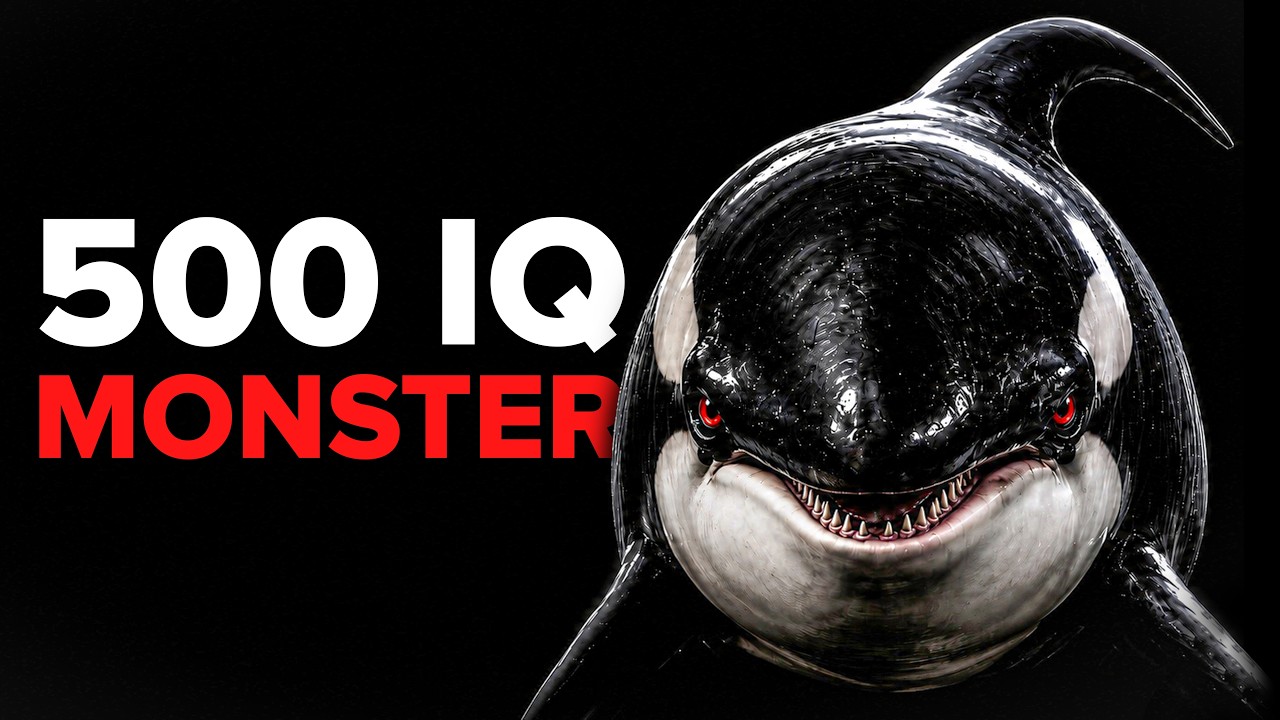
Why The Ocean's Deadliest Predator Refuses To Kill Us

Explore why orcas, the ocean's deadliest predators, never hunt humans despite their power and intelligence.

Key Takeaways

  • Orcas are highly intelligent, social apex predators with advanced hunting strategies.
  • Their name 'killer whale' is a mistranslation; they are actually the largest dolphins.
  • They have a global presence and adapt physiologically to various marine environments.
  • Orcas have never attacked humans in the wild despite their capacity to do so.
  • Their hunting tactics include teamwork, cultural transmission, and exploiting prey vulnerabilities.

What the video covers

  • Orcas are apex predators capable of killing great white sharks and blue whales but have never hunted humans in the wild.
  • The name 'killer whale' originated from a mistranslation of early whalers' observations and orcas are actually dolphins, not whales.
  • Orcas possess powerful anatomy including large conical teeth, a tall dorsal fin, and countershading camouflage for hunting.
  • They are globally distributed, adapting to diverse environments from polar to tropical waters with thick blubber and vascular heat regulation.
  • Their diet includes over 140 species, and they use advanced hunting tactics like coordinated pod attacks and intentional beaching.
  • Orcas demonstrate remarkable intelligence and social learning, teaching hunting techniques across generations.
  • They can incapacitate great white sharks by inducing tonic immobility and target calorie-rich organs like the liver.
  • Recent observations confirmed orcas can take down blue whales using coordinated suffocation and targeted attacks.
  • Orcas have spindle neurons linked to empathy and social behaviors, with distinct ecotypes specializing in different prey.
  • Despite their lethal capabilities, orcas have never been recorded killing humans, highlighting unique behavioral traits.

Answers

Questions about this video

Why are orcas called killer whales if they are not whales?

The term 'killer whale' originated from a mistranslation of early whalers' observations. Orcas are actually the largest members of the dolphin family, not true whales.

How do orcas manage to hunt large prey like blue whales?

Orcas use coordinated group tactics where some individuals suffocate the whale by blocking its blowhole while others attack vulnerable areas like the tongue, demonstrating complex social hunting strategies.

Why have orcas never attacked humans in the wild despite their power?

Orcas appear to actively avoid humans as prey. Their hunting behavior is highly selective and culturally transmitted, and no recorded wild attacks on humans exist, suggesting a unique behavioral trait.

Full Transcript — Download SRT & Markdown

00:08
Speaker A
There is a predator that dominates the ocean, one powerful enough to flip great white sharks, take down colossal blue whales, and more recently, sink vessels off the coast of Europe.
00:21
Speaker A
Yet, remarkably, there has never been a single recorded instance of this creature hunting or consuming humans in the wild.
00:32
Speaker A
Why would a hunting machine more than capable of obliterating us actively cross humanity off its menu?
00:41
Speaker A
Indeed, the truth behind this bizarre behavior will change how you look at the ocean forever.
00:53
Speaker A
For centuries, humanity has often viewed these creatures with sheer terror. In his work, Naturalis Historia, the Elder described them as an enormous mass of flesh armed with savage teeth.
01:22
Speaker A
However, the origin of the moniker killer whale actually stems from an ancient mistranslation and the observations of early Spanish and Basque whalers.
01:34
Speaker A
Upon witnessing these predators orchestrate the surrounding and taking down of massive baleen whales, they fearfully dubbed them as balenas, meaning whale killers.
01:49
Speaker A
As this phrase made its way into the English-speaking world, the word order was flipped to kill a whale, inadvertently transforming them into a species of whale driven by murderous instincts.
02:04
Speaker A
But the truth is, they are not even whales. Taxonomically speaking, the orca is essentially the largest and most powerful member of the oceanic dolphin family, Delphinidae, a branch within the suborder of toothed whales, Odontoceti.
02:22
Speaker A
Their scientific name, Orcinus orca, is derived from Orcus, the Roman god of the underworld.
02:31
Speaker A
To live up to that formidable title, evolution has bestowed upon the orca an almost perfect anatomical structure.
02:38
Speaker A
A mature male can reach lengths of nearly 10 m, 32.8 ft, and boast a total body weight of up to 10 metric tons, 22,000 lb, roughly equivalent to a midsized bus.
02:55
Speaker A
Towering on their backs is a magnificent dorsal fin that can stand almost 2 m, 6.5 ft tall. Lacking any supportive bone structure, this fin is composed entirely of collagen connective tissue.
03:11
Speaker A
It serves not merely as a navigational rudder that allows them to cut through the water at speeds of up to 56 km/h, but also as a massive thermal radiator that helps regulate their body temperature during high-speed pursuits.
03:27
Speaker A
Coupled with their speed, their most terrifying weapon lies within their curved snouts, massive conical teeth, roughly 10 cm long, curving inward and interlocking like a bear trap. Their bite force is entirely capable of crushing the densest bones of their prey, rendering them an apex predator with no natural enemies.
03:47
Speaker A
Given such immense size and overwhelming power, you might wonder, why do they sport such a striking black and white coloration that seems so easily detectable?
04:05
Speaker A
In reality, this color distribution is a pinnacle of optical camouflage known as countershading. Within the ocean's complex visual environment, this coloration creates a sophisticated optical illusion. When a prey animal swims above and looks down, the pitch black back of the orca blends seamlessly into the murky darkness of the ocean floor.
04:26
Speaker A
Conversely, if a prey animal below looks up, the orca's stark white underbelly vanishes into the glistening sunlit surface.
04:42
Speaker A
Furthermore, the white patches serve to break up their true silhouette, making it incredibly difficult for prey to gauge the predator's actual size and trajectory until it is far too late. Even so, nature occasionally produces spectacular genetic exceptions. In 2012, scientists off the coast of the Kamchatka Peninsula in Russia recorded Iceberg, a mature adult male carrying a rare albino mutation, making him entirely white like a wandering iceberg.
04:58
Speaker A
Regardless of their coloration, however, these physical traits serve one highly practical purpose, equipping orcas to adapt and hunt in any ocean on Earth.
05:17
Speaker A
Excluding humans, there is no other mammal on Earth capable of conquering as vast a territory as the killer whale.
05:41
Speaker A
They are a truly globally distributed species. You can find them in the freezing Antarctic waters, gliding through tropical coral reefs in Hawaii, or cruising around the Arabian Peninsula, where water temperatures can soar to 30° C.
05:49
Speaker A
This remarkable thermoregulatory adaptability stems from an exceptionally thick layer of blubber up to 10 cm, 4 in deep, enveloping their entire body combined with a vascular network capable of dynamically expanding to either dissipate or retain heat at will.
06:08
Speaker A
To sustain this massive physique and its internal heating system, the orca's metabolism demands a staggering caloric intake.
06:28
Speaker A
On average, a mature individual must consume around 135 kg, 300 lb, of meat daily.
06:39
Speaker A
This voracious appetite has molded them into the ocean's most versatile assassins with a menu encompassing over 140 species. From tiny schools of herring, hard-shelled sea turtles, penguins, seals, sea lions, and dolphins to creatures widely considered the nightmares of the sea. The orca's most infamous prey is the great white shark. For years, marine biologists were utterly baffled as numerous great white carcasses washed ashore in South Africa, perfectly intact, except for their bellies being ripped open and their livers missing.
06:49
Speaker A
The culprits were pods of orcas. They had learned a fatal flaw of the shark. When flipped upside down, sharks fall into tonic immobility, a state of neural paralysis that renders them unable to breathe, ultimately causing them to drown.
07:09
Speaker A
Orcas will ram the shark's flank at high speed, flip it over, and use their razor-sharp teeth to extract the liver, which is rich in squalene.
07:30
Speaker A
For the orcas, this is the most calorie-dense, fatty energy source available. In other regions like Australia, the terror is so profound that massive great white sharks will completely abandon their territories for months the moment they detect approaching orcas.
07:49
Speaker A
But the most terrifying testament to the orca's supremacy is their ability to take down the blue whale, the largest creature to ever exist in Earth's history.
07:59
Speaker A
For decades, this was merely a hypothesis. However, in 2019 and 2021 at Bremer Bay, Western Australia, scientists witnessed and recorded pods of orcas systematically attacking adult blue whales.
08:18
Speaker A
They organized themselves like a highly trained military unit. The strongest individuals take turns swimming over the blue whale's blowhole to suffocate it, while others bite into its flanks and specifically target its tongue.
08:30
Speaker A
This event officially confirmed what was long suspected. Orcas have no upper limit when it comes to the size of their prey.
08:49
Speaker A
Yet, it is not brute muscular strength that makes the orca the reigning sovereign of the seas, but rather their pack hunting tactical intelligence.
09:05
Speaker A
Unlike sharks that hunt purely on solitary instinct, orcas coordinate with the precision of a special forces strike team. In the icy expanse of Antarctica, weddell seals often seek refuge on floating ice floes.
09:13
Speaker A
Upon spotting their prey, the pod does not attack blindly. Instead, they pull back and swim closely alongside one another in perfect synchronization, generating a massive wave that washes over the ice, sweeping the seal into the water.
09:26
Speaker A
At the Valdés Peninsula in Argentina, orcas employ an even more dangerous technique, intentional beaching.
09:42
Speaker A
To snatch juvenile sea lions playing at the water's edge, an orca uses the momentum of the surf to launch itself straight onto the dry sand, grabs its prey, and then uses sheer muscular force to wriggle backward with the receding foam.
10:00
Speaker A
This is not a technique hardwired into their DNA. Rather, it must be meticulously taught by mothers to their calves through years of observation and practice.
10:11
Speaker A
A single miscalculation in estimating the beach's incline could leave them stranded and lead to their demise.
10:26
Speaker A
Their predatory intellect even
10:41
Speaker A
A single miscalculation in estimating the beach's incline could leave them stranded and lead to their demise.
10:49
Speaker A
Their predatory intellect even evolves alongside modern times. In the Beering Sea and the Gulf of Alaska, orca populations have learned to steal sable fish and halibet directly from the long lines of commercial fishing vessels.
11:05
Speaker A
Remarkably, they do not even need their eyes. In the dark oceanic environment, they utilize their hearing to eavesdrop on the acoustic signature of the hydraulic winches on the boats.
11:20
Speaker A
The moment the winch engages from kilome away, the pod recognizes that a free meal is being hauled up and immediately rushes in, stripping the entire catch before the helpless eyes of the fisherman.
11:34
Speaker A
These continuous adaptations and learning capabilities prove that orcas do not hunt based on pre-programmed behaviors.
11:43
Speaker A
To process and transmit such sophisticated survival skills, they require a superior biological computing machine.
12:03
Speaker A
That machine is housed deep within their skulls. The brain of an adult killer whale is four times larger than a human brain.
12:14
Speaker A
Astonishingly, when scientists performed MRI scans on orca brains, they discovered highly complex and convoluted folds in the areas responsible for emotional processing.
12:26
Speaker A
Hidden deep within is a network of spindle neurons functioning as high-speed information highways. This exact type of cell is what grants humans the capacity for empathy, intuition, and the ability to shed tears out of grief.
12:43
Speaker A
The fact that orcas possess these cells is profound evidence of a deeply complex inner life.
12:50
Speaker A
Furthermore, orcas are among the extremely rare group of animals that can pass the mirror self-recognition test, a definitive proof of self-awareness.
13:01
Speaker A
Because they possess a sense of individual identity, orcas have specific names. Within its very first weeks of life, a newborn orca will learn the unique acoustic signatures of its lineage.
13:15
Speaker A
This sound signal acts as an identifier that it will use for its entire life, broadcasting across the vast ocean. I am here. I am a member of this family.
13:27
Speaker A
This neurological evolution has propelled the orca past the boundaries of mere survival instinct, [music] forming the very foundation of culture.
13:37
Speaker A
The clearest evidence of this is that different orca populations inhabiting the same waters do [music] not mix.
13:45
Speaker A
For instance, in the Pacific Northwest, there are two distinct ecoypes of orcas. residents [music] who exclusively eat salmon and transients who [music] strictly hunt marine mammals.
14:00
Speaker A
Despite sharing the exact same waters, they do not interact. They do not interbreed and they utilize completely distinct acoustic dialects.
14:12
Speaker A
The vocalizations of a resident pod are as incomprehensible to a transient pod as speaking to someone who does not know a word of English.
14:22
Speaker A
This culinary and linguistic knowledge is absolutely not encoded in their genes or biology. It [music] is passed down from generation to generation through teaching and imitation.
14:35
Speaker A
That is the very definition of culture. Their social intelligence continually astounds the scientific community.
14:45
Speaker A
For decades, researchers have observed incredibly complex play behaviors in this species. Orcas [music] will actively swim through kelp forests, tear off strips of kelp several meters long, and carefully drape them over their bodies, rubbing them against their dorsal and
15:04
Speaker A
pectoral fins. Initially thought to be a method for scraping off parasites, this behavior, dubbed kelping, was later recognized as a form of recreation.
15:17
Speaker A
It stimulates their senses [music] and serves as a highly social form of play that individuals learn from one another.
15:24
Speaker A
However, the learning and transmission of these cultural behaviors do not happen haphazardly. To maintain this framework of survival knowledge across decades, every individual must adhere to a remarkably strict hierarchical structure.
15:54
Speaker A
Orca culture cannot exist without a robust social architecture. In many populations, particularly the residents, society is built upon an incredibly stable matriarchal system.
16:08
Speaker A
A pod is always led by the oldest female. The offspring, both male and female, will never leave their natal pod.
16:17
Speaker A
They remain by their mother's side for their entire biological life cycle. Embedded within this matriarchy is one of evolution's greatest mysteries, the phenomenon of menopause.
16:31
Speaker A
In the entire natural world, only an exceedingly rare handful of species are known to go through menopause, including humans, wild chimpanzees, and a few tooththed whales like the orca.
16:44
Speaker A
According to the rules of natural selection, an organism that can no longer reproduce should theoretically be phased out.
16:53
Speaker A
Yet, female orcas who cease reproducing around the age of 40 will continue to live for another 30 to 40 years, specifically to fulfill the role of a leader.
17:05
Speaker A
A prime example is the legendary matriarch known as Granny, [music] designated J2, one of the longest lived individuals in marine biology history, reaching an estimated age of nearly 80.
17:20
Speaker A
What this means is that she spent half of her life solely guiding her descendants. [music] The explanation for this is known as the grandmother hypothesis.
17:33
Speaker A
By seizing reproduction to avoid competing with their offspring for food, these elderly females become living datab banks for the entire pod.
17:42
Speaker A
With a mind storing decades of memories, [music] they pinpoint the exact migratory roots of salmon, the locations of deep ocean currents, and safe harbors when supertorrms strike.
17:55
Speaker A
Studies have proven that orcopods led by grandmothers have significantly higher survival rates during severe El Nino years when food is scarce.
18:06
Speaker A
This tight-knit family structure forges intense emotional bonds rarely seen in other species. An earthshattering event that occurred in the summer of 2018 served as the most explosive testament to the psychological depth of these animals.
18:26
Speaker A
On July 24th, 2018, a mother orca from the southern resident population named Talqua, designated J35, gave birth to a female calf.
18:39
Speaker A
Tragically, the infant survived for only 30 minutes. Taloqua placed the nearly 180 kg, 400 lb, body of her calf on her forehead and began to swim. Whenever the body slipped into the depths, Taloqua would dive down, desperately pushing it back to the
18:59
Speaker A
surface to breathe. She refused to eat, entirely ignored her own physical exhaustion, and embarked on a grueling procession of mourning that lasted for 17 straight days and nights.
19:12
Speaker A
covering a distance of 1,000 mi, approximately 1,600 km. Throughout that agonizing journey, the other pod members swam closely around Taloqua, taking turns supporting the calf's body whenever she grew too exhausted.
19:29
Speaker A
The entire world fell silent watching those images. Neurobiologists cite this as undeniable evidence of grief, a profound psychological anguish that transcends species [music] barriers, proving that they love their families no less than we do. It is precisely this highle
19:47
Speaker A
intelligence and complex psychological life that directly shape how orcas process the world around them.
19:55
Speaker A
Understanding this is the only key to unlocking the mystery of their bizarre behavior when confronting humanity.
20:16
Speaker A
[music] And now we arrive at the ultimate question. Why has an intelligent predator equipped with bone crushing jaws, [music] ruthless hunting tactics, and the power to slay a blue whale [music] never killed a single human being in the wild?
20:32
Speaker A
Throughout all of recorded marine history, the number of human fatalities caused by wild orcas [music] is exactly zero.
20:42
Speaker A
When you dive into the ocean and come face to face with an orca, you are confronting a hyper carnivore.
20:50
Speaker A
You swim sluggishly, possessing no protective armor, no fangs, and no venom. In the middle of the sea, you are merely a soft, fleshy, and utterly defenseless organism.
21:03
Speaker A
By all logic, you should be the perfect snack. Yet they simply glide past, shoot you a curious glance, [music] and swim away.
21:15
Speaker A
This behavior defies every fundamental survival instinct of a predator, which is to consume the easiest available protein.
21:23
Speaker A
To decode this paradox, we must first dismiss a common misconception. Many assume that when paddling on a surfboard, [music] a human silhouette closely resembles a seal.
21:34
Speaker A
Indeed, great white sharks frequently bite us in cases of mistaken identity for this exact reason.
21:42
Speaker A
So why is the rate of mistaken identity with orcus practically zero? The answer lies in their biological sonar technology, echolocation.
21:53
Speaker A
Unlike a shark's murky vision, an orca's acoustic waves can physically see through our skin when they bounce off us. This sonar beam accurately returns data on our fragile bone density, our two-chambered lungs, and crucially, our extremely thin layer of fat compared to
22:13
Speaker A
a seal. The sound waves deliver an unmistakable physical data point to their brains. This creature lacks the required biological blubber. It is not a seal.
22:25
Speaker A
However, even the most advanced sonar system has its blind spots. This occurs in shallow waters where crashing waves create millions of air bubbles that completely scramble their acoustic signals. [music] And that is precisely the context of the most classic collision incident [music]
22:44
Speaker A
in recorded history. In 1972, off the coast of California, a surfer was paddling through turbulent whitewash surf.
22:55
Speaker A
With its sonar blinded by the bubbles, a hunting orca had to rely on its vision.
23:02
Speaker A
Spotting a dark silhouette on the surface, [music] its predatory instinct triggered instantly. It surged forward and clamped its jaws around the victim's leg. With a bite force capable of pulverizing whale bones, it could have easily ripped the victim apart in a
23:18
Speaker A
fraction of a second. But the moment its teeth touched the flesh and registered an alien bone structure, the orca immediately released the surfer and swam away.
23:30
Speaker A
This spectacular display of restraint proves [music] one thing. Even when their most ruthless hunting instinct is accidentally triggered, the orca's nervous system remains lucid enough [music] to recognize the error and actively abort the attack. If humans are permanently off their menu, however, how
23:48
Speaker A
do we explain the events currently sending shock waves through [music] Europe? Beginning in the summer of 2020, a population of orcas around the Iberian Peninsula began relentlessly attacking sailboats.
24:02
Speaker A
They approached, violently rammed, and bit into fiberglass rudders, snapping them off. To date, there have been over 673 documented incidents with several yachts having their holes breached and sinking to the ocean floor.
24:19
Speaker A
The media immediately dubbed it nature's uprising or an act of revenge. Yet, behavioral scientists point to one crucial detail. When the boats sink and [music] panicked humans plunge into the water, the pod simply swims away.
24:37
Speaker A
They do not touch a single person. Their solitary target is the rudder. Research confirms that the group engaging in this behavior consists of about 15 individuals, mostly juveniles.
24:54
Speaker A
This is essentially a cultural fad. Much like human teenagers obsessing over a viral social media trend, ramming the rudder creates fascinating water vortices [music] or offers a pleasurable sensation when rubbing their bodies against a moving solid object.
25:11
Speaker A
It is a form of collective recreation or a hydrodnamic practice drill. No matter how violent it appears toward the vessels, they still strictly adhere to their species ultimate principle. Do not harm humans.
25:37
Speaker A
Tragically, this astonishing self-restraint and this wild oceanic peace treaty have been shattered by humans through the captive entertainment industry.
25:47
Speaker A
Imagine this. A creature possessing a massive emotional brain accustomed to swimming hundreds of miles a day alongside its family is suddenly thrust into a concrete tank barely a few body lengths across.
26:02
Speaker A
This rupture does not just destroy them physically. It triggers a malignant psychological disorder known as zuocosis, captivity induced psychosis.
26:13
Speaker A
The nightmare begins with their very own biological strengths. In the ocean, orcas see the world through sound waves.
26:23
Speaker A
But when confined to a tank, their echolocation clicks continuously slam against the smooth concrete walls and bounce back with intense amplification, causing acoustic sensory overload.
26:36
Speaker A
Scientists describe it this way. It is akin to being locked in a tiny closet and forced to listen to your own screams echoing endlessly day and night.
26:48
Speaker A
The psychological torture does not end there. In the wild, orca families have their own distinct cultures and dialects.
26:57
Speaker A
Yet, marine parks routinely capture random individuals from completely different oceans globally and throw them into the same enclosure.
27:08
Speaker A
Forcing creatures that do not speak the same language to cohabitate in a cramped space with no escape route has birthed a bloody gladiator arena.
27:19
Speaker A
The vast majority of captive orcas bear raking scars, deep lacerations caused by the teeth of their tankmates.
27:28
Speaker A
Driven to extreme frustration, they spend hours gnoring on steel gates and concrete ledges. This [music] self-destructive behavior wears their teeth down to the [music] pulp. To prevent lethal infections, veterinarians must regularly use power drills to core out the [music] dental
27:47
Speaker A
pulp. Agonizing procedures performed entirely while the animal is awake without any anesthesia. The physical collapse is [music] most blatantly visible in their once proud dorsal fins.
28:00
Speaker A
In the [music] wild, a male's dorsal fin stands tall like a sword. But 100% of mature captive males suffer [music] from dorsal fin collapse.
28:12
Speaker A
Because it lacks bone structure, floating listlessly at the shallow surface means Earth's gravity [music] inevitably drags down their collagen tissue network.
28:23
Speaker A
Instead of living out their 80year lifespans as they would [music] in the open ocean, they frequently succumb to sepsis by the age of 20. And when a highly advanced intellect is pushed [music] past its breaking point, these glass ward pools turn into crime scenes.
28:39
Speaker A
The most shocking tragedy is the story of Tikum, a colossal male orca weighing 5,400 kg, 11,900 lb.
28:51
Speaker A
Kidnapped from the coast of Iceland in 1983 at just 2 years old, Tik was [music] transferred to a marine park and housed with two fiercely aggressive females.
29:02
Speaker A
For years on end, every single night, he was herded into a pitch black metal [music] module measuring a mere 6 m 20 ft across.
29:13
Speaker A
Locked away for over 14 hours at a time to prevent them from tearing each other apart.
29:20
Speaker A
The darkness, [music] the isolation, and the bleeding wounds mutated Tilkum from a curious animal into a fractured psychotic [music] mind. Over the course of his 34 years of captivity, Tikcom directly took the lives of three human beings.
29:36
Speaker A
His first victim in 1991 was dragged [music] to the bottom of the pool and drowned.
29:42
Speaker A
His second victim in 1999 was found [music] dead, his body mutilated on the whale's back.
29:49
Speaker A
But the absolute climax of this horror occurred in [music] 2010. Right in the middle of a live performance, Tikcom suddenly grabbed his most exceptional [music] trainer, Dawn Broncho, and pulled her under.
30:04
Speaker A
The incident [music] was so profoundly violent that her body was crushed, and Tikcom adamantly [music] refused to release her remains for an extended period.
30:14
Speaker A
Recall [music] the spectacular restraint of wild orcers. The killings committed by Tikcom were not accidental [music] surfing mistakes, nor were they predatory instincts driven by hunger.
30:26
Speaker A
They were the desperate wrath of a mind subjected to prolonged systemic [music] torture. Tikcom's tragedy is the darkest mirror reflecting back humanity's own crimes.
30:40
Speaker A
Orcas may overlook our frail presence out in the vast ocean, but they will morph into a brutal void when we strip them of the [music] sky, the sea, and their freedom.
30:52
Speaker A
[music] Though slowly escaping the dark era of artificial show tanks, wild killer whales now face far more insidious existential threats in their oceanic homeland.
31:12
Speaker A
The deafening propellers of modern super cargo ships are causing acoustic blindness, completely jamming the orca's echolocation and leaving them unable to coordinate hunts, communicate, or track their calves.
31:28
Speaker A
Worse still is a chemical ticking time bomb. Legacy toxins like PCBs bioaccumulate in their blubber, the highest concentrations in the animal kingdom, causing severe immune degradation and alarming miscarriage rates.
31:44
Speaker A
Compounding these threats, [music] climate change and reckless dam construction have decimated the Chinuk salmon, forcing populations like the southern residents to face a grim ultimatum, break thousands of years of cultural tradition to change their diet or starve.
32:02
Speaker A
While modern science uses advanced technology to decode these majestic creatures, indigenous peoples of the Pacific Northwest have intimately understood them for millennia.
32:14
Speaker A
Tribes like the Lumi do not see mindless beasts. They revere them as quail Holmeck, our relatives under the waves, reflecting a profound respect for a peer culture.
32:28
Speaker A
This brings us to the ultimate biological paradox. The greatest mystery is not why killer whales refrain from eating humans, but how an apex predator intuitively knows to restrain its absolute power.
32:43
Speaker A
preserve its cultural heritage and honor a steadfast peace treaty with us. All while humanity actively poisons our shared oceanic home.
32:53
Speaker A
The next time you gaze out at the white capped waves, remember the unique acoustic symphonies and magnificent minds quietly gliding through the darkness below.
33:05
Speaker A
Protecting the killer whale is not merely about saving a single species. It is a profound lesson in respecting nature, constantly reminding us of the true power of restraint and harmony.
33:33
Speaker A
The
Topics:orcakiller whaleapex predatorocean predatormarine biologyorca hunting tacticsblue whale attackgreat white sharkorca intelligencecountershading

Get More with the SozAI App

Transcribe recordings, audio files, and YouTube videos — with AI summaries and speaker detection. 30 minutes free.

Or transcribe another YouTube video here →