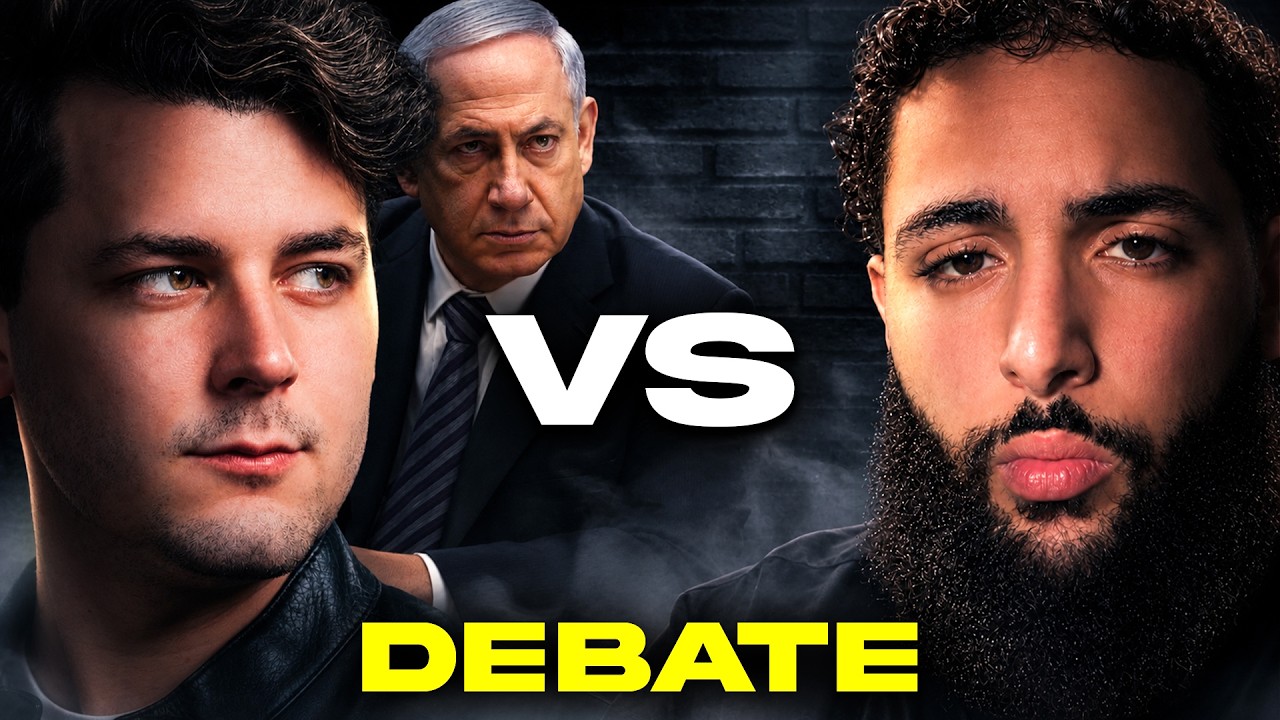
Mike Jones (Inspiring Philosophy) and the Orthodox Muslim debate whether Prophet Muhammad is foretold in the Bible, focusing on Daniel 2, Matthew's fulfillment citations, and Old Testament prophecies.
Key Takeaways
- The debate hinges on methodology: literal fulfillment versus typological interpretation of Old Testament texts.
- Daniel 2's kingdom sequence and the end date of Rome are the central disputed prophetic evidence.
- Both sides dispute the reliability and interpretation of Matthew's Old Testament citations.
- Cross-examination exposed unresolved questions about how prophecy is verified and by what criteria.
What the video covers
- Debate format: 15-minute openings, 5-minute rebuttals, 30-minute cross-examination each side, and 5-minute closings, followed by audience Q&A.
- Topic: whether the Prophet Muhammad is prophesied in the Bible; Mike Jones argues negative, the Orthodox Muslim argues affirmative.
- The Orthodox Muslim opens by criticizing Christian typological readings and Matthew's use of Hosea 11:1 and similar Old Testament citations.
- Discussion of Matthew's 'out of Egypt' and Nazarene arguments, with claims that Matthew cites partial verses and that the text may be corrupted.
- Core case: the Orthodox Muslim argues Daniel 2's statue and fourth kingdom point to Islam as the successor superpower after Rome.
- Debate centers on when the Roman Empire ended, with dates such as 1204 and 1453 raised as arguments.
- Cross-examination probes definitions of prophecy, interpretive methodology, and whether typological reading is objective.
- Topics also include the Quran's claims about the crucifixion (Surah 4:157) and Surah 6:16, which the Orthodox Muslim says were not defended.
- Mike Jones repeatedly raises time-limit and fairness objections, and the moderation/fairness of the platform is also discussed.
- The debate ends with the participants disputing whether external verification of prophecy is possible without interpretation.
Chapters
- 00:00Introductions and debate format
- 00:40Orthodox Muslim opening: Matthew's citations
- 08:00Daniel 2 and the statue vision
- 17:20Debate over the end of Rome (1204 vs 1453)
- 26:40Cross-examination: methodology and prophecy criteria
- 40:00Crucifixion, Quran verses, and rebuttals
- 53:20Closing remarks and audience Q&A
Full Transcript — Download SRT & Markdown
Speaker A
Yeah, I'm Mike Jones. I run Inspiring Philosophy, a Christian apologetic channel. I make a lot of videos defending the Bible. That's about it. I don't know what else you want from me.
Speaker A
All right. All right. Quick and fast, man. I didn't even get a chance to put your overlay up. All right. So, uh, Orthodox Muslim, you got the floor, man.
Speaker A
All right. All right. Quick and fast, man. I didn't even get a chance to put your overlay up. All right. So, uh, Orthodox Muslim, you got the floor, man.
Speaker A
and yeah, been waiting 6 months for this debate, which should have took two weeks to really prepare, but 6 months later, we're here. Excited. Let's just get right into it.
Speaker A
My name is the Orthodox Muslim. That's what I go by online. Others know me as Liiano. Um, I love making videos. Um, my channel is mainly about refuting Christianity, why Islam is superior in every way that you could imagine. Um,
Speaker A
believe, seven minute, did we say? Seven minute openings. Uh, five minute five-minute rebuttals, sorry. 15-minute openings, five minute rebuttals. And we're going to have 30-minute cross-examination where both of you will get 15 minutes each to ask questions.
Speaker A
and yeah, been waiting 6 months for this debate, which should have took two weeks to really prepare, but 6 months later, we're here. Excited. Let's just get right into it.
Speaker A
Sounds perfect. Do you want me to share my screen now? Yep. You can go ahead and share your screen. Uh, awesome.
Speaker A
All right. Yeah, let's get right into it, man. And so, all right. Today's topic is: is Muhammad in the Bible? Mike Jones is arguing negative. Orthodox Muslim argues affirmative. And we'll start that with 15-minute opening statements. And that's followed by, I
Speaker A
maybe I could uh, be a future guest on your platform once again. If we could uh, make sure that happens, that'd be great. I'll just go ahead and share my screen.
Speaker A
believe, seven-minute, did we say? Seven-minute openings. Uh, five-minute, five-minute rebuttals, sorry. 15-minute openings, five-minute rebuttals. And we're going to have a 30-minute cross-examination where both of you will get 15 minutes each to ask questions.
Speaker A
this little chime. That let you know you have one minute left in your opening, your rebuttal, and your closing. Um, so with that said, uh, I will start your 15-minute timer as soon as you begin to speak.
Speaker A
And then that's going to be followed with a 30-minute open dialogue. And then we're going to have five-minute closings. And then we have a 30-minute Q&A from the audience. Sounds good.
Speaker A
that my interlocutor today that's been away for 6 months somewhere thinks are good sufficient prophecies to establish prophethood and messiahship. Now please if you are watching, if you are a Christian, I want you to listen to me. I
Speaker A
Sounds perfect. Do you want me to share my screen now? Yep. You can go ahead and share your screen. Uh, awesome.
Speaker A
against the typological flimsy garbage that IP is going to bring today. So let's give an examp couple examples in the gospel of Matthew. So Matthew um this gospel specifically points out a lot of prophecies um in the Old
Speaker A
Actually, just before we start, uh, I just want to make sure that your moderators on YouTube are not just modding, you know, blocking Muslims out and stuff like that. I'd like this to be respectful and fair. So,
Speaker A
was a child, I loved him and out of Egypt I called my son. But the more they went away from me, the more they sacrificed to idols and sacrifice and worship the boughels." Now, as you see, this is not a prophecy. Has nothing to
Speaker A
maybe I could uh, be a future guest on your platform once again. If we could uh, make sure that happens, that'd be great. I'll just go ahead and share my screen.
Speaker A
But guess what? What does Matthew do? He takes half of the verse, not even the full verse, ladies and gentlemen, half of the verse, and says, "Out of Egypt, I called my son. This is fulfilled by Jesus." Wow, man. What a flimsy pro.
Speaker A
For sure. What's fascinating is I don't see none of my mods in there. I don't see none of them, man. So, uh, all right. Uh, also keep in mind when you have one minute left, you hear
Speaker A
friend. You might as well take your sh today. And he does this over and over again with the young woman will give birth to a son from Isaiah. Twisting passages, taking them out of its context. Bethlehem out of you a ruler
Speaker A
this little chime. That lets you know you have one minute left in your opening, your rebuttal, and your closing. Um, so with that said, uh, I will start your 15-minute timer as soon as you begin to speak.
Speaker A
Ladies and gentlemen, Matthew 26, Rachel weeps for her children. This is Jeremiah saying that the ancestral mother of Israel is weeping because the Israelites are being oppressed by the Babylonians.
Speaker A
All right. Uh, today's debate is about: is the prophet Muhammad, peace be upon him, prophesied in the Bible? That's a big, fat yes. And uh, just before I get started right into the prophecies, I want to show the Christian criteria for messianic prophecies. Prophecies
Speaker A
before we get into the prophecies. Matthew in 2:23 says that Jesus grew up in Nazareth to fulfill the prophecy that was spoken by the prophets. Out of Egypt I called or not out of Egypt but that the Messiah will be called the Nazarene.
Speaker A
that my interlocutor today, who's been away for 6 months somewhere, thinks are good, sufficient prophecies to establish prophethood and messiahship. Now, please, if you are watching, if you are a Christian, I want you to listen to me. I
Speaker A
made 15 years ago? because he's doing this for 15 years and he's still trash.
Speaker A
want you to look at the evidence. Okay? I know you call me "duck lips" and "lesbiano," and you don't like me because maybe I'm not too nice to your religion sometimes, but really pay attention to the evidence that I provide today, and
Speaker A
way of saying I hate you." Oh my god. Wow, man. Wow. What an amazing pro.
Speaker A
weigh it against the typological, flimsy garbage that IP is going to bring today. So let's give a couple of examples. In the Gospel of Matthew, this gospel specifically points out a lot of prophecies in the Old
Speaker A
root of Jesse a branch. So because the word sounds similar or maybe has a similar or the same root, it must be Jesus. Wow. Guys, similar guys, remember this similar word means prophecy. Wow.
Speaker A
Testament. One of them, in Matthew 2:15, he quotes Hosea 11:1. Well, what happens in Hosea 11:1? God recalls his favor upon the Israelites by calling them out of Egypt and saving them from the Exodus. He says, "When Israel
Speaker A
It's corrupted, guys. Wow. Oh, the Bible's corrupted. That's why Nazarene is not there. Wow. They want to accuse us of, you know, and mock us for saying the Bible's corrupted. But saying John Christosum says, "Well, Matthew was quoting a verse. The Jews corrupted it.
Speaker A
was a child, I loved him, and out of Egypt I called my son. But the more they went away from me, the more they sacrificed to idols and burned incense to the Baals." Now, as you see, this is not a prophecy. It has nothing to
Speaker A
you could see here, Gaya Verm, she says that there is no evidence that Nazarene and Natsar have to do anything with each other. Okay? So, you could read that.
Speaker A
do with Jesus. It has nothing to do with a 500-year-later dying, rising savior, a mythological man, a God who dies on a stick, who goes to Egypt, running away from Herod. It has nothing to do with that.
Speaker A
and open up your heart and your mind, just look at the evidence. And for Muslims, I promise you, you will get goosebumps listening to me. You will get goosebumps listening to me. and your hairs on your arms will stand up. Let's
Speaker A
But guess what? What does Matthew do? He takes half of the verse, not even the full verse, ladies and gentlemen, half of the verse, and says, "Out of Egypt I called my son, this is fulfilled by Jesus." Wow, man. What a flimsy proof.
Speaker A
kingdom will come after the Roman Empire and will subjugate Rome. Now, let's get into Daniel 2:7. And I know he probably expects me to talk about this, but there's no way out of this. Featuring King Silv, the statue. So, what is uh
Speaker A
This is what they call a prophecy. I'm not going to take too long. I just want to show the hypocrisy being found. If this is sufficient to be a prophecy, then I don't know what to tell you, my
Speaker A
sees a statue made of five different elements. Each body part is an element. Then he sees a stone not cut with human hands come and destroy the statue. And so, King Nebuchadnezzar wants this dream interpreted. So, who does it? Daniel.
Speaker A
friend. You might as well take your, uh, stuff today. And he does this over and over again: the young woman will give birth to a son, from Isaiah, twisting passages, taking them out of context. Bethlehem, out of you a ruler
Speaker A
and Rome. These are the four kingdoms that come one after the other, destroy each other and succeed one uh uh one another as world empires. And Daniel tells us the second kingdom and the third kingdom explicitly in Daniel 8.
Speaker A
over Israel, Micah 5:2. This ruler is supposed to subdue the Assyrians, be a king over Israel. What did Jesus do? He died on a stick. He died on a stick.
Speaker A
it. Look at it. I want you to see a lot of people are visual learners. Please please pay attention to what I'm saying.
Speaker A
Ladies and gentlemen, Matthew 2:18, Rachel weeps for her children. This is Jeremiah saying that the ancestral mother of Israel is weeping because the Israelites are being oppressed by the Babylonians.
Speaker A
Mes and the Persians. Now who is the fourth kingdom? What is the fourth beast? It is the Roman Empire. And this is the Roman Empire at its greatest extent. Look at that. It's more than triple if not quadruple the size of
Speaker A
But guess what? Matthew somehow puts it about a dying, rising God. Can you guys believe it, ladies and gents? So this is the amount, this is what they consider to be sufficient prophecy. All right. Now I want to focus on one more
Speaker A
the words of Daniel not my words. Forget Liano. Look at what Daniel says. THE FIFTH KINGDOM WILL CRUSH ROME. It will be instituted by God himself and will spread. It will become a mountain and fill the whole earth. Now ladies and
Speaker A
before we get into the prophecies. Matthew 2:23 says that Jesus grew up in Nazareth to fulfill the prophecy spoken by the prophets: that the Messiah will be called the Nazarene. Wow, man, that must be fantastic. There must be a prophecy in the Old Testament that the prophets spoke that he will be called the Nazarene. Wrong. There isn't. So how does IP deal with this in a video he
Speaker A
Take a look, ladies and gentlemen. Tell me if this is typological. Tell me if this is flimsy. Tell me if this is taking things out of context. Look at the mighty empire of Ishmael. Look at the mighty empire of Ishmamail. Let's
Speaker A
made 15 years ago? Because he's been doing this for 15 years and he's still trash.
Speaker A
That's two years before the prophet dies. This is Persia 6:30. Two years before the prophet dies. They are world empires that crush everything in front of them. Just like the prophet Daniel says, look at how big Rome is. Look at
Speaker A
All right. What does he say? He says, "Well, maybe Matthew's quoting an oral tradition that doesn't exist." Oh, guess what? That's, it sounds like a magical oral tradition, a magical Torah. He says, "Option two, Nazarene is like another
Speaker A
What happens seven years later? Please tell me what happens seven years later. Here comes the stone that out of nowhere comes destroys these empires and becomes a world empire and subjugates everybody.
Speaker A
way of saying 'I hate you.'" Oh my god. Wow, man. Wow. What an amazing proof.
Speaker A
Persia back to the lobby. Persia is a race. There's no more Persia. The kingdom of Ishmamail comes in a span of 70 years. The Muslims control more land in 70 years than the Roman Empire did.
Speaker A
Nazarene is another way of saying "I hate you." And the third one, which he seems to take himself, is: well, Nazarene sounds similar to branch, which is netzer in Hebrew. And in Isaiah, Isaiah calls the Messiah that comes from the
Speaker A
Guys, don't listen to Liiano. Look at what the Christians are saying in the letters of Ishu Yab III dated to the year 650 an eastern Christian ecclesiastical authority. What does he say describing Islam? For also these Arabs to whom at this time GOD HAS GIVEN
Speaker A
root of Jesse a branch. So because the word sounds similar or maybe has a similar or the same root, it must be Jesus. Wow. Guys, similar, guys, remember this: similar word means prophecy. Wow.
Speaker A
No, we're not done. In the Kustan chronicle, which is also a Syriak Christian chronicle from the year 650 AD, what does this Christian say? The God then God brought up against them the sons of Ishmael who were as numerous as
Speaker A
Now let's see what St. John Chrysostom, the golden mouth of commentary, says. Oh, the Jews ripped it up. They corrupted it.
Speaker A
in paragraph 35, "And at the aforementioned time when the Arabs had conquered all the lands of the Persians and the Romans, just like Daniel had foretold few a few hundred years before." Wow.
Speaker A
It's corrupted, guys. Wow. Oh, the Bible's corrupted. That's why Nazarene is not there. Wow. They want to accuse us of, you know, mock us for saying the Bible's corrupted. But saying John Chrysostom says, "Well, Matthew was quoting a verse. The Jews corrupted it.
Speaker A
spiritualizing anything? Am I telling you it's typology? Am I telling you the Holy Spirit is tickling me? I am g I'm just reading for God's sake. I'm just reading historical attestation. Who subjugated Rome? The kingdom of Ishmael subjugated Rome. There is no doubt about
Speaker A
The evil Jews cut it up in pieces and burned." Anyways, I'm not going to spend too much time, but just to show you the hypocrisy, guys, because I'm going to bury him today. Anyways, what does scholarship say? Scholarship says, as
Speaker A
destroys unexplainably destroys the whole statue. The rise of Islam is perhaps the most amazing event in human history. Springing from a land and a people alike previously negligible.
Speaker A
you could see here, Gaya Verm, she says that there is no evidence that Nazarene and netzer have anything to do with each other. Okay? So, you could read that.
Speaker A
extraordinary does it appear. The other great religions won their way slowly by painful struggle and finally triumphed with the aid of powerful monarchs converted to the new faith. Christianity had its Constantine. Buddhism had its ASOS. Zoroastrianism had its Cyrus. Each
Speaker A
I'm not going to spend time reading it. So, as you can see, flimsy, typological, out-of-context garbage. I will present real prophecies, real contextual fulfillment, meaningful, and without any typology. And trust me, if you are a Christian and you just hear what I say
Speaker A
the heaviest of material odds. Yet Islam triumphed with a seemingly miraculous ease. That's the ladies and gentlemen.
Speaker A
and open up your heart and your mind, just look at the evidence. And for Muslims, I promise you, you will get goosebumps listening to me. You will get goosebumps listening to me, and the hairs on your arms will stand up. Let's
Speaker A
Let's keep going. The next prophecy will be the kingdom of God in the parables of the banquet and the tenants from Matthew 21 and Matthew 22. I'll just sum it up quickly. Matthew 22, Jesus compares the kingdom of God to a man, a king who
Speaker A
get right into it. Okay, I will demonstrate that there's a prophet who comes after 70 AD. He will come to save the Jews from the Roman exile. He will spread universal recognition of the true God, monotheism, and his
Speaker A
servants to those who had been invited, telling them, "Come to the to the kingdom of God. Come to the kingdom of God." But they reject, they deny, they kill God's prophets. They mistreat God prophets. So what does God do?
Speaker A
kingdom will come after the Roman Empire and will subjugate Rome. Now
Speaker A
He sent his army, destroyed those murderers, and burnt down their city. I have one more minute. Right.
Speaker A
Okay. I guess that's a yes. So anyways, this happens after 70 AD. Why? Because according to the consensus of traditional critical scholars, when God executes punishment in 70 AD and then the invitation to the Gentiles happens after 70 AD. So this is the timeline.
Speaker A
I'm not going to go through it, but this is summing up everything I said. Am I cherrypicking? No, I'm not cherry-picking because when it comes to historical reports, they can't be accepted without any reason without any reasonable grounds. I accept this
Speaker A
parable because it's independently attested and it meets the criteria of dissimilarity which are two criterias of authenticity. Therefore, I'm locally justified in accepting this parable and nothing else. Then we have Psalm 74 which describes the Roman exile and God
Speaker A
coming to save the Jews from the Roman exile which Malachi 3 and Isaiah 40 also say that God will send a message of the covenant to save the Jews from the Roman exile. Guess who the Muslims Moshe Gil
Speaker A
respond says in his book the history of Palestine that the 10th century Jewish kerite rabbi Salmane says all right that's time right there real quick can I read that's time expired sorry about that time's expired all right thank you thank
Speaker A
you uh Mike you're up for your 15-minute opening statement and I will start your time as soon as you begin to speak I got to put slides up okay Yeah. Go to there's uh at the bottom of the screen you see icons
Speaker A
there. There's a computer base. There you go. You already got it. There we go.
Speaker A
Before I say anything. All right. If you want to put in presentation mode, it may be bigger so people can see a lot better. But yeah, I gota it it kind of could get weird. So, I'm just going to stick with
Speaker A
this. So, we should be okay. All right. So, let me know when you're ready.
Speaker A
Start. I'm ready. I'll start your time as soon as you begin to speak. All right. Thank you, Marlin. I have a short opening statement and then I'm going to use the rest of my time as a rebuttal. Uh to be clear, I'm not
Speaker A
defending Christianity today because remember that's not the debate topic my opponent wanted. Thought he spent over five minutes not even on the topic.
Speaker A
Christianity could be false for the purposes of this debate and that wouldn't make Islam true. So he needs to defend the claim Muhammad is in the Bible regardless of the true status of Christianity. I hope he can stay on
Speaker A
topic unlike what he did in for a third of his opening statement. For those confused as why Muslims are desperate to find their profit in books they claim are corrupted. Let me explain. Surah 7 says that they can find the description
Speaker A
of Muhammad in the Torah in the Gospel. And surah 61 says Jesus spoke of a messenger after him whose name will be Akmmed. So the Quran says Muslims can find prophecies of their Muhammad in the Torah and Gospel, which means they can't
Speaker A
look at this without blatant Islamic bias. They need him to be in there because the Quran says he is in there.
Speaker A
But in this debate, we can't start with the Quran, assume it's true, and then force biblical data to fit Islamic conclusions. We need to use biblical texts alone and see if they actually predict an important prophet after Jesus
Speaker A
who will deliver divine revelations. So if they cannot find the description of their prophet in our Bible, then we must conclude Islam is false. Liiano did not actually present any of that.
Speaker A
Surprisingly, he relied on very few passages and so he did not show Jesus speaking of someone named Akmed and he did not show a description of Muhammad in the Torah or the Gospel. But I want to point out that even if my opponent is
Speaker A
successful, he will only end up showing Islam as practiced by Muslims today is false. Because by using our book as their authority to prove Islam is true, you create a dilemma I'm calling the biblical prophet dilemma. Either Muhammad is in our scriptures or he is
Speaker A
not. The first horn is pretty simple. Surah 7 and 61 say we can find a description of him in our Torah and gospel. We cannot find him in there, then Islam is false. And so far, we've not seen anything like that. But if we
Speaker A
find predictions of some future prophet in there, then that means our scriptures accurately predict the the future are divine revelations from God. But they teach a completely different theology and contradictory history to what we find in the Quran. It is important to
Speaker A
remember biblical biblical descriptions are not neutral. If they are found in the biblical text, they are theologically indexed and cannot be divorced from their context or theology.
Speaker A
So unless the Bible were incredibly specific and says a future prophet will come to fix our corrupted scriptures, Muslims cannot use this argument because they're relying on a book that predicts a prophet in line with what the Bible
Speaker A
teaches. For example, the Bible says Jesus was crucified, resurrected to atone for sins. The Quran says Jesus wasn't crucified and didn't teach atonement. The Bible says Jesus is fully God. The Quran says he was a mere prophet. Bible says the covenant will
Speaker A
come through Isaac and not through Ishmael at all. And there are many other differences. But if the Bible is divine revelation from God and accurately predicts the coming of another prophet, then he either hasn't come yet and that
Speaker A
first one was a satanic impostor or the prophet did come as he really was Muhammad. But the Quran as we have it today must have been thoroughly corrupted by Muslims after his death so that it no longer matches the prior
Speaker A
scriptures because again the biblical texts for this debate are establishes our authority with accurate prophecies from God. But there's no getting around the fact that they completely contradict the Quran in multiple ways. So either way, Islam is false. If my opponent is
Speaker A
successful in showing the Bible does predict a future prophet, that that will just mean Islam is false. Now, I expect he will try to say the Bible's been corrupted like his main source does. Uh but he will still but we can still find
Speaker A
accurate prophecies of Muhammad in there. Uh just in the non-corrupted parts. What this doesn't work because we just need to ask how do we know which parts are corrupted and which have not been. Uh he'll have to say it's the
Speaker A
parts that just so happen to agree with Islam. But that will be arguing in a circle. Islam is true. So we can use the Quran to know which parts of the Bible are accurate and those parts include predictions of Muhammad and we use those
Speaker A
to show Islam is true. This is obviously circular. It is facious and so it doesn't establish the truth of Islam. So I expect my opponent will complain about this about me pointing out his argument is circular. But the reality is if he
Speaker A
tries this he would be admitting defeat. He may also try to avoid this by bringing up John Chrism or Justin Martyr like he kind of did claiming they're doing something similar which is false.
Speaker A
they're actually doing the exact opposite of what he is doing. But either way, that would be a two coke fallacy.
Speaker A
Uh he may try to bring up passages like Jude 1, which may quote the book of Enoch, but that won't be a valid comparison because Jude quoting Enoch does not entail that Jude believed Enoch was scripture. He quoted it to teach
Speaker A
Christians to persevere in the faith. There is nothing wrong with quoting another work for teaching purposes only.
Speaker A
Jude is only doing that and he's not using it to establish the truth of his worldview. Whereas my opponent is trying to use the Bible to establish the truth of his religion, which he cannot do if the Bible contradicts his religion.
Speaker A
Again, the biblical prophecies are theologically indexed. You cannot divorce them from their context by using the Quran as your criterion because that would be assuming the truth of the Quran to prove the truth of the Quran. Muslims should understand where I'm coming from
Speaker A
because they reject Misum Gulam Ahmed who claimed that Muhammad predicted his coming. But they're not going to just go on his mere claims in his citations of Quran verses and hadith that that he used to support himself. Muslims rightly
Speaker A
bring up that his claims contradict their theology and that you can't cherrypick the Quran and use the works of Mir Gulam Akmed to interpret them, which is the same thing I'm pointing out today. Again, if my opponent wants to
Speaker A
argue for the truth of Islam from the Bible, he can only you use the Bible and its prophecies, but those are theologically indexed. So there's only two options now. future prophet is in there or he is not. If he's not in
Speaker A
there, then Islam is false. But if it does predict the coming of another prophet, then Islam must be false. That real prophet has not come yet or he did and it was a trinitary trinitarian Christians that early Muslims corrupted,
Speaker A
which hypothetically would kind of make sense because the Quran claims to confirm the prior scriptures, but that's a topic for another time. So no matter what he presents here today, we must conclude Islam is false. He is in a
Speaker A
no-win situation. In fact, the rest of what we do is now trivial because of this dilemma. But regardless of this fact, what I'm going to do now with the rest of my time is at least show why it's absolute nonsense to suggest that
Speaker A
Muhammad is in the Bible. Uh so let's start with some basics here. Uh the two passages he used was Daniel 2 and Matthew uh parables in Matthew 2122.
Speaker A
Let's start with Daniel here. Okay. So scholars are actually divided on how to interpret Daniel 2. Uh most scholars say that this uh most modern scholars say the statue is Babylon, the Mes, the Persians, and then Greece. and others
Speaker A
more traditional say Babylon, Meo, Persia, Greece and Rome. So that needs to be addressed as well. It's actually fine for Christians regardless of what either one we take. Uh Daniel uh let's talk a little bit about this for he
Speaker A
claimed that uh Islam ended the Roman Empire, but he didn't actually justify that. Uh Ro all he said was that Rome all he said was around 700 AD, but Rome last outlasted that. I suspect he's going to come back and he's going to
Speaker A
say, "Yeah, but the Ottomans came in and ended the Roman Empire in 1453." Well, he needs to actually justify that. I'm going to challenge him on that. I'm not convinced of that. Actually, he needs to define what he means by the Roman Empire
Speaker A
and what metric he is using to determine the end of the Roman Empire. So, what ended in 1453 or 700 as we saw on the screen that shows it's the end of the Roman Empire because it definitely outlasted 700. Uh, and I will argue that
Speaker A
no matter what metric he uses, he'll accidentally admit the Roman Empire ended before 1453 or after and by another group. So, he needs to actually defend that claim, not me. Uh, let's talk a little bit about what Daniel
Speaker A
says. So, Daniel actually says, "This kingdom, the stone thrown from heaven is supposed to last forever." He using the Hebrew word olam.
Speaker A
Now, in past debates, Liiano has said, well, he can just refer to long periods of time. But let's talk a little bit about what the word alam means. It doesn't mean eternity or forever despite the way it's often translated. Scholars
Speaker A
like Satcha Stern have pointed out the actual meaning of the word is permanent. It means permanent which makes sense because when you'll see it used in for example the Torah it'll say that there are certain things like the Levitical
Speaker A
priest had to do ulam forever. But really just means permanent. There are permanent stipulations of the Mosaic covenant. Uh sometimes punishments are doled out like in Jeremiah and there are permanent aspects of that of that punishment for example. So that's what
Speaker A
it means. It means a permanent kingdom and context helps us determine how it's used. Well in Daniel 2 it's completely unstipulated. It's just a permanent kingdom which suggests it's supposed to last forever. He might may appeal to the
Speaker A
magi referring to King Nebuchadnezzar saying oh king live forever. But they're not a reliable source. These are the bad these are like the bad guys of the story. So we don't go to them uh to better interpret Daniel. So that's also
Speaker A
important. Uh he also needs to justify that the stone is just another earthly kingdom. Uh so for example, John Walton and Audrey Buster uh say in their uh recent commentary on Daniel as scholars identify the text represents a
Speaker A
conundrum. If each successive kingdom has replaced the previous kingdom, how can the kingdom of God destroy them all?
Speaker A
Furthermore, what does each successive kingdom why does not each why does each successive kingdom not destroy the preceding layer? See, the statue already sets up the context of earthly kingdoms destroying each other represented by a new layer. But the stat the stone is
Speaker A
doing something entirely different. It's not like the earthly kingdoms. It's entirely different and it's uh so yeah that that needs to be addressed as well.
Speaker A
Uh for example, Eugene Carpenter in the cornerstone biblical commentary says, "This kingdom and its related world systems contains the seat of its own demise. A blow to the feet of the image would place the entire structure in danger. The huge image collapsed not
Speaker A
only by the blow to its feet, but because it ultimately had no solid foundation upon which to rest. It produced division within itself, its own foundation succumb, crumbling, collapsed. Attempts within the world system to create unity fail. It is
Speaker A
destined for certain annihilation. It is no accident that the image was attacked at the feet and not its head." In other words, he is pointing out that the stone is destroying the entire system of empires coming and destroying each
Speaker A
other. Uh John Walton and Aud and Aubrey Bustb Buster point this out as well in their commentary on Daniel. So it's not going to be just another earthly kingdom. If that was the case, it would just set up another layer in the statue.
Speaker A
This is something entirely different, which is why commentators have noted it better make sense as a spiritual kingdom, not an earthly kingdom. And it needs to last forever. uh the Islamic caliphate did not last forever.
Speaker A
Therefore, it cannot fulfill that. Uh also uh he says that the stone is he's going to try to say the stone has to come after the division. Doesn't actually say it has to come after the division. Uh that needs to be pointed
Speaker A
out as well. So um uh Audrey Bust Buster and John Walton point out that it's actually using the word plural there for kings and it could refer to any of the kings that come after Nebuchadnezzar. So that's important as well. Now I also
Speaker A
brought up Matthew uh these parables. Uh let let's be clear about these parables in Matthew. Uh they're not saying what he seems to be think what he thinks they're saying. Uh parables are just approximations. For example, later in
Speaker A
Matthew, Jesus gives a parable of himself and he says it's like a king going on a long journey. Uh he didn't actually go on a long journey. So these are approximations. Now this is about Islam. We have we have a problem. He's
Speaker A
having a he has a hyperliteral reading of these parables. Okay, if we're going to have a hyperlit reading of these parables, they say that God only sent prophets twice prior to the coming of the son and air twice. Now, that
Speaker A
contradicts uh the Islamic history because prophets were sent multiple times. So, if we have to take this strictly hyperliteral the chronology of it, he it would not fit with Islam at that. And remember, parables are approximations. We don't have to agree
Speaker A
uh the chronology has to be literally unfolding this way. And plus, it speaks as the invite to the Gentiles happening right after the destruction of Jerusalem, not 600 years later. Also, God didn't send his army to destroy Jerusalem. He allowed Rome to destroy
Speaker A
it. So, unless he wants to say the Roman army was God's army, that's not going to work as well with his hyper literal reading. So, that needs to be kept in mind as well. Uh, what else did he say?
Speaker A
He brought up the criterion of dissimilarity to help support that. That's great. But if you're going to use parables or excuse me, if you're going to use um crit uh criteria like that, uh okay, well then historians are going to
Speaker A
know the most likely thing that happened is was that Jesus was crucified and died. Uh that that fits all of the historical criteria in terms of what's going on there. Uh so if we're going to use historical criteria, great. But
Speaker A
you're going to have to accept basic Christian doctrines like the idea that Jesus was crucified and died, which I don't think he's going to be willing to do. So we can't pick and choose when historical criteria like the criterion
Speaker A
of dissimilarity apply. That's not going to work. So as I said, uh he didn't really mention much else beyond that. He cited Christians and authors at the time of the Arab conquest. Uh irrelevant.
Speaker A
We're talking about Muhammad and the Bible and so far we've not seen surah 757 or surah 616 met. Uh therefore I guess Islam is just not making or the Quran is not making an accurate uh claim there. uh when it says that Muhammad is
Speaker A
in there and we can find his description. Uh so we need to see actual evidence for that. It's a shame he wasted a third of his opening statement not actually presenting that. Uh but yeah, I mean so far we've seen no
Speaker A
evidence. And by the way, the the parables in Matthew and Daniel don't mention a future prophet. So he he's inserting that in there. I thought this was about Muhammad in the Bible. Uh but we do need to get more into what's going
Speaker A
on in Daniel 2 because again I need to know what metric he is using to determine the end of the Roman Empire.
Speaker A
Uh was there a line of kings that ended or is there no more Caesars of Rome reigning in Constantinople? What do what are you using to define the end of the Roman Empire and how do you know that it
Speaker A
was Muslims that ended it? Uh there's a lot of historical problems there we're going to have to get into. He also brought up Assad, but he didn't have much time to go over that. So I will let him try to defend that later. Uh it's
Speaker A
also important to remember two final things. Liiano needs to present a clear methodology for what he's doing. He needs to explain every part of each passage he is using to predict Muhammad.
Speaker A
And he cannot arbitrarily say something is metaphorical or literal like he's done in the past. Okay? So we need to know what is going on, why Islam literally fulfills these things. Uh second, he needs to demonstrate why any
Speaker A
of his interpretations are more than merely possible readings. they need to be shown to be there the most probable.
Speaker A
Uh and he has not done that thus far. So, um yeah, I'll yield the rest of my time. Uh let's I'd like to hear what he has to say in his rebuttal and then we can get into the cross- examination.
Speaker A
All right. All right. Thank you so much for the for the opening statement, guys.
Speaker A
All right. So, we are transitioning to our rebuttal rounds and our rebuttal rounds are five minute rebuttals. And so, uh so, Liviano, I will start your five minute time. Let me set this thing.
Speaker A
Make sure it's right here. All right, I will start your five minute timer as soon as you begin to speak.
Speaker A
I think you might be muted. Sorry about that. So instead of getting an opening D or an opening section, I got a bunch of voice cracks and no evidence and just yapping about nothing basically. All right. So, the fir I'm
Speaker A
going to respond to everything he said and I cannot wait till we get to the cross exam where I bury you and your false god. So, check this out. He runs away from Christianity. He says, "Well, I'm not here to defend Christianity, so
Speaker A
I'm going to be a goofy liberal secular just so you don't prove that me as a Christian, you're going to dominate me because your Islamic interpretation is more likely from the text." Thank you very much. You're a goofball, man. Uh he
Speaker A
says, "Didn't show Muhammad. He didn't say that Jesus said Ahmed will come. Well, wait until the cross exam where I'm going to make you stutter. Okay, you just wait. But that's not the debate topic. Remember, as long as I show the
Speaker A
prophet Muhammad in the Bible, I don't need to show anything else. So, you appealing to specific instances where I'm supposed to show that Jesus spoke about Muhammad. That's not a debate topic. You can accept that debate topic with Dean so he could further crucify
Speaker A
you after I do. Then he says, "Oh, the dilemma. Every day you come up with a dilemma, but you you're it's it's nothing. You're just speaking, man.
Speaker A
You're just here. you're just participating. So he says, uh, either he's there and Islam is false or either he's not there and Islam is false. Well, why? Because if he's there, then our scripture is divinely revealed. Holy fat
Speaker A
nonsequittor. Please give me the inference for that, the formal argument for that. And this time, give me an inference rule. You're supposed to have a master's degree in philosophy, yet you don't know what an inference rule is.
Speaker A
Don't think we forgot about that. So please tell me how that follows fat nonsequiter. Thank you very much. Um, then he says, "Yaps about Quran confirming the Bible. Uh, I didn't know we're talking about the Islamic dilemma today, but I'm more than happy to belt
Speaker A
you on the Islamic dilemma. Just let me know, man. If you want to use your time in the crosses, I'm talking about Islamic dilemma. Let me know." Then he says, "Oh, IN THE BIBLE, THE COVENANT WILL COME FROM JACOB." NO, IT DOESN'T.
Speaker A
Genesis 17 gives two covenants. One specifically for Isaac and one universal covenant under Abraham. John the Baptist says in the beginning of Matthew that if the Jews keep disobeying, keep killing the prophets. God raise up other children of Abraham from these very
Speaker A
stones. Thank you very much. And there's also covenantal shift. According to the early Christians, they say it's the church that replaced uh replaced Israelites promises. We say that it's the children of uh children of Ishmael who replaced the covenant as Jesus
Speaker A
himself in Matthew 21 says. Thank you very much. He says, "Well, how do we know which parts are corrupted?" That's actually a decent question. I'm going to answer you that. Well, Lebaniano, you're quoting this prophecy and that prophecy.
Speaker A
But how are you justified in saying this is not corrupted and this is not? Well, very good question. I'll tell you how I'm justified because I have reason to think that this is externally verifiable through supernatural fulfillment.
Speaker A
Therefore, I am locally justified in thinking that this goes back to a prophet that this tradition has divine revelation. But I am not justified in taking everything in the Bible because not everything is externally verifiable.
Speaker A
A prophecy because it is divine in its origin, in its very nature can be externally verifiable. So if I could verify a fulfillment that corroborates historical events, therefore I am locally justified. Thank you very much.
Speaker A
You're buried. Uh what else he Oh yeah, by the way, he says, "Oh, well Enoch quoting it doesn't mean Enoch thinks it's scripture." Hey buddy, ENOCH SAYS IT'S A PROPHECY. Did you forget that one? Enoch says that this is a or sorry
Speaker A
Jude says THIS IS A PROPHECY FROM ENOCH and he doesn't say it's from the book attributed to Enoch. The book of Enoch he says that Enoch the seventh from Adam says so he attributes it to Enoch. Thank you very much you're destroyed. Then he
Speaker A
says, "Oh, Maham Ahmed, Punjabi Jesus." Hey well Ahmed, he confirmed that the Quran is preserved and the Sunnah is preserved.
Speaker A
This is uh not uh analogous. There's a cemetery breaker. Why? Because I don't affirm that your Bible is preserved. And I could demonstrate that from the Quran if you let me. I'm not going to have time to respond to everything,
Speaker A
unfortunately. He Whatever, man. I'll just go. Um, oh, he wants to take a liberal uh scholarly interpretation of Daniel. I'm going to crucify him on that when I have the time. He says, "Can you guys believe he said Islam didn't end
Speaker A
Rome?" Ladies and gentlemen, just just quit. This guy is so desperate that he wants to Oh, I'M NOT CONVINCED that Islam ended Rome. The Christians are embarrassed.
Speaker A
Embarrassed. The This guy wants to say Islam didn't end Rome, ladies and gents. Wow. I can't wait to talk about that, man. Well, how do you how did Rome end? How do you determine that he wants to be a sophist
Speaker A
today? Okay, just wait until the cross exam and watch what I do to you. He says that uh the he the Hebrew in Daniel uh is am. It's not in Hebrew, stupid. It's in Aramaic. Get your You see, this guy
Speaker A
DOESN'T EVEN KNOW THE TEXT. HE DOESN'T EVEN KNOW THAT Daniel the portion we're speaking about is in Aramaic. It's notam.
Speaker A
Okay, that's right there. I get to you next time, man. Yeah. Thank you so much for that. All right.
Speaker A
Uh IP Mike Jones, you're in the seat again for your fivem minute rebuttal. And as before, I will real quick. It's uh Did you I'm just seeing my slides. Should you Have you taken them down?
Speaker A
No, you should be able to take them down. I thought I did. It's just There you go.
Speaker A
Oh, there we go. Perfect. There you go. All right. So, I'll start the time as soon as you begin to speak.
Speaker A
All right. Thank you for that. Okay, so uh he said I gave no evidence. Again, he's the one who has the positive claim here. He needs to present evidence. And again, he still has not shown how surah 7157 or 616 is correct. So I guess we
Speaker A
conclude Islam is false. He says, "I ran away from Christianity." Bro, this is the topic you wanted. Debate the topic.
Speaker A
Stop running from the topic. Okay. Uh he said, "Okay, so he just laughed at the dilemma I gave him. He didn't even really try to address it. I know you need to actually address it. Why are you using books you say are corrupted to
Speaker A
show your supposed prophet? And notice I said in my opening statement, you need to show your Muhammad, your prophet.
Speaker A
Okay? Because any prophet that our book is going to predict is going to be a prophet of our religion in line with our books. You need to actually show that.
Speaker A
You just can't dismith dismiss it. Uh he said Genesis 17 gives a covenant to to Ishmael, I think is what he was going for. Uh yeah, verse 21 completely debunks that. It says very clear the covenant's going to go through Isaac.
Speaker A
Ishmael is only under the covenant through Abraham and that he gets circumcised as part of Abraham's household, but so do all the servants.
Speaker A
They don't have covenants either. The covenant is explicitly going through Isaac there. That doesn't work. Uh so yeah, uh that not sure what he was getting at with that. Uh real quick, he laughed at my uh challenged him on Rome.
Speaker A
Notice he didn't actually address the point. He still needs to give me a definable metric on how he knows. Uh, so don't just, you know, try to dismiss that with rhetoric. I know you were on TikTok live saying that 50% of debates
Speaker A
or more are rhetoric, but you're not going to get away with this with rhetoric. So don't think you can just dismiss it with confidence. You need to actually show that Rome was ended by Islam because there's a lot of lot of
Speaker A
problems with that, which we're going to get into there. Uh, he mentioned Jude saying it was a prophecy. Again, you missed the whole point about Jude. Uh, Jude is not using that to establish the truth of his worldview. And you should
Speaker A
also show that Jude is quoting Enoch because there are scholars that do debate that. So you need to actually uh deal with that. Uh so again, yeah, we still haven't actually seen anything. He didn't really address anything more on
Speaker A
Matthew. He didn't really address anything more on Daniel. Uh he needs to actually get into that. And by the way, the Aramaic word is being borrowed from the Hebrew. That's why they're very similar. Um not sure why you thought
Speaker A
that was a gotcha moment. uh he said uh that he doesn't need to address the dilemma because if he can show that the prophecies have been fulfilled and met then they uh actually work. Well, no, you've not actually done that first of
Speaker A
all. And again, you actually have to show specific prophecies. They need to be very specific if that's what they're going to be. Like uh this guy's going to come and uh we have prophecies in our book that some guy's going to come and
Speaker A
fix corrupted scriptures and his name is going to be Muhammad. We don't have anything specific. These are just vague associations you're running with. So, you actually need to deal with the main topic here. stop trying to pivot towards
Speaker A
Christianity. Stop trying to laugh away with your nervous laugh there. Uh the issue about Rome because I I'm curious if you actually know the real history there. How do you know Rome ended uh by the Muslims in 1453? What metric are you
Speaker A
using? I'm very curious. I've heard you say that, but I don't think I've ever seen you actually defend that. Well, but of course, no one has really brought it up with you. That's why I'm going to bring it up today. Uh so, we need to
Speaker A
actually get into this. He didn't address my point about Daniel uh the stone being different than the success of kingdoms. uh because again as the successive kingdoms in the statue of Daniel represent earthly kingdoms destroying one after another. The stone
Speaker A
is not doing that. So it can't be just another earthly kingdom that comes and then eventually disappears like the caliphate has been abolished. So uh that needs to be addressed as well. And again it needs to be a permanent kingdom. Uh
Speaker A
actually address it uh show because it's completely unstipulated in Daniel 2. So we need to actually show that not just assume it. So yeah again not much there to address. We still have not seen how surah 757 and surah 616 are answered in
Speaker A
the Bible. Uh so I guess those verses in the Quran are wrong at this point. Uh and again I still want to see how he knows Islam ended Rome. So I'm happy to go to the cross- examination now.
Speaker A
Thank you so much for the um the rebuttals, the openings and the rebuttals, guys. So yeah, we are definitely going to get into the cross examination now. So, I must warn you guys, I'm be pretty strict with this
Speaker A
cross examination, man. Um, I will shut down a cross examination if I feel that it's not going accurate. If I feel you guys are arguing, bickering, not answering questions, uh, ad homage and so forth, I will shut it down. I have no
Speaker A
problem with doing that. Um, so let's make sure we stay on quue, focus, and answer the questions that are asked of you so I don't have to step in. I really want a cordial conversation because everybody else wanted it as well. So
Speaker A
with that said, uh this first portion cross examination will be a total of 30 minutes, 15 minutes each to ask questions. Uh make sure it's a question answer question answer. Um and once again, no no ad homminous, man. No
Speaker A
disrespect talk to none of you guys. All right? Just keep it straight and narrow.
Speaker A
And then we'll follow it up with a 30-minute open discussion. You guys will be able to hash out lingering uh questions and issues. All right? And so with that said, Orthodox Muslim, you're up first for your 15minute crossex. and
Speaker A
I will start your time as soon as you begin to ask your first question.
Speaker A
Awesome. Uh, is the son of man the most glorified most glorified? What do you mean by that?
Speaker A
Can we Can we describe the son of man as the most glorified human figure?
Speaker A
Um, sure. Yeah. What verse are you referring to? I need to know. That's all that's all I I I just from the cumul the cumulative case that Jesus makes in the gospels about the son of man. and he's the most glorified.
Speaker A
Awesome. Now, according to German scholarship, according to Adela Collins, EP Sanders, Bartman, and Rudolph Baltman, did Jesus speak of the son of man as a distinct figure from himself coming sitting on the right hand of God?
Speaker A
According to the scholars, but not according to Mark. Okay. According to that scholarship, did Jesus speak of the son of man as a distinct future figure who will sit on the right hand of God and bring God's kingdom?
Speaker A
As I said, according to those scholars, but not according to the Gospel of Mark, as our admits.
Speaker A
All right. So that's a that's a yes. Beautiful. So that's the scholarly position of those scholars. Beautiful.
Speaker A
It's one uh what what does Ahmed mean in Arabic? Uh I most praise one I believe most glorified. So you mean to tell me that in scholarship Jesus spoke about somebody who's Ahmed the most glorified as a distinct figure who will come in
Speaker A
the future distinct from himself? Uh this is about Muhammad in the Bible not what these scholars say.
Speaker A
Can you answer? Can you answer that? According to these scholars, did Jesus speak about Ahmed, distinct son of man figure who will come in the future sitting on the right hand of God?
Speaker A
No, they did not speak about Akhmed. They spoke about the son of man. And did you say the son of man is the most glorified?
Speaker A
He is the most glorified in the gospels. Yeah. Does Ahmed mean most glorified? Uh you say so.
Speaker A
Thank you very much. That's the debate ladies and gentlemen. I says that Ahmed will come according to this scholarship.
Speaker A
Thank you very much. All right. You going to let me actually respond now instead of letting you let me respond because man says in his book when Jesus when when Jesus became you going to let me respond now. Okay. Man
Speaker A
says in his debate book when did Jesus become God? I think you need to understand that for Mark for Mark himself the author of this gospel Jesus is the son of man. Jesus is coming back in glory. Those scholars you're citing
Speaker A
are saying that the historical Jesus said the son of man was distinct. But that's not what is presented in the gospel. The debate topic is Muhammad in the Bible. Not is Muhammad in the works of Bart. So can you stay on topic,
Speaker A
please? Yeah, that that's a nonsequiter, but I'm going to deal with that because we don't have a lot of time. All right. So in John 41, does Jesus fulfill that?
Speaker A
John 41, the one who ate my bread will turn against me. Did Jesus fulfill John 41:9?
Speaker A
The one who ate my bread will turn against me. According to John 12, there is no John 41.
Speaker A
Sorry. Sorry. Psalm 41. Psalm 41 and John 12. Psalm 41. My bad. So Psalm 41.
Speaker A
Yeah. Uh the one who ate my bread will turn against me typologically. In a typological sense. Yeah.
Speaker A
Does he fulfill the context? He fulfills that typological aspect. I didn't ask that. Does he fulfill the context?
Speaker A
I don't know. He doesn't f Okay. Well, let me help you. In verse four, the same speaker says, "Lord, forgive me for I have sinned against you." Does he fulfill that?
Speaker A
Well, no, because he didn't sin. Oh, okay. So Jesus fulfills a verse out of context.
Speaker A
I know he fulfills stuff typologically. So it's your out of contestant and reading it.
Speaker A
Is that out of cont? Is that out of context though? What is out of context? It doesn't make any sense.
Speaker A
Does Jesus only ver fulfill one verse out of the context? Yes. Because it's a typology. Yeah.
Speaker A
Okay. So you could fulfill a pro prophecy out of context, right? Typologically. Yeah. Beautiful. Now the prophecy you make fun of in Isaiah 29 where the book is given to one who cannot read saying read this.
Speaker A
He will say, "I cannot read." The context doesn't allow for the prophet Muhammad. But can the prophet Muhammad fulfill that typologically? Does he fulfill that typologically?
Speaker A
If you're going to use Islam typology, if you're going to use Islam typology, sure. But that's assuming Islam and then reading it into the Bible. That's circular.
Speaker A
So the So the Prophet Muhammad fulfills Isaiah 29 typologically. And I'm justified in thinking that as a Muslim, right?
Speaker A
Within Islamic theology? Sure. Thank you very much. So he concedes that the Prophet Muhammad fulfills typology.
Speaker A
Nice. All right. You're going to assume Islam and then use that to read the Bible? Sure, but it's circular. If you want to do that, you want to admit it's circular, go for it.
Speaker A
Where where is the prophecy that Jesus will be called the Nazarene? Uh, it's a typological film, I believe, in Isaiah 11.
Speaker A
Isaiah 11, right? Do nets and Nazarene, are they the same thing or are they two different words?
Speaker A
H, they're two different words. Sure. They're two different words. Okay. And he only fulfills that because it's a play on words, right? And it sounds the same.
Speaker A
It's play on words. Ma Matthew like to do that. Jews at the time like to do that. Yeah.
Speaker A
All right. So, let's go to the same prophecy you always make fun of. Songs of Solomon, it says Muhammadim or Mahmadim, does that sound similar to Muhammad.
Speaker A
Uh, it sound Yes. phonetically, sure. Whatever. Okay. So, so then that's a typological fulfillment as well, right?
Speaker A
If you're going to assume Islamic theology and then read that into the Old Testament, then yeah, but that's circular. That's what that is by definition.
Speaker A
So, Ma so Matthew's being circular, right? Yeah. Yeah. That's that's actually what happened. Matthew is circular, ladies and gentlemen. All right. Fantastic. The kingdom of God mono is the kingdom of God monotheistic?
Speaker A
Uh, sure. Yeah. Under classical logic, are there three gods? Uh, depends on how you formulate it and that has nothing to do with the topic.
Speaker A
Yeah, it does. You said the kingdom of God is monotheistic. So, Daniel's kingdom is supposed to be monotheistic.
Speaker A
Under classical logic, if we count it the same way we count everything else, are there three gods?
Speaker A
Uh, depends on how you're doing defining identity. It depends. And this again has nothing to do with Muhammad.
Speaker A
I said under absolute identity are there three gods. Define absolute identity. Give me a rigorous definition because that's not a the what? Go ahead.
Speaker A
Under classical identity are there three gods? Less. Again, you need to define Give me a liess lineness's law. Under leness's law, are there three gods?
Speaker A
It's it's irrelevant to the topic. This is not trinity. So you can actually keep on top. Under lad I'm gonna ask again.
Speaker A
Under ladiness is law. You can ask me again, but it doesn't have anything to do with the topic.
Speaker A
So you're not you're not gonna answer. Okay. No, it's it's not topic. Only Muhammad's in the Bible. What is this doing?
Speaker A
All right. Beautiful. Beautiful. No, it is on topic because the kingdom of God is supposed to be monotheistic. Did you admit in a clip that if we counted using the CCM under classical logic and the uh the primitive notion of identity,
Speaker A
classical identity, would there be three little G gods? You admitted that, right? No, because that No, because that's taking things out of context. That was according to how he was defining identity. Can you topic and not try to
Speaker A
bring up past things? So under under that there's three gods, right? Under that regimentation of identity there's three gods, right?
Speaker A
Depends on how you define it. I don't even remember the conversation. It depends guys. So there's a sense. So there's a sense in which there's three gods. Thank you so much. Michael Jones.
Speaker A
You can define identity in such a way that it just doesn't make sense. And when you define identity, let me answer my question. the kingdom of God. Sorry.
Speaker A
He doesn't want me to answer because he knows I'm going to show this. Guys, guys, guys, guys, guys. It's a Let me pause time. It's extremely difficult to hear uh the responses to these questions when when I understand, you know, you got your
Speaker A
energy going and stuff. Let's try to allow them answer the questions. All right. All right. Uh beautiful. Uh the next question is um according to our 7th century Syriak texts who subjugated and defeated Rome?
Speaker A
7th century Syriak texts. I don't know. I've not read the Christian the Kuzan chronicle. It's a Christian chronicle.
Speaker A
Syriak Christian Chronicle and the letters of Ushaab III which I showed on my presentation according to what I read who destroyed and subjugated Rome.
Speaker A
Uh well they incorrectly would say the the the caliphate then they would incorrectly say that. All right still exist after that.
Speaker A
All right. Muslims destroyed Rome. Beautiful. According to modern scholarship and historians who destroyed Rome uh depends on who you're talking to.
Speaker A
Do you have any scholar who says that Rome wasn't destroyed in 1453? Yeah. Yeah. Edward J. Watt says it was destroyed in 1204 in his recent book from last year, The Romans.
Speaker A
Edward who? Edward J. Watts. His book, The Romans, it's up to date scholarship. On what grounds?
Speaker A
Uh do you know what happened in 1204 for example uh is when the Latin crusaders came in and they destroyed Constantinople sacked it set up the Latin Empire and then Rome split into distinct factions. You had the despot of
Speaker A
Trebzison, you had the um empire of Nika, the empire of Trebzon and even at the time uh Constantine Lascarus said that this was basically the end of the Roman Empire. So it split into these distinct factions.
Speaker A
Oh. Oh, beautiful. According to Daniel himself, splitting into fractions, does it make you a different kingdom?
Speaker A
No, not necessarily. No. Oh, beautiful. So, Rome wasn't finished. Thank you very much. So, under Daniel's view, who destroyed who destroyed Rome?
Speaker A
Well, then he No one has yet because when the Western Empire is split, it split all these different kingdoms and they just existed.
Speaker A
Mike, does Rome according to Daniel? Then, yeah, they still exist. Based on what you just said, distinct kingdoms that came. Are you gonna let me answer?
Speaker A
Yeah, sure. Okay. Based on that, if splitting in different smaller kingdoms means it's still Rome, then by that logic, the kingdoms that came out of the Western Roman Empire are still Rome. So, okay, sure.
Speaker A
Yeah, they're still Rome according to Daniel. Yeah, splitting into smaller kingdoms was still attributed to the kingdom before that they are collectively a part of according to Daniel. So for example, how does Daniel consider that Babylon was destroyed?
Speaker A
I I believe and Persians the Mes and the Persians. What what's the metric? How was Babylon destroyed?
Speaker A
The Mes and the Persians came in, conquered the whole land and set up their own empire.
Speaker A
Conquering the whole land means you destroyed. Thank you very much. The Muslims conquer the whole land of Rome.
Speaker A
No, no, they did not. The the Muslims didn't conquer the Eastern Empire and that where Rome had no more land.
Speaker A
Well, they didn't conquer the western parts. No. Wait, you just you just said that Eastern Rome lost at its capital in 1453, right? Did they have any more land?
Speaker A
Uh well, yeah, actually they did. Uh because um uh when the Ottomans came in, they didn't claim to end the Roman Empire. They claimed to just inherit the Roman Empire. And George George of Trebzon said that I was the real Roman
Speaker A
Empire. Has nothing to do with what? That has nothing to do with Are you saying that tur Are you saying that the Ottomans were Rome?
Speaker A
They claimed to be. Yeah. The the Ottoman Empire is the Roman Empire. You can laugh at it and make fun of it all you want. That's what they claim.
Speaker A
They called themselves Kaiser's EO. They called themselves Kaiser E. Roman Empire. Ladies and gentlemen, man, you let me let me read a quote here.
Speaker A
Okay, so this is from Crick Wickham of No, you're not here to read quotes.
Speaker A
You're here to answer questions. All right. I'm just saying the Ottomans did not claim to end the Roman Empire.
Speaker A
They claimed to become it. That's important. They became Rome, right? Okay. Ottomans are what they claimed. Yeah, that's that's fine. Let's let's read this for you.
Speaker A
That's different than the Persians and the Mes and you know the Macedonians. No, no worries, man. No worries. Here, where is Let's Let's read this for you.
Speaker A
Here we go. So, uh Edward Gibbons, let's see what he says. He says from an humble origin the Ottomans arose the scourge and the terror of Christendom. Constantinople was besieged and taken by Muhammad II and his triumph annihilates the remnant
Speaker A
the image the title of the Roman Empire in the east. What is Edwin Gibbons here?
Speaker A
Is he saying that Rome was destroyed by the Muslims? Uh he's an extremely outdated historian.
Speaker A
Uh possibly but he's inaccurate. Yeah, very okay. So according So then according to this scholarship, Islam fulfills Daniel, right?
Speaker A
Well, no, because he said that Rome really fell in 476 and that was the Byzantine Empire.
Speaker A
Yeah. He says the remnant of Rome in the east and according to Daniel, a remnant of an empire is the same empire. So answer the question, according to this scholarship, does Islam fulfill Daniel?
Speaker A
Uh, no. Because the remnants were still in the west and they had broken up which you acknowledge were still the Roman Empire according to Daniel. So no.
Speaker A
So what what constitutes a remnant? Cuz you seem to be equivocating. Well, you said it's when kingdoms split.
Speaker A
So you said when Daniel talks about them. That's not what I said. That's not what I said. So in Daniel 8, in Daniel 8, Alexander's kingdom splits into four, but it's the same beast. It's the same animal. It's the same kingdom. They are
Speaker A
just four kings from the same kingdom. Right. Um yeah, I'm I'm willing to grant that.
Speaker A
Sure. All right. Under what metric is that the case? Uh well, they claimed to continue his work. They were still technically of the same ethnicity uh of that Macedonian lineage.
Speaker A
You make that argument there. Sorry. Having the same ethnicity means that Okay, cool. So, under the Meo Persians, the Babylonians have the same ethnicity under the the Babylon. I mean, sure, but they weren't ruling at that point.
Speaker A
Oh, okay. So, then the metric has nothing to do with ethnicity. What is the metric metric for the end of the No, it does because again it's about the four for the four kingdoms for the fourth four split kingdoms being part of the four of
Speaker A
the whole kingdom. What is the metric? I told you it's so the rulers come in, they're Macedonian and they set up their distinct empires and are still ruling as Macedonians.
Speaker A
Okay, cool. So how is that the case with the Roman Empire? No, no, definitely not.
Speaker A
Oh, okay. So, they were the Roman Empire was destroyed. Well, no, because by the time the Byzantines were there, they were a different empire. They were a different ethnicity. They were a different language.
Speaker A
Mike, is the Roman Empire gone today or is it still here? Uh, depends on who you ask. Russia says there's still continuation.
Speaker A
I'm asking you. I'm asking you, Mike. Debating. I said it ended in 1204 is what I think is the best way to set that date.
Speaker A
Oh, okay. Oh, okay. Beautiful. So actually that fulfills Daniel because Daniel doesn't require Rome to be fully complete. It just requires that Islam is the next superpower. As you see in the statue when the statue is destroyed, it
Speaker A
turns into shaath, right? It says that it was like shath and the air came and took it away. So then, but does Islam destroy it?
Speaker A
Let me finish. Let me finish. Does Islam come after the Roman Empire and weaken the Roman Empire and take more land than the Roman Empire did in 800 in in 70 years than the Roman Empire did in 800
Speaker A
years? Uh, no. It they don't because it didn't take it didn't take it all. And it actually the Holy Roman Empire reformulation of the Western.
Speaker A
I didn't I didn't say that. Were they the next power block super empire? Sure. But that doesn't fulfill Daniel then.
Speaker A
Oh. Oh, okay. Beautiful. That's time right there. That's time. That's time. That's time. Time right there. All right, Mike.
Speaker A
All right, Mike, you have 15 minutes to crossexamine uh Orthodox and I will start your time as soon as you ask your first question.
Speaker A
All right. Excellent. Okay. So, when did the Roman Empire end? According to scholarship, what I'm seeing ends, it fully ended in 1453.
Speaker A
What is the metric they use to say that's the end of the Roman Empire?
Speaker A
I'm not a historian. I don't know. So you don't know. So the only metric I can't I can't I I can't tell you what metric. I could I could tell you what I observe, right? But I'm not a historian.
Speaker A
So I can't tell you what metric. I would assume it would be the end of their governance. It would be the end of their rule. It would be the end of their image. It would be the end of their uh
Speaker A
uh systems or governmental systems and the end of their authority. Didn't think Let me finish my finish.
Speaker A
Let me finish. Let me finish. Let me finish my answer. Thank you very much.
Speaker A
Let's allow Let's allow him to complete his answer. Yeah. But according to Daniel, because we're dealing with Daniel, the conquering of Rome is that of the conquering of Greece is that of the conquering of Mopersia is that of the
Speaker A
conquering of Babylon. And I see no difference between what happened to Babylon and what happened to Rome.
Speaker A
Did Muslims conquer the traditional land of Rome? Then depends on what that means. What does that mean?
Speaker A
Italy. Traditional land. Ital. What? Who says that's the traditional land of Rome? That's where That's where they got started. That's where Rome is.
Speaker A
Yeah, I know. Yeah. So, where they got started means that this is what it means to be Rome.
Speaker A
Uh, I'm ask you said that they had to conquer the land. So, did the Muslims conquer all the land of Rome?
Speaker A
No, they didn't conquer all the lands. They conquered most of Thank you. So, they didn't actually Let me finish. Let me finish. I'm I'm answering. I'm moving on. We're done. I need to move on.
Speaker A
You're letting me You're I'm going to answer. Thank you very much. Hurry up. All right. So, the Muslims conquered what was left of Rome, the Constantinople, and that area of Eastern Europe. They conquered it all, and Rome was no more according to what
Speaker A
scholarship says. Yeah. Did the Ottomans claim to end the Roman Empire? Uh, yes, they did.
Speaker A
No. Uh, okay. Well, that is false, but uh we can move on. What did the uh what was one of the titles the Ottomans the Ottoman Sultanss had for themselves? Are you aware that it was Kaiser Erum Caesar
Speaker A
of Rome? Yep. Okay. Uh when the Roman Empire broke up uh and the Ottomans conquered that, does that mean they conquered the Roman Empire according to you?
Speaker A
Broke up. What? What are you referring to? In 1204? I'm not aware. I'm not aware what you're referring to.
Speaker A
Yeah, I know you don't know the history. Uh what about the uh the the Western Roman Empire? Did that reformulate into the Holy Roman Empire?
Speaker A
the Holy Roman Empire. Yeah. Did that not reformulate into the Holy Roman Empire in what year?
Speaker A
Uh under Charlemagne. So in the early 800s in the early 8 No, that wouldn't be Rome that Daniel describes.
Speaker A
That wouldn't be Rome. So if the if it breaks up into distinct pieces, it's no longer Rome then.
Speaker A
Yeah, because it has nothing to do with the fourth Roman Empire. That is the beast.
Speaker A
Excellent. So when it breaks up, it's no longer Rome. Good. Glad to know we've we've considered.
Speaker A
That's not That's not That's not what I said, Mike. Mike Jones, that's not what I said. You said when it broke up and reformed in 1800 in the 1800s, right?
Speaker A
No, no, no. Roman Empire ended. You just said right in the 1800s. But Rome said under Charlemagne, let me let me let me finish. Rome went west the western part of Rome was demolished by the barbarian tribes in the fifth
Speaker A
century in 479. I believe there was no more western Rome. It was all taken over by the barbarian tribes.
Speaker A
So when they destroyed that, that means that's the end of the Western Roman Empire because they broke up into smaller kingdoms.
Speaker A
Sorry, say that one more time. When that happened, that So when that happened, that means that was the end of the Western Roman Empire because they broke up into smaller kingdoms.
Speaker A
Just the West, but not the end of Rome. Okay. So when the East breaks up into smaller kingdoms, that's also the end of the Roman Empire in 1204. Correct. That sorry when you say broken into smaller kingdoms according to what? according to
Speaker A
history. No, I get smaller kingdom. Remember different emperors emperors ring over different areas. Remember the the Byzantine Empire was finished in 1453.
Speaker A
Nobody disagrees. Nobody disagrees. Everybody knows that the eastern that the Eastern Empire was finished in Okay.
Speaker A
What happened in 1453? Mike Jones actually Ottomans claim to So I'm asking questions here. So I want to continue on this. So the Western Roman Empire Hold on. I'm asking questions. When the Western Roman Empire split into smaller
Speaker A
kingdoms, you said that's the end of the Western Roman Empire. So why would not be that be? Let me finish my question.
Speaker A
When the Eastern Roman Empire broke up into smaller kingdoms in 1204, why is that not the end of the Eastern Roman Empire?
Speaker A
What? Breaking up into smaller kingdoms means that the kingdom is finished. That's what you said about the Western one.
Speaker A
That's not that's that's literally the opposite of what I said. According to Daniel, breaking up into smaller power blocks does not mean that now the whole beast is destroyed. That's just not what Daniel says. And according to Daniel
Speaker A
chapter 8, so then you would agree that the Western Roman Empire continued as those other kingdoms and was never destroyed by Islam.
Speaker A
No, the Western EMP One sec. Can you pause the time? My camera died, man.
Speaker A
Pause the time. He's uh getting his camera back together. I guess I'll go over some announcements here. Um we are going to be having uh the Gospel Truth Conference is coming up soon, guys. uh only in a couple days. Uh this conference is
Speaker A
I think going to be the best theological debate conference ever. Uh that's my opinion. Obviously I'm biased. So but I think it's going to be fantastic. Um I got some of the most heavy hitters some of the heavy hitters coming. So uh it
Speaker A
look like uh Orthodox is back. So uh we'll get back into it. Can you hear me?
Speaker A
When you're ready. All right. Yep. I can hear you. All right. Sorry. Carry on.
Speaker A
Okay. So again, if the Western Roman Empire broke up, according to Daniel, that would still be the continuation of that empire. Why would Okay. So then uh for the East, would you are you saying that's the same thing?
Speaker A
Again, you're equivocating. The breaking up of smaller kingdoms is still a part of the bigger kingdom that now where the bigger kingdom is now divided and being ruled by multiple different kings under different jurisdictions. That's not the same as the Western Can I Can you stop
Speaker A
with the ad lips? That's not the same as Western Empire being taken over by the Visigots and being destroyed and then the Holy Roman Empire now comes around.
Speaker A
This is not this same at all. So when outside people come in and take over the entity, that means that empire has ended.
Speaker A
That's that's just not what I said. You're you're not tracking. So I'm going to repeat it. I'm going to repeat it for you one more time. My metric and my standard is exactly what Daniel says.
Speaker A
Daniel had Babylon. Babylon was succeeded by Meo Persia. Meo Persia was succeeded by Macedonian Greece.
Speaker A
Macedonian Greece was succeeded by Rome. Okay. Now, if we go to Daniel 8, Macedonian Greece splits up into four power blocks, but Daniel still considered it to be the same exact beast, just split up. So, the same metric that I'm using for Daniel is the
Speaker A
same metric I'm using for Islam and the Roman Empire. Great. So, when the empire, the Roman Empire split up in the West, it continued on then by that metric according to Daniel. No, it didn't continue on because the whole western
Speaker A
empire was demolished and what continued the kingdom wasn't finished. What continued is the eastern part Bzantium which continued for a thousand more years. There was no more western Rome.
Speaker A
Yeah. But you said that when it broke up when it it's a continuation of the kingdom like with Macedonia. So why isn't when the western kingdom breaks up, it is just a continuation and then it just reformulates into the Holy Roman
Speaker A
Empire. Because it didn't because it didn't just break up. It just was destroyed. It was finished. There was no more Western Rome.
Speaker A
According to who? What came what came later has not what came later has nothing to do with the Roman Empire.
Speaker A
Okay. So if an empire breaks up breaks up into smaller kingdoms and then reformulates later, it's no longer the Roman Empire.
Speaker A
That's again, Mike, you're not getting it. And you're equivocating on purpose because you're getting slapped with all due respect.
Speaker A
So I'm going to repeat it one more time. Yeah. Yeah. If you say so. So I'm going to repeat it one more time.
Speaker A
The split in the west and the east happened at the end of the 3rd century.
Speaker A
Then at the end of the fourth century or sorry the uh uh at the end of the fourth century at the end of the fifth century western Rome is no more because it was consumed by the Germanic tribes
Speaker A
but what continued on is Bzantium. There was no more western Rome. That beast was just Rome and that Rome was identified as Bzantium and was continued to be known as Rome. And I brought you the sources like the Syriak sources say they
Speaker A
make no distinguishment between west or east. They call Bzantium Rome. The same Roman Empire that subjugated them for 500 years until the Muslims came with victory. And question uh if they're calling themselves Rome that makes them Rome in the east.
Speaker A
That's not what I said. I didn't say just because answer the question. Nope. Nope. It's not. But it's a part of it. Why? because they were identified as the same Roman Empire, not a distinct entity.
Speaker A
Okay. So then then is that the case for what happened after the uh those rump states of 1204? Were they still the same Roman Empire?
Speaker A
I'm not sure what you're referring to. Rump states when 1204 when the Latin crusaders took over Constantinople and they broke up into the Latin Empire, the despot of tre the despate of Eperis, the empire of Trebzon, and the empire of Nika. Okay.
Speaker A
Which one of those is the Roman Empire at that point? No, it would still be considered Rome just like in Daniel 8.
Speaker A
Which one? What do you mean which one? All of them were considered the same beast, bro.
Speaker A
Okay. So, they're all Roman Empire. Mike Jones. Daniel 8s that split from Rome to be the same beast. So if a kingdom dissolves or is governed by different jurisdictions or splits up into follow smaller parts it doesn't make it a different kingdom
Speaker A
according to Daniel himself. So according to Daniel So according to Daniel to Daniel when the Western Roman Empire split up it would be the continuation of the Roman Empire just like the Western Empire didn't right thank you very much the Western
Speaker A
Empire didn't just split up it was consumed there was no more Western Empire there was just Rome and that Rome was just Bzantium so so okay so then if so if it's consumed by outside people coming in it's no longer Rome
Speaker A
Did I say that? That's what I'm asking because that's what you imply. So if it was consumed, there was no more recognizable Roman entity. It was invaded by Germanic tribes. Had nothing to do with the Roman uh identity, the
Speaker A
Roman image, the Roman governance, nothing. They were a distinct people with a distinct governance, with a distinct identity, distinct entity came and consumed the western part of Rome.
Speaker A
Rome continued to be just bzantium. So then by that logic when the Latin crusaders came in and conquered Constantinople in 1204 that was the end of the Roman Empire because they were distinct people. Nope. Because because when that happened according to you they
Speaker A
split into smaller sections of the same eastern Byzantine empire. And that didn't happen in the in the west at all. There were no entities still calling themselves the descendants of the Roman Empire. It didn't happen in like Spain for example or any of that.
Speaker A
What when what? When the Visig gods took over. Yeah. They they claimed to still be a part of Rome for example. Like that that's not the same thing.
Speaker A
Show the show the source where the Visigots claim to be I don't have it on me but that's just basic history. That was You just said you just said sorry. You just No, no, sorry. You just said the
Speaker A
Visigoths and Germanic tribes claim to be Rome. Where is that? They claim to be ruling over Rome.
Speaker A
No, you just lied. You said they claimed to be. Nope. You said they claimed to be Rome.
Speaker A
Where is that? Okay. So, I'm asking questions here, not you. Can we get back to this? So, again, 1204. Where is the Roman Empire after your teeth?
Speaker A
Will you answer the questions? Stop running. Li, stop running and answer the questions. Answer the question. Guys, guys, I'm getting cracks and guys, moderator talking. Uh, I'm I'm g stop the time here. I'mma pause it. Let's get it. Let's Let's settle down a little
Speaker A
bit. Mike, I'm going to let you go ahead rehash that question one more time and leave answer the best you can. Okay. So, again, where is the Roman Empire in 1205?
Speaker A
Okay guys, so clearly Mike Jones got caught lying. So, I'm going to repeat my answer again. the Eastern Rome even if it's split into smaller jurisdictions it doesn't mean that the Eastern Roman identity was destroyed and according to
Speaker A
scholarship mainstream historical uh uh uh historians they say that Rome was ended in 14 in the 1400s. Okay, very simple. Why do they say that?
Speaker A
You're quote you're quoting. Why do they say that? This is crossexamination. Why? No, I want to answer that. Be quiet.
Speaker A
Why did they say that? Stop running from the question. Stop running and she doesn't want to let me talk.
Speaker A
Guys, let's chill out on the name calling and let's allow par conversation, guys. All right. So, once again, go ahead, ask that question again, Mike. The I guess the follow-up question and Liiano, go ahead answer the best you can. Once again, why do his
Speaker A
I was I was I was answering I was answering and Karen cut me off because she's on her messes. So I'd like to continue get desperate, man.
Speaker A
Yeah. I'd like Yeah. Yeah. Whatever. Yeah. Why are you acting like the nice guy and you're ripping up Qurans?
Speaker A
Please. Please don't give the nice guy act. Okay. Show me one Quran be upon him and Quran's being ripped.
Speaker A
Guys, don't do the nice guy act. Let's get back on track. Guys, don't do the nice guy act.
Speaker A
Guys, guys, guys, let's get back on track. Mike, ask the question again. Liano, answer the question the best you can.
Speaker A
All right, once again, let's stay on topic. Stop trying to wear the time down. Why do historians say the Roman Empire ended in 1453? What metric are they using?
Speaker A
I already answered this question. So, as Edwin Gib uh what's Edward Gibbons says here, there here's the quote. I could read it for you. He says from an humble origin the Ottomans arose. The scourge in the terror of Christrysendom. Uh
Speaker A
Constantinople was besieged and taken by Muhammad II and his triumph annihilates annihilates the remnant the image the title of the Roman Empire in the east.
Speaker A
So the remnant if that's true image that's true. Hold up. I got to ask a question man.
Speaker A
We're running out of time. Stop trying to wear the clock down. If that's true, why did the title of Caesars of Rome continue under the Ottomans?
Speaker A
Okay, beautiful. So, what Mike is saying, because Muhammad II, he says that he's the Caesar, right? That means that he thinks that he's a part of the Roman Empire.
Speaker A
What he claimed? Yeah, he claimed to inherit it. Okay. So, Okay, beautiful. So, if I say I'm the Pharaoh of today, that means I'm part of the Egyptian Empire.
Speaker A
Well, no, because you don't actually have a title or a claim to it. He actually had a claim to it.
Speaker A
All right. Thank you, guys. He says he that's time right there. So, I mean, if you guys want to carry this one on, we do have 30 more minutes of open discussion, open dialogue now.
Speaker A
So, let me uh get the timer set here real quick. Make sure I get it right so we don't go over time here.
Speaker A
And uh I'm not sure who wants to begin the open dialogue, but uh I have I have a lot of things I didn't I want him to keep answering. He's not answering my questions. I need to know how he knows the Roman Empire 1453.
Speaker A
We have 30 We have 30 minutes. But remember, you said I didn't answer you when I had no time. You see how deceptive you are.
Speaker A
You said, "Oh, he didn't talk about this and he didn't talk about that." So anyways, you said that in Matthew, let me address what you said. You said in Matthew it says that God sent his armies. Unless you want to say that the
Speaker A
Roman ar the Roman army is God's army. Interesting. Does the Bible say does God say that Assyria is the rod of his anger?
Speaker A
Yeah, he uses different armies. Yeah. Is it the rod of his anger? Yeah. He uses different armies to allow to allow So Assyria is God's arsy is God's army.
Speaker A
That's not That's not what that says. No, it's a rod of his anger. He's allowing them to go into say he's the rod. Okay. So it's the rod of his anger, right?
Speaker A
Yeah. He's allowing that to happen. So the rod the rod belongs to God, right?
Speaker A
Yeah. But his army is the angelic army. Oh, beautiful. All right. Beautiful. So then the Assyrian army that is the rod belongs to God, right?
Speaker A
He allows all sorts of armies to do things and then he and then he says that yeah, he allows you to come in and do that. So what? That's not that does not show that's his army.
Speaker A
Oh, thank you. Thank you so much, Mike. So, when it says that God sent the king sent his armies, it doesn't have any insinuation of the army being people of God or btheists or not, God is using them for a punishment. And in that
Speaker A
sense, it is predicated onto God. Why? Because Paul also says that kingship and everything in the world belongs to God.
Speaker A
Everything. And um you're making the point for me. You don't we don't take you're you're making the point for me.
Speaker A
We don't take these hyperliteral readings. Thank you. That's what I wanted you to say. YOU'RE RIGHT. MATTHEW 21 and 22 parables are not hyperliteral.
Speaker A
We are there areations of the kingdom. I never I never said I never said they were hyper literal. Whatever that means.
Speaker A
Okay. But again, according to these Yeah. No. No. That that's just a misunderstanding. I never said that you are to hyperlit. I don't think that uh uh every little detail maps out into reality, but we have no reason to reject
Speaker A
the timeline that Jesus gives. What reason do you have to reject the timeline that's attested in both parables?
Speaker A
I told you because the prior time before that before the son and air is killed, which I'm curious if you're going to try to argue that's John the Baptist, we'd only have to conclude prophets were sent twice.
Speaker A
Okay. And that does not la ma map the uh Christian or the Islamic timeline. These are approximations not completely mapping the reality. How does that so wait so one second. So because it only mentions two sending of prophets that
Speaker A
means there only two prophets. No there'll be two groups of them according to you if you want to take that hyperliteral reading of the timeline.
Speaker A
Oh beautiful. But I'm not but I'm not reading it that way. I'm asking you in terms of I'm asking in terms of the events that happen. There's a there's God assigns Israel. God sends Israel prophets. God punishes Israel. After God
Speaker A
punishes Israel, guess what? God sends in the prophets to the Gentiles. Now you ask, well, why do we have why do we reject that this is not only two groups? Why? Because we have Where does Matthew 21 say? Prophets are
Speaker A
going to be sent to the Gentiles after that. Let me let me finish. Let me finish. Let me finish. Let me finish. Because two both parables are saying the same thing, right?
Speaker A
No, not according to you. Now, now you just debunked yourself because it doesn't say there were prophets after that. In Matthew 21 and Matthew 22, okay, in Matthew 22, does God send his servants to the alleyways to invite
Speaker A
anybody he could find? Immediately after the city is destroyed. Yeah. Oh, beautiful. Are the servants the prophets?
Speaker A
Um, possibly. Or they could be angelic. There's different scholars that agree. Oh. Oh, okay. Beautiful. SO THEN GOD DOES send whoever the servants are which according to majority interpretations of prophets how we know that because they are killed and rejected. So prophets
Speaker A
every let me finish I'm finishing every servant let me finish. Thank you. So as we know God sends holy people and prophets to his people and they reject and kill them. Anyway that supports my point. So after that God sends them after 70 AD.
Speaker A
Is that correct? Uh, he sends several people out after 70 AD. Sure. Yeah. Oh. Oh, beautiful. But you said he doesn't earlier. And you said, "Oh, wait wait wait wait wait." No, no, no, no. We don't. I'm talking
Speaker A
about a specific prophet who's supposed to come. That's not what these are about. This is about sending out service. Okay, you've been talking a while. You got to let me talk now. Calm down. Calm down. You're going to get to
Speaker A
talk in a little bit. You have to let me respond. Calm down. Okay. Anyway, again, it says servants generally. Again, these are approximations. There is no mention of some future prophet after that is going to deliver revelation. Why are you
Speaker A
these passages? They don't support your case or do you not believe in surah 75 57 or surah 616. These are not this.
Speaker A
Thank thank you so much Michael Jones for conceding that it does say that cuz earlier you said it doesn't say that.
Speaker A
Now you said oh well it says servants. Yeah I agree. The prophet Muhammad and the companions who fit the who fit the description of servants were sent. And guess what? They were sent after 70 AD.
Speaker A
So immediately, let me ask you, immediately after 70 AD, because that's the way these parables read it, it happens.
Speaker A
Show me where it says immediately. Show me where it says show me. Show me where it says context.
Speaker A
If you're preparing, it's the context. If you're preparing the wedding feast, you don't let it sit for 600 years. I'm show I'm taking the hyperliteral timeline you want. We're going to go on that timeline. Has to happen, right?
Speaker A
Verse, please. Mike verse now. Okay, fair. I'll read it. Okay. So the king was angry and he sent his troops to destroy those murders, burn the city. Then he said to his servants, "The wedding feast is ready, but those
Speaker A
invited were not worthy." So as soon as it's destroyed, he then says, "Okay, it's ready. Go." So that follows.
Speaker A
Where does Where does it Where does it say that it's immediate? It has to happen right away.
Speaker A
It's in the context. It's not. Can you show it? Yes, it I just read it for you, man.
Speaker A
I don't know what to tell you. Hey guys, I didn't see immediate or right after. Where does it say that?
Speaker A
Oh my gosh. That's an exact word fallacy, bro. Oh. Oh, okay. Beautiful. So, there is there's nothing. You're just inferring that from the text. Thank you very much. Now, that's what you're doing. Um, you said you said that Jesus was historically
Speaker A
crucified and died according to the parable. Is that what you said? Mhm. Yeah. And, um, I said, "No, no, wait." No, no, hold on, hold on, hold on, hold on. Are you going to let me reply to everything you said?
Speaker A
No. This is not how this is going to work, sir. You brought up a topic. I want to go back to the Roman Empire. You still haven't answered me.
Speaker A
running. No. No. Okay, guys. All right, guys. Let's Mike is running, man. Let's let's reel it in a little bit. Uh, you don't want to deal with everything else you said.
Speaker A
We We don't want to talk over each other, guys, cuz everybody's trying to trying to listen to what you guys are saying, man. So, let's uh let's be courteous and let's allow people to respond and let's allow people get their
Speaker A
questions off as well. Beautiful. So, let's again, you just wanted to talk about Matthew 22. No, you're not going to speak. You just brought up a topic. We discussed it. No, you're not. No, you're not. Can we be cordial? No, you're not. CAN WE
Speaker A
SPEAK? I AM BEING CORDIAL. We talked about Matthew 22. Now, I want to talk about I Guys, why does this guy manifest? I don't I don't I don't want to have to keep interrupting, man. I want you guys
Speaker A
to be able to flow, man. I know. I want to flow. Okay. So, so let's try this, man.
Speaker A
He has all of these. He has all of these that I haven't responded to yet. He thinks that he's going to get away with saying all of this and I'm not going to respond to it.
Speaker A
That's not going to happen. I'm going to respond to everything he said. For sure. For sure. That I I think that's only fair. But we have to allow everybody to ask the question and then respond to the question.
Speaker A
Talk it over. It's hard to understand what you guys are saying. So, let's let's try again. Go for it.
Speaker A
Once again, we just talked about Matthew 22. I still need an answer on how you know the Roman Empire and in 1453.
Speaker A
Let me let me finish. You're the one running. Okay. He's going to run from that. He's going to because he can't answer me.
Speaker A
Let me finish IP. You spewed a bunch of Daniel now. Thank you. I'm glad you can stop. Can you stop talking while I'm talking? Thank you very much.
Speaker A
Daniel, this is great. Let's go ahead. We we we spoke about your gibberish nonsense. You said the Roman Empire is a Turkish empire. You should be ashamed of yourself because you're going to you're going to be made a laughingstock. But
Speaker A
remember, you said all of this and you uttered it and I haven't responded to it yet. So, let me respond to all the garbage that you spewed. All right. So you said that Jesus's story doesn't talk about Daniel, guys. Just remember that.
Speaker A
I'm afraid of that. Oh, we spoke all we've been doing is speaking about Daniel, but we haven't spoken about anything else. So, you never answered my question. Let the record show you did not answer me on that. You did not answer me on the end
Speaker A
of the Roman Empire. So, everyone, guys, guys, guys, I'm going to be forced to cut this uh this this uh this open dialogue short.
Speaker A
No, no, no. Don't don't cut it short. Just make sure that Mike Jones understand. Can you Can you please pause it because the time is running and he's gonna get away from this.
Speaker A
Please pause the time. Hold on. Can you pause the time? All right. Yes. All right. Mike Jones made several points against me. I didn't even get to respond to a third. I not even half of them. We've been speaking about Daniel
Speaker A
the whole time. You've showed that you're an idiot that you stick to fringe positions. I want I want to listen. I want to address everything you said. I I wrote it down. So why are you terrified of addressing everything you said? You
Speaker A
thought you were going to get away with it. All right. So, can we please get back to addressing everything you said?
Speaker A
No, no, no. That's not how this this is an open dialogue. You brought up a topic. Now, I like to talk about a topic. If you're going to run on that, just say you don't want to talk about
Speaker A
Daniel. You need to do more research. Just say that. You don't know how to answer that stuff on Daniel.
Speaker A
All we've all we've spoken about is Daniel, sir. We haven't spoken Matthew, we have we just started. We just started talking about We just started and we have everything else. We have Psalm 74. We have Malachi. We have all
Speaker A
the garbage arguments. Guys, guys, guys, guys, guys, listen up. Come on. If If we can't If we can't dialogue correctly, I'm either going to put time sp time bands on the response and answer. We're going to go back to old
Speaker A
formal crossex or uh I'm just going to eliminate this portion of the debate and be done with it. So, let's try our best.
Speaker A
Yeah, go ahead. Go ahead, Mike. Yeah, I'm fine if we just do one minutes back and forth if he's not going to answer my questions. Uh I confine doing one minute times through the rest of this.
Speaker A
No, no. One minute is how he's going to run away with timing. Okay. So, he's not going to get to run away behind the time. He's going to answer these points that he spewed, right? And then we can
Speaker A
get to Daniel. We've spoken about Daniel. You've asked the same question over and over and over again for for 15 minutes. I answered. Okay. Uh, I want to get I want to get back to answering everything.
Speaker A
How many more questions do you have for How many questions? No, brother. I don't It's not questions.
Speaker A
He made some points in his rebuttal that I never got to address and I'd like to speak about them.
Speaker A
Okay. All right. I'm We've been speaking about Daniel the whole time. Hold on. Hold on. Hold on. Hold on. Hold on. I'm trying to address it. I'm gonna allow you to answer I'm gonna allow you to address those current concerns, Mike.
Speaker A
Just answer the questions the best way you can and I'm gonna allow you some time. Then I'm going to switch over to Mike and Mike's going to have time to ask questions as well. Okay. So I want to keep it as an open dialogue. I'm
Speaker A
allow you your time uh and go ahead ask your question and Mike answer the best you can.
Speaker A
Yep. Sure. All right. Can we start now? Yeah. Go for it. All right. You said Jesus historically was crucified according to the criterians that I used and he died and this is problematic for my position. How so?
Speaker A
uh because if you're going to use like criterion of dissimilarity uh typical historical criteria, you need to accept other facts as well. And that for example meets criterion of dissimilarity, criterion of embarrassment and many other aspects. So why would you only use it for the
Speaker A
parables but not for an historical fact that all historians accept? Oh, okay. Beautiful. What is my position, Michael Jones?
Speaker A
Uh your position is that these parables somehow predict the coming of Islam. No, I understand. But what is my position on the historical authenticity of the crucifixion of Christ? Well, I don't know. You've not actually said it, but I'm curious. So, why don't you
Speaker A
tell me? So, how so so how do you know that it refutes my position if you don't know my position?
Speaker A
Well, then tell me your position instead of just not saying it. Oh, beautiful. So, you don't know. All right. So, Jesus was So, you said Jesus was historically crucified and died. My position is that's exactly what the Quran says in
Speaker A
terms of the historical context. There's two claims the Quran makes. It makes a historical natural claim and a supernatural claim. The historical claim is that according to the attestation Jesus people would have said Jesus died but supernaturally he didn't actually
Speaker A
die but he was raised. That's why the Quran says it was made to appear. So now Michael Jones if the Quran says God made it appear but okay that's just ad hoc.
Speaker A
If the Quran, if the Quran, you asked for my position. You said this contradicts my position. You can hold it.
Speaker A
All right. Let's see. Let's see if it Let's see if it contradicts. You said it contradicts. Mike, don't run. The Quran saying it seemed to appear. So, would we expect anybody to say that he wasn't crucified? If the Quran said God made it
Speaker A
appear so, we would say that again. That doesn't make sense. If the Quran Open up your ears. If the Quran says God made it appear so, do we expect any attestation to say otherwise?
Speaker A
To say that he wasn't. Yeah, absolutely. His disciples were reported it. Yeah. His disciples were there and it was made to appear. So are you stupid?
Speaker A
So that so his disciples didn't know the truth. They weren't actually teaching Islam. They were they were teaching Christianity. Great. That's great.
Speaker A
Guys, hold on. Hold on. Hold on. Hold on. Hold on. Hold on. Hold on. Guys.
Speaker A
Just chill on that ham, man. Just chill, man. You just have your conversion, brother.
Speaker A
I got you. Just chop it up. Just chop it up, man. That's all you got to do.
Speaker A
All right. I got you. I got you. So, I says that we have no problem saying that the earliest followers believe Jesus died. You said, "Oh, you considered Christianity." No, because even according to Paul, the mere crucifixion doesn't establish Christianity.
Speaker A
Christianity necessitates crucifixion. Crucifixion doesn't necessitate Christianity. So again, if God made it appear so, do we expect any attestation to say otherwise?
Speaker A
We would expect people that were preaching the the beliefs of Islam like the disciples to say that he was taken to heaven.
Speaker A
That's not what I asked. I said according to Islam, it was made to appear so.
Speaker A
So according to Islam, it was made to appear so. Do we expect any historical attestation to say otherwise?
Speaker A
And I've answered you, yes. The people that were supposedly preaching Islam, like the the disciples, for example, because the Quran says the disciples were Muslims. So therefore, they should be believing what Islam teaches and they didn't say that. According to you, they
Speaker A
were deceived. The Quran is wrong. And they thought Jesus was crucified. So Mike, according to me, did the disciples think Jesus was crucified?
Speaker A
Um, I don't know. You've not said your position. I'm curious now, but go ahead.
Speaker A
You just said if they were Muslim, that means they WERE PREACHING THAT HE WASN'T CRUCIFIED. Is that what you just said?
Speaker A
That would be what? Yeah, that have to be the case because that's what the Quran says. Muslims supposed to it doesn't follow because THE QURAN NEVER SAYS THE DISCIPLES knew that he wasn't crucified. What does it say in the
Speaker A
Quran? Oh, so they were preaching he was crucified. They believed he was crucified and that doesn't necessitate Christianity.
Speaker A
Okay, you guys heard it here. Liiano thinks the disciples were preaching Jesus was crucified. Okay, that's exactly what says people like under the bus said the disciples knew this. The disciples under the bus this is not this is not
Speaker A
responding. This is my position. Does this contradict Islam? Yeah. Yeah, it does. Because the disciples told you to believe what Islam teaches.
Speaker A
All right. What nullif what nullifier of Islam did they break? They believe Jesus died.
Speaker A
Is that a nullifier? Yeah. Because according to you, the Quran doesn't say that. So they should be in align with what Islam teaches. And you just God didn't reveal that until God didn't reveal that until the seventh century.
Speaker A
So again, crime that they committed. Nope. Because crucifixion doesn't necessate Christianity. Okay. Well, you threw Iban Cathe under the bus because he says the disciples knew what was going on. I would ask does the crucifixion necessitate Christianity?
Speaker A
Uh it is definitely a necessary foundation for it and the opposite is a necessary foundation for Islam.
Speaker A
I didn't ask that. I didn't say in Christianity is a crucifixion necessary. I said does a crucifixion necessitate Christianity?
Speaker A
No. OH, SO THE DISCIPLES COULD HAVE BELIEVED IN A CRUCIFIXION AND NOT BEEN PREACHING CHRISTIANITY RIGHT?
Speaker A
And then they wouldn't have been Muslims. Yeah, sure. Oh, really? show me that in the Quran.
Speaker A
Yeah, because you according to Islamic theology, Jesus wasn't crucified. And Iban Kafir says they were in on this.
Speaker A
They knew what was going to happen. So you knew they can't actually be Muslim because they're believing in something a core doctrine of Christianity and not a core doctrine of Islam. Thank you for that. I'm glad you uh disciples under
Speaker A
the bus. They are in line with according to Islam according one second. Let me land here. According to Islamic doctrine, the disciples had to believe Jesus was crucified. And they were and they're not Muslim if they didn't. Is
Speaker A
that what you're saying? They would not be believing in a core doctrine of Islam if they believed he was crucified.
Speaker A
Is it only a core doctrine after it's revealed or before it's revealed? Well, it would have been revealed to them in the first century. That then show me that in the Quran that it was revealed in the first so the
Speaker A
So, wait a minute. Wait a minute. Wait a minute. Wait a minute. So, we get this straight. So, they they were not actually preaching what is in the Quran.
Speaker A
They were not actually preaching the You got to answer the question, man. This is open dialogue running.
Speaker A
Answer the question. A lot of answer dialogue man. Yeah. Yeah. So, they were not actually preaching what the Quran teaches. You heard that from Libyan, folks. Thank you. Thank you for that. I'm really happy to know what teaches. They were preaching a lie
Speaker A
according to teaches because the Quran says it was made to appear. So, so the disciples, okay, so they weren't preaching. It was made to appear. So they were preaching he was. Notice that they were preaching he was not what the Quran teaches. You
Speaker A
just buried the Quran. Thank you for that. I I IP literally can't track. The Quran says it was made to appear so. And that was only shed light on in the seventh century. So before it was shed light on,
Speaker A
BECAUSE GOD MADE IT APPEAR SO, IT WAS SO. RIGHT. All right. It's time for me to ask questions now. Can we actually go back because he's been rambling for like 10 minutes.
Speaker A
That that that's what I thought. Thank you very much. All right, you can ask your question.
Speaker A
Thanks for thanks for throwing Islam under the bus. I appreciate that. Okay, so again, when did the Roman Empire ended and how do you know it was 1453? What metric?
Speaker A
According to scholarship, it ended 1453. That's what mainstream historians say. I'm I'm answering your I'm answering your question. Are you a historian, Mike Jones?
Speaker A
No, neither are you, but go on. Oh, okay. That's exactly why we appeal to people who are experts because we're not historians. Right, Mike Jones? So, according to mainstream historians, Rome was ended in 1453. But remember, Mike Jones, I'm not making the argument that
Speaker A
according to Daniel, it must be fulfilled by the Ottomans destroying Rome. I don't even need that as a necessary condition because all that Daniel needs is for Rome to be subjugated so much that Rome becomes not a world empire anymore.
Speaker A
Got it. So let's go on that. So the the the criteria now is what historians say.
Speaker A
Are there any historians that specialize in Daniel that agree with your interpretation of Daniel? If they are now the criterion for determining truth, I guess we have to throw out your interpretation of Daniel then. What's my interpretation of Daniel?
Speaker A
You think the stone is Islam and no historians I can find say that. Yeah, that's be that's a good question.
Speaker A
So when I appeal to when I appeal to historians on a specific point, it doesn't mean that I must accept the historian on every point. Why? Because I'm locally justified and independently justified by other means. because you and I have certain theological
Speaker A
presuppositions that we could use to interpret Daniel that the historian does doesn't have epistemic access to.
Speaker A
Great. So, can you justify it ending in 1453 or do you just not know?
Speaker A
Yeah. According to mainstream historical position, it ended in 1453. And I have no reason to doubt that that's I have Nope. That's not I said I have Nope. It just means that I have no reason. Mike, is it that Mike? Let me ask you this. Is
Speaker A
it the mainstream position that it was ended in 1453? It's an arbitrary date set by historians. It's not based on an object. They didn't ask that. Didn't then the answer is the mainstream view.
Speaker A
It's not the mainstream view. No, because there's no objective metric that they can use.
Speaker A
No, you have to prove it. You're the one MAKING THE CLAIM. YEAH. THIS IN THE BIBLE. We've been 20 minutes. You've given nothing.
Speaker A
And you you're the one asking me about the Roman Empire. Now you don't want to talk about it anymore. All right. No, that's what you brought up. Of course, I have to talk about it.
Speaker A
So, so Mike Jones, according to this mainstream view, my interpretation follows right? No. No, it doesn't. Because you're saying it's objective.
Speaker A
What are you doing? Like, what are you doing, dude? What do you mean no?
Speaker A
Are you going to actually respond or are you going to just try to wear the clock?
Speaker A
I topic, bro. Again, the response to your question was the metric that is used is that the mainstream historians say that Rome ended in 1453. I have no reason to doubt that hypothesis.
Speaker A
Therefore, the hypothesis is the case. Now, our metric is what historians have to say, what experts have to say. There are no experts to agree with you on your interpretation of Matthew. There are no experts agree with your interpretation
Speaker A
of Daniel. Therefore, you just threw your entire argument under the bus. And how did that just And how did I answer that, Mike Jones, when you asked me about that just now? Or are you not using your ears? You had a double
Speaker A
standard. No, I don't because I'm independently justified by other reasons because I have a different epistemology. Do you have the same epistemology as secular historians Mike?
Speaker A
Uh, in some areas, yes, I have to. Yeah, because that's they use basic but not entire but not entirely. Right.
Speaker A
Uh, no. That doesn't have nothing to do with the topic though. But you said your metric for ending the Roman Empire was what historians have to say. Then when I say great, let's use that metric for other areas. You throw it out. You don't even
Speaker A
guys guys. It's hard to understand when you guys are talking over each other, man. Um, let's try to center in on let's try to get back on the topic and let's focus, man. It's hard to understand what you got to say.
Speaker A
Yeah. Yeah. He's not being consistent because his only metric for deciding the end of the Roman Empire in 1453 is because historians say so. But he's he uses a completely different methodology for Daniel. It's not a consistent methodology.
Speaker A
It's you just said you don't have the same epistemology. Are you not Are you not tracking?
Speaker A
You you yourself admitted you yourself admitted that you don't share the same epistemology. So I am justified in saying that look there is this historical event there is this historical evidence and because of this historical evidence historians come to
Speaker A
that conclusion. I have no reason to reject their hypothesis based on my established methodology and my established epistemology. So I have no reason Mike to think that Rome wasn't ENDED IN 143. AND MIKE, you didn't address that. I don't need 1453 for the
Speaker A
prophecy to follow because according to Daniel, ending Rome doesn't have to be literally uh demolishing it in a in a specific metric that Michael Jones comes up with.
Speaker A
All you need is as long as it's done in the same manner that Babylon was done, Meo Persia was done, and Greece was done. And remember, Mike, you said what?
Speaker A
I'm landing. You said it ended in 12 in the in the 1200s, right? Okay. Can I respond now?
Speaker A
Oh, man. Uh, the time is yours. Let me respond. Yeah. Thank you. Finally, I get to actually talk.
Speaker A
Perfect. Yeah. Good. Perfect. Okay. So, so by that logic there, you can't say Islam ended the Roman Empire because when it broke up into other pieces in the West, they never conquered that. And no, they didn't actually destroy it the way those
Speaker A
other kingdoms did because again, the Roman Empire broke up. It was never fully conquered by the prior kingdoms by your own metrics that you are using. But you don't even you're not even given me a good metric for 1453. 1204 is a more
Speaker A
definitive date. But if you want to keep going, you have to conclude that the Ottomans are the continuation of the Roman Empire as they claimed or that the Holy Roman Empire is the reformulation of the Western Roman Empire and that
Speaker A
ended in 1806 when Napoleon destroyed it. So you actually need to show something here because by your own metrics, they did not actually destroy the Roman Empire or take over it like the prior kingdoms did. So this doesn't
Speaker A
work for you. Islam does not fulfill Daniel 2 by that logic. Okay. Beautiful. So notice how Mike Jones didn't respond to what I said.
Speaker A
Mike Jones, you said that it's happened in in the 1200s, right? Yep. 1204 when the Latin uh the Latin crusaders came in broke it up and uh then uh established their own empire.
Speaker A
Yeah. What's the metric? So again it's similar to what happened in the west. So the metric outside invaders I'm telling you outside invaders came in they conquered Constantinople and then it split into distinct kingdoms. The Latin Empire the
Speaker A
despisite of uh Eperis the uh empire of Trebzon and the empire of Nika. similar to in the west. If that's the continuation of the Roman Empire, the western side continued on long past and Islam never conquered it.
Speaker A
So Ro So So Rome ended in the 1200s, right? Yeah. Okay. What ended in 1453? Cuz something ended.
Speaker A
Uh yeah, the uh rump state called Nika. The rump state. Yeah. The rump state that retook Constantinople, kicked out the Latin Empire, and so and what was it known as?
Speaker A
Uh they it was known as the empire of Nika and then they started calling themselves the Romans again.
Speaker A
Oh okay. So it was known as the Romans, right? Byzantine Rome. Yeah. The same as the Ottomans. They were known as Romans too.
Speaker A
Oh okay. Beautiful. So can you demonstrate that metric now that you use for the 1200s with the Meo Persians and the Greeks?
Speaker A
Um no because that's a different thing. They ended differently. That's my point. That's my whole point.
Speaker A
That's my whole point, man. You're not even tracking WITH ME. IT'S COMPLETELY DIFFERENT. WOW. THANK YOU SO MUCH, Michael Jones.
Speaker A
I don't get it, man. You don't get the metric at all. The Oh, I don't get it.
Speaker A
Hey, man. No. Again, you're on your period again. So, Michael Jones. Wow. Listen to the insults, ladies and gentlemen.
Speaker A
Is the Let's chill. Let's chill on the insults. Why do you keep Why do you Why do you keep getting emotional, man?
Speaker A
That's why he has to keep insulting me, man. That's why he's getting so emotional.
Speaker A
Wow, I'm so emotional. Michael Jones, can we please get back on topic? Poor guy.
Speaker A
Yeah. I I poor guy. Yeah. So the metric that is used for the 1200s is it the same metric for the end of Babylon?
Speaker A
Uh no. Oh okay. So Babylon didn't end. Uh it did end. Yeah. When they were conqu entire entirely conquered by the meetup.
Speaker A
So it is so it is the same metric. No you're not actually answering my questions. Okay.
Speaker A
No no no. Don't don't run. Don't don't run. Don't run. I'm not running. I want to keep talking about this. So this is this is this is the metric that you use for the end of Rome in the 1200s, right?
Speaker A
Uh it broke up into smaller kingdoms. Yeah. Very different than the prior empire. All right. Beautiful. Did that happen with Babylon?
Speaker A
Uh no. It was completely conquered by the Persians. So it's different. So how do you justify the stones doing the exact same thing?
Speaker A
Okay. Be so one sec. So one sec. You're saying that the end of Rome happened one way and that constitutes its end. But that that very end which what constitutes an end didn't happen to Greece and uh the the Meo Persians,
Speaker A
right? They were completely conquered by prior empires unlike the Roman Empire. So you still haven't given me your metric for 1453.
Speaker A
So So doesn't doesn't D doesn't Daniel say Rome will be divided? Of course he does. Yeah. Yeah. 395. It divided.
Speaker A
Oh, okay. But it's not specifically referring to 395, right? That's what you've been saying for years. Now it's not.
Speaker A
What? That's a weird argument. So now it So now it doesn't divide into 395. So you're not changing.
Speaker A
Can you Can you answer the question, Mike? No, you got to answer me because you've been saying that the the split that Daniel talks about is 395. Answer that.
Speaker A
Is 3 So I'll I'll answer you, Mike. Yeah. I previously I previously made the argument that the split specifically refers to 395. I no longer think so. Do you think so?
Speaker A
Uh yeah, I think it's split in 395 into the western and the eastern fact and and Daniel's speaking about 395 only.
Speaker A
Uh no yeah because you have two legs. So according to that you would have two leg to split kind of thing. So that makes sense.
Speaker A
But what about what about the what about what about the toes? No then you have the oh so you want to include the toes. You want to include the toes.
Speaker A
Oh great you just conceded the point. You just conceded everything. Okay. So then what are the toes of the Western Roman Empire? What are the toes of the Western Roman Empire?
Speaker A
What are the toes of the Western Roman Empire? Don't panic. Don't panic. Mike, tell me the toes. Come on. Tell me what the toes are.
Speaker A
Don't panic. The toes refer the toes refer to different divisions and different kings as Daniel 7 says. So don't panic.
Speaker A
There will be a division in the western one, right? Don't don't panic. Division doesn't Guys, you won't answer my question.
Speaker A
Notice No, you won't answer my question. Daniel doesn't specify one division. Daniel just says the Romans will be divided, some will be weak or one part will be weak and different parts will be strong.
Speaker A
Different parts will be weak. They'll be strong and they'll be brittle. All right. So according to this, I'm justified in thinking that the Roman Empire will divide unlike other empires.
Speaker A
So now please tell me because I asked you earlier under the view that it ended in 1453.
Speaker A
Does Islam fulfill that interpretation? Uh no it does not. And I'll tell you why. It's quite simple. Because they did not claim to end it. They claimed to inherit it and continue on that empire.
Speaker A
So did Russia. So did the Holy Roman Empire. Can you can you can you can you show me where the Ottomans said that they're Romans and they thought they're Romans?
Speaker A
Yeah. It's from I was going to read you this quote earlier and you panicked and wouldn't let me. Chris Wickham Medieval Europe chapter 2 says East Rome from then on we call it the Byzantine Empire not the Roman Empire although its
Speaker A
inhabitants called themselves Roman until its end continued for another thousand years until the conquest of the last remnants of the Ottoman Turks in the 15th century. And then the Ottomans used some of the basic fiscal administrative structures of the
Speaker A
Byzantine past in their own state building focused on their new capital in Constant Constantinople now Istanbul.
Speaker A
some sense in some sense then the Roman Empire lasted until the first world war.
Speaker A
So yes, you can also check out just Mike you said they themselves said that they are Romans, right?
Speaker A
He's running. Yep. Yeah, they said they said they were Romans. I'm going to finish. You won't let me, man.
Speaker A
Yeah, finish. Finish it. It's okay. The time is finished, but you can keep reading. Go ahead.
Speaker A
Is it Is it time up, Marlin? No, no, you can I It's okay. I give him permission to keep reading the quote and I hope it's gonna say that the Ottomans thought that they were Romans, that they were
Speaker A
the Roman Empire. Yeah, they didn't think that just like the Byzantines did. All right. Can you You said you were going to read it. Can you read it?
Speaker A
Okay. I had there's I got three more quotes here. Uh let's just uh let's just read this one. Okay. Um uh crap, I just actually lost my thing. So finally by conquering Constantinople the seat of the Roman emperors the Ottomans asserted
Speaker A
the title of Caesar. They refused to address the Holy Roman Empire emperors as Caesars on the grounds that there could be only one Caesar on earth. Thus they addressed Charles V simply as king of Spain in his successor Ferdinand as
Speaker A
the king of Austria. This is in the book Holy Roman Empire and Ottomans page three by Mechmmed.
Speaker A
Where does it say that? So where are the Ottomans saying we are Romans, we are the Roman Empire.
Speaker A
They're calling themselves Caesars of Rome. How does that not resonate with you? So calling yourself So calling yourself Caesar means you think you're a Roman.
Speaker A
Yes, it does. So you you guys saw it here, you guys. Guys, calling yourself Caesar makes you We're going to conclude we're going we're going to conclude the 30 minute cross open discussion.
Speaker A
We're we're going to conclude it and end it. Um many people were confused about uh they people thought you were you guys were being off topic. Um, I think I was following um, uh, in some way. Anyway, I'm thinking that you either attempting
Speaker A
to try to argue historical points uh, to try to show that Muhammad is in the Bible or outside of the Bible. Um, I think that was the point of argument, but it did venture off a little too much. Um, and so, um, maybe next time we
Speaker A
can do a better job at keeping it on point a little better, but nonetheless, it's time for our fiveminute closings.
Speaker A
Um, and, uh, Mr. Orthodox, you are up for your 5minute closing and I will start your five minute timer as soon as you begin to speak.
Speaker A
Thank you very much. I'll use this time to address some of the things that he um that he just you know just talked about and didn't let me uh respond to. So he never he never got to respond to that
Speaker A
the point about Enoch. He got destroyed on that. Matthew, he said it's hyper literal. Then he got destroyed on that.
Speaker A
He said that the Roman army is God's army and he got destroyed on that. Uh Jesus historically crucified and died.
Speaker A
He failed. He thinks that we don't think that the first century Christians believe that Jesus crucified and he and he admitted that uh the crucifixion does not necessitate Christianity. He admitted three gods. Hence Christianity can't be the monotheistic empire. He
Speaker A
admitted that according to scholarship, Jesus spoke of Ahmed to come who will sit on the right hand of God who will be the son of man to usher in the kingdom of God. U he admitted that prophecies can be taken out of context as long as
Speaker A
they're tapological. He admitted that Songs of Solomon is a prophet, the prophecy of Muhammad. He admitted that Isaiah 29 is a prophecy about Muhammad.
Speaker A
Uh so that's awesome, man. Thank you so much for that IP. Um he tries to you know the Quran confirms the Bible covenant you know we didn't get to speak about that because he was stuck on that.
Speaker A
Anyways uh in order to get away I want everybody to pay attention here. In order to get away from the inevitable conclusion he has to play semantics and dance around and try to claim that the Turks are Ottomans or that the Turks are
Speaker A
Romans. That the Ottoman Empire really just is the Roman Empire. Ladies and gents, that's what AIP wants us to believe. But why does he want us to believe that? Well, he wants us to believe that because according to the
Speaker A
timeline and according to the mainstream historical view, you don't even need it. According to what we see, according to the historical data, the Muslims came and all the sudden they subjugated the Romans and the Persians and grew as a
Speaker A
mountain and filled the whole earth. They destroyed Rome in 1453. That's the icing on the cake. Okay? But Christians way before that in the seventh century and Jews way before that from the seven two to 10th centuries admitted that the
Speaker A
Romans were destroyed and subjugated by the sons of Ishmamail by the kingdom of Ishmamail. So you had to appeal to secular takes. He had to appeal to fringe takes to avoid the unavoidable that Islam is the kingdom of God
Speaker A
prophesied by Daniel. And there's just no there's just simply no way out of this. He got refuted on Matthew. We never got to speak about Psalm 74 unfortunately or Malachi. Uh we didn't have enough time. Um but yeah, thank you
Speaker A
IP so much for the concessions. The clips are going to go crazy. Um and yeah, uh thank you for having me host. I appreciate it. I enjoyed this and uh hopefully I could come back here another time. Thank you for being a fair
Speaker A
moderator. That's all I need. Thank you. Thank you for your five minute closing and all right, Mike, you are up uh for your five minute closing and I will start your time as soon as you begin to speak.
Speaker A
All right, thank you for the dialogue. I really appreciate it, Marlin. And just remember, I mean, just look how emotional he got with all the insults, dodging, laughing, not really responding. Again, he said on TikTok that he thinks uh 50% of debates is
Speaker A
rhetoric. So, just remember there was one guy here, him, who was just focusing on rhetoric and one who kept trying to present facts and it just didn't work.
Speaker A
Uh, he had no response to the biblical prophet dilemma. Again, you guys are looking for your Muhammad in our book.
Speaker A
He's supposed to teach your theology. Okay? The the prophets in our books, teach our theology. So, whatever it is, they cannot be yours. So, he, you know, it's funny. I was going to say that he was going to show Islam as false by
Speaker A
trying to show Muhammad's in the Bible. He didn't even show Muhammad is in the Bible. uh he did not defend surah 757 or surah 616. I guess he thinks that you can't find those in the Bible. He never
Speaker A
once did that. So I guess he conceded the debate. Thank you for that. The Quran is wrong when it claims that we can find the description of the uh unlettered prophet in our Torah gospel because I didn't see any evidence of
Speaker A
that. And uh I guess surah 616 is also wrong because Jesus never spoke of someone named Akmed. So great, that's perfect. Um he uh again he all he did was to try to say that Bartman says uh and some other scholars say that uh
Speaker A
Jesus speaks of the son of man as a different person but Bart man as I point out acknowledges in the Gospel of Mark Jesus is the son of man. I thought the debate was is Muhammad in the Bible not
Speaker A
is Muhammad in the works of Bartman. So he's confused about the debate topic. Uh he doesn't understand typology. Uh yeah, you can concede that if you start with Islam is true and then you can read typ typological patterns into the Old
Speaker A
Testament. That's not actually arguing for Islam. That's conceding that you can't because you have to do typology.
Speaker A
If you're just doing typology, you're not actually arguing the case and you don't actually understand what typology is if you think that was a concession.
Speaker A
And he couldn't answer me on the Roman Empire. Okay, I have pointed out he just laughed at the Ottomans claim which is weird. Okay, I argue the Roman Empire empire ended in 1204 when it broke up into smaller kingdoms. Same with the
Speaker A
western that was never conquered by Islam. Uh if we're going on this though, if other people can come in and rule and claim to be Romans like the Byzantines who were Greek by descent, who spoke a different language, if they can claim to
Speaker A
be Romans because they inherited the Roman Empire even though they weren't Latin, ethnically Italians, then so can the Ottomans. So can the Russians. So can the Holy Roman Empire. But see, he doesn't deal with any of these historical issues because he can't. And
Speaker A
he just acknowledged that. He conceded everything on that because he said, "I don't know. I just go on what the secular historians say." But he won't do that when it comes to his interpretation of the Bible. So he's got a double
Speaker A
standard there. He uh will use what the secular historians say for the Roman Empire, but won't do it for Daniel. And he can give no metric whatsoever. Uh so what else? Also, the Ottomans didn't fill the whole earth. Islam didn't fill
Speaker A
the whole earth. So, that doesn't work either. The stone is a spiritual kingdom. It's made uh not with human hands. And it does something different.
Speaker A
As John Walton points out, it destroys the whole statue. If it was just another earthly kingdom, it would just be another layer, but it's doing something else. It's destroying the entire system of empires. Uh he wanted to bring up
Speaker A
Malachi 3. Malachi 3 isn't going to work. It's not about an exile. He likes to argue. Christopher KW Moore says, "The prophet writing after the return from the exile took up the theme and look forward to a time when the Lord
Speaker A
would once more return to the temple." He says, "The Lord is going to return to the temple, not some prophet." Uh, also Malachi 3:3 says he will purify the sons of Levi. Muhammad never did that. So going to that would have just it would
Speaker A
have been very embarrassing for him. Good thing he didn't have time to do that. It just would have been bad. So again, no evidence that Islam actually ended the Roman Empire. it broke up into smaller kingdoms, many of which are
Speaker A
still today, still existing today. Uh so doesn't actually work. You can't say that Islam fulfills Daniel 2 because again, it doesn't actually operate like the stone does from heaven. And remind you once again, we saw no evidence that
Speaker A
Muhammad is in the Bible. He focused on Daniel 2 in Matthew, which he couldn't actually respond on. uh could he just had to hyper literally read into those parables when it was convenient for him and then ignore details that didn't
Speaker A
align up. For example, the first parable says the son and the air will be killed.
Speaker A
He wants to argue that's John the Baptist. John the Baptist has never called the son or the air only Jesus is.
Speaker A
And yet guess what the prior parable doesn't do that either. He's misunderstood that parable in his prior uh talks on this. So again, no evidence Muhammad is in the Bible unfortunately.
Speaker A
Therefore, I guess Islam is false. He did not defend Surah 7 157 or Surah 616.
Speaker A
Even if he was right about those, that still would not be Muhammad in the Bible. He didn't actually he spent this whole time not even debating the topic.
Speaker A
I had a lot of fun though and I look forward to the 80 videos of damage control he'll have to do uh after this.
Speaker A
So, it's going to be great guys for a fantastic fiery debate. Um, I know many people in the live chat are like, "Man, they was off topic.
Speaker A
Moderator, you ain't step in enough and all that." Hey, you guys don't understand how difficult it can be um when it when you guys get to these discussions like this, man. Uh, so a lot of people are in the chat chiming in.
Speaker A
They don't know. They know the substance, man. Half them a never been top of discussion that you guys are in, but they have so many criticisms. Um, but the the idea is that um, at the end of the day, I do appreciate you guys
Speaker A
conversation. Um I think we got a lot out of it. Um and uh maybe we could do this again sometime. And so um now we're going to jump into our 30 minute uh our 30 minute um Q&A. And so we do have a
Speaker A
lot of questions here. Uh so the way the Q&A works is that each of you get one minute to respond to the question. Um the person who uh the question was originally for gets a 30 second uh response after the second person
Speaker A
responds to the question that it wasn't originally for. So hopefully you guys understand what I'm saying there. Um so uh let's see if I can find a question. A lot of these are just statements. Um and just let you guys know uh audience if
Speaker A
you made a if you did a super chat just to insult one of the debaters uh you wasted money. You wasted your money because I'm not going to read it.
Speaker A
Um so I'm only looking for questions. So that's what I'm looking for here. All right. So, here's a question for you. And I think this question is for you, uh, Orthodox Muslim here.
Speaker A
And for whatever reason, this thing does not want to cooperate here. All right. So, I have to force it up here. All right. So, the question is, uh, thank you for the support, Dollar Troll. Uh, how does the failed
Speaker A
prophecies prove Muhammad is in the Bible? Sorry. How does failed prophecies? Yeah. Prove Muhammad is in the Bible is the question here.
Speaker A
I don't uh that question is unintelligible. I don't know what that means. How does failed prophecies prove the prophet Muhammad in the Bible? I don't know what that means.
Speaker A
I think he might have been poking fun at it. But um I mean if you can't if you want to answer, you're not too worried about it. Then we can just Well, there there's there's there's nothing to answer. I'm just like there I
Speaker A
don't know what he's saying. question is unintelligible. All right. Uh Mike, you want to take got anything to say about that?
Speaker A
Not sure what he means as well. We can move on. All right. All right. So, we are definitely doing that. Let's move on.
Speaker A
Let's see. See if I can. So, bear with me because there's a lot of questions here.
Speaker A
And here's a question for for um for Orthodox here. This come from Chris Claus. Thank you, Chris, for the support. Uh the verses you quoted, do you believe Allah revealed these verses to uh uh verses to you quoted? Do you believe
Speaker A
Allah revealed these verses to the prophet you quoted? Yeah. So, uh, I gave a couple justifications for why I quoted the parables in Matthew because, you know, I'll be accused of cherrypicking, but it's not because we have to treat all
Speaker A
relevant historical data as historical reports. I'm not justified in just accepting them without reasonable grounds. Therefore, that's why I employed uh the criteria, the criteria of authenticity like the criterion of dissimilarity and criterion of independent attestation for Matthew 21,
Speaker A
Matthew 22. As for Daniel, I believe it's it's a tradition that goes back to Daniel. I don't think the book of Daniel is written by Daniel himself. But uh why I think that it's a prophecy and it's divinely inspired because it could be
Speaker A
externally verified by its fulfillment. And because its fulfillment is so clear, therefore the prophecy must go back to the prophet.
Speaker A
Uh IP. Yeah. This is again the these prophecies are theologically indexed. uh and if he's going to apply historical criteria then he's got to also uh look at that elsewhere for example if you go to for example Mark 8 where Jesus is talking
Speaker A
about the son of man he says the son of man is going to die but you know scholars like Michael Lakona will note that that claim in its context where he tries to rebuke pe where he rebukes Peter for trying to stop him that meets
Speaker A
things like the histo criterion of dissimilarity criterion of embarrassment historical and cultural congruence multiple attestation so he'd have to accept those as well he'd have to accept a lot of the other aspects of the gospels that would contradict Islam,
Speaker A
which he's not going to do. So, he's really just picking and choosing when he wants to apply the historical criteria and when he doesn't.
Speaker A
All right. Uh, Orthod, you get 30 seconds. Oh, I can respond to that. Oh, okay.
Speaker A
Awesome. You get 30 30 seconds to respond. Oh, okay. Cool. So, no, absolutely not.
Speaker A
Just because a text or a prophecy is theologically indexed, I would agree with him that it's obviously going to be theologically indexed. But just because it's theologically index, it doesn't mean that the tradition in its origin means what the author who's writing this
Speaker A
down or receiving this tradition means. So as the Jesus semin or the Jesus seminary notes um or uh scholars like EP Sanders call like Adala Collins they would say that look originally Jesus spoke of the son of man as a distinct
Speaker A
figure but the gospel of Mark and the gospel of Matthew think the son of man is Jesus. The gospel authors are applying this to Jesus but originally this didn't apply to Jesus. So that's an example of something that's
Speaker A
theologically indexed, but its origin can be traced to mean something else. And others other scholars note that with Paul as well with the preauline uh traditions that Paul inherits um and creeds and statements and so on and so forth. Sorry. Sorry.
Speaker A
That's about 30 seconds. 30 seconds. All right. Uh so this question is for you, Mike.
Speaker A
And uh question for IP. Can you read second Peter 21:16 in the KJV? It's Muhammad in the Bible.
Speaker A
What is it? Second Peter 21:16. Yeah. Second Peter 21:16 in the KJV. It's Muhammad in the Bible.
Speaker A
Oh. But was rebuked for his own transgression. A speechless donkey spoke with human voice and restrained the prophet's madness.
Speaker A
I think he's just uh poking fun. Yeah. Yeah, he is. Yeah, these guys, man. Let me see. Hold on.
Speaker A
Yeah, a lot of these are just like statements and like insults and I'm not trying to read these these statements here, man.
Speaker A
Let me see. Try to find some questions here. I mean these like there are some sp there's some statements here that I think are worthy to sort of interact with here. So it's one that's coming from uh IP's partner uh with inspire
Speaker A
philosophy and I think it's uh maybe a worthy worthy to interact with. Uh he says external verification huh?
Speaker A
Yeah. He says external verification fails. Verifying a verse requires interpretation. interpretation needs prior context and theology that theology that theology excludes Muhammad who contradicts biblical doctrine. So that's a statement but I think it's a worthy worthy interaction. What do you think uh
Speaker A
uh with us? Sure. Yeah. I I I disagree. I think that doesn't follow. Um, if there is a prophecy in the biblical text, as long as we could demonstrate that it's externally verifiable, then we have reasonable ground to accept this to be
Speaker A
from God. And no, like I said, not every tradition has to uh uh align with its theological index. Meaning, if the author intends one thing by tradition, it doesn't mean that the tradition aligns with the intention of the author.
Speaker A
And several scholars note that. Uh number two, I don't think that Islamic doctrine contradicts any Old Testament doctrine as far as the fundamental doctrines go. I think the New Testament doctrines contradict as IP admitted three gods.
Speaker A
Mike, what are your thoughts? Yeah. Uh he for some reason didn't want to debate the topic earlier and wanted to try to debate the trinity for some weird reason. But the point of this is that external verification fails if
Speaker A
you're not actually in line with those texts. Uh so for example, uh like like when you go through the Bible, it's going to predict prophets. Unless you're going to get a prediction like, yeah, this prophet's going to come and he's
Speaker A
going to corrupt your he's going to correct your corrupted scriptures. It doesn't work. Like for example, if you were going to go through like Aztec writings and we were going to ex and they were going to predict coming
Speaker A
prophets for example in this hypothetical world, we would expect them to be in line with a Aztec theology. Uh and so we couldn't actually use that as data because it would be a total contradiction of the theology that's
Speaker A
presented. That's why I said he's got to find his Muhammad in our scriptures, which is impossible. That's why this argument completely fails. And that's why you just need to stop using it. You got to use other ver other other means
Speaker A
of verification for your religion. This one is completely circular or it just flat out fails.
Speaker A
Right. You get 30 seconds. I get to respond. Yeah. 30 seconds. Yeah. Nice rhetoric IP, but that doesn't work. So, like I said, IP is begging the question there. Islam does not think that it doesn't co-align with previous
Speaker A
prophets. It does affirm that. However, we're saying that these texts are not entirely reliable. You're asking me, how do I determine between what is reliable and what is not reliable? But I do agree that the message coming after must align
Speaker A
with the message coming before. And I gave you my criteria and my justification as to why I would I would accept one tradition over the other. And you do the same thing with Enoch, by the way.
Speaker A
All right. Uh, this question is for you, IP. Uh, should have one here. Let make sure.
Speaker A
Where's it at? I just had it up here, too. Let me Hold on. Here.
Speaker A
Where could Where did it go? Sorry guys, I'm these questions got me all bogged up right here because I had a question for you and I'm trying to find it.
Speaker A
Man, where is this question at? Gosh, man. Kind of worse. Take your time. Yeah.
Speaker A
All right. Here's a question for you, IP, right here. Okay. All right. It says uh it says uh IP said that Liiano threw Ivan Qatar under the bus for Ivan uh Tam Tamaya. Am I pronouncing that right? Hopefully I did.
Speaker A
My question for IP, do you know who to who who teacher of Ibqatar is?
Speaker A
Iben Cathir you mean? Iban Ca and Ibentamia. Yeah. Okay, got you. No, I don't remember off the top of my head, but I'm referring to the tapsier on surah uh 61:14 where Ibn Cathir asks it says that Jesus
Speaker A
asked his disciples, you know, who's going to be the substitute for him to die. So, they were obviously made aware of this and so yeah, that's you'd be throwing a scholar under the bus there by the Islamic standard,
Speaker A
right? Uh um yeah, IP keeps pooping himself. So for example, when Aronyaeus says that Jesus is 50 years old, does that mean you're throwing Aronyaeus under the bus if you reject his opinion? So there's nothing dogmatic about what happened at
Speaker A
the crucifixion. There's different opinions. There's different traditions that are passed down by the SE, but no, there we're not obliged to accept them.
Speaker A
And my position, you're arguing against my position is that the disciples were not aware. And thank you for conceding that it doesn't necessate Christianity.
Speaker A
Can I respond to that now? Yeah. Yeah. So again, he said that the they were supposed to teach what the Quran teaches. But according to him, the disciples were going around teaching that Jesus really did die and gave rise
Speaker A
to Christianity because of that teaching. So it's just if they were actually teaching Islam, they would be teaching. It was made to appear that he did and they weren't. So they were deceived. They were teaching something that the Quran doesn't teach. They're
Speaker A
not Muslims. It just doesn't work. So yeah, it doesn't matter how many times he nervously laughs at it.
Speaker A
Okay. All right. All right. And here's a question for Limiano here. And this is coming from Metaphysic Mike.
Speaker A
Uh question on the point that it was only made to appear as if Jesus died.
Speaker A
Are you saying that the apostles also believe this or they believe he did die but only because it was made to appear so to them?
Speaker A
It's it's very simple and I'm glad um metaphysics Mike is asking this very simple Allah subhanahu wa ta'ala says he made it appear. So what does that mean?
Speaker A
People believed it. People wrote it, transmitted it, said it, including the disciples. All right. Now the knowledge that it was a mere appearance and not reality didn't come until the seventh century. So they had no reason to think
Speaker A
that it was a mere appearance and not reality until God sheds light in the seventh century. But as he conceded crucifixion doesn't necessitate Christianity. Christianity necessitates crucifixion. And that's Paul's point in Galatians chapter 3.
Speaker A
Yeah. So it just sounds like that Allah just it just sounds like Allah just basically created a false religion, deceived everyone for 600 years, and now we got to take the word of an illiterate man claiming to be a prophet living in
Speaker A
Arabia for some reason. This is absurd by any historical standards and it's also an ad hoc reading. It's far more just it's simpler and far more parsimmonious to just say Jesus was crucified than it was just made to
Speaker A
appear. You've added an additional layer that's just not justified in the historical data. So why should we trust?
Speaker A
I mean, that's just a good reason to dismiss Islam. It's just an ad hoc religion.
Speaker A
All right. All right. Uh I think uh you get 30 seconds. Uh oh, I get the respon. Wow. This guy is calling my answer ad hoc. When he thinks when Jesus says I don't know, he doesn't actually mean I don't know, but to
Speaker A
declare. Wow, man. Ad hoc, he says. So, no, it's not ad hoc. You're asking if it is Islamically justified, not historically justified. I could agree that independent from the Quran, the historical data suggests that Jesus died. But the Quran doesn't contradict
Speaker A
that because the Quran says it was made to appear. So now am I justified into thinking that historically happened?
Speaker A
Yes, because I have other independent reason to think the Quran is true. Therefore, because the Quran is true, and this is not circular, because I have other independent reason to first substantiate the Quran is true.
Speaker A
Therefore, I could say that Jesus really didn't die. But historically, it seemed that way. And remember, you said crucifixion doesn't necessitate Christianity. Therefore, you can't make the claim that Allah started Christianity because crucifixion doesn't necessitate Christianity. Thank you,
Speaker A
Mike. All right. So, here's a statement, Mike. Uh perhaps you can tackle this guy, tackle this question here. Um and this is coming from Dean Responds. Um thank you for the support. It says, "Nice entry in the story Christian."
Speaker A
I don't know how to pronounce these words, guys. You got to help me out here. Uh, Hayun Ben is hawk ish. Am I pronouncing that right?
Speaker A
Okay. Has a Greek word doc as hammad. Um, I'm tell I'm struggling with these words.
Speaker A
He has also Yeah. Hammed. Okay. He has also indoxis. Indoxus. Indoxus. Indoxus as it's Mahmad.
Speaker A
Indoxus as Mahhammad. Uh would it be fair to say Ahmed would mean the person who has the most docks according to him?
Speaker A
You understand that question, Mike? Um I'm I need to know what these words actually refer to.
Speaker A
All right. So, can I can I explain it to him? I can explain it to him if he wants.
Speaker A
Yeah. Yeah. Explain to him real quick. All right. So he says according to the source 9th century historian Christian hunb so hainb who must have a greek Arabic lexicon I think that's what he's referring to he has the Greek word do or
Speaker A
do as h which is the root word for ahmed and muhammad ham right um and he also uses indoxus for muhammed okay so he's saying um Can you finish the repeat that last sentence? It doesn't show here. I'm on the YouTube.
Speaker A
What does he say after? He says he says um would it be fair to say Ahmed would mean the person who has the most do according to him?
Speaker A
So right so he's saying does Ahmed therefore mean the one who has the most do?
Speaker A
Okay. No idea because again this is completely irrelevant to the topic. So I'm not prepared for this issue.
Speaker A
Completely irrelevant to the topic. Has nothing to do with in the Bible. What some Christian was saying has everything to do. Can I respond now? has everything to do with Muhammad in the Bible because IP conceded the debate and
Speaker A
said that according to the earliest view according to scholars like EP Sanders, Rudolph Baltman, Adala Collins, Bart Urman and most of German scholarship, the son of man was a distinct figure that Jesus spoke about who comes at the
Speaker A
right hand of the father and he is the most glorified. He is Ahmed. So thank you for admitting that according to the scholarship Jesus spoke of Ahmed to come.
Speaker A
So the respond uh this is again the debate Muhammad in the Bible not is Muhammad in the works of EP Sanders.
Speaker A
Okay. Bartman says according to Mark Jesus is the son of man. You don't seem to get that point. So again notice what guys notice what they have to do. They can't go to the Bible. They have to go
Speaker A
to what skeptical scholars say that don't actually even show this stuff. They just ad hoc assert it without any good strong evidence. The overwhelming majority of scholars say Jesus is claiming to be the son of man. Like Dale
Speaker A
Allison for example, NT Wright, uh Daryl Bach, for example, this is a small minority view and they're not even going to the Bible. They're saying there's some earlier layer they can detect and their evidence is they just say so. So
Speaker A
again, if that's conceding the debate, uh you don't actually understand the debate, right? Uh maybe this is a statement you can actually uh well I think you got the last question Mike but uh let me see if I
Speaker A
if I have a question for Mr. I'm sure I do got a lot of questions here.
Speaker A
All right. So, here is a question for you and I think it fits perfectly with the topic as well. Liiano um says here, "If you think that Muhammad is in is a son of man to come, are you saying he was given dominion and
Speaker A
glory by Allah as Daniel said in Daniel 7?" Beautiful question. Allah subhanahu wa ta'ala says in the Quran, he gives dominion to whom he wants and he takes away dominion from whom he wants. So yes, Allah gives dominion and he takes
Speaker A
away dominion and the son of man who is the prophet Muhammad was given dominion and authority because he's the leader and he says I am the master of the sons of men. So he is the son of man who is the master
Speaker A
of the sons of men who was given authority. And if he says well yeah it says that all nations will serve him.
Speaker A
Well, the same word is used for King Nebuchadnezzar in Jeremiah 27 where it says, "All nations and all people will worship King Nebuchadnezzar, but the word there is pilarum, which means a service that's not necessarily due to God." Thank you.
Speaker A
Right. Uh Mike, any thoughts? Yeah, the problem for this is the son of man that comes in Daniel 7 comes with the clouds. And as Jaime Emerton notes, the act of coming with clouds suggests a theophony of Yahweh himself. If Daniel
Speaker A
7:13 does not refer to a divine being, then it is the only exception out of about 70 passages in the Old Testament.
Speaker A
This is in the origin of the son of man imagery in studies on the language and literature of the Bible, page 440. So, I mean, if you're going that you're claiming that the Bible says the son of man is divine, great. That would exclude
Speaker A
Islam. Uh, but I mean, they're going to special plead and say that that doesn't mean he's divine, even though scholars say it.
Speaker A
Wow. So, um, IP makes a big blunder and he says that, "Oh, it says that Yahweh comes with the No, it doesn't. Show me one verse where it says Yahweh comes with the clouds. Yahweh rides the clouds." And if you've ever read Daniel
Speaker A
7, this is how I know you don't know your Bible. Daniel 7 shows the four monsters coming from the bottom of the sea because they're pagan empires. But the fifth kingdom of God comes from up above, from the clouds. So you have the
Speaker A
imagery from the bottom of the sea and from the top with the clouds. Has nothing to do with Yahweh. Yahweh rides the clouds. He doesn't come with the clouds. Thank you very much. You baked yourself.
Speaker A
I've quoted scholars, mind you, the actual experts. I also quoted scholars, but you threw them.
Speaker A
Okay. Okay. Okay. Okay. All right. The interaction back and forth is is discontinued. All right. So this question for IP here, thank you for the support. And this question is uh for IP for an empire to be a literal
Speaker A
continuation. We expect institutional continuity. Uh same ruling tradition, political uh identity, same legal. Can you start over? You kind of slur your Can you start over? You kind of slur there a little bit. I didn't hear what you said.
Speaker A
Sorry about that. Uh it says for an empire uh this question is for IP. for an empire to be a literal continuation.
Speaker A
We expect in institutional continuity, same ruling tradition, political identity, same legal framework and same religion. Do Ottomans check all of this?
Speaker A
Uh no, but also neither do the Byzantines for example. Uh they had they did not have continuity with the ancient Romes. They evolved to be different.
Speaker A
They were being ruled over. They were Greeks uh Thrians for example ruling different language. And then when you have the breakup in 1204 again, Constantine Lascarus doesn't take the traditional titles or the traditional procedures to become Roman emperor when
Speaker A
he's reigning over Nika because they were acknowledging at the time that this is the Roman Empire is broken up. So you have a break there. So if that's the case, that's when the Roman Empire ends.
Speaker A
Uh if you're going to say that they can continue to be the Roman Empire by just claiming it, okay, then then the Ottomans claim that. The Holy Roman Emperors claim that. And again, if you're just going to allow for the
Speaker A
empire to break up and still continue to be that empire by just saying it's Daniel's perspective, well then guess what? Then Islam never got the Western Roman Empire, aka the Holy Roman Roman Empire. They failed in 1683 at the gates
Speaker A
of Vienna, right? All right. Can I speak now? All I got to say, guys, ladies and gents, just remember that IP today said that the Roman Empire still exists and that the Roman Empire is the Ottoman Empire, guys. The Ottoman Empire
Speaker A
is the Roman Empire. It is the Russian Empire. I'm I'm the Roman Empire myself.
Speaker A
We're all the Roman Empire, guys. We're all the Roman Empire. That's all. And just to respond, he is given no metric to actually know when the Roman Empire end. And again, I did not say the Roman Empire still exists. I said it
Speaker A
ended in 1204. But if you're going to use the weird metrics you were throwing out to try to get out of this debacle you put yourself in, you're the one who who is saying accidentally the Roman Empire outlasted 1453. So you don't
Speaker A
actually know the history and everyone could see that, right? And we have about five minutes left in this Q&A here. And so we're going to try to get some more questions here. Um see if I can find one. This question is
Speaker A
for Leviano. Yes. All right. Uh so this question says would you accept a man applying a prophecy of the Quran to someone while that someone contradicts the same message of the Quran like others have tried like Rashid Rashid Khalifa
Speaker A
is the standard Quranic theology? Excellent. Uh no because I have justifiable independent reason to think so. Um, I have reason, historical reason to think the Quran is preserved and I have historical reason to think why my tradition is preserved and goes back to
Speaker A
the prophet himself. And because I could historically establish established establish this then it becomes a metaphysical impossibility in this world to be uh for there to be another prophet after the prophet Muhammad sallallahu alaihi wasallam.
Speaker A
All right, Mike. Yeah, exactly. If you're going to start with the assumption of Islam and the Islamic texts, uh you're going to assume the theology of those texts and so you would reject later prophets. Same thing applies to the Bible. And we often
Speaker A
argue, I have a 15-part series on the reliability of the Gospels. I have uh videos on the reliability of the Old Testament. We can show these are reliable documents and they've not been drastically corrupted as Muslims like to
Speaker A
claim. So if we're going to start with our scripture, we have to conclude Islam is false because they would predict a prophet in line with what our our scriptures teach, not what Islam teaches. So it's the same principle that
Speaker A
applied. I'm really glad Liiano said that because that's the point I'm trying to make about his whole argument.
Speaker A
Oh, beautiful. Yeah. All those videos you made, they suck. You've been doing this for 15 years and you still don't get it. So the reason why that doesn't work is because there is enough historical reason to justify that the
Speaker A
earliest view of those traditions are not what the post Easter church wants them to be and that's what I could demonstrate. So because I could demonstrate that then therefore there is a symmetry breaker. Thank you IP or Mikey Jones. You failed man. Nice.
Speaker A
Let me see if I can get some more questions here. Trying to keep it even kill. You know what I mean? I'm trying to get it to where one question for Li and other question for for Mike. But it is the
Speaker A
problem is a lot of these questions are just statements of people ridiculeing you guys. You know, they're saying crazy stuff about you guys.
Speaker A
That's the majority of these these uh super chats are. Um let's see if I can find one here.
Speaker A
Trying to find one for you, Mike. It's like statements, man. May I have a question for Leiana? Let me see if I can get this one in, I guess.
Speaker A
It's a lot of question for Le. I'm just trying to even it out a little bit here.
Speaker A
All right. So, this question is says, uh, show from your Quran and Allah that Daniel is a prophet of Allah. No, it's the same God. So, don't appeal to Daniel and the Jews.
Speaker A
Sorry, the question is, show that Daniel is a prophet of Allah. Yeah, it says, Laniano, show from your Quran in Allah that the that Daniel is a prophet from Allah. No way. It's the same God. So, don't appeal to Daniel and
Speaker A
the Jews. Okay, beautiful. Um, well, we have a tradition that's actually attested by non-Christian Syriak chronicles that as the Muslims were doing their conquests, they found the body of Daniel. And upon finding the body of Daniel was preserved
Speaker A
and it had a manuscript with him and it had Daniel 2 and it was translated and it was verified to be a prophecy about Islam. Now you may think well is this attested anywhere else? Yes, it's attested in the Kustan Chronicle. It's a
Speaker A
Christian chronicle in 650 AD that mentions that Abu Mus Alari, the companion of the prophet found the body of Daniel and basically corroborating the historical event. Also, another way that I could verify this is because I have reasonable grounds to think
Speaker A
Daniel's a prophet, therefore Daniel is a prophet. Right, Mike? Yeah. Again, we're going back to the book of Daniel, which contradicts it. uh Islamic theology in multiple ways. If you go to Daniel 9, for example, it talks about the temple being destroyed
Speaker A
after the 490 years, which a lot of Muslims say is somehow from the Barukba rebellion to uh the time of Islam, which doesn't line up. And again, despite what they say, no one in the Old Testament comes with the clouds of heavens other
Speaker A
than divine figures. So Yahweh for example. So this is why scholars note the son of man is a divine figure in seven that contradicts Islam. They're going to a book that contradicts their own theology to try to argue for it.
Speaker A
Doesn't make a lot of sense. Unfortunately, we didn't have time to get into Constantine the little horn because I wanted to go over all that mess that they try to use. But yeah, it is what it is.
Speaker A
All right. You have 20. Do you have 30 seconds? Oh, I have 30 seconds. Oh, okay. So, um, what's it called? What was the question again? I kind of zoned out, man.
Speaker A
What was the question again? Oh, yeah. Daniel's body, right? Right. Daniel's body. Oh, yeah. So he says Daniel contradicts Islam. No, it doesn't.
Speaker A
That's an assumption. That's an assumption. You're begging the question. No, Daniel 7 is not a proof text for the son of man being Yahweh. Because I just told you that coming on the clouds is not the same as the imagery of Yahweh.
Speaker A
The theophies of Yahweh coming on the clouds or riding on the clouds. In the text, the coming on the clouds is being contrasted by the monsters, the animals coming from the b the bottom of the sea.
Speaker A
Has nothing to do with Yahweh. So, no, Daniel doesn't contradict. Also, Daniel 9, you said u from the barbar. Sorry, I never said that. I don't know where you're coming up with that. Uh, and I would have loved to talk about the
Speaker A
little horn. And no, I wasn't going to say it's Constantine. I think it's ambiguous. So, I don't know. I don't know why you thought I would I would say that, but Daniel 9 is a failed Christian prophecy. I'd love to talk about that
Speaker A
any time of the day. All right. All right. We're going to conclude the Q&A. Our time did expire there. So, I thank you guys for that.
Speaker A
Sorry, everyone. I would obviously would not be able to get to every single super chat that came in and about 90% of them were just insults and little little crappy statements. So, uh, I do thank everyone for supporting the channel cuz
Speaker A
it definitely goes through a good source, a good ministry. And so, I thank you guys for supporting the channel. And I thank you too as well for coming on and debating this heavily anticipated topic. And so, uh, before I let you guys
Speaker A
go, I do want to give you guys a chance to sort of rehash uh uh let everybody know again, should I say, uh, where you guys are, where they can find you, man, your YouTube channel, blogs, whatever it
Speaker A
is, man. Uh, go ahead, let them know and then say your goodbyes. All right, Mike.
Speaker A
You got it, man. Yeah. Yes, I really enjoyed this debate. I appreciate it. Uh you can find me on in uh inspiring philosophy on Tik Tok, Instagram Twitter YouTube Facebook you name it. Just the same handle. And uh thanks for the opportunity. I had a
Speaker A
lot of fun. Great movement. Yeah. Thank you so much for having me. Uh I appreciate it. Thank you for being a fair moderator. I think it went uh pretty well. I had a lot of fun. Uh, you could find me on YouTube, The Orthodox
Speaker A
Muslim. On Tik Tok, the Orthodox Muslim, on Instagram, Orthodox Muslim. And, um, stay tuned for the clips coming from this debate today. I do appreciate it, Marlin. Um, it was nice, man. And, uh, yeah, you're you're a great host. I I
Speaker A
enjoyed it.
Topics:Muhammad in the BibleDaniel 2Matthewtypologymessianic prophecyRoman EmpireIslamChristianitydebateapologetics