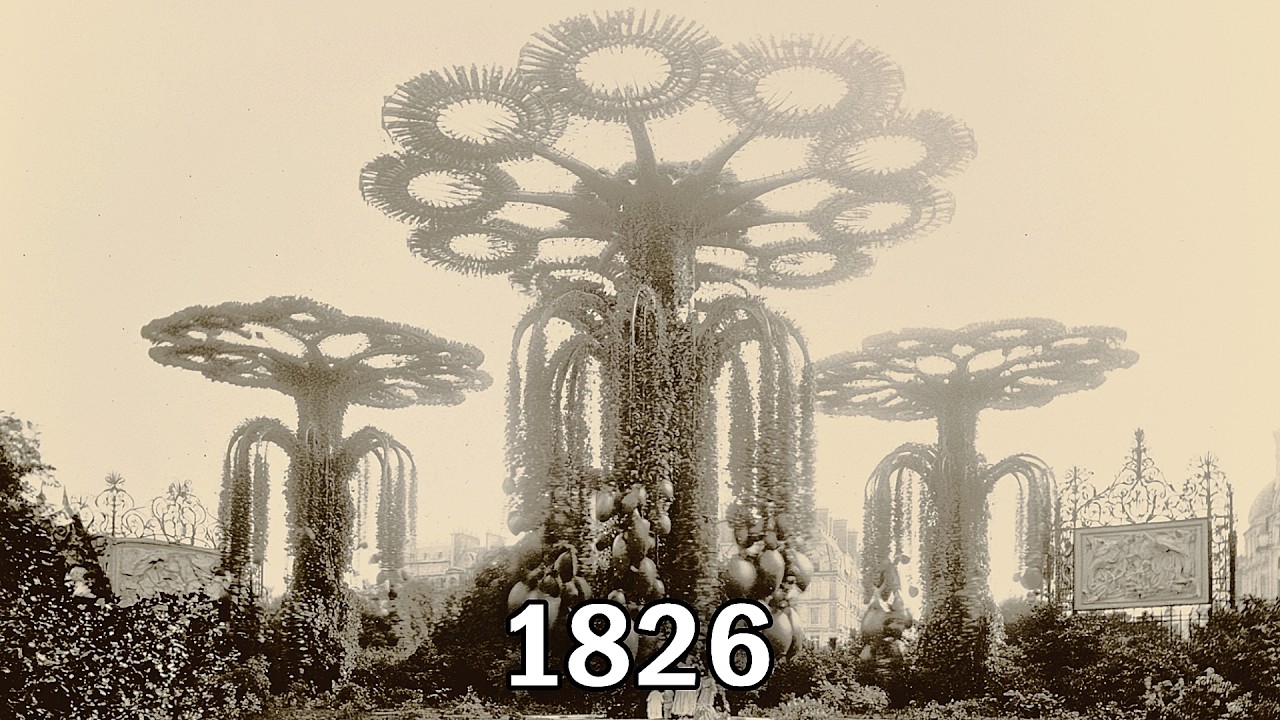
In 1923, a 147-year-old woman described a forgotten advanced world with heated roads and self-warming buildings in Zurich.
Key Takeaways
- The woman’s testimony suggests the existence of an advanced, forgotten civilization with sophisticated infrastructure.
- Her lack of a surname and unique vocabulary indicate she lived through a significant cultural and historical transition.
- The Zurich Municipal Archive holds unusual records that challenge official historical documentation practices.
- Physicians found her account credible and internally consistent despite its extraordinary claims.
- The video encourages skepticism but also openness to reconsidering accepted historical and architectural knowledge.
What the video covers
- In 1923, an elderly woman claiming to be 147 years old died in a Zurich clinic after outliving three generations of caretakers.
- She described a pre-forgetting world with advanced infrastructure: heated roads, buildings that warmed themselves without fire, and towers that pulled light from the sky.
- Her file in the Zurich Municipal Archive is unusually thin and categorized under 'deceased unverified origins,' a category that should not exist under Swiss law.
- She had no surname, stating surnames were a recent invention and she never needed one, reflecting a lived experience of a historical transition.
- Her testimony was recorded mid-sentence and contained unusual technical vocabulary not recognized by contemporary physicians.
- She described roads that 'remembered the sun,' a phrase from an archaic Slavic dialect, and buildings that radiated heat from within their walls.
- The woman spoke of cities organized differently from known architectural records, with interconnected buildings combining civic infrastructure and biological-like features.
- Physicians noted her testimony was internally consistent and troubling due to unfamiliar vocabulary, suggesting authenticity rather than confabulation.
- Her geographical descriptions pointed to regions in Central Asia, particularly between the Ural Mountains and river basins, as centers of this advanced built world.
- The video raises questions about forgotten advanced civilizations and challenges accepted historical narratives about urban development and technology.
Chapters
- 00:00Introduction: The Last Person Who Remembered The Old World
- 01:22The Thin Archive File and Admission Records
- 02:40The Woman’s Testimony and Its Impact
- 04:16Untranslatable Words and Roads That Remember the Sun
- 07:11Skepticism and the Description of Towers
- 10:32Buildings, Lighting, and Infrastructure
- 12:09Physicians’ Observations and Consistency of Testimony
- 15:32Cities, Geography, and Historical Implications
- 18:26Conclusion: The Forgotten World and Its Legacy
Full Transcript — Download SRT & Markdown
Speaker A
In 1923, in a small clinic outside Zurich, an elderly woman died at the age of, by her own account, 147 years old. She had outlived three generations of the same family who cared for her, and in her final hours she spoke. What she described was not folklore, not myth, not the confused ramblings of an aging mind. What she described was a world with heated roads, buildings that needed no fire to stay warm, and towers that pulled light from the sky. She called it simply the world before the forgetting. I couldn't stop thinking about that phrase.
Speaker A
spoke. What she described was not folklore, not myth, not the confused ramblings of an aging mind. What she described was a world with heated roads, buildings that needed no fire to stay warm, and towers that pulled light from
Speaker A
Let me tell you exactly what I found in the Zurich Municipal Archive subregistry 7 filed under deceased unverified origins.
Speaker A
Let me tell you exactly what I found in the Zurich Municipal Archive subregistry 7 filed under deceased unverified origins.
Speaker A
A category that I later discovered shouldn't exist at all under Swiss administrative law and yet contains hundreds of entries spanning from 1890 to 1941.
Speaker A
The file on this woman is thin, disturbingly thin, four pages. A handwritten admission record from the Herenweg charitable clinic dated March 1919. A nursing log with sporadic entries. A death certificate marked April 14th, 1923.
Speaker A
The file on this woman is thin, disturbingly thin, four pages. A handwritten admission record from the Herenweg charitable clinic dated March 1919. A nursing log with sporadic entries. A death certificate marked April 14th, 1923.
Speaker A
When asked for a family name upon admission, she reportedly replied in accented German that the admitting nurse described as melodic, almost formal, like old court speech, that surnames were a recent invention, and she had never needed one. That single detail
Speaker A
And a single transcribed testimony, two pages, typewritten unevenly, as if whoever typed it stopped frequently, as if they needed to pause. Her name was recorded as Martr. Just Martyr, no surname.
Speaker A
It was that phrase. Surnames were a recent invention and she had never needed one. Because she was right.
Speaker A
When asked for a family name upon admission, she reportedly replied in accented German that the admitting nurse described as melodic, almost formal, like old court speech, that surnames were a recent invention, and she had never needed one. That single detail
Speaker A
She said it casually as a fact. As someone who had lived through the transition, the transcribed testimony begins mid-sentence, as if the typist began recording late, as if they didn't initially think what she was saying mattered. And then, I suspect they
Speaker A
kept me up for three nights, not the age, not the unusual admission, not the four-page file in an archive designed to erase people as if they never existed.
Speaker A
She spoke of roads, yes, but not the roads we know. She described surfaces that were warm underfoot, even in winter, that did not crack under frost.
Speaker A
It was that phrase. Surnames were a recent invention and she had never needed one. Because she was right.
Speaker A
question mark for months. She spoke of buildings, not as architectural achievements to be marveled at, but in the way you might describe familiar furniture, as ordinary, as expected buildings, she said, that kept themselves warm without chimneys, without wood, without coal. Buildings
Speaker A
Widespread hereditary surnames in central Europe didn't become truly standardized until the late 18th and early 19th centuries. That's documented.
Speaker A
This raises a simple but unavoidable question. In 1919, speaking to a nurse in a charity clinic in Zurich, how does an elderly woman with no apparent education, the file notes she could not write her name, describe with apparent
Speaker A
She said it casually as a fact. As someone who had lived through the transition, the transcribed testimony begins mid-sentence, as if the typist began recording late, as if they didn't initially think what she was saying mattered. And then, I suspect they
Speaker A
I want to be skeptical. I was skeptical, but the deeper I went into the testimony, the more the skepticism started to feel like the easier answer rather than the honest one. She called them towers, but she didn't mean what we
Speaker A
realized it did. What she described, and I want to be careful here because I'm going to present this as the document presents it without embellishment, was a world of extraordinary physical infrastructure.
Speaker A
temples, not as defensive structures. She said they had a function, a practical everyday function. They gathered light and held it. Now stop.
Speaker A
She spoke of roads, yes, but not the roads we know. She described surfaces that were warm underfoot, even in winter, that did not crack under frost.
Speaker A
structures. She described public spaces that were lit without flame, interior spaces that were bright in conditions where they should have been dark at night. She said this plainly, apparently without any awareness that this was remarkable.
Speaker A
She used a word the translator noted as untranslatable, a compound word from what appeared to be an archaic Slavic dialect that roughly meant roads that remembered the sun. The translator put a question mark after that phrase. I've stared at that
Speaker A
The details she offers are never presented as miraculous. They are presented as simply how things were, how the world worked. And that register, that flatness of tone in the face of what should have been astonishing, feels to me far more credible than any
Speaker A
question mark for months. She spoke of buildings, not as architectural achievements to be marveled at, but in the way you might describe familiar furniture, as ordinary, as expected buildings, she said, that kept themselves warm without chimneys, without wood, without coal. Buildings
Speaker A
signs of confabulation. Query origin of technical vocabulary. That's a physician in 1923 noting that the internal logic of her testimony held together and that she was using words he didn't recognize for the things she was describing.
Speaker A
where the walls themselves seem to breathe heat outward. She described the sensation of placing your hand flat against an interior wall in deep winter and feeling warmth push back, not the stored warmth of a heated room, something from within the wall itself.
Speaker A
cities that were organized differently from anything in our architectural record. She described structures that seem from her account to combine what we might call civic infrastructure with something that sounds almost biological buildings that were not isolated from each other but connected, sharing
Speaker A
This raises a simple but unavoidable question. In 1919, speaking to a nurse in a charity clinic in Zurich, how does an elderly woman with no apparent education, the file notes she could not write her name, describe with apparent
Speaker A
it is right there in a footnote on page two of a four-page file in a subregistry that shouldn't exist. Tatar, early Turk.
Speaker A
nonchalance building materials that behave like what modern engineers would call radiant thermal mass systems, systems that were at the time she was describing them not a feature of any known historical architecture.
Speaker A
them directly, but her geographical descriptions are consistent with areas between the Eural Mountains and the River Basin regions of Central Asia that were by her account significant centers of what she calls the built world.
Speaker A
I want to be skeptical. I was skeptical, but the deeper I went into the testimony, the more the skepticism started to feel like the easier answer rather than the honest one. She called them towers, but she didn't mean what we
Speaker A
that existed fully formed with all its towers and warm roads and self-heating buildings, and then an after in which those things were absent.
Speaker A
mean. The testimony describes tall structures. She estimated them in the translator's note by comparison to trees, saying they were the height of 30 great oaks stacked, positioned at regular intervals across cities. She didn't describe them as monuments, not as
Speaker A
centuries that our historians attribute to methods we can barely replicate today? What if those weren't built by the civilizations we've credited?
Speaker A
temples, not as defensive structures. She said they had a function, a practical everyday function. They gathered light and held it. Now stop.
Speaker A
I'm not making a claim. I'm asking a question. But once you start asking it, you can't stop seeing the threads. I spent 6 weeks after finding this file traveling to six cities in central Europe. Zurich obviously then Prague,
Speaker A
Before you move on from that sentence, I want you to sit with it. She was not describing windows, not mirrors, not reflective surfaces. She said these towers collected light, pulled it was the word she used apparently, and distributed it somehow to surrounding
Speaker A
And here's the strangest part. There is everywhere. In Kazan, there are basement level structures beneath 19th century buildings that do not appear in the original construction permits.
Speaker A
structures. She described public spaces that were lit without flame, interior spaces that were bright in conditions where they should have been dark at night. She said this plainly, apparently without any awareness that this was remarkable.
Speaker A
pursue further. Their paper was submitted to a regional engineering journal. It was declined without review. In Lviv, a civic building dated by official records to the 1780s contains a substructure prey visible only from below street level through a
Speaker A
That's what caught my attention most, not the claim itself, but the absence of drama in the telling. She wasn't performing wonder. She was remembering the mundane. That pattern repeats throughout the testimony with an unsettling consistency.
Speaker A
A local architectural historian I spoke to who asked not to be identified by name told me the marks appeared to have been made by something rotary. In the 1780s in a Leviv basement, the deeper you go, and I mean that both literally
Speaker A
The details she offers are never presented as miraculous. They are presented as simply how things were, how the world worked. And that register, that flatness of tone in the face of what should have been astonishing, feels to me far more credible than any
Speaker A
interior of the spire. decorative presumably, except that copper ring configurations arranged in specific mathematical progressions are now known in contemporary engineering to function as primitive resonance antennas, collecting and concentrating ambient electromagnetic frequencies.
Speaker A
embellished account. The nursing log records that two physicians visited her during her final week. One of them identified only by the initial Dr. K made a single notation after his visit. Patients' accounts are internally consistent and displayed no
Speaker A
official record says decorative ornamental. Move on. I didn't move on. Page four of the file contains what appears to be the end of the testimony.
Speaker A
signs of confabulation. Query origin of technical vocabulary. That's a physician in 1923 noting that the internal logic of her testimony held together and that she was using words he didn't recognize for the things she was describing.
Speaker A
Someone made an editorial decision about the deathbed account of 147year-old woman in a Zurich charity clinic.
Speaker A
What happened to Dr. K's full report? Unknown. It's not in the file. The silence around that absence is deafening. Let me walk through what the testimony describes as the physical landscape of the world she came from.
Speaker A
What does survive is this. She describes the end of the old world not as a violent overthrow but as a kind of administered forgetting. She says and again I'm working from a translation of a transcription. though layers of
Speaker A
Cities that were organized differently from anything in our architectural record. She described structures that seem from her account to combine what we might call civic infrastructure with something that sounds almost biological: buildings that were not isolated from each other but connected, sharing
Speaker A
loss. She doesn't clarify. She seems in the transcription to find the distinction unimportant. What she says next is the part that has stayed with me. She says that the new people, the people who came after, the people who inherited the empty buildings
Speaker A
something she called the flow. She makes no attempt to explain what that means. She simply assumes the listener knows the term. The translator notes it as another untranslatable compound. This time from what he identifies as possibly corrupted Tatar or early Turkic. There
Speaker A
way any story does when there is no one left to correct it. And then she says something the transcriber has underlined twice which suggests it struck them as significant even in the moment of transcribing it.
Speaker A
it is right there in a footnote on page two of a four-page file in a subregistry that shouldn't exist. Tatar, early Turk.
Speaker A
I began looking more systematically at the map record. at what maps from the 15th, 16th, and 17th centuries actually show in the interior of the Eurasian continent versus what our historical record accounts for in terms of population and infrastructure.
Speaker A
I don't think that's a coincidence. I think that's a coordinate. She describes populations that were larger than anything the 18th and 19th century historians have accounted for. She speaks of cities in the interior of the Eurasian continent. She doesn't name
Speaker A
settlements that the official historical record simply does not support. Cities appear on maps in 1542 that historians will tell you were not established until the 1700s.
Speaker A
them directly, but her geographical descriptions are consistent with areas between the Ural Mountains and the river basin regions of Central Asia that were, by her account, significant centers of what she calls the built world.
Speaker A
The standard explanation is ctographic error. Careless copying from earlier maps. Mythological filler. Mapmakers, we are told, sometimes included cities that didn't exist simply to fill space or to demonstrate cultural awareness of distant lands. The official explanation collapses the moment you examine it
Speaker A
Dense, organized, warm, and then she says they were not. She doesn't describe a war. She doesn't describe a plague exactly, though she uses a word the translator renders as the great sickness of forgetting. She describes a before and an after, a world
Speaker A
locations, and many of them coincide exactly with the regions she described. The warm interior, the built world, the continent before the forgetting.
Speaker A
that existed fully formed with all its towers and warm roads and self-heating buildings, and then an after in which those things were absent,
Speaker A
investigate further? I keep asking. I haven't found an answer. One of the researchers who declined to be named passed me before we lost contact a set of photographs taken in the basement structures of a building in Kharkiv. The
Speaker A
replaced or perhaps more precisely inherited without understanding. This raises a question that once asked I found impossible to stop asking. What if the architectural record we have, the cathedrals, the elaborate civic buildings, the impossible construction achievements of the 17th and 18th
Speaker A
The markings are not decorative. They are systematic, spaced at regular intervals. Some appear numerical or unit-based. Others are more complex, nested shapes, lines indicating directionality, configurations that one might, if one were inclined toward a certain interpretation, describe as
Speaker A
centuries that our historian
Speaker A
acoustician. All three said versions of the same thing. They didn't recognize the system, but the system appeared intentional and internally consistent.
Speaker A
None would speculate further on record. One of them in an email wrote, "Whatever this is, it belongs to something larger than a single building." That phrase has been in my head ever since. Something larger than a single building. Something
Speaker A
that was once perhaps everywhere. That is now visible only in basement, in footnotes, in the deathbed confessions of very old women in subregistries that shouldn't exist.
Speaker A
This suggests something much larger than any single anomaly can account for. And the pattern repeats in the maps, in the buildings, in the walls, with a precision that makes coincidence feel at a certain point like its own kind of
Speaker A
claim. I want to be honest about what I don't know. I don't know who Mata was. I don't know where she was born or when or under what circumstances a woman claiming to be 147 years old ended up in
Speaker A
a charity clinic in Zurich in 1919. I don't know what language she originally spoke or how much was lost in the multiple layers of translation between her mouth and the typewritten transcript I held in my hands. I don't
Speaker A
know what the world before the forgetting actually was. Not precisely. not in the way that would satisfy a historian or an engineer or anyone with a professional investment in the official account, but I know what the testimony describes. And I know what I
Speaker A
found in Kazan and Lviv and Berno and Kharkiv. And I know that a physician identified only as Dr. K found her account internally consistent and was troubled enough by her vocabulary to note it, and that his full report is
Speaker A
nowhere in the file. And I know that the file itself exists in a category of Swiss administrative records that legally should not exist. And I know that when you place the ghost cities on the 16th century maps, next to the
Speaker A
geographic descriptions in the testimony, next to the anomalous substructures in the cities that now occupy those coordinates, something forms, a shape, not a proof, not a conclusion, a shape, the outline of something that was once coherent. She said they didn't erase it. They simply
Speaker A
didn't remember it. And she seemed to suggest, the transcription makes this part ambiguous, but it's there, that she had spent the better part of a very long life watching the last traces of memory dissolve.
Speaker A
Watching buildings whose function was no longer understood be attributed to gods or to giants or to the ingenuity of civilizations that arrived after the fact. Watching the maps get corrected.
Speaker A
Watching the basements get filled with cement. Watching the towers stand, purposeless now, their copper rings inert, the roads gone cold, beneath layers of mud and misidentification.
Speaker A
She died on April 14th, 1923. The file records no family in attendance, no funeral arrangements, no indication of where she was buried.
Speaker A
One final administrative notation in a hand that doesn't match any other in the file. effects. None. Knowledge unverifiable.
Speaker A
Knowledge unverifiable. Someone wrote that. Someone sat down, dipped a pen, and chose those two words to close the file of the last person who claimed to remember the world before the forgetting. And I find myself returning always to the same set of questions. Not
Speaker A
accusations, not claims, questions. If the world she described never existed, why do the substructures in central European and Eurasian buildings contain features that current engineering cannot attribute to their documented construction periods?
Speaker A
Why do 16th century maps place functioning cities at infrastructure logical coordinates that official history has chosen to call errors? Why does the thermal behavior of certain basement walls in Kazan remain unexplained and unpursued?
Speaker A
Why does a charity clinic in Zurich have a subregistry for deceased unverified origins? And why does it exist in apparent violation of Swiss administrative law?
Speaker A
Why was the remainder of her testimony deemed not suitable for inclusion? What did she say in those final pages that someone decided the record should not carry? And the deepest question, the one that sits beneath all the others,
Speaker A
the one that follows me out of archives and into sleep. If a civilization can be so completely unmemorialized that even its infrastructure gets credited to the people who inherited it, even its maps get reclassified as errors, even its
Speaker A
last living witness gets filed under unverified origins and sealed in a subregistry. What does that tell us about the fragility of any civilization's claim to its own story? What does it mean to be the last person who remembers? And is
Speaker A
there somewhere a file with your name in it or mine? Or does the forgetting only become visible in retrospect?
Speaker A
Long after the last witness has closed her eyes in a Zurich clinic, and the physician's report has vanished, and the cement has gone down over the markings in the basement walls, and the towers have been standing empty so long that no
Speaker A
one alive can remember what they were ever supposed to do. I don't have answers. I have a four-page file, a set of photographs, and the words of a woman who said she watched a world disappear, not through violence, but through the
Speaker A
simple, patient accumulation of forgetting. Maybe that's how it always ends. Or maybe, and this is the question I can't shake, maybe it hasn't ended
Topics:Tartariaforgotten civilizationadvanced infrastructureheated roadsself-warming buildingsZurich clinic 1923historical mysteryunverified originsarchaic Slavic dialecturban architecture


![[FLOOR] Abd Al Rahman Case: Reparations Hearing, 8 Sept… — Transcript](https://i.ytimg.com/vi/PyO_KAAIm0I/maxresdefault.jpg)