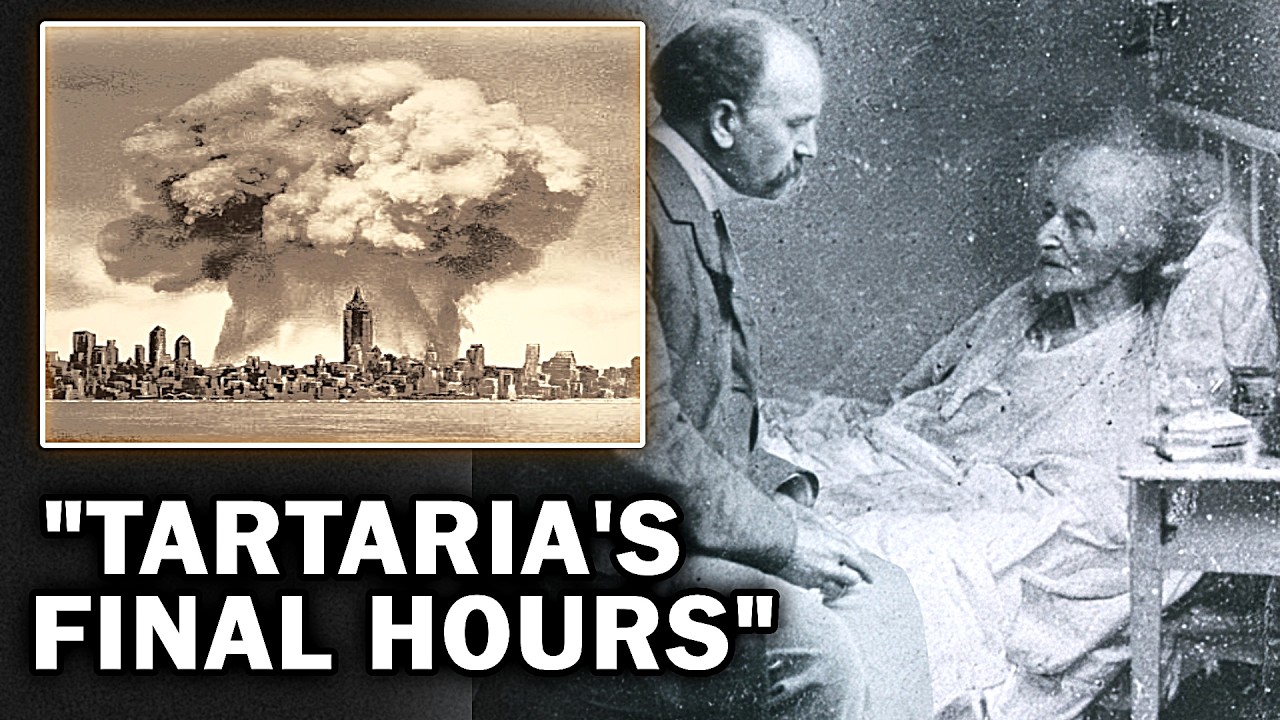
Explores a 19th-century deathbed account revealing a vast, managed food forest in eastern Poland, challenging official forest history.
Key Takeaways
- The Biaava forest was likely a large-scale, human-managed food forest rather than a wild, untouched woodland.
- Traditional ecological knowledge about the forest's food-producing capacity was lost or suppressed over time.
- Historical and botanical evidence shows patterns inconsistent with natural forest growth, supporting the food forest hypothesis.
- Current academic and official accounts overlook or avoid investigating these anomalies.
- Understanding this system could reshape views on historical land use and sustainable agriculture in Eastern Europe.
What the video covers
- In 1878, an elderly man in eastern Poland gave a deathbed testimony describing a vast food forest system that fed cities without conventional farming.
- The testimony, recorded by Father Alexander Maruka, described the forest as an organized system with maintained roads and designed clearings for staggered food production.
- This forest, known today as the Biaava primeval forest, is officially described as a protected hunting reserve, but the old man's account suggests a sophisticated, human-managed food forest.
- Historical botanical surveys and ethnobotanical records show unusual species arrangements and local knowledge of food-producing areas, unexplained by current academic accounts.
- The concept of a food forest is a multi-layered, self-sustaining ecosystem designed for continuous food production without plowing or replanting.
- The region historically had high population density, raising questions about how so many people were fed before modern agriculture.
- There is a lack of official documentation or cartographic evidence supporting the existence of such a managed food forest system.
- The video discusses the systematic erasure or replacement of this traditional ecological knowledge over time.
- Ethnobotanists acknowledge anomalies in species clustering but no comprehensive studies have been done to explore historical human management.
- The video suggests the Biaava forest is a degraded remnant of a deliberately designed landscape system, challenging mainstream historical narratives.
Chapters
- 00:00Introduction to the 1878 deathbed account
- 01:21Discovery of the ethnographic footnote
- 03:03Description of food convoys and forest roads
- 04:41Forest clearings and staggered food production
- 05:59Botanical surveys and tree age data
- 07:08Folklore and local knowledge of the forest
- 08:54Population density and food sustainability questions
- 10:45Systematic erasure of traditional knowledge
- 12:13Ethnobotanical expert consultations
- 14:38Conclusion: Reassessing the forest's history and legacy
Full Transcript — Download SRT & Markdown
Speaker A
In 1878, somewhere in eastern Poland, an old man died. He was not famous. He was not documented. He left no estate, no published writings, no verified surname in any registry I could find. What he left was a deathbed account recorded by
Speaker A
a local priest, buried in a parish archive, and ignored for over a century. The account describes a forest. One that fed entire cities without farming. One that grew unlimited food for the people.
Speaker A
One that nobody planted. One that, according to this dying man, everyone once simply knew.
Speaker A
And then it got sealed forever. That one sentence. That is where this begins. The document is called in the original Polish ecclesiastical record Zania Umiron Sego, a deathbed testimony. It was transcribed by a Father Alexander Maruka in the winter of 1878 in a village
Speaker A
outside of Hagnovka, which sits on the western edge of what is today the Bawa primeval forest.
Speaker A
The village no longer exists under that name. The parish register in which the testimony appears was digitized only partially in 2009 by a regional heritage project that lost its funding before completion. I found a reference to it in
Speaker A
a footnote. A footnote in a Polish language ethnographic journal from 1934. That journal was itself out of print.
Speaker A
That is how buried this is. The dying man referred to in the record only as Starzek Zalasu, the old man of the forest, was estimated to be somewhere between 80 and 100 years old. Father Maruka noted that he was of clear mind
Speaker A
though failing body, that he spoke in an archaic register of Polish mixed with what sounded like older Runian phrases, and that he insisted repeatedly that what he was describing was not legend, not his grandfather's story, not a dream, his memory. What did he say? What
Speaker A
does the testimony actually contain? This is the part that stopped me cold. The old man described the Bow Vaia not as a wilderness, not as an untamed expanse of ancient woodland that had simply been left alone. He described it
Speaker A
as a system. His word, or rather Father Morufka's translation of his word, was a stroy, which in modern Polish means system or order, but which in older usage carried connotations closer to living arrangement or organized body. An organism with intention behind it. He
Speaker A
said the forest provided. That is the verb Father Maruka underlined. Dost chawa. It provided not occasionally. Not seasonally in the way forests provide berries in summer or mushrooms in autumn. Continuously, abundantly to everyone who lived near it and to cities
Speaker A
much farther away. He described convoys. His word was transporty, which Father Maruka noted seemed anachronistically precise for a man of his apparent background. Convoys moving food out of the forest on roads that no longer existed.
Speaker A
Roads that no longer existed. I want to sit with that for a moment. The Bioavasia primeval forest spans approximately 1,500 km across the Polish-Belarusian border.
Speaker A
It is commonly described as the last and largest remnant of the primeval forests that once covered the European plain. It is by most academic accounts a protected relic, a survivor, something that escaped the axe by luck and royal
Speaker A
decree. Polish kings used it as a hunting reserve from at least the 15th century. The Russian Tsars later continued that tradition. This is the official story. The forest was protected because it was a hunting ground for the powerful. That is why it survived.
Speaker A
[music] But here is where the account begins to press against that explanation. The old man did not describe a hunting ground. He described something far more deliberate and far more useful than a royal game reserve. He described pathways through the forest, not animal
Speaker A
trails, not footpaths, but maintained corridors wide enough for laden carts with what he called osnia markers or signs at regular intervals. He described clearings, not natural clearings, but designed ones, where specific trees grew in patterns, where fruit-bearing species
Speaker A
and nut-bearing species and medicinal plants were arranged in what he called crangi circles or rings that produced food in staggered seasons.
Speaker A
Staggered seasons so that something was always ready, always available, always there for the taking. This is not how we describe wild forests. This is how we describe a managed system, a food forest, one of extraordinary scale and sophistication. And here is where the
Speaker A
official framing begins to buckle. If such a system existed, even partially, even in a degraded form by the 19th century, where is the documentation?
Speaker A
Where are the cartographic records? Where are the botanical surveys noting unusual species arrangements? Because the Bioava via has been studied extensively, Russian imperial botanists surveyed it in the 1860s. Polish naturalists cataloged its species in the early 20th century. German foresters produced
Speaker A
detailed maps during the First World War's occupation. Not one of those surveys describes anything resembling what the old man recounted.
Speaker A
Not one. The deeper I went into the botanical literature, the more I noticed something uncomfortable.
Speaker A
The surveys agree on species composition. They agree on tree age distributions. Many oaks in Bia are assessed at between 300 and 500 years old.
Speaker A
They agree on the presence of unusual microclimatic zones within the forest, pockets of warmth and moisture that support species not typically found at this latitude.
Speaker A
They agree on all of this. What they do not agree on, what they seem almost to avoid, is the question of arrangement.
Speaker A
Why do certain fruit-bearing species cluster in patterns that don't follow the randomness of typical forest dispersal?
Speaker A
Why do wild apple and wild pear and wild cherry trees appear repeatedly at the edges of those same clearings the old man described?
Speaker A
Why do ethnobotanical records from nearby villages collected sporadically between 1880 and 1920 describe residents knowing where to go within the forest to find specific foods as though the forest had an internal geography that people had memorized?
Speaker A
A 1912 account from a village elder in the Narvka district recorded by a traveling folklorist named Chadigga Kaminska and preserved in the Bawisto regional archive describes paths known only to the oldest families where the trees give more than trees should give.
Speaker A
That phrase, "where the trees give more than trees should give," appears almost verbatim in two other accounts from different villages collected independently years apart. The same phrase, different mouths, different decades. Once you see it, you cannot unsee it. Let me describe what a food
Speaker A
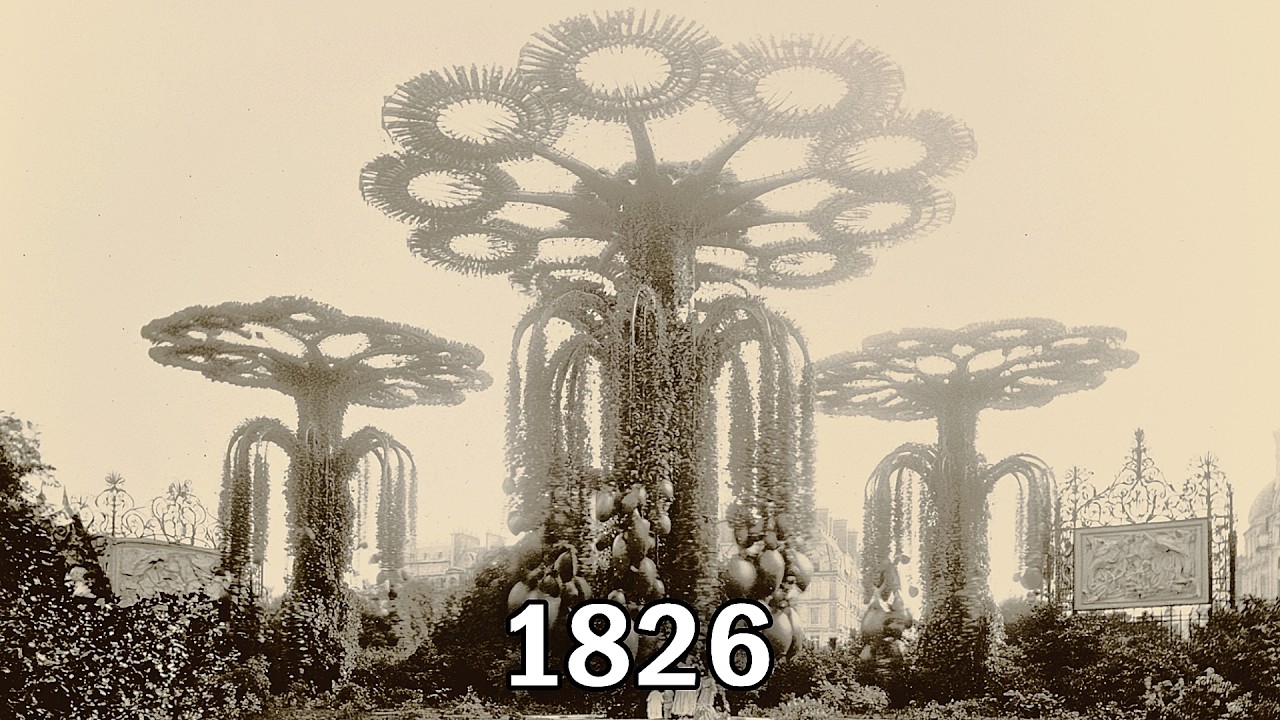
forest actually is in the most basic terms because I think this concept is more radical than it first sounds. A food forest, sometimes called a forest garden, is a multi-layered growing system modeled on woodland ecology, but designed entirely around human
Speaker A
nutritional needs. It has canopy trees for mast and fruit, understory trees for smaller fruits and nuts, shrubs for berries, herbaceous plants for vegetables and medicine, ground cover for nitrogen fixation, vines, roots.
Speaker A
Every layer contributing, every layer producing, every layer supporting every other layer indefinitely, without plowing, without replanting, without seasonal labor in any conventional agricultural sense. Once established, and establishment takes generations, a food forest is essentially self-sustaining.
Speaker A
Now, consider that the oldest trees in Bovia are assessed at 300 to 500 years old. Consider that the forest sits at the center of what was in medieval and early modern records one of the most densely populated regions of the Polish
Speaker A
Lithuanian Commonwealth. Consider that the population density of that region has puzzled historians for decades. How did so many people sustain themselves in an era before modern agriculture in terrain not especially suited to conventional grain farming?
Speaker A
This raises a straightforward but devastating question. What were they eating? The official answer involves subsistence agriculture, seasonal foraging, and trade networks. And that answer may be partially correct, but does
Speaker A
Does it account for the consistency of nutrition evidenced in skeletal remains from the period which show anomalously lower rates of malnutrition than comparable populations in regions with documented intensive farming? Does it account for the old man's memory of
Speaker A
convoys of transporty carrying food to cities much farther away? The official explanation strains here. It does not break entirely, but it strains. Here is where I have to be careful. Here is where I have to slow down because this
Speaker A
is where the argument could easily tip into something I am not trying to say. I am not claiming the bow was a magical place. I am not claiming impossible technology. I am asking whether the scale of intentional ecological design
Speaker A
that the old man described, a living infrastructure, a managed landscape of continental significance, could have existed, been deliberately maintained for centuries and then been forgotten, not destroyed, not documented and abandoned, forgotten. And the more I looked into that question, the more I
Speaker A
began to encounter something that might be called a pattern of eraser, not conspiracy, not a coordinated plot, something quieter and in some ways more disturbing. The systematic replacement of one way of knowing with another, leaving the first way, not disproven,
Speaker A
but simply absent. Father Maruka's testimony describes the old man becoming agitated at one point.
Speaker A
Maruka writes, "He grew distressed and repeated several times that people no longer knew how to read the forest. That the knowledge had been taken from them not by force but by forgetting. By the introduction of new ways that made the
Speaker A
old ways seem unnecessary and then invisible. Taken from them by forgetting, not burned, not banned, not seized, made unnecessary and then invisible." I want to ask you to think about that mechanism for a moment because it is the
Speaker A
subtlest form of erasia and the most complete. When you ban knowledge, you create martyrs. You create hidden transmissions. You create the conditions under which knowledge survives underground.
Speaker A
But when you make knowledge seem unnecessary, when you replace it with something more immediately convenient, more modern, more legible to whatever administrative apparatus is currently running the world, the knowledge doesn't go underground. It simply stops being transmitted. The last people who hold it
Speaker A
get old. They try to describe it to children who don't have the context to receive it. And eventually there is one man in a small house outside Hajnufka in the winter of 1878 talking to a priest who is doing his best to write down what
Speaker A
he hears and then that man is gone. The Tartarian question. I cannot approach this material without addressing it directly because it is the context in which I first encountered the reference to Morfa's document. The hypothesis, and I use that word
Speaker A
deliberately, circulating in alternative historical communities, is that a prior civilization, sophisticated and globe spanning, preceded our documented history.
Speaker A
That this civilization maintained a relationship with the natural world fundamentally different from what we practice today. that its infrastructure, its roads, its cities, its systems of food and resource management was so thoroughly integrated into the landscape that we have been walking through its
Speaker A
ruins for centuries without recognizing them as ruins. We have called them forests. We have called them wilderness.
Speaker A
We have called them nature. The mainstream historical community dismisses this wholesale. And the mainstream has good reasons to be skeptical. The Tartarian hypothesis is as popularly presented is often incoherent, internally inconsistent, and attached to demonstrably false claims about architecture and historical
Speaker A
geography. But here is what the mainstream dismissal does not address. The old man's account does not require a supernatural civilization.
Speaker A
It does not require lost technology beyond what is theoretically achievable through generations of careful botanical knowledge and landscape management. What it requires is time.
Speaker A
Enough time to design, plant and establish a multi-layered food system at forest scale and enough subsequent time for that knowledge to be lost. Both of those time scales are available in the historical record. What is not available is the documentation of the transition.
Speaker A
The moment when the forest ceased to be managed and became in the official account simply ancient and wild. That transition if it occurred is not recorded.
Speaker A
There is no document saying we stopped tending the bioa food system in such and such year. There is no botanical survey noting the gradual decline of intentional plantings. There is simply a before, the old man's memory, and an
Speaker A
after, the official classification of the forest as primeval wilderness. The gap between those two things is enormous, and that gap is precisely where something becomes impossible to dismiss.
Speaker A
I contacted three separate ethnobbotonists about the species arrangement question in BA Vaia. I asked each of them independently whether the clustering of fruitbearing species in the forest had been studied in the context of possible historical human management. The responses were
Speaker A
interesting not for what they said but for what they did not say. The first researcher told me it was an intriguing avenue and that she was not aware of literature specifically addressing that question.
Speaker A
The second told me that the forest's unusual species distribution was generally attributed to soil variation and microclimatic factors.
Speaker A
The third, a retired botonist who had spent 30 years studying the forest, paused for a long time before answering and then said, "There are patterns in there that I've never been fully comfortable explaining." But that is not the same as saying they require an
Speaker A
unusual explanation. Not the same, but not entirely different either. The silence was something. In 2011, a small team of Polish archaeologists conducting ground penetrating radar surveys in the eastern section of the forest near the Bellarusian border reported what they described as linear
Speaker A
subsurface anomalies consistent with compacted earth pathways at multiple locations across a roughly 40 km transct.
Speaker A
The survey was part of a broader medieval settlement study. The pathway anomalies were noted in the technical appendix. They were not the focus of the study. They were not followed up in any subsequent published research that I was
Speaker A
able to locate. Linear subsurface anomalies consistent with compacted earth pathways, roads, dark, buried roads running through what we are told was always simply wilderness. The old man had mentioned roads. He had mentioned roads that no longer existed.
Speaker A
I found myself returning to that phrase again and again, the way you return to a sentence you've read wrong and keep rereading.
Speaker A
Roads that no longer exist. Not roads that were built and fell into disuse. Not roads whose remnants are visible, roads that, to his eye in 1878, had already vanished so completely that their absence was itself remarkable.
Speaker A
That he felt the need to mention it, that he expected the priest, the young, educated 19th century priest, not to know about them. He was already living in an aftermath, already describing a loss, already the last thread of
Speaker A
something that had been unraveling for longer than any living person could document. What would it mean if this were true?
Speaker A
Not the full Tartarian hypothesis, not the grandest possible version of the claim, but simply this, that the Bovasia primeval forest, as it stands today, is a degraded remnant of a deliberately designed landscape system that once functioned at a scale we have no
Speaker A
framework to conceive of. It would mean that the forest boundary we call natural is artificial. That what we classify as wilderness is actually an overgrown garden. that the word prime evil applied to be basia is not a description of age
Speaker A
but a misidentification of origin. It would mean that somewhere between the world the old man remembered and the world Father Marufka inhabited, an entire mode of relationship between human beings and the land had been replaced so completely that within a
Speaker A
generation or two the replacement had become invisible and the original had become folklore or less than folklore. A deathbed whisper an underlined verb in a parish ledger dosawa.
Speaker A
it provided. And here is what accumulates into something that I find genuinely difficult to set aside. the accounts from the villages, the buried pathways, the unexplained species clustering, the population densities that don't quite fit the agricultural record, the phrase
Speaker A
whether trees give more than trees should give, appearing in different mouths across different decades.
Speaker A
[clears throat] The retired botonist paws, none of these things taken alone proves anything. But they don't need to prove anything individually. What they need to do is establish whether the anomalies are real, whether the gaps in the official account are genuine gaps, or
Speaker A
whether I am simply failing to understand a record that is actually complete. The pattern accumulates with a kind of uncomfortable precision. Father Marua's testimony ends with a detail that has stayed with me. After describing the system, the roads, the managed
Speaker A
clearings, the convoys, the old man apparently fell silent for some time. Then he asked the priest a question. He asked, "Do they still know where the centers are?" Marua wrote that he did not understand the question and said,
Speaker A
"So the old man seemed to accept this without sadness," Marua noted, but with something the priest described as resignia, resignation, or perhaps acceptance.
Speaker A
as though this was the answer he had expected, as though he had asked the question already knowing the response.
Speaker A
Do they still know where the centers are? The centers plural, not the center of the forest, singular, the centers, as though there were multiple nodes to something, multiple organizing points in a distributed system that had its own internal
Speaker A
geography, its own logic, its own memory. And the memory of that memory was at last in 1878 in that small house in Podlaski expiring. I keep returning to the structure of the loss, not the loss itself. We lose things constantly,
Speaker A
knowledge and practices and ways of seeing. That is ordinary. What is not ordinary is lost so complete that even the shape of what was lost becomes invisible. Where you cannot tell from looking at what remains that anything is missing. Where the degraded
Speaker A
version of a thing becomes the baseline definition of that thing. And the question of what it once was cannot even be properly formulated because the vocabulary for it has also been lost.
Speaker A
Did the bioa once feed a civilization? I don't know. Could a managed food forest at that scale have existed, been maintained across centuries and then been abandoned and naturalized beyond recognition within a 100red years.
Speaker A
The botonists say that time scale is theoretically possible. slowly, carefully, [music] without quite committing to the implications. Why? Why is there no documentation of the transition?
Speaker A
Why do the Russian imperial surveys of the 1860s not mention the management system even in the process of noting its absence?
Speaker A
Why does the 1912 folklorist's record of a village elers's knowledge of where to go in the forest not prompt any follow-up investigation into whether that knowledge was systematic rather than anecdotal?
Speaker A
And why, this is the one I cannot release. Why does the phrase where the trees give more than trees should give appear in multiple unconnected sources spanning decades as though it is the residue of a much larger understanding?
Speaker A
stripped of its context, but somehow preserved in the phrasing, as though the full sentence once had many more words before and after it, and these are simply what survived. What did the centers know? What did the roads connect? Who tended the clearings, and
Speaker A
in what language did they name the species? And what were their words for system and abundance? And this is how we feed everyone. Where does the knowledge go when the last person who holds it closes their eyes? Does it go into the
Speaker A
trees?
Topics:food forestBiaava foresteastern Polandhistorical ecologyethnobotanyforest managementsustainable agriculture19th centurydeathbed testimonyTartaria Vault