JJ Simon shares how he grew $100 to $1M in under two years through poker, trading, and bankroll management.
Key Takeaways
- Making the right decision matters more than winning the hand in the long run.
- Risk of ruin should be minimized by proper bankroll management and small initial bets.
- Consistent study, practice, and seriousness are essential for success in trading and poker.
- Expected value is a crucial concept for decision-making in both poker and trading.
- Avoid emotional decisions and high-risk gambles to sustain and grow your bankroll.
What the video covers
- JJ Simon turned $100 into over $1 million in under two years while in college.
- The video breaks down his net worth growth in stages from $100 to $1M.
- He explains key concepts like risk of ruin, bankroll management, and expected value.
- JJ relates poker strategies to futures trading and prop firm challenges.
- He emphasizes the importance of making the right decisions over focusing on short-term outcomes.
- The video covers practical advice on studying, practicing, and taking trading seriously.
- JJ discusses managing emotions and variance in trading and poker.
- He shares personal milestones including his largest wins and bankroll growth.
- The content includes lessons on reducing risk and improving consistency.
- He advises viewers to avoid get-rich-quick mentalities and focus on steady progress.
Chapters
- 00:00Introduction and Net Worth Breakdown
- 01:34Explaining Risk of Ruin with Coin Flip Example
- 03:09Poker vs Trading and Taking It Seriously
- 04:33Bankroll Management Basics
- 06:05Expected Value and Its Importance
- 07:32Making the Right Decisions Over Outcomes
- 08:54Playing Stakes and Managing Risk
- 10:21Emotional Control and Practice in Trading
- 14:18Tracking, Prop Firms, and Trading Strategies
- 21:48Large Wins and Income Growth
Full Transcript — Download SRT & Markdown
Speaker A
Here's how I turned $100 into over a million dollars in under two years as a college student.
Speaker A
So, the process of this video is going to just be going through my net worth pretty much. So, 100 to 250, 250 to 2,500, 2,500 to 25,000, 25,000 to 100,000, and then 100,000 to 250,000, and then lastly, 250,000 to a million.
Speaker A
And sort of this pyramid shape. I'm going to go through some of the pictures from the time, go over a few keywords, and then talk a little bit about what they mean, and then of course a takeaway
Speaker A
from each different category of net worth. So, let's start obviously with March 2024, exactly two years ago from when I'm filming this.
Speaker A
The first time I started to play small stakes poker, I was doing five to ten dollar buy-ins. So, there's a picture of me from two years ago, April 29th, 2024.
Speaker A
I turned my five dollar buy-in into $49. So, pretty good return. Now, let's talk about these keywords that I have around here, how they relate to me, my process, and trading since I am now a full-time futures trader with
Speaker A
prop firms. So, I will be relating as much of these to futures and trading as possible. So, first let's start with risk of ruin.
Speaker A
Risk of ruin is probably one of the most important statistics that you need to be aware of when you're trading.
Speaker A
And that's for any industry. Like, risk of ruin is very important. Basically, risk of ruin is talking about your chance of losing everything. And you want that chance to be as low as possible, of course,
Speaker A
but you can never make it zero. So, if you're flipping a coin and you're going to bet $100, if you win, you get $300.
Speaker A
If you lose, you lose your $100. That's like a really good coin to keep flipping, right? Like, you'd want to flip that coin as much as possible.
Speaker A
Now, if you're flipping with 100% of your net worth, though, your essentially, your risk of ruin is 50% since there's a 50% chance you lose everything.
Speaker A
If you win, then you're up 300. From there, more than likely you're just going to continue climbing. There's obviously a small chance that you lose three in a row and then obviously you hit your risk of ruin again, but
Speaker A
should be about 50% risk of ruin. And you want to play that game as much as possible, right? Just because you're so advantaged to flipping the coin since it's a 50/50 chance and you win 300 versus lose 100. So,
Speaker A
that's sort of what risk of ruin is. And in that example with the coin, there is obviously an optimal amount to bet. It's probably like 80 or 90, I'm not sure. Or no, not 80 or 90.
Speaker A
Probably like below 50. Maybe 25 actually. Like just to reduce your risk of ruin, you want to take very small introductory fees. Like if you're trading prop firm challenges, you want to buy the cheapest ones as possible if
Speaker A
you have an edge because you want your risk of ruin to reduce as much as possible so that you're able to realize more of your edge in the long run. So, in this coin flipping example, you want to bet really small to start. Like
Speaker A
honestly, you could even bet $10 at a time in your coin flipping example, your risk of ruin would probably be close to zero just because of how high the expected payoff is if you win. So, that's risk of ruin. Studying,
Speaker A
for poker it's a little bit different than trading. Poker, you're usually just using a solver and trying to compare your actions to the computer's actions as much as possible.
Speaker A
It was something that I related to taking things seriously, which is on the left side. So, sort of tie those two together. When you're trading, you want to take everything very seriously.
Speaker A
You don't really want to treat it like a joke or like gambling, anything like that. Even though it is simulated money when you're trading prop firms, you just want to take it as serious as possible
Speaker A
just because you should take that approach to pretty much everything you're doing. So, obviously giving it 100% of your effort, but really taking it seriously. Like just knowing what it can do for you if you're able to put in
Speaker A
100% of your effort and 100% of your focus each time. If you're not in the mood to approach it 100%, then just don't approach it for that day.
Speaker A
You want to be consistently improving. And if you're working on trading, but you're not putting everything into it, then you're probably decreasing your ability.
Speaker A
So, you want to take it very seriously. You want to practice as much as possible, study as much as possible, even if it doesn't seem like it's worth it. Study paper trading, study a strategy, put it into practice in paper
Speaker A
trading. Eventually, it will pay off. You just have to have that forward-looking point of view of this will work out for me eventually.
Speaker A
I'm just going to practice a ton. I'm just going to practice as much as possible before I spend money.
Speaker A
That can also help reduce your risk of ruin. Next, bankroll management. Obviously, similar to risk of ruin. So, what bankroll management is is basically how much am I betting at one time? So, how much am I going to spend on my
Speaker A
first prop firm challenge if I have $500 to invest? Or which prop firm am I going to try?
Speaker A
Which risk reward am I going to try? Because obviously, you can change your risk reward. Like if you're targeting higher risk, higher reward, then you're going to need a larger bankroll, obviously, because you're less likely to hit your
Speaker A
massive payout in that sense. So, small bankroll, you want to target smaller payouts until you're able to build the bankroll.
Speaker A
Bankroll management, obviously, very important in poker. Usually, they recommend, I think it's like 20 times your bankroll to be in what specific buy-in? Like $5 buy-in like I was doing, you want to have $100, something like that. I can't remember
Speaker A
exactly but bankroll management in that sense of obviously, don't spend too much. You need to build up a bankroll before you start. That way your risk of ruin is reduced.
Speaker A
Lastly, something really important that I learned from playing poker is expected value. Now, obviously, the formula for expected value is your chance of a win times how much you win minus your chance of a loss times how
Speaker A
much you lose in any given scenario. It's very important for poker, making decisions about do I play this hand, do I call this bet. For trading as well though, you need to know your win rate, you need to know how much you're
Speaker A
winning, you need to know obviously based on that you can derive what percent of the time you're losing and then how much you're losing, but it's really important that you keep track of those sort of things. I'll get
Speaker A
into that more, but expected value is really important. The founder of Odds Jam, Alex, talks about it a lot. He says to approach your life through the point of view of expected value. Like if you're adding
Speaker A
a business and you're adding a new product, what's the expected value of that product? Just think of the probability yourself. Honestly, you're not going to be that far off, ideally.
Speaker A
Like if you're adding a new product to your business, what are the chances that you sell 100 of those products? And if you sell 100, how much are you making, how much do you spend on ads, that sort
Speaker A
of stuff. So, expected value can really be used to calculate a lot of things in terms of math and finance. So, it's really important that you get familiar with that if you're getting into trading.
Speaker A
So, took about 3 months or so. Turned 100 into $250 in small stakes poker at my college.
Speaker A
And the takeaway from that is making the right decision matters more than winning the hand. Now, that can go anywhere in life.
Speaker A
So, just think to yourself, making the right decision matters more than winning the hand. It's like a very common poker saying. Like if you're putting your money in good, meaning you have the better hand and
Speaker A
then obviously luck can play out based on the cards that come.
Speaker A
right decision, this can be personal with people, with your business, with trading. If you're making the right decision, more often than not, in the long run, things will turn in your favor. So, try not to focus on the outcome, try
Speaker A
just to focus on making the right decision at each point in your in your journey.
Speaker A
[clears throat] Next, 250 to 2,500 was from May to August 2024. And this is when I started moving my small stakes from in-person to online.
Speaker A
Now, this was just because I thought the competition would be probably easier and I'd be able to scale.
Speaker A
So, let's talk a little bit about scaling. I wasn't able to find that many pictures, but first we have what I call multi-tabling.
Speaker A
Now, that's how you play online poker most of the time. If you see in the top left, I have two hands. That's basically just cuz I'm playing on two tables at once.
Speaker A
It's very similar to copy trading in trading. So, multi-tabling is basically a way to increase your hourly win rate playing poker or copy trading is a way to increase your your profit if you're trading.
Speaker A
The bad thing about this in poker and in trading though is variance. So, in trading if you have five accounts, each for a $100 entry fee, and you're copy trading all as one, that makes your new entry fee like $500 and
Speaker A
your chance of blowing it is increased. So, obviously you need to have a large bankroll for that.
Speaker A
But that just that goes without saying. So, don't don't copy trade if you don't have to. Ideally, find a strategy that works multiple times per day so you're able to trade multiple accounts.
Speaker A
You can see I was playing for like $60 to $100 here. I was in for $50 in this game. So, probably this was closer to $1,000 of my of my net worth. And obviously you never want to enter with too much money.
Speaker A
But yeah, multi-tabling was a really good way for me to scale. Like I was able to play probably eight tables at once at one point. This is just a random picture I found. It has two. But eight tables at once at one point was was very
Speaker A
profitable for me. So, I was able to compound my edge by doing that in a sense just by getting a lot of volume in.
Speaker A
[sighs] Again, volume is more important than talent, I guess I could say. Just in in anything, in trading, in life, volume. People say obsession beats talent every time, I think.
Speaker A
There was a There was a story I read once of a woman teaching a pottery class. She told half of her class to half of the class to make a pot, but just make one pot for the entire
Speaker A
semester, and they would be graded on how well they made that one pot. And the other half of the class, they were told to do make as many pots as possible, and they would be graded on the volume of pots that they produced.
Speaker A
At the end of the semester, uh which one do you think made the better pot? Well, the one with the volume made the better pot. Just because they were practicing, they were improving, they were putting as much volume as possible, and over time they
Speaker A
got better. So, that's sort of the approach you want to take to everything in life.
Speaker A
[sighs and gasps] Now, here is an approach you don't want to take in life, and that's gambling.
Speaker A
Now, you can obviously gamble in trading all the time. You can gamble in poker by by playing bad hands, stuff like that, but but my problem was this is on stake, so like if it's like RainBet, a very
Speaker A
common online gambling site. So, here is Blackjack. I unfortunately like whenever I won in poker, I felt like, you know what?
Speaker A
I'm just going to go play Blackjack with I just want to have some fun, you know?
Speaker A
I can make that back in poker, since I was winning at poker. I felt if I lost it in Blackjack, I could go make it back in poker. Now, this is a really bad approach to have.
Speaker A
So, don't take this approach to your trading, don't take this approach to your life. You want to gamble as as little as possible. And if you need to gamble, just place a bet as small as possible. So, the house always has an
Speaker A
edge so you should never want to do that. I literally lost $500. And this is at a time where that meant a lot to me.
Speaker A
Uh unfortunately, the next image is even worse, I think. What I did was after I lost 500, deposited 500 more, and then thankfully won it back. So, uh just just don't don't gamble. It's never worth it. The house always has an
Speaker A
edge. They will always win in the long run. If you want to gamble, just bet as small as possible, like $5 at a time, just for fun. You need to have like a fun budget for gambling. It's like
Speaker A
like going go-karting. If going go-karting's fun, you're going to spend $100 there. Take 100 to the to the casino if you want to have fun.
Speaker A
Don't bet more than $5 at the time. [sighs] I also got into crypto at this time a little bit.
Speaker A
Um this is I think when Elon Musk was becoming the head of the Department of Government education or whatever, DOGE.
Speaker A
There was like a new government thing Trump was adding called DOGE. So, I just bought a ton of DOGE coin with pretty much my entire net worth.
Speaker A
And I mean thankfully it thankfully it returned 2,500 on my $2,000 investment. So, that that was that was pretty fortunate.
Speaker A
Obviously don't don't do don't invest that much of your net worth into something silly like that. But, uh if you have some sort of read, at least I thought I had a read or an edge on the price here. I thought it was very
Speaker A
undervalued. But, just put a lot of research into stuff if you do things like that.
Speaker A
Next takeaway, emotions destroy edge, yeah. So, this is what I'm talking about with with the blackjack and the the crypto. Thankfully, the crypto was a win but emotions destroy your edge. So, in trading and in poker, you never want to
Speaker A
be making a decision when it's an emotional decision. You always want it to be backed up by at least some sort of scientific proof or data.
Speaker A
Um and whether that just be your own experience, right? Like trading, poker, own experience is fine.
Speaker A
Just make sure you're not emotional when you're making a decision because that usually means your decision is not the most rational and it's obviously not the most optimal. It's not the most rational. So, um practice does make you better with
Speaker A
this. Uh but, try your best not to make emotions destroy your edge in in anything. And obviously, that's like with each decision you make, with your bet sizing, your bankroll. Don't go all in in poker if you don't if you don't
Speaker A
not not comfortable with it. Don't go all in on trading if you're not comfortable with it.
Speaker A
Um stuff like that. Next, we'll do 2,500 to 25,000. This was August 2024 to about February of 2025.
Speaker A
So, about a year ago was when this ended and this was my casino poker journey.
Speaker A
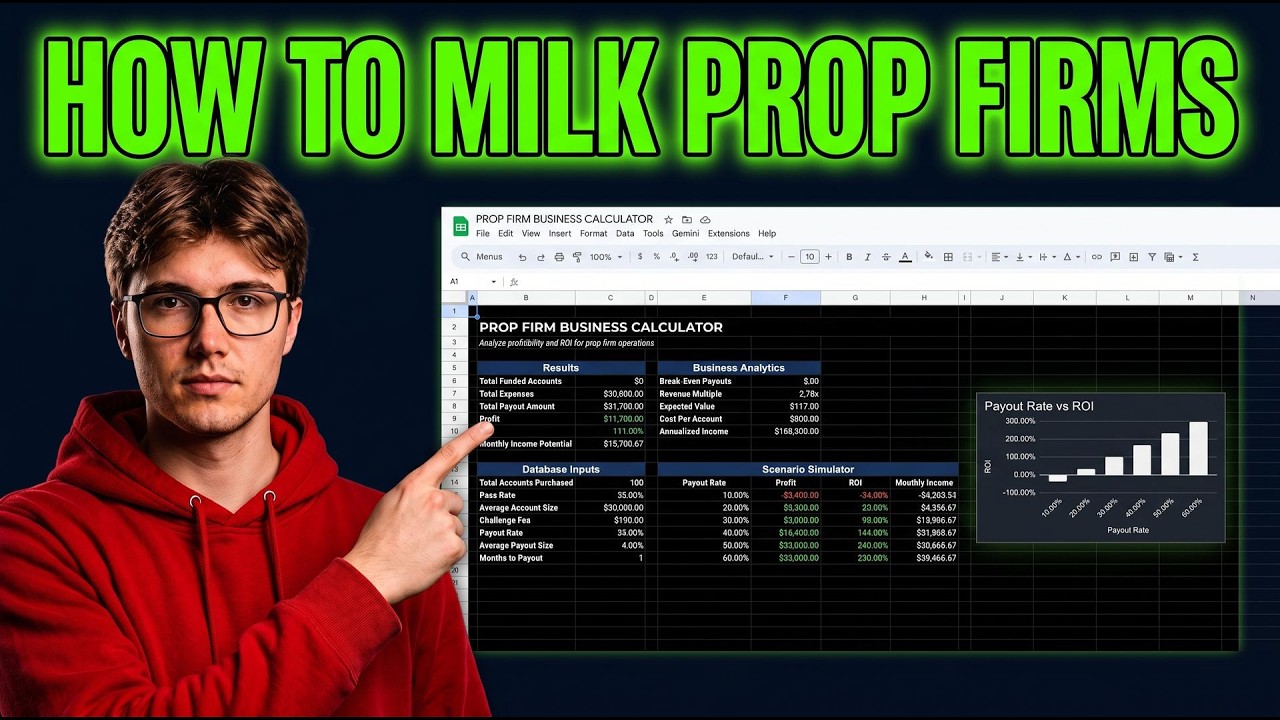
First, most important thing is bankroll management and tracking for poker and obviously for trading. You really want to know what your pass rate is, what your average payout is, what your average payout chance is. Obviously, you can't know these things when you're just
Speaker A
starting, but uh if you're going to invest $500 to $1,000 in your trading, you really want to find out some of these statistics, whether that's through paper trading, simulating that you're actually paper trading a prop firm account, uh finding your average payout just
Speaker A
through your performance history and the evaluation, comparing that to a funded account. Obviously, trying to take the same approach to both.
Speaker A
But, tracking your results is really important in a lot of things because you're able to review your past performance and you're able to see if you're improving, you're able to see what's going right, what's going wrong, and you're able to determine, should I
Speaker A
keep doing this? Do I actually have an edge? So, bankroll management, obviously already spoke about that, but tracking is really, really important, more than you might think.
Speaker A
Uh psychology, obviously, trading psychology is a a really important part in trading. There's not too much I can say about it in this video. I'll probably have some other videos up on trading psychology, but uh what I want to stress is to
Speaker A
obviously, emotionally, never risk money that you're not okay with losing since in the short term, trading can be sort of like gambling just because it's high variance. So, you're not able to realize all of your edge in one specific trade,
Speaker A
of course, or with one with with one specific prop firm account. Um other advice for trading psychology, um honestly, it's going to be whatever works best for you. Practice makes perfect and you learn every time you lose. So,
Speaker A
take your losses, try and make the losses help you become a better person and a better trader.
Speaker A
Next for my poker journey was picking the best games. So, when you sit down at a table in the casino, you're placed with seven random people.
Speaker A
Some of those people may be good. If two of those people are good, then that's not the best game to play at. You want to play at a game where where most of the players are worse than you.
Speaker A
Now, in trading that's a little bit different. You can't obviously choose who you're trading against, but in some cases you can. Like you choose which prop firm to trade with.
Speaker A
Don't choose it based on which one you think is the best because they have the best payout policy or they have a really good reputation or you see your favorite trader trading with them.
Speaker A
You need to go through the prop firms, read the rules, and trade which one resonates best with you and your personal trading. Now, what I mean by that is if you're someone who likes to go for home runs,
Speaker A
risk high risk high reward, Topstep is a good firm for you because they have a 5K max payout. And that's 50% of your balance. If you're someone who likes small wins, maybe an instant funded consistency account is best for you
Speaker A
because they have 20% consistency. And if you're winning like massive wins at a time, consistency is not something in your favor. So, based on your trading style, your risk to reward, there will be an optimal firm for you. So, I just
Speaker A
suggest look through all the firms and try and find which one is the best for your specific approach.
Speaker A
Emotions. Now, obviously this applies to anything. I've talked about it a little bit already.
Speaker A
It's best to keep your emotions in check to never You never want to feel emotional when you're making a decision.
Speaker A
I know I already said that, but I definitely want to reinforce it. Just make sure you really understand.
Speaker A
It's I know it's really hard to take your finger off the trigger and don't actually press that that trade button if you're feeling emotional. It's happened to me. I've ignored that feeling. I felt the feeling and I ignored it and I just
Speaker A
traded anyways, but that's it's never the right thing to do. No amount of experience or no amount of people telling you will will eventually make it known to you that's not the right thing to do. It's unfortunately it's practice.
Speaker A
But, just write it down as many times as you can. Hopefully, it will eventually resonate that you want your emotions to always be in check when you're trading.
Speaker A
Now, studying in this sense, it actually is different than studying that I did previously.
Speaker A
And the the way that that works is it's what's called exploits. Now, in poker, you want to exploit your opponents because they are obviously not playing optimal.
Speaker A
That's how you make money. When they make a mistake, you can exploit that mistake. And whether that's through increasing your bet sizing in a specific hand or increasing your folding frequency. Basically, just means you're folding more often because your opponent doesn't play that
Speaker A
many hands. So, when they play, they have a higher caliber of hands. So, you want to overfold, which means increasing your folding frequency. So, in this case, you're studying and you're adapting to the actual market. And in trading, this could be
Speaker A
What sort of exploits could you do, right? You could change your trading strategy based on what's happening that day. So, instead of repeating the same mechanical strategy every time, you're looking at actual economic data. Like, what's happening in the world? Is there
Speaker A
news today? How is the news going to impact my trade today? Is there a speech today? How will that impact my trade today? What news already came out? Stuff like that. So, really changing your approach to trading to be
Speaker A
more of a well-rounded one instead of a very mechanical strategy. Candle this, candle that. You want to have a more broad understanding of how prop firms work, how the news works, how the economy works, and anything like that,
Speaker A
really. Next, I did a little bit of meme coin trading. I won't endorse this, but it was pretty fun for me at the time. I believe I turned $500 of an initial deposit into 5,000.
Speaker A
First meme coin I bought was Chill Guy. Just saw it on Instagram as a trend.
Speaker A
Just bought $500 worth. It did pretty well. I kept cashing out throughout these pictures. After that, did Pudgy, Locked In Alien, The White Monster Effect. Just some common memes on Instagram.
Speaker A
Um Turned about 500 into 5,000, and I just stopped. I felt that I was getting lucky identifying the trends before they were massive.
Speaker A
So, probably would not recommend that obviously to to anyone else, but never risk too much money if you're if you're doing something like that. So, takeaway scaling and understanding variance. Now, with scaling obviously comes variance.
Speaker A
It's a little bit what I was talking about with your with your tracking, but first off, variance means basically your luck.
Speaker A
And not luck in the traditional sense of like flipping a coin. Luck in the sense of how much money do you have available, and what are the chances that you're able to pass an evaluation and get a payout with that set amount of
Speaker A
money. And that's based on your pass rate and your chance of getting a payout obviously.
Speaker A
So, when you're scaling, you need to understand variance. And scaling means copy trading. It means working on more firms at once, more accounts at once, larger accounts, more money per account.
Speaker A
Higher profit targets on funded accounts. Trying to win more, high risk reward, that sort of stuff.
Speaker A
So, you need to understand how variance will change through risking more. Obviously increases your variance. So, you need to understand when you're able to risk more. You need to understand how are you going to approach risking more.
Speaker A
And most importantly, you need to make sure your variance is as low as possible.
Speaker A
So, whether that be trading multiple times per day with a few different strategies or not copy trading for the more expensive accounts. Only copy trading your small winning days. Not copy trading when you're doing high risk. That sort of stuff. So,
Speaker A
make sure you understand how to scale before you actually scale is what I mean by this basically.
Speaker A
Next, my $25,000 to $100,000 was my February to June of last year is when I actually started trading.
Speaker A
Uh you can see my first ever funded account was February 3rd, 2025. Uh I made $1,000 on it.
Speaker A
For some reason I have the Renko candles. Um I was I was still a bit new to trading. I was sort of messing around, but um definitely got lucky, made my first $1,000. Obviously got the first payout from from this account probably.
Speaker A
Uh by March 7th, I had my first large win. I had more of a defined strategy.
Speaker A
Uh I was trading reversals, so um reversals here. It's my main trading strategy now, so at the time of this posting, March 8th, I've been doing this for exactly a year.
Speaker A
Uh this is my first large win, so probably $8,000 win on this day. And then from there, got my largest payout ever, which was $45,000 from E8.
Speaker A
Um let me go straight to the the takeaway and then I can talk more about more about this phase of starting trading.
Speaker A
Things only get easier, and volume is more important than talent. Uh I mentioned that earlier with the the pot pottery example, but volume beats talent, especially in trading. There is not really any underlying talent in trading other than
Speaker A
I guess IQ or how fast you can learn something, how fast you can realize your own mistakes and apply uh apply changes to your mistakes and and really learn what's going on with the charts.
Speaker A
So, in that sense, volume, learning, practicing, all of that is much more important than how naturally good you are at something like trading.
Speaker A
And of course, things will only get easier. You'll only learn more. Every single day that you're trading, you'll only learn more things about the market. Like one day you'll learn why the market moves, the next day you'll learn how the market moves, the next day
Speaker A
you'll learn how to take advantage of that or something like that. But just just understand that things will only get easier the more time you put in. And you obviously want to put more time in, as much time in as
Speaker A
possible. So, um originally I started sort of just just messing around trying random things on the on the charts.
Speaker A
I wouldn't recommend that. Obviously, I had a large bankroll like 25k to start with and prop firm evals back then were pretty cheap, like $50.
Speaker A
That's probably a bit more now. Now I'm speaking about it a year later, but um definitely don't take the approach that I took. You want to sort of start in this phase where you know what approach you're taking. So, obviously
Speaker A
paper trading is really important. I know it can be boring at times, but but again, things will only get easier and volume is more important. So, paper trading is just fine um for before actually buying prop firm accounts.
Speaker A
Then lastly, not second to last, 100k to 250k was July to August. I had my biggest month ever in trading.
Speaker A
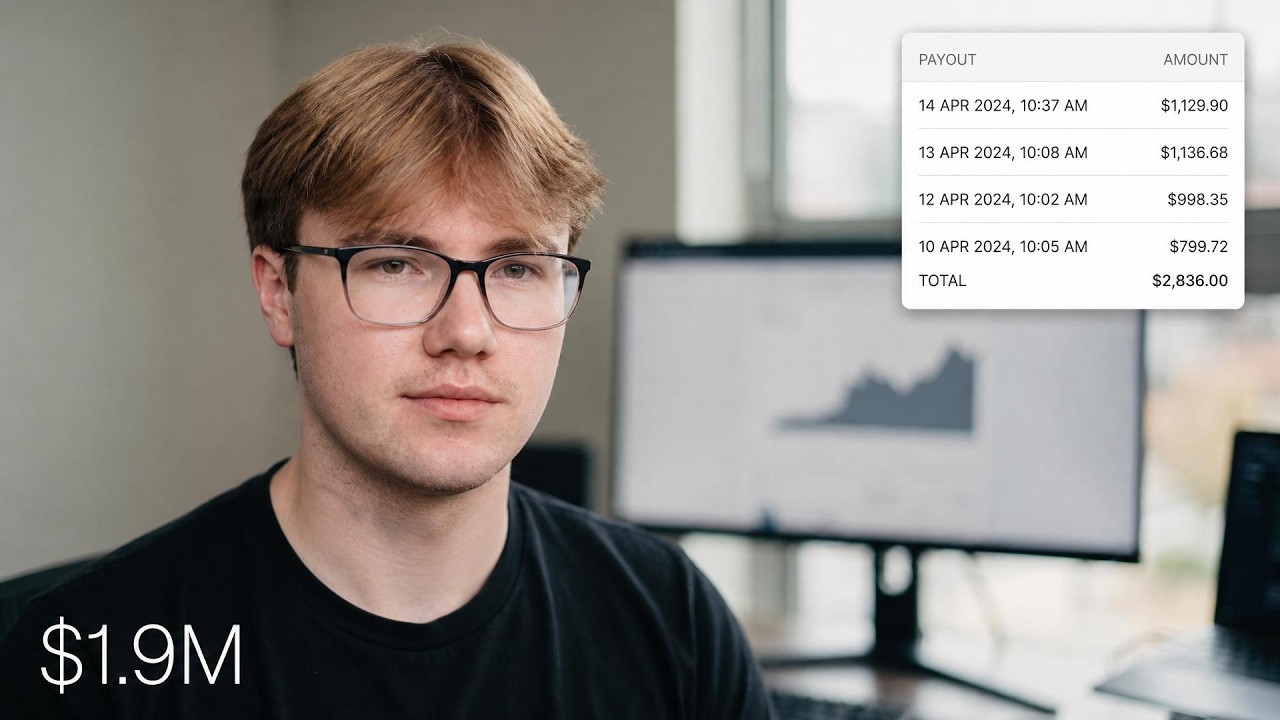
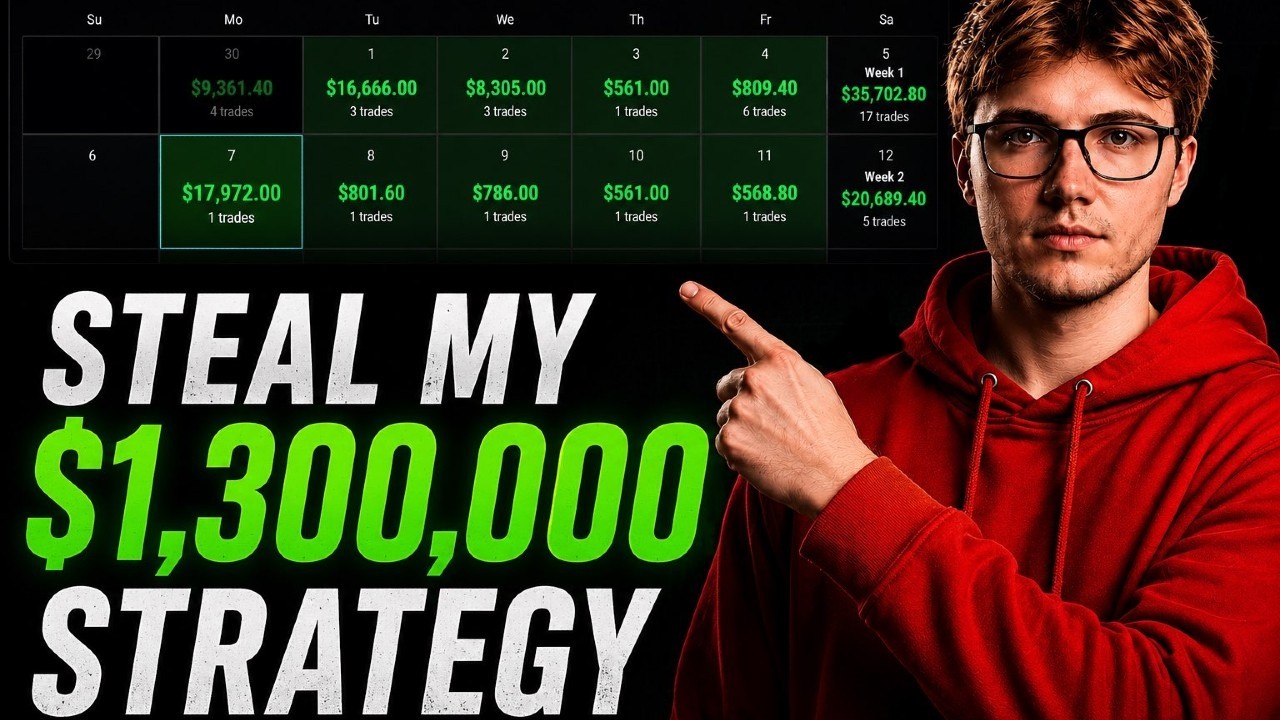
So, in July here, $125,000 in payouts. Uh I didn't actually do any other sort of work at this time. This was just off prop firms. And then over here, we have the first 2 weeks of July.
Speaker A
$56,000. So, this is on one account. And I'm not sure how many accounts I had at this point. This was a a crazy amount of accounts. If you can see here, four trades, three trades, three trades, one, six, one massive one for 18k, one,
Speaker A
one, one, one. Now, uh definitely don't overtrade. Uh I guess it everyone says that, but one trade per day is the most optimal.
Speaker A
I know I did more here on these on these specific days, but one trade per day, like for this week, I did one trade a day and I made 20k. That's like a crazy amount. Um considering it could be on
Speaker A
five accounts. I don't know how many I had at this time, but um probably 56k was was definitely the the bottom side of the the income during these 2 weeks.
Speaker A
So, this is my biggest ever 2 weeks since um I think I I still do like weeks like that, but the problem is you can't get it all in payouts, so.
Speaker A
Obviously, the E8 payout up here of 45k arrived in July, I guess, so. Uh this was definitely the biggest month I had. You can see the income curve going from 40k, 40k, 83k, 60k, and then 125k. It's like a crazy
Speaker A
increase and there's never really that moment where everything clicks for you in trading. I know a lot of people say that there is, and they're sort of just convincing you, keep trying, keep gambling, keep trying, eventually something will
Speaker A
doesn't really work like that. It's sort of it sort of an approach where you're slowly increasing your pass rate, you're slowly increasing your average payout, or you're slowly increasing your chance of getting a payout. So, by slowly increasing all of these things
Speaker A
through practice, repetition, and uh intelligently improving your strategy, all these things will slowly increase to the point where your side of the inequality is larger than the prop firm side of the eval fee. Eventually, you're more profitable than the prop firm is in that
Speaker A
sense so eventually, you will make money assuming you you put all of your effort into this and take the correct approach and learn the correct strategy.
Speaker A
Take away, to make something full-time, you truly have to believe in it. It's not a get-rich-quick scheme. If you approach it this way, you won't do well.
Speaker A
You have to truly enjoy it. That's pretty much what I just said um before even realizing it, but uh just to reiterate, making it full-time, you truly have to believe in it. Now, um obviously, the more you believe in
Speaker A
something, the better you're going to do at it. Like, you have to have this inherent sense of self-optimism. I'm very bad at that, actually, but uh the more you believe in yourself, the more successful you will be, obviously,
Speaker A
in any field. It definitely applies to this as well, since trading is very an emotional game. Uh before you're making good money, it's very emotional.
Speaker A
So, don't look at it as a get-rich-quick get-rich-quick scheme, because you're taking the wrong approach. You're taking the approach of high risk, high reward.
Speaker A
And low risk, high reward doesn't really exist. It's either low risk, low reward, or high risk, high reward in trading.
Speaker A
Uh so, you have to truly believe in yourself as well. So, you have to believe trading is going to work, and you have to believe it's going to work for you.
Speaker A
And you have to make the time to make it work. So, try to approach it from that point of view, I guess. A little bit of work every day, and truly believing that you can make it work, and it will work
Speaker A
for you. Belief is very important thing. Obviously, belief doesn't help with with your entries on the chart, or how often you get stopped out, but uh I think just the entire process of trading, it should be very related to
Speaker A
that. And then lastly, $250,000 to a million dollars in September 2025 to March 2026.
Speaker A
Now, when I'm recording this, and I'm a full-time prop firm trader. Uh this is just the like the income picture from my bank account. You have November 145k, 100k October, 130k September, 100k October, and then July 125k. So,
Speaker A
consistently getting those 100k months ever since July, and I still haven't gone below it.
Speaker A
This is an old picture, but but December, January, February, same sort of thing. Uh February, I believe is documented on my Instagram, and so is December. So, if you're interested in more of that day-to-day approach, uh February, I did
Speaker A
a day in the life series, 20 days of trading, 100k in payouts, just standard day in the life content of which prop firms I'm trading, where I'm getting my payouts, what I do in a day, that sort of stuff. If you're
Speaker A
interested, Instagram, it's JJ Simon. Uh December, I just did a payout tracking series, same thing as as February, but less day in the life content.
Speaker A
But yeah, now that I'm a full-time trader, uh consistency is the most important thing. Obviously, staying above this 100k month mark is the most important thing.
Speaker A
Obviously, you see the sort of pattern, it's low, high, low, high, low, high, low. Um that's fine. That's just because like your your process in an account, like how close you are to the next payout varies pretty much. So, you get a large
Speaker A
chunk of payouts one week and then none the next week. It's totally fine. Just be consistent month to month, not week to week.
Speaker A
Consistency in your practice and constant belief in yourself. I said that last time, but uh it's very important.
Speaker A
It's more important than than you might think. So, try to be as consistent as you can in your day-to-day routine, trading at the same time every day, hopefully studying at the same time, and the same approach you take to studying
Speaker A
you want to take to trading. So, whether that's with your setup, with uh your computer, what sort of stuff you're learning, your strategy, consistency is key. So, apply the same stuff you do in practice to your real trading, and I
Speaker A
think you'll be very well off. Obviously, you need to have a constant belief in yourself, be very optimistic about yourself and your journey. Don't let the losses weigh you down too hard, and I wish you the best of luck.
Topics:JJ Simonpokerfutures tradingprop firmsrisk of ruinbankroll managementexpected valuetrading strategycryptonet worth growth