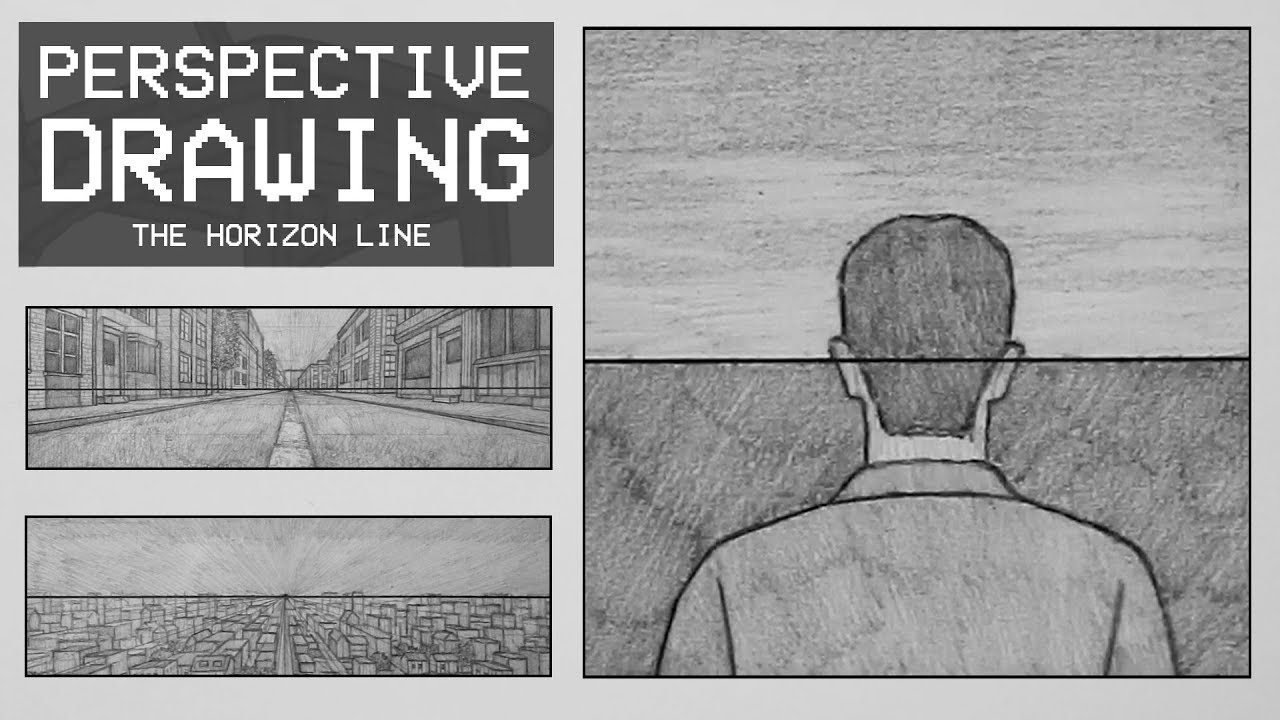
Learn the fundamentals of one-point perspective drawing with Dan Beardshaw, including horizon lines, vanishing points, and practical examples.
Key Takeaways
- One-point perspective uses a single vanishing point to create depth.
- The horizon line represents the viewer's eye level and affects perspective.
- Simple shapes like boxes are essential building blocks for complex drawings.
- Moving the vanishing point changes the viewer's perspective within the scene.
- Practicing these fundamentals prepares artists for more advanced perspective techniques.
What the video covers
- Introduction to one-point perspective and its use of a single vanishing point.
- Explanation of horizon line placement and its relation to eye level.
- Drawing simple boxes to illustrate one-point perspective principles.
- Using boxes to construct more complex drawings and scenes.
- Creating a street scene example with construction lines and perspective blockout.
- Adjusting the vanishing point along the horizon line to change the viewpoint.
- Noting exceptions like angled vehicles using two-point perspective.
- Drawing an interior room from a top-down perspective using one-point perspective.
- Encouragement for beginners to practice and recreate examples.
- Mention of upcoming videos covering two and three-point perspectives and additional resources on Patreon.
Chapters
- 00:00Introduction to One-Point Perspective
- 00:31Drawing Boxes Using One-Point Perspective
- 01:02Understanding Horizon Line and Viewpoint
- 01:33Importance of Boxes in Perspective Drawing
- 02:01Creating a Street Scene Example
- 02:45Rendering and Exceptions to One-Point Perspective
- 03:14Drawing an Interior Room in Perspective
- 03:43Summary and Encouragement to Practice
- 04:10Additional Resources and Closing Remarks
Full Transcript — Download SRT & Markdown
Speaker A
Welcome everyone to another episode in the perspective drawing series. In this video, we are going to be learning about one-point perspective. I have briefly discussed vanishing points in a previous episode, and in this one, we are going to be expanding on that.
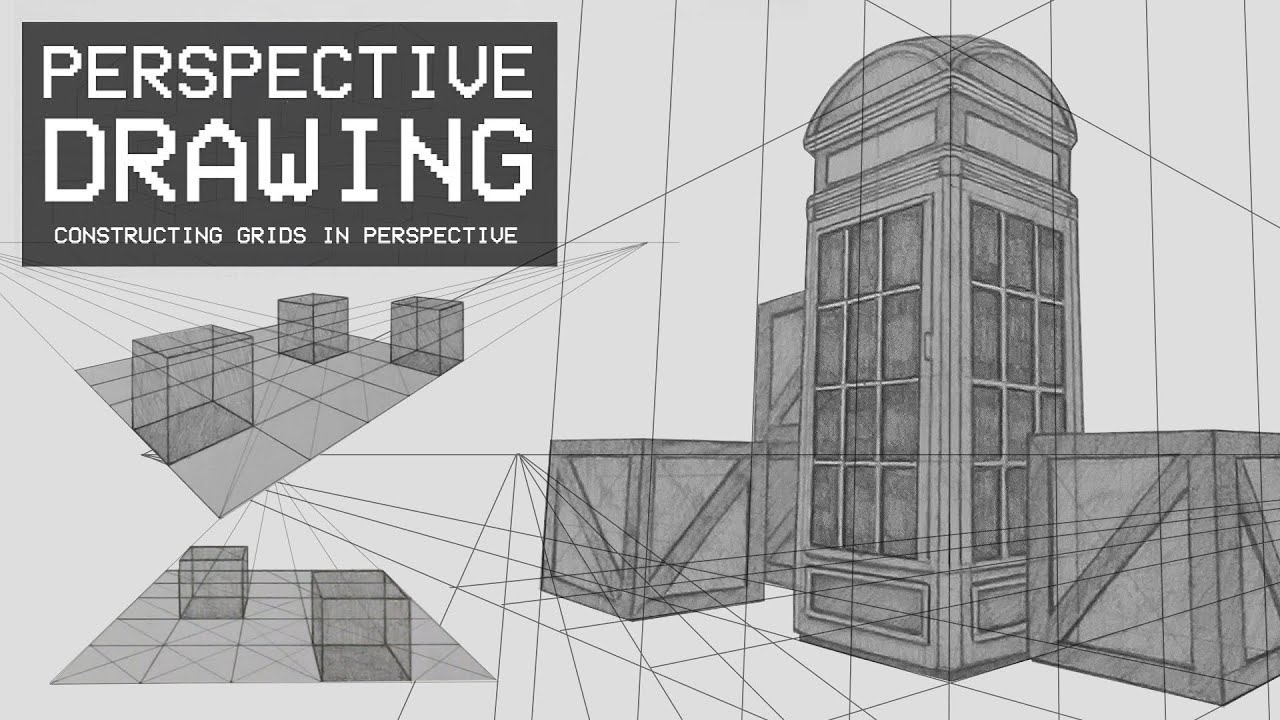
Speaker A
By taking a look at one-point perspective, this means using only one vanishing point to create your drawings. It's common to assume that one-point perspective is simple, and whilst that can be true, it still has a lot of
Speaker A
potential to produce interesting images. So let's begin with a simple example. Here, I have established the horizon line, and I have placed the vanishing point in the center. Now, I am going to draw in some boxes using that point. These are
Speaker A
drawn in one-point perspective, and I'll likely begin the episodes on two and three points perspective in a similar way because drawing boxes like this is a simple way to illustrate the use of vanishing points. Now here we have these boxes of
Speaker A
different sizes placed in this space. Notice how one plane is flat, whilst the others are converging to that vanishing point. If I draw them above the horizon, I will be looking up at them from below. If I draw them below the horizon, I will be
Speaker A
looking at them from above. Remember that this is because the horizon line is our eye level. This is a good exercise to start with if you are a beginner. Try drawing boxes like this in one-point perspective. You may assume that drawing out simple
Speaker A
boxes will be of little benefit when learning to draw, but as we progress through this series, you'll notice that we depend on boxes and other basic forms to construct and draw almost anything in perspective. And so, to give you an
Speaker A
example, I am going to draw a street scene in one-point perspective, and I'll begin by lightly drafting in some construction lines. Here, I just repeat what I had done in the previous example, except this time I have an idea of what
Speaker A
I want to draw, and so I arrange these boxes with that in mind. This perspective blockout can then be used to draw everything more accurately. Remember that you can also move the vanishing point across the horizon line, changing the view of the drawing. As I
Speaker A
create this drawing, notice how everything responds to the perspective that is applied. All of these different elements, like the windows on the buildings, the cars on the street, all of it converges to that vanishing point. Although you might have noticed that
Speaker A
this vehicle is on an angle. This is an exception. It's actually in two-point perspective, which we will be covering in the next video. So once everything was constructed correctly, I began to render the image. A street view like this is
Speaker A
a common example of one-point perspective. If you were to go stand in a similar street in real life, you would see the same result, and that's what perspective is all about. It's about generating that realistic space, turning
Speaker A
a flat drawing surface into a three-dimensional world. So now, let's take a look at another example. As always, I begin by establishing the horizon line, and then I place a vanishing point on this line. Again, for this example, let's
Speaker A
keep it in the center. Now, I am going to be drawing the interior of a building from a top-down view, and building plans are usually presented as flat projections, but seeing as I am drawing in perspective, this will be done
Speaker A
three-dimensionally. Once I have created some walls around this room, which also establishes the floor, I can start to draw in some objects. Pay attention to how everything is directed to the vanishing point. All of this is being blocked in using basic
Speaker A
shapes. Drawing out simple boxes is really useful because it allows you to construct more complex forms within them whilst keeping within the perspective that is applied. These examples we have taken a look at allow you to understand the potential
Speaker A
drawings that can be created in simple one-point perspective. We will be exploring different techniques and methods throughout these episodes, so don't worry too much if a lot of these end up looking a little overwhelming. However, I'd encourage you
Speaker A
to try and recreate some of these drawings. You'll find that it's actually pretty simple. You need only to focus on one vanishing point for this, and the resulting images can look great. We will continue to progress onto more
Speaker A
complex techniques in later episodes. I have a Patreon page that is used as a way for me to upload some additional content, and it's a good way to directly support the channel, so do consider checking that out. Thank you for watching this video. If you
Speaker A
enjoyed it, then please leave a like. Be sure to subscribe with the notifications on to stay up to date, and if you have any questions, feel free to comment below. You can also find me on various social media. All of those will be listed in the
Speaker A
description. That is all from me today. I will see you in the next video.
Topics:one-point perspectiveperspective drawingvanishing pointhorizon linedrawing tutorialDan Beardshawart fundamentalsstreet scene drawinginterior perspectivebeginner drawing tips