Skip to content
Get App

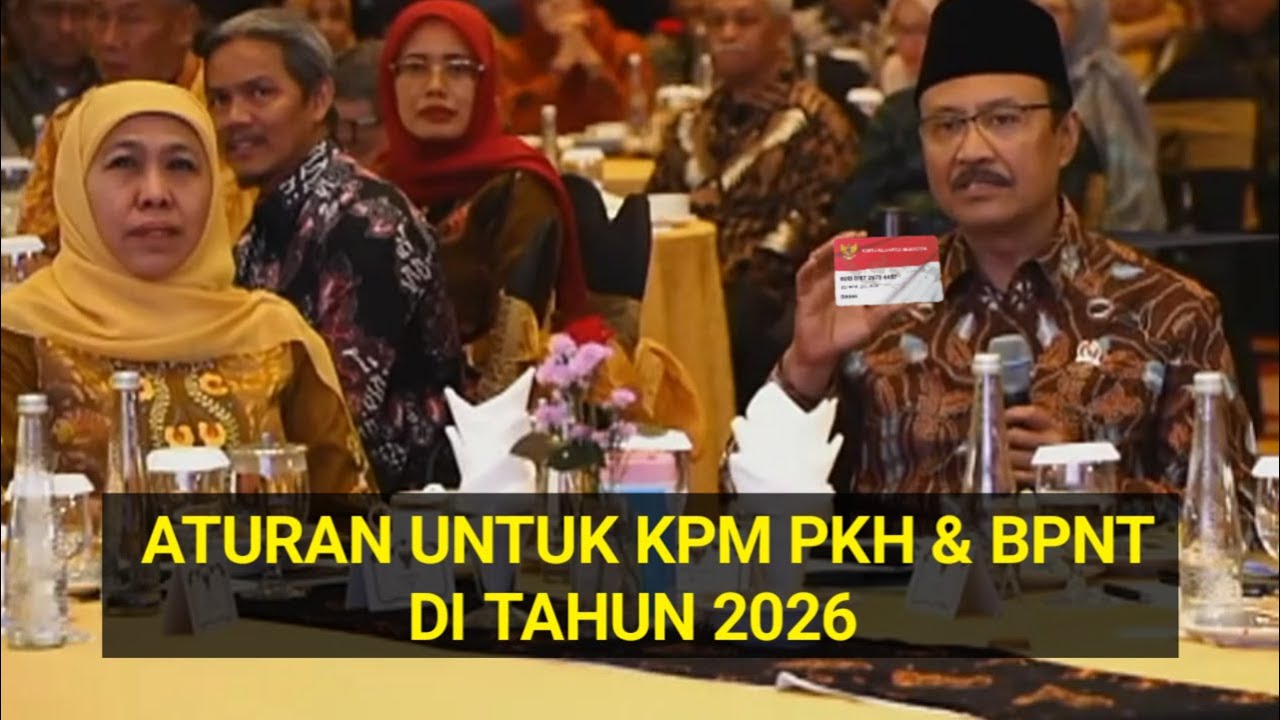
PERATURAN BANSOS PKH & BPNT TAHUN 2026/2027 | INFO PKH HARI INI 😍

Overview of PKH and BPNT social assistance regulations for 2026-2027, focusing on decile targeting and quota adjustments.

Key Takeaways

  • PKH and BPNT social assistance programs are becoming more targeted with stricter decile eligibility.
  • Quotas limit the number of recipients, prioritizing lower deciles to maximize aid effectiveness.
  • Data honesty and verification are critical for accurate decile classification and fair distribution.
  • BPS holds the authority to update decile rankings based on comprehensive data collection.
  • Local officials facilitate data collection but cannot directly alter decile rankings.

What the video covers

  • The video explains the latest regulations for PKH and BPNT social assistance programs for 2026-2027.
  • BLTS assistance previously covered deciles 1 to 4 with a quota of 35 million recipients without filtering.
  • PKH social assistance quota is limited to 10 million, primarily covering deciles 1 and 2, with decile 3 waiting.
  • Food assistance recipients in 2025 included deciles 1 to 5, but in 2026 the program targets deciles 1 to 4.
  • Data updates involve recording 39 variables about education, occupation, assets, and housing conditions.
  • The BPS is responsible for recalculating deciles based on submitted data, which can result in decile changes up or down.
  • Local authorities cannot lower deciles; they only collect complaints and submit data to BPS for re-ranking.
  • Higher education, better occupation, better house conditions, and more assets increase decile ranking.
  • There are still about 5 million families in decile 1 who have not received PKH assistance and are prioritized.
  • The program aims to become more targeted and equitable by narrowing down eligible deciles over time.

Answers

Questions about this video

Who is eligible to receive PKH social assistance in 2026-2027?

PKH social assistance is targeted primarily at families in deciles 1 and 2, with a quota of 10 million recipients. Decile 3 recipients may have to wait as the program narrows eligibility.

How are decile rankings determined for social assistance?

Decile rankings are calculated by BPS based on 39 variables including education, occupation, assets, and housing conditions. Rankings can change after data verification and recalculation.

Can local officials change a family's decile ranking for social assistance?

No, local officials cannot directly lower or change decile rankings. They collect complaints and submit data to BPS, which has the authority to update decile classifications.

Full Transcript — Download SRT & Markdown

00:00
Speaker A
Important announcement regarding the latest regulations for PKH and BPNT social assistance for 2026-2027. Please listen carefully.
00:11
Speaker A
The last one was the BLTS. Do you still remember the BLTS? You do, right?
00:17
Speaker A
Who received the BLTS? Those who received it were deciles 1 to 4, sir. Everyone got it, sir. Given by the government because the quota was 35 million. So all deciles 1 to 4 weren't filtered. Basically, whether proposed or not, they all got it. Except for
00:34
Speaker A
those you crossed out. If you crossed them out because you felt they were already capable, then they weren't given any. It’s different for the people's schools. Now, for these people's schools, it's decile 1-2. For PKH, it’s decile 1 to 4. Deciles 1-4
00:49
Speaker A
can be proposed for PKH. But I apologize, ladies and gentlemen. Yes. So, decile 1 has about 9 million people, 9 million families. Meanwhile, the PKH social assistance quota is only for 10 million. So not all deciles 1 to 4
01:10
Speaker A
will get social assistance later. Do you understand this? Yes, there is such a thing as a social assistance quota.
01:18
Speaker A
If the previous BLTS quota was 35 million, 1 to 4 were all covered. For PKH, it's only 10 million, sir. 10 million is actually enough for deciles 1 and 2. That’s why I said those in decile 3 should wait in line first, sir.
01:36
Speaker A
For now, existing recipients are still allowed to receive it. But moving forward, we will narrow it down further. For example, the basic food assistance recipients. How many deciles were the food assistance recipients before, sir? Remember. Food assistance
01:53
Speaker A
was 1 to 5. Some answered 1 to 4. That means last year, in 2025, food assistance recipients were 1 to 5, they could apply, they could receive it. But this year, God willing, for the first term, we are cutting decile 5 so that
02:12
Speaker A
PKH and food assistance recipients are the same, 1 to 4. Can you understand that? It could be that next year we cut it again, sir. One more thing, sir.
02:24
Speaker A
One to 3, right, sir? Why is my decile eight even though I'm poor? Is there anyone like that? Are there any like that, ladies and gentlemen?
02:31
Speaker A
Yes, ready. Are there those who asked to lower their decile now? It seems everyone is racing to lower their decile. Is there anyone asking to increase their decile? There is.
02:42
Speaker A
So that’s it, ladies and gentlemen. Essentially, as the provider, what do you call it? Updating the data. We just record 39 questions. Ladies and gentlemen, what is your education, occupation, what are your assets, then what is your house condition, we record
03:00
Speaker A
that into the system and then hand it over to BPS. Yes, there will be a visualization later. The one that authorizes, the one that updates the final data and changes the decile is BPS. So, we only submit 39 or 49
03:20
Speaker A
variable questions, right? Isn't that so, ladies and gentlemen? So we fill in 39 variables, but you must be honest when filling them out. You must be honest. If you have a car, say you have a car. If you have a motorcycle, say
03:42
Speaker A
you have a motorcycle. Don't try to lower your decile; the public is already smart. I am sure they are already smart. Yes, ladies and gentlemen, you must clarify that. If they claim they don't have a motorcycle, is it true? If they say they don't
03:56
Speaker A
have a car, is it true? It must be clarified and verified to see if it matches the actual condition. Then we submit that data to the BPS. Within about 3 months, BPS will recalculate the decile. Yes, after that decile is
04:15
Speaker A
calculated, we don't know if the person's decile will stay the same, go up, or go down. So, the public asks for a decile reduction, they say. But a change in decile could mean it goes down, it goes up, or it stays the same.
04:35
Speaker A
That, ladies and gentlemen, can be understood, right? So the Ministry of Social Affairs, village heads, sub-district heads, department heads, and regents cannot lower the decile. What can we do? We can receive complaints from the public, fill in the data, submit it to BPS, and
04:56
Speaker A
then BPS will do a re-ranking. Hmm. Do you understand? What determines the decile? First, education, and second, occupation. The higher the education and the better the job, the decile will tend to be high. But it's not just that,
05:14
Speaker A
it's the condition of the house. If the house is nice, the floors are ceramic, the walls are concrete, the house is multi-story, then the decile will likely be high. Added to that are the assets. The more assets, like cars
05:29
Speaker A
or motorcycles, the higher the decile will be. Do you understand, ladies and gentlemen? Recently, the last one was BLTS (Fuel Cash Assistance). Ladies and gentlemen, do you still remember BLTS?
05:41
Speaker A
Still do, right? Who received BLTS? Those who got it were deciles 1 through 4, sir. Everyone got it, sir. Provided by the government because the quota was 35 million. So for all deciles 1 to 4, it didn't choose. Basically, whether they
05:56
Speaker A
proposed it or not, everyone got it. Except those that you crossed out, of course. If you crossed them out because they were considered capable, then it wasn't given. It's different with the public school program. Now, for the public school program, this is
06:10
Speaker A
different. For PKH, it's deciles 1 to 4, right? Deciles 1 to 4 can be proposed for PKH. But I apologize, ladies and gentlemen. There are about 9 million people in decile 1, 9 million families.
06:29
Speaker A
Meanwhile, the PKH social assistance recipients are only for 10 million. So not all deciles 1 to 4 will receive social assistance. Do you understand this? Yes, there is something called a social assistance quota. If the BLTS quota yesterday was 35 million, 1
06:48
Speaker A
through 4 were all taken. For PKH, it is only 10 million, sir. 10 million is actually only enough for decile 1 and decile 2. That's why I said those in decile 3 should wait in line first, sir. For now, old recipients are still
07:05
Speaker A
allowed to receive it. But moving forward, we will narrow it down further. For example, the basic food assistance recipients. For the food aid recipients yesterday, was it deciles one to how many, sir? I recall. The food aid was deciles 1 through 5. Some
07:22
Speaker A
answered 1 through 4. So, in 2025, food aid recipients from deciles 1 to 5 were allowed to apply and receive it. But this year, God willing, for the first phase, we are cutting it to decile 5 so that PKH and food aid recipients are
07:41
Speaker A
the same, 1 to 5. Is that understood? It could be cut again next year, sir.
07:49
Speaker A
One more thing, sir. 1 through 3. Because we are becoming more targeted, those in the lower deciles should all receive it. Because there are still about 5 million in decile 1 who haven't received PKH. So, there are 5 million people still in
08:05
Speaker A
that category who haven't received PKH social aid, sir. Now, we are pushing for decile 1 to be proposed so they can receive PKH. That is roughly the PBI.
08:18
Speaker A
PBI is still 1 through 5 and so on.
Topics:PKHBPNTsocial assistanceIndonesiadecile targetingBLTSfood assistanceBPS data2026 regulationssocial aid quota

Get More with the SozAI App

Transcribe recordings, audio files, and YouTube videos — with AI summaries and speaker detection. 30 minutes free.

Or transcribe another YouTube video here →