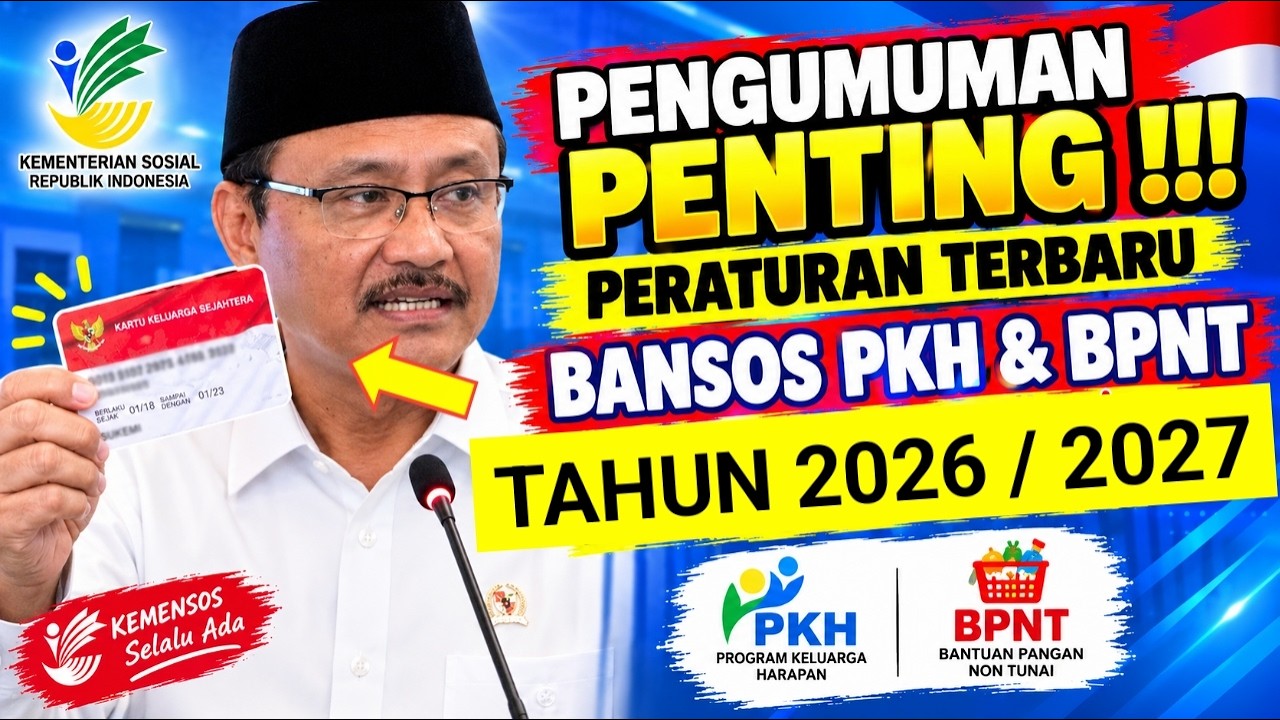
Overview of the 6 key data points checked by Indonesia's digital social protection system to determine eligibility for social assistance in 2027.
Key Takeaways
- Indonesia is moving towards a fully digital and interoperable social assistance eligibility system.
- Real-time data verification reduces the need for manual document submission and potential fraud.
- Six specific data filters help ensure social assistance reaches the intended low-income households.
- The system aims to minimize exclusion and inclusion errors in social assistance distribution.
- The pilot phase allows for feedback and adjustments before full implementation in 2027.
What the video covers
- The Indonesian government is piloting a digital social protection system to assess eligibility for social assistance programs like PKH and BPNT.
- The system uses data interoperability to verify applicant data in real-time without requiring document uploads.
- Six key data points are checked: community decile, civil servant status, BPJS Ketenagakerjaan wage earner status, four-wheeled vehicle ownership, electricity consumption, and land certificate ownership.
- Community decile data is sourced from the Central Statistics Agency (BPS), focusing on households in deciles 1 to 4.
- Civil servant status is verified through the State Civil Service Agency (BKN); civil servants are currently ineligible for social assistance.
- Employment social security data checks if any family member is a wage earner with a salary above 1.082 million rupiah, which disqualifies eligibility.
- Vehicle ownership is verified via the traffic police corps, focusing on ownership of four-wheeled vehicles.
- Electricity consumption and power capacity are assessed, with thresholds set at above 41 kWh per capita and power capacity above 900 VA, but higher power capacity alone does not disqualify.
- Land certificate ownership is checked through the Ministry of Agrarian Affairs and Spatial Planning and the National Land Agency (BPN).
- The system is still in testing, with ongoing evaluations to reduce errors in social assistance distribution ahead of the 2027 beneficiary determination.
Chapters
- 00:00Introduction to Digital Social Protection System
- 00:30Data Interoperability and Real-Time Verification
- 01:00Community Decile and Civil Servant Status Checks
- 02:00Employment Social Security and Wage Earner Filter
- 03:00Vehicle Ownership and Electricity Consumption Filters
- 04:00Land Certificate Verification and System Testing
- 05:00Goals and Future Evaluation of the System
Full Transcript — Download SRT & Markdown
Speaker A
People who want to receive social assistance through digital social protection need to know and pay attention to the data that the system will check. The government is currently testing a digital social protection system to assess the eligibility of those registering as prospective social assistance recipients. This system uses the principle of data interoperability, meaning people do not need to upload various documents to prove their circumstances. The digital social protection piloting coordinator from the Committee for the Acceleration of Digital Transformation, Rahmat Danu Andika, emphasized that data will be checked in real-time through several related government systems upon registration. So, what data will be checked? The first data to be checked is the community decile. For the Family Hope Program (PKH) and the food assistance program, the criteria currently used are households in deciles 1 to 4. This data is checked directly with the Central Statistics Agency or BPS. The system will also check employment status through data from the State Civil Service Agency or BKN. Civil servant status serves as one of the filters in the eligibility assessment. Currently, social assistance recipients cannot hold civil servant status. Another data point checked is employment social security (BPJS Ketenagakerjaan) membership status. However, it does not check all BPJS Ketenagakerjaan participants. The system will check if there are any participants within the applicant's family with the status of wage earners. Wage-earning participants are workers who receive a salary from a company with BPJS Ketenagakerjaan contributions paid by the employer. There is currently a wage threshold used in that filter. Those with a wage above 1.082 million rupiah per month will be deemed ineligible based on this filter. Personal vehicle ownership, specifically four-wheeled vehicles, will also go through a verification process. The system will check vehicle ownership data through the traffic police corps. The filter currently used is the ownership of a four-wheeled vehicle. Electricity consumption data is one of the filters used to assess eligibility. The system will check household electricity consumption and power capacity. One of the current limits used is electricity consumption above 41 kWh per capita and power capacity above 900 VA. However, higher power capacity does not automatically make someone ineligible because the system also considers electricity consumption per capita. Additionally, land certificate ownership will also be subject to verification. This data will be checked through the database of the Ministry of Agrarian Affairs and Spatial Planning and the National Land Agency or BPN. It should be noted that all these filters are still in the testing phase. The government is still accepting input and will conduct evaluations ahead of the determination of beneficiaries for the Family Hope Program (PKH) and non-cash food assistance (BPNT) in 2027. According to Rahmat, these filters were created to reduce exclusion and inclusion errors in social assistance distribution via the digital social protection system. When people register, their data will be checked in real-time through integrated government systems. The results will show whether the applicant falls into the potentially eligible or ineligible category based on the filters used. So those are the six data points currently checked in the Digital Perlinsos system to assess the eligibility of social assistance applicants.
Speaker A
those registering as prospective social assistance recipients. This system uses the principle of data interoperability, meaning people do not need to upload various documents to prove their circumstances. The digital social protection piloting coordinator from the Committee for the Acceleration of
Speaker A
Digital Transformation, Rahmat Danu Andika, emphasized that data will be checked in real-time through several related government systems upon registration. So, what data will be checked? The first data to be checked is the community decile. For the Family Hope Program (PKH) and the food
Speaker A
assistance program, the criteria currently used are households in deciles 1 to 4. This data is checked directly with the Central Statistics Agency or BPS. The system will also check employment status through data from the State Civil Service Agency or
Speaker A
BKN. Civil servant status serves as one of the filters in the eligibility assessment. Currently, social assistance recipients cannot hold civil servant status. Another data point checked is employment social security ( BPJS Ketenagakerjaan) membership status . However, it does not check all BPJS
Speaker A
Ketenagakerjaan participants. The system will check if there are any participants within the applicant's family with the status of wage earners.
Speaker A
Wage-earning participants are workers who receive a salary from a company with BPJS Ketenagakerjaan contributions paid by the employer. There is currently a wage threshold used in that filter. Those with a wage above 1.082 million rupiah per month will be deemed
Speaker A
ineligible based on this filter. Personal vehicle ownership, specifically four-wheeled vehicles, will also go through a verification process. The system will check vehicle ownership data through the traffic police corps. The filter currently used is the ownership of a four-wheeled
Speaker A
vehicle. Electricity consumption data is one of the filters used to assess eligibility. The system will check household electricity consumption and power capacity. One of the current limits used is electricity consumption above 41 kWh per capita and power capacity above 900 VA. However, higher
Speaker A
power capacity does not automatically make someone ineligible because the system also considers electricity consumption per capita. Additionally, land certificate ownership will also be subject to verification. This data will be checked through the database of the Ministry of Agrarian Affairs and
Speaker A
Spatial Planning and the National Land Agency or BPN. It should be noted that all these filters are still in the testing phase. The government is still accepting input and will conduct evaluations ahead of the determination of beneficiaries for the Family Hope
Speaker A
Program (PKH) and non-cash food assistance (BPNT) in 2027. According to Rahmat, these filters were created to reduce exclusion and inclusion errors in social assistance distribution via the digital social protection system.
Speaker A
When people register, their data will be checked in real-time through integrated government systems. The results will show whether the applicant falls into the potentially eligible or ineligible category based on the filters used. So those are the six data
Speaker A
points currently checked in the Digital Perlinsos system to assess the eligibility of social assistance applicants.
Topics:digital social protectionsocial assistance eligibilityIndonesia social aidFamily Hope ProgramPKHBPNTdata interoperabilityreal-time verificationsocial security BPJSdigital transformation