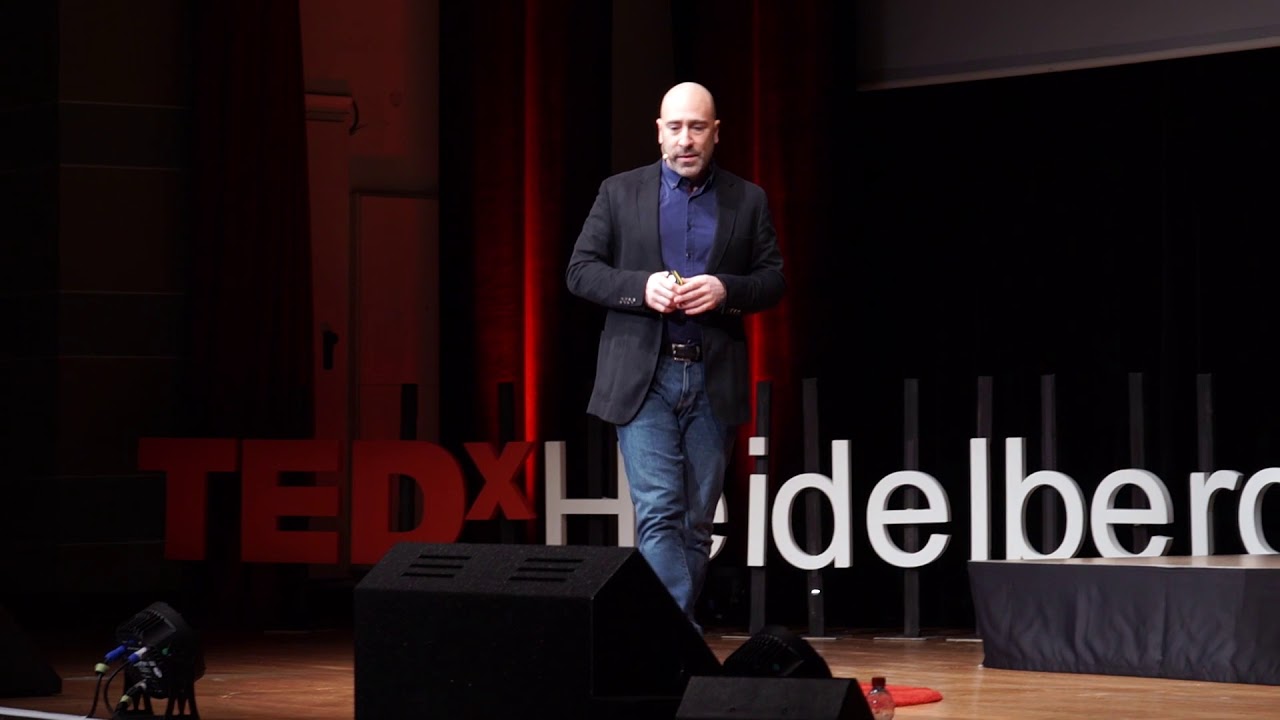
Lecture on behavioral genetics, heritability, gene-environment interactions, and kin recognition by Robert Sapolsky, exploring complex biological and social behavior concepts.
Key Takeaways
- Heritability and inheritance are distinct concepts crucial for interpreting genetic influence on traits.
- Gene-environment interactions are constant and essential for understanding behavioral genetics.
- Different biological disciplines offer complementary but sometimes conflicting perspectives on behavior.
- Modern behavioral genetics integrates molecular biology to better understand gene-behavior variability.
- Kin recognition involves complex sensory and hormonal mechanisms that influence social behaviors.
What the video covers
- Clarifies the difference between inheritance and heritability using the example of finger number variability.
- Discusses common misunderstandings about heritability and gene-environment interactions in behavioral genetics.
- Explains the coexistence and conflict among evolutionary, molecular, and genetic approaches to social behavior biology.
- Introduces epigenetics at three levels: cultural/environmental influence, gene regulation, and molecular mechanisms like chromatin structure.
- Highlights the limitations and strengths of classical and modern behavioral genetics, including twin and adoption studies.
- Emphasizes the importance of understanding gene-environment interactions rather than simplistic genetic determinism.
- Previews upcoming lectures on ethology, neurology, and endocrinology to broaden understanding of behavior biology.
- Discusses kin recognition mechanisms in animals, including pheromone detection and the role of oxytocin and vasopressin.
- Mentions the balance between inbreeding disadvantages and kin selection benefits in humans and other species.
- Notes the role of sensory and endocrine systems in parental recognition and care in primates.
Chapters
- 00:00Introduction and Review of Heritability Concepts
- 04:32Epigenetics: Multiple Levels of Definition
- 09:14Behavioral Genetics: Classical vs Modern Approaches
- 13:36IQ Differences and Birth Order Effects
- 21:22Kin Recognition and Pheromone Signaling
- 25:47Role of Oxytocin and Vasopressin in Social Behavior
- 30:08Parental Recognition and Endocrine Regulation
- 34:54Balancing Inbreeding and Kin Selection in Humans
- 40:20Sensory Systems and Social Recognition in Primates
Full Transcript — Download SRT & Markdown
Speaker A
Today, we will move into new territory within a new framework. But first, let’s go over various problem areas from the office hours and comments from my TAs. Let’s see where the serious gaps in understanding currently lie. It seems that over the last two days of
Speaker A
lectures on behavioral genetics, a whole bunch of them have piled up. A lot of difficulties have arisen. As it turns out, one of the most complex, difficult to understand, insidious, and tiresome concepts in the entire course is heritability. Remember the following
Speaker A
example. It shows the fundamental difference between something being inherited and the degree of heritability of a trait. The fact that most people have five fingers shows that having five fingers is inherited.
Speaker A
The fact that having a different number of fingers is almost always explained by environmental factors indicates that, despite this, the variability in the number of fingers is almost never inherited. So figure this example out, and you will master two useful concepts.
Speaker A
What is the use here? To start with, what is the benefit of all this? It is important to understand the differences. For some reason, it is quite often believed that they mean the same thing.
Speaker A
And since that is the belief, people think both terms refer to heritability. Something genetically regulated, genetically determined, it doesn't matter. Two different terms. This is very important because when newspapers run another headline, "Scientists discovered," it usually refers to
Speaker A
heritability with some misleading numbers, and then people think they’ve been told how much genes determine any general property of that trait. So it is important to distinguish between these concepts.
Speaker A
Another reason is not only to eliminate meaningless and incorrect interpretations of the term, but also to understand that it allows us to see how and when gene-environment interactions occur. To be precise, how and when these interactions happen.
Speaker A
They happen all the time. Remember our last lecture? It’s like asking what contributes more to the area of a square? The height, the length, the roundness, or something else? Yes, constant interactions between genes and the environment. They explain the most
Speaker A
interesting, important interactions and what and how. Understand this, and you will stop being confused. Understand this and get an idea of gene-environment interaction. Okay.
Speaker A
There are other problems, too. Earlier, we looked at three main approaches to the biology of social behavior. Roughly speaking, evolutionary, molecular, and genetic. It should already be clear to you that if you sit within one of these frameworks, you hate the others,
Speaker A
diligently tearing them to shreds. This is how we arrive at the first serious conflict. Does that mean one of the approaches is wrong? No, that’s not the case. They are all correct. Some are more correct than others, and some
Speaker A
are significantly better. Nevertheless, these are all, returning to the first lecture, different levels of description. A way to think about this from a different angle in light of a recent topic. This was inspired by some questions after class. In the last
Speaker A
couple of lectures, the term epigenetics popped up. There are at least three levels, three different approaches used to define this concept.
Speaker A
What is epigenetics? It’s how culture, the environment, and so on influence biology. That’s a very general definition. And notice, here biology becomes a synonym for genetics, which is incorrect. Nevertheless, in general terms, it works. Here is another
Speaker A
discipline. Introduction to molecular biology. What is epigenetics? It is how the environment turns genes on and off.
Speaker A
And what is epigenetics at the next, more reductive level? Regulation of chromatin structure, gene methylation, and so on. Don't panic if you don't understand these terms. We have already covered them. It’s just a scientific way of saying changing transcription
Speaker A
factor access to DNA. Don’t worry. The point is that this is an entirely different level of definition, and it’s important to remember that. We are beginning to distinguish between disciplinary approaches. We see how one discipline decided that they had found
Speaker A
the answer to the question. This is how culture influences biology. Yeah, wait, show me which genes we are talking about. We are talking about genes. Wait, show me what the mechanism of chromatin reconstruction is. Is it reversible? The answer of one
Speaker A
discipline is a starting point for another. A beautiful, scientifically grounded answer from one discipline is grounds for contempt by another. And you call that science. And our goal is to learn how to navigate between all these approaches. Next point. Another
Speaker A
problem has emerged. The balance of approval and criticism. Obviously, I have been tearing apart behavioral genetics too much lately. So I will clarify a bit. First, we can broadly say what relates to classical behavioral genetics. Comparing identical and fraternal twins, studying
Speaker A
adopted children, and twins adopted at birth. In all cases, we only indirectly assume that something is happening at the genetic level. On the other hand, in, so to speak, modern behavioral genetics, we combined these traditional approaches with molecular biology. And
Speaker A
in the end, we gained an understanding of the gene, how it relates to the variability of human behavior. You know the behavior and to some extent its variability, how it relates to gene variability. This is a modern aspect
Speaker A
with great potential. What is it good for? To claim something like "this is 73% genetically determined." And then we discard that idea because it's nonsense. That is the usefulness of this aspect. So, you are studying adopted children.
Speaker A
A classic behavioral genetics study where children were adopted at birth within a few seconds and raised in different families. Oh, you didn't take the environment into account. Don't forget about the prenatal environment.
Speaker A
Oh, you didn't account for the environment, as adoption doesn't happen randomly. So this approach is useless?
Speaker A
No, it shows well that by excluding all environmental types people consider important, the ones that matter much more remain. We haven't fully excluded the environment. And since it’s all gene-environment interaction, we can’t possibly get such absurd figures. But at least it shows a sphere
Speaker A
where many people would assume more environmental influence, when it’s much less. It’s a more conservative and sober approach to this field. The fact that too few people actually apply it gives grounds for criticism. And yet, there is a lot of good in behavioral
Speaker A
genetics, but it is useful in a limited sphere. So, we are just beginning to sort through confusing concepts.
Speaker A
Clearly, no one on the exam will be asked which discipline is better, nicer, dearer, and all that. But we are learning to recognize different approaches and the wonderful variety of ways to analyze mating, fruit flies, and so on. And I think you’ve already
Speaker A
understood that this is the point of our classes. By the way, I recalled something from the first lecture. I think there was a student from the English literature department around here. If you could, email me how you like it here, what about next week. But
Speaker A
I am curious. I am glad you are here. Whoever you are, if you haven't run away after the first class, let's move on. The schedule. Next Monday we have a lecture on another discipline. That is ethology. We will see that it’s a
Speaker A
completely different approach and all that. Wednesday, Friday, and next Monday are introductory sessions. They will be conducted by my teaching assistants. Two lectures dedicated to an introduction to neurology. The third is an introduction to endocrinology.
Speaker A
There will be a brief overview specifically for people unfamiliar with these topics. But I think it wouldn't hurt, even if you think you know them, it wouldn't hurt to refresh your knowledge. It will be useful for everyone. Then we have two more
Speaker A
lectures. More complex topics—basic questions of neuroendocr...
Speaker A
in today’s New York Times about the Snakes and Ladders study? Has anyone, nobody saw it today? You know this game . Come on, we all played it. It’s a massive study supported by the World Health Organization. A truly landmark
Speaker A
work in this field. According to the results, Nepalese play Snakes and Ladders better than Belgians. Isn't that cool? I don’t know how you missed it. Things like that should be known. It is important. What do you need to know about the experiment? This
Speaker A
serious study shows that Nepalese are not better at playing Chutes and Ladders than Belgians. Ask questions, since you are so blatantly ignorant about this. What information do you need to admire this work and tell your whole dorm about it tonight? What else
Speaker A
do you need to know? What does "better" mean? What does "better" mean? Uh-huh. A social relativist. Does that mean you learn more about yourself while playing ? Or maybe you make the world a better place? You win, you just win. So,
Speaker A
winning is your goal. Good question. What else do you want to know? Yes. Why?
Speaker A
Why else are you asking? Read Aristotle . This problem has interested humanity since we left the cave. And now we know . My son, the difference between knowledge and wisdom. Good. Why? What else do you want to know? Any questions
Speaker A
? Yes. What methods were used? Methods are wonderful, various methods. Let's break it down in detail, using the critical tools you already have, before deciding how impressed you are or are not by this study. What questions can be asked about the
Speaker A
methodology? What population participated in the sample? Great question, as it is the first problem with the methodology. Is your sample size large enough to speak with confidence about an entire population?
Speaker A
Excellent question. The experiment was conducted on the entire. Population of Nepal and Belgium. A good experiment.
Speaker A
What else do you want to know? Any more questions? As for the method, did they pit Nepalese against Belgians in the game, or what?
Speaker A
Wonderful. Each study participant from Belgium and Nepal played once against every other participant. That's why both countries haven't been in the news much lately. Everyone was busy with the experiment. So, good methodology, large sample, random distribution of rounds.
Speaker A
What else do you want to know? Why should one read about the studied questions and the subject matter? Why?
Speaker A
The same thing again. It's obvious. To know ourselves, to know the Nepalese and Belgians, or something like that.
Speaker A
Personally, I'm glad I know, I'm glad someone studied this. What else? I see. The question of what to consider an important subject of research is a matter of subjective taste. I think it's very important. What else do you
Speaker A
want to know? Something about the conclusions. The researchers aren't sure, but they are speculating about a genetic component. Yes, the question in the back. Yes. What skills are needed?
Speaker A
What skills? What skills are needed? There is a whole list. Let's see. Spatial memory skills, executive function skills, telekinesis skills, various areas. What else do you need to know? Yes, they are heritable. Are they heritable? Excellent. What exactly is
Speaker A
meant by "heritable"? Scientists allow for a certain degree of heritability, and they have taken everything into account. They went through all the points we have already discussed.
Speaker A
Specifically, every participant from Nepal and Belgium was adopted by someone in Ecuador. And the embryos were transplanted right after conception, all that prenatal stuff.
Speaker A
What else do you need to know to decide if you are impressed by the fact that Nepalese are better at Snakes and Ladders than Belgians? Yes.
Speaker A
Did they play equally well in childhood ? Yes, actually, they all played for the first time. They grew up in hydroponic gardens without slides or ladders, and were released only for this experiment.
Speaker A
What else? What is the variance of the results within each group? Good question. Now we are getting a bit closer to the point. All the Nepalese achieved the exact same result. And all the Belgians achieved the same result.
Speaker A
Impressive, isn't it? You are already amazed. Are you ready to run out of here and spread the news? What else needs to be known? Yes. Who went first?
Speaker A
Who went first? In random order. A draw among all participants by, what do you call it? Rock, paper, scissors. They played rock, paper, scissors. And furthermore, they had to play it in Esperanto. Yes.
Speaker A
In what environment was the study conducted? They were released from the hydroponic garden, and then everyone was placed in an absolutely sterile, isolated environment with only a bunch of People magazines in a language they didn't know. So all possible environmental
Speaker A
influences were accounted for. What else needs to be known? How much better were the Nepalese?
Speaker A
Maybe by one-thousandth. There. That's it. A huge sample size. Cross-embryo adoption. They created a sterile environment and placed the participants there. They used the correct methods.
Speaker A
They eliminated the possibility of a non-random outcome. All of this is very impressive indeed. But what was the difference? Was it significant? And this is the most important point, a skeptical remark to add to your arsenal of critical questions. Okay. Now you
Speaker A
have a bunch of techniques. They said: "Genes, you considered this, you considered that." Wow, they found differences. Wait a minute, they conducted the same experiment with all participants, and they had a large sample: "Everything is accounted for, a
Speaker A
great, wonderful, flawless experiment." They calculated every detail. But one important question should be asked. How big is the difference? Is it impressive ? Because we all think we have the basic techniques. I hope we do, in order to sort out these questions. Okay
Speaker A
. Was the study conducted transparently and objectively? Did the scientists know who was Nepalese and who was Belgian? Was a blind method used? Are the experimental results falsifiable, which is the foundation of experimental science? Could someone independently repeat the experiment? We all know
Speaker A
these questions should be asked. But in many cases, before getting excited, we forget to ask: "But how big is the difference?" Here is a real-life example for you. About three years ago, an article appeared in Science magazine . By now, you should know that Science
Speaker A
and Nature are the big fish on our planet when it comes to credibility. This article was about IQ. This article concerned the link between IQ and birth order. It was shown with stunning statistical significance and accounting for all factors. Everything was
Speaker A
accounted for as flawlessly as in the case of embryos grown in a hydroponic garden in Nepal. In this fundamental study of 250,000 eighteen-year-old Norwegians, they found that depending on whether one is a firstborn or a later child, there is a significant
Speaker A
difference in IQ. Alright, who among you is a firstborn child? Who among you is an only child? Who among you is a second child? Who was born third or later? Good. Who thinks that firstborns have the highest IQ? Okay, let's assume
Speaker A
everyone else thinks the opposite. Did anyone vote against themselves? Isn't that impressive? I have to give you credit. So, they found differences.
Speaker A
They found differences in this very reliable and robust way. Firstborns possess a higher IQ than subsequent children. The analysis was restricted to second-born children to avoid confusion. And it was proven that firstborns have higher IQs. 250,000 people, while not the entire population
Speaker A
of Nepal or Belgium, is a huge sample size. The results are announced. It was the most thorough study in history.
Speaker A
What questions would you ask? Suggest a hypothesis for this experiment. Obviously, one of them is that parents stuff the first child with protein-rich food, while the second gets chips and whatnot. But let's look at other ways to explain this phenomenon in terms of
Speaker A
biological, sociocultural, immune, endocrine, and psychological factors. Yes, I think we all already know that with the first child, parents are sort of more afraid to make a mistake. They raise firstborns more strictly, so to speak, and they relax with the second
Speaker A
child. Firstborns are more likely to attend universities and colleges and more often do traditional things.
Speaker A
Alright. An excellent hypothesis. Parents invest more in the first child and panic over every little problem.
Speaker A
But the third child is already fending for themselves at six months old. So, investment in the child. Scientists investigated this hypothesis and refuted it, finding the following: if you are an only child, your IQ is, on average, lower than that of the eldest
Speaker A
child in a large family. So it's not about parental investment. It's about being the first among many. Yes.
Speaker A
Could it be that firstborns are expected to both take care of younger children and be independent?
Speaker A
Okay. Firstborns are pressured by the fact that they were born first. How does that raise IQ?
Speaker A
Perhaps early responsibility and being placed in more adult situations simply leads to an increase in IQ.
Speaker A
Okay, that is one of the models. In other words, firstborns end up in a teaching role quite early on. And it's a known fact that, over time, by teaching something, you yourself begin to understand the subject better. So,
Speaker A
it's all about the teacher function. This would explain the difference between an only child and a firstborn.
Speaker A
Could it be a teacher phenomenon? What else could it be? Any other ideas? Yes.
Speaker A
It depends on the age of the children being observed. If you compare their IQ , the older ones will likely be higher, as they have had more time to learn and more life experience. Great point, but under 12, younger children usually have
Speaker A
a higher IQ than firstborns. By age 18, when this study was conducted, they switch places. There's a theory as to why. Why do younger children have a higher IQ before age 12? Why does this change over time? Yes.
Speaker A
Could it be like language tests, where individual traits aren't considered? So , it’s the IQ test itself. It isn't always objective. However, a counterargument to this is that children without siblings also have different IQs. This possibility was ruled out. Yes.
Speaker A
I think in one of your lectures you mentioned that it’s related to the ratio of adults in a child's upbringing environment. If a child is an only child, they have more adults per child.
Speaker A
Right. That is another version of the parental investment model. The fewer the children, the more parental energy there is. Again, that is one of the standard assumptions. It was dismissed by comparing firstborns and children without siblings. It was the dominant
Speaker A
model, so data against it was collected well. Yes. Could the mother's age during pregnancy have an influence?
Speaker A
Okay, go on. Younger mothers have a better fetal environment. And naturally, women give birth to their firstborns at a younger age than subsequent children.
Speaker A
Right. Intrauterine effect. Quality: egg cells, maternal age. Scientists took these factors into account. Can anyone think of another intrauterine mechanism responsible for the difference between the first fetus in the mother's womb and the second, third , or fourth? What biological phenomenon
Speaker A
is possible? Yes. Stress level. Right. Stress level, which indicates the state of the intrauterine environment with each subsequent pregnancy. The stress level may increase. What else could happen over time from a biological perspective?
Speaker A
Remember progesterone from that lecture about creating new conditions and glucocorticoids. This is a bit more complex. You need to know quite a lot about gynecology and obstetrics. What is the danger of each subsequent pregnancy for the immune system?
Speaker A
Someone mumbled the answer. It is suppressed. Yes, immune suppression. A mother may lose health, which, generally speaking, is closely linked to the decline in egg quality with age. It also matters how many times the body goes through this.
Speaker A
What else is related to immunity and repeated pregnancies? Yes. With each subsequent pregnancy, the mother develops more antigens. All right.
Speaker A
Despite immune suppression, on average, later pregnancies have a higher probability of forming antibodies against the embryo. The scientists took that into account, too. They showed that a second child with younger siblings would adopt the firstborn's IQ if the firstborn died. They showed it
Speaker A
doesn't matter which birth order it is or how many antibodies are in the womb.
Speaker A
That is, by the way, one of the study's conclusions. What else? How about the fact that under 12, the second child has a higher IQ, but by eighteen, it's the first? There are theories.
Speaker A
Could it be related to their growth rate? After all, we’ve looked at examples of how one child grows much faster than their siblings at first, and over time, it takes a toll on their health.
Speaker A
Right. An extreme advantage that has to be paid for later. Possibly. What else? Think back to the idea of the firstborn's position in the family and their responsibilities. How does that affect family dynamics at first? Why is the second child more successful in the
Speaker A
first decade? Why does that change later on? What ideas do you have? Yes. Second. The child initially benefits from learning where the firstborn acts as the teacher. But then, the elder is influenced by this experience and responsibility, which explains the
Speaker A
shift in the difference. That is exactly one of the primary theories. It is most often used to explain this change with age. A second child arrives , and suddenly we have a primitive, infantile environment where an eight-year-old is watching Teletubbies
Speaker A
again for the first time in 6 years. That is the prevailing environment when a younger child is born. And the older ones are usually the ones teaching them , and it takes several years for the benefits of that to finally manifest.
Speaker A
That’s the main model. Another idea. How about parental resources? After all , on average, in Western countries, the larger the family, the lower its social and economic status. How does that fit into the picture? What else could be
Speaker A
happening? Yes, if the family's status is lower, it could mean that a greater burden is placed on the children. With younger siblings, you have to grow up sooner and face the real world. Yes, the younger children are hunting
Speaker A
squirrels instead of practicing violin. Another variation of the parental resources theory. The more children there are, the smaller the portion of parents per child and the higher the expenses. And each child gets less.
Speaker A
Because of this, they compared children not across different families, but within the same one. They accounted for everything. This study laid the foundation for decades, showing how IQ changes based on birth order in eighteen-year-old Norwegians in 2007.
Speaker A
What is the scale of the IQ difference in this experiment? 2.3 points. And let's return to the question that should have been asked from the very beginning, when these guys were planning to announce their findings and start selling self-help books on how to
Speaker A
get an IQ like a firstborn or something of that sort. The press jumped on this news. And of course, David Letterman made a couple of snide comments, but it’s 2.3 points. Sneezing during an IQ test and wiping your nose takes 8
Speaker A
seconds and will cost you 2.3 points because you’ll be distracted for a moment. A stunning example. Yes, these people conducted a flawless experiment.
Speaker A
Phenomenal. I have no idea who could have funded such a thing. But in the end, a very cool, indisputable, and quite reliable result is not at all the same thing as an important one. And ultimately, this grand study showed a
Speaker A
difference of 2.3 points. A prime example of the difference between how solid an experiment is, how confident you are in the findings, considering all criteria like sample size and objectivity. How confident are you in the findings, and how significant are
Speaker A
those findings? These are different things. Therefore, as we begin the material for the second half of the course, you should remember to use another tool in addition to those you already have: evaluating the significance of a result. The question
Speaker A
of whether a result is reliable is different from whether it is significant, whether it carries consequences. So, one more tool. Now, if you want, go tell everyone about snakes and ladders. And now let’s move on to a topic we touched upon in
Speaker A
previous lectures. We have different evolutionary models of individual and kin selection within and outside the group. We broke down at the molecular level why we share 50%of our genes with one relative, 25%with another, 12.5%, and so on. All this time, a question
Speaker A
remained, which we will focus on today. How do organisms, animals, individuals recognize their relatives? Because none of these evolutionary kin selection theories work if everything is based on the degree of relatedness. If we don’t know who is related to whom and
Speaker A
to what degree, we will examine the why or how. Yes, better how instead of why.
Speaker A
how animals, how social animals, recognize their kin. Obviously, you don’t need a complex organism for this. I had a great example. I added it to the syllabus at the last minute. An article about deer mice published a couple of weeks ago. Deer mice are
Speaker A
similar to their cousins, the voles. If they are cousins, some of them are monogamous and some are polygamous. It turns out this is a common situation for rodents. In polygamous groups of deer mice, the female mates with multiple males. As a result, afterward,
Speaker A
there will be sperm from different males in her vagina. From an evolutionary standpoint and considering all the rules we have studied, it is logical that intrasexual competition occurs between the sperm of different males. We already know about a similar
Speaker A
phenomenon among flies, where the sperm of one individual releases toxins that kill the rest, even though the female's health is at risk. This topic is often found in literature on sexual competition. Sperm competition. There is a hypothesis that something similar
Speaker A
is observed in humans as well. How does this happen in white-footed mice? I won’t go into the mechanism of this process, and I don't really want to anyway. Roughly speaking, the sperm of white-footed mice form groups, a joint
Speaker A
effort and all that. When they group up , they form a cluster that swims faster . The paper had various diagrams that I was too lazy to study in detail, but there is a problem in polygamous groups . If the sperm want to do things right
Speaker A
and need to form something like a team —a little love boat with sperm from one and only one individual—then, according to our assumptions, sperm from close relatives would be slightly less suitable, and sperm from a complete stranger would not work at all
Speaker A
. That is exactly what the paper studies. If you take sperm from males of a monogamous group and mix them together, they happily combine into this large cluster. But if you take sperm from species that evolved under the competitive pressure of polygamy,
Speaker A
the sperm will distinguish kinship and only combine with other sperm from the same male. You can immediately imagine various lock-and-key mechanisms that explain this. You can immediately imagine what the molecular mechanism is roughly like. But what’s striking is
Speaker A
that it’s not just organisms that recognize relatives. There are single cells that do this under evolutionary conditions. We already know these models. And if individual cells can do it, then whole organisms certainly can.
Speaker A
Let’s look at exactly how they manage to do it. Many species possess something very similar to the ability of these sperm: innate kin recognition.
Speaker A
How do we prove this? We are already familiar with classic methods like cross-fostering. We take newborn rodents from different females and swap them. If their later behavior toward their biological and non-biological siblings differs, there is something innate about it. Wait a minute, hold on
Speaker A
, what about the prenatal environment? Now let’s do prenatal adoption. Embryo transfer. The result is the same . Innate kin recognition is present in various rodent species. You can conduct an even cleaner experiment. Take two litters of rodents from the same
Speaker A
parents, and have them meet. There is no shared prenatal environment, and recognition can still be observed.
Speaker A
Place a rat in a cage with the urine of a sibling and the urine of a stranger, and it will more likely approach the former. You can go even further. Rats will approach the urine of siblings more readily than that of cousins,
Speaker A
which they would prefer over more distant relatives, and so on, all the way down to fourth and fifth cousins.
Speaker A
Incredible sensitivity. That’s how it should be. Otherwise, after all our theories, you wouldn't be able to understand who you should sacrifice yourself for. For two cousins or eight brothers, or however the calculation goes, without knowing who is who. In
Speaker A
some species, this happens at the instinctual level, which can be demonstrated. What mechanisms are at work in such cases? The most studied ones are olfactory mechanisms, specificities of scent. Pheromones. We have already heard this term and will hear much more about it. Communication
Speaker A
via pheromones. What does that require? If pheromones come from, say, the urine of different individuals, you need two things to figure out the degree of kinship with them. Qualitative differences in urine that reflect the genetic makeup of the individual who
Speaker A
provided the sample. And some sort of mechanism, an olfactory brain mechanism , to detect these differences. Both of these have been discovered. All right.
Speaker A
Recognition begins at the level of distinct urine odors. Let’s return to mobile genetic events. Remember, vertebrates have a very high rate of mobile events in the immune system, in genes related to immunity. Where you can mix everything up, have a bit of
Speaker A
luck, and produce an antibody that recognizes a brand-new pathogen. But in this region, there is an additional gene segment that also undergoes intense splicing, transposition, shuffling, and so on. Then a completely new protein is created. Using a combinatorial method, in about 400
Speaker A
quadrillion googolplexes, or something like that, you would create another organism with the same protein profile.
Speaker A
When a protein appears in this way, you can be sure that no other organism on the planet has another one like it.
Speaker A
This gene segment is called the major histocompatibility complex. MHC. A new concept: histocompatibility. All these organ transplants, how compatible the donor is, how close a relative they are , how many—in scientific terms for those in the know—how many common
Speaker A
antigenic determinants there are, how much the genetic fingerprints match, these protein identifiers. All of this determines histocompatibility. How successful will an organ transplant be?
Speaker A
Hence the name. Each of us, each organism, has produced a perhaps unique permutation of genes and created such a protein attached to the surface of every cell in the body. What is it for?
Speaker A
For training the immune system. If it encounters a cell with this thing, it’s one of "our own." Don’t hit it , don’t produce antibodies. And if it encounters something without such a protein, it’s an invasive pathogen, and it must be attacked. This is the
Speaker A
basis of the immune system's ability to distinguish between self and non-self. By the way, autoimmune diseases occur when the immune system glitches and mistakes one of the proteins encoded by the major histocompatibility complex genes for a foreign one. And we have
Speaker A
already heard about the tropical parasite trypanosome. As you know, it constantly shuffles its surface proteins. As soon as your immune system is ready to attack it by producing antibodies for recognition, it changes its MHC protein. There is another
Speaker A
tropical parasite, schistosoma. It turns out it can steal MHC proteins. From the surface of your cells and stick them onto itself. These are wolves in sheep’s histocompatibility proteins, or something like that. And this is one of the main areas where a
Speaker A
unique protein, encoded by a unique gene, a unique protein profile, allows the immune system to function properly.
Speaker A
It turns out there is one more application. These proteins can become soluble, which means they are no longer tied to the cell but just float around.
Speaker A
So, they are swimming in your saliva, urine, underarm sweat, and so on. And they initiate—these are complex mechanisms, the details of which I will probably skip. They make the pheromones emanating from you unique. As we will see in the next lectures, animals of
Speaker A
various species can recognize the species and sex of another individual: its age, degree of sexual maturity, state of health, pregnancy, anything.
Speaker A
But thanks to the major histocompatibility complex, they can also tell if it is a relative. All this shuffling, splicing, and gene movement is correlated to a certain extent with the degree of kinship. In other words, you smell your own urine, if you are
Speaker A
into that sort of thing. And, of course , the histocompatibility genes will completely match your own. Smell the urine of your sibling. There are even more questions about this, and the structure of this protein will be more similar to yours than the protein of a
Speaker A
second cousin or a stranger, for example, not a finger, if you are from Belgium. In that case, it is not only an innate recognition of a relative’s scent, but also the recognition of the degree of kinship. That is half the
Speaker A
battle. That is how a unique scent is created as far as pheromones are concerned. The next question is: how to create an olfactory system capable of distinguishing it? If you think about it, you can guess that we just need
Speaker A
olfactory receptors of the type that work on the lock-and-key principle. So, we need to create a protein of a certain shape that points to your unique profile. And we also need receptors of a unique complementary shape so that you can do this. Oh, this
Speaker A
one fits perfectly. Let's translate that into a signal to the brain that I am sniffing my own armpit. If instead you have a protein that fits the lock, but not quite perfectly, you get the message: "I am sniffing a brother's
Speaker A
armpit." And if it doesn't fit very well, and so on down the line, I think the principle is clear. If there are a thousand receptors of such a shape and each of them fits perfectly and holds the protein for 3 seconds, then each of
Speaker A
the thousand sends a signal. For this, it needs to be bound for 3 seconds. If every one of the thousand sends a signal, then it is me. If the receptors do not fit perfectly and only 800 of them remain bound for 3 seconds, and
Speaker A
only 800 send a signal, it means it is a sibling. I'm not sure if that's how it is, but it could very well be. This is exactly how it might be happening.
Speaker A
Lock-and-key interaction, genes encoding proteins of a certain shape and with certain functions. We can start with this. What do we have? We have a protein, the molecular basis of our conditions. If then, if and only if it is a close relative, it will send a
Speaker A
signal to the neurons responsible for cooperation. We already know that it is nonsense to claim that some neurons are responsible for cooperation. But we are speaking in general terms now. This is the first element, that particle, of all the conditions based on the degree
Speaker A
of kinship. How does the olfactory bulb do this? People are starting to learn more and more interesting things about two hormones linked to this process.
Speaker A
The first is oxytocin, and the second is vasopressin. In upcoming lectures, we will see that, as is known, particularly in females, oxytocin performs various functions during childbirth. And vasopressin is involved in uterine contractions. Any average endocrinologist will tell you that
Speaker A
these hormones are involved in uterine contractions and childbirth, but that is only a small part of their work.
Speaker A
Much more interesting is how they are connected to the process of recognizing the scent of the individual you have just given birth to. As it turns out, oxytocin and vasopressin tune the olfactory bulbs. In your olfactory eyes and ears, they tune the cells that
Speaker A
recognize MHC signals, tuning them to recognize kin. Then the conditions take effect. If the level of this hormone shows that I have just had a baby, and I feel that their scent fits this receptor very well, then I will
Speaker A
tirelessly care for them, unless it turns out to be my mom or grandma. Alright, let me rephrase that. If they are tiny and adorable meowing creatures , I will care for them and nurse them.
Speaker A
It turns out that oxytocin and vasopressin are responsible for exactly that. If you breed mice with oxytocin or vasopressin disabled, or their receptors—if these words are unfamiliar to you, you will learn about them in 2 weeks—you turn off these
Speaker A
genes and get so-called social anosmia. Anosmia is the inability to smell odors . Social anosmia is when your sense of smell works perfectly. For example, rats can distinguish between a wide variety of foods by scent, but cannot distinguish between individuals. A
Speaker A
curious article appeared a couple of weeks ago. It was previously believed that circulating oxytocin and vasopressin enter the olfactory system and produce this effect. However, the article showed for the first time that these hormones are produced directly in
Speaker A
the nostrils. That is how it works. Curiously, literature is also appearing that suggests mutations in genes associated with vasopressin and oxytocin in families with frequent cases of autism. Autism is a condition that can be characterized by a huge
Speaker A
deficit in normal socialization, communication, social bonds, and social belonging. And they suggest that these genes are linked to this. So, this is the first mechanism. The innate version . A cool study recently appeared showing another facet of the problem.
Speaker A
If you have studied even a little bit of neurobiology over the last 5,000 years, you have surely heard that an adult brain does not produce new neurons. All your nerve cells are formed by age 3, and after that, you
Speaker A
can only squander them by partying every weekend. Nevertheless, it turns out that this is not the case. This idea has become the biggest revolution in neuroscience in recent decades.
Speaker A
Adult neurogenesis, as it turns out, occurs in only two areas of the brain. The first of these is quite interesting , as it is a remarkable part of the brain called the hippocampus. The hippocampus is responsible for learning
Speaker A
and memory. A ton of research shows how learning a new fact stimulates the formation of nerve cells in the hippocampus. If you are placed in a stimulating environment where you exercise and stay active, you will create new neurons, whereas stress
Speaker A
produces fewer new cells. This is an entire field. 99%of research concerns the population of neural stem cells in the hippocampus. The second tiny zone of neural stem cells, capable of producing new neurons, was completely ignored. No one was interested in it;
Speaker A
it was considered incredibly boring, with the second site being right behind the olfactory bulb. This study showed it, and an excerpt from it is in your reading list. If you take a rat around the start of pregnancy, it will produce
Speaker A
new neurons not in the interesting hippocampus, but in the boring olfactory bulb. And with the onset of pregnancy, female rodents undergo a massive renewal of all their olfactory neurons. As the study showed, this is caused by elevated prolactin levels
Speaker A
during pregnancy. What is happening with us? Scientists have shown that around the time of birth, the female has a completely renewed sense of smell . Just in time for one of the most important scent-related events of her life: recognizing her children. You
Speaker A
need to quickly establish a social bond with them. This hasn't been tested yet, but I am sure that vasopressin and oxytocin are somehow involved in this.
Speaker A
It is very curious. The implications are interesting, too. Think about it. If you are pregnant, assuming this is common in other mammals besides rodents , then what happens during pregnancy?
Speaker A
An overhaul and renewal of the olfactory bulb takes place, along with the installation of new equipment. It is total chaos. You spend your entire pregnancy with a chaotic sense of smell . No wonder you smell strange things and food tastes strange. There is a ton
Speaker A
of literature on why you suddenly crave pickles and food you usually can't stand, supposedly to avoid accidentally eating toxins. These attempts to provide evolutionary justifications are quite unconvincing. This could be a byproduct of the entire olfactory system being rewired so you can
Speaker A
recognize the scent of your children. It’s just that throughout pregnancy, your sense of smell and taste are a bit off. The point, however, is that this is endocrine regulation, but it does not give you the ability to recognize
Speaker A
kin. You already have genes for that. It is simply trying to prepare the olfactory bulb for this task at the right time. What else should you know about this? Here is something else you can do with this information. Why do we
Speaker A
need to know who our relatives are? It determines who to cooperate with, who to mate with, who you want to kill, who to care for, and so on in various directions. Who else do we pay social attention to when it comes to gossip
Speaker A
and such? There was one interesting study of baboons. These were the same guys from the University of Pennsylvania. They recorded their voices. You know, scientists play animal sounds from the bushes and watch the reaction of the other individuals.
Speaker A
A standard method. In this case, they used the voices of two animals from the same group. And the other baboons heard a low-ranking baboon's voice making a dominant signal, and a high-ranking male's voice making a scared sound of
Speaker A
submission. Obviously, they couldn't have recorded a dominant male sounding scared. So they had to collect recordings of the second-in-rank and all the others to construct these sounds. And they played them. And all the other animals were like, the fourth
Speaker A
is afraid of the twenty-seventh? What is happening? It turned out everyone only paid attention to the twenty-seventh yelling at the fourth if they weren't relatives. But if those two were from the same family and there was a breach of hierarchy, no one cared
Speaker A
. Well, family squabbles, who knows what's going on there. Well, they're arguing. Everyone understands that a change in rank will have different consequences depending on the kinship of those fighting. One more point.
Speaker A
before we move on to the next method of recognition after the break. So don't go away. One more point is, of course, determining who to mate with. Of course , for many species, it is obvious that you shouldn't mate with relatives,
Speaker A
because otherwise you might accidentally end up with a child with two tails and seven fingers. And it doesn't matter that we already have 10 fingers, not five. But let's not get into that. The main idea: avoid inbreeding. Do not mate with relatives.
Speaker A
But we have already heard the counterargument. Mate with relatives because of inclusive fitness and the benefits of kin selection. As soon as these theoretical models started appearing, it became clear that there are serious conflicting points in both related and unrelated mating.
Speaker A
Theoretical economic models were created to optimize the degree of divergence. And people concluded that in various species, the optimal balance between the problems associated with inbreeding and the benefits for kin selection is mating with a fourth cousin. If you observe different
Speaker A
species, that is exactly what they do. That is how a balance is created. Again , this won't work if you don't know the degree of kinship. A couple of years ago, the world heard about researcher Martha McClintock from the University
Speaker A
of Chicago. She was the one who discovered cycle synchronization. For all those planning a scientific study in their senior year, it was her research, the study of this effect.
Speaker A
Impressive work, isn't it? And Darwin married his third cousin. He married his first cousin. Yes, a first cousin. Well, there you go, although we know he would have more willingly married a giant tortoise, but his parents forced him. An interesting
Speaker A
observation. And now we move into the human world. In her research a couple of years ago, McClintock took a roller; she had this advanced technology. She rubbed cotton swabs on other people’s armpits, hid them in a jar, and then
Speaker A
recruited volunteers who sniffed the cotton and rated how pleasant it smelled. That’s already hard to imagine. The experiment was conducted on humans. Whose scent was rated as the most attractive in the context of kinship? Fourth cousins. Think about
Speaker A
that. In this regard, we are just another species. This suggests that even in humans, the disadvantages of inbreeding are balanced by the benefits of kin selection. Again, this is useless without knowing the degree of relatedness. All right, 5-minute break.
Speaker A
Then we’ll move on to species where recognition is not innate, but through imprinting after meeting relatives. So, let's continue. Let's see. First, thanks to the wonders of Wikipedia, which is always at hand. Now we know, here are Charles Darwin's parents,
Speaker A
fourth cousins, and Darwin himself married his first cousin. Now we know how it was. But it seems that was common practice back then. And, according to Martha McClintock, it is not the optimal option. All right, moving on. We learned why it is
Speaker A
important to recognize relatives and the degree of kinship. It is the basis of all our models. Who to compete with, who to mate with, who to feed, who to care for, who to spy on. We saw the first mechanism allowing for this.
Speaker A
Innate recognition. And one aspect I managed to confuse you with is the connection to smell: oxytocin, vasopressin, and prolactin. So, from birth you have olfactory receptors, olfactory neurons in the olfactory bulb , in your nose. From birth you have
Speaker A
olfactory receptors that can recognize the degree of kinship, how much someone's scent is similar to yours.
Speaker A
This is innate, it's there immediately. But the thing is, oxytocin and vasopressin are more likely to increase the number of these receptors. So it’s not because of oxytocin and vasopressin. That you suddenly can recognize relatives. They just improve
Speaker A
the mechanism, making it more sensitive . So instead of ten, now 100 receptors are sending a signal, increasing the accuracy. Prolactin is still being studied, but it is suggested that it is another way to recruit more olfactory receptors for innate kin recognition
Speaker A
right after birth. Instead of forcing neurons to produce more copies of receptors, it produces more neurons, but the process itself is much more subtle. Roughly speaking, these are two different paths for optimizing something innate. Rather than you suddenly acquiring this ability. Now
Speaker A
let’s move to the second way of recognizing relatives, the non-innate one. For this, you need imprinting, some kind of learning that has a lasting effect. Imprinting. Now we have imprinting in a different sense. You will learn the most common meaning on
Speaker A
Monday. How does an animal know who its mother is? How does a mother know which offspring are hers? How is a scent, sound, or some trait of parents or children memorized, how does recognition occur? In this case, the
Speaker A
memorization itself is an innate ability. But what exactly gets memorized depends on experience. This is an important point. So what actually happens? Many species memorize the sound of their child's voice. Many species memorize the scent. Many species memorize what they look like.
Speaker A
Different species, different ways. For example, what does it take to memorize the scent of your offspring? Don't forget, this is not innate. For instance, goats or sheep, it doesn't matter, they don't possess an innate recognition mechanism. Oh, this is
Speaker A
someone with MHC proteins similar to mine. Their homology is 50%similar. This must be my child. That is not how it works. It is not innate. So what rules help you recognize your children?
Speaker A
Here is one simple one. So, there is a bunch of offspring, which ones are mine ? And I am a goat, trying to determine who I will care for, on what basis can I recognize a child if I don't know how
Speaker A
to do it from birth? I know, I will start caring for the offspring that smells like my vaginal discharge. This is a fairly reliable way to identify the offspring you have just given birth to. Or if I lick the offspring right
Speaker A
after birth, then I will be able to understand who to care for. The one who smells like my saliva. The one I marked immediately after birth. Someone who smells like some of my glands, someone who smells like my amniotic fluid,
Speaker A
someone who, after I recognized them and fed them for the first time, smells like my milk. In this case, we see that memorization is based on one's own scent recognition system. We can develop this topic. How do siblings
Speaker A
recognize each other in species with memorization and imprinting? I will consider someone a relative if they smell like mom, if they smell like her vaginal discharge or saliva, or something else. Or I will be friendly to someone who smells like a female I
Speaker A
recently mated with. This strategy is observed in different species. You see that these are all ways to obtain logical information. Someone has a voice similar to the squeaking I heard inside the egg. Oh, it's them. I will nurse them. No, I won't. I will bring
Speaker A
them worms or whatever birds do. But these are ways of using sensory information to determine: "Yes, it's them, it's them. Okay, I know it's them ." So, various ways of recognition. How do we know that these are not rigid
Speaker A
conditions, that it doesn't always work exactly like that? By the method we have already heard about, cross-fostering. You take newborns and swap their mothers, and the mothers will take care of the others. What does that tell us? It means that other
Speaker A
properties of these pups, rat pups for instance, override the fact that they don't smell like my vaginal secretions.
Speaker A
However, they are cute, and there are no other moms around, and you want to cuddle them, and maybe it takes ten seconds instead of three to decide: this is my baby. Various factors influence this. There are conflicting signals coming in. So it happens that
Speaker A
way too. Now let's move on to how we, humans, recognize relatives. It seems like everything is clear right away.
Speaker A
Our methods are different. We don't recognize relatives innately, nor through memorization or imprinting. We don't sniff our parents right after birth and we don't sniff vaginal secretions to remember who our mom is for the rest of our lives or anything
Speaker A
like that. What do we do instead? We use a cognitive pathway. We figure it out, we think about it, applying active , conscious, cognitive rules for relative recognition. Of course, we will soon see that quite often it works
Speaker A
completely differently. But for starters, the cognitive pathway. Instead of saying like goats, "someone who smells like my vagina," or like rats that innately recognize their child, we say, "Well, this is the child I just gave birth to because it hasn't
Speaker A
been taken out of the room yet." So that is a cognitive strategy. How do I know who the father is? Not because I can smell that the child has inherited 50%of his histocompatibility genes.
Speaker A
It's the only person I had sex with during the conception period. A cognitive strategy. That is how humans act because we think, because we can process this. Other options are also possible. I saw mom give birth to someone, or I was taken out of the room
Speaker A
but given a soft toy so I wouldn't get too upset. And then I was told, "Here is the new baby." Well, okay. Or a relative is someone who has been around since mom gave birth to them. Someone who looks like me, looks like a member
Speaker A
of our family. All of this is a cognitive recognition strategy. We think about it. We think about it. It turns out we have brain mechanisms suitable for this task, but we are not the only species that does this. For
Speaker A
example, baboons, there was a wonderful study a couple of years ago. Baboons use a kind of statistical analysis.
Speaker A
Baboons are polygamous. Females mate with several males during their cycle. And then it is unclear who the father is. But everyone plays the guessing game. Everyone analyzes the situation.
Speaker A
Since baboons are a highly competitive species, as a rule, males do not take care of the offspring. It turns out that's not exactly true. Some take care when they are sure it's their child.
Speaker A
And here is how they know. Let's say you're a baboon that has reached puberty. A female baboon. For the first five menstrual cycles, you aren't ovulating yet; you aren't fertile. This happens in humans as well. And none of
Speaker A
the big, important guys are interested in you because you probably aren't giving off a bunch of interesting pheromones. So, who do you choose? Some miserable teenager who simply has nothing else going for him. No one challenges his right to be with you, so
Speaker A
you mate with him. Most of the time, this doesn't lead to pregnancy, since you aren't ovulating yet. But from time to time, some young baboon's girlfriend gets pregnant, and he is the only candidate. Then it may happen that
Speaker A
after the birth, he takes care of the offspring quite actively. So it turns out he has some kind of rule: "If I'm the only one who mated with her, if they use a cognitive strategy, then I will look after the kids." And it's
Speaker A
something to see. How incredibly incompetent a young male baboon is in his attempts to be a father. But what is the result? Maybe he remembered something? Maybe he uses innate recognition? Or does he actually think: "Hey, I was with her all the time, so
Speaker A
I'm probably the father; let me take care of the kid." The situation gets more complicated with a more desirable female, an older one, where several males will compete. And here everything is different. Two days before and after ovulation, she will mate with number 10
Speaker A
; a day before and after, with number three; on the day of ovulation, with number one. That is usually the sequence. It's not strict, since female baboons have their own thoughts about whom they want to mate with.
Speaker A
Nevertheless, this is the system that emerges. Like that. After she gives birth, the male tries to determine: is this my child? Should I invest in it as a parent? It has been proven that male baboons analyze statistics and
Speaker A
probability. If it is a male with whom the female mated on the day of ovulation, he is more likely to take care of the infant than a male from this or that period. They calculate the probability, but they aren't very good
Speaker A
at it. Unsurprisingly. Nevertheless, a pattern emerges—not innate recognition, not scent recognition, just thinking about whether I was with her. Yeah, but she smelled much better the next day. And that other guy was with her. So, I guess I'm in this
Speaker A
category. All right, I’ll smile at the baby and say he plays the piano great, but I’m not going to invest anything in him. a conscious cognitive strategy used by us and other clever animals like primates. Another variation in the fish world: the
Speaker A
sunfish. This study was conducted by David Sloan Wilson, the one with multilevel selection evolution, who did experiments in many different fields.
Speaker A
An incredibly creative guy. Here is what he did. Male sunfish are surprisingly quite active in caring for their offspring. Much like Nemo’s dad . And in this version of recognition, I won’t be drawing fish mating. Forget it. So, the male mates with a female,
Speaker A
and after some time, she gives birth. He helps take care of them. In the experiment, he mates with the female.
Speaker A
And now some heartless scientist barbarian puts him in the tank across from her, where he can watch what’s going on. Meanwhile, he gleefully lowers a transparent plastic box with another male next to the female. He’s not actually mating with her, he’s
Speaker A
just there. And this guy, stuck on the other side, goes crazy with jealousy, resentment, and other teenage problems.
Speaker A
And after the female gives birth, here she is on the chart, after she gives birth, the male doesn't care about the children as much anymore. The sensory information is all the same. He is the only one who mated with the female. The
Speaker A
second one in the box—we are observing cognitive mechanisms in fish. Incredible. So it’s not just us. That is a densely populated category with innate strategies. next, with uncompromising, sensory imprinting. And there are those who think everything through. We are at the head of the
Speaker A
latter group, but we are not the only ones. How does the brain do it? Humans have a part of the cerebral cortex, the fusiform gyrus, that is good at recognizing faces. It’s incredible.
Speaker A
It specializes in recognizing faces, facial expressions, and degrees of kinship. Show a person someone’s portrait. And this area activates as if a live person were in front of them.
Speaker A
Show a good caricature, and the same thing happens. Perhaps with a lower degree of confidence. This specialized part of the cortex deals with face recognition. Amazing. In people with autism, this part of the brain is far from working at full capacity. Show a
Speaker A
healthy person a photo of a well-known loved one, and the fusiform gyrus activates strongly. Show them a photo of a stranger. It activates a bit more weakly. Show a photograph of an armchair. Nothing will happen. Show such photos to an autistic person, and
Speaker A
there will be an equally low reaction to all three. Mom equals stranger, equals armchair. That is partly the essence of autism. You can see what is happening in this part of the brain.
Speaker A
Very interesting. And it turns out we are not the only species possessing this special area. Other primates have it, the great apes, and as it turns out , sheep do too. Pigeons can recognize each other from photos. But why would
Speaker A
they do that, who knows? Yet they have a very rudimentary version of the fusiform gyrus. It seems this is part of a conscious cognitive strategy. This face, this face I have seen very often over many years, so the activation is
Speaker A
stronger. This suggests a certain cortical specialization for recognizing individuals. A couple more features of human recognition. Human mothers are very good at recognizing a baby's scent right after birth. And it has been established that this is linked to the
Speaker A
major histocompatibility complex. In other words, it is not purely a cognitive strategy. There are also innate instinctive olfactory signals present. The first proof that we are not purely rational beings in determining kinship. Right after birth, babies are incredibly good at
Speaker A
recognizing their mother's scent among others. How can you show this with a baby? Take a newborn, give them, on one side, the scent of their mother's underarm, and on the other, the scent of, I don't know, Margaret Thatcher.
Speaker A
And you will see that the newborn baby will more often turn its head in the direction of the mother's scent. That is how it can be tested. Infants cannot distinguish a father's scent from other males. In this case, there is no
Speaker A
instinct. Newborns use recognition of closeness to mom. By the scent of vaginal discharge. It doesn't matter.
Speaker A
This raises a question. Is there a difference in establishing this bond at an early stage between those born naturally and by C-section? I don't know, but it seems there should be. And I should find out about that. Alright.
Speaker A
On other properties. Newborns, as we already know from previous lectures, recognize the mother's voice, through resonance within the amniotic fluid when mom reads War and Peace aloud. And , as we have already heard, they do not recognize the father's voice. This is
Speaker A
not an instinct. In this case, it is obtaining information via a sensory path. The amniotic environment as a resonator for mom's voice. Now we get a mix of instinctive MHC-based smelling and acquired sensory-based recognition.
Speaker A
Does this sound like the voice I heard for the last 9 months? And the cognitive approach—trying to figure out who your relative is, who they brought to the party—all of that is a cognitive strategy and an assumption that we are not such rational machines.
Speaker A
Where does this show up most interestingly? It is a fascinating series of studies conducted over the years, showing how insignificant the thought process can be in some vital spheres. How do you decide whom you are interested in mating with? How does
Speaker A
this work in humans? In the most interesting ways. But one way is particularly curious. This is a classic study by anthropologist Joseph Shepher.
Speaker A
Here is what he did. He studied people who grew up in Israeli kibbutzim. Kibbutzim are traditional communes with socialist ideas. They don't exist like that anymore. But one of the early principles was: a parent for one, a parent for all. All the children grew
Speaker A
up in large communal baths together. And one big socialist family bathing together naked. Spiro discovered something interesting. You are raised within your age group. Everyone born in the same year grows up in a communal group. They bathe together, play
Speaker A
together, and a parent takes them home for one afternoon every Tuesday. And then another comes for the next shift.
Speaker A
A communal system. Spiro discovered that if you were raised in the same age group with another person until age six , you would never marry them. And this wasn't just a random sample. He studied every individual who grew up in the
Speaker A
kibbutz system in Israel. It seems there is some sort of law. If you spend a lot of time with someone before the age of six, you definitely won't want to marry them when you grow up. "Ew," and you love them. "But she's like a
Speaker A
sister to me.""But he's like a brother to me." Yes, that would be terrible. There wasn't a single case where people grew up together for the first 6 years of life, bathed together, and then felt sexual attraction in their twenties.
Speaker A
They will be like brother and sister to each other for the rest of their lives.
Speaker A
What does this tell us? This is not a cognitive strategy at all. Who are relatives? Who is suitable for mating?
Speaker A
You could think, "This is my mother's sister's daughter, so she isn't suitable." Or you can just spend a lot of time naked with someone, bathing, playing pat-a-cake, and counting each other's toes for the first 6 years. And you are like brother and sister. Arthur
Speaker A
Wolf explored something similar here in the anthropology department, a version from another culture. Traditional Taiwanese marriages have something similar, where you either meet your future partner at a terribly early age and are essentially raised with them, or it happens later. If you were raised
Speaker A
together since infancy, it results in a failed marriage because you perceive each other as brother and sister. So, this shows us that yes, we are wonderful, rational thinking machines, but we also have innate strategies and sensory imprinting. In this, we aren't
Speaker A
much more complex than hamsters. What does this information give us? This topic will be very important when we get to the lecture on aggression, cooperation, competition, and so on. If we spend a lot of time determining relatives cognitively, or more
Speaker A
importantly, if we are malleable like those children in Taiwan or kibbutzim, if you can change who we feel related to, then we can be manipulated in various ways to suddenly feel close kinship with people, or conversely, when biologically it is otherwise. The
Speaker A
terms used for this are pseudo-kinship and pseudo-speciation. Over time we will see, if we analyze human violence, cooperation, aggression, and the like, that we are easily manipulated regarding who to consider our own and who to consider outsiders. This is a
Speaker A
brilliant approach used by armies all over the world. It doesn’t matter if we are talking about clans with warrior classes or state forces. In all these cases, there is a brilliant understanding of how to make non-relatives become brothers to each
Speaker A
other, and outsiders stop being perceived as human at all. The ability to manipulate these subconscious mechanisms of our perception of relatives will help us during the analysis of human social behavior. In other words, we are not perfectly rational. So, on Monday we will shift
Speaker A
our framework to ethology, where we will try to understand what behavior is constant and what role the environment plays. A completely new approach, translated and dubbed by Vert Dider studio.
Topics:behavioral geneticsheritabilitygene-environment interactionepigeneticskin recognitionoxytocinvasopressinRobert Sapolskysocial behavior biologymolecular biology


![My Favorite Greek Myths [No AI] — Transcript](https://i.ytimg.com/vi/0YzfXACnnuc/maxresdefault.jpg)