Explores how AI, initially cheaper than human labor, became more costly due to token maxing and infrastructure expenses.
Key Takeaways
- AI adoption surged rapidly after 2022 due to its efficiency and low initial costs.
- Massive job displacement occurred across industries as AI replaced human roles.
- Rising costs from token consumption and cloud infrastructure are making AI expensive to scale.
- Token maxing artificially inflates AI usage, complicating cost justification for companies.
- Data center shortages and project delays further exacerbate AI operational expenses.
What the video covers
- ChatGPT's 2022 release sparked rapid AI adoption across industries for tasks like image creation, code generation, and automation.
- Companies initially found AI extremely cheap and efficient, replacing many jobs from tech to fast food sectors.
- AI began causing massive layoffs and job displacement in companies like Amazon, Microsoft, Meta, and fast food chains.
- Recently, AI costs surged, making it expensive to scale due to high cloud and token usage fees.
- Microsoft banned internal use of Claude code due to its high operational costs; other companies like Uber, Nvidia, and Amazon face similar issues.
- Demand for AI usage grew uncontrollably as companies pushed employees to use AI tools, measured by token consumption.
- Token maxing, where employees excessively use AI tokens to meet KPIs, inflated AI demand artificially.
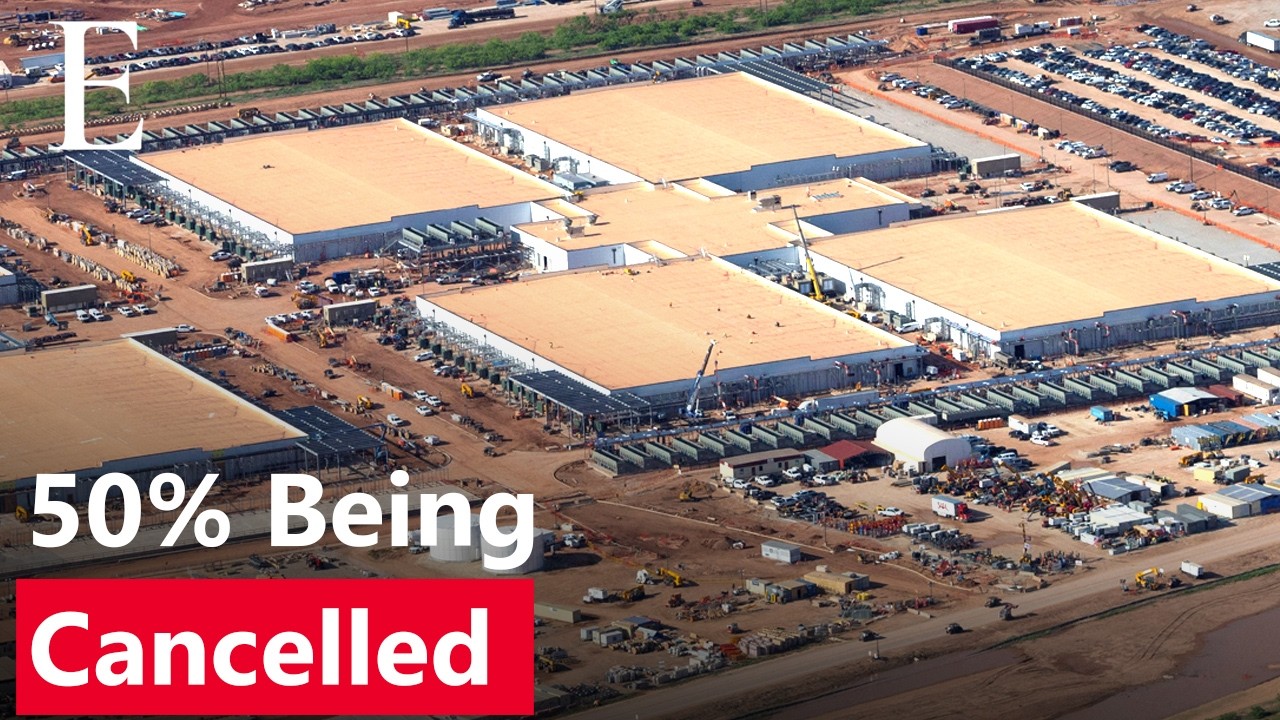
- This inflated demand contributed to delays and cancellations of US data center projects planned for 2026.
- Despite AI's promise to reduce costs, rising token prices and infrastructure shortages have made AI more expensive than human workers.
- The video highlights the tension between AI's efficiency benefits and the economic challenges of its growing operational costs.
Chapters
- 00:00Rapid AI Growth and Initial Adoption
- 00:52AI Replacing Jobs Across Industries
- 01:34Emerging Cost Challenges of AI
- 02:30Companies Facing High AI Operational Costs
- 03:25Why AI Became More Expensive Than Workers
- 04:05Token Usage and Its Impact on AI Demand
- 05:19Token Maxing and Its Financial Implications
- 07:33Artificial Inflation of AI Demand
- 09:09Data Center Delays and Supply Shortages
- 10:02Economic Impact and Future Outlook of AI Costs
Full Transcript — Download SRT & Markdown
Speaker A
In 2022, ChatGPT was released to the market, and since then, the growth of AI has been impressive. The creation of hyperrealistic images, code generation, and even the delegation of complex tasks—AI seemed capable of doing everything with great ease. After seeing everything it was capable of, companies began adopting AI exponentially. They incorporated it into their processes and realized that it was extremely cheap. But precisely because of its low costs, AI also began to bring problems.
Speaker A
seeing everything it was capable of companies began adopting AI exponentially. They incorporated it into their processes and realized that it was extremely cheap. But precisely because of its low costs AI also began to bring problems.

Speaker A
An AI company called Anthropic is raising alarms tonight about AI's potential impact on employment that could soon be felt. Thousands of layoffs, team reductions, and massive displacement. Literally, AI was eliminating jobs across every industry. From roles in tech companies like Amazon, Chegg, Microsoft, Meta, Salesforce—the list continues. Tech companies just are cutting tens of thousands of jobs. To fast food chains,
Speaker A
Thousands of layoffs, team reductions, and massive displacement. Literally, AI was eliminating jobs across every industry. From roles in tech companies Amazon, Chegg, Microsoft, Meta, Salesforce, the list continues. Tech companies just are cutting tens of thousands of jobs to fast food chains.
Speaker A
you could soon be ordering from an AI machine instead of a real person. The fast food company's owner announced today that artificial intelligence will work the drive-thru at hundreds of locations by the end of this year.
Speaker A
AI was wiping out almost any type of job. It could perform the work of entire teams in just minutes largely because it was much more efficient but above all because it was cheaper to maintain. But in recent months a problem has started
Speaker A
AI was wiping out almost any type of job. It could perform the work of entire teams in just minutes, largely because it was much more efficient, but above all because it was cheaper to maintain. But in recent months, a problem has started
Speaker A
Using open cloud these days is like driving a Ferrari. So much so that Microsoft itself banned its own employees from using Claude code due to its high costs.
Speaker A
to emerge. AI is becoming very expensive. Because AI maybe is becoming too expensive to scale.
Speaker A
expense. Big tech is scrambling to slow down its use of AI. Major companies have already exhausted their annual budgets and some say it's getting more difficult to justify the costs.
Speaker A
Using open cloud these days is like driving a Ferrari. So much so that Microsoft itself banned its own employees from using Claude code due to its high costs.
Speaker A
Although the birth of artificial intelligence dates back [music] to the beginning of the 1950s, it was not until 2022 that this technology truly experienced a boom. It promised efficiency and solutions to complex problems with just one click. But most
Speaker A
So Microsoft starts canceling Claude code licenses. But this is not only happening at Microsoft. Uber, Nvidia, Amazon, and hundreds of other companies have reported similar cost problems, making it almost impossible even for top executives to justify such a high
Speaker A
least, that was what people were saying. AI is a technology for taking away your job and maybe eventually displacing human sovereignty over our own future.
Speaker A
expense. Big tech is scrambling to slow down its use of AI. Major companies have already exhausted their annual budgets, and some say it's getting more difficult to justify the costs.
Speaker A
high number of tokens became somewhat of a status symbol among employees, proving that they were going above and beyond to meet key performance indicators. But there was a problem. After realizing this, employees began using these tokens excessively, simply to appear more
Speaker A
But if AI promised to be so cheap and efficient, how did it end up costing more than the workers it replaced?
Speaker A
[music] Token max, like that's actually the coolest thing you can do now. Token maxing in this new way of building.
Speaker A
Although the birth of artificial intelligence dates back [music] to the beginning of the 1950s, it was not until 2022 that this technology truly experienced a boom. It promised efficiency and solutions to complex problems with just one click. But most
Speaker A
making it increasingly common [music] for software engineers to use AI even for insignificant tasks. But, much of this popularity was driven by statements like these.
Speaker A
importantly, it promised to save companies a lot of money. From technology companies to fast food chains, every business began implementing it at an unprecedented speed. It was such a revolutionary technology that it could do the work of 10 people at 1/10 of the price. Or at
Speaker A
And that person said $5,000, I will go ape something else. Yes. Yes. If that if that $500,000 engineer did not consume at least $250,000 worth of tokens, I am going to be deeply alarmed.
Speaker A
least, that was what people were saying. AI is a technology for taking away your job and maybe eventually displacing human sovereignty over our own future.
Speaker A
Believe it or not, Silicon Valley engineers are now being scored on how many AI tokens they use. The problem that may end up inflating overall AI demand.
Speaker A
Starting in 2023, companies began not only encouraging, but also forcing their employees to use AI tools, causing demand for these models to grow uncontrollably. And the way companies measured their AI performance [music] and usage was through tokens. Using a
Speaker A
According to Bloomberg, nearly 50% of all data center construction projects planned for 2026 in the US have been canceled or delayed. But, many of these constructions and plans were based on the enormous demand that AI companies were receiving. According to the
Speaker A
high number of tokens became somewhat of a status symbol among employees, proving that they were going above and beyond to meet key performance indicators. But there was a problem. After realizing this, employees began using these tokens excessively, simply to appear more
Speaker A
So, when a hyperscaler like Andy Jassy at Amazon in his annual letter this morning or that deal this morning tells Wall Street that demand is outstripping supply, [music] you got to ask how much of that is real enterprise adoption and how much is
Speaker A
efficient at the end of the month. This gave rise to what became known as token maxing.
Speaker A
On the concerns over the rising cost of artificial intelligence, it led to a major [music] tech stock sell-off that dragged down the S&P and Nasdaq, which fell more than 500 points.
Speaker A
[music] Token max, like that's actually the coolest thing you can do now. Token maxing in this new way of building.
Speaker A
per million tokens. While this increase in price may seem insignificant when taking into account the massive amount of tokens these companies use every day, it translates into tens of millions of dollars per month.
Speaker A
But token maxing is expensive. For text-based inquiries, the math is simple. With 750 words costing 1,000 tokens, and generating videos, images, code, and more can cost much more. By the end of 2025, token maxing began becoming popular among tech companies,
Speaker A
consuming nearly 8 billion tokens every single day. Without a doubt, this has been incredibly profitable for Anthropic and OpenAI, the leading AI companies in the world today. According to Reuters, thanks to the adoption of AI agents at the enterprise level, Anthropic aims to
Speaker A
making it increasingly common [music] for software engineers to use AI even for insignificant tasks. But much of this popularity was driven by statements like these.
Speaker A
result, employers are frequently blowing through their AI budgets, putting them in a situation where it's no longer clear that using AI is cheaper than hiring people, and AI companies are beginning to realize this.
Speaker A
That $500,000 engineer at the end of the year, I'm going to ask him how many tokens, how much did you spend in tokens?
Speaker A
An internal memo from a Microsoft executive vice president instructed engineers to stop using Anthropic's AI [music] coding tools. At first, executives said it was to encourage the use of AI tools within the same ecosystem, such as GitHub Copilot. But
Speaker A
And that person said $5,000, I will go ape something else. Yes. Yes. If that $500,000 engineer did not consume at least $250,000 worth of tokens, I am going to be deeply alarmed.
Speaker A
reported that Meta consumed nearly 60 trillion tokens in a single month. That's roughly $900 million worth of Anthropic's tokens, based on the firm's blended prices.
Speaker A
Interestingly, Nvidia's CEO, one of the companies benefiting the most from AI adoption, strongly encouraged all developers to use these tokens. The problem is that all this demand did not correspond to real demand, but rather was artificially inflated.
Speaker A
But these extra costs are becoming a real headache for corporate finance departments. In fact, a Gartner survey found that three-quarters of the executives it pulled expect technology budgets to increase this year, and nearly half estimate double-digit percentage increases. A sizable chunk of
Speaker A
Believe it or not, Silicon Valley engineers are now being scored on how many AI tokens they use. The problem that may end up inflating overall AI demand.
Speaker A
Global spending on AI agents and models is rising at concerning rates. By 2027, spending on this technology is estimated to reach $680 billion, more than double what companies spent in 2025. But these estimates were made using the current average costs of these
Speaker A
At the same time, shortages of electronic components needed for building data centers are causing many of these projects to be delayed.
Speaker A
Therefore, they will inevitably increase the prices of using tokens from their AI tools and agents in order to generate profits. In other words, the amount of money companies are currently paying for tokens will multiply exponentially. So, if the cost of using these tools
Speaker A
According to Bloomberg, nearly 50% of all data center construction projects planned for 2026 in the US have been canceled or delayed. But many of these constructions and plans were based on the enormous demand that AI companies were receiving. According to the
Speaker A
The thing is, this is not a prediction. In fact, this is already happening. Maybe human labor will be more cost-efficient after all. Uber and Microsoft are starting to second-guess aggressive AI adoption. That's partly because the cost of using AI can exceed
Speaker A
Economic Times, demand for artificial intelligence infrastructure continues to greatly exceed supply. The thing is that experts are now beginning to question how much of this demand actually comes from real usage and how much comes from inflated figures. [music]
Speaker A
entry tasks, the difference is minimal. But in others, such as call centers, the cost of human labor is actually cheaper.
Speaker A
So, when a hyperscaler like Andy Jassy at Amazon in his annual letter this morning or that deal this morning tells Wall Street that demand is outstripping supply, [music] you got to ask how much of that is real enterprise adoption and how much is
Speaker A
[music] According to the Wall Street Journal, enterprise customers are beginning to question the true return on these investments. And the reality is that with the public listings of Anthropic and OpenAI, combined with investor pressure to see returns [music] and
Speaker A
engineers juicing a leaderboard? The problem is that due to token maxing, the cancellation of data center construction projects, and the massive adoption of AI worldwide, the cost of those tokens has increased significantly.
Speaker A
more for a simple tool than what they used to pay many of the workers they laid [music] off.
Speaker A
On the concerns over the rising cost of artificial intelligence, it led to a major [music] tech stock sell-off that dragged down the S&P and Nasdaq, which fell more than 500 points.
Topics:AI costsChatGPTtoken maxingjob displacementAI adoptioncloud infrastructureAnthropicMicrosoft AIdata center delaysAI scalability