Skip to content

Weirdest Space Projects Ever

Explore the strangest and most ambitious space projects ever attempted, from Soviet lasers to nuclear propulsion and secret military space stations.

Key Takeaways

  • Many ambitious space projects failed due to technological, political, or environmental challenges.
  • Military and Cold War tensions heavily influenced early space exploration concepts.
  • Innovative designs like lifting bodies and reusable rockets paved the way for modern spacecraft.
  • Some of the strangest ideas, like nuclear propulsion and space-based lasers, remain influential in space history.
  • Secret military uses of space stations reveal the dual-use nature of space technology.

What the video covers

  • The Soviet Union's Polyus spacecraft was a laser cannon designed to disable enemy satellites but crashed before reaching orbit.
  • Project Orion proposed propelling spacecraft by detonating nuclear bombs behind them, but was canceled due to political and environmental concerns.
  • The Sea Dragon was a massive rocket concept launched from the ocean to reduce costs and carry huge payloads, but never received funding.
  • NASA's Parker Solar Probe survived flying through the sun's outer atmosphere using advanced heat shields to gather critical solar data.
  • Project A119 was a secret U.S. plan to detonate a nuclear bomb on the moon to demonstrate technological superiority, later canceled due to risks and lack of scientific value.
  • The Roton SSTO was a helicopter-landing single-stage-to-orbit rocket concept that failed due to technological challenges and funding issues.
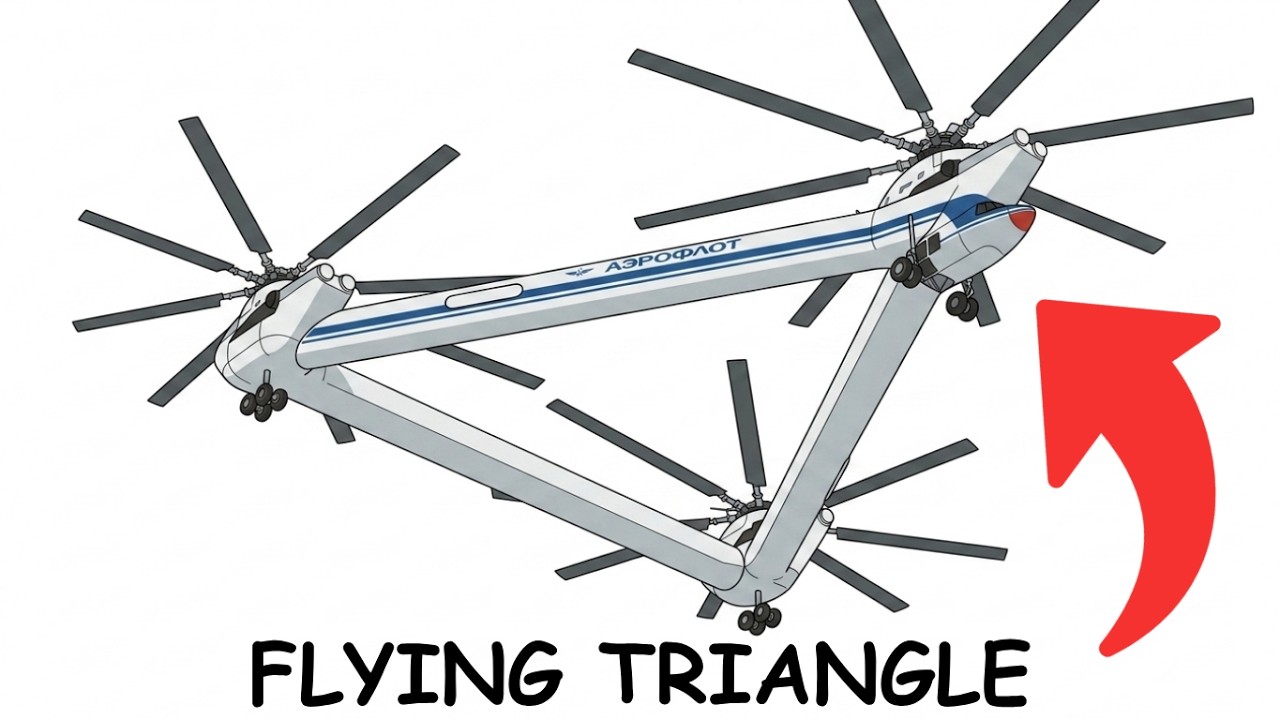
  • VentureStar was a Lockheed Martin single-stage-to-orbit flying triangle spacecraft that never flew due to fuel tank failures.
  • NASA's HL-10 lifting body aircraft tested wingless spacecraft designs to improve safe reentry and landing, influencing future space vehicles.
  • The Soviet Salyut 3 space station was actually a secret military surveillance platform disguised as a scientific mission.
  • These projects show how ambitious, sometimes bizarre ideas have shaped and challenged the future of space exploration.

Answers

Questions about this video

What was the purpose of the Soviet Polyus spacecraft?

Polyus was designed to test a powerful laser cannon in orbit to disable enemy satellites during the Cold War, but it crashed before reaching orbit.

Why was Project Orion, the nuclear propulsion concept, never built?

Although technically feasible, Project Orion was canceled due to political and environmental concerns following nuclear test ban treaties.

How did NASA's Parker Solar Probe survive flying through the sun's outer atmosphere?

The probe used a carbon composite heat shield to protect its instruments, allowing it to withstand extreme heat while gathering valuable solar data.

Full Transcript — Download SRT & Markdown

00:00
Speaker A
Space laser. Almost nobody knows the Soviet Union once tried to put a laser cannon in space. The spacecraft was called Polyus, and it looked like something straight out of science fiction. During the Cold War, the idea was simple. If your enemy relies on
00:18
Speaker A
satellites, why not build a spacecraft that can disable them? Polyus was reportedly designed to test a powerful laser in orbit, making it one of the most ambitious military space projects ever attempted. If it had worked, it could have completely changed how
00:36
Speaker A
countries thought about fighting in space. But nobody ever found out what it could really do. Right after launch, a guidance mistake sent the spacecraft back toward Earth, and it crashed into the Pacific Ocean before ever reaching orbit, wasting years of development and
00:55
Speaker A
an enormous investment before it could perform a single mission. Nuclear engine. Did you know scientists once wanted to fly a spaceship by setting off nuclear bombs behind it? As ridiculous as that sounds, it was a serious proposal called Project Orion. Instead
01:13
Speaker A
of using normal rocket engines, the spacecraft would eject small nuclear bombs behind itself and detonate them one after another. Each blast would slam into a massive steel plate under the ship, and shock absorbers would smooth out the ride.
01:30
Speaker A
The calculations suggested it could carry enormous payloads and reach Mars in a fraction of the time of conventional rockets. So, why was it never built? Not because it could not work, but because exploding hundreds of nuclear bombs near Earth became
01:46
Speaker A
politically and environmentally unacceptable after nuclear test ban treaties. On paper, it could have worked. In reality, the world decided the risks were just too high. Submarine rocket. What if someone built a rocket as tall as a skyscraper and launched it
02:04
Speaker A
from the sea? Believe it or not, engineers actually wanted to do exactly that. The Sea Dragon was a serious 1960s rocket concept designed to stand roughly 550 ft tall and carry an enormous amount of cargo into orbit. Instead of
02:22
Speaker A
assembling it in a traditional factory, the plan was to build it in a shipyard, tow it into the open ocean, stand it upright in the water, fuel it, and launch it from the sea. The idea was that building giant rockets like ships
02:36
Speaker A
could dramatically cut costs while carrying payloads far larger than anything flying at the time.
02:43
Speaker A
It never got funding, but Sea Dragon is still remembered as one of the most ambitious and bizarre space projects ever conceived. Sun walker. This spacecraft has actually flown through the sun's outer atmosphere and survived.
02:59
Speaker A
The Parker Solar Probe sounds like a mission that should be impossible, yet NASA built it to do exactly that. But getting close to the sun wasn't as simple as flying straight toward it.
03:09
Speaker A
Instead, NASA used the gravity of Venus over several years to slowly pull the spacecraft closer and closer to the sun until it was flying through its outer atmosphere. Even while traveling at nearly 430,000 mph, it survives because of the carbon
03:26
Speaker A
composite heat shield that keeps its instruments near room temperature. The data it collects is helping scientists understand why the sun's outer atmosphere is hotter than its surface, how the solar wind is created, and how solar storms can affect satellites,
03:41
Speaker A
astronauts, and even power grids on Earth. Sometimes the strangest space projects end up answering the biggest questions. Nuking the moon. This might be the worst space idea ever imagined.
03:54
Speaker A
In 1958, right in the middle of the Cold War, the United States came up with a secret proposal called Project A119.
04:02
Speaker A
The idea was surprisingly simple and completely insane. Launch a nuclear bomb to the moon and detonate it on the surface. The goal was not to destroy the moon. Scientists knew that was impossible. The real goal was to create
04:17
Speaker A
a bright flash that people on Earth could see, proving to the Soviet Union that America had the technology to pull off something no one else could. A team of scientists worked on studying whether the mission was even possible. But the
04:31
Speaker A
more they looked into it, the worse the idea became. There was almost no scientific value. The mission could easily fail. And if the rocket exploded after launch, it could spread radioactive material back on Earth. On top of that, turning the moon into a
04:47
Speaker A
giant nuclear billboard was probably not the best way to impress the world. The project was quietly canceled. And years later, the documents were declassified, revealing one of the strangest ideas ever considered during the space race.
05:03
Speaker A
Somehow, one of humanity's first big ideas for exploring the moon was to nuke it. Helicopter rocket.
05:11
Speaker A
Imagine a rocket that flew to orbit and landed like a giant helicopter. That was the vision behind the Roton SSTO, one of the weirdest spacecraft concepts ever seriously developed. In the late 1990s, a company called Rotary Rocket wanted to build a fully reusable
05:30
Speaker A
spacecraft that could reach orbit without dropping any stages, making space flight much cheaper. What made Roton so unique was its landing system. After reentering Earth's atmosphere, giant rotor blades would deploy from the top of the vehicle and spin freely in the air, slowing its
05:48
Speaker A
descent. It was an incredibly ambitious idea, but the technology simply wasn't ready. Building a single-stage rocket light enough to reach orbit proved far more difficult than expected, and the company eventually ran out of funding. Roton never made it to space, but it remains
06:07
Speaker A
one of the boldest rocket concepts ever attempted, proving that even the strangest ideas can help shape the future of spaceflight. Flying triangle.
06:17
Speaker A
This flying triangle was supposed to replace rockets as we know them. VentureStar was a futuristic spacecraft designed by Lockheed Martin for NASA to reach orbit as a single-stage to orbit vehicle.
06:30
Speaker A
Instead of throwing away rocket stages during launch, it would take off, reach space, return to Earth, and fly again.
06:38
Speaker A
The biggest obstacle was its lightweight composite liquid hydrogen fuel tank, which failed during testing.
06:45
Speaker A
In the end, the technology wasn't ready, and the flying triangle never left the ground.
06:51
Speaker A
Even today, no true single-stage to orbit vehicle has ever reached orbit. The wingless wonder. This weird NASA aircraft flew like a spaceship, landed like a plane, and helped astronauts survive returning from orbit. In the 1960s, NASA was facing a massive
07:09
Speaker A
challenge. After traveling through space, how could astronauts return to Earth and land safely instead of crashing into the ocean? To solve this problem, NASA began testing something completely different from traditional spacecraft. They built lifting body aircraft, vehicles that had no normal
07:28
Speaker A
wings, but used their own shape to create lift. One of the strangest designs was the HL-10. It was flat, wide, and almost looked like a flying machine from another planet. But behind its strange appearance advanced engineering. Its curved body allowed it
07:45
Speaker A
to glide through the atmosphere, make controlled turns, and approach a runway for landing. During testing, pilots flew the HL-10 at high speeds to prove that a wingless spacecraft design could actually work. The lessons learned from this strange aircraft helped NASA
08:03
Speaker A
develop better spacecraft designs, including technology that influenced the Space Shuttle program. Secret weapon. What if I told you one of the world's first space stations wasn't just a space station? It was actually a secret military weapon. In 1974, the
08:20
Speaker A
Soviet Union launched Salyut 3 and told the world it was another peaceful scientific mission. On the surface, that seemed believable. After all, astronauts were living in orbit, running experiments, and pushing space exploration forward. But that story was only a cover. Behind the scenes, Salyut
08:40
Speaker A
3 was actually part of the highly classified Almaz military program, a Cold War project designed to turn space into the ultimate surveillance platform.
08:50
Speaker A
Instead of focusing on science, its real mission was to spy on Earth. The station carried enormous high-resol
09:04
Speaker A
The crew could even develop the film while still in orbit and send the images back to Earth, giving Soviet intelligence valuable information without relying on satellites alone. But the strangest part wasn't the cameras.
09:18
Speaker A
It was the weapon. Engineers believed an enemy spacecraft might try to inspect or even capture the station. So, they installed a modified 23-mm aircraft cannon directly onto Salyut 3.
09:31
Speaker A
Near the end of the mission, after the crew had already returned home, the cannon was reportedly fired remotely while the station was still in orbit.
09:40
Speaker A
The recoil was so powerful that the station had to fire its own thrusters to stay stable. As far as we know, this is the only space station in history that was equipped with and tested a gun in space. Salyut 3 wasn't just another step
09:56
Speaker A
in space exploration. It was proof that during the Cold War, even outer space became another battlefield.
Topics:space projectsPolyus spacecraftProject OrionSea Dragon rocketParker Solar ProbeProject A119Roton SSTOVentureStarHL-10 lifting bodySalyut 3

Get More with the SozAI App

Transcribe recordings, audio files, and YouTube videos — with AI summaries, speaker detection, and unlimited transcriptions.

Or transcribe another YouTube video here →