Skip to content

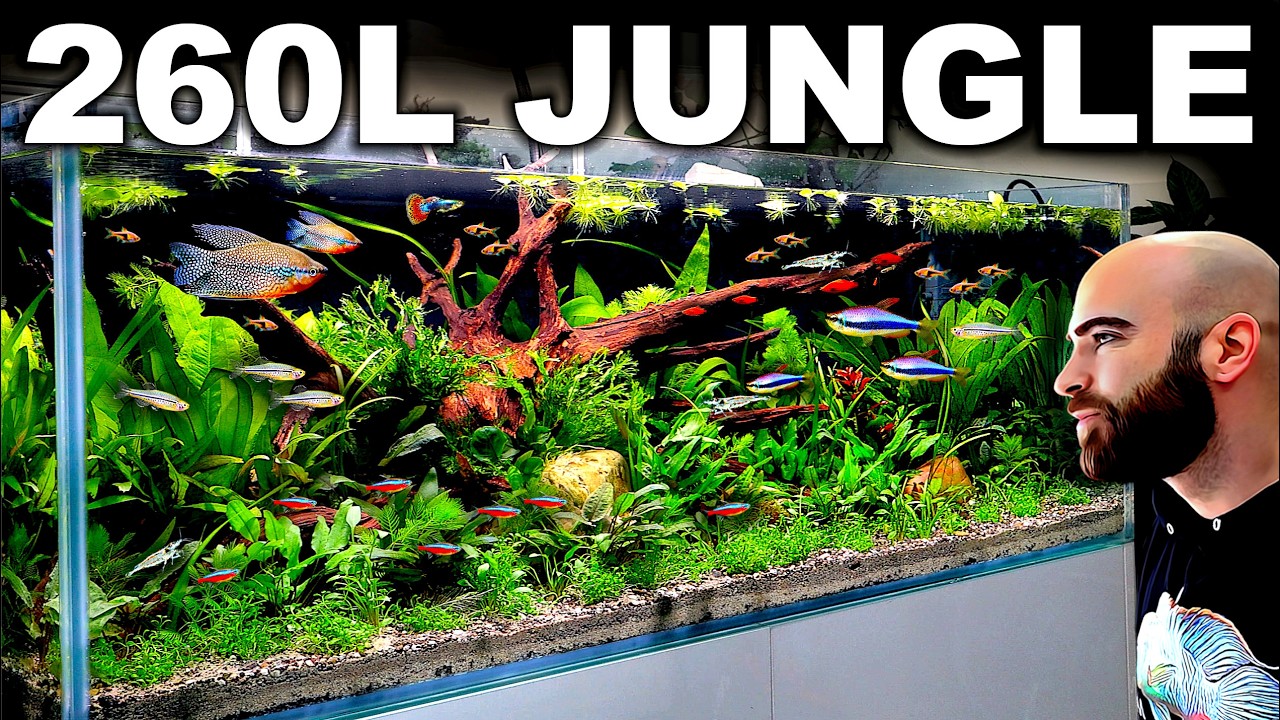
Making A NO FILTER Guppy Ecosystem Pond Aquarium From Start To Finish

Watch the full build of a no filter guppy pond aquarium from tank prep to planting and fish introduction by MD Fish Tanks.

Key Takeaways

  • Reusing substrate and materials enhances plant growth and sustainability in aquarium setups.
  • Creating a natural hardscape with wood, rocks, and moss provides both aesthetics and functional habitat.
  • Proper lighting and water treatment are crucial for maintaining a healthy no filter pond ecosystem.
  • Introducing floating plants and marginal plants supports fish wellbeing and ecosystem balance.
  • Regular water testing and feeding ensure the long-term success of the aquarium environment.

What the video covers

  • The video starts with stripping down two tanks and swapping their places to create a shallow pond aquarium for guppies and fry.
  • Green neon tetras are relocated to a larger aquarium while guppies are kept in the new pond setup.
  • The substrate from the old tank is saved and reused for its nutrient density to support plant growth.
  • A background is applied to hide equipment, and an ADA Aqua Sky LED light is installed for optimal lighting.
  • The hardscape is built using wood, rocks, lava stone, pumice, and recycled substrate to create a retaining wall for soil.
  • Moss is harvested and tied onto wood with cotton thread to create a natural look and promote plant growth.
  • The retaining wall is built up with aqua soil and stabilized with rocks and superglue safe for fish and shrimp.
  • Fine sand is added to the foreground for aesthetic appeal, and various aquatic plants including pearlweed and crips are introduced.
  • Floating plants like red root floaters are added to enhance the ecosystem and provide shelter for fish.
  • Water testing and fish feeding routines are demonstrated to ensure a healthy environment for the guppy pond.

Answers

Questions about this video

Why does the creator reuse substrate from the old tank?

The substrate is nutrient dense and helps plants grow well, making it beneficial to reuse for supporting healthy plant growth in the new pond aquarium.

What is the purpose of the retaining wall in the aquarium?

The retaining wall made of wood and rocks locks soil in place, allowing plants to grow out of the water and creating a natural pond ecosystem.

Is the superglue used safe for fish and shrimp?

Yes, the superglue gel used to stabilize rocks and wood dries quickly into a hard plastic and is safe for fish and shrimp.

Full Transcript — Download SRT & Markdown

00:00
Speaker A
I've currently got a couple of tanks in my studio that have seen their best days. So, I'm going to strip them both down and swap their places because one's a shallow tank and one's a tall tank.
00:09
Speaker A
And in this video, I want to create a really cool pond aquarium in the shallow tank.
00:18
Speaker A
Now, the shallow tank didn't have any fish in it, but the tall one does. It's got a lot of green neon tetras and guppies and guppy fry. So, after I'd taken out all the hardscape and drained a load of the water, I caught them all
00:30
Speaker A
up and separated them both. Now, I only want the guppies and the fry in the pond tank 'cause I think it'd be perfect for them. And I'm putting the green neons into my 8ft aquarium. As soon as I put
00:39
Speaker A
them in, they settled in straight away and started to color up instantly. [Music] And then it was just a case of cleaning out the rest of the tank and making sure to save all the substrate. I'm going to
00:51
Speaker A
reuse it. I always like to. It's nutrient dense and it will get our plants growing well. And then I just had to swap the tanks around and put them in their final places.
01:01
Speaker A
[Music] Now it's time to put the background on to hide all the gump and electrics behind the tank. When I peeled this off, I creased it all up on one side, but it's not going to matter 'cause you're not
01:13
Speaker A
going to see that area anyway. But that'll all come clear when we start doing the hardscape. The whole right section of the tank is going to be covering the background anyway. And for the lighting, I've opted for a posh
01:22
Speaker A
light. This is an ADA thingy. It's the ADA Aqua Sky, I think it's called. It's LED. It does give a completely different color temperature than most of the tanks I use, but it's quite nice. Today's video is sponsored
01:34
Speaker A
by API and Aquarian. So, thank you very much, guys. Throughout the video, we're going to be using some of these products, but I use all of them very regularly. I use Leaf Zone to keep my plants looking luscious and amazing.
01:46
Speaker A
Quick start for adding fish when I first set up a tank to make sure everything's safe for them. Root tabs down in the substrate system to make sure the roots got everything they need. Freshwater master test kit for ongoing testing and
01:56
Speaker A
on startup. Very important. Acuclear for making sure that my water is crystal clear. And Acroential for purifying my tap water so everything is safe for my fish. Aquarian also offers a range of foods that I use for feeding my fish. My
02:09
Speaker A
cichlids absolutely love these pellets. Watch this. Some are breeding at the back at the moment. Come on then, guys.
02:16
Speaker A
Chuck some back as well. It's just going nuts for it. Doesn't even get to touch the floor. So yeah, once again, thank you very much API Aquarium. And now back to the build. So that's the setup. And now we need to
02:27
Speaker A
move on to making a hardscape in there. We're going to create like a retaining wall out of wood and rocks that can lock soil in the back right section. And here's some of the materials that we're going to be using. I've got nice big
02:38
Speaker A
rounded pebbles, my favorite thing to use, and lots of sort of gnarly wood as well that we can intertwine together to create the retaining wall. Now, first of all, I'm going to try and create a composition. I'm not sure yet if I want
02:50
Speaker A
a central island or if I want to do a triangular one, which is to the side.
02:54
Speaker A
Triangular works quite well 'cause I think I can hide a filter right down in the dark areas and you won't see it.
03:01
Speaker A
[Music] So, that is just some sort of formation of what I want to go for. You can see all of these gaps right between the wood and the rocks. If I use coarse gravel now as a base layer, it'll fill in these
03:21
Speaker A
gaps, meaning we can then put rocks on top of the base layer and build up some height with more and more pebbles so we can get that full retaining wall, which I want to be about halfway up the tank.
03:32
Speaker A
And what that means is that we can then plant into the top half and it will just grow straight out of the water. So you can see here I've got like a lava stone and pumice as a base layer just the
03:41
Speaker A
right size to fill in gaps. [Music] and what I've done is just pile it up behind the initial hardscape there, trying to block as many of the holes as I can before we put the next layer on.
04:03
Speaker A
And then on top of that, I can mix in as well a little bit of old recycled material. If you got any stuff you take out of your tanks, just keep it. You never know when it comes in handy for
04:12
Speaker A
just bulking up a background area like now. This is just like a coarse sand or a fine gravel. Really, it's about it.
04:19
Speaker A
[Music] Now, the process can get a little bit messy, especially when you're using recycled substrates, but don't worry.
04:31
Speaker A
When we fill it up, anything that flows into the foreground, I'm not too worried about. Just clean it up afterwards.
04:37
Speaker A
Water changes and that kind of thing. Vacuum in. It's all good. Now, before we go any further and lock this piece of wood on top in place, I want to take it out whilst we still can and absolutely
04:47
Speaker A
cover it in moss. And that's actually revealed our base layer quite nicely as well. So, in this tank here, which I'm struggling to film because of the reflections, but you can see we've got an absolute ton of moss growing. I'm
04:59
Speaker A
going to harvest a load of this and then I'm going to place it all the way along the wood and then use this cotton thread to wrap and tie it on.
05:08
Speaker A
[Music] So you can see there I've not wrapped the moss too tightly with the thread. I just think it gives it a much more natural look and being a little bit more scraggly, you know, you get that growing look straight away. And what we
05:44
Speaker A
can start doing now is building up the layers behind it and just keep adding rocks and wood as we go higher.
05:51
Speaker A
[Music] So you can see here, look, I've built up the barrier to the side. Look, I've stuck some aqua soil in on the top as well. And all the way around. Look, I've built this kind of container bowl that's
06:08
Speaker A
going to lock it all in. So, I'll bring the aqua soil now up to the top of that.
06:11
Speaker A
And I might need to add another sort of layer of rocks and wood as well. Or it might be high enough there. I'll just get it in and see. Yeah, there we go.
06:18
Speaker A
Look, I brought the aqua soil right up to the top of the rocks there. And I would say that's still not quite high enough for, you know, the pond look we're going for. And I definitely need to raise this
06:27
Speaker A
area as well, 'cause it slopes off way too low. [Music] But as you can see here, look, I put a piece of foam in this section 'cause there's just way too many gaps. Looks a bit weird at the moment, but it won't
06:48
Speaker A
do. I'm thinking actually I'll put a nice little branch across it and you won't even see. This bit might work well. Oh yes, that stays.
06:57
Speaker A
Oh, it's going to stay. It will stay. I'll put a rock on it. That's given a really good sort of contrast to the moss as well. So you got the brown of the wood which will go a lot darker
07:06
Speaker A
than this. And then the moss I can put a rock on here as well to stabilize it and glue everything to. Give this rock a go.
07:12
Speaker A
It might be a bit too big but maybe not. I can get that to stay still there.
07:20
Speaker A
Oh yeah, that's cool. Looks like a proper banked section. And it means I can bring it up even taller behind with the soil as well. So, we really want that soil near the surface. So, when we plant our plants in, the tips of them
07:32
Speaker A
are already out the water and it'll just grow so fast. And I got some superglue gel here, which I'll just put in contact points where like the rocks are touching all of the wood and that will lock it
07:41
Speaker A
down. And don't worry, this is all safe for fish and shrimp as well. Will not harm them. It basically just goes like a hard plastic very quickly. Just give it 24 hours. It'll be dried solid. And don't forget, if you're taking your time
07:52
Speaker A
with this, you need to make sure that you're watering your moss. It's pretty hardy. Just give it a little rinse every now and again. And you can really take your time with it. You don't have to rush the process 'cause it's actually quite
08:02
Speaker A
enjoyable building this. Kind of like Lego, but with nature. There we go. That is looking good.
08:11
Speaker A
any leaks coming through any of the gaps, I just plugged them. I've got little bits of black foam in the odd spot as well, just to get the gap in where I couldn't find the right size rock. This worked really well. We're
08:21
Speaker A
right up the top there now as well. Now, we don't want a bare bottom tank, do we?
08:25
Speaker A
So, the next thing is to put in a like sand and decorative layer. Now, you can go for a completely clean look with one type of sand, but I like to just grab a load of everything, you know, mix it all
08:36
Speaker A
together, and I feel like it just gives a far more sort of realistic look. So, I'll take this as the main base, then add everything else into it, and mix it together.
08:51
Speaker A
[Music] Now I have washed the sand, but basically I want like a nice fine sort of like just a hint at it in the foreground and then just bank it up a little bit in some of these sort of
09:06
Speaker A
crevices where we might be able to put some plants and things later on. Just plunk it in for now when we fill it up the the water will level it. Bit of aqua soil in some of this. Not too worried.
09:16
Speaker A
It'll add detail. Like I say, we can spray this in a second and it will just sort of level out itself.
09:28
Speaker A
Yeah, there we go. Look, it all spreads quite nicely. You put some water on it.
09:32
Speaker A
So, that's plenty. I do want some detail stones in there as well. I better dry that glass, haven't I? Cuz like I say, if you want realism, then it's details that's going to make that happen. You know, just let them fall where they want
09:43
Speaker A
these stones. If you want like a contemporary look, then minimal sort of details works really well as well.
09:49
Speaker A
That's quite a nice little weird yellow stone. Doesn't go with anything else, but I want it. You can't really do too many. And you can't do it wrong. Just chuck all these in. They'll go exactly where they want over time anyway. Little
10:02
Speaker A
pile maybe there. Some over here. Some there. Don't even think about it too much. And look at that. Instantly just looks good. Way better to me than just the sand. just love all these different sort of colors that you get. You've got
10:14
Speaker A
pinks, browns, yellows, you know, it's just so nice, grays, everything. Right, I'm going to fill this whole thing up now and hopefully it all doesn't float.
10:23
Speaker A
Wish me luck. Right, that's up to a good level where I'm pretty sure the wood is no longer going to float. So, now it's time to put in some fertilization into the aqua soil. Just to boost it up a bit, I've
10:36
Speaker A
got API root tabs here. What they're going to do is add everything that the root systems are going to need. We're going to be planting a ton of plants in that top section. You really do need to boost it up. And normally in that space,
10:46
Speaker A
I'd opt for half a pack. So, you get 10 10 uh tablets in each pack. I normally put five in that area. But in this one, I'm going to put all 10 because the plants growing out of water means that
10:56
Speaker A
their root systems are going to grow so fast and they are going to need these nutrients. So, yeah, API root tabs, they're a must really. We really need to boost all of this up.
11:05
Speaker A
[Music] And all I've got to do is take each one of my tweezers and push it down into all of that aqua soil. The roots are going to grow as a massive block in this whole system we've created. So, they're
11:19
Speaker A
definitely going to use all the nutrients. And just because they're growing out of water as well means that they grow extra fast because they're exposed to the CO2 in the atmosphere.
11:28
Speaker A
Faster growing plants mean faster growing roots, which means more nutrients are needed. Right now, I can continue filling. The reason I didn't put the tabs in beforehand because I was a little bit worried about it all sort of falling falling apart and then
11:40
Speaker A
wasting them. But we're all good now. [Music] And filled right to the top. Look.
11:49
Speaker A
Should be able to plant that brilliantly. Look at that. Now the water has gone a bit misty to be expected. I did clean the sand like I say, but there's obviously a little bit of crud left in it. And Stefan is back from
11:59
Speaker A
holiday tomorrow and I don't want him coming into the studio and seeing it like this. So I'm going to get it clear.
12:11
Speaker A
[Music] So, I've added in this little nano filter with fine filter floss in it. At the moment, the dust that's in there is so so fine, it will probably just keep recirculating that cuz even the filter floss will not be able to pick that up.
12:23
Speaker A
And that is where Acuclear comes into play. This stuff's magic. So, what it's going to do is magically make those tiny particles stick together, become bigger clumps, then the filter will be able to pick them up. Now, for this volume of
12:36
Speaker A
water, I only need a tiny amount, just that much. And even that was probably slightly too much. So, what happens is it gets worse before it gets better. It goes cloudier as it's doing its magic.
12:47
Speaker A
And then within an hour or two, this water volume is going to be like completely clear. But you do have to make sure that your filter, whether you're using a canister or hang on the back or whatever, has got this fine
12:57
Speaker A
filter floss in it. Otherwise, it won't be able to like trap it all. And we want it to be able to work. I can see it's already working cuz it's going murkier.
13:04
Speaker A
There we go. Look, an hour later and we're looking miles better, but it has highlighted some areas that I want to improve on. I feel like this dark shadowy area in the middle here can have a little bit more of a pop of green. So,
13:15
Speaker A
I want to put a rock in there that's got some moss on. And then this area here is also looking a little bit odd. you know, when you step back. So, another piece of wood or something with some moss there
13:25
Speaker A
as well. Maybe I can make it so it kind of like travels through it or gives the illusion of So, we're now at one of the most fun parts of the build, and that is actually bringing it to life. Plants do that so
13:37
Speaker A
well. And just like the substrate, the more little details that you can add in, the more real it's going to feel straight away. Now, because I'm so impatient, I really like making tanks that look like they've been, you know,
13:47
Speaker A
growing for years sometimes. And the way to do that is small details, different textures, and just a visual variance in everything that you're seeing. So, the pearlweed is what's going to make this tank. It's a stem plant that grows
13:58
Speaker A
really, really fast, which is massively beneficial in terms of keeping nutrients in the water column down, and it just makes everything easier because it stops algae. Also, it oxygenates the water and it does really tie everything together because it's so bright and vibrant. It
14:12
Speaker A
lightens up the dark areas nicely as well. It's good to have some dark areas, but if there's a whole section of it, kind of feels like it's missing opportunity for something nice in the tank for me. I then added boost valro on
14:22
Speaker A
some little rocks so I can place them wherever I want. And hydraottle chippet to really add some more green pops to the darker areas.
14:30
Speaker A
[Music] I am massively proud of that. It's probably one of the best looking setups I've done like instantly. It looks like it's been growing for a very long time and it's all those little tiny details that add that look. Pearl weeds helping
14:46
Speaker A
massively as well. This pops like crazy. And the next stage now is going to be planting everything in that island section at the top. And I couldn't have time this any better because my plants from Tropica have arrived.
15:00
Speaker A
[Music] Now, obviously that is way too many plants to be going in the top of that pond section. I've got quite a few here for other projects as well. So, we've got quite a few coming up. One thing
15:12
Speaker A
that I do want to try though is some of these crips cuz I've never used them as a marginal plant. I'm just going to use one in case it doesn't work. I don't want to like lose all of them. But I've
15:21
Speaker A
got some nice ludigia greens there that I'll know will work. Also, this hatonia here, I know that works well. I've done that before. And definitely some of the echinodoris because, you know, this has all been grown out of water. It should
15:32
Speaker A
just continue. And we got Siamese 53b here as well. Another great one that just always works really well. So yeah, let's get planting.
15:43
Speaker A
[Music] So that's the crypt as the test run and I've left them almost fully in the water in the hope that they'll just, you know, climb out and adapt to being in and out of water really nicely. I think it's
15:59
Speaker A
given them the best chance and I know that this Echinodoris is just going to do great as well. And the root section is what's giving these plants all of their moisture in the stems at the moment. So, make sure you don't cut any
16:09
Speaker A
of the roots off or they'll probably just dry out when they're out of water.
16:13
Speaker A
Oh, there we go. I think that that looks amazing. Now, this is a little bit different to the usual pond builds you see cuz most people use actual pond plants, but I quite like the idea of just growing my aquarium plants like
16:26
Speaker A
this. Then I can just take them and use them whenever I want them. For instance, all the stems in this front section will just keep growing. And I can just trim bits off the top and then plant underwater. It's like infinite plant
16:36
Speaker A
glitch. And I was going to add a filter into the bottom section as well. But I mean, what pond has a filter? The pond itself is the filter. So I'm going to keep it filterless. There is so much
16:45
Speaker A
substrate and plant life in there. There's no way the small amount of bode that we're going to put in there is going to have any effect on the water column at all. But that said, none of the roots at the moment are like settled
16:54
Speaker A
in. So I'm going to be adding some leaf zone to the water column just to make sure that they can all like pull in some nutrients. And whilst they're getting settled, I'll keep using it anyway because, you know, it's really good just
17:04
Speaker A
to make sure that all the plants have got everything they need. They got it in the roots. They got it in the water column. Yeah, it's just going to keep growing. Insane. As always, shake up the bottle. For this water volume, I'm only
17:15
Speaker A
going to need one capful. So, a bottle like this for a tank like this will last so long. We haven't got any flow in the tank. Obviously, she's not here. So, I'll just pour that in and then just
17:28
Speaker A
give it a swirl. Yeah, I'm really happy with that. It's probably one of the best ponds I've ever made, actually. And now it's ready. We can put in the fish that we took out, the guppies from earlier on. It's going
17:38
Speaker A
to be like such a cool little guppy pond. They're going to breed like crazy in here. Before we put the fish in, there's a couple of things I want to add. Look, just some little floating plants. Some red root floaters. Not too
17:48
Speaker A
many cuz they're just going to multiply at an exponential rate, but it does add a little touch of something to the whole thing, I think. Then also I think we're a little bit too clean in that front section. So let's add a little bit of
18:01
Speaker A
botanicals. We've got some elder combs there. Look. Ah, there we go. Just a little bit. And then now we've got all of our guppies and the babies to go in.
18:11
Speaker A
There's quite a few in here actually. Not too many adults, but there was a lot of babies in the tank previous as you can see. Now technically this is a brand new aquarium even though we've got a ton
18:22
Speaker A
of plants from other aquariums and lots of substrate. But I do like to add something for insurance purposes as well. And that is quick start. This is beneficial bacteria. It's going to help, you know, get the whole cycle going.
18:35
Speaker A
It's basically going to seed the tank so that then all of the beneficial bacteria can multiply cuz obviously the guppies are going to provide a food source now to that beneficial bacteria. The colony will just grow. Now I only need one
18:46
Speaker A
capful for this amount of water, which is good. So I'm just going to a little bit over one capful, but that's good. A little bit extra. Just trickling it in.
18:53
Speaker A
the fish themselves swimming around will just get all of this moving. So, that is all good. Now, I don't just stop there and leave it at that. Like, tomorrow when I come in, I will test the water with the fresh water master test kit. If
19:05
Speaker A
I get any sort of spikes in ammonia or nitrite, then I'll just pull the water down and lift it back up again. 75% something like that. But, if I'm honest with you, I know I've done this enough times now to know it will be absolutely
19:18
Speaker A
fine with this bol load and this amount of plant mass. It's not going to be an issue at all. But that doesn't mean, you know, you should take risks. I always recommend getting a test kit for any situations where you might need them.
19:29
Speaker A
Like for instance, if you're getting some fish deaths, before you start changing water, first thing you need to do is find out what's going on. And if you've changed the water and haven't tested, how do you know? So, I think
19:38
Speaker A
they're important. And there's nothing like getting your fish to feel comfortable straight away in their new setup. So, let's give them a feed with the aquarium, tropical, and temperate flake food. Now, what's good about this stuff is that you have big flakes, you
19:49
Speaker A
have small flakes. We've got bigger and smaller fish here. Not bigger, but they got, you know, larger guppies and babies. And if I just take the flake look and I just crumble it to my fingers. We get everything. Then the
20:00
Speaker A
bits that's left over, I go under the water as well. Breaks it up even finer.
20:04
Speaker A
Just to make sure then that all the fry look capable of getting food. There we go. Look at that. Perfect for all the fish sizes. They've gone to town on that. It's been a few seconds and it's mostly gone. The good news is all those
20:19
Speaker A
Look, look at that. the tiny pieces all the fry are going to get. I say fry, some of those are actually juveniles now. So, I'm massively happy with how this pond tank has turned out. I've not done very many of those in my time doing
20:30
Speaker A
aquariums over the last 6 years. Actually, it's probably 7 years now. Anyway, but still, I've never managed to create that amount of detail under the water before, which I'm really pleased with. And usually, I feel like I cheat a
20:41
Speaker A
little bit by putting actual pond plants above it. It's not cheating, don't get me wrong. It's just my silly way of thinking. By doing it now with the actual aquatic plants, I feel it's going to benefit me moving forwards. I know
20:52
Speaker A
I'm going to trim it more often cuz I'm going to be able to take samples and use them in other tanks. And also, I've never done it before without a filter.
20:58
Speaker A
One of my favorite things to do is create tanks without a filter. Not because it makes them better or anything. I just find real pleasure in creating that balance with just the plants and the substrate system. It's the ultimate reward to me. I pretty much
21:10
Speaker A
found that whenever I put CO2 on a tank, it's very, very easy. when I put high filtration, same thing again. But when I can get the tank to balance itself without use of mechanical filtration, it's just my absolute favorite. And I
21:22
Speaker A
can already see this tank is going to go on to grow and be an amazing spectacle.
21:25
Speaker A
Anyway, thank you for watching and I hope to see you guys again. [Music] [Music]
Topics:guppy pond aquariumno filter aquariumaquascapinghardscape designaquarium plantsguppy breedingMD Fish Tanksaquarium substrate reusepond ecosystemaquarium lighting

Get More with the SozAI App

Transcribe recordings, audio files, and YouTube videos — with AI summaries, speaker detection, and unlimited transcriptions.

Or transcribe another YouTube video here →