Mindfulness and kindness – the keys to increasing happi… — Transcript

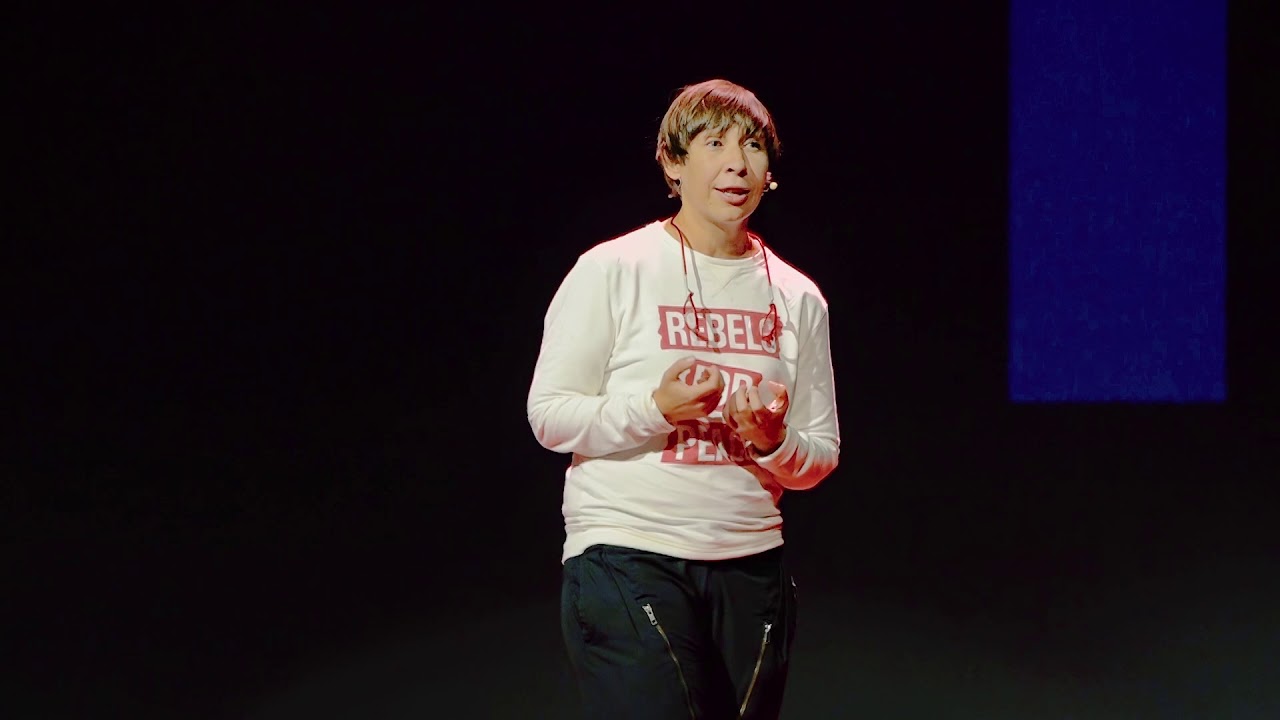
Kathy Ward explores how mindfulness and kindness can reduce stress and increase happiness by redirecting attention to the present moment.

Key Takeaways

  • Mind wandering is linked to unhappiness; mindfulness can ground us in the present.
  • Redirecting attention with kindness reduces suffering and improves well-being.
  • Mindfulness strengthens healthier brain pathways, similar to physical exercise.
  • Stress responses are useful but can be harmful when triggered unnecessarily.
  • Conscious responding, not automatic reacting, enhances health and happiness.

Summary

  • Our minds wander and worry nearly half the time, which research shows leads to unhappiness.
  • Mindfulness helps redirect attention to the present, increasing awareness and reducing automatic, reactive behaviors.
  • Kathy shares personal experiences of using mindfulness during stressful health challenges.
  • Kindly awareness not only benefits the individual but also positively influences those around them.
  • The brain strengthens pathways based on what we practice, making reactive or responsive habits stronger.
  • Our brains cannot distinguish well between real and imagined threats, often causing unnecessary stress.
  • Mindfulness-Based Stress Reduction (MBSR), developed by Jon Kabat-Zinn, offers simple tools to manage life's challenges.
  • The survival instinct triggers rapid fight, flight, or freeze responses, which can be harmful if activated without real danger.
  • Reacting is instinctual, but responding consciously requires learning and practice, which mindfulness supports.
  • The 90/10 model by Stephen Covey illustrates how our reactions impact our well-being and happiness.

Full Transcript — Download SRT & Markdown

00:12
Speaker A
Wow. And to think before today my mind was wondering and worrying about what to wear. How little it knew. Just look at the size of this place.
00:21
Speaker A
And I didn't sort of factor in cameras and lighting and makeup and all sorts of things.
00:26
Speaker A
But you know, that's what our minds do. They worry and wonder. On average, on average 46.9% of the time. So at any time in this audience here today, over a thousand of us are not even here. They're somewhere
00:42
Speaker A
else. And not only that, but the research has shown us that a wandering mind is an unhappy mind.
00:50
Speaker A
But you know, it's one thing to see a statistic on a slide beside me here, but it's another to experience it.
00:57
Speaker A
So I invite you to just stop and pause for a moment. And just drop in to your mind and notice where is it now?
01:09
Speaker A
And often what we'll find is that we are worrying about a text message or something that's happened in the past or maybe even something that may or may not happen in the future.
01:20
Speaker A
And as it says, the research shows us that it's likely to be making us unhappy.
01:27
Speaker A
And so Mark Twain, a writer, summarized this really well. He said, "I've had a lot of worries in my life, most of which have never actually happened." And I know that's right for me and maybe you notice that yourself. That's
01:41
Speaker A
what's actually happening to you. So when our minds are somewhere else, we're automatically running in a sort of an automatic pilot, a default mode, where something else is actually doing the living for us. And so what happens is there's very little or no awareness
01:59
Speaker A
of what's going on around us or even the decisions that we're making. So we end up doing the same old things in the same old way and then thinking, "Why do I get the same old results?" So what if there was another way?
02:16
Speaker A
How would that change your life? Well, I know from first-hand experience that there is another way and that just by redirecting my attention back into this present moment, I've given myself some space to take care of myself, to make
02:30
Speaker A
some decisions. And I practiced before I came on stage here today to really ground myself.
02:37
Speaker A
But also with more serious things, as with stress-related illness, as I was waiting for the test results for some cancer and the treatment that followed.
02:48
Speaker A
But what I've found is that learning how to redirect our attention with kindness actually can reduce our suffering.
02:59
Speaker A
And so our pleasant, unpleasant, and neutral experiences are all parts of life and learning how to take care of myself and redirect my attention to see what was actually happening rather than what my mind was creating has allowed me
03:15
Speaker A
to increase my levels of health, well-being, and happiness. And so it's been key for me.
03:22
Speaker A
But kindly awareness isn't just for the sort of the major stuff, it's for the everyday life, too. And I've noticed that it has a sort of a ripple effect out to the people around me. As I become
03:35
Speaker A
less reactive, the people around me become less reactive, too. And so the wandering mind creates sort of pathways, neurologically speaking. So whether we're practicing reacting or responding, that pathway gets a little bit deeper, a little bit stronger.
03:53
Speaker A
It becomes a little bit quicker, a little bit more accessible for us. Literally, what we practice gets stronger. And so when we're caught up in the automatic pilot of worrying about the future or even trying to rewrite the
04:06
Speaker A
past, it's almost as if we think we've got some sort of time machine to be able to go back for a re-over, a redo.
04:15
Speaker A
And it's as if we're also training to be participants in some sort of what-if Olympics, as this picture shows here.
04:23
Speaker A
And we're striving to become a gold medal winner in repetitive thinking or worry or anxiety.
04:30
Speaker A
And as we've seen, the research shows that there's little or no awareness of what's actually going on and our health, well-being, and happiness can suffer.
04:39
Speaker A
But you know, we've also got a major flaw. Our brains, although they're very clever, don't actually know the difference between what's real and imagined.
04:48
Speaker A
So when we get caught up in imagining worst-case scenarios, the psychological stress is often actually more damaging than the event, if indeed it ever happened.
05:00
Speaker A
So what is this other way that I've found has worked for me? Well, it's based on mindfulness, but more specifically mindfulness-based stress reduction. Developed just over 40 years ago by a very clever man called Jon Kabat-Zinn in the USA. And he
05:17
Speaker A
developed it for everyday people just like us to manage our lives' ups and downs.
05:25
Speaker A
But we don't need to be stressed to be able to get a benefit from this practice. The S could equally stand for suffering because, well, we all suffer.
05:34
Speaker A
Not necessarily because we're doing anything wrong, just because, well, life can be difficult at times.
05:41
Speaker A
But don't worry, I'm not going to ask you to learn to meditate or suddenly try and sit on the floor and amongst your chairs or practice some yoga moves in the aisles. It's a very simple practice.
05:53
Speaker A
And no special equipment's needed, not even your smartphone or an app. And you know, even if we practice for a few moments when we notice that the mind is wandering or we're getting caught up in stress by something,
06:06
Speaker A
we can become more grounded, more self-aware, be more empowered to make some decisions that will take care of ourselves and in the process create these new healthier pathways in our brain in the same way as physical exercise actually changes our bodies.
06:23
Speaker A
And I spoke a little while ago about what we practice gets stronger. And so this is an evolutionary strategy.
06:29
Speaker A
It's not some sort of mistake. And our ancestors made sure that we were absolutely hardwired to survive.
06:37
Speaker A
We're survival of the fittest. And this reaction starts in just 14 milliseconds. I can't even begin to imagine how quick that is.
06:46
Speaker A
But in that moment in time, we're ready to fight, to flee, or to freeze. And often when we freeze, we're like sort of something in headlights. We get a lot smaller.
07:00
Speaker A
Now, this takes up all our available energy and so there's nothing left really to digest our food, to spot a lurking flu virus, or even to carry out the everyday maintenance that our bodies need to stay
07:15
Speaker A
healthy and well. And the reason for that? Well, we don't know whether we're going to eat lunch or be lunch, as Rick Hanson would say.
07:25
Speaker A
And this is a very good strategy when there is real danger. But in the absence of the true threat, it can actually limit our capacity to fully live and enjoy our lives and to notice and enjoy moments of
07:40
Speaker A
joy and happiness or even the changing or cessation of physical or emotional pain. And because our survival instinct is so strong, we get caught up in something that we could call a negativity bias. And so we're constantly looking out for danger and then
07:57
Speaker A
practicing sort of fighting that danger, resisting it, looking for solutions, even when the event is in our mind, is in the past or might be in the future. And as we know, who knows whether it's going to happen?
08:11
Speaker A
And so this can lead us to a third stage, which is exhaustion. And this is physically and mentally exhausting. And this can lead to, I think, why there's such an emergence of stress-related illness in the world today. So reacting,
08:26
Speaker A
as we've seen, is instinctual. It's a good thing in the right place. But responding is a conscious choice.
08:35
Speaker A
And I don't know about you, but I didn't come with some sort of operating manual when I was born, a sort of how to respond. So I've had to learn. And mindfulness has given me the tools to be
08:46
Speaker A
able to do that. And the practice that we're going to, I'm going to show you in a little while, is really easy to learn.
08:53
Speaker A
And before we get there though, there's a model that I'd like to share with you by a man called Stephen Covey. And he called it the 90/10 model.
09:03
Speaker A
And it's helped people around the world to actually see how this continued reacting has an effect on our levels of health, well-being, and happiness.
09:13
Speaker A
And because I've got a little bit of a sense of humor, I've come up with something, Cyril the unhappy snail, to be able for us to...
09:25
Speaker A
life, which is indicated by the the 10% in the small round circle, is actually what happens to us. And that could be a physical or an emotional pain. But more importantly, it's already in the past.
09:40
Speaker A
So there's nothing we can do about it. The 90% of life is how we see things or don't see things and how we react to that pain. So here with Cyril, our unhappy snail, our thoughts, our emotions, our body sensations are
09:57
Speaker A
creating suffering for us. And Cyril here is carrying a very heavy load. There's no moments of joy or happiness here because he's caught up in reacting. He's trying to create solutions for things.
10:11
Speaker A
And it can be the same for us, too. Our thinking minds, when we get stuck in reacting and and worrying and what ifs, creates a cascade of emotions and a stressed body. And this is critical for our health and well-being. A stressed
10:27
Speaker A
mind creates a stressed body. But you know, I'm here to tell you the good news. There is a way that we can make this 90% workable. It is workable.
10:39
Speaker A
We can reduce our suffering. With awareness and kindness, we can learn how to redirect our attention back into the present moment and to ask ourselves, "What's actually happening?" And very importantly, "What can I do to take care of myself?" So, okay, let's
10:56
Speaker A
learn how we can actually do this. And I invite you, just as we did at the start of this talk, to just stop and pause for a moment.
11:09
Speaker A
And if you're choosing to practice with me, just take a moment to see where your mind is now.
11:16
Speaker A
Maybe, like just over a thousand of us in this room, it's actually wandering off somewhere.
11:23
Speaker A
And so, if that's the case for you, choosing to maybe say to yourself, "Aha, thinking." Or practicing the what ifs.
11:30
Speaker A
Choosing to bring it out of automatic pilot into awareness. And then what we do is we want to stabilize ourselves in the present moment.
11:40
Speaker A
And so, I invite you to sort of just come in to any sense that's strongest for you now.
11:47
Speaker A
Now, for me, standing on the stage, it's the sense of my feet on the floor. I feel really grounded here. So, so that might be working for you, too. But it might be a case of really tuning in and
11:57
Speaker A
feeling the chair beneath you. How's that supporting you? Or perhaps even taking a few deep breaths, noticing really what's going on for you in this moment.
12:09
Speaker A
And we know the mind will wander. It'll get caught up in something much more interesting than feet on the floor or, you know, sitting on a chair. And it'll get carried away with a train of thought. Now, that's not a failure. All
12:22
Speaker A
we need to do is just to kindly and gently redirect our attention back again into our senses. And that's really the heart of the practice. Noticing we've wandered, caught up with the what ifs, choosing to redirect our attention with
12:36
Speaker A
kindness. And so, here in this space, once we're actually here, we can ask ourselves, "What's actually happening?" Letting go of the what ifs.
12:49
Speaker A
And empowering ourselves to choose how to take care of ourselves. And that's it. All we need to do to reduce our suffering. So, just by pausing, we might have reduced our suffering. So, perhaps Cyril looks like this.
13:05
Speaker A
Well, no, we're not denying something's happened to us. We're only human. Well, we are. I don't know about Cyril. So, maybe he looks like this.
13:14
Speaker A
So, here is Cyril. He's a much happier snail. He's carrying a much lighter load. He's got a wider field of awareness and he can notice those moments of joy and happiness. And being able to do more of the things that he
13:27
Speaker A
loves to do. And the good news is it can be the same for us, too. So, I'm wondering if this was you and you were able to let go of the worry and the what ifs, what difference would that make to your life?
13:41
Speaker A
I know it's made a huge difference for me. Over time, small changes and moments of kindly awareness have made major shifts in my life and I've been able to really practice being alive rather than doing living.
13:57
Speaker A
So, I wanted to share this with you today so that the next time you find yourself getting caught up in the what if Olympics and training to have a gold medal in repetitive thinking or worry or anxiety or some other thing
14:11
Speaker A
that's causing you unhappiness, that you remember this short practice. We call it a practice in our pockets, there whenever we need it.
14:20
Speaker A
All we need to do is just stop and pause. Redirect our attention with kindness back into the present moment.
14:29
Speaker A
And ask ourselves what's happening and then empower ourselves to make a difference to our lives. So, please share this with everyone. Let's create a ripple of kindness so that together we can make a real difference to everyone's health, well-being, and happiness.
14:48
Speaker A
Thank you.
Topics:mindfulnesskindnesshappinessstress reductionmental healthwell-beingmind wanderingmindfulness-based stress reductionKathy WardTEDx

Frequently Asked Questions

What is the main cause of unhappiness according to the video?

The video explains that a wandering mind, which worries and thinks about the past or future rather than the present, is linked to unhappiness.

How does mindfulness help improve well-being?

Mindfulness helps by redirecting attention to the present moment with kindness, which reduces suffering, strengthens healthier brain pathways, and increases self-awareness.

Do I need special equipment or skills to practice mindfulness as described in the video?

No special equipment or skills are needed; the practice is simple and can be done anytime by gently redirecting attention back to the present moment.

Get More with the Söz AI App

Transcribe recordings, audio files, and YouTube videos — with AI summaries, speaker detection, and unlimited transcriptions.

Or transcribe another YouTube video here →