A Lego War? Artificial Intelligence and the New Informa… — Transcript

Explores AI's role in modern information wars, focusing on US-Iran conflict and AI-generated propaganda's impact on narratives.

Key Takeaways

  • AI dramatically changes the scale, speed, and sophistication of information warfare.
  • Both state and non-state actors use AI to shape narratives and influence public opinion.
  • AI-generated content complicates distinguishing truth from propaganda in conflict zones.
  • Regulatory and technological measures are needed to mitigate AI-driven disinformation.
  • Understanding AI's role is crucial for future conflict resolution and media literacy.

Summary

  • The webinar discusses how AI accelerates and sophisticates influence operations in modern conflicts, particularly in the US-Israel-Iran war.
  • AI-generated content like Lego battle scenes and memes blur lines between satire, propaganda, and reality, creating 'slopaganda'.
  • Information warfare is not new, but AI lowers costs and time to produce compelling disinformation and propaganda.
  • Iran heavily uses AI-generated content to compensate for military disadvantages and influence public opinion.
  • The US also deploys AI-generated content, primarily to glorify operations and rally public support, though with less covert sophistication.
  • Iran's centralized media and propaganda apparatus integrate AI to dominate restrictive information environments.
  • Social media algorithms optimize for engagement, making AI-generated content more viral and difficult to moderate effectively.
  • Challenges exist in detecting AI-generated content and regulating its spread, with platforms experimenting with moderation tools.
  • Human rights documentation is complicated by AI-generated misinformation, requiring multifaceted approaches to verification.
  • The future of conflict narratives will increasingly depend on managing AI-driven information ecosystems and regulatory responses.

Full Transcript — Download SRT & Markdown

00:01
Speaker A
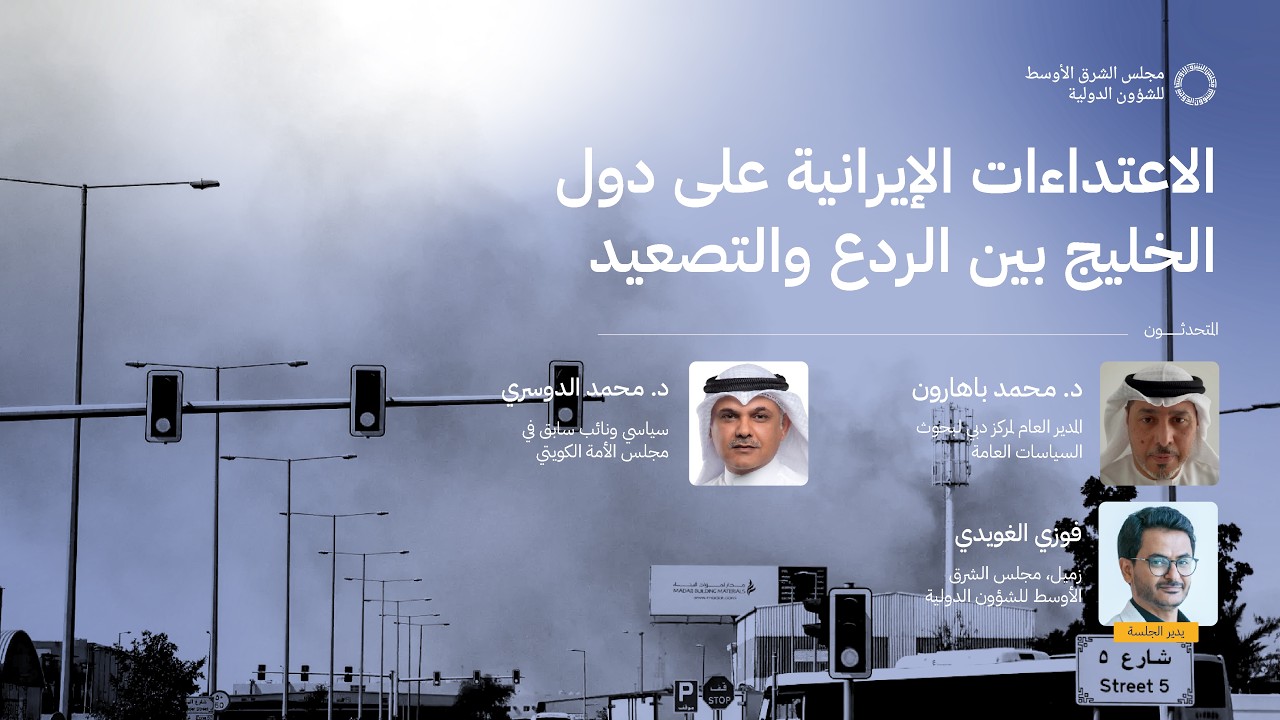
Welcome to this webinar hosted by the Middle East Council on Global Affairs. I'm Hennis Shabibi, and I'll be moderating today's conversation.
00:08
Speaker A
Throughout history, shaping and dominating narratives has been as strategic as achieving military gains in times of war.
00:15
Speaker A
Today, the introduction of AI is accelerating the speed, scale, and sophistication of influence operations in ways that are becoming increasingly difficult to counter.
00:24
Speaker A
This has been demonstrated in striking ways during the US-Israel-Iran war, where Lego battle scenes, memes, and AI-generated content are blurring the lines between satire, propaganda, and reality. Today, slopaganda is reducing complex geopolitical dynamics into shareable, scrollable content. Take a
00:43
Speaker A
look. Here comes the heat from the USA. For Iran, here it is clear. [music] People reached out to us.
01:01
Speaker A
Yeah, we got the Dems here. If one nation's going to stand against [music] the Epstein regime's fear, it's us till the last breath. We've been doing it for years.
01:09
Speaker A
They never obtain [music] a nuclear weapon. Why don't you explain this to me like I'm five?
01:13
Speaker A
No nukes, no navy, and a complete dismantling of their missile program and defense industrial base.
01:19
Speaker A
Oh. Sudan, Pakistan, Egypt, Jordan, Palestine, [music] Lebanon, Yemen, we're bringing you freedom, bro. They never asked for that.
01:27
Speaker A
Retribution is [music] coming with a storm you can't tame. Iran doesn't forget, and we're coming for the game.
01:32
Speaker A
This reality raises urgent questions. Who controls the narrative surrounding today's wars? What forms of content are proving most resonant? And what does this mean for how we understand information wars?
01:44
Speaker A
To unpack these questions, I'm delighted to be joined by Valerie Brachafter, fellow of the Foreign Policy and AI and Emerging Technology Initiative at the Brookings Institution.
01:54
Speaker A
Masha Alimardani, associate director of technology threats and opportunities at Witness, and Mona El, non-resident senior fellow at the Middle East Council on Global Affairs.
02:06
Speaker A
Valerie, I want to start with you to unpack the evolution of information wars. So, we know that states have long competed to shape public opinion during conflict, but the integration of AI and influence operations is marking a qualitative shift.
02:20
Speaker A
What is fundamentally changing in terms of the scale, speed, and method? You're absolutely right that information warfare, the use of propaganda, especially during conflict, both hot and cold, is really nothing new. Even just a couple years ago, right, I wrote about
02:36
Speaker A
the Israel-Hamas conflict and the information ecosystem there. And there was a ton of chaos online, right? There were plenty of structural problems. Some of them are new, related to social media and the way people seek information. Some of them
02:50
Speaker A
are kind of as old as time, right? Like during times of crisis, the idea that there is a dearth of supply of credible information and a high demand to understand what's going on. That's very old. And then, of
03:05
Speaker A
course, we've had platforms pushing back or pulling back their content moderation practices. All these things are still present, but that was, you know, a couple years ago.
03:14
Speaker A
And the contested conflict content during that time was really just mostly recycled images, decontextualized clips, video game footage. AI was around, it was known. You know, ChatGPT had already launched, but it wasn't sort of front and center. Those same sort of
03:31
Speaker A
structural problems, the things that were present then, are still here. But really, I think what has changed now is the economics and capability ceiling of AI has improved. You know, it's not necessary still. We still see some of
03:46
Speaker A
that recycled footage. We still see those old clips. But generative AI now has, I think, dramatically really lowered the cost and time to produce sophisticated, compelling content, and the tools are really, I think, far more accessible now
04:01
Speaker A
than they were, even just a few years ago. You know, a couple things that we've seen, of course, is just like really basic stuff. You know, especially during covert campaigns when you're trying to kind of manufacture
04:14
Speaker A
consensus, play against the algorithms, go viral, just being able to get rid of those grammatical errors makes agenda setting much easier online.
04:24
Speaker A
Traditional approaches using that video game footage, those old images, you know, you were kind of constrained.
04:30
Speaker A
There's a lot of shocking, awful imagery that exists already. But you were kind of constrained by what existed before or what you could edit in Photoshop, and you needed somebody with skill to do that well. But now you can
04:42
Speaker A
really kind of just fabricate things out of thin air, really quite easily, whatever your wish, you know, is possible.
04:50
Speaker A
I think this was clunkier than before, but the tools are now getting better and better, especially if the goal is more covert action. When it's the overt sort of slopaganda version, you know, really you can kind of like
05:05
Speaker A
dream it up and make it happen at this point. You know, that involved previously animation, more talent to be able to actually put these things together. Now it's much easier and much better.
05:17
Speaker A
You know, in recent research that I did looking to see the like X and community notes, contested conflict or content that referenced generative AI had reached its highest point ever. So this isn't just qualitative, it's also
05:31
Speaker A
quantitative. And we're seeing and hearing about reports, especially state-linked operations. You know, the overt stuff is well-known. The sort of Lego videos and the like are very well-known, but also more covert campaigns that point back to the Iranian
05:48
Speaker A
regime. And so, you know, Iran, of course, is no stranger to this space, but seems to really, I think, be deliberately investing in these tools in both types of campaigns. I think, you know, primarily to compensate for the
06:02
Speaker A
military disadvantage, for the fact that the American public is a bit more malleable in terms of their support for this type of conflict.
06:10
Speaker A
Thank you, Valerie. And can I ask you briefly to touch on the American side of this conversation? I think the AI-generated content has become associated heavily with Iran-aligned groups and the Iranian state, but we've also seen this AI-generated
06:23
Speaker A
content be deployed by the US. How has that looked like on that front? And how is it different from the kind of Iranian content?
06:30
Speaker A
Yeah, I mean, it's a similar sort of, you know, maybe it's not the same trying to exaggerate the destruction type of thing, or to sort of glorify what makes it seem like
06:46
Speaker A
this is more of a costly conflict for Iran, which is sort of the way Iran has framed its usage is, right, like, look at all the damages we are inflicting on the US and its allies.
06:56
Speaker A
That's not necessarily the side of the coin. What we've seen here is more of like the kind of glorification of the operation, sort of the same ways that this administration has used AI in the past, really,
07:09
Speaker A
to it, and it's much more visible and much more clearly sort of AI-generated than some of the more covert stuff, but really kind of to try and foment this sort of rally around the flag aspect that typically
07:22
Speaker A
happens during the start of a conflict. But we're not really seeing it right now, right? The public opinion hasn't really been moving in support of this intervention in the same way it has potentially at the
07:36
Speaker A
start of others. And so, that's really kind of been more of the objective there.
07:40
Speaker A
Thank you, Valerie. And Marcel, I want to go to you. So, Iran, of course, has a long history of navigating restrictive information environments, and that has largely led to the development of alternative and a large alternative media ecosystem. But how is this
07:53
Speaker A
integration of AI shaping the way these actors are adopting AI-generated content in the current war?
07:59
Speaker A
You touched on a really important point, which is the fa
08:17
Speaker A
of multiple layers of control from a very centralized media ecosystem, a very centralized kind of propaganda apparatuses across the Iranian state.
08:28
Speaker A
Um and of course, we have the technical centralization. And so, all of these layers are very important in terms of what we're seeing with the kind of propaganda narratives. And um I think one of the most interesting and crucial
08:42
Speaker A
points that points to both the kind of external perception of the narratives coming out of Iran, and both the internal dynamics at play, is that you have this conflict play out in the midst of a internet shutdown. And the
08:59
Speaker A
primary aim of the fact that the state is choosing to restrict communications for its own population is really to control the narrative. Um during the June 2025 war, we we did see a similar internet shutdown, and the government
09:15
Speaker A
narrative in response was that they were protecting uh national infrastructure from cyber attacks. This time, the veil kind of has dropped, and they have explicitly said uh what they're doing in terms of controls is to ensure that there is one voice being projected from
09:34
Speaker A
inside of Iran to the outside world, which is why international intranet is generally restricted for the over 90 million population Iran has. And AI has been a very crucial element into this because a you have a lot of different
09:51
Speaker A
kind of contractors and government-affiliated production companies. The AI Lego videos are produced by what is generally known to be kind of this besiege media company, uh, Explosive Media, and I'm happy to unpack that actor a little bit more, um, that have
10:10
Speaker A
these viral AI Lego, um, cartoons that have a lot of traction and popularity within the Western world.
10:18
Speaker A
Uh, you also have the fact that you have a country of over 90 million Iranians. And the perception of the war within a population that large is not monolithic. Um, it definitely is not, uh, cohesive with the one narrative
10:35
Speaker A
coming from the state. There are many varied versions of what people think about the war from, you know, people, you know, generally agreeing with the US and Israel attacking Iran, people being against them attacking Iran, to complex feelings about, you know, how people
10:54
Speaker A
feel about the regime or they support the regime or don't support the regime. However, in the vacuum where you cannot have access to what is authentically happening or what Iranians are authentically feeling, you do have the void that obviously the one Iranian
11:10
Speaker A
state narrative fills. Uh, and the AI Lego videos and all of the different kind of production coming from of the official kind of states or unofficial state accounts for that. And then of course you have the void that's
11:24
Speaker A
being filled with the other conflict actors. Um, you do have a lot of propaganda coming from, uh, Israel, either officially from the Israeli state or unofficially from the Israeli state.
11:38
Speaker A
And there have been moments where you see the traction of that AI content really filling the void of you know, not being able to access what Iranians are authentically feeling. And one example to kind of illustrate what I
11:55
Speaker A
mean is that um there was one kind of viral AI video of a very popular residential building in Iran Ekbatan.
12:04
Speaker A
Uh there's thousands of people that live in the Ekbatan building complexes in Tehran. Um and there was a video that went viral of a projection of a Israeli flag on this building. Uh now this went viral, many people believed it was true.
12:20
Speaker A
And um eventually, I mean, it was verified and debunked by many uh legitimate sources that this was completely generated by AI, but why did people believe this? People believe this because there is a general vacuum of being able to authentically know what
12:36
Speaker A
Iranians are thinking and feeling. And there are chances that there are people who, you know, are sympathetic or are uh supporters of Israel in Iran, but we can't access this because of all the many different layers of censorship. And
12:51
Speaker A
so you have AI come in and fill this void and be able to deceptively get traction in that way.
13:00
Speaker A
Thank you, Massan. I want to probe you a little bit more later in the discussion on how people have been able to adapt and respond to these restrictions. But Massan, I wanted to go to you. So um we've touched so far on the asymmetrical
13:10
Speaker A
nature of this conflict, right? This is an asymmetrical conflict, which makes it very difficult for Iran to achieve any kind of symmetry on the military side.
13:17
Speaker A
But that has made information a lot more consequential for Iran. So is Iran seeking to dominate the information landscape? And and how is it seeking to do that?
13:26
Speaker A
Right. Well, thank you very much. And I think I will be um um probably repeating some of the points by Valerie and Massa, but in in a from probably a a different angle. Iran is not trying to win um the information
13:41
Speaker A
war. It's not in in does not have the capacity, and it's not one of its um strategic objectives. And you you know, I think also what Massa mentioned and Val- Valerie as well, that Iran does you know, they inside Iran, they don't have
13:57
Speaker A
the internet during the war. They didn't have it. I don't know if they do have it now, but I think they during the war definitely they did not have access to the internet, which means that the information war and the usage of AI
14:11
Speaker A
during that time was directed somewhere else. So, if Iran is not trying to win the war, what they are trying to do that they are trying to survive it, just like what they have been doing during the um
14:23
Speaker A
military campaign. And the logic when you can't impose costs um in in the military field connect- kinetically, you impose them cognitively, and it is the audiences are you know, are different. And this is the same this is not a new, by the way. And also, it's
14:40
Speaker A
the same logic that Iran has been conducting the war in the in the tangible in the real world, which is basically um you know, it's asymmetric approach to conducting um this war. Now, um I think why I mentioned that I might also come you
14:57
Speaker A
know, um come across the same points that Valerie at the beginning rightly pointed uh to, which is basically the scale um in the in the in the past. And so, where AI fits and where AI helps uh the Iranian regime conduct this um
15:14
Speaker A
this information war. Uh in the past, you would need um probably uh a massive department to you know, conduct such uh such an operation.
15:24
Speaker A
But now, um the scale is easily conducted through AI tools. And the second thing is the speed. It used to take weeks or at least a week or days if you have a bigger team. Now, you can do
15:37
Speaker A
that with a few prompts. And then, the cost also, obviously, is very minimal compared to before, not only how many people you need, but also, you know, the type of people you know you need. And also, the targeting. In
15:54
Speaker A
the past, you know, you know, the gaming, if you like, the algorithms used to be, and I I mean in in the very recent past, not in the, you know, not many years back, it used to be a a bit harder. Now, the Iranian regime
16:08
Speaker A
has learned over the years how to game or, you know, play with the algorithms so that they not only use AI for producing the materials, you know, for their information targeting, but also, they can make sure that it it goes to the right
16:27
Speaker A
population. And in during this war, we can see that Iran also did not, as I mentioned earlier, that did not focus on the people of Iran only, but also, it focused on the regional, if you like, audiences in the Arab
16:42
Speaker A
world. And I would say that it has been very successful. What I mean also in the region, because in Iran has if you like, supporters and also people who are against the Iran, especially here in the GCC.
16:56
Speaker A
Because of the Iranian regime targeting on GCC countries. But also, Iran wanted to make sure that it's the population within the scope of the axis of resistance would be supported and, you know supported through using AI and through producing
17:15
Speaker A
this kind of material. And I my assessment and my understanding that Iran has been also uh quite successful.
17:23
Speaker A
So, I think the framing is very important that Iran is not trying to win, Iran is trying to survive and they have done a very good job there. And if we understand it from that point of view, I think Iran um discovered that
17:36
Speaker A
during this war the hard way, but they did discover that that they use of information um in the battlefield with the assistance of AI is uh strategically beneficial, but also it worked in tandem with what the politicians have been
17:54
Speaker A
saying. So, if we look at what, for example, Qalibaf and Araqchi and others have been saying, you can see some um if you like indications that there is an information, I wouldn't say warfare, but there's an information campaign that uh
18:10
Speaker A
is being coordinated among all these elements with the assistance of AI. So, always AI, but AI is part of the, if you like, is part of the game. But and this is, I think, the the overall image that
18:23
Speaker A
I can see from where I stand. Thank you, Mohaned. And and just uh probe you a little bit more on a point you mentioned earlier. So, you said it's not Iran's objective to win the information war, and they've long
18:32
Speaker A
realized that. But has the scalability of information using AI, the ability to produce content rapidly, um react to different events that take place, the ability to scale this information at unprecedented rates, has it shifted their strategy in that sense? Has it
18:47
Speaker A
heightened the importance of information in in Iran's strategic calculus? I think it has already been doing that for a while now. Iran understood the importance of the cyberspace, the importance of the information spheres that that are available to it to the
19:04
Speaker A
Iranian regime. And I think Iran is one of the few countries, if you like, in the region with the exception of Israel that has been focusing on this domain as much as using the conventional and focusing on the conventional capable
19:20
Speaker A
military capabilities because they understood in their limitations to what a country like Iran can achieve in terms of military capabilities. And this has been tested last June during the 12-day war and it has been tested during this recent war. I don't know if we can call
19:36
Speaker A
it that you know ended but it's still there is no deal. But you know the the the latest war and Iran understood that they cannot really for example have an air force. They cannot have many of the conventional and and traditional
19:51
Speaker A
capabilities. But with the information with the cyber domain they understood that they could do much more and it has been effective. And this not only the scale in Iran, you know what I haven't done an and a study on this but I have
20:06
Speaker A
been watching what the Iranian regime has been doing in the information sphere. And they have been very successful in targeting especially Western audiences and they know who to target. For example, the US has a massive information sphere. And so where
20:21
Speaker A
they were target or directing their messaging was to the mega population that is usually supportive of the of President Trump. They went to the points that you know they wanted to dismantle the narrative of the Trump administration targeting the weak points in these
20:40
Speaker A
narratives using what the war has exposed and the limitations of of the US capabilities in the region. And it is very consistent right across the board what the Iranians have been doing and the capacity and capabilities that they
20:55
Speaker A
have. They used it very well and it is as I said part of their strategy to survive because they think that their strategy of survival is their strategy of winning. They they know that they can They are no match to the US in the
21:10
Speaker A
military campaign or domain and also they are no match to the US in terms of the information domain. You know, the US after all has so many tools and they didn't even have to use AI as much as the Iranians
21:23
Speaker A
because they're doing much better in the conventional military battlefield. Thank you, Muhannad. Um and building on those points, Massa, I want to go to you and discuss the content that's coming out of these videos, right? So, they've managed to achieve mass appeal because
21:37
Speaker A
of the invocations to popular culture, Legos, Minions, um and other references to popular culture and things that kind of speak to global and regional audiences as well. So, I wanted to ask you about this this kind of content. Um
21:49
Speaker A
it's generating broader reach and appeal, but what about it makes it resonate so much and what does its production reveal about the strategic intent behind this content? You mentioned earlier Explosive Media and I think that's of course become a very
22:00
Speaker A
prominent case um or a very prominent group in the production and circulation of of the kind of content that's established such wide reach. Maybe if you can touch on Explosive Media as well and their specific case.
22:10
Speaker A
Yeah, definitely. That's a really great question and um I mean, before getting into the content analysis, I do um and um just to touch on just the unprecedented scale of this conflict and what it just generally means for other
22:25
Speaker A
conflicts and how I think other bad actors are probably taking a lot of lessons from here um in terms of, you know um uh maybe Iran hasn't necessarily won the war or won uh the conflict in the traditional
22:42
Speaker A
sense, but I think there have been significant inroads and progress in how AI war propaganda will go on uh following this conflict and uh I do also want to hat tip to the really great research that Valerie did for Brookings
22:57
Speaker A
kind of trying to assess the scale and quantity of uh the content by assessing community notes off of X, uh trying to give us a glimpse into a very hard to define scale and quantity of what we've seen with AI content. But, towards the
23:13
Speaker A
question of exactly what the strategy uh of the content and the narrative is from Iran, I think it's really crucial to really understand the ideology and foundation at the core of the Islamic Republic. And this goes even before the
23:28
Speaker A
internet was introduced, which was when the Iranian revolution happened in 1979. The kind of establishment and ideology behind the revolution was one that showed the regime as the representatives of the oppressed. And this is very much written within the Iranian constitution.
23:51
Speaker A
Um and the crux of the ideology that permeates throughout state institutions and even the education system is Iran as this representative of the oppressed, of the global south, against, you know, the big um imperialist powers of the US and Israel.
24:10
Speaker A
And so very much the narrative, ideological, and propaganda foundations for this war were set in place for decades before it started. And in fact, you can say in many ways, the Islamic Republic had been waiting and craving for a chance to really mobilize this
24:28
Speaker A
narrative. And so, when you do have a situation where you actually do have, you know, war crimes happening at the hands of the states, you do have civilian casualties, it basically has given the Iranian regime the most raw material it has ever
24:49
Speaker A
craved, right? And so, um one of the things that as someone who is, you know, a human rights advocate and has dedicated their life to the documentation of human rights abuses and accountability and justice. One of the kind of greatest harms that we see here
25:06
Speaker A
is how evidence and documentation is being so undervalued by these propaganda efforts and by AI doubt in general. So, you do have these situations where you have the regime obviously the authorities are over investing in documentation.
25:23
Speaker A
They ensure that photojournalists go to the sites of civilian bombings in ways that a few months prior during for example the very harrowing protest massacres that happened where you had victims created at the hands of the authorities. The authorities made sure
25:40
Speaker A
through so many different layers of censorship, technical, physical coercion that the documentation of those crimes wouldn't occur. And now you during the war you have a situation where they're over documenting and over investing. And so, we've seen um
25:55
Speaker A
because of this kind of atmosphere of AI, we've seen accusations of real documentation of civilian casual casualties be accused of AI.
26:06
Speaker A
I've documented many instances of this where, you know, for example the very horrific bombing of the Minob School which has been proven to have been done by the US.
26:19
Speaker A
This was systematically denied by people with good and bad intentions online and accused of being AI. The photos of the funeral for example were accused of being AI generated content.
26:33
Speaker A
And so, you have the situation where real evidence does get mobilized for propaganda, which doesn't mean that it's not real.
26:43
Speaker A
And you do have, you know, the state also trying to further increase the impact of its propaganda by also using AI in the midst of it. For example, during for the Minob school bombing, many different uh Islamic Republic state
26:57
Speaker A
accounts were not only sharing real uh photos from the Minob tragedy, but they were also sharing, you know, a AI-generated backpack of a child with blood on it that was very easily found out to have been generated by
27:11
Speaker A
uh Google's Gemini, for example. And so, this different kind of layering between the distrust between the presence of actually generative content uh has created this just general sense of uncertainty and ambiguity. And I know that wasn't necessarily your question,
27:30
Speaker A
but I think this is a very important layer of how we have this ecosystem, this very toxic information ecosystem that has been contributed to by, you know, the information systems that the Islamic Republic has created, by uh the
27:46
Speaker A
fact that you have a opposition to this regime, that you have all these different conflict actors. And so, you have this general sense of uncertainty about what is real and what is not real.
27:56
Speaker A
And of course, um the regime at its core takes advantage of this, uh and we've seen the different ways they take advantage of this. I mean, the most kind of popular and viral example was uh a couple weeks ago when uh Donald Trump uh
28:11
Speaker A
posted in the midst of the ceasefire negotiations, he posted uh photos of eight women uh that in reality was heavily kind of edited and filtered with uh AI enhancement and AI editing uh software.
28:29
Speaker A
Um he shared those images, which were of eight real women, with a piece of disinformation that they were about to be imminently executed. Um and so, this went viral. It was spotted to have been a piece of content generated with AI
28:45
Speaker A
next to a piece of information that was generally misinformation, and suddenly the Iranian regime latches onto this to generally undermine any of the discourse and documentation of the real abuses they commit. The Iranian judiciary immediately reacted that this was fake
29:02
Speaker A
news. When at the heart of the matter you had eight real women protesters who were arrested in January. They were not all about to be imminently executed. One of them faces execution. The timeline of it is not known, but generally they
29:17
Speaker A
latched onto this to propagate this narrative that any kind of accusation of the repression that goes on internally in Iran is part of this war narrative.
29:28
Speaker A
Um, and so this has been very harmful. It has been part of the, you know, narratives that the regime puts out like the AI Lego videos very much centers, you know, the corruption and the ills of the Trump administration, what's been
29:42
Speaker A
going on with the Epstein files, while completely trying to erase and call the accusations against its own bad behavior as fake news, AI generated, etc.
29:57
Speaker A
Thank you, Masih. And I just wanted you to touch very briefly on the entertainment side of all of this. There is of course a weaponization of the information available and created uh by the various conflicting parties, but there seems to be a heavy incorporation
30:10
Speaker A
and reliance on an entertainment element here to establish that appeal. Could you briefly touch on that?
30:16
Speaker A
Well, you know, like I said, um, the authorities in Iran have spent four decades really harnessing propaganda, their narratives, and their preoccupation with Israel and the US as, you know, these kind of narrative and ideological pillars of like why they exist to stand
30:37
Speaker A
in resistance to these big, you know, imperialist powers has meant that they have spent many years studying the space. They know American pop culture very well. And there's actually a really great book written by an academic named Narges Bajoghli called Iran Reframed.
30:59
Speaker A
It's an anthropological study of how she's embedded herself with you know, the new generation of Basij media creators who are setting the new kind of propaganda and ideological communications policies that are supposed to come with the new generation of those of the elite
31:20
Speaker A
of the Islamic Republic. And what's really interesting is is that those kind of new generation Basij media creators are very much who are behind some of these new projects and these new narratives. Like Explosive Media is you know, I think in a very um
31:41
Speaker A
evidence way connected to that new generation of the Basij media creators. In fact, Narges wrote a follow-up to her research um in the in New York magazine saying that the the Basij media creators that she had embedded with during her research in
31:58
Speaker A
Iran um the the very popular AI Lego media production teams are an outgrowth of that. And now and there's been different forms of documentation to show that they are very much connected to the state. I know there's been different
32:14
Speaker A
interviews where Explosive Media its founder says that they're independent. But if you study how Iranian propaganda and projects of Iranian influence campaigns and propaganda work, they're often like contracted to private companies. But these private companies are very much
32:32
Speaker A
part of the apparatuses of the state as in they were part of the Basij, you know, youth groups that were trained in media production that now have their own kind of private uh companies that are creating this kind of content.
32:47
Speaker A
Thank you so much, Mossa. And Valerie, I want to go back to you on the algorithmic level, right? That's been mentioned a couple of times now. But what's really happening on the algorithmic level here? And is the use
32:56
Speaker A
of this recognizable entertainment-adjacent information providing structural advantages for how this content is distributed and amplified across various platforms?
33:05
Speaker A
Yeah, I mean, absolutely. Like, I'd say there kind of two compounding issues here and they've been One is just at the core of social media platforms, right?
33:14
Speaker A
Uh by definition, algorithms are optimizing for attention. Um they're optimizing for engagement. Their goal is to sell you ads and keep you visiting and keep you scrolling.
33:27
Speaker A
Um they're not necessarily optimizing for accuracy. That gets slapped on at the end, hopefully. Um and has sort of become um less prominent across these platforms as well, particularly due to some political pressures recently.
33:42
Speaker A
Um so that means that the most shocking things, the things that sort of catered to, you know, base human psychology around uh you know, survival or fear or things like that, the most emotionally resonant content, um that sort of information is
33:59
Speaker A
what filters to the top, naturally, based on just the the idea that we want to kind of keep you here and keep you looking. Um and, you know, in this context, will go viral um whether it's AI or not. Um of course,
34:13
Speaker A
you know, the AI component and I mentioned and Mossa sort of mentioned this as well around the entertainment side, that's funny. Uh it keeps people watching. Entertaining things are um you know, part of this um attention-seeking economy, the goal to kind of keep you
34:28
Speaker A
there. Um and I think that this gets compounded by a newer element of platforms, which is monetization structures.
34:35
Speaker A
Um again, um the way that users uh join these monetization structures, they incentivize virality, which means they're incentivizing uh participation in this algorithmic creation. To go viral, um you need engagement. You need to to be able to kind of keep people on your page. And
34:55
Speaker A
what does that is again the shocking information. And so people are now, you know, have a profit incentive in some sense to share this type of content, whether it's true or not. Um and you know, in the first few weeks we we saw this. Um
35:09
Speaker A
we've seen this. I think Masha had a great report as well. Hat tip to your research, too. Um about the sort of actually um using uh investigations, debunking OSINT research as a way to kind of filter to the top of
35:25
Speaker A
these conversations as well. People who wanted that um supply of information um when it was weak, who wanted more content, more ability to kind of uncover what is true, this sort of idea. Um you know, those people were kind of
35:38
Speaker A
fabricating OSINT research type of type of content to to enter into this viral conversation. The platform X especially pushed back a little bit, um especially around AI-specific content. Um but it's pretty easy to get rid of some of the
35:54
Speaker A
ways that they detect AI content in terms of like watermarking and like. Uh so you know, it's it's these two kind of compounding features that especially, you know, in in normal times are um not ideal for a healthy information
36:10
Speaker A
ecosystem, but especially when we're in this moment where there's the supply and demand issue, they become kind of a toxic combination. Um and so we see the sort of more viral content that sort of secondary is accuracy, but entertainment
36:25
Speaker A
and attention are really the primary focuses, that's what breaks to the top as a result of this structure and really I think makes makes it really hard to especially in times of content conflict where information is scarce to really find out
36:40
Speaker A
what is true in any given moment. Thank you Valerie. Muhannad to push that a little further I wanted to ask you about the regulation of this content right? So we have a providence center here that's at play and of course the
36:53
Speaker A
fact that this content is able to generate so many clicks and consistent reach and attention does of course drive the content algorithmically but then because this content is able to circulate so quickly and seemingly with little restrictions it raises questions
37:06
Speaker A
about the regulations that aren't place or the potential regulatory mechanisms that can curb their circulation especially because we've seen mechanisms like shadow banning be used in other context to limit the spread of information. How are these dynamics playing out now and what are the kind of
37:20
Speaker A
mechanisms that can be deployed to limit or are they being deployed to limit the circulation of this content?
37:26
Speaker A
Great. Well, I think I think this is one of the biggest challenges facing not only like big countries like the US and Europe and UK but also here in the in the Middle East especially where the existing governance if you like
37:44
Speaker A
frameworks are not there especially not up to par with the with the AI content and how fast it's been deployed. In the US I think the biggest challenge now is how can we control maybe for for the lack of better word this you
38:06
Speaker A
know the the distribution of these of these materials especially AI generated ones during the time of war without compromising the existing democratic frameworks and freedom of and the freedoms of if you like of uh, expression. For Iran, they're, you know,
38:28
Speaker A
taking advantage, the Iranian regime, but also in other countries, they're taking advantage of, uh, these gray spaces. And also, there is, I think, a fundamental weakness in how countries, whether they are like in the West, um, like the US or Europe or the UK,
38:45
Speaker A
or even, you know, I don't know if I mean, the Chinese, they they are trying to to go there, but they're not there yet. Uh, so what what we're looking at here, the fundamental problem is that these countries, they're still trying to
38:58
Speaker A
retrofit the existing frameworks of regulation into this age and time of, uh, AI. There are very good ideas, uh, especially in Europe, uh, in how, you know, how to deal with this, but I don't think they are, uh, effective, uh, yet.
39:16
Speaker A
And the test that they were tested the hard way during the war in Ukraine and the Russian propaganda. And also, the, um, what happened during this war and before, uh, we could see that, uh, I think I would take an example that I I
39:33
Speaker A
came across the in the last, uh, 2 3 days, when the Prime Minister of, uh, Italy was complaining online that one of her pictures was used and abused by a by, uh, some kind of AI apps, um, and,
39:49
Speaker A
uh, being circulated inside Italy in such a way that people believed that these pictures, um, are true. And I imagine that this is the, uh, one of the most powerful, politically at least, most powerful figures in Italy complaining that there
40:05
Speaker A
is no way for her and her government to stop this. I mean, she had to go out herself and talk about it and post that picture, um, you know, saying that this this is where we are and this is the
40:16
Speaker A
state in which um, Europe is. Obviously, Italy is is part of that structure. And so, when it comes to countries like Iran and what they're trying to do and how they are using and abusing AI in the current war
40:31
Speaker A
and in the previous war leading up to this, I don't think that, you know, countries in the region and countries such as the US is doing enough. And it goes both ways. If there is shadowbanning and if there other
40:45
Speaker A
mechanisms in place by big tech companies, there is this tension between, you know, whether allowing and giving the freedom to these sources to create and distribute this this kind of material or restrict them and also risking, you know, losing a
41:04
Speaker A
percentage of popularity of these platforms. We all remember also the platform X what it used to be before Elon Musk and what Elon Musk promised and delivered. And in in both cases, there are, if you like, negative and positive
41:22
Speaker A
sides. One of the things that during the, you know, when Elon Musk took over X, it was banning the president himself of the United States, accusing him of spreading lies. And now, you know, with the advent of AI and President Trump
41:37
Speaker A
himself has used AI tools to produce content and distribute content online. And also, he used other types of information targeting adversaries, if you like, political adversaries, not only inside the US, but also, notably, when when he retweeted or reposted a video of the
42:02
Speaker A
current Prime Minister of the UK, Keir Starmer, making, you know, trying to target him politically. So, what we are looking at here is basically too many countries are trying to um control an information space that is global, that is controlled by
42:19
Speaker A
corporations, and the tension between these two governments, governance, and um control mechanisms on one side, and on the other side, you have commercial corporations that are trying to um monetize this, make more money, and are pretending to be uh you know, or at
42:39
Speaker A
least adhering to the minimum of regulation imposed by governments, but they also have their tools to punish these governments. And the the Elon Musk and others, and I don't I'm not picking on Elon Musk, but there are also other
42:53
Speaker A
companies like Amazon and others, sometimes they do punish these governments by relocating to other either states inside the US or other uh states, other countries. So, uh the existing mechanisms, I don't see them.
43:07
Speaker A
They are uh you know, matching the speed if you like. They're always uh playing catch-up catch-up, and they're not doing very well there in terms of regulating the um the uh information sphere, and especially it is a stark here in in this
43:23
Speaker A
part of the world in the Middle East. Thank you, Mohaned. Um and Valerie, back to you a little on this tension and the pressure governments are under to counter these um AI-generated influence operations. Um what are the tools
43:36
Speaker A
available? Detection, labeling, takedowns, and where are they most effective um and least effective in an active conflict environment? And maybe also a little on what can be done or should be done on states' part, but then also the corporations themselves and
43:48
Speaker A
what they can do or what they are doing to try and limit the spread of this content.
43:53
Speaker A
I will try and get all those things for you. If I forget something, you can rejog my memory. Ah, but you know, honestly, the toolkit is sort of limited in some sense, but it's mostly by implementation gaps.
44:06
Speaker A
Um on detection, you know, we know that there are possibilities. They are of varying quality, but the research into detection has not matched the speed of sort of deployment and creation of more frontier capabilities. So, while I think
44:26
Speaker A
that detection is useful, you know, it is hard to incorporate into especially an online ecosystem where crowdsource crowd where content moderation is uh you know, seen as a negative. And so, crowdsourcing becomes kind of the more permissible version. And I think there's
44:47
Speaker A
a lot of good things about crowdsource content moderation. But, you know, the level of skepticism required to deploy some of these detectors is missing in that regard. And so, it's really hard to kind of find that appropriate balance where expertise is
45:02
Speaker A
especially necessary to be able to discern what is sort of a a useful assessment. And then in addition, kind of pushing the frontier of these capabilities is is really I think something that's lacking as well.
45:16
Speaker A
Labeling, you know, labeling has been I would say one of my preferred methods because, you know, you get into especially in the US, some of the politicized discussions around free speech, content moderation broadly, you know, just broadly providing more
45:35
Speaker A
context I think is really valuable for people. The challenge is is that people have to especially on the AI case have to be able to actually figure out that something is AI or not. And that involves import like important
45:47
Speaker A
investments in detection capabilities, which again is compounded when the main crowdsourcing or the main labeling practice becomes a crowdsourced approach.
45:57
Speaker A
I the in some of the research I did on this current conflict, Um, know, X has leaned into this crowdsourced approach.
46:04
Speaker A
Um, AI references have climbed sharply, especially in the aftermath of this conflict, but really, um, a little bit before as well. Um, and so, you know, what has to happen is that people debate back and forth what is and isn't,
46:19
Speaker A
um, a useful addition or a useful label to add as additional context. Uh, and so, that becomes, you know, that becomes the next layer on this, and those have declined as AI content has spiked. Um, you know, some of that is that they run
46:35
Speaker A
it through a detector, some of that is that the AI images are watermarked. Um, you know, those things, I as I said before, are kind of far easier to strip.
46:44
Speaker A
Um, you know, so, thinking about whether labeling is the appropriate approach, provenance for accurate content is another aspect of this. Um, that sort of gained a lot of traction in the lead-up to a bunch of elections in 2024 has sort
46:59
Speaker A
of quietly become um, less discussed. Um, and so, there's a lot of potential tools, a lot of potential conversations. They don't necessarily interact well together.
47:12
Speaker A
Um, the expertise required of crowdsourced moderation maybe doesn't gel with the requirements and sort of skepticism needed to bring toward AI detection. AI detection hasn't, um, you know, is easy to remove in a lot of cases. Um, you know, authentication for
47:28
Speaker A
true content, accurate images, um, is another avenue that's maybe something that hasn't been as explored as much in recent times. Uh, so, the tools do, like, there are things that are possible, um, but they're not really operating at the moment at the speed and
47:44
Speaker A
scale, um, that is demanded, especially when a crisis hits, when you need to really surge content moderators or attention to a specific area. It's becoming increasingly hard, um, because of the way that all these different pieces are interacting or not
48:01
Speaker A
interacting effectively. And then on the the company level, I mean, we have sort of two layers here now. We have social platforms, the X's, the Meta's, YouTube's, but those are then we also have frontier labs, right? We have OpenAI, we have
48:19
Speaker A
Anthropic, we have Google which owns YouTube, we have Meta which, you know, does have a Instagram and Facebook. And so there's some overlap as well.
48:29
Speaker A
And so AI frontier labs are really kind of beginning to think through ways to detect generation, the sort of behavior of actually creating this type of content. And they've put out, you know, some less frequent than others in differing levels of detail
48:46
Speaker A
with different criteria. You know, there's not really harmonization across the industry about what they should look like, but they're starting to put out information, sort of modeling what social platforms did previously about how state and non-state actors are
49:04
Speaker A
using their platforms for influence operations to develop it, you know, this type of AI generated content. But, you know, not everyone is using OpenAI's models. Not everyone is using Anthropic's models. So, you know, there's tons of open source capabilities
49:20
Speaker A
as well. You can find tune a model with a bunch of images. It doesn't have to be a large language model or a frontier model, right? It could be a smaller, more tailored model as well that's developed in-house. And so,
49:34
Speaker A
you know, that's useful in some regard just to see how countries and non-state actors are using these tools for campaigns like this, but it's not the full picture either. And so, you know, it's sort of like a a mesh sieve layered on top of each
49:50
Speaker A
other and lots of things are getting through right now because they're not coordinated at all. Um, they're never going to be able to fully cover this space, but more coordination, I think could do a lot more um with some of the
50:03
Speaker A
tools that we currently have in place. Thank you, Valerie. And very briefly, it's a little early on to say that there were lessons learned from this ongoing war, but are you noticing any changes?
50:13
Speaker A
Are you observing any changes or adaptations to this evolving information landscape um and the kind of responses that have been deployed?
50:20
Speaker A
Um, you know, I mean, I think that there has been a lot of some like some, but it's been more kind of crisis moment, right? Like I mentioned X uh stopped monetizing for AI-generated content. Um, again, that's really challenging. Um, does that stand?
50:38
Speaker A
Um, you know, how do how do companies sort of look back on this and say, "Okay, this was a crisis moment and we failed. Um, what are we going to do for the next one?" Um, I'm not optimistic, you know,
50:50
Speaker A
I think companies sort of run from fire to fire a little bit and some of that is capacity and I totally understand that.
50:56
Speaker A
Some of that is political pressure. Um, you know, there are a lot of competing forces in the space given how fraught content moderation is right now in the US.
51:06
Speaker A
Um, but you know, I'm not totally optimistic that lessons will be gleaned and put in place for the next crisis moment that inevitably evolves where AI is um you know, an an increasingly important actor. Um, you know, I think the US government as well,
51:24
Speaker A
you know, there were some systems in place to be able to at least push back on the narrative here um and be able to kind of counter it a bit more rapidly.
51:34
Speaker A
Um, you know, I think this administration has dismantled some of those capabilities um and is sitting here being like, "Wait, like I wish we had a strategy in place to be able to push back on this." Again, this is not
51:46
Speaker A
going to you know, the the the administration has top secret information. They know when these types of things are putting in place policies or practices ahead of time um is really important to be able to kind of avoid
51:59
Speaker A
this confusion to make sure that that sort of the supply and demand dynamics are not so overwhelmed by whether it's opportunity strength to make a profit through some of these monetization um efforts or um you know, foreign actors
52:14
Speaker A
trying to sway US publics in one way or another with Lego movies or whatever versions of it. So, none of this is um we know that there will be another crisis at some point, unfortunately. Um but the sort of foresight to put in
52:28
Speaker A
place practices um you know, it is is lacking at the moment and hopefully will be a lesson that can I kind of be gleaned from this. Um but I'm not totally optimistic.
52:39
Speaker A
Thank you so much, Valerie. Um and Masha, I want to go back to you. So, you've spoken about the difficulties of documenting human rights abuses in an information landscape that's dominated by this AI-generated content. But how do how do people who are whether it's
52:51
Speaker A
documenting human rights abuses, activists, journalists, communities on the ground, how are they navigating this space and and how are they bypassing these challenges?
53:00
Speaker A
Yeah, I think it's very unfair to say that the onus should be on regular people. Um there needs to be structural changes within the information ecosystem and Valerie did a really great job of unpacking what we need from the company
53:14
Speaker A
and platform level because that is really what we need and you know, our information ecosystem is increasingly being shaped by very powerful tech companies uh already mentioned. But in terms of um relying on things like AI detection, you know, Valerie just
53:32
Speaker A
mentioned the ex-monetization policy. This relies on post-hoc AI detection, which we've already said is very unreliable. The technology to generate content is far more advanced than the technology to detect content. And so and my team at Witness, we've done a lot
53:51
Speaker A
of research analyzing this. We have a deep fake rapid response force that is a service for civil society, but we also do research based on the work we do with the AI detection and AI forensics companies. And so our emphasis really is
54:06
Speaker A
that if we are asking for things from the tech companies, it needs to start very early on in the information pipeline. It needs to start at the model stage when content is being created. And so our team has invested heavily in the
54:19
Speaker A
Coalition for Content Provenance and Authenticity, C2PA, which is developing content credentials. And in its kind of best form, these content credentials need to be applied in an interoperable way across all platforms to be able to, as I think Valerie alluded to, provide a
54:38
Speaker A
kind of recipe for how a piece of content is developed because we have a lot of complexity as well. It's not just AI-generated content. We have real content that's, you know, AI-enhanced or AI-edited right now. And there's generally a lot of confusion about that.
54:53
Speaker A
And so there needs to be investments in all of these different trust signals from things like content provenance that starts very early on in the pipeline.
55:03
Speaker A
This is kind of being worked on through different legislations we see emerging. California's AI Transparency Act will be enforced over the summer. So we will see potentially how these content provenance standards will be required from some of these platforms. Uh but generally,
55:19
Speaker A
again, uh not to repeat Valerie, there isn't a lot of investment and resources being put by these companies even within the Coalition for Content Provenance and Authenticity that platforms like Meta are signed on to. We do not really see
55:34
Speaker A
them committed or doing the work on this. And you know, there's been really great research from like Indicator that shows AI labels do not work on Meta platforms.
55:45
Speaker A
And I mean, we're expected to hear Meta's reaction to the Oversight Board recommendations on AI and conflict maybe this week or next week to see if there actually will be some accountability or responsibility on their end for this area. With X, we're
56:04
Speaker A
not really sure how they're doing AI detection for that, you know, on paper very good monetization policy, but how is this in practice? We have no transparency or insight into it.
56:15
Speaker A
So while we're kind of seeing platforms renege on their responsibilities in this realm, I think we should also be looking to some how regulation is developing in, you know, rights-respecting and accountable ways for these tech companies that are really shaping our
56:32
Speaker A
information ecosystem. So I will leave it there in terms of our kind of multifold levels of methods that we need to tackle these problems.
56:42
Speaker A
Thank you, Martha. And Muhanned, there is a very apparent scaling issue. We are not able to scale the resources that are needed to adapt to this information landscape, but what does that mean, right? What does it mean for
56:53
Speaker A
accountability, political legitimacy, and the trajectory of not only this war but but future conflicts at large?
57:00
Speaker A
Great. Maybe I will talk about three points. Something that, you know, related to governance. The institutional architecture for information governance was built, I mean, the current time that we have was built for an era of expensive production and centralized
57:18
Speaker A
distribution. Both assumptions are dead today. And and re, if you like, retrofitting the existing frameworks is like applying maritime laws to a So, you know, we need to rethink how uh you know, the the existing uh governance framework and how they could control the
57:41
Speaker A
information uh sphere. The other thing is um and I think this goes in line with uh what um what has been mentioned, the economics today uh because, you know, we talk about AI product, not only AI, information in in general, information
57:58
Speaker A
production is much cheaper today, much faster today. And the economics are, if you like, they lean more to the offensive side of things. So, um the if so if a country or a group wants to produce uh any kind of information influence or
58:16
Speaker A
or even influ- information warfare, uh they could do that because it's cheaper, much cheaper today. But the cost of countering that is uh is still very high. So, uh that is, you know, the mechanisms that are uh today uh in a
58:32
Speaker A
production, if you like, and they are existent today, and they have been uh probably recommended by uh people in the tech industry, in the governance, in the human rights uh industry, they're very valid, but the cost um is still high compared to the
58:50
Speaker A
production one. And maybe and this is some an area where um I did some research into, where the you know, the Middle East and the usage of AI. The Middle East is not um on the margins of this um
59:05
Speaker A
of this uh process. While the Middle East is not a center of production, it is a testing bed, and we can see this uh during the war of uh in Gaza, we we could see how Israel used AI in
59:18
Speaker A
different ways for um not only in in terms of automating uh the weaponry, but also of collecting data, of analyzing data so quickly and also uh in targeting populations. All of this, um I think um it has to be taken into consideration
59:37
Speaker A
when it comes to bringing solutions and I think also other countries, while they they look at what what is happening in the Middle East as far away, they're also learning a lot of messages and this comes to the
59:52
Speaker A
current war with with Iran. I think that many other countries are looking at what Iran has been doing. They're trying to learn from what Iran has done so far.
60:02
Speaker A
And also, they're looking at what the US and Israel have done so far. And so, if we take these, you know, into consideration alongside what has been mentioned in terms of the technology available today um to detect and regulate and and govern
60:19
Speaker A
the usage of information and AI alongside the implications of the current war and the previous war because the the the current war is a continuation of what has happened on the 7th of October 2023. I think there's so
60:34
Speaker A
many lessons to be learned and also we have to be modest about where we can start. These big big tech companies are offering solutions that, you know, address their own concerns in terms of monetization, in terms of detecting, um
60:51
Speaker A
you know, if you like, people trying to sell a products and sell their own, I don't know, um um say YouTube or on X on others trying to make money. So, the these these companies are trying to make sure that
61:05
Speaker A
they these people are not abusing AI for these very context. But what about other issues related to war war information and the saturation of uh you know, if you like, cognitive war.
61:20
Speaker A
So, what Iranians have been doing in terms of, you know, losing the kinetic side, but they are saturating the information sphere with a lot of information trying to change the cognitive perception of what is really happening on the ground.
61:38
Speaker A
Thank you so much, Muhammad. And with that, I want to go to our final concluding question.
61:44
Speaker A
In 1 minute, what's the single thing that worries you most about how this AI-generated information warfare is shaping um the future of conflict? And I'll start with Valerie.
61:54
Speaker A
Yeah, I mean, I would just say that I think this is sort of proof of concept as to how this can be used as both covert and overt approaches. And you know, I'll add, you know, a lot of this
62:05
Speaker A
we've been talking about, especially AI in the war context and AI detection and all of these things. Not all of the usage of AI at all is bad. In fact, sometimes it's designed to just show AI.
62:18
Speaker A
Like be an AI image and and kind of have that aesthetic. It's really where it becomes kind of like the covert designed to deceive that is really, I'd say, quite challenging.
62:29
Speaker A
And you know, we've seen that be quite effective both on the the covert and overt side.
62:35
Speaker A
The ways that Iran has used AI to sow confusion about battlefield development. And really, I think, you know, effectively, and and this was said earlier as well, kind of shorten the duration of this conflict, kind of survive it. Really to
62:52
Speaker A
kind of do that by leaning on US domestic political fault lines, especially in an in a time where the US population put put the Trump administration in power because they were promised an end to forever wars. And so, you know, I think
63:08
Speaker A
what we've seen here is a real collision of domestic promises, the online space, and Iran really finding a viable wedge issue and using a technology in a way that is kind of a template for other actors that they will likely be studying
63:26
Speaker A
moving forward. And so, you know, I think it is a clear reminder as well that moderation does have a purpose online, right? Like those sort of layers of detection and capabilities across the stack are not effective on their own. They need to be
63:42
Speaker A
working in concert and so figuring out a way to do that better I think is extremely important. And then, you know, the US has struggled to push back against this type of content. It's gaining traction both on the mega
63:54
Speaker A
movement but also on the left. And so, you know, figuring out the sort of preemptive approach, making sure that you know, the communication narrative element of it is aligned so that people can have accurate content and accurate information when they're
64:11
Speaker A
most demanding it is I think fundamental to the future of any sort of conflict movement moving forward, especially in that acute period where where supply is really really low.
64:24
Speaker A
Thank you, Valerie and Mohaned. Well, I think the the asymmetry is is very striking. Have a look at what Iran did. It's by design that they actually blocked internet inside Iran and they went on an offensive information warfare against the US
64:41
Speaker A
because they could do that. Well, and they know that Iran can the US cannot do that back home. They cannot shut off the internet to block what the Iranians are doing. So, the asymmetry also affects what we have been talking about in terms
64:54
Speaker A
of governance and controlling or at least making sure I think Massa now has left but Massa mentioned at some point that in Iran one of the big challenges is for the Iranian people to verify whether this is AI created content or
65:11
Speaker A
not. And for the US, probably the tools are available, but not as much as well.
65:17
Speaker A
That's another challenge, but at least they do have access to different, if you like, venues, if somebody wants to bother and take the time to to verify.
65:26
Speaker A
While in Iran, during the war especially, they they really did not have I mean, they were struggling to have access to the internet. So, this asymmetry also affects, and I think for us here in the I mean um what Valerie was um
65:39
Speaker A
mentioning earlier, you know, that we already have challenges. And these challenges are big. It's not It's not something that um that is easy, even for the US, a a country that is accredited with uh probably creating the internet
65:53
Speaker A
at some point, or maybe the UK. But in the the US has the biggest tech companies today. Imagine what kind of challenges we have here, or we would have here in um in the next round of conflict that we might have. I mean, the
66:07
Speaker A
the current conflict is not over officially yet. So, to you know, to I think the asymmetry is not only in terms of what each country or country countries have in terms of offensive, but also defensive, as well as the the
66:21
Speaker A
governance side. And I I I don't I don't see how the US can uh reconcile this, but I could see how countries here can scale up their effort, and also where they should invest, not only in the offensive side, but also in terms of
66:34
Speaker A
defensive and governance uh aspects of uh controlling information or its regulating information, and uh part of which is the AI.
66:45
Speaker A
Thank you so much. Well, influence in the age of AI is being shaped by fast-moving, emotionally driven, and highly shareable digital content that's blurring the line between fact, propaganda, and entertainment. Our panelists have touched on the various challenges that complicate um adjusting
67:00
Speaker A
and adapting to this climate, but there are, of course, opportunities to enhance response mechanisms. And with that, I thank you both. I think Massa as well, who's unfortunately not with us, but Valerie, Mohammed, thank you so much for
67:10
Speaker A
your time and thank you for taking part in this discussion. And thank you to you for tuning in.
Topics:Artificial IntelligenceInformation WarfarePropagandaUS-Iran ConflictAI-generated ContentDisinformationSocial MediaMiddle EastNarrative ControlMedia Manipulation

Frequently Asked Questions

How is AI changing the nature of information warfare?

AI lowers the cost and time to produce sophisticated propaganda, enabling faster and more compelling influence operations that blur lines between reality and fiction.

What role does Iran play in AI-generated information campaigns?

Iran uses AI-generated content extensively to compensate for military disadvantages and to influence both domestic and international narratives through centralized media control.

How does the US use AI-generated content differently from Iran?

The US tends to use AI-generated content more overtly to glorify military operations and rally public support, whereas Iran employs both overt and covert AI-driven campaigns.

Get More with the Söz AI App

Transcribe recordings, audio files, and YouTube videos — with AI summaries, speaker detection, and unlimited transcriptions.

Or transcribe another YouTube video here →