Speaker A
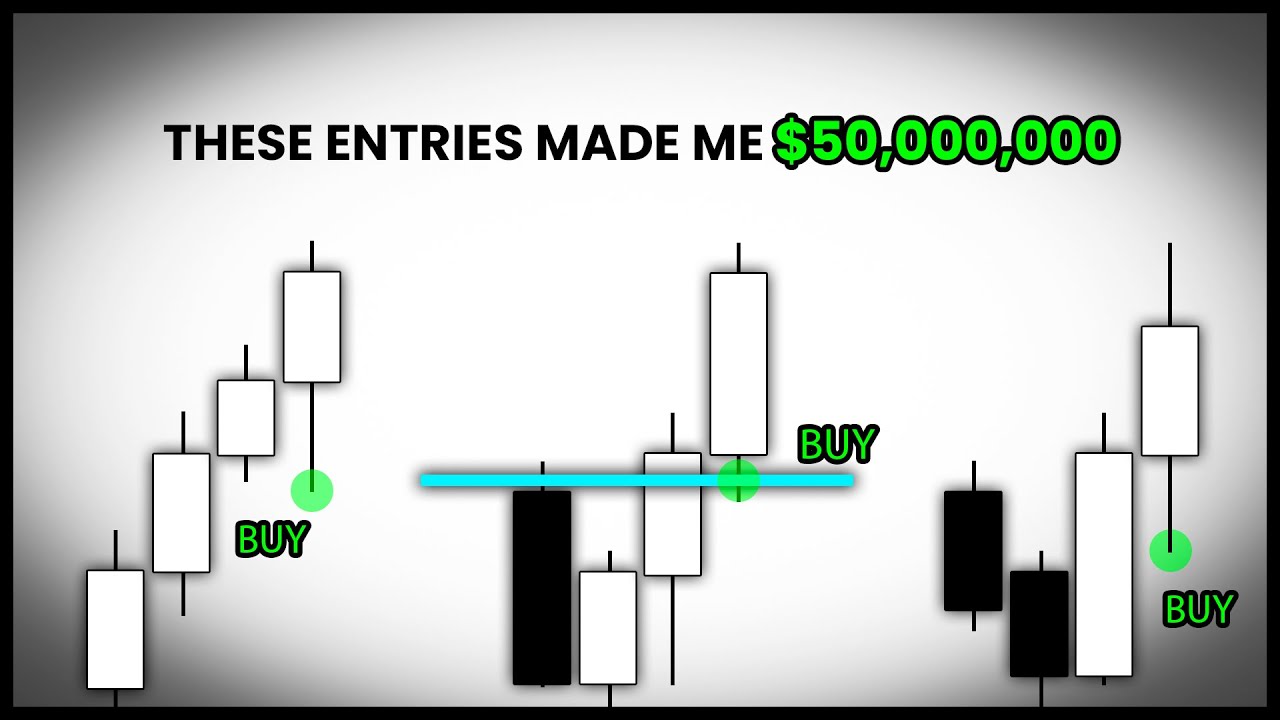
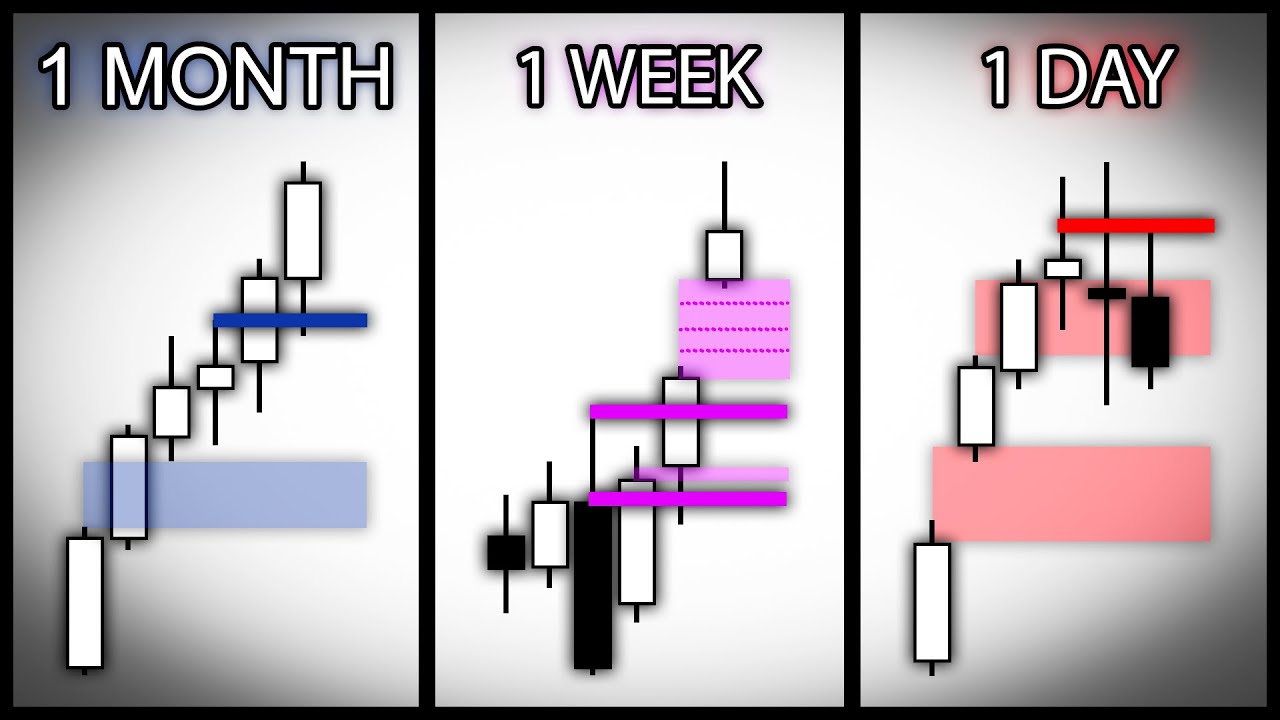
I've been trading with the system that I'm going to teach you in this video for over half a decade at this point. And over that time, on average, I make about 60 R a month. Now, those statistics are pretty incredible if you compare those to almost any system in the space. The results don't even come close. And the reason that those statistics are able to be that high is because this is a very unique system. You will not see anybody else on the internet trading like this, and you won't see anybody else on the internet thinking about trading like this. So in today's video, we're going to put together the whole system. I have taught most of it for free on YouTube in parts, but in this video, we're going to be putting it all together, showing you how to use it day by day, and then also giving you some insight on the philosophy of the system and how to think about the market. So first and foremost, the name of my model is the Four Pillars Model or the Four Pillars Setup, whatever you want to call it. But the Four Pillars is the name because there are four distinct steps that you follow when you are utilizing this model. Now, this model covers everything from how you mark the levels to how you determine bias to how you actually enter as well. And the Four Pillars Model kind of extends out to my general trading philosophy as well. And it talks about how I value exposure over win rate and how I think about the market in a way that allows me to perform dramatically better than almost anybody in this space on a very consistent basis. And it's not just me. My students do as well. At this point, I've been doing this internet stuff for a very long time. I've been trading for a very long time, and a lot of people have learned from me and also had very similar results. So, this video is going to go over it all and put it all together. The Four Pillars are as follows in this order. First and foremost, and the very first pillar, is a liquidity sweep. So, if you're looking to buy the market, we need a liquidity sweep underneath old lows. Or if you're looking to sell the market, we need a liquidity sweep above old highs. Now, this is very basic stuff. Everybody talks about liquidity sweeps. This part of the setup is nothing new, but we do need a liquidity sweep. And going forward, when we talk about actually implementing this model, we'll talk about the very specific liquidity sweeps that we look for because not just any liquidity sweep will do. I'm not looking at some random 1-minute level or 15-minute lows or whatever. I'm looking at very specific liquidity pools that need to be swept. Again, we'll go over those once we get into the actual execution part of this video. But for now, the very first pillar, and in your head, and remember, I'm telling you these in order. The order is more important than the position where you find these things. The order is more important. The very first step for this model to show up is a liquidity sweep. If you're looking to buy the market, the market needs to run underneath prior lows. If you're looking to sell the market, the market needs to run above prior highs. Now, the second part of this setup is your high time frame levels. Now, how I mark high time frame levels is very different than how many people do. We're going to have a brief rundown of them in this video, a brief overview of how I mark them in this video. I have an entire video on my YouTube channel dedicated to high time frame level picking, but it is a mechanical process, and it's the same thing every single day. So, this is a very mechanical way, but nobody marks levels like I do. And when you do mark levels like I do, they also allow you to have a very easy bias based on something that I call projected defined ranges or PDRs. A very quick TL;DR of PDRs is that when you hit one level, you expect to go to the next one above you, or if you hold underneath a level, you expect to go to the next level below you. So, a very, very, very undetailed and nondescriptive description, which is, I guess, a little bit paradoxical of a saying, is that when you run into a high time frame level, you think that you're going to go to the next high time frame level. So, this is number two, and pillar three. So at this point, you have a liquidity sweep, which is your first pillar. Then you run into a high time frame level. Holding that high time frame level, sometimes getting above the halfway point, PDR sets into motion your internal bias. Now, I don't believe in daily bias. We do not trade based on daily bias with this setup. We trade off of very internal next move bias. So we're looking for the next move in the market. That may be the next 10 minutes. That may be the next hour. That may be the next 2 minutes of price. But whenever you hit a level, going to the next one is your immediate bias. So I believe in immediate bias, not daily bias. So again, so far the order is you have your liquidity sweep into your high time frame level, and then that high time frame level sets into motion your immediate bias, which is what sets into motion your Four Pillar stage. At this point, there's only one pillar left, which is how you get your entry or what we call internal confirmation. Now, again, like I said, the stage is set, and what I mean by the stage is set is that the Four Pillars setup, the first three pillars create what I call a stage. Imagine a stage is where something is hosted. Okay, for example, you go and you see a play. The stage is where the play is hosted. In this particular setup, in the Four Pillars Model, the first three pillars create the stage where your entries are hosted. So your PDR range or your bias level to level creates a range from here to here. And in this case, we would be looking long, right? We have a liquidity sweep into a high time frame level, which creates a bias. How do we actually long this? This is where we have our internal confirmation. Until price action reaches the completion of the PDR or the completion of the immediate bias, we can have as many internal confirmations as we want. And understand that your internal confirmation is your entry. So if 10 internal confirmations show up, we could take 10 trades on this entire Four Pillars setup. So the Four Pillars setup is really a stage for as many entries as it takes to complete the immediate bias. Hopefully that makes sense. Now, internal confirmation could be a lot of things. It could be the thing that held price down, breaking up and then having a retest. It could be as simple as, for example, if this is the liquidity sweep, price comes down and it can't get back underneath those lows. That could be internal confirmation to take a long. It could be something where you gain an order block. It could be turning a fair value gap inversion. It could be a whole hell of a lot of things, but as many times as it shows up, you could take it. It could be regaining a different level that's not involved in the bigger PDR or the bigger immediate bias. So, if you regain a level, you hold it. You could have internal confirmation here. You could have an internal confirmation as high up as here. As long as the bias has yet to be completed, you could have as many internal confirmations as you want. Now, that's theoretically how the Four Pillars Model works. The reason why I'm able to perform how I do perform is because of what I optimize for. Now, the third pillar, the bias, okay, that is what has the likelihood. That's where your probabilities lie. So the probability to go from level to level is about 70%. So think of that as the overall setup's expansion rate. That's not your trade's win rate. That's the setup. That's the stage completing in a way that you thought it was going to complete. That is the high probability. That's where you get your probabilities in the setup. On your actual entries, and on my actual entries, I do not care so much about the win rate of every individual entry. And here is why. For the most part, people thi...