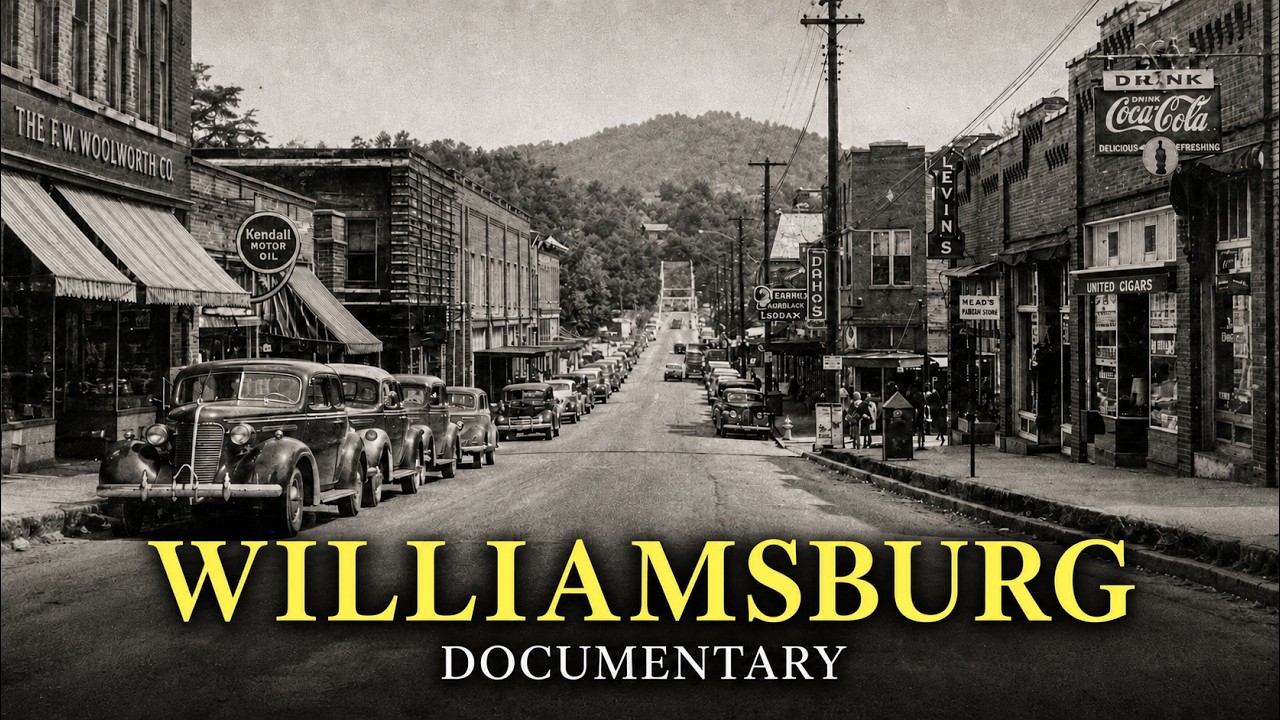
Explore how Palm Beach evolved from a remote swamp to a billionaire enclave, with historic estates torn down by new wealthy owners.
Ask about this video. Answers come from its transcript only — with the timestamp, so you can check them.
Generated from the transcript and can be wrong — check the timestamp.
Key Takeaways
- Palm Beach was deliberately developed as an exclusive, isolated retreat for America's elite.
- Flagler's control over transportation and hospitality was key to the island’s early success.
- Architectural innovation and luxury defined the island’s identity through the early 20th century.
- The current trend of demolishing historic estates reflects changing values among the ultra-wealthy.
- Palm Beach remains a symbol of extreme wealth and social exclusivity.
What the video covers
- Henry Flagler founded Palm Beach in 1894 by building a hotel and railway on a remote barrier island.
- Palm Beach transformed from a mangrove swamp with no infrastructure into a private paradise for America's wealthiest families.
- Flagler's developments included the Royal Poinciana hotel, the Breakers, and his own mansion Whitehall.
- The Florida East Coast Railway monopoly controlled access to the island, shaping its early growth.
- Paris Singer and architect Addison Mizner contributed to Palm Beach's architectural legacy with projects like the Everglades Club.
- The island became home to extravagant mansions built to impress and last, owned by old and new fortunes.
- Despite the historic significance, many current wealthy buyers purchase estates only to demolish them.
- Palm Beach today has fewer than 9,200 residents but over 68 billionaires with a combined net worth of $600 billion.
- The video highlights the tension between preservation of historic architecture and the desires of modern wealthy owners.
- It traces the island’s physical and social transformation over more than a century.
Chapters
- 00:00The Island That Wasn't There
- 02:51Flagler's Vision and the Royal Poinciana
- 05:46Early Development and Waterfront Lots
- 08:37The Everglades Club and Architectural Innovation
- 11:15Construction and Craftsmanship of Palm Beach Homes
- 16:47The Growth of Worth Avenue and Social Life
- 19:21Economic Challenges and Land Abandonment
- 29:16Modern Era: Demolitions and New Wealth
Full Transcript — Download SRT & Markdown
Speaker A
In 1894, Henry Flagler opened a hotel on a barrier island, so removed from anything resembling a city that his first guest numbered exactly 17. He had built it as an escape, a private paradise reachable only by his own railway, insulated from the mainland by a lagoon that kept out the mosquitoes and the heat.
Speaker A
The families who followed him spent the next several decades building the most extravagant private houses in American history there. Houses meant to last, houses meant to be seen. Today, Palm Beach holds fewer than 9,200 residents and more than 68 billionaires, worth a combined 600 billion on an island 3 and 1/2 miles long. And the families buying property there now are not preserving what Flagler's generation built. They are the same class of family. New fortunes standing where old fortunes once stood.
Speaker A
Paying tens of millions of dollars for those historic houses. Not to live in them, to tear them down.
Speaker A
Chapter 1. The island that wasn't there. Before it had a name, Palm Beach was a smear of mangrove on the edge of a swamp nobody wanted. A barrier island reachable only by boat. Its interior thick with insects. Its shoreline reshaped by every passing storm season. Seven miles of tangled route and sand, standing between the Atlantic and a freshwater lagoon called Lake Worth. With no road touching it and no railway near it. The land itself seemed to have opted out of the 19th century, indifferent to the railroads and telegraph lines, then stitching the rest of the country into something that could be surveyed, sold, and taxed. For a long time, it had. Then in 1878, a Spanish ship carrying a cargo of coconuts wrecked off the coast, and roughly 20,000 of them washed up on the island's beaches, scattered across sand that had never grown anything a settler would have recognized as a crop. They took root anyway, indifferent to whatever plans anyone might have had for the place. Spreading along the dune line the way volunteer growth spreads when nothing is there to stop it. Within a few seasons, the barrier island was thick with palms that had no business growing there, self-seeded, uninvited, thriving anyway. And the name followed the trees the way names on this coast so often did, attached to a landscape by accident and never revised. Henry Flagler did not care about the coconuts. He cared about the lagoon. By 1893, Flagler, a co-founder of Standard Oil, turned Florida's railroad and hotel baron. A man who had already spent a decade building the case that the state's future lay in persuading the wealthy to winter there. Had already built grand hotels up the coast at St. Augustine, palaces of stucco and arcade meant to convince northern money that Florida could be civilized. What he wanted next was not civilization. It was isolation, and Lake Worth offered it. A body of fresh water separating the barrier island from a mainland thick with mosquitoes and choked with heat. A natural moat his wealthiest guests would never have to think about twice.
Speaker A
He gave the order to push the Florida East Coast Railway south, past the swamp, to the island the coconuts had claimed. The crews came first, laying track through country that offered them no shade and no firm ground to stand on.
Speaker A
Then came the track itself, mile after mile of it. Arrow straight through terrain that had never before carried anything heavier than a fishing camp.
Speaker A
Then on February 11th, 1894, the hotel, he called it the Royal Poinciana. And on opening night, it held exactly 17 guests scattered through corridors and dining rooms built to seat and shelter hundreds. Not 1700, 17. A building conceived to house the ambitions of an entire class of American fortune. Standing nearly empty on a spit of sand, three and a half miles long and half a mile wide, a place most of the country could not have located on a map. It did not stay empty. Within months, Flagler was expanding the Royal Poinciana toward a capacity of 1,000 guests, adding wings, adding floors, adding corridors until the hallways alone ran more than 3 miles end to end. By the time the additions were finished, the Royal Poinciana was the largest wooden building on Earth. Not the largest hotel on Earth, the largest wooden structure of any kind anywhere. Full stop. A fact that spoke as much to the speed of its construction as to the appetite it had been built to satisfy. A private railway, a private lagoon, a private island reachable by no other means Flagler did not also own. He had built in less than a year a sealed environment on a swamp that had never held a building larger than a fishing shack.
Speaker A
Sealed environments once built attract a particular kind of tenant. The Royal Poinciana filled within its first season. Its verandas crowded with the same northern families who had wintered at St. Augustine now trading one Flagler property for another further south, further removed. And behind it, on that same lagoon shore, other men were already looking at the water and calculating what a house of their own might look like there. Not a room in Flagler's hotel, but land and a name on a deed. Chapter 2. The Monopoly and the Club. By 1896, the men calculating waterfront lots had a reason to move quickly, the Florida East Coast Railway reached Palm Beach directly that year. No longer stopping short of the island and forcing guests into a carriage across the inlet. And Flagler answered the surge of new arrivals by building a second hotel. He put it on the ocean side of the island, away from the lake where the Royal Poinciana stood and named it the Breakers. Two hotels, one railway, one owner. A guest arrived by Flagler's train, ate at a Flagler table, and left the same way he had come. For more than a decade afterward, no family spent a winter in Palm Beach without first paying Henry Flagler. His tracks the only route in, his rooms the only beds on the island, no competition, toll collection. The money that followed built him a house to match the toll booth. In 1902, on land just north of the Royal Poinciana, Flagler completed Whitehall, 100,000 square feet under one roof. Marble imported by the shipload, a wedding gift to his third wife, Mary Lily Keenan. Estimates put the cost near $4 million, something over 130 million today. The New York Herald called it more wonderful than any palace in Europe. An American railroad man's house on a Florida sandbar measured against the accumulated palaces of European monarchy and found the winner. Flagler was 72 years old and had never lived anywhere that large in his life. Had spent decades building hotels for other men's comfort before building anything of comparable scale for his own. He had built the toll booth and then he had built the proof of what the tolls were for. Whitehall settled the question of what money could do on the island. It did not settle who else got to try. Sixteen years passed before the next name that mattered arrived. In the winter of 1918, Paris Singer, heir to the sewing machine fortune, restless, recently arrived from a Europe still consumed by war, came to Palm Beach with a young architect named Addison Mizner. The two men had met abroad before the war scattered whatever plans either of them had made for after it. Mizner already carrying a reputation as talented, unconventional, and difficult to pin down to a single commission. Singer had money without a project. Mizner had talent without a client. Palm Beach, still built almost entirely of Flagler's Victorian hotel wood, gave them both a use. They broke ground on a building meant to be a convalescent hospital, a place for wounded American soldiers to recover far from the cold, from the mud, from everything the war had come to mean. The war ended before it opened.
Speaker A
Singer and Mizner changed the plan without changing the walls. And on January 25th, 1919, the building opened instead as the Everglades Club, a private social club, invitation only, its members drawn from the same families who had spent a decade paying Flagler's toll. The club ex...
Speaker A
the place. Spreading along the dune line the way volunteer growth spreads when nothing is there to stop it. Within a few seasons, the barrier island was thick with palms that had no business growing there, self-seeded, uninvited, thriving anyway. And the name followed
Speaker A
the trees the way names on this coast so often did, attached to a landscape by accident and never revised. Henry Flaggler did not care about the coconuts. He cared about the lagoon. By 1893, Flaggler, a co-founder of Standard
Speaker A
Oil, turned Florida's railroad and hotel baron. A man who had already spent a decade building the case that the state's future lay in persuading the wealthy to winter there. had already built grand hotels up the coast at St.
Speaker A
Augustine, palaces of stucco and arcade meant to convince northern money that Florida could be civilized. What he wanted next was not civilization. It was isolation, and Lakew Worth offered it. A body of fresh water separating the barrier island from a mainland thick
Speaker A
with mosquitoes and choked with heat. a natural moat his wealthiest guests would never have to think about twice.
Speaker A
He gave the order to push the Florida East Coast Railway south, past the swamp, to the island the coconuts had claimed. The crews came first, laying track through country that offered them no shade and no firm ground to stand on.
Speaker A
Then came the track itself, mile after mile of it. arrow straight through terrain that had never before carried anything heavier than a fishing camp.
Speaker A
Then on February 11th, 1894, the hotel, he called it the Royal Pointiana. And on opening night, it held exactly 17 guests scattered through corridors and dining rooms built to seat and shelter hundreds. Not 1700, 17. A building conceived to house the ambitions of an
Speaker A
entire class of American fortune. Standing nearly empty on a spit of sand, three and a half miles long and half a mile wide, a place most of the country could not have located on a map. It did not stay empty. Within months, Flaggler
Speaker A
was expanding the Royal Point Siana toward a capacity of 1,000 guests, adding wings, adding floors, adding corridors until the hallways alone ran more than 3 miles end to end. By the time the additions were finished, the Royal Pointiana was the largest wooden
Speaker A
building on Earth. Not the largest hotel on Earth, the largest wooden structure of any kind anywhere. Full stop. a fact that spoke as much to the speed of its construction as to the appetite it had been built to satisfy. A private
Speaker A
railway, a private lagoon, a private island reachable by no other means Flaggler did not also own. He had built in less than a year a sealed environment on a swamp that had never held a building larger than a fishing shack.
Speaker A
Sealed environments once built attract a particular kind of tenant. The Royal Pointiana filled within its first season. Its verandas crowded with the same northern families who had wintered at St. Augustine now trading one Flaggler property for another further
Speaker A
south, further removed. And behind it, on that same lagoon shore, other men were already looking at the water and calculating what a house of their own might look like there. Not a room in Flaggler's hotel, but land and a name on
Speaker A
a deed. Chapter 2. The Monopoly and the Club. By 1896, the men calculating waterfront lots had a reason to move quickly, the Florida East Coast Railway reached Palm Beach directly that year. no longer stopping short of the island and forcing
Speaker A
guests into a carriage across the inlet. And Flaggler answered the surge of new arrivals by building a second hotel. He put it on the ocean side of the island, away from the lake where the Royal Pointiana stood and named it the
Speaker A
Breakers. Two hotels, one railway, one owner. A guest arrived by Flaggler's train, ate at a Flaggler table, and left the same way he had come. For more than a decade afterward, no family spent a winter in Palm Beach without first
Speaker A
paying Henry Flaggler. His tracks the only route in his rooms, the only beds on the island, not competition toll collection. The money that followed built him a house to match the toll booth. In 1902, on land just north of
Speaker A
the Royal Pointiana, Flaggler completed Whiteall, 100,000 square ft under one roof. marble imported by the ship load, a wedding gift to his third wife, Mary Lily Keenan. Estimates put the cost near $4 million, something over 130 million today. The New York Herald called it
Speaker A
more wonderful than any palace in Europe. An American railroad man's house on a Florida sandbar measured against the accumulated palaces of European monarchy and found the winner. Flaggler was 72 years old and had never lived anywhere that large in his life. Had
Speaker A
spent decades building hotels for other men's comfort before building anything of comparable scale for his own. He had built the toll booth and then he had built the proof of what the tolls were for. Whiteall settled the question of
Speaker A
what money could do on the island. It did not settle who else got to try. 16 years passed before the next name that mattered arrived. In the winter of 1918, Paris Singer, heir to the sewing machine fortune, Restless, recently arrived from
Speaker A
a Europe still consumed by war, came to Palm Beach with a young architect named Addison Misner. The two men had met abroad before the war scattered whatever plans either of them had made for after it. Misner already carrying a reputation
Speaker A
as talented, unconventional, and difficult to pin down to a single commission. Singer had money without a project.
Speaker A
Mizner had talent without a client. Palm Beach, still built almost entirely of Flaggler's Victorian hotel wood, gave them both a use. They broke ground on a building meant to be a convolescent hospital, a place for wounded American soldiers to recover far from the cold,
Speaker A
from the mud, from everything the war had come to mean. The war ended before it opened.
Speaker A
Singer and Mizner changed the plan without changing the walls. And on January 25th, 1919, the building opened instead as the Everglades Club, a private social club, invitation only, its members drawn from the same families who had spent a decade paying Flaggler's
Speaker A
toll. The club excluded Jewish applicants. It excluded black applicants. Both exclusions were written into its practice from the first season and stayed there for decades. unremarked upon by the membership that benefited from them. What mattered architecturally outlasted what mattered socially. Mner
Speaker A
built the Everglades Club in a style he was inventing as he went. Red tile roofs, walls of porous coina stone quarried nearby, rot iron balconies worked by hand, arched loes borrowed loosely from Spain, from Italy, from wherever else suited the effect.
Speaker A
Courtyards left open to the ocean air in a way no Flaggler Hotel had ever been.
Speaker A
Stairways that led nowhere in particular except toward the next view he wanted a guest to notice.
Speaker A
Nothing like it existed yet on the island. Within a few years, almost nothing else did. Not because Mizner enforced it, but because every architect who followed him to Palm Beach found it easier to copy the formula than to
Speaker A
invent another one. Singer had wanted a hospital and gotten a club instead. What he had actually built was a template, and by the mid 1920s, more than a dozen architects working on the island would be using it without ever meeting the man who drew it
Speaker A
first. Chapter 3. The masterpieces. By 1919, Addison Misner had stopped building clubs and started building for owners who wanted the club's language applied to a single family's life. Elmir Soloul went up that year on the oceanfront, commissioned by the Stosbury
Speaker A
family of Philadelphia. Old money, the kind that wanted a winter house that looked as though it had always been there. And it was one of the first great private estates the island had seen. It borrowed the courtyards and
Speaker A
the loias and the imported roof line that Meisner had been developing for years and scaled them down to one household, one address, one family's name on the gate. Other architects would spend the rest of the decade copying what Eliasol had already proven. The
Speaker A
island now had a house that other houses were measured against, a standard set within a single building season. Two years later, Mizner gave the Stosburies a second one. Kasabendida rose in 1921.
Speaker A
Further along the same stretch of shore, larger than the first, built by the same hand for the same family. Its rooms multiplying the way a fortune multiplies once it decides a single house was never really the point. Two estates, two years
Speaker A
apart, one architect, one client, one shoreline. The Stosburies had not exhausted their ambition with Elmir Soul. They had only tested it. Then came serial money. Marjgery Merryweather Post had built her fortune on post cereal and on general foods. The company assembled
Speaker A
around it and in 1923 she began building on Palm Beach. She called the house Mara Lago. Construction ran four years 1923 to 1927 and post spent approximately $7 million completing it. Adjusted for inflation, that figure clears $90 million today,
Speaker A
not a house. An argument made in stone and guilt and imported tile about what money could still buy when there was enough of it. And a willpatient enough to spend four years proving the point.
Speaker A
By the time it was finished, whatever the Stozburies had raised on the same shoreline looked modest beside it. The argument had numbers behind it. 110,000 square ft under a single roof. 58 bedrooms, each finished to a standard that assumed a guest list large enough
Speaker A
to fill them. 33 bathrooms, and in every one of them, gilded plumbing. Not brass finished to resemble gold, but gold.
Speaker A
Fixture by fixture, faucet by faucet. The roof tile came from Cuba and from the Dominican Republic, shipped across open water because no Florida quarry produced the color post wanted. Crate after crate unloaded onto a beach that had never seen cargo of that kind. A
Speaker A
tower climbed 75 ft above the grounds. modeled on the tower of the do's palace in Venice, tall enough that it announced the house to anyone approaching from the water long before they reached the gate.
Speaker A
None of it assembled itself. Roughly 90 craftsmen worked the site across those four years, Bahamian, Italian, American, each trade brought in for a skill the others did not have.
Speaker A
each speaking a different language on the same scaffolding. Stonework, tile setting, plaster, iron work, the long, patient labor of matching imported material to a design that had never existed anywhere before it existed here.
Speaker A
Revised on paper as often as it was revised in stone. 4 years is not a long time to raise 110,000 square ft from open ground. It is a long time to keep 90 men employed on a single private
Speaker A
residence and still call it a house rather than a project. Elmirasol had taken months. Kasa Bendida had taken less than a year. Mara Lago took four years, 90 craftsmen and $7 million. And when it was finished in 1927, it was the
Speaker A
largest private residence Palm Beach had produced, a scale no subsequent owner on the island would attempt to match.
Speaker A
Misner himself was already moving on. Restless in the way men become restless once a single commission stops feeling large enough. He had started building something bigger than any single house, an entire city further down the coast.
Speaker A
And by 1925, he had the money of some of the most famous names in America behind it. Chapter 4. Worth Avenue.
Speaker A
By 1925, Addison Misner was no longer building one house at a time. He and his brother Wilson formed the Misner Development Corporation that year, and the names attached to it read like a roll call of the decad's fortunes.
Speaker A
Irving Berlin, WK Vanderbilt II, T. Coleman DuPont. These were not clients commissioning a winter cottage. They were investors putting money behind a plan that had nothing to do with a single lot on the island.
Speaker A
The corporation's target was further down the coast. A stretch of scrub land the group intended to transform into an entire city built from the ground up in Midsner's own style. Arches and towers and loia multiplied across an empty
Speaker A
landscape that had until that year supported nothing more ambitious than cattle. The plan already had a name, Bokeh Raen.
Speaker A
Palm Beach had made Addison Mner rich enough to stop thinking in houses and start thinking in cities.
Speaker A
Picture Worth Avenue on a Saturday afternoon in the winter season of 1925. Automobiles stand double parked along the curb outside shops built in Meisner's signature arches and red tile roofs. Their window displays lit for customers who would think nothing of
Speaker A
buying on impulse. Behind 10-ft hedges, private lawns host orchestras hired for a single afternoon. The music carrying over walls built expressly to keep the street from hearing what it was missing.
Speaker A
The air carries salt, cut grass, and cigar smoke. A car horn sounds twice, then stops. The street runs on three months of the calendar, January through March, when the trains from New York and Newport arrive full, and the hotels post
Speaker A
their winter rates and empties again the moment the season turns. Land that sold for a few hundred an acre before Henry Flaggler's railroad reached the coast now changes hands for hundreds of thousands. The rest of the year, Worth
Speaker A
Avenue was nearly empty, its arcades shuttered, its orchestras gone north with everyone who had hired them. The shops themselves were the point. Mizner had designed the Avenue not as a street, but as a stage set for spending, its
Speaker A
arcades and courtyards built to slow a wealthy pedestrian down. To turn a walk, to buy a hat into an afternoon. a series of turns and courtyards that made the shortest distance between two shops the longest possible route.
Speaker A
There was no need for the avenue to function the other nine months of the year, and it largely did not. Its owners had built for a 9-week audience with money enough to make the other 43 weeks irrelevant. That was the arithmetic the
Speaker A
entire island ran on. Behind that avenue, the names filling the hotels were not incidental. Vanderbilts, Aers, Wideners, Dukes. By the middle of the 1920s, these were not occasional visitors to Palm Beach. They were fixtures of the winter season, as
Speaker A
reliable as the trains that carried them south and the staff who opened their houses each December to receive them.
Speaker A
Their presence was the town's entire business model, stated plainly. An island with no industry and no port and no agriculture worth mentioning, sustaining itself entirely on the annual migration of a few hundred families with more money than any American resort town
Speaker A
had ever hosted at once. Property values on the island had tripled in 3 years.
Speaker A
Nobody who owned land there was selling. The transformation of the land itself told the same story from a different angle.
Speaker A
Before Flaggler's railroad reached the coast, an acre on that stretch of Florida sold for a few hundred. When it sold at all, swamp and scrub that no one had found a use for land a surveyor would have struggled to justify walking.
Speaker A
By 1925, the same acre changed hands for hundreds of thousands. Nothing about the ground had changed. What had changed was who wanted to stand on it and how many of them wanted to stand there at the same time. That same money, having
Speaker A
financed the shops on Worth Avenue, was now moving south toward the empty scrubland where Meisner intended to build his city. He had the backers. He had the name.
Speaker A
What he did not yet have was proof that Boca Raton would work the way Palm Beach had worked.
Speaker A
Chapter 5. The first storm. The storm came in September 1926 out of the Atlantic, and it did not announce itself as an ending. Palm Beach had weathered hurricanes before, storms that tore a few roofs loose and were forgotten by
Speaker A
the following season. This one moved differently. A wide, patient wall of wind that crossed the lower half of the state, and did not weaken as it went.
Speaker A
that seemed to the people who lived through it to have no intention of passing quickly. It tore roofs from houses that had stood since before the boom. It flattened the flimsier construction thrown up in the rush of the previous two years, the frames built
Speaker A
fast and sold faster. Timber that had never been meant to outlast a single winter season, let alone a hurricane.
Speaker A
When it passed, the physical damage was bad enough. What it did to confidence was worse. For 5 years, the money had moved on a single assumption that Florida land once bought would always be worth more tomorrow than it was today.
Speaker A
An assumption nobody had bothered to write down because nobody had thought it needed defending. The storm broke that assumption in an afternoon. Buyers who had put down deposits on lots they had never seen. Scrub land platted into streets that did not yet exist. Streets
Speaker A
with names but no pavement. no water, no houses, stopped paying the balances. There was no lawsuit to file, no single culprit to blame. They simply walked away in the thousands because the arithmetic no longer worked. A swamp lot
Speaker A
bought on margin was still a swamp lot. Now it was a swamp lot nobody wanted.
Speaker A
The collapse did not happen in a single week. It happened over months the way a fever breaks. slowly, then all at once.
Speaker A
Land that had traded hands three times in a season sat unsold. Its owners unable to find a buyer at any price.
Speaker A
Developers who had financed one project against the paper profits of the last discovered that paper profits could not meet a payroll. That a ledger full of promised sales was worth nothing to a bank demanding cash. Newspapers up north, which had spent two years running
Speaker A
advertisements for Florida acreage, began running different stories, cautionary ones, the kind that make the previous two years of advertisements look like something closer to fiction.
Speaker A
By winter, the boom that had built Worth Avenue was being spoken of in the past tense. Addison Misner had bet everything on the boom continuing. Bokea Raton was to be his masterpiece, a city, not a resort, laid out on his own terms with
Speaker A
his own money and his backers behind it. The storm did not touch Boca Raton directly. It did not have to. The buyers he needed, the ones who were meant to purchase the lots and finance the next phase of construction, were the same
Speaker A
buyers now defaulting on deposits across the state. The financing dried up within weeks. By the end of 1926, Mizner was forced into bankruptcy. The city he had drawn on paper stopped where the money stopped. Half-built streets, a handful
Speaker A
of finished structures. The rest left his foundations and surveyor stakes baking in the Florida sun. He did not recover it. He stayed in Palm Beach in the town he had built for other men's fortunes, and watched his own disappear.
Speaker A
A man who had spent a decade designing other people's paradise and ended it without one of his own. There would be no second act, no return to the drafting table with fresh backers. In 1933, at the age of 60, he died there. The
Speaker A
architect of the wealthiest colony in America, nearly penniless. The mansions he had built did not vanish with him.
Speaker A
Worth Avenue remained. The great houses along the shore remained. their owners largely untouched, their fortunes built on steel and oil rather than sand and speculation.
Speaker A
What had failed was the speculation that surrounded them. The outer ring of paper wealth that had mistaken a resort town for an inexhaustible mine.
Speaker A
The storm of 1926 was, by the standards of what Florida would see 2 years later, a modest one. Chapter 6. The second storm.
Speaker A
The storm of 1926 had given Palm Beach a rehearsal. It did not prepare anyone for what came ashore 2 years later. On September 16th, 1928, a hurricane made landfall near Jupiter at the northern edge of Palm Beach County and moved
Speaker A
inland on a track that carried it directly across the county's populated coast and into its agricultural interior, gathering force over water still warm enough in September to feed it.
Speaker A
Along the shoreline, a storm surge estimated at 10 ft pushed into the barrier island and the mainland behind it, driving water through streets that had been laid out only a few years earlier for people who assumed the ocean
Speaker A
stayed where the maps put it, who had built their winter houses on land that had never, in living memory, been asked to prove it could hold back the sea. In the immediate area around Palm Beach, 1,711 houses were destroyed.
Speaker A
Roofs, porches, entire frame structures. The wood-built inventory of a resort economy that had expanded faster than its building codes could account for storms of this size, houses framed for a mild winter climate, and never tested against wind of this force.
Speaker A
Insurance claims and rebuilding estimates would occupy the county for years. But the coastal damage, severe as it was, was not what made the 1928 storm different from every other hurricane the region had recorded. 40 mi inland, Lake Oki Chobee sat behind an earthn shore
Speaker A
never built to hold back a surge of this magnitude. a low dyke raised by hand and mule labor to manage ordinary rainfall, not a wall of water pushed by a hurricane. The hurricane's winds pushed the lakes's water south, over that
Speaker A
shore, and across the flat agricultural land around its southern rim. farmland worked at that time of year by a labor force of migrant agricultural workers, the majority of them black, housed in the settlements and labor camps that served the region's vegetable and sugar
Speaker A
operations. There was no evacuation order that reached most of them in time and in many cases no infrastructure, no roads, no elevated ground, no shelter built to withstand it. that would have mattered if there had been estimates of
Speaker A
the dead in the Lake Okachchobee flooding range between 1,800 and 4,000. The range itself is a fact worth stating plainly. Bodies were recovered for weeks afterward. Some counted individually, many buried in mass graves without full identification. And the county's tally
Speaker A
undercounted a population that had in life gone largely uncounted by the same civic and property records that meticulously tracked the value of a Palm Beach cottage down to the dollar. It stands as one of the deadliest natural disasters in United States history. Palm
Speaker A
Beach County's property losses from the 1928 storm were assessed at approximately $25 million, close to $470 million in current terms.
Speaker A
That figure describes structures, roads, agricultural infrastructure, and the resort properties along the coast. Each one itemized, valued, and eventually rebuilt. It does not and was never intended to describe the other ledger, the one kept in death certificates and
Speaker A
unmarked graves in labor camps that were rebuilt when they were rebuilt without much change to the arrangement that had put people there in the first place. The island's hotels reopened. The season resumed. The trains ran again. The same
Speaker A
families arrived in December as though the previous September had happened somewhere else entirely, to a different county, to a different class of people.
Speaker A
Within 4 years, a different kind of pressure arrived. Not wind and water this time, but the collapse of the market that had financed the island's construction in the first place.
Speaker A
The depression reached Palm Beach on a slower schedule than it reached most of the country. Protected for a while by fortunes deep enough to absorb a bad year or two without selling anything.
Speaker A
Insulated the way the island had always been insulated, by money and by distance. But it reached the estates too eventually, the way it reached everything else. and some of the largest of them built in the years when money
Speaker A
seemed to have no ceiling proved too expensive even for the men who had built them to keep. Chapter 7, the first demolitions.
Speaker A
Elmir Soul went first. The Stosbury family's oceanfront masterpiece raised by Addison Misner in the same building season that gave Palm Beach its first taste of unlimited money came down in 1959, more than three decades after the last stone had been set and the last of the
Speaker A
imported roof tile laid. Nothing was salvaged in any deliberate sense. The house was simply too large and too costly to maintain for a family whose fortune and whose reasons for keeping a winter estate on that scale had both
Speaker A
receded with the decade that built it, the household staff, and the entertaining calendar that had once justified a house of that size gone along with them.
Speaker A
Only the stone arch at the entrance was left standing. A gate that no longer led anywhere, that opened now onto nothing but the lot where the rest of the house had been. It remains on the site today, admitting nothing, a threshold with no
Speaker A
house behind it and no family left to walk through. Kasa Bendida followed two years later. The second of the Stotzbury houses larger than the first, fell in 1961 to the same logic that had claimed Elmir Soul, a structure built for a
Speaker A
scale of living that no longer existed, maintained at a cost no subsequent owner cared to carry. Its rooms too numerous and too particular to repurpose for anyone who might have wanted the address without the household staff to run it.
Speaker A
Two of Misner's grandest commissions were gone within 3 years of each other. The pair of them standing for barely a generation longer than it had taken to build them. The oceanfront that had once measured its wealth in bedrooms now
Speaker A
measured it in vacant lots. Mara Lago took a different road. Marjgery Merryweather Post, who had built the house and outlived the era that produced it, died in 1973 and left it to the United States government, intending it as a winter retreat for sitting
Speaker A
presidents. A gift meant to preserve the one estate on the island, still standing at its full original scale. The offer sat under study for 8 years, passed from one federal office to the next. In 1981, Washington declined it formally,
Speaker A
concluding that a residence designed around the private staff of a single family was too expensive to secure and maintain as public property. The house reverted to the post estate, unwanted by the one buyer built to afford it. It
Speaker A
found another in 1985. Donald Trump purchased Mara Lago for a fraction of what it would have cost to build again and converted it into a private club, a use its architecture had never anticipated, but could accommodate without much alteration to the rooms
Speaker A
post had built for entertaining. Of every great estate raised at the height of the 1920s boom, it is the only one still standing at its original size. The others survive, if at all, as fragments, an arch, a gate, a name on a plat map.
Speaker A
The pattern of loss did not end with the boom era mansions. Palm Beach's Landmarks Preservation Commission, created in 1979, spent the following decades designating protected status onto more than 350 buildings across the island. a slow accumulation of legal shelter, one
Speaker A
address at a time, for houses that had outlived the families who built them. The commission's authority rested on the assumption that the town, not the market, would decide which structures were worth keeping. That assumption ended in 2024.
Speaker A
The Florida legislature passed a law stripping local governments of most power to block demolition, extending even to buildings already listed on historic registers, overriding decades of local designation in a single legislative session.
Speaker A
Preservation officials learned of the change only as it arrived. Commission members described being blindsided by a statute drafted with no input from the body it overrode.
Speaker A
350 designations accumulated one building at a time since 1979 now carried far less weight than they had the year before. The arch at Elmir Soul had stood as an accident of demolition, a leftover no one had bothered to clear. What came next in
Speaker A
Palm Beach would not be accidental at all. Chapter 8. What the money buys now.
Speaker A
In June 2024, the house directly inside the security perimeter that surrounds Mara Lago changed hands for $15.5 million.
Speaker A
The buyers were neighbors Kim and Todd Michael Glazer, working alongside entities tied to the socialite Jane Holer. The 9-bedroom house they bought covered 12,000 square ft built decades earlier for a family that had wanted exactly that much room and no more.
Speaker A
Their plan required no negotiation, no design review beyond permitting, no debate about the merits of the architecture standing on the lot. They intended to tear it down from the moment the sale closed, and divide the land between two households, the house itself
Speaker A
worth nothing to the transaction beyond the square footage of dirt it happened to occupy. The Glazer purchase was not an anomaly. Across 2024 and 2025, several of the island's historic estates went to market with their fate already advertised in the listing. The language
Speaker A
of preservation replaced entirely by the language of assemblage and lot value of buildable square footage and setback lines. One waterfront property asked $54.9 million for the land alone.
Speaker A
The house itself treated as an obstacle rather than an asset. A structure to be cleared rather than shown to a single prospective buyer. Another sold for $31 million only months after its previous sale. Bought expressly so it could be
Speaker A
leveled, flipped, not for the value of what stood on it, but for what could replace it. The pattern no longer hid behind euphemism. The word used in the listings plainly in the marketing copy meant to attract exactly this kind of
Speaker A
buyer was tear down. The people paying these prices are rarely the descendants of the families who built what they are removing. The names attached to the purchases belong to private equity, hedge funds, technology fortunes, new capital willing to spend at guilded age
Speaker A
levels for the privilege of erasing Gilded Age architecture and replacing it with something larger, more private, and less ornamented than what it replaced.
Speaker A
The island's population has barely moved in a century. It remains under 9,200 residents, roughly what it held when the great estates were still going up rather than coming down. What has multiplied is the wealth concentrated behind that number, grown past anything Flaggler or
Speaker A
Misner budgeted for when they were laying out lots and pricing lake frontage by the linear foot. The same winter migration that Flaggler engineered in 1894, south in December, north by April, still sets the rhythm the island runs on. Only
Speaker A
now it delivers a different class of buyer to the same stretch of sand. One with less patience for a house that isn't already exactly what it wants. Two houses survive this arithmetic. Whiteall still stands as the Flaggler Museum. Its
Speaker A
marble halls open on a ticket to anyone who wants to walk through them and see what a 100,000 square feet looked like before anyone thought to tear it down.
Speaker A
Mara Lago survived inside its own perimeter, guarded rather than toured. Between those two exceptions lies the rest of the record. House after house that defined Palm Beach in the 1920s gone, replaced again and again by newer, bigger, planer houses built by people
Speaker A
who could have restored what was standing on the land and chose instead to start from nothing.
Speaker A
The island is still there in outline. Three and a half miles of reclaimed sand and rock between the ocean and the lake, still reached by the bridges that decide who crosses. The lots are the same lots Flaggler platted. The frontage measured
Speaker A
in the same feet his surveyors marked off in the 1890s. What sits on them now is not what he built or what Mizner drew. It is a newer geometry. flatter roof lines, taller walls, security gates instead of arcades, assembled by owners
Speaker A
with no name in the deed history before their own. No memory of the coconuts or the mangrove or the 17 guests who once stood in an empty hotel and wondered whether anyone else would come. The Paradise Flaggler paid to invent in 1894
Speaker A
is still there in shape. Almost none of the paradise the guilded age actually built with that shape is still standing.
Topics:Palm BeachHenry FlaglerFlorida East Coast RailwayRoyal PoincianaThe BreakersEverglades ClubAddison Miznerhistoric mansionsbillionairesreal estate demolition