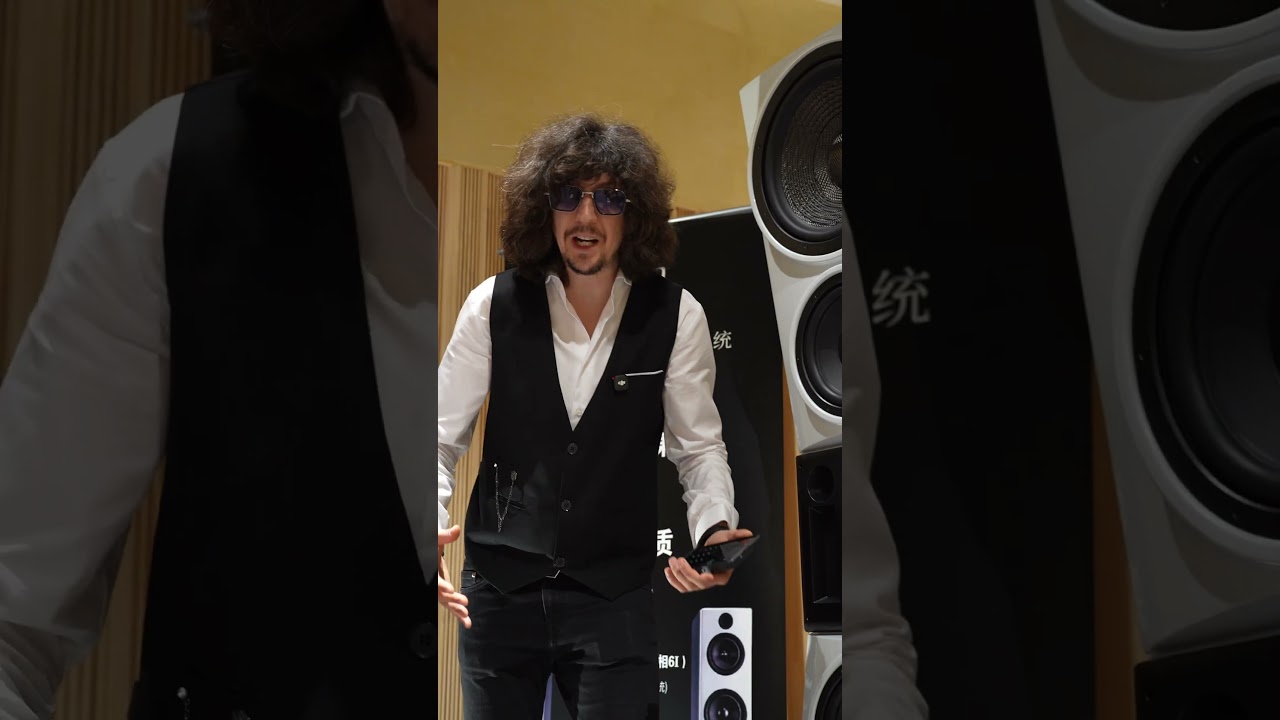
Margulan Seissembai explains Kaizen planning as a foundation for a happy life, linking it to Ikigai and effective life organization.
Ask about this video. Answers come from its transcript only — with the timestamp, so you can check them.
Generated from the transcript and can be wrong — check the timestamp.
Key Takeaways
- Effective planning can multiply productivity by a factor of ten.
- Finding your Ikigai helps align your work, passion, and purpose for happiness.
- Happiness results from having control and clarity in your life.
- Kaizen planning is more than task lists; it is a holistic system for organizing life.
- Success should be measured by happiness and meaning, not just financial or GDP growth.
What the video covers
- Kaizen planning is introduced as a key to a happy and well-organized life.
- The concept of Ikigai is explained as the intersection of what you love, what you are good at, what people need, and what you get paid for.
- Happiness is described as a side effect of a well-organized life, emphasizing control and clarity.
- The seminar contrasts Kaizen planning with traditional to-do lists and highlights its principles and IT applications.
- The Japanese concepts of Shokunin (mastery) and Satori (flow state) are linked to finding and living your Ikigai.
- The importance of planning the right things to avoid wasting effort on ineffective tasks is stressed.
- The speaker shares practical advice on starting planning with paper before moving to digital tools.
- Quotes from Richard Bach, Viktor Frankl, and Einstein are used to reinforce the philosophy behind meaningful living and planning.
- The negative impact of GDP-focused success metrics on happiness and ecology is briefly discussed.
- The transcript includes practical steps and mindset shifts for effective planning and life management.
Chapters
- 00:00Introduction to Kaizen Planning and Its Importance
- 03:53Happiness as a Side Effect of a Well-Organized Life
- 07:08Simplifying the Ikigai Concept
- 10:43Decision Making and Commitment
- 13:58Understanding Time and Life Management
- 17:35Clarity in Thought and Planning
- 22:24Organizing and Filtering Your Tasks
- 25:36Living Your Own Life and Legal Freedom
- 29:55Practical Planning Exercises and Tools
- 35:10Using Cards and Checklists for Complex Projects
Full Transcript — Download SRT & Markdown
Speaker A
Seminar by Margulan Seissembai: Kaizen Planning. Kaizen Planning as the Basis of a Happy Life. Planning is a very important part of my life; it is my hobby. I love planning.
Speaker A
I even funded a startup that optimizes planning systems. Later, at the end of the presentation, I will give you some applications that will make planning easier for you.
Speaker A
I don't plan on paper now, only on my iPhone. But I recommend that you start with the paper version, with a simple version.
Speaker A
One hour of planning equals ten days of work. This is approximately how it turns out: an hour of high-quality planning is equal to at least ten days of just work, without planning.
Speaker A
I will also show you what planning systems are there today, and I will also show you their shortcomings.
Speaker A
So let's get started: Kaizen planning as the basis of a happy life. What topics will we go through today? First, a quote from Richard Bach.
Speaker A
You've probably read Jonathan Livingston Seagull. This is a series of his philosophical books. So, he is writing: You are never given a dream without the resources and power to realize it.
Speaker A
If you have a dream, it does not just come to you. This means that you have and will have the resources and powers to carry it out.
Speaker A
Your task is just to find these resources and powers. Today we will go through what Ikigai is. In short, because Ikigai is about finding the meaning of life.
Speaker A
You understand, it takes more than one lecture to reveal this topic; it would take a very long time. So, I will be short.
Speaker A
What is Kaizen planning and how it differs from to-do lists and other planning systems?
Speaker A
Planning principles. Planning system rules and IT applications to arrange a planning system. I haven't put everything on slides to communicate verbally more, explain, talk, and so on.
Speaker A
So, what is Ikigai? There is a good concept in Japanese culture; it is called Ikigai.
Speaker A
Ikigai means what you live for and what you wake up in the morning for, to be brief.
Speaker A
To be longer: this is your purpose of life. Why did you come into this life?
Speaker A
This is essentially what we call the meaning of life. The Japanese introduced this term, and this term comes from the island of Okinawa, where the largest number of centenarians are concentrated who put the finding of their Ikigai at the forefront of their lives.
Speaker A
The Japanese have a good concept - Shokunin. Shokunin means a master of the craft; he is the supreme master of his craft.
Speaker A
This is when a janitor wants to be the best janitor in the world. He doesn't want to become the head of the janitors’ department, the head of the janitors’ branch, the head of the janitors’ company.
Speaker A
He wants to be the best janitor in the world. If it's a singer, he wants to be the best singer in the world.
Speaker A
That is, each in their job. But to become a Shokunin, you must find your Ikigai.
Speaker A
There are three concepts. Shokunin. Or better put: you have to find your Ikigai. Then, in the process of finding, you become Shokunin. And when you are accomplishing the work, you are achieving the point of Satori, that is, you plunge into a flow where you feel happy and achieve bliss.
Speaker A
So, what is Ikigai? In connection with this, I like the statement of Viktor Frankl. He writes...
Speaker A
Viktor Frankl is a psychologist who survived Auschwitz, a bunch of concentration camps; he survived and then started working as a practicing psychologist and helped children.
Speaker A
So, he writes: happiness is just a side effect of a well-organized life. This is a good takeaway: if your life is messy, it won't be happy.
Speaker A
You should clearly see the equal sign between happiness and well-organized life. They are equal; there is an equal sign between them. If your life is chaotic, you will never be happy.
Speaker A
What is a messy life? These are unforeseen accidents, these are various unexpected events, unpleasant surprises, this is the unpredictability and uncontrollability of one's life.
Speaker A
You feel that life is not controlled by you, and you feel like a sliver in this river of life.
Speaker A
So, where will you get your happiness from? Happiness... There is another definition: it is the degree to which you control your life.
Speaker A
This echoes Viktor Frankl's words that happiness is just a side effect of a well-organized life.
Speaker A
If you have a properly organized life, then happiness will come to you as a side effect.
Speaker A
Now let's move on to Ikigai itself. Ikigai consists of four circles. The first circle is called “love to do.” I love doing it.
Speaker A
I will explain later how important this is and how it correlates to planning. The thing is... I will tell you looking ahead, that to achieve a happy life, you must plan the right things.
Speaker A
If you don't know what you are living for at all, you will plan the wrong things.
Speaker A
And the worst thing in this life is doing effectively what you don't need to do.
Speaker A
And to determine what then needs to be done, it is necessary to answer the question of Ikigai: what do you like to do? Take a piece of paper and write, just paper and put it down: I love this, I love this, I love this, I love this. Done. The second list is what I can do.
Speaker A
The fact is that there are things that we love, and there are things that we can do.
Speaker A
I would put it differently: not what I can do, but what I'm good at.
Speaker A
Because, as it often happens, a person knows how to do some kind of craft, but he is bad at it.
Speaker A
Well, just no luck! As in the joke about the best poker player in the world: the right card just doesn't come to him.
Speaker A
He is the best poker player in the world; it just doesn't work. This is how it happens.
Speaker A
Therefore, it is better to say not what I can do, but what I am good at.
Speaker A
Next: what I get paid for. It also needs to be described. Next: what people need. So, when these four circles intersect, you get your Ikigai.
Speaker A
Between what I love to do and what I can do is a passion, a hobby.
Speaker A
Between what I can do and what they pay me for is work. Between what I am paid for and what people need is a vocation.
Speaker A
Between what people need and what I love to do is a mission. And at the center of it all is Ikigai. This is kind of a sweet spot.
Speaker A
If you are in it, then you get paid well, people need it, you love it, and you are good at it.
Speaker A
But not to complicate things, I simplified this concept a little bit and I found this thing.
Speaker A
It is easier because this is what motivates you, this is what you can do, this is what someone needs.
Speaker A
Because what people want and what you get paid for is usually the same thing.
Speaker A
Because if people need it, then, as a rule, you are getting paid for it. Therefore, in order not to complicate the scheme, I took another scheme.
Speaker A
This is what turns you on or what you love. This is what you can do, or a hobby, here. What someone needs, here, the work. And also charity. So, do this.
Speaker A
This is a simpler version of Ikigai. A bit later you will see what this is for.
Speaker A
Now let's go further. Here are just thoughts, just some thoughts about planning. I didn't structure them, didn't systematize. I shall give you a general picture, then we will figure it out.
Speaker A
Happiness is the best measure of success. This is very important to understand. Einstein said: do not strive to be successful but strive to ensure that your life has meaning.
Speaker A
This is very important! Do not strive to be successful, do strive to ensure that your life has meaning.
Speaker A
Therefore, if you are a happy person, then you are a successful person. It doesn't matter how much money you have, it doesn't matter what your job is, it doesn't matter what your profession is.
Speaker A
It's just that, in the modern world, we incorrectly assess the development of humanity in general, and all countries are measured against each other by GDP growth. What is GDP, anyway?
Speaker A
If we increase the GDP, our whole ecology would be finished. Our entire sky would be covered in smoke, all minerals would be dug up, everything would be smelted down, everything would be processed into a heap of rubbish. That's what GDP is.
Speaker A
GDP actually contradicts the happiness of humanity. It is good when the poor begin to gain access to some kind of benefits, but, otherwise, GDP only harms if it is not based on...
Speaker A
Next: success is not determined by knowledge or by education, but by action. And to act correctly, you need correct planning.
Speaker A
For instance, what is the problem of scientists, what is the problem of educated people?
Speaker A
Have you noticed that all successful people tend to drop out of their universities? Bill Gates, Elon Musk, Steve Jobs, Zuckerberg: all of them dropped out of their universities.
Speaker A
You may have noticed that those of your classmates, who were excellent students, as a rule, do not achieve anything.
Speaker A
As for the losers and hooligans, they have achieved something in life. So, why is this happening? I thought about it and came to such a formula.
Speaker A
The fact is that the more knowledge a person has, the more information, the smarter he is: then the wider choice of options he has.
Speaker A
The greater the choice of options for action, the more difficult it is to decide which action to take.
Speaker A
Accordingly, an intelligent person always has doubts. Only fools have no doubts. An intelligent person always has doubts.
Speaker A
But there is a problem with how success is achieved... There are an abyss and a bridge over it, which is called the action. No action - no success. No matter how smart you are.
Speaker A
Success is possible only when you choose a direction and you act without any doubts.
Speaker A
You just go, and, that's it, you have made the decision and you don't care about anything else, about another alternative, and so on.
Speaker A
An intelligent person thinks like this: I'm going to do this now... or that, I could do that ... but now I could do it differently...
Speaker A
And as a result, even though he does it, he does it with no certainty.
Speaker A
But, to achieve success, you must be sure of what you do just like an elephant.
Speaker A
There are many seminars around the world now. Tony Robbins and some others are very popular.
Speaker A
What do they repeat as a mantra? You have to believe in yourself, you have to be sure, you have to think as if you have already achieved the goal, and so on.
Speaker A
This is about one thing only: you need to be very confident. How to solve this dilemma?
Speaker A
If you are an intelligent person, is this the final verdict? I will not be successful? No!
Speaker A
As I said, 100 fools act very confidently: only 20 of them become successful, the other 80 fail.
Speaker A
Smart people have to act this way: they have to choose such a method of planning that would eliminate all doubts... and then act like fools.
Speaker A
What I mean is: you made a choice, you have planned it. And then, as a camel or as an elephant, you go ahead and that's it, there aren't any doubts.
Speaker A
Then the following rule comes into effect: if you are afraid - do not do it, if you do - do not be afraid, that's the rule.
Speaker A
Next: If you want to understand your past, look at your current situation. If you want to understand how effective you were in the past or how successful you were, look at who you are now.
Speaker A
And if you want to know about your future, look at your current actions. Next: doing things that do not please you reduces your efficiency.
Speaker A
This has been proven by many studies, psychologists, various scientists. But I know without them: if I am doing during the day, for example, 15 things that bring me pleasure then, during the day, I can only accomplish 3 things maximum that do not please me... I just can't: everything is against me, I don't want it...
Speaker A
To be effective, you need clarity of goals. And for clarity of goals, visualization is needed.
Speaker A
This is a very, very powerful rule: efficiency requires clarity of goals, and clarity of goals requires visualization.
Speaker A
We will analyze later what this is about. Choose the right goal, and then discard all that is unnecessary.
Speaker A
This is what I'm talking about: choose the right target, then throw everything away, and do not hesitate further.
Speaker A
People's work cannot be viewed as a glass of water. Many work through the To-Do planning system, when they list what they have to do So he is looking at this list and says: oh, I can't do it, it's too much!
Speaker A
Many people perceive this as a glass of water that is full. But in what way does Kaizen planning differ from this concept? Human work should not be viewed as a glass of water.
Speaker A
It's more like a pipe. And if you have a huge to-do list, and you are running out of time, then your pipe is clogged.
Speaker A
Your bandwidth is very low and there is no flow. Or you have problems with your filters.
Speaker A
This is usual physics... There is proof... The difference between time and a hard disk or glass is that you cannot buy it.
Speaker A
If the to-do list were like a glass of water then you could buy a second glass, reload your things to do in it and you are not that busy anymore.
Speaker A
But this is not the case. Therefore, you must understand that your deeds and your actions are more like a pipe, not a jar, because you can buy any jar. Your throughput is equal to the number of completed tasks divided by the time spent.
Speaker A
It doesn't matter how many things you have planned, it doesn't matter how many things you are looking into, The number of tasks per day that you accomplish, divide it by one day, one working day, that would be your bandwidth.
Speaker A
Three things per day or five things per day Absolutely no one in this world cares how many things you were doing People only care about how many things you have accomplished. This is very important.
Speaker A
This is the difference between Kanban planning and a conventional to-do list system. I have already said, but I am repeating it briefly: The To-do list focuses on what to do, while the Kanban planning system focuses on what is to have been done.
Speaker A
In short: you do not need to do work, but create a result. Next: the to-do list is static while Kaizen planning is dynamic.
Speaker A
Next: the to-do list is oppressing while Kaizen planning motivates and inspires. You will see further on that when you have this long list, you are afraid even to start it.
Speaker A
It demotivates you, it suppresses you! So, this procrastination comes from here because you do not know, from which side you have to start doing it.
Speaker A
it’s like you entered a cluttered room, you need to put things in order, and you don’t know where to start, and constantly postpone, postpone, postpone...
Speaker A
The to-do list doesn't show the problem, while Kaizen planning reveals the problem. The problem in your behavior, the problem in your goals, your planning, and so on.
Speaker A
In other words, the planning system itself helps you to identify your problems and solve them.
Speaker A
Kaizen is a process of uninterrupted, continuous improvement. The basic principle of Kaizen planning is flow creation.
Speaker A
I will show you what a flow is. Flow is when fluid flows evenly in a pipe.
Speaker A
Imagine the liquid in a pipe: it does not flow intermittently. It flows evenly. It is necessary to arrange things in such a way that they flow like a liquid in a pipe: evenly, nicely, constantly, without breaks, and so on.
Speaker A
The principle of a flexible planning system. The problem with the majority of planning systems is...
Speaker A
... and I've dealt with lots of various planning systems... They are too detailed when you have to plan up to an hour, to a minute Then something unexpected or urgent happens to you, and everything goes to hell!
Speaker A
Hence the rule - the more detailed the planning system is the more rigid and less flexible it is.
Speaker A
Therefore, one or two such failures when you need to postpone things to the next days - you quit.
Speaker A
The more detailed the planning system, the less flexible it is and the more likely you are to quit it.
Speaker A
Therefore, the flexibility of the system is very important. The use of all senses: vision, muscles, tactile sensations. I'll show you further how it works.
Speaker A
The thing is that when we plan based on a to-do list, we just see with our eyes.
Speaker A
While in the Kaizen system, you also need to work with your hands. I will show you.
Speaker A
Clarity of wording: to write your thoughts on paper, you will first need to understand and correctly formulate them.
Speaker A
The problem is that many of us have to-do lists in our heads. You may have noticed, sometimes one has this soup in one's head, consisting of emotions, anger, fatigue, hunger...
Speaker A
All this mixes up, and as a result, you do not realize what you really need.
Speaker A
Therefore, this Kaizen planning system provides clarity of formulation. Visibility of the dynamics of the process - you must see the dynamics.
Speaker A
And simplicity and intuitiveness. I will stop now with the slides because otherwise, all this will turn into a theoretical part.
Speaker A
I want to show you and to demonstrate the properties of a flow. We will now experiment and see what the flow provides.
Speaker A
So, I take a liter of water... How long? 12,54 seconds 12,54 seconds. That is, to pour out a bottle of water takes almost 13 seconds.
Speaker A
How can we speed up the pouring of the bottle? You need to spin the funnel. That is, to pour out a bottle of water takes almost 13 seconds.
Speaker A
How can we speed up the pouring of the bottle? You need to spin the funnel.
Speaker A
How long? 6 seconds. 6 seconds, right? I poured water out of the bottle in six seconds.
Speaker A
13 seconds is the usual way. 6 seconds - through the funnel. And 3 seconds if I use a small tube, provided that air enters the bottle through the tube.
Speaker A
Thus I showed you the properties of the flow. The flow can speed up all your affairs many times.
Speaker A
And in fact, the main technique of Kaizen is building a flow of value creation.
Speaker A
At any company, when we arrive, what do we start to do? We begin to tune the flow so that everything goes smoothly. It is the main Kaizen tool. So, the flow is very important.
Speaker A
How to get to the practical part? The basic principle of Kaizen planning is that everything that you have in your head, everything in your head your thoughts, worries, dreams, and so on are transferred to paper. So, what do you do? You take these notes and just put them in any order.
Speaker A
what is good here - no need to complicate. Just in any order: to buy a car ... to read such and such book...
Speaker A
Go to a concert... learn a foreign language... Whatever, just whatever, - take it and start putting them here.
Speaker A
Do this until your head is completely empty. Only until then. All your desires, all your dreams, all your goals, all you need to do ...
Speaker A
The main goal is to unload what is in your head. This is the number one task.
Speaker A
The fact is that a person worries exactly when... As scientists and psychologists have found out, unfinished business causes the most terrible anxiety in people. This is a proven fact.
Speaker A
Unfinished business does not allow you to sleep, because you go to bed and before falling asleep you think: damn, this must still be done, this must not be forgotten, this must be done, and so on.
Speaker A
Therefore it is very important. The second factor of insomnia: when you fall asleep, you start dreaming: if I could do this... if I would do that... what if I would have that ... and you can forget about sleep.
Speaker A
This is the second factor. The third factor is anxiety. The fourth factor is when someone told you to do something and your deadline is near...
Speaker A
Well, in short, you upload everything here. This is the number one task you need to do.
Speaker A
In fact, the rule of the Kaizen planning system is that each thought should be given one card.
Speaker A
Give one card for each thought. And the second part of the rule is to place each card in its place.
Speaker A
But the main is: your first task is to empty your head. There is one more secret to this method!
Speaker A
The fact is that when you start trying to formulate your idea on paper, in 50% of cases the solution to this problem comes to you.
Speaker A
Because of these unconscious things... There is a rule. Look: what you do not see, you will never realize.
Speaker A
What you do not see, you do not control. You must see it. Let's go through the rules.
Speaker A
There should be no thoughts, desires, doubts, and other things outside of the card. Every thought, wish, doubt, and so on should be on its own card. Each card should be in its place.
Speaker A
I'll show you where it should be. Next: reduce the size of the task. Eat the elephant in small bites... or dumplings.
Speaker A
The tasks must be measurable. The moment when the task ends should be very clear. We will be going through each of these moments.
Speaker A
What you do not see you will never realize. Remember this! What you have in your head, but not on paper, you will never realize, remember this just as Our Father prayer.
Speaker A
Why am I telling you this? This is also based on research. When you are engaged in your daily routine, you are always distracted either by your diary, or your boss, or someone else... They are overdriving you!
Speaker A
These thoughts that are in your head, the task that you wanted to do, they will come to you before bedtime...
Speaker A
When you are more or less free, you lie down and think: damn, again I did not do what I wanted...
Speaker A
Because during the day you are attacked by your enemies - a bunch of your enemies, time-wasters and time eaters: phone calls, Facebook, something else... And as a result, you will never get what you wanted.
Speaker A
What you do not see, you will never realize. What you do not see, you do not control.
Speaker A
There should be a sequence. First, do the wash, then do the ironing. No doubt, this is very important: first you do the washing, and only then the ironing, not vice versa, first ironing and then washing.
Speaker A
This is also very important in business. Next: one thing per unit of time. Multitasking is a myth.
Speaker A
Limit the load in the In Progress section as much as possible by increasing the number of completed tasks and balancing the workloads.
Speaker A
There should be no thoughts, desires, doubts outside of the card. Now we are going through this.
Speaker A
All your thoughts, I emphasize once again, should be uploaded to the card. It is advisable to have such a board at home at the beginning.
Speaker A
If you do not have such a board, then use a board with needles or something similar.
Speaker A
Believe me, it's worth it, if you learn to do this once, it will save you in the course of your whole life.
Speaker A
Then you can do it on a computer, on an iPhone, it doesn't matter. But this exercise must be done once at the beginning.
Speaker A
And the good thing is, no coach is needed here, you will understand this on your own.
Speaker A
Now, after this process, which is called The Materialization of Thoughts, when you have put everything on paper...
Speaker A
This is a process where you begin to feel your thoughts with your hands. These are not some shapeless things. And before these thoughts show up on paper, you would be expressing them in writing with your fingers and your hands.
Speaker A
And before putting them down, you have to chew your idea up and somehow formulate it. It's not easy either.
Speaker A
It’s no wonder that... As they say in the German army: if you have any complaint, submit it only in writing, it will not be accepted in verbal form.
Speaker A
Because if done verbally, emotions overwhelm the person and so one is not able to clearly express his thought. And to submits them in writing, one must calm down.
Speaker A
One must write it down. And the most interesting thing... I also use it in my companies...
Speaker A
When you ask employees to file a complaint in written form, they very often do not come back...
Speaker A
Because they realize during the formulation of their complaint that, firstly, it is not worth it, secondly, they find the solution on their own, and thirdly, it turns out that this is not even a problem.
Speaker A
So, please note: writing is also a process as you translate your intangible, amorphous thoughts onto tangible, concrete pieces of paper.
Speaker A
All this is called the Materialization of Thoughts. Do this until your head is empty.
Speaker A
To test this just sit for 15 minutes, look at the list and think: so, what else should I do?
Speaker A
Here! You catch a thought, but then you look down at the list and see it, there it is... This one! Ah, there it is...
Speaker A
And finally you realize that everything is there. After that, believe me, a certain calmness will come to you. The next day you will have two or three thoughts only.
Speaker A
Then one or two more, then two or three, and this is how they will be coming.
Speaker A
As a result, within a year these cards will make up to 70% of all your thoughts, and the remaining 30% will be coming to you during the year.
Speaker A
I'll show you how to work with them. Look. first and foremost, if you have done this, you have already achieved a lot.
Speaker A
Very simple operation, very clear. Second process: you must now sort these pieces of paper into Want and Must.
Speaker A
You just ... You don't need to bother too much, you just write here: want ... must ... Right, this is what I want...
Speaker A
This is what I must do because someone told me ... This is a Must because another one told me to do it... This is something else... And this is what I want...
Speaker A
Everything is very simple: you take what you put in and divide it into Want and Must.
Speaker A
This thing does not play any practical role a such as such in everyday work. You won't be doing it every day.
Speaker A
When you are starting to tidy things up, this is your primary filter. To understand in general whether you live your own life or you are a puppet in the hands of others.
Speaker A
From this diagram, you can immediately see that you are practically accomplishing someone's will. You always fulfill other people's wants. Look, this Must of yours is always someone's Want. You must understand this.
Speaker A
If you have to do something, it is because the boss wants something. If you have to do something, it is because your spouse wants something.
Speaker A
Something else you have to do because your kids want it. If you put this in the Must section, then you are fulfilling another person's Want.
Speaker A
Our goal of today's master class is to teach you how to realize your wants. You will not need this in your everyday routine.
Speaker A
This moment is needed just to have your thoughts' mass unloaded so that you have a picture for analysis of your state of affairs.
Speaker A
That's it! We have done it! This is Primary Separation, as I call it, Primary Separation. Done the assessment...
Speaker A
This is called Primary Separation or Assessment. Assessment... You will not need it in the next phase. That's it! We have done it! This is Primary Separation, as I call it, Primary Separation. Done the assessment...
Speaker A
This is called Primary Separation or Assessment. Assessment... You will not need it in the next phase.
Speaker A
Once this system is implemented, it will no longer be needed. Why is it being done now, at this level?
Speaker A
Because you have this is the inheritance from the time before planning system! This has come to you from before...
Speaker A
And you have to assess, how do you ... Remember the rule? Today's situation reflects your past actions...
Speaker A
Here, just for assessment. Later on, when you do your planning, you won't have this like that.
Speaker A
After all, you will be already choosing things through this prism: should I do that or not?
Speaker A
It would probably be correct to call the Primary Separation an Assessment or an Inventory.
Speaker A
Then, a rather complicated moment comes here, with this filter. It is through this filter that you need to define the Mission. That is to find an answer to the question of who I am and why I live.
Speaker A
This is the most important question of any person, and without answering it, you will never build an effective planning system.
Speaker A
It's like, for example, I would ask you where you are driving or walking and you would answer: I don’t know but I will be walking for three hours.
Speaker A
Where will you come? You will not come anywhere. Or I'll ask you: in general, who are you? Where are you going?
Speaker A
I do not know. Well, then how can you achieve something in this life if you do not know where you are going?
Speaker A
You must answer this in principle! Otherwise, you will be engaged in all kinds of things that are fashionable or other...
Speaker A
If you do not define your Mission, you will always do what you must do...
Speaker A
Because if you do not have your Want, you will always fulfill someone else's Want.
Speaker A
This is consistent with the rule that nature does now allow emptiness. You must understand, you must always keep in mind: if you have not formulated your Want, then you will always fulfill someone else's Want!
Speaker A
Accordingly, your whole life will consist of Musts: must, must, must, must, must... Accordingly, this is only stress, these are quarrels, scandals... A happy life is out of the question!
Speaker A
Here I give you my Mission as an example. My mission is to live a happy life, first, for the benefit of society and the environment.
Speaker A
This is the answer to the question of what I am living for. When asked who I am, I answer: I am the one who lives a happy life for the benefit of society and the environment.
Speaker A
So, this is the Mission. Now, how does it affect the planning system? So, now I draw this table with three columns. And I ask myself if this makes me happier or not.
Speaker A
Is it good for society or not? Is it good for the environment or not?
Speaker A
Then I take these cards and I say: this is needed by society. This is what society needs. This is what makes me happier. This one makes me happier.
Speaker A
This one makes me happier, but this is neither here nor there. This table can already be erased.
Speaker A
This is not a table, this is a filter. Just for you to see this more clearly what it is Imagine you have some sort of accumulated liquid, a huge vat. One hundred liters of liquid. You need to put it in order.
Speaker A
What would you do? That's what this first filter was for. Imagine you have a hundred liters of liquid. You pour into the tank first.
Speaker A
Pour everything out so that it is empty there. And afterward, you are installing a Want and Must Filter and you are pouring the liquid into two jars: Want and Must.
Speaker A
And then you install three containers: it makes me happier, it is good for society, it is good for the environment.
Speaker A
So, you have poured it into the three containers and you have got the sediment. This is what is unclear. It is not useful to the environment, neither for society nor for me, it does not make me happier. What to do with it?
Speaker A
Here is a separate tank called These are not my Thoughts and Wishes. This is what should be just thrown away.
Speaker A
But, before throwing it into the trash, you must take the sheet in your hand...
Speaker A
Here's why the Kanban planning system is great: every thought is a piece of paper...
Speaker A
You touch it, you feel it, you see it... Your brain is not engaged practically, you work with pieces of paper...
Speaker A
You feel it and you think: why has this thought come to me? For example, to buy a sports car of some kind. Am I a cool car driver? No. Do I like driving a car? Not particularly.
Speaker A
Do I love speed? No. This is just because that friend of mine bought a sports car, this one did...
Speaker A
So, to amuse my ego, I also decided to buy it. And it dawns on you that these are other people's dreams! Or it may be a fashion imposed on you...
Speaker A
Or it is someone's command and someone's Want that does not pass through your filter.
Speaker A
And you realize: this person is manipulating you. You can identify manipulators in this way.
Speaker A
This person is manipulating me, he does not want me to be happier. He does not want any benefits for the community or environment. He wants it just for himself and he's just manipulating me.
Speaker A
So, after the analysis, you throw it into the trash can. Now, it is in the trash can.
Speaker A
So, this is the filtering system... I repeat you will not need it for your daily planning.
Speaker A
This is done only once: now when you clean your head to translate everything in your head onto paper and then create the flow.
Speaker A
Here is the filter. There is the filter. We got rid of the unnecessary. So, after we looked through all these thoughts... The point is... What else determines a person's engagement?
Speaker A
Imagine a pipe filled with liquid. If it does not cope, why can't it cope?
Speaker A
First, because there are too many things to do from this side but this is not the problem.
Speaker A
Second, because this pipe does not have an additional bypass pipe. The bypass pipe is called delegation.
Speaker A
You can make part of your work, your Want, you can make it someone else's Must.
Speaker A
You can ask someone to do it or pass it over to a subordinate. This bypass pipe helps you achieve your goals.
Speaker A
You have your pipe and you can also use the subordinate's pipe, throw things over to him and he can do it for you.
Speaker A
And the third thing that limits... Do you remember, we said, things have to flow like a liquid in a pipe?
Speaker A
The third thing that limits your performance is when the filter is missing or it is clogged.
Speaker A
So, thanks to these filters, we throw these things out of the to-do list. Everything fashionable, everything that is imposed on you. It is here that this is only one piece of paper but in reality, there may be 20-30% of those pieces that you will throw away.
Speaker A
Do you see? This to-do list will immediately be reduced automatically by simply going through this stage.
Speaker A
It will be reduced, you will stop making someone else's Want, which neither makes you happier nor is useful to society or nature.
Speaker A
This filter acts as a waste filter. But rubbish just can't be thrown away. It must be analyzed in order not to make the same mistake twice in the future.
Speaker A
And in the future, this filter will already be in your head. When you are asked to do something or are given a task, you immediately think: so, will this make me happy? No.
Speaker A
Is there any benefit for society? No. For the environment? No. So, you immediately say: no, I am sorry, I'm not for that.
Speaker A
This filter is already in your head. But you need to put all this through paper and board for it to be fixed in your memory until it reaches automatism.
Speaker A
You have to work on your own, independently, because as soon as another person appears, you will begin to work for the public a little.
Speaker A
.In the evening or when you are alone... Even if you have done everything legitimately, even if you have done everything right...
Speaker A
When you are alone, you might still see that you have made some little turn around the edge... I smoothed up a corner a little bit...
Speaker A
Some rules are very good! Avoid the doubtful things. By the way, you should take this as a rule. Avoid the doubtful things!
Speaker A
Everything should be clear and straightforward. Kaizen doesn't generally like dubious things... No gray areas, everything should be very clear!
Speaker A
Emotions are just emotions, and tasks are just tasks... And when something is happening in your head, you say: wait, I have everything on paper. They are immediately visible...
Speaker A
In other words, in case of any such questions, like is it good or evil, is it useful or not useful, you pass it through your heart and 100% you will be answered.
Speaker A
The only condition: it should be done on your own because when you are alone it is unlikely you would deceive yourself.
Speaker A
Well, if deceiving yourself - then you better not do it at all... If it makes you happier, then you know that it makes you happier.
Speaker A
There are very straightforward things... For example, if your mission says: "For the benefit of society", - then you cannot be happy with killing someone or hurting someone.
Speaker A
So, from that side, the law is the limiter in this case, as well as your morality.
Speaker A
In other words, if you draw a diagram of the road to happiness, then you can indicate the law here...
Speaker A
If you break it, then clearly you will be unhappy later. Another barrier is morality. It is clear that if you will cross its line then you would not break the law, but you will not be happy...
Speaker A
Because you have gone against your morality. As for this space up to this wall - it is nobody's business, it is all yours.
Speaker A
Be happy! No questions about it. No need to look around, no need to watch out, no need for this.
Speaker A
If you do not break the law, if you act within the framework of morality, worry only about your happiness!
Speaker A
Young entrepreneurs often ask me many questions on how to use the planning system, in what way can it help to do more things.
Speaker A
And I answer: this is bullshit! My planning system is only geared towards freeing up as much time as possible.
Speaker A
Not towards doing as many things as possible, but to free up as much time as possible for me.
Speaker A
Please do understand the huge difference: if your goal is to do as many things as possible, you drive yourself into stress.
Speaker A
Because things never end. You try doing even more, and more, and more - and then here comes the nervous breakdown, then depression, and then a feeling: what the heck is all this for? And you have quarreled with everyone...
Speaker A
Therefore, the scheduling system cannot be used to complete many things. The planning system is used to do only those things that either make you happy, or benefit society, or benefit the environment.
Speaker A
Everything else does not matter! Consequently, much time for yourself is freed up... And during this time, you can plan to go dancing, to play "World of Tanks", to do something else, to lie in bed and in general not to see anyone at all. Isn't it great?
Speaker A
The will is a temporary mechanism, it is spring. There is an overcompensation mechanism. If you starve for 2-3 days, then you will get so full...
Speaker A
If you have drastically lost the weight of 5 kg, then you will be gaining 7 kg until you stop.
Speaker A
It will never happen that you lose 5 kg and gain 5 kg. You will get 7 kg. This is the overcompensation mechanism.
Speaker A
For example, If you break a bone, then the place where it happened would never break again.
Speaker A
Yes, if it breaks, it would happen in another place, because there is a mechanism of overcompensation, nature made it so that the bone is more solid in that place, everything is done with a margin.
Speaker A
Therefore, the will does not work here. How does the will mechanism work? The will is energy. The will feeds on energy. So, if you have driven yourself into a corner with lots of things to do, and your battery is running out, whether you turn your will on or not, it would end up very badly.
Speaker A
And if you were just lying around for 2-3 days, there would come lots of energy, so much, that you don't know where to put it, you are just craving to create something... And you are doing your favorite thing where you have to apply lots of effort...
Speaker A
But for you, it won't be an effort at all. You will just fly through this all because you have the excess of energy that feeds your will.
Speaker A
Therefore, the will would appear automatically. I would put it like that: will is zero without energy.
Speaker A
Energy creates the will. But energy only comes when you live a happy life, in which there are periods of idleness or doing some favorite things... In brief, the more things you do that you like, that is, in fact, Ikigai, the more energy you get!
Speaker A
Young guys often ask me: you have so many meetings and things to do, where do you take your energy from?
Speaker A
I have told you one secret already: firstly, I sometimes do nothing and mess around.
Speaker A
The second moment: when you meet interesting people or do projects every day that brings you one step closer to your dream, you do not lose strength but gain it. And start working even harder. Remember I gave you the rule?
Speaker A
If you did work that you didn't enjoy, your efficiency would drop. Conversely, if you did work that gives you pleasure, your efficiency would increases. Thanks to the Kaizen planning system, you will have the feeling: imagine, you have ordered some kind of a car, or, in case you are a woman, some kind of a fur coat or a dress...
Speaker A
It doesn't matter, but you ordered something, that you can't buy on spot. And you are in anticipation that it is coming very soon... My order is coming!
Speaker A
I ordered it, I paid for it, the fitting went through, the order is coming soon. This is the state in which I live.
Speaker A
Thanks to this planning system, I have my dreams, my goals. And every day when I do something I know that I am one step closer to their realization.
Speaker A
I have a passion like a hunting dog. I know this dream will come true just around that corner, and my wish will come true just around that corner. And every day, I am excited.
Speaker A
Each day, I am passionate, each day is a pleasure, and, therefore, energy comes. When you fulfill your wish and not someone else's wish, naturally, there will be energy.
Speaker A
Therefore, this filter is very important. Let's go further. Here we have done filtering through the mission. You are free to borrow my mission, by the way.
Speaker A
Missions can be different. The main thing is to answer the question - who am I?
Speaker A
And this will be your true self, and not those social roles that society has imposed on you.
Speaker A
The point is that when society imposes on you some roles... there are many psychological books on this topic...
Speaker A
it drives you into the framework of Must. Each role has this long list of Musts. So, the society is manipulating its members by saying: right, you are such and such. This is the problem that since childhood when we are growing up,
Speaker A
firstly, society imposes roles on us. But secondly, it is us who say to ourselves: I am such and such.
Speaker A
And we put on this box, which consists only of the words "Must": if you are this, then you must do that and that and that, but if you are that, then you must do this and this and this...
Speaker A
Consequently, we put on this box and we start playing this role. Therefore, the Mission is who you are, this is the only role that you have to play in this life.
Speaker A
That is, If you want to be happy. There is also another rule: one would never be happy if one played someone else's role.
Speaker A
As someone said today: you can never achieve someone else's happiness. For example: for the sake of children's happiness. Never do that!
Speaker A
The children will grow up and would spit on their parents. You cannot live for the sake of your children.
Speaker A
The thing is that when you set a mission and live for the sake of yourself, and you are happy, children learn it too, not by words, but by examples.
Speaker A
Therefore, I emphasize to you once again - any role that you put on yourself is an attempt to play the role that was imposed on you, and you will never be super professional in it.
Speaker A
You would always lose. So this is the only role that you must define for yourself and play it.
Speaker A
There is another rule: as is said, either you play in this life, or you are played.
Speaker A
When you play any social role, it is you who is being played. When you have defined your Mission and implemented this planning system, you start playing your part.
Speaker A
Here we come to the filters. After the filters, let's go further. We are now working with this block.
Speaker A
Next, we have this block. Here is just a repeat, this block... Then there is a filter of five directions: personal development, family, business, social affairs, hobbies. Let's divide it the same way.
Speaker A
Arbitrarily, here is personal development, family, business, society, hobby. This is also a filter. What is it done for? To see the general structure of all your wishes and thoughts in your head.
Speaker A
You look at it and you say: so, reading the book "Anna Karenina" is connected to personal development.
Speaker A
To go on vacation to Dubai - this is my family. These goals, to earn some more millions of dollars, are in business. Buy a jeep is a hobby.
Speaker A
This, for example, is also a business. That's it. Why do you do it? Since you would have a lot of such notes, better distribute them like this.
Speaker A
What for is this done? First, to see the structure... In effect, you now see the structure of your thoughts in your brain. You cannot see them In your brain, but when they are on paper, you can.
Speaker A
You can see what you are being drawn to, what you want to achieve most of all, or to what you are attracted to: is it personal development or to the family? And so on...
Speaker A
This is the first goal. The second, the most important goal, is not to miss any of these five things.
Speaker A
The thing is that when you miss something... there is such a star, where you have to comprehensively do all the things...
Speaker A
Because, otherwise, you would not have a happy life as well. So, each person draws their profile: here is personal development, there is the business...
Speaker A
This is like this, that is like that... Well, my picture is like this. Some say that, in each section of the chart, the person plays different roles. Don't get confused!
Speaker A
No need for any other roles! Your role is your goal, your Mission, the reason you came into this life.
Speaker A
What is happiness? One of the main components of happiness is freedom. Well, the concept of freedom seems to be obvious. But no! In fact, freedom consists of three freedoms.
Speaker A
One is physical freedom when you are not imprisoned, and you can move around and so on.
Speaker A
The other one is legal freedom. For example, you are not able to go to the USA at once, you need to get a visa first.
Speaker A
And if you have a visa, then this means you have the legal freedom to travel to the United States.
Speaker A
If you are imprisoned, you cannot even get to the airport. And the third is financial freedom.
Speaker A
You have freedom, you have a visa, but no money. It is financial freedom. So, happiness is achieved when your financial freedom expands.
Speaker A
And financial freedom is achieved through business. Business is achieved through personal development. All of them are connected.
Speaker A
Therefore, I singled out these five separately. In terms of a role, you only have to play one role, here it is. This one.
Speaker A
As for the degree of these factors in the chart... Let's take an example, a family...
Speaker A
Someone pays a lot of attention to the family, homebody. Another one is happy when he pays this much attention to his family.
Speaker A
And you, for example, are happy at this level. Some people are engaged in personal development like this, and as for the business - like that.
Speaker A
Some devote a lot of attention to hobbies. As in these stories, where someone quit his job to start doing what he loved.
Speaker A
So, he is fully engaged in this hobby. But without business - he won't last long.
Speaker A
Even if he works as a diver on some beach in the Maldives, if he does not collect enough money to ensure his economic freedom, he will not last long as a diver.
Speaker A
And, the second point. These roles have two sides. One is whey you are forced...
Speaker A
Like, you should be a good father, behave like a good father... and the second one is when you say it to yourself: I am a good father...
Speaker A
Yes, but that doesn't mean that I have to do this or that... This is what I do and that's enough, this is my understanding of a good father, that's it.
Speaker A
So, put it through this filter. The second goal of this filter is not to miss anything, as I said before.
Speaker A
See, I have nothing in the Society section? It's okay, but it helps me to conclude: I have to do something for society.
Speaker A
Often, one may simply miss something. As they say: out of sight - out of mind.
Speaker A
This is the visualization principle... You have just missed the need to do public affairs. But somewhere inside you know that you need to do something for society.
Speaker A
And when you see that you have this section empty, you think: ... and there is a need... in fact, everyone feels a need to do something for the public, everyone...
Speaker A
This is evident from the concept of socialization and the concept of self-realization... There is also Maslow's Pyramid... According to them, to feel happy you have to give something.
Speaker A
You can give something to a kindergarten, or go to an orphanage... or help an old woman next door. It's all doing something for society.
Speaker A
Planting a tree is a good example. And here you are sitting and thinking: in general, I am a fine fellow, but I still need to do something for society.
Speaker A
But you should not force yourself... In principle, never force yourself to do anything... Something will emerge inside you, and you will say: something needs to be done.
Speaker A
Just to have something done: plant a tree, help someone or go and do something for babushkas...
Speaker A
So you put a note in here. This is the first call and the first signal - you have begun to form your agenda.
Speaker A
That means that nobody told you this, nobody manipulated you... This is your first task, the need for which you have realized understood, and put it into the plan.
Speaker A
As soon as you wrote it on a piece of paper - done, it is already in your plan!
Speaker A
I'll show you how. In other words, please note, as soon as a new task appears, to plant a tree, for example...
Speaker A
it does not pass these filters all over again, through the mission, through the must-want filter...
Speaker A
You are already holding it in your head, automatically. As soon as you see that you want to do something, you are sure about it, so just put it over here...
Speaker A
I am telling you this so that you are not afraid. This filter is needed only once.
Speaker A
So, we have broken this down. You have to apply this filter each year. At the end of the year, you lay it out again, because every day or every year brings new things to do.
Speaker A
What else does this filter give you? This filter gives you the feeling that your life is full, that you are doing everything correctly, you have not missed anything, that there are no sectors that you have missed.
Speaker A
You know your planning system is complete, comprehensive. This feeling is very important. It kills all your doubts. This is what this filter is necessary - to kill all of your doubts.
Speaker A
Otherwise, you are lost in doing something and suddenly you realize: damn, do I do anything for myself as well or not?
Speaker A
So, here is the Personal Development section. There, you can put books, learning foreign languages, dancing and so on.
Speaker A
Then you think to yourself: I do things, I am running around, I am happy... but is there any benefit to society from me?
Speaker A
This is something that calms down your conscience. And when you have this, you look at this and think: well, I am a beauty, I am doing everything right, there is nothing that I have forgotten.
Speaker A
And, therefore, I do not have any doubts, I cannon have any doubts. I have everything in here: hobby, I do something for society, for my business, for my family, for myself. I do everything. Therefore, any type of activity comes in here...
Speaker A
Family travel - here. Learning something - there. Reading books - here. Dancing - there.
Speaker A
Going to the movies with wife - here. Doing business - here you go. Helping old lady in the neighborhood - here. Planting a tree - there.
Speaker A
Fighting poachers - there. Jumping with a parachute - here. That's it, this filter is complete!
Speaker A
But, again, to stress once again: this filter is very important, as it calms down your conscience and kills all your doubts in the future, when you start carrying out your plans.
Speaker A
You will never look back and say: maybe I forgot something? You have not forgotten anything, everything is in there.
Speaker A
After that, all these things must be grounded. And this is where the 2018 Kanban comes into play, that is, for the next year.
Speaker A
This is the first segment, which would help you to ground down all this blah blah blah. This theoretical part should be grounded on Earth, shouldn't it?
Speaker A
So now, you are doing it this way... You are drawing it out... You should have annual and monthly Kanban on your board.
Speaker A
Here is what you need to do... but note this is what you need to do, on your own...
Speaker A
This is not that someone tells you to do it. You are saying: I need to do it...
Speaker A
Planned... Done... There are three parts in an annual plan... So, you have put everything in here. Do not throw anything away, because, as you remember, you have already thrown away everything that is not in line with your Mission.
Speaker A
Now, everything that you have here, corresponds to your Mission. What is Kanban? Kanban translates from Japanese as a card.
Speaker A
These cards are, in fact, Kanban. What do you do next? You take all of these...
Speaker A
After all those filters, you are putting them here... There, in that filter, stay things that you will not be able to accomplish in 2018.
Speaker A
They could be done in 2019, in 2020... As I have them on my iPhone, they are planned for ten years into the future.
Speaker A
Accordingly, what passed through this filter, this filter... I always have it empty, I distribute all the cards from there...
Speaker A
Like, for example, this is real to do in 2018, that is realistic in 2019, this is real to do in 2020, that - in 2021, this can be done in 2023, so I throw them around.
Speaker A
The main idea is that these five columns must be empty. It shouldn't be like that, hanging there... These columns...
Speaker A
after the mission... when you put them here, look... from here... this one stays empty... you should erase this...
Speaker A
this goes to trash after being analyzed. Then you take these notes... and distribute them in these five columns... this one should be erased...
Speaker A
These become full after that... Then you distribute those by years... Kanban 2018, 2019, 2020, 2021, etc. Because, your dreams may be long-term, for 3 years. or for 5 years, and so on...
Speaker A
But all of them should look like this: Kanban 18, 19, 20, 21, and so on...
Speaker A
So you just throw them over here "Need to be done", which is just an annual plan...
Speaker A
Now, once you have distributed 2018 cards... Let's say, now is December 2017... You are creating a Kanban card like this... let's call it January 2018... and you are thinking: what things are real to be accomplished in January.
Speaker A
So, this one is realistic, let's put it over here... This one needs to be done, it's not that I want it but... So, I put it over there...
Speaker A
This one - I will try to do it in January... And so on... You can have around 50 cards over here... you put this one to January...
Speaker A
Just put everything in here... Now, if you do not have Kanban, let's say, for May...
Speaker A
Just write down on the card: do this in May, and put it in "Planned".
Speaker A
Not to create 12 such boards by the number of months in a year... You put this in "Planned". For example, this is about traveling in August Need to book hotels, and so on. This one is about 1 September, need to get prepared for school...
Speaker A
Just write on them... As for January, put everything on the January board... What do you end up with? Out of all the thoughts, you have not decided only with these, you will be thinking them through again...
Speaker A
On these, you have the dates already defined, this is everything that is not in January.
Speaker A
And this is all that is in January. You brought everything that is in January onto here.
Speaker A
After that ... but it must be done in January, and on what day in January?
Speaker A
It is not clear. Therefore, you know some things immediately... For example, I'll do this next Monday. Some meetings do not depend on you but your counterpart.
Speaker A
So you write down on this one: In Progress, the ball is on the performer's side. For example, I wrote to Zhanibek: let's meet next Tuesday.
Speaker A
I can't put this into my plan, as he hasn't yet confirmed. I ask: let's meet next Tuesday at 11:00 am in the coffee-room...
Speaker A
But he hasn't yet confirmed. So, I am suspended. I'm in the process of doing it, but the ball is not on my side, it is on his side.
Speaker A
I am not responsible for this, as I did my part of the job. Do you see? That's it. Now...
Speaker A
Zhanibek or someone has sent me an email with some project. I read it and I say: right...
Speaker A
Today I am busy with this thing, something long, so, now, the ball is on my side, I have to answer...
Speaker A
I have a Kaizen-hour every morning. I plan this way: this is today. This ball is on my side, so I must do it today.
Speaker A
So, I've planned this... So, now, I am doing these things today. That's it. Out of this huge number of notes, I have to think about only these two today.
Speaker A
You have 50-70 of your wishes and wants over there, that you have described, but you have to do only these...
Speaker A
Please note, what is the meaning of the flow? When I showed you the three streams that I poured out of bottles, in all three of them what did I change?
Speaker A
I changed only the methods to increase the throughput of the bottleneck. You see, right? The most critical place is the bottleneck...
Speaker A
So, the throughput of the entire bottle is equal to the throughput of the bottleneck.
Speaker A
Therefore, to increase the throughput of the bottleneck, I was twisting it to create a swirl inside, then, I used a straw so that the air could pass through and the water could flow out faster.
Speaker A
So, in a unit of time, manage only the narrow part, the bottleneck. And this is what you have today...
Speaker A
You have no future yet, yesterday has already passed. So, you have only today. In this regard, one of the American presidents said a good phrase: do what you can... with what you have... now.
Speaker A
Why else is this planning system better than other systems? This planning system takes into account unfinished things to do.
Speaker A
You were doing this work today, you have reached some moment, some results... you send a report to your boss. So, you put it down here: In process. That's it, the ball is on the performer's side.
Speaker A
And then again, someone has sent you a large file and you start working on it. So, it is in the process, the ball is on my side.
Speaker A
That is, you are working on it, but it's too big. You will read it later. So, it is In process...
Speaker A
And then, when you are finished, you transfer it into Done. I have in "My Personal Development" section here: Learning the Arabic language.
Speaker A
Isn't this task huge? It is. It is not clear where to start, right? Most probably, I would not be able to master it in 2018. Right?
Speaker A
So, what do I do? What is language proficiency? It is reading, No, first, it's the alphabet, then counting, then reading, then talking. Right?
Speaker A
There, we have already divided the elephant into four parts. After this... Remember the rule, first do the washing, then - ironing.
Speaker A
First, the alphabet, then counting, then reading, then talking. So, I am writing ... in 2018... can I learn the alphabet?
Speaker A
Anyone of you would say: I can. Can I learn Arabic numbers in 2018? Anyone would say: I can.
Speaker A
Can I learn reading in 2018? Anyone would say: I can. As for talking? It's unclear. Wouldn't you agree with this?
Speaker A
So, I am taking the Arabic language card, destroying it, and I am making four new cards out of it...
Speaker A
To learn the Arabic alphabet, to learn counting in Arabic, to learn reading in Arabic, to learn talking in Arabic...
Speaker A
I am putting the first three cards in here. And I am putting To learn talking in Arabic card to 2019.
Speaker A
Is it clear? Now, how do we proceed with cutting the elephant? Here - To learn the alphabet...
Speaker A
What can I do with the alphabet in January? To learn 10 letters... I am writing: to learn 10 Arabic letters... So, I am dividing the card To learn the Arabic alphabet into three cards...
Speaker A
To learn the first 10 letters, then to learn the second ten, then to learn the third ten...
Speaker A
I am putting the first ten to January. Is it possible to learn 10 letters of the Arabic alphabet in January?
Speaker A
That is, the system is built in such a way that you cannot lose anything.
Speaker A
The system is built in this way: you are cutting the elephant into pieces... ...or, rather, for Kazakhs it is better to take a horse (<i>sogym</i>) as a metaphor...
Speaker A
So, we have cut it into pieces and have put a card against each piece of meat. (<i>speaks Kazakh</i>): <i>mynau zhilek </i>(this is bone marrow)...
Speaker A
So, you are writing on this card: <i>mynau zhilek </i>(this is bone marrow), <i>mynau omyrtka </i>(this is spine) on that one...
Speaker A
You are mirroring the horse in the cards... So, when you are eating <i>sogym</i> (horse meat) ... before throwing <i>omyrtka</i> (spine) into the pot...
Speaker A
You have put it in the pot, right? So, you are writing on the card: in the pot...
Speaker A
This would be like that on your cards: in the fridge - in the pot...
Speaker A
You are taking the card <i>omyrtka </i>and putting it in here: in the pot, being cooked now...
Speaker A
When it has been cooked, you transfer the card here, In process... In the process! Eating it. As soon as you're finished and thrown away the leftovers, you put the card in here: Done...
Speaker A
So then you will be able to see, what parts are being missed. You would say: hey, there should remain the left shoulder bone...
Speaker A
That is, this system is like this - you cannot lose a task at all!
Speaker A
You cannot lose it. This is how it differs from To-do lists, Things to-do lists, and so on.
Speaker A
Kanban cards are a mirror of your thought. Remember: one thought is one card? Then it all starts to split up and spreads over calendars, dates, and so on.
Speaker A
And you will achieve your goal 100% when all these cards pass through this pipe.
Speaker A
Just 100% - there is no chance of failing. Okay, let's continue. Let's move over here. To do in January. January is a shorter month. So, what should you do?
Speaker A
You are starting now using your regular daily planner or a calendar on your smartphone.
Speaker A
So now, you are using the diary where there are hours, there are dates, weekends are indicated, and so on.
Speaker A
So, you will be looking in there... This system gives you the ability not to lose your dreams, your thoughts, and so on...
Speaker A
And thanks to this, your head is always empty. So, how are you controlling this? in this way: the ball is on the side of the performer, the ball is on my side... This should be done today...
Speaker A
Then, when the accomplished work is accumulated... The month has passed, these things have been done, all of these...
Speaker A
accumulated like this, and those have not been done yet... not done... What do you do? You take these cards on the last day of the month and put them in Done in 2018.
Speaker A
As for this one, you put it in February Kanban, or March, it doesn't matter, you can easily transfer them. So, what is happening then?
Speaker A
With each month you can see how many things you have completed... With every day, every month, every year, you physically feel how your dreams turn into your reality.
Speaker A
And every day, every year, you see that you live the life by the scenario that you have chosen for yourself.
Speaker A
And this gives you incredible power. emotional power, it gives you an incredible boost of vivacity and energy, and you are ready to do even more things.
Speaker A
The only thing you want with such a planning scheme is to do things even faster, To do it even faster, to achieve your goals even faster... But the most interesting thing is since you are doing what you love, it will be even easier for you, certainly.
Speaker A
Be sure to reread this and just enjoy... This year I have done that and that and that and that... The problem with other planning systems, especially the To-do lists, is that once you've done something, you just cross it out...
Speaker A
and you forget it. It feels like you have lived your life in vain... The most interesting thing about this planning system is that it gives you a sense of control over your life because you know where the events come from.
Speaker A
Where do they come from? Let's suppose: this is the task connected to your boss, but he is not there already or can't do it ... so just take the card and throw it away.
Speaker A
You had 100 thoughts and 100 dreams, and now, they are just 99 in number.
Speaker A
This is why this system is so flexible. Of otherwise, your boss is sick and will return to work only in two months you just transfer this card to March. Again, Planned. You are not losing it.
Speaker A
That's it. Next. Again, something changes, a new piece of information has arrived... Don't keep it in your head, just put it in its place. You don't have to go through this filter again.
Speaker A
You know right away: is this making me happier? Yes, it is... If it is making me happier, what is this? Is this related to my personality or my family or my hobby or my business?
Speaker A
Okay, you approximately understand the task. And then you ask: is it realistic for this year?
Speaker A
After that you say: right, is it realistic to accomplish this year? Yes. Okay, you approximately understand the task. And then you ask: is it realistic for this year?
Speaker A
After that you say: right, is it realistic to accomplish this year? Yes. So, you are writing it on a piece and putting it right here: Need to do.
Speaker A
Filters are no longer needed. Filters are needed to put all this mess in your head through this sieve once, and afterward, this sieve will already be installed in your head.
Speaker A
So, when the new task arrives, you immediately put it through the sieve in your head, and put it down for 2018, that's it. And then, when you have spare time...
Speaker A
I recommend that you always devote an hour in the morning to your planning. I call it a Kaizen hour. So, you look there: well, I have put it in 2018. In what month would it be ideal to do it?
Speaker A
For example, I want to visit Dubai. When is the weather good in Dubai? Well, I've already missed the spring, it's probably good in the fall. Yeah, in October. So, you are writing - in October.
Speaker A
You are looking into the plane tickets, booking hotels, scheduling your time off... It is planned, that's it!
Speaker A
There, you will have your Dubai in October, the best time of the year! Do you see? The planning system is very context-dependent.
Speaker A
Your implementation and activity must be efficient: when you do the right thing, in the right place, at the right time, in the right quantity...
Speaker A
All these moments are called the context. As for other planning systems, whether it is To-do lists or Gantt charts, and so on...
Speaker A
If you have planned something in there then you must do it. It doesn't matter that you have no energy at this moment...
Speaker A
It does not matter that you have no power at this moment. It doesn't matter that it's raining outside... or something else... These planning systems do not take into account the context.
Speaker A
There is also another very important point: I have broken this planning system literally by months, because look, the day is too short, you have little time to do something... The tasks are very small, like dumplings. When you eat dumplings, it's hard to imagine that they are made of an elephant, right?
Speaker A
So, you think: am I doing the right thing or not? But you do know, as you have put everything through filters and all that, that these are no other people's tasks, they are all yours.
Speaker A
Now. If there is a need to change something, it's hard to reach, as there are still no results, the period is too short.
Speaker A
To review the year... Damn, you say, damn me, I should have changed something, the whole year has passed...
Speaker A
This is too long period already... A month is an ideal period. A month has passed, you go through the list of things done, analyze it and the next morning already you can correct your behavior.
Speaker A
Right, I need to do some more public things now... Right, here I need to do more about the business...
Speaker A
Right, here I missed some personal development, need to read those two books... And you are starting to do these exercises in your head...
Speaker A
Because you have statistics... Statistics. These are facts, not emotions. These are facts, with which it is useless to argue...
Speaker A
All these things of yours... And I will show you how to determine immediately that this is that...
Speaker A
This is very easy to do: differentiate these 5 columns by color, one for the family, another one for a hobby.
Speaker A
Here you go: for example, family things are green... personal development is yellow, for example... public affairs, are red, for example...
Speaker A
Business is blue... hobby is orange... You can do it whichever way you like... Now, what do you come to? When this colored army goes through that pipe...
Speaker A
You can immediately see how many things you have done for society, for business, for personal development, all of these become immediately visible.
Speaker A
And, to underline: these are hard facts, statistics, and these are your thoughts and your actions.
Speaker A
But at the end of the month, you are erasing this, you are not throwing this away, you are transferring everything to Done in 2018, everything, everything...
Speaker A
This is accumulating and whenever you look at it, you can enjoy and praise yourself: well done, I am such a cutie!
Speaker A
Two more things need to be planned. These are routine things that repeat every day. Every day, repeat, repeat, repeat...
Speaker A
So, I just put them in my diary every day. For example, wake up at 6 am, having a walk, Kaizen hour from 8 to 9... These things are automatic and happen daily...
Speaker A
My rule is that my business meetings, my workday start at 10:30 am and finish at 6 pm. That's it.
Speaker A
I don't usually start my working day later, but rather start it earlier, because I reserve my mornings for myself: I study languages, or I implement Kaizen or do some walking, or sports, or whatever...
Speaker A
So, I have this phone application that controls my habits. All those routine, daily things are best transformed into habits.
Speaker A
And this is very interesting, as many things are done by us on autopilot, therefore...
Speaker A
Rather than fight old habits, it is much more effective to develop new habits. And this is very interesting, as many things are done by us on autopilot, therefore...
Speaker A
Rather than fight old habits, it is much more effective to develop new habits. If you are developing new habits, you are paying more attention to it and more energy. So, you start to automatically forget bad habits.
Speaker A
Because, during the day... Imagine the day is a pipe, it is 24 hours wide...
Speaker A
However hard you are trying to plan, you would not be able to squeeze in some more things to do, you have to sleep 8 hours anyway.
Speaker A
Anyway, you spend this many hours on your hygiene, this many hours on eating, and so on.
Speaker A
So, when we are talking about spending this remainder of the time, this quarter, or this third part of the time, do it like this.
Speaker A
You don't have to plan sleep and other things... The other thing is that you need to automate many things, like habits.
Speaker A
The second thing: you need to have a separate board for complex projects, like, for example, the construction of a house.
Speaker A
This is a project, a whole project that you cannon divide like that. Call it Building a House Project.
Speaker A
So, put there all the things, like to find a contractor, to buy construction materials, etc.
Speaker A
So, it will live there independently. And, when you are planning Today, you have to fix that this column is for Today Because you cannot have 8 hours of working time both here and there...
Speaker A
Just throw some things from here to there... From this below project to Today, and then from here to Done...
Speaker A
Right, so, what do I have to do on the House? Talk to the construction contractor... This is In the process, the ball is on my side...
Speaker A
This is the slate coming in a week... And these are the things that I will be doing today. But take this line out of Today because your Today column is common for both.
Speaker A
Because... You can play with these columns, but Today has only 24 hours, this is the bottleneck...
Speaker A
This is today... So, this will help you not to put here too many things to do...
Speaker A
So, this is the way to control... In total, there are 3 options here. First, come the routine actions that you should control through your habits and automatic planning that pops up each day...
Speaker A
Second are your main things, which take up to 80% of your time. And the third would be all the complex projects. You can do it like this.
Speaker A
I would also add here how I organized it for myself. Since I have it on my iPhone, the application is called Travelload...
Speaker A
I also have put in there all my meetings and Facebook publications. There are only two boards there, and there are very few of such columns. What is if for?
Speaker A
Sometimes, it happens like this: I open WhatsApp and I see that I need to meet this one, and this one, and this one, and there is a bunch of the events I need to attend, and all of that...
Speaker A
While planning your calendar is not that quick, you have to sit down and do your planning, agree on the meetings, resolve overlaps, this is real work to do.
Speaker A
This is why I throw all my meeting there as if it's a box, then, when time allows, I sit and start planning: right, better meet this one tomorrow. So, I am writing to him on WhatsApp: let's meet tomorrow... Then, better have a meeting with this one on Wednesday...
Speaker A
So, I plan all this and transfer the cards: the ball is now on the side of the performer.
Speaker A
Once they replied, the ball is on my side. So, I am putting it down in my Calendar: this time is the meeting, say, at 10 am, at Paul's cafe... This one, at, say, 11 am... 3 pm - in the office, etc.
Speaker A
But this only in case, when... It is just that all these projects, offers are showering down on me, and sometimes they are like...
Speaker A
Should you leave for a weekend, there is a bunch of them there, piled up like that...
Speaker A
So, you have to process it all. That is why I have separated it as another process and called it's board "Meetings".
Speaker A
Or, sometimes... I have one more board "Facebook Publications"... So, sometimes an idea pops up: I should publish something about this...
Speaker A
But, when to publish? When text should be prepared, pictures, figures? You do not know... but it just needs to be done...
Speaker A
So, the main idea of this planning is that the head is always kept empty.
Speaker A
So, once the idea to publish something pops up, I just make a card for it and I will think later, when to publish it, what exactly... I will just know, that this needs to be published.
Speaker A
The card is a mirror of all your thoughts. So, when you put it like that, in effect you are scheduling down all that work that your brain does.
Speaker A
So, with your eyes, as if from the other side, you see: what you do, how you do it, when you do it, how soon you do it, what hinders it...
Speaker A
For example, I have several cards, that are constantly roaming from To do in January to To do in February, then to To do in March...
Speaker A
If this happens three times, I think to myself: well, do I need it or is it just imposed on me by myself, that I should do it?
Speaker A
And then, often happens that you want something as you think, but in reality... Do I want it? No...
Speaker A
Statistics show, that I do not want it. I will show you now how I do that digitally...
Speaker A
For example, let's create Kanban 2018. They do not contradict each other, rather they supplement each other. Let's take Travelload, we have started with Travelload.
Speaker A
Here is the 2018 Kaban. Now write in there Need to be Done, Planned and Done. Now, go to the boards again.
Speaker A
And create new board. For example, April Kanban. Please do the Needs to be done... then Planned...
Speaker A
In Process... Ball on Performer's side... In Process, the Ball is on My Side... Next: Today... and Done...
Speaker A
Let's go back to 2018 board... This is 2018 Kanban. Let's put in there: to learn 10 letters of the alphabet...
Speaker A
To earn the second 10 letters... To learn the third 10 letters... This is what needs to be done. Now, the card below... 2018 Kanban...
Speaker A
To learn counting in Arabic... Next card: to learn reading in Arabic... To learn 100 Arabic words... To learn the second 100 Arabic words...
Speaker A
To learn the third... So, you see, we have created the 2018 board. This is the same board, imagine...
Speaker A
Now, we have created the cards. Now, please show how to do it, throw it into Planned.
Speaker A
You see, just drag and drop, same as some material things. Now, let's throw it to April... Open it...
Speaker A
Now, transfer. April Kanban. In the April Kanban, where should we put it? Should do, Planned, In Process? We should put in the Needs to be Done.
Speaker A
10 letters, 10 letters... Put everything in April... That's it, we have transferred all this to April 2018...
Speaker A
Now, go to April bord. You see, it is there, in April board? Now, you say: so, I should learn the 10 letters today. Transfer it to Today.
Speaker A
It's there. Now, I have learned them. So, throw it to Done. Let's plan another 10 letters. For example, to plan them for next week...
Speaker A
There. Now, open the card "To learn 10 letters". Look what you can do there...
Speaker A
This is an advanced level when there are participants. You can put in here all your team members.
Speaker A
You can see who is responsible. You can see the checklist... You can add to the checklist...
Speaker A
Now, when you have some complex projects, you can do it like that: not to learn 10 letters, but and sometimes, I do it like that: to learn the alphabet, looks like a big task, so I add to the checklist: to learn 10 letters...
Speaker A
just to add... do write in there.... to learn 10 letters... to learn 10 letters...
Speaker A
Please put the timing: till the end of April... So, I put the timing... Save...
Speaker A
Now, close it. I take this card and put it in Today. In other words, I transfer this pot of dumplings to Open... When I learned something, I open the Checklist, click here...
Speaker A
Now, the first 10 is done, I close the card. That's it. The day is completed. I am taking the task back again...
Speaker A
I immediately see that out of three items I have already done one. See, there it is...
Speaker A
Now, when I need the Alphabet again, I take it and put it in Today...
Speaker A
As soon as it is done, I check it again and return it... So, when the third time I accomplish this task... Please check in there... Now, it's done and I put it in Done.
Speaker A
You see, how it turns out? The green means that I have accomplished the task before the deadline, before April 30.
Speaker A
Travelload does replace completely all that I have shown you here... Completely. The main thing that you have to keep in your head: each thought should have its card.
Speaker A
No thought means no card. As soon as a thought pops up, there a card shows up.
Speaker A
The second software that I use is the Ultimate Calendar. Go please to Appstore... See? This one is for smartphones, so we will show you just screenshots. Look here...
Speaker A
Here, I am distributing things by day. You see, they are of various colors? You can see right away whether it is a hobby, business, social activities, etc.
Speaker A
Have a look at it on your own. It is like a usual calendar. I use it when I work, for example, with the January schedule.
Speaker A
When I am planning January. You can see here the meetings, the time, you can see here...
Speaker A
Day week month year... By hours, by tasks, by lists... For example, if you colored business with blue you can immediately see...
Speaker A
You have business meetings at 13:00, 14:00, 15:00, 16:00... If something else is green, you can also see it.
Speaker A
So, you can see in a month, how many business meetings you have, public matters, family matters, etc.
Speaker A
Now, the third thing is Way of Life. Here you click on there... and you put down all the habits you want to develop... drink water, meditation, no soda, no alcohol, etc.
Speaker A
So, during the day, by clicking there you can see whether it is yes or no...
Speaker A
whether it was missed or not accomplished... and you can see, just clicking there... you have missed the training session that day... then it all can be shown in graphs...
Speaker A
then you want to develop a new habit, so put in here: no sugar after 15:00.
Speaker A
or no bread after 15:00 So, if you have not eaten sugar after 15:00, you can just click there and you can see...
Speaker A
You can see the number of days you had without sugar, or when you broke the rule. But this planner is for routine, daily actions.
Speaker A
And then you can also see the dynamics, the number of breaks, etc. It is very simple. No need to switch on your brain at all. Once you have put in there 10-12 habits you want to develop and there you just answer yes or no. For example, in the morning, isn't it evident, whether I woke up at 6 am, or not?
Speaker A
It is also clear, whether I drank the required amount of water... Now, did I went for a walk or not? Clear.
Speaker A
So, what things are we talking about? Sleep, toilet, hygienic things, shower, this and that...
Speaker A
Then you have a productive time. Out of that productive time, you should devote this time to habits. Done it once and then just answer the question: yes or no, yes or no, that's it...
Speaker A
And then you are left only with this upper part and you are distributing it in this way.
Speaker A
Is it clear? So, these are the three apps, that do not compete with each other: one is for controlling habits, one is for your life, and this one is to control things during the day.
Speaker A
Kanban system always presupposes that there are a seller and a buyer. So, each process has this principle. For example, if you did something, It is not good, and he sends it back to you. So, the system should be such that there always are a seller and a buyer...
Speaker A
And then, there is no need to control. The main principle of Kaizen says that you cannot pass a defect over to the next stage...
Speaker A
And that the consequent process is the client of the predeceasing process. In this case, we also have this because this process is the client of that process, as it falls here first, and then there.
Speaker A
So, in the process, it is easy to determine, whether the ball is on my side or someone else's.
Speaker A
If you have not engaged in something so far, you just throw it over there. If the date is already fixed, you put it over here. If you are doing it today then put it over there.
Speaker A
What is good about this system is that it does not have any gray areas. Avoid the doubtful things, and there is nothing doubtful in it.
Speaker A
As for the teamwork, it just works like this: when your pass over the task to him...
Speaker A
There are three participants in there: customer, performer and controller. So, often you have this kind of a situation, you see here...
Speaker A
Sometimes, a legal clerk is performing a task, but he is given a new task by the boss of the legal department...
Speaker A
while this process is controlled by an accountant, because the task is being done for her, eventually, the agreement will come to her... There are such systems, lots of them...
Speaker A
The important thing here is to provide you with the basics. The picture for each of you at the level of destabilization would never be the same. As I told you before, some people like dumplings of this size, others prefer <i>manty</i>. Some like a pie. As I showed you with the example of the Arabic language...
Speaker A
There is the alphabet, but it would be divided within the checklist. There would be small pieces of the pie.
Speaker A
In other words, different people do things in different ways, and their productivity may vary a lot.
Speaker A
While someone can eat 15 dumplings a day, others would be able to eat only three. I am giving you the basics here...
Speaker A
Afterward, you do it in your way. For example, you may have lots of energy having returned from vacation, and that day you can cope with this many tasks.
Speaker A
But, some other day, you can perform only three tasks, two tasks, one task. You may even do nothing.
Speaker A
But the main thing here is that you are not the slave to the system, but you are the master of the system.
Speaker A
This is very important. When you have the list to do when using the usual planning system, It looks like this: the date has arrived, it is the deadline, you must do it, whether you want it or not, whether you have enough energy or not.
Speaker A
After vacation, or before the vacation, it doesn't matter... As for this system, it takes into account everything.
Speaker A
Kaizen is useful. It is based on common sense. It increases each person's efficiency and happiness.
Speaker A
Be at an enterprise, a plant, be it a home, be it your personal life...
Speaker A
Kaizen works in all cases. Therefore, I have a dream that Kaizen centers operate in all the cities of Kazakhstan.
Speaker A
Therefore, I will continue giving this kind of seminars and masterclasses for pay just to help the Kaizen Center...
Speaker A
Kaizen is such a science that is specifically very practical, the theoretical part is minimal.
Speaker A
Here, they do business simulations... We also have Kaizen Club where all the fans gather together and discuss things.
Speaker A
Kaizen is not my private method. Kaizen is the heritage of humanity, I believe. Everyone, do look for it on the Internet, search, take an interest...
Speaker A
when implementing Kaizen. The most interesting thing about Kaizen is that whenever you have accomplished something, you are not going back to that.
Speaker A
Whenever you have implemented something, you are not returning to that, but you come to a new level of Kaizen to improve things...
Speaker A
Anything may be the subject of Kaizen: people's relationships, business, planning... Anything you can imagine, even the relationships with your relatives. Anything can be the subject of Kaizen.
Speaker A
Generally speaking, Kaizen is constant, continuous improvement. There is nothing that cannot be improved, including the relationships.
Speaker A
Therefore, welcome to Kaizen Center. Thanks for attending this masterclass. I hope, I have justified the money that you have paid.
Topics:Kaizen planningIkigaihappinesslife organizationproductivityMargulan Seissembaiplanning systemsShokuninSatorimeaning of life


![[Full Episode]Nothing Else Compares(English-dubbed)#cdr… — Transcript](https://i.ytimg.com/vi/YYJruShKWz8/maxresdefault.jpg)