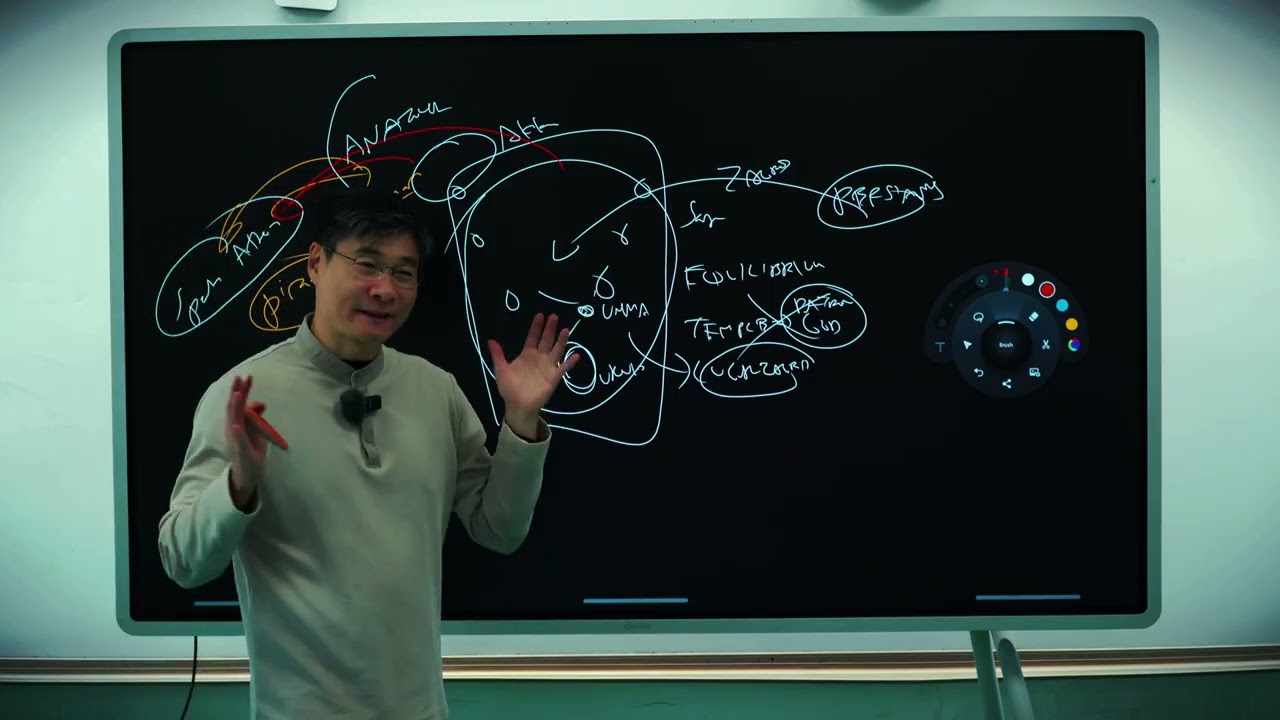
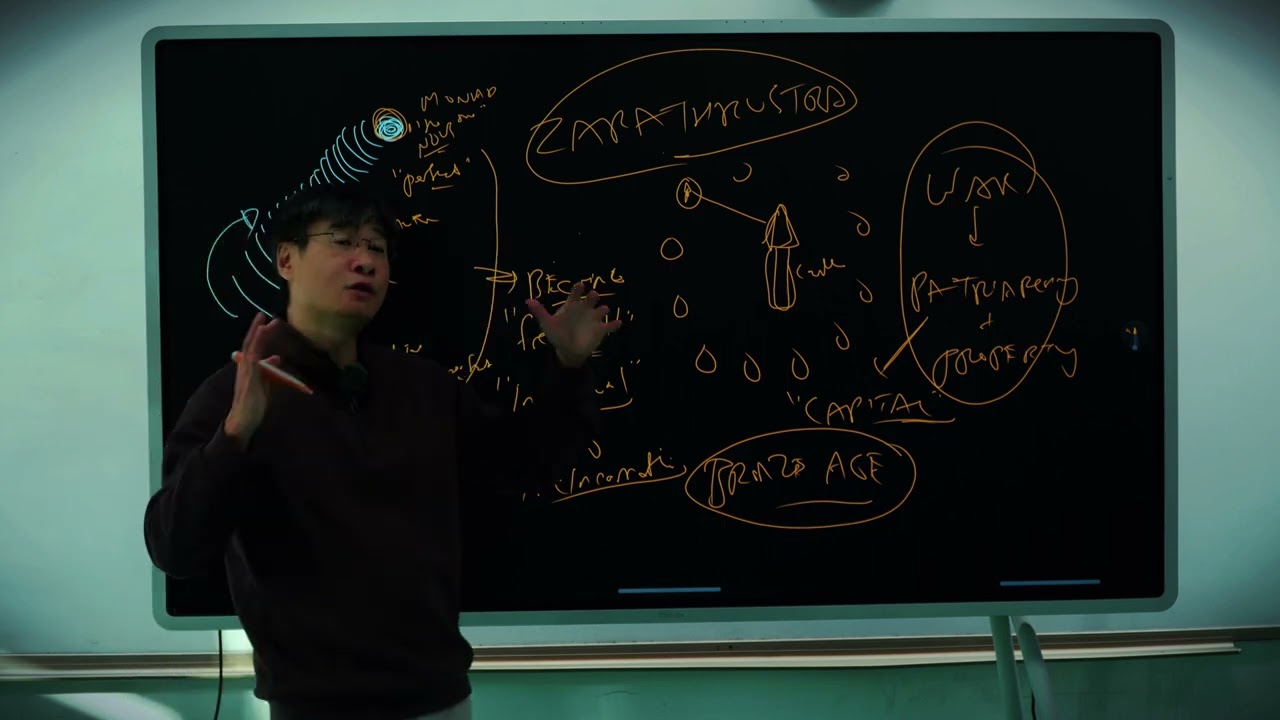
Secret History #12: Heaven on Earth — Transcript

Explore human history concepts from Ice Age cave art to agriculture, society, and myths in Predictive History's Secret History #12.

Key Takeaways

  • Human history is best understood through concepts and ideas rather than just facts.
  • Early humans saw themselves as part of nature, leading to egalitarian and sustainable societies.
  • Myths about human nature, such as inherent materialism or fixed family structures, are historically inaccurate.
  • The development of agriculture and settlements marked a significant shift in human society and population growth.
  • Humans have always possessed intelligence and adaptability, with historical figures showing unique sensory experiences.

Summary

  • The video continues a series exploring human history through ideas and concepts rather than just facts or places.
  • It discusses Ice Age cave paintings as ritualistic and religious expressions without intent to leave a legacy.
  • The concept of synesthesia is introduced, explaining how some historical figures like Beethoven may have experienced mixed senses.
  • The transition from Ice Age to warming climate enabled agriculture and settlements, leading to population growth and city formation.
  • Common myths about human nature, such as materialism and the nuclear family as the natural unit, are challenged.
  • Historical societies are described as compassionate, egalitarian, and interconnected with nature, contrasting with later patriarchal structures.
  • The video highlights the role of religion in answering fundamental human questions about existence and purpose.
  • Humans have always been intelligent, with better memory and sensitivity in the past, disputing the idea that modern humans are smarter.
  • Navigation and exploration, including oceanic travel and island settlements, demonstrate early human ingenuity and adaptation.
  • YouTube comments are integrated to engage the audience and deepen understanding of historical concepts.

Full Transcript — Download SRT & Markdown

00:01
Speaker A
So we continue our run-through of human history today. So last class, we did cave paintings, and what I will do from now on is I will highlight some YouTube comments for us to review what we learned last class, but also as a chance for us to better engage the YouTube audience.
00:17
Speaker A
last class but also um as a chance for us to better engage the YouTube audience. Okay. So this comment comes to us from Gary Zorakiski and he talks about the K paintings. He says that um it is possible they created
00:32
Speaker A
Okay. So this comment comes to us from Gary Zorakiski, and he talks about the cave paintings. He says that it is possible they created art everywhere; the paintings only survived in the caves, and the answer is absolutely.
00:47
Speaker A
They really didn't care about leaving a legacy that comes later. Okay. So that's a very important comment. So thank you.
00:55
Speaker A
So back then, during the Ice Age, they made these cave paintings as a ritual, as a celebration of their religion, to express their imagination. They really didn't care about leaving a legacy; that comes later.
01:12
Speaker A
discuss is that he probably had symphysicia. Okay? And this is just a fancy word meaning the mixing of senses. So some people are born with a special talent and so what happens is that their senses get mixed up. So when people hear things
01:30
Speaker A
Okay. So that's a very important comment. So thank you.
01:46
Speaker A
reason why is when they hear something they see a color. Okay. So they mix the audio sense with a visual sense and that's part of the situation with Beethoven as well. So a lot of really talented people in life what happens is
01:59
Speaker A
This man says that when I was talking about Beethoven, he points out that Beethoven wasn't born deaf. He became deaf much later as an adult. And that is true.
02:16
Speaker A
blind and the reason why is that when you go blind um you're able to imagine much more strongly and much more deeply.
02:26
Speaker A
But one thing about Beethoven that people don't really discuss is that he probably had synesthesia. Okay? And this is just a fancy word meaning the mixing of senses.
02:39
Speaker A
And that's something that's very true for most of of human history. For most of human history, we saw ourselves as part of nature. And so when you go to someone's house, you don't leave trash.
02:51
Speaker A
So some people are born with a special talent, and what happens is that their senses get mixed up. So when people hear things, they actually see things.
03:07
Speaker A
highlight some YouTube comments. Okay. So let's talk about heaven on earth. So we did the ice age and now what's happening is that the um planet it's warming up and allows for agriculture.
03:23
Speaker A
Okay. So the classic example is that they have perfect pitch. So there are some musicians who, when they hear something, they know exactly what the pitch is. Is it C minor, D major?
03:37
Speaker A
Okay. So let's review what we learned last class because in this class we don't learn facts or places. Um we learn about ideas and concepts. So if you want to understand human history, you need to internalize certain concepts. So in
03:56
Speaker A
Okay. And the reason why is when they hear something, they see a color. Okay. So they mix the audio sense with a visual sense, and that's part of the situation with Beethoven as well.
04:04
Speaker A
Explain why we have these myths. Okay? So the first myth is that we are materialistic. We like money, sex, and power. Okay. The truth of the matter is that throughout most of human history, we had three goals or three concerns.
04:22
Speaker A
So a lot of really talented people in life, what happens is that they mix up their senses.
04:37
Speaker A
question is where do we come from? Second question is why are we here? And the third question is where are we going? That's why we had religion to answer these three questions. Okay? And that's why we still have religion today.
04:48
Speaker A
Okay. Another person is Leonard Euler, who was a mathematician, and this YouTuber says that the pirate, the Pirate Bay, he says that he probably did his best work after he went blind.
05:04
Speaker A
are we telling you that we're materialistic? And the answer is it's better to control you. Okay. So in a society there's a hierarchy and the people in charge they want you to work hard. They want you to be obedient. But
05:18
Speaker A
And the reason why is that when you go blind, you're able to imagine much more strongly and much more deeply.
05:28
Speaker A
Okay. Second myth is this is going to be hard for you to understand. What you're taught is that the nuclear family, father, mother, children, that's the most natural human unit.
05:42
Speaker A
Okay, so he's able to see the math in his head.
05:59
Speaker A
sex with. And that's where the power comes from. They control access to to sex, which gives men pleasure.
06:07
Speaker A
Okay. This man says that I also learned from indigenous people that they don't produce trash and garbage.
06:14
Speaker A
Okay? And there are three reasons why they choose this strategy. The first is it's fun. Okay? It gives them pleasure to have sex with as many men as possible. That's number one. Number two is women are really good at negotiating
06:32
Speaker A
And that's something that's very true for most of human history. For most of human history, we saw ourselves as part of nature.
06:42
Speaker A
Okay? So women are very good at managing emotions through sex. Okay? And then number three is the most important. If you're a woman, you want to make sure that all your children grow up successfully. They don't die, okay? And
07:00
Speaker A
And so when you go to someone's house, you don't leave trash.
07:16
Speaker A
child because no one knows who the real father is. So everyone assumes that I could be the father. Okay. And this is historically um how societies are usually organized with the woman in charge and as such societies tend to be very egalitarian
07:34
Speaker A
Same thing for primitive people, okay? They saw themselves as interconnected with nature.
07:49
Speaker A
a woman, you don't want to have too many children. You want to make sure that all your w all your children have access to resources, but you also want to stay healthy, right? If you have too many children, it's possible you could die in
08:02
Speaker A
And so they have to respect nature, and therefore they had to keep it clean.
08:12
Speaker A
But we when we switch to a uh patriarchy, now we can have as many children as possible. Okay? Because now women are basically become slaves and their main duty is to have as many children as possible. And that's why
08:26
Speaker A
Okay. All right. So from now on, we'll just highlight some YouTube comments.
08:41
Speaker A
Historically, if you look at how societies are organized, we tend to be compassionate. We look after the ill. We look after the elderly. We look after the weak. Okay, that's who we are. We have empathy. We care about other
08:54
Speaker A
Okay. So let's talk about heaven on earth. So we did the Ice Age, and now what's happening is that the planet is warming up and allows for agriculture.
09:09
Speaker A
Any questions so far? Okay. All right. Let's continue. Number four. Humans have gotten smarter over the centuries. And uh one one thing that you will learn in this class is that's not true. Humans have always been smart, but
09:24
Speaker A
It allows for settlements.
09:33
Speaker A
They had better memories. They had more they were more sensitive and they were more resilient than we are. So why are we taught that we're smarter? The answer is confirmation bias. because everyone likes to believe that we're smarter than
09:46
Speaker A
Okay. So now we will discuss today what happens during this time as the population grows and as we settle down to form cities.
09:58
Speaker A
do and you usually need a computer. Why? Because there's so much information that you need to process in order to navigate the ocean. Okay, so let's go over some of the information.
10:08
Speaker A
Okay. So let's review what we learned last class because in this class we don't learn facts or places.
10:16
Speaker A
Wherever there's an island, they had a settlement. And this is a testament to our desire to be to explore the world.
10:25
Speaker A
We learn about ideas and concepts.
10:39
Speaker A
they did was this. They built boats that allow them to navigate Pacific. But as you can see, these are not large boats.
10:47
Speaker A
So if you want to understand human history, you need to internalize certain concepts.
10:59
Speaker A
out exactly where they were. They also had to memorize oceanic currents, okay? How the oceans were moving in order to better navigate the ocean. Also, every island has its own distinct oceanic ecosystem. Okay? So, there's so much information that they have to take in.
11:15
Speaker A
So in history class, in our culture, you're taught certain myths about who we are.
11:21
Speaker A
But back then, they didn't have computers. So, they had to do this all in their heads.
11:27
Speaker A
Okay? So I'm going to go over some of these myths and show you they're wrong.
11:38
Speaker A
is while they were out in sea, they couldn't sleep. Okay? They have to keep track of all this information to know exactly where they were were. If they fell asleep, the navigator fell asleep, they got lost and then they died. Okay?
11:52
Speaker A
Explain why we have these myths.
12:08
Speaker A
Okay? So um you're taught in school about the theory of evolution, how we evolve from apes. And maybe our bodies evolve from apes, but our minds did not.
12:19
Speaker A
Okay? So the first myth is that we are materialistic. We like money, sex, and power.
12:33
Speaker A
All right, so having revealed last class, let's now talk about um the religious imagination. Okay, so this is the pyramids.
12:44
Speaker A
Okay. The truth of the matter is that throughout most of human history, we had three goals or three concerns.
12:57
Speaker A
Yeah. Go ahead. Um, you said that that the the uh previous people are like smarter than today's because they can uh navigate the Pacific like just with the boat and and the and and don't sleep but nowadays we
13:13
Speaker A
The first is that we have a religious impulse, and we want to express this religion through art, through music, through dance.
13:29
Speaker A
information. Okay, that's not true. Okay, if I put you on a serial computer, you would die.
13:34
Speaker A
And when I mean by religion, I mean that we have three questions in our heads.
13:53
Speaker A
on the internet heard sill explanations like aliens came and built the pyramids. Okay? Or maybe the lost civilization of Atlantis gave the technology to the Egyptians to build the pyramids. And this is an example of confirmation bias. We think that we're
14:11
Speaker A
The first question is where do we come from?
14:27
Speaker A
All right? So as you can see, the pyramids are extremely complex structures. Okay? And first of all, there's debate as to what the pyramid is. What are you taught in school? What the pyramids are?
14:42
Speaker A
Second question is why are we here?
14:48
Speaker A
Okay, guys. It's not a tomb. Okay, it looks like a tomb, but it's not a tomb.
14:54
Speaker A
And the third question is where are we going?
15:15
Speaker A
actually built it from the inside out. Okay. All right. So again, it's hard for us to imagine that they would do this because it's like, wait, you don't have a pen, so you couldn't write it down. You have
15:28
Speaker A
That's why we had religion to answer these three questions.
15:37
Speaker A
All right. Um and as you can see it was a massive undertaking huge organization.
15:43
Speaker A
Okay? And that's why we still have religion today.
15:55
Speaker A
The imagination. Someone had a vision and this vision was so compelling that everyone knew exactly what part to play.
16:03
Speaker A
Second thing about us is that we're all diverse, and we want to differentiate ourselves.
16:20
Speaker A
Like all cultures, the Pharaoh wanted what's best for his people. Okay? So, the Pharaoh would in his lifetime undertake a lot of public works projects, okay? including canals. Okay. So that so the pyramids were just a public works
16:37
Speaker A
We want to stand out.
16:44
Speaker A
Okay? Back to your point. We have computers. Guess what? We have all these machines. Okay? And guess what? We cannot build the pyramids. Why? Well, because the way we work is different from the way they worked before. Let's
16:59
Speaker A
The last thing is we are curious, and we want to explore.
17:12
Speaker A
peace. They felt that my dedication my sacrifice would make my children my grandchildren my great-grandchildren all more prosperous. Okay, that's why they worked so hard. Today it's make more money. Okay, second thing, vision.
17:31
Speaker A
That's fundamentally who we are.
17:44
Speaker A
well. It was almost like they had telepathy. It was almost like they could see the same thing. Okay. The structure of the parent was designed in a way that people saw the same image and they work towards that image. Today we focus on
17:56
Speaker A
Then the question is, why are we telling you that we're materialistic?
18:11
Speaker A
not sure if you take art class but you guys know like to produce a great piece of art you stay in a room and you work really hard at it. Okay.
18:20
Speaker A
And the answer is it's better to control you.
18:32
Speaker A
outline. Then you do a draft. Then you do an iteration. Okay? You understand? We break it down in a process. And you think that this would lead to better results. It actually leads to worse results. Okay? Because you're no longer
18:45
Speaker A
Okay. So in a society, there's a hierarchy, and the people in charge, they want you to work hard.
18:59
Speaker A
Okay? I I can give you the best machines, the best computers. It wouldn't matter because you lack that vision. The last thing, this is most important is when you have vision, when you have religious purpose, everything you do is
19:13
Speaker A
They want you to be obedient.
19:28
Speaker A
possible to maintain the budget. Okay? So do you understand? It's not about how smart you are. It's about your purpose in working. It's about how you work. And that's why everything we do today is just crappy. Okay.
19:43
Speaker A
But if you believe that you want to explore, then you're not going to be obedient enough.
19:57
Speaker A
and fly, and it's still there, guys. Okay, this is a modern picture. So, you can see the amount of attention and care put into architecture back then. Okay?
20:09
Speaker A
Okay. Does that make sense?
20:24
Speaker A
was working with the same vision and working with the same dedication. This is the Aken Cathedral built in 1790.
20:30
Speaker A
Okay. Second myth is this is going to be hard for you to understand.
20:42
Speaker A
by the Atlanteanss. So the idea that the Egyptians couldn't build the pyramids by themselves and have to rely on aliens, that's just a racist comment. Okay. Um, also Charlemagne, the first Roman emperor, the first Holy Roman Emperor, he was
20:57
Speaker A
What you're taught is that the nuclear family—father, mother, children—that's the most natural human unit.
21:03
Speaker A
So the pyramids are a church, a temple to their gods. And once you understand that, then we can better understand how they built the pyramids. Okay? Does that make sense?
21:16
Speaker A
And it's not true.
21:29
Speaker A
everything they did because because they believe that what they did was to make a more godly spiritual world.
21:39
Speaker A
Actually, if you look at most ancient societies, the most natural organization is that women are usually in control.
21:47
Speaker A
All right. And there were 100,000 of scientists who worked on the Manhattan project to build the nuclear bomb. Same concept where they believe that they were creating eternal peace on earth, heaven on earth. And that's why they worked so hard. And guess what? They
22:06
Speaker A
Why? Because women have complete autonomy over their bodies.
22:19
Speaker A
before. Okay. All right. So, this idea of bringing heaven to earth, it goes way back to the beginning of humanity. This is go Goblé Teepe. Um, it was first built in 90 in 9600 9,600 B.CE. And this considered the
22:38
Speaker A
So they can choose who to have sex with.
22:54
Speaker A
art, architecture, music, dance. Okay? And it's an amazing achievement um because these pillars, okay, they're really tall. So we don't know how they were able to move these pillars into place. Okay, you can see how small people are, how big this is. But if you
23:14
Speaker A
And that's where the power comes from.
23:28
Speaker A
understand because it repeats itself throughout human history. Okay, so let's go over the process.
23:34
Speaker A
They control access to sex, which gives men pleasure.
23:37
Speaker A
It could be a woman. But he or she has a vision for creating a temple, a place of God. Okay, that's what a temple is. It's a play. It's a place for God to live on earth. And he shares this vision with
23:51
Speaker A
And with this power, they often choose to sleep with as many men as possible.
24:01
Speaker A
Okay? Why? Because a temple and this really important for you guys to remember a temple is always the most valuable real estate on earth. Okay? If you if you are in a temple, people come to pray to you, right? So they have to
24:16
Speaker A
Okay? And there are three reasons why they choose this strategy.
24:30
Speaker A
to the um priests and then they would celebrate it together and then they would um feast. Okay. So if you're able to control this temple you lived a very good life. You were a very powerful person. Okay. And so there
24:46
Speaker A
The first is it's fun.
24:52
Speaker A
And so what happened is they would have these trials where they prove to each other who the god's favored. Okay? So it's possible maybe there are two hills.
25:01
Speaker A
Okay? It gives them pleasure to have sex with as many men as possible.
25:10
Speaker A
Because at this time um humanity believed that the mother goddess ruled over all because because if as humans at this time you're concerned about two things right you're first concerned about farming agriculture fertility and then you're concerned about having
25:26
Speaker A
That's number one.
25:41
Speaker A
forming secret societies, okay? By getting people to follow you and then you swear blood oath to each other and you also maybe have sex with each other and you become a faction, okay? And this led to logo conflict. And the way they
25:56
Speaker A
Number two is women are really good at negotiating politics, and they use sex as a political strategy.
26:12
Speaker A
people lost a power struggle and as such they were all sacrificed together. Okay. So in other words power struggle, political conflict, uh religious dispute, human sacrifice, secret society, they go all the way back to human society. Okay.
26:32
Speaker A
So if two guys are fighting each other, she has sex with both, and then voila, they're best friends now.
26:43
Speaker A
with our architecture there's mythology in place. Okay. And here we assume the mythology is the mother goddess with a bird in the sky and this might be a human skull. Okay. So there's a very complex diverse mythology in place. We
26:58
Speaker A
Okay? So women are very good at managing emotions through sex.
27:20
Speaker A
mythology of this place it's different but these places are very close to each other. Okay. So this is maybe the cult of the skull. The idea here is when people die, you can still communicate with them in the spirit
27:32
Speaker A
Okay? And then number three is the most important.
27:46
Speaker A
cultures including in China. Okay? It's what we call ancestor worship. And as you can see, uh this is a cult of skull.
27:56
Speaker A
If you're a woman, you want to make sure that all your children grow up successfully.
28:10
Speaker A
But there's actually a better much better explanation for the Tower of Jericho. It's a religious temple. Why?
28:16
Speaker A
They don't die, okay?
28:32
Speaker A
So you have a ritual, you have a celebration when the solar eclipse happens and you can feel as though you're ascending to heaven or heaven is coming down to you. Okay? That's a Howard Jericho.
28:43
Speaker A
And they're happy and they're healthy.
28:55
Speaker A
would leave. Okay. Kak is where they decided to settle down permanently for decades. Now in school you're taught that we started farming because it allowed us to access more food and so we could grow the population. we will
29:13
Speaker A
So from your perspective, it's in your advantage to hide paternity, to hide the fact who the father is.
29:25
Speaker A
Hunter gatherers are stronger, live longer, healthier, they have better teeth. Why? Because if you're a farmer, um, you so sorry, if you're a kind of gatherer, you have access to lots of different food, right? meats and and getting the food is actually pretty
29:42
Speaker A
Why? Because now all the men in the village, in the community, are responsible for raising a child because no one knows who the real father is.
29:57
Speaker A
limited diet. And also because of starch, your food, your teeth gets really rotten really fast. Okay. Also, because you're living together in a close quarters, it's really easy for diseases to spread. Okay. So, um it's hard for us to appreciate this,
30:17
Speaker A
So everyone assumes that I could be the father.
30:32
Speaker A
with a charismatic leader. Okay? Does that make sense? All right. So this is Khoic. This is the this is this the religion of the mother goddess. Okay.
30:40
Speaker A
Okay. And this is historically how societies are usually organized, with the woman in charge.
30:58
Speaker A
both. As you can see how people are worshiping the bowl. Uh this is an image of Kakoya. It's a very sophisticated community. It's also very egalitarian. And each house is a temple onto itself.
31:13
Speaker A
And as such, societies tend to be very egalitarian because women don't really care about status and power.
31:26
Speaker A
Okay, this is um Katak. As you can see, it's beautiful. This is what it looks like today. Okay.
31:36
Speaker A
They care about harmony and balance.
31:52
Speaker A
So, they're trying to um practice a religion like here. Okay. As as I mentioned, each house is a temple onto itself. As you can see how each house is elaborately decorated with, you know, the bowl with ornaments to their gods and to the religion.
32:16
Speaker A
And the question then is, why did we change?
32:33
Speaker A
we feel an obligation to the animals we killed. We have to thank the animals that we killed. We have to celebrate the animals we killed in order to maintain balance and harmony in the world. Okay?
32:43
Speaker A
There's actually a very simple reason.
32:48
Speaker A
After you kill the animals, you must fetg the animals for sacrificing their body to you so you can you can uh eat.
32:56
Speaker A
The simple explanation is in order to produce more children.
33:12
Speaker A
why it fell apart. Again, you have a charismatic leader who has a messianic vision. He takes us to this place and says this is where the gods are. This is divine place and let's settle down here and and as such we can bring heaven to
33:27
Speaker A
Because if you're a woman, you don't want to have too many children.
33:41
Speaker A
Okay. And over time as a population grows they become much more dependent on um farming. Okay. So so it's a gradual process that doesn't happen overnight.
33:52
Speaker A
You want to make sure that all your children have access to resources, but you also want to stay healthy, right?
34:01
Speaker A
Okay? Does that make sense? But over time the system breaks down. What happens? Well, first thing that happens is because of overpopulation, there's too much stress on the environment and so you have um the land uh you're not you're not able
34:17
Speaker A
If you have too many children, it's possible you could die in childbirth.
34:20
Speaker A
Okay. Another big issue is that the hierarchy becomes hereditary. Before the leaders were elected, now they are just inherited. Okay? And this leads to corruption where the elite bully and exploit everyone else. And people forget the memories of the first days. And so what do people
34:48
Speaker A
It's also possible that your children die in childbirth as well.
35:01
Speaker A
your principles. Okay? All right. So based on today's lecture, I want you to remember three things about how we humans come together in a community. Okay? And these three basic principles are almost like laws. I want you to remember them. And then these
35:18
Speaker A
So women have always practiced population control.
35:32
Speaker A
Second thing is that diversity within societies is greater than across societies. So another way of saying of saying this is yes there's a conflict between United States and China. But actually if you actually look at differences in diversity, the difference
35:46
Speaker A
But when we switch to a patriarchy, now we can have as many children as possible.
36:00
Speaker A
Okay. Uh, Beijing, Shanghai, Shenzhen, Chungdu, they're all different. Why? Because they want to be different from each other. Okay. But also within Beijing, you have Haiden, Tayyang, different districts, right? They're all different from each other because they want to be different. Okay?
36:18
Speaker A
Okay? Because now women basically become slaves, and their main duty is to have as many children as possible.
36:30
Speaker A
So I'm going to go over some books to highlight certain issues that we discuss in this class. This is a thought of everything uh by David Grabber and David Wangro who are both anthropologists.
36:42
Speaker A
And that's why after this transition from matriarchy to patriarchy, a lot of women start to die.
37:00
Speaker A
and what happens what's really interesting is throughout the year they have different social structures. So during the winter everyone comes together and they form a hierarchy where there are palaces where there's an aristocracy um and where the different they're
37:18
Speaker A
Okay, so that's number two.
37:31
Speaker A
Okay, this is like really interesting how in different times of the year when the needs are different people will choose different social organizations.
37:39
Speaker A
Number three is humans believed in survival of the fittest.
37:52
Speaker A
different video game, you adopt a different identity. You you adopt a different persona and that's fun for you. Okay? So, um what's common in the ancient past is for people to adopt different social structures and they can choose what social structure to go to.
38:11
Speaker A
And that's not true.
38:22
Speaker A
Um he's he is looking at also print of communities, native tribes throughout the world. Okay. And he's looking at specifically the Amazon people.
38:35
Speaker A
Historically, if you look at how societies are organized, we tend to be compassionate.
38:50
Speaker A
same clothes and their life looks very simple spiritually they're very complex people and they're very complex and sophisticated mythology. Okay. So these are these called called people of the anacana. Okay. In the beginning, before the creation of seasons, before the
39:06
Speaker A
We look after the ill.
39:17
Speaker A
complex mythology. I'm not going to I'm not going to go through all of it, okay?
39:20
Speaker A
We look after the elderly.
39:36
Speaker A
One thing that's really important for them is maintain balance and harmony in the world. Okay. So like most printed people they believe there are different dimensions and their role is to maintain harmony across these dimensions because that that is what guaranteed a happy and
39:54
Speaker A
We look after the weak.
40:06
Speaker A
Every rock and waterfall embodies a story. Plants and animals are but distinct physical manifestations of the same essential spiritual essence. Okay.
40:15
Speaker A
Okay, that's who we are.
40:31
Speaker A
and energetic. At the same time, effing is more than it appears. For the visible world is only one level perception.
40:39
Speaker A
We have empathy.
40:51
Speaker A
alive, plants and animals are human beings, sap and blood, the bodily fluids of the primordic river of the anacona.
40:58
Speaker A
We care about other people.
41:13
Speaker A
Okay, you can see how the mythology is very complex and how they imbued it, embedded into their everyday life. Every day when they wake up and they see the world, they see a world of color, of energy, of change.
41:28
Speaker A
So why do we believe in survival of the fittest?
41:44
Speaker A
the land is to embrace both its creative and destructive potential. Human beings, plants, and animals share the same cosmic origins in a profound sense are seen as essentially identical, responsive to the same principles, oblate by the same duties, responsible
41:57
Speaker A
It should create fear and anxiety.
42:10
Speaker A
behavior also define the manner in which human beings interact with the wild, the plants and animals, the multiple phenomenon of the natural world, lightning and thunder, the sun and the moon, the scent of a blossom, the so sour order of death. Everything is
42:24
Speaker A
Okay. If you have fear and anxiety, you work harder, but also you're easier—it's easier to control you.
42:40
Speaker A
how sophisticated their imagination is. Okay, so one thing that um I discuss continuously because it's very important concept is how effing is a harmonious whole. And so when you kill something, you first need permission. You need you need have a contract. Okay, this is true
43:03
Speaker A
Any questions so far?
43:15
Speaker A
forging a mystical contract with the spirit guardians in exchange based always on reciprocity. Okay. D reciprocity. If you kill an animal, you need permission. Now, if you kill the animal, you must thank the animal through through ritual sacrifice. Okay.
43:32
Speaker A
Okay. All right. Let's continue.
43:45
Speaker A
hunter, but a gift from the spirit world. To kill without permission is to risk death by spirit guardian. by it in the form of a jaguar, anakona, tapar or harpy eagle. Okay. So the concept here is karma, right? If you do evil, evil
44:01
Speaker A
Number four: Humans have gotten smarter over the centuries.
44:16
Speaker A
that these animals came from the spirit world. And that's why you paint it. That's why you express art to thank the animals for coming from the spirit world to feed and nourish us. And after we kill them, then um we pray that they
44:32
Speaker A
And one thing that you will learn in this class is that's not true.
44:40
Speaker A
All right. Let's go to Africa. So, so we were in the Amazon. Now, let's go to Africa. And in Africa, there's some some people call the force people. Okay. This is a book by Colin Turbo who spent a few
44:52
Speaker A
Humans have always been smart, but we've expressed our intelligence in different ways.
45:08
Speaker A
um this is called Mullamo, which is a mutual instrument that they use to communicate with the spirits of the forest. Okay.
45:19
Speaker A
So...
45:32
Speaker A
ancestors and the and their traditions, okay? If you're not, if you refuse to honor their traditions, then they will ostracize you or they might even kill you. Okay? So um uh the pygmies are having a religious festival and Colin Turbo says this. I
45:50
Speaker A
was told however that everyone had to eat just as no adult male was allowed to sleep but had to sing while Malomo singing was in progress. Apparently one of the greatest crimes that Pygmy can commit if not the greatest is to be
46:03
Speaker A
found asleep when the Malobo is singing. Okay. If you refuse to participate in the ritual or if you break the seriousness of of the ritual, then you are a threat to community and they will kill you and they will forget about you. Okay?
46:23
Speaker A
So the if so once they kill you, the woman would be told that the malommo itself, the great animal of the forest had carried off one of their number. But like the men, they would ask no questions and would never again mention
46:34
Speaker A
the missing men. So if you disrespect them, they would not only kill you, but they would forget about you forever.
46:44
Speaker A
So this is how they explain why they do what they do. Why do they practice these rituals? Why these rituals such an important part of their lives?
46:54
Speaker A
Normally everything goes well in our world. But at night when we are sleeping, sometimes things go wrong because we are not awake to stop them from going wrong. Army ants invade the camp, leopards may come in and steal a
47:07
Speaker A
hunting dog or even a child. If we were awake, these things would not happen. So when something big goes wrong like illness or bad hunting or death, it must be because the forest is sleeping and not looking after its children. So what
47:21
Speaker A
do we do? We wake it up. We wake it up by singing to it. And we do this because we want it to awaken happy and everything will be well and good again.
47:31
Speaker A
So when our world is going well then also we sing the force because we wanted to share our happiness. Okay. So their idea of God is heaven on earth where you're connected to the environment around you. Everything that you do
47:46
Speaker A
impacts the environment. The envir environment also impacts you as well. So you practice these rituals in order to maintain balance and harmony in the world. Okay. The world is a script.
47:58
Speaker A
living in living you must follow certain practices in order to respect the traditions of the world and that's what brings harmony and heaven to the world and this something that we've for most of our history something that we've
48:12
Speaker A
understood and we've appreciated then the question then is what do we change okay and we'll we'll be discussing this as the semester progresses okay so that's it there questions before we end.
48:30
Speaker A
Uh yeah. Uh so before you said that people nowadays Okay. So so first of all I I I totally agree that people nowadays are lack of vision and imaginations you know contrast to people back in the days uh
48:47
Speaker A
because of you know multiple reasons. And so my question is that I I I agree that people nowadays are lack of vision, but I kind of are a little bit confused about what your argument your argument that we cannot rebuild the pyramid
49:05
Speaker A
because well from my point of view um nowadays we have the ability to you know build skyscrapers or metropolitans and so why what what is the factor that kind of stops we us to to build you know structures
49:22
Speaker A
like a pyramid. Um okay so the question is what why can't we build the pyramids? Okay. All right. So there are different factors in place. The first is um the resources that are required to build the pyramids it is tremendous. Okay. Okay. So, um to
49:47
Speaker A
give you an example, the stone that um sorry, let me just bring this up.
49:55
Speaker A
Okay, the stone that they used to build the pyramids is enough to build a wall around France.
50:03
Speaker A
Okay, so this the size, okay, is beyond our imagination. Okay, that's number one. Okay, where we where we find the resource to do this?
50:13
Speaker A
Second is the question of will why would why would we want to do this like do you want to rebuild the pyramids like okay well yeah that's another problem okay the third problem is organization which is um how would we
50:30
Speaker A
organize the people in a way as to build the pyramids because back then it was a massive undertaking but again people were united by a a similar vision which is like we're bringing heaven to earth.
50:45
Speaker A
Once we build the pyramids, the gods can rest in peace. The gods can come down and shine a divine light all over us. So that's the end of history. We're done.
50:53
Speaker A
Okay? Just do just work hard for 20 years and then there'll be heaven on earth. Okay? That's what drove them.
51:02
Speaker A
What inspires people today? There's nothing there's nothing that inspires people today. Okay? Like, oh, make a billion dollars. Make a trillion dollars. Okay? That's what inspires people. But you know what? To make a billion dollars, it doesn't mean you
51:13
Speaker A
have to work hard. It just means you have to cheat and lie and steal. Okay.
51:20
Speaker A
So, so does that make sense? Yeah, it makes sense. But u well nowadays we we people still have religions, right? Let's say Christian is still one of the most powerful religions and uh people share and so are are they
51:37
Speaker A
capable to you know build another very tremendous or imaginary structure or buildings. Okay. Okay. So um this is hard okay for you to understand it means it's a different world and the brains work differently back in this age religion
52:00
Speaker A
was the end all be all okay you live for your religion okay does that make sense today our religion is capitalism okay so and capitalism is just make as much money as you possibly hand and the the difference is
52:22
Speaker A
back during the time of the Egyptians it was a spiritual age okay so you sought inspiration from the heavens and people's imaginations could expand because um they would wake up with ideas okay today we live in a materialistic
52:44
Speaker A
age which is say we don't believe in God. We don't believe in divinity. We just believe in numbers, in computers, in process.
52:55
Speaker A
Okay? Does that does that make sense to you? Okay. It it's hard to understand because you live in a time of complete materialism. So, you don't understand what it means to live a life of spirituality, of divinity, of trying to
53:07
Speaker A
bring heaven to earth. Okay? But if you did do that, then you'd be a very different person. There were there were things that you could do that would be unimaginable to you. Okay. For example, if you go visit a temple or a monk, they
53:20
Speaker A
could meditate for months and months and months. They could walk barefoot in the cold for years and years and years. We can't do that. Okay? Because the moment I say, "Hey, meditate for a whole month.
53:32
Speaker A
Just don't eat. You can't do that." And you're like, "What's the point?" And then their answer is because I want to be with God. Okay? Because I want to feel as though it's heaven on earth.
53:44
Speaker A
So it's not just a question of how smart you are. It's a question of faith and purpose and meaning as well. The the reality is that not only do we live a life of purpose and meaning and spirit,
53:57
Speaker A
we also think these things don't matter. Okay. Does that make sense? All right. Any more questions?
54:04
Speaker A
Yep. Um so so I I do agree that we cannot be permissed nowadays and and I'll definitely die if you just put me on a pathetic but uh so but like for more for more more than people we
54:24
Speaker A
also can do like a lot of things that previous people cannot. So, so how does the the the building of a pyramid these things demonstrate that the py the the previous people are smart?
54:36
Speaker A
Can you tell me what we do today that is so wonderful and spectacular? What what what yeah what what do we do today that's so wonderful and spectacular and and you think is amazing.
54:47
Speaker A
What what give an example of something that we do today that is spectacular and wonderful.
54:54
Speaker A
Um Okay. Yeah. I mean, give you an example. Okay. Okay. Well, thank you. Okay. Yeah. So, give an example. Any any more questions?
55:09
Speaker A
Does it matter for the first person who have the vision to build it and the second person have the same vision or it doesn't really matter? They just build.
55:17
Speaker A
They just want to bring heaven to earth. Look, that's a great question. Okay. And this is hard for us to understand, but there's no sense of individual proparity. Okay. Okay, it's like this is my idea. You can't have it. Okay, it's
55:28
Speaker A
it's always like we're in this together. Okay, we don't know who built the pyramids. Why? Because it doesn't matter who built the pyramids. All that matter is it was built. That's the spirit that they had. Nowadays, like if I have this
55:41
Speaker A
idea, how do I patent it? How do I get credit for it? How do I make money out of it? Okay, and that's why ideas suck.
55:48
Speaker A
Back then, it was just like it doesn't what what matter what my idea is. What matters is this idea is expressed to other people. Okay. When you have that spirit, when you have that heart, when you are when you share who you are, then
56:00
Speaker A
God comes into you and gives you ideas. You understand? But if you're like, "Nope, all I want to do is make money." God leaves you.
56:08
Speaker A
Okay? And and that's hard for us to understand. That's so back then there must have been a genius, a charismatic leader, and God gave him this vi not God, but like the spirit world, okay?
56:18
Speaker A
The universe gave him this vision for the pyramids. And he knew exactly how to do it. And then he goes to the pharaoh and says, "Listen, I have this vision." The pharaoh says, "Let's just do it." Okay? So the pharaoh got credit, but it
56:28
Speaker A
didn't matter who got credit. It just doesn't matter. What mattered is it was built. Do you understand? There's no sense of individualism. There's no sense of capitalism. There's no sense of like private property. It's all like let's just make let's just work together to
56:41
Speaker A
build a better world. Okay? And yes, the people who worked on it were getting paid, but that was that's not what mattered to them. What mattered was achieving this vision together.
56:53
Speaker A
Okay. So, it's hard for us to understand, but once you have this mentality of common sacrifice, you are able to do tremendous things together.
57:03
Speaker A
Okay. And I'm sorry, but I can't think of an example of things that we do wonderful today like chatbt.
57:11
Speaker A
Give me a break. Okay. All right. Any more questions? All right. Great. So, I'll see you guys next week. Okay.
Topics:human historyIce Agecave paintingssynesthesiaagricultureegalitarian societiespatriarchyreligionancient navigationhistorical myths

Frequently Asked Questions

What is the significance of cave paintings according to the video?

Cave paintings were ritualistic and religious expressions made during the Ice Age, created to celebrate beliefs rather than to leave a legacy.

How does the video explain the concept of synesthesia in historical figures?

Synesthesia is described as a mixing of senses, where some people hear sounds and see colors, a trait possibly experienced by figures like Beethoven.

What myths about human nature does the video challenge?

The video challenges myths such as humans being inherently materialistic and the nuclear family being the natural social unit, showing historical societies were often egalitarian and compassionate.

Get More with the Söz AI App

Transcribe recordings, audio files, and YouTube videos — with AI summaries, speaker detection, and unlimited transcriptions.

Or transcribe another YouTube video here →