HEISENBERG: The Dumber Oppenheimer — Transcript

Explore the complex story of Werner Heisenberg and Nazi Germany's failed nuclear bomb project during WWII.

Key Takeaways

  • Nazi Germany was ahead in nuclear research but failed to produce a bomb before the U.S.
  • Heisenberg's role remains controversial—either a cautious scientist or a deliberate saboteur.
  • The Manhattan Project succeeded due to greater resources, personnel, and urgency.
  • Political and social factors like anti-Semitism impacted Nazi scientific progress.
  • Heisenberg's legacy is ambiguous, balancing between heroism and villainy.

Summary

  • Nazi Germany developed advanced military technology including massive mortars, artillery, and a prototype death ray.
  • In 1939, scientists discovered nuclear fission, revealing the potential for an atomic bomb.
  • Albert Einstein warned the U.S. president about the dangers of nuclear weapons, prompting American research.
  • Werner Heisenberg, a Nobel laureate and quantum mechanics pioneer, became involved in Germany's nuclear program.
  • The Nazis launched the Uranprojekt to develop nuclear weapons, aiming to harness fusion power.
  • Heisenberg was initially excluded from the Uranprojekt's first meeting but joined the second meeting discussing bomb feasibility.
  • Despite early progress, Nazi nuclear efforts lagged behind the American Manhattan Project, partly due to Heisenberg's cautious approach.
  • Historians debate whether Heisenberg deliberately slowed progress or lacked faith in the project.
  • Anti-Semitism and wartime resource constraints also hindered Nazi nuclear development.
  • Heisenberg was captured after the war, later contributing to peaceful nuclear energy in Germany.

Full Transcript — Download SRT & Markdown

00:00
Speaker A
When it came down to the Nazis and their military technology, you can’t deny that they were next level.
00:07
Speaker A
They made mortars the size of blue whales that shot shells as big as rhinos, built an artillery cannon so big and powerful that the Nazis broke it down themselves as they were afraid the Soviets would capture and use it against them.
00:21
Speaker A
And they even worked on a prototype death ray, a ray weapon that could kill the engine of an airplane and its pilot with one simple click.
00:30
Speaker A
The Nazis were spearheading massive and ungodly new means of warfare. And among those many plans of mass destruction was one that, luckily, never saw the light of day.
00:41
Speaker A
At least, not by this fedora-wearing fella. Meet the hero of its time, or the main villain who failed.
00:49
Speaker A
Historically Facts Part 4. It is early 1939, and Poland is still Poland. A German scientist named Otto Fisch and his colleague found out by pure chance that when you shoot neutrons at uranium, it splits into two equally lighter elements.
01:07
Speaker A
But more interestingly, it also plowed out a strong burst of kinetic energy, which another Otto with another colleague figured out was a completely undiscovered process.
01:18
Speaker A
They ended up calling the process “fission." But they soon figured out another layer to this process.
01:24
Speaker A
Along with the kinetic energy splurged from the atom, there was another thing that got shot out.
01:30
Speaker A
Neutrons. The same thing that started this entire process. Now guess what happens if one of those neutrons that gets blown away hits another uranium atom.
01:41
Speaker A
Exactly, the same thing. Now imagine this all happening in a controlled environment: an atomic bomb.
01:51
Speaker A
Now, this is all just on paper, and such a bomb wasn’t actually a thing, but one top scientist immediately knew the danger of this just discovered process.
02:00
Speaker A
His name was Albert Einstein. He and many other top scientists who worried about the rising fascism in Europe fled Germany in the earlier years and settled in America,
02:11
Speaker A
where they continued to worry about their home country's fate. And when Einstein heard the news of this newly discovered process, he immediately sent a letter to the president in office, Franklin D. Roosevelt, about the potential unknown danger of nuclear weapons.
02:27
Speaker A
This brings us to Heisenberg. No, not that one, the one he named himself after.
02:33
Speaker A
Werner Heisenberg. Werner was somewhat of a genius himself. At age 23, he wrote groundbreaking papers; age 25, he formulated...
02:43
Speaker A
this, which I’m not even sure what it means; and at age 31, he received a Nobel Prize for, and I quote, "for the creation of quantum mechanics."
02:53
Speaker A
That sounds fancy, doesn’t it? We will come back to Heisenberg in a bit because it’s time for BLITZKRIEG.
02:59
Speaker A
Germany, the Slovak Republic, and the Soviet Union all attacked Poland at the same time, leaving the massively outnumbered Polish in an extremely one-sided war with no support whatsoever, followed by their country being tarnished forever by all six of Nazi Germany’s extermination camps,
03:18
Speaker A
where millions of people ended up, well, you know how it ended. The war had started, innocent lives were being taken, and Hitler was rapidly taking over parts of Europe and Africa.
03:30
Speaker A
The same day the war started, the Nazis set up the Uranprojekt, a nuclear weapons research program with the intention to harness the power of fusion to overpower their enemies.
03:41
Speaker A
And why? Because of Heisenberg. Just as Einstein wrote about the dangers of nuclear weapons to the president, so did Heisenberg to the German government.
03:51
Speaker A
And this sparked the Nazis’ interest. The first meeting of the Uranprojekt: Heisenberg, for some reason, wasn’t invited, but he was at the second a month later, where top physicists discussed the potential of a nuclear bomb.
04:04
Speaker A
A bomb so powerful, it could wipe down entire cities within the blink of an eye.
04:10
Speaker A
The physicists unanimously agreed that creating such a bomb would take roughly five years, meaning it would’ve been finished no later than 1944, in the midst of the Second World War, a year before the Americans exploded their prototype.
04:26
Speaker A
Yeah... We are still in 1939, and the Nazis were already looking into the possibilities of a nuclear bomb, two years before Oppenheimer even entered the atomic scene.
04:37
Speaker A
So why did the Nazis fail even though they were three years ahead of the Americans?
04:42
Speaker A
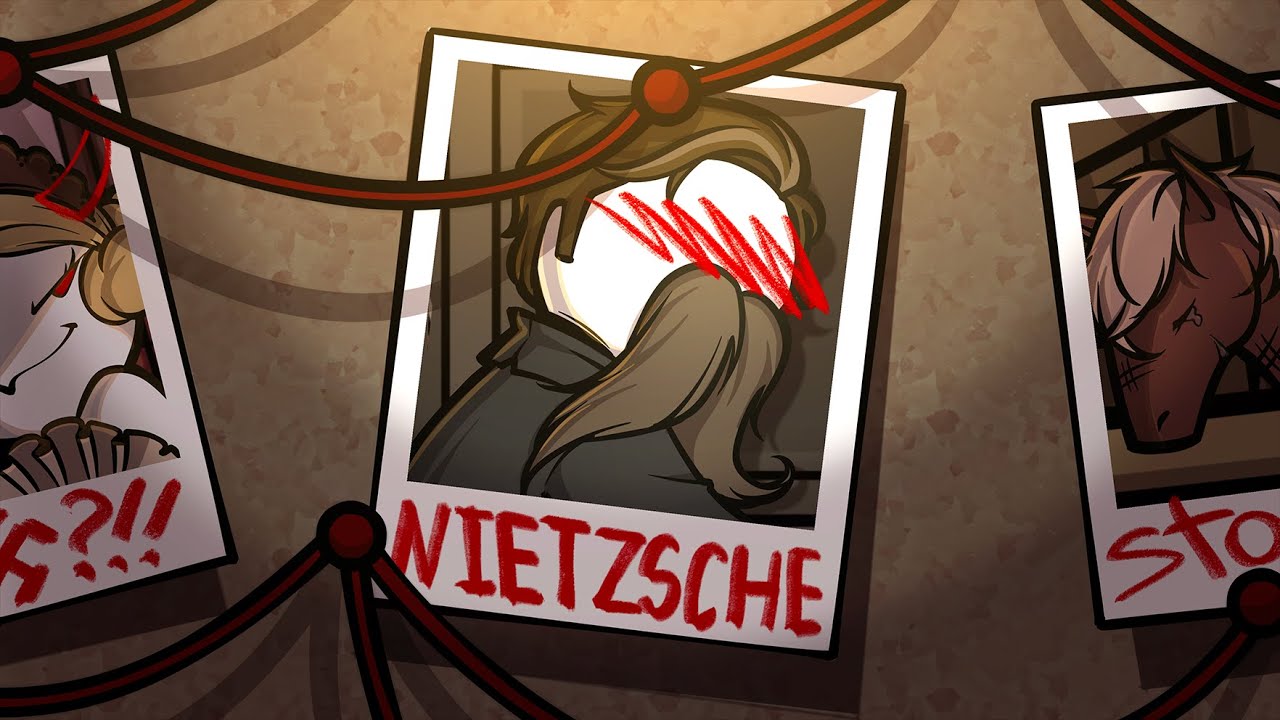
This is where we can either call Heisenberg a hero or a failed villain. Heisenberg didn’t become the head of the research program till the same year Oppenheimer rose up.
04:53
Speaker A
Why did the Nazis not use Heisenberg’s brilliance before the Americans started the Manhattan Project?
04:58
Speaker A
Well, it’s because Heisenberg didn’t push for nuclear weapons as hard as he could have.
05:03
Speaker A
He “only” reported the findings of the second meeting to the Führer two weeks after it happened, where he claimed he casually proposed the idea because he once again claimed he didn’t want to put thousands of personnel on a project that might ultimately fail,
05:19
Speaker A
resulting in extremely disagreeable consequences. Testimonials like these make it very hard to find out what Heisenberg actually stood for.
05:28
Speaker A
Did he really have no faith in the project? Or did he not want to bear the sins that Oppenheimer ended up bearing himself?
05:35
Speaker A
Nonetheless, his plan worked. The project was halted till 1942, but shortly after he took the role of the head of the nuclear research program.
05:45
Speaker A
Once again, why?! Is it because he wanted to hinder the progress which he could only get in a top position?
05:51
Speaker A
Or was it because he felt like he could finally bring the Nazis to victory only if HE led the group?
05:57
Speaker A
Either way, the playing field between Oppenheimer and Heisenberg was… effectively evened. Both started the same year at the same position respectively in their countries.
06:07
Speaker A
Yet, luckily, the Americans came out victorious. Did our hero hinder the progress while Oppenheimer thrived?
06:14
Speaker A
Or was it because of the anti-Semitism which caused all the top Jewish scientists to flee the country, meaning less available personnel—and the fact that the tide in the war had turned, which meant not all the resources he needed could’ve been assigned to his Uranprojekt?
06:32
Speaker A
Historians all around the world aren’t sure themselves, so unfortunately we can’t give you a final answer if he is in heaven or hell, but we can give you facts.
06:43
Speaker A
And here is a fun fact: In 1944, Heisenberg was invited to meet Adolf Hitler in person.
06:49
Speaker A
And not even a year later, Hitler killed himself. Call me a conspiracy theorist, but that is awfully suspicious.
06:57
Speaker A
In the end, the Nazis and Heisenberg did make a prototype of a nuclear reactor, but they didn’t even get close to what the Americans and Oppenheimer achieved in as little as three years.
07:09
Speaker A
Heisenberg was eventually captured by the Allies but, just like the other scientists, he was shortly after released and sent back to his country where he played a key role in getting Germany consistent nuclear energy.
07:20
Speaker A
This is the bizarre story of the hero or villain of the Second World War.
Topics:Werner HeisenbergNazi nuclear programUranprojektatomic bombManhattan ProjectWorld War IIquantum mechanicsAlbert Einsteinnuclear fissionOppenheimer

Frequently Asked Questions

What was the Uranprojekt?

The Uranprojekt was Nazi Germany's nuclear weapons research program initiated at the start of World War II to develop a powerful atomic bomb.

Why did Nazi Germany fail to develop a nuclear bomb before the U.S.?

Nazi efforts were hindered by Heisenberg's cautious leadership, lack of resources, anti-Semitism driving away top scientists, and wartime constraints, allowing the U.S. Manhattan Project to succeed first.

What is the controversy surrounding Werner Heisenberg's role?

Historians debate whether Heisenberg deliberately slowed the Nazi nuclear program to prevent a bomb or if he simply lacked faith in its feasibility, making his legacy as either a hero or villain unclear.

Get More with the Söz AI App

Transcribe recordings, audio files, and YouTube videos — with AI summaries, speaker detection, and unlimited transcriptions.

Or transcribe another YouTube video here →