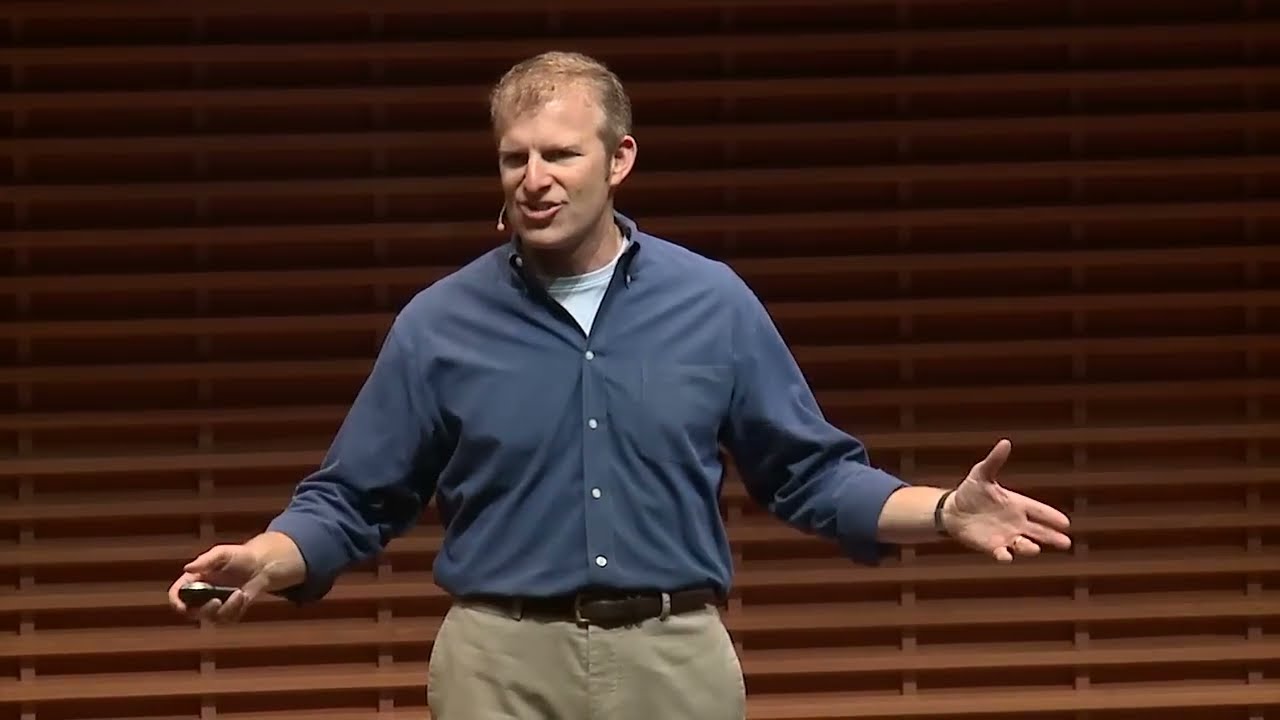
Ben & Jerry’s CEO Jostein Solheim on “Conscious Capital… — Transcript

Ben & Jerry's CEO Jostein Solheim discusses integrating social and financial missions through conscious capitalism and activism.

Key Takeaways

  • Conscious capitalism can successfully integrate social missions with financial goals.
  • Strong governance structures help maintain company values post-acquisition.
  • Corporate activism requires deep internal preparation and genuine commitment.
  • Investing in community and ethical sourcing supports sustainable business growth.
  • Balancing social justice and environmental responsibility is central to Ben & Jerry's strategy.

Summary

  • Jostein Solheim shares his first experience with Ben & Jerry's Chunky Monkey flavor and his journey to becoming CEO.
  • Ben & Jerry's unique acquisition by Unilever includes an independent board to protect its social mission.
  • The company balances three core missions: product quality, shareholder returns, and social justice.
  • Solheim emphasizes the importance of speaking out on social issues like Occupy Wall Street and Black Lives Matter.
  • Ben & Jerry's spent 18 months preparing internally before publicly supporting Black Lives Matter.
  • The company’s 'linked prosperity' business model focuses on investing in communities through ethical sourcing.
  • Ben & Jerry's integrates racial justice with climate justice, participating in initiatives like COP21.
  • The CEO highlights challenges and successes in operationalizing social impact while maintaining profitability.
  • The company prioritizes transparency, employee empathy, and fan engagement in its mission-driven approach.
  • Solheim reflects on the importance of humor, activism, and maintaining company values within a large corporate structure.

Full Transcript — Download SRT & Markdown

00:00
Speaker A
[MUSIC] All right. Thank you so much, Jostein, for being with us today. It's such an honor and privilege to have you here.
00:10
Speaker A
So my first and most important question: Chunky Monkey is your favorite flavor of ice cream.
00:15
Speaker A
When was the first time that you had Chunky Monkey ice cream? Wow, we start at the top.
00:21
Speaker A
[LAUGH]
00:21
Speaker B
[LAUGH] Chunky Monkey is my favorite flavor because it is my first Ben & Jerry's flavor.
00:29
Speaker B
I was sitting at home in Holland. I was living in Holland, and I had just discovered this company called Ben & Jerry's.
00:35
Speaker B
And me and my wife, we were doing, without knowing it, what is a fantastic Ben & Jerry ritual which is called surfing for the chunks.
00:45
Speaker B
So you got two spoons, and the key is to hold back and you wait until you see the chunk is getting uncovered by the other person, and then you dive in.
00:53
Speaker B
[LAUGH]
00:53
Speaker C
And take that. That was Chunky Monkey, and that was the beginning of my relationship at Ben & Jerry's.
01:00
Speaker C
Wow, that's wonderful. And so before you had become CEO of Ben & Jerry's, you were at Unilever for many years.
01:06
Speaker C
Can you talk to us a little bit about your process of becoming CEO of Ben & Jerry's?
01:12
Speaker C
Yeah, well, I don't think it was a great sort of linear process. Like all great things in life, it happens rather randomly.
01:21
Speaker C
But I had at least three or four people when they decided that this role was coming up.
01:30
Speaker C
There was at least three or four people that were senior people that came to me and said, we have finally, finally found the perfect job for you.
01:39
Speaker C
So there must have been something I did along the way that signaled that I would make that appropriate pain in the ass, agitator that is required to run Ben & Jerry's.
01:49
Speaker C
I think there were some people happy to like scoot them off to Ben & Jerry's.
01:53
Speaker C
And then others who were just excited that it can marry my passions and my job.
02:00
Speaker C
That's great. And please, we're very interested in hearing you say it: pain in the ass agitator.
02:05
Speaker C
So being CEO of Ben & Jerry's, I know that one of the core elements—
02:08
Speaker C
And we talked about this a lot in—
02:08
Speaker D
Yeah. Business school, is the integration of the social mission with the financial mission. Can you talk to us about how you've gone about doing that, building your company around that?
02:18
Speaker D
Well, I was very lucky. So Ben & Jerry's was acquired by Unilever in 2000.
02:25
Speaker D
And it sort of says Ben & Jerry on the front of the packaging. So when you want to buy this company, you really need Ben & Jerry to agree with you.
02:36
Speaker D
I mean, you can't just buy it and then Ben & Jerry go out and say this is a terrible company.
02:40
Speaker D
So they made an acquisition agreement which was unprecedented, whereby Unilever owns the company, but an independent board of directors actually controls the policies of the business, defines the mission,
02:57
Speaker D
and can stop any action that I take that they deem goes against the integrity of Ben & Jerry's.
03:03
Speaker D
So this was a very unique legal construct that right out of the gate set us up for how to manage that tension.
03:11
Speaker D
And I came in with a brief to re-radicalize Ben & Jerry's. I said, are you sure? Is that really what you want?
03:21
Speaker D
I think the trick for us is a clearly defined mission, three-part mission. So we try to make the absolutely—we're ice cream people, okay?
03:30
Speaker D
We live, die, and breathe ice cream. So making the best possible ice cream in the most natural possible way with at least negative impact on the environment, that's one of our missions.
03:44
Speaker D
The second mission is to return a shareholder return, an economic mission, and a third is our social mission,
03:52
Speaker D
which is to impact human rights, worker rights, and social justice around the world. And those three missions are sort of horizontal, and we try to look at each decision across those three elements of our mission.
04:07
Speaker D
And then with the help of the board, we can really put that in order.
04:10
Speaker D
We've always had that front and center of our mind. I gotta say this, we are an incredibly successful company. We grow double digits.
04:19
Speaker D
We're one of the most profitable ice cream companies in the world. We return a wonderful cash flow, and so people always say, yeah, that's all really sweet but it can't work.
04:31
Speaker D
It works. So Jostein, when you say re-radicalized Ben & Jerry's, what does that mean?
04:37
Speaker D
Can you give some examples of how that's played out in practice? Well, there is always a temptation to not stand up and speak out in the face of injustice.
04:50
Speaker D
There's always multiple reasons why not taking action. And like all organizations, Ben & Jerry’s was constantly looking at, how do we do this?
05:03
Speaker D
What learning journeys do we have to be on ourselves as a company, etc.? But my view is that there are two tiers to this.
05:12
Speaker D
One is structural systemic things that you need to work on with structural and systemic answers.
05:19
Speaker D
But then in the face of injustice, you have a duty as a company in power to speak up.
05:24
Speaker D
So we were the only company that supported Occupy Wall Street, Black Lives Matter. We were at the COP21, and we brought hundreds of thousands of our fans, signatures, and voices to the COP21 climate negotiation.
05:41
Speaker D
Those to us were important pillars, where we felt we had to use our voice and speak up.
05:48
Speaker D
That's great. So that's the sort of re-radicalization, but you have to walk the talk. So the systemic programming that goes behind that is really the hard work, the everyday hard work.
05:59
Speaker D
On that note of Black Lives Matter, it was something that was very important to the students here, and we had a protest in solidarity of Black Lives Matter here.
06:07
Speaker D
Can you talk a bit more about the process internally for making the decision to join that movement and how that played out?
06:13
Speaker D
Yeah, this was probably the most humbling journey for us. I mean, we live in the state of Vermont, that's 625,000 people, 96% white.
06:26
Speaker D
So for us, we spent quite a long time working out the legitimacy of us getting engaged and really deeply understanding the issues and how we could contribute.
06:41
Speaker D
For me personally and Darren, sitting right here, is one of our esteemed board members.
06:46
Speaker D
But for me personally, I had to go all the way to John Lewis, Congressman John Lewis,
06:52
Speaker D
and look him in the eye, and he said, of course you can play a role in this.
06:56
Speaker D
Of course, you must play a role in this. But we spent 18 months preparing our company.
07:04
Speaker D
This isn't something that you wake up one day and say, hey, we're going to get engaged on this topic.
07:08
Speaker D
We spent 18 months going deep into that, training our staff, and preparing and understanding and working with the broad set of partners in a very humble way,
07:20
Speaker D
because people have dedicated their whole lives to this. Sure. So for me, it was not a short journey, but it has had an incredible impact on our company, incredible impact.
07:34
Speaker D
And I know that a big part of the Ben & Jerry's mission is sort of this integration of racial justice with climate justice, and you referred to the COP21.
07:42
Speaker D
Can you talk a bit more about the decision to join the COP21 and climate risk, and how you think about that across your whole supply chain?
07:52
Speaker D
So we have a business model that we call linked prosperity. And it's a bit like a circular economy idea.
08:00
Speaker D
But the whole idea and Ben was really about to close down the company, because Jerry was going to go off—well, Jerry's wife was going off to do a PhD somewhere else.
08:08
Speaker D
And they were like, we're done with this, we'll shut it down, we never wanted to be business people anyway.
08:15
Speaker D
And some of their friends said, but listen, if you didn’t want to be business people, why don’t you make a business that’s radically different?
08:21
Speaker D
Why don’t you make a business that is going to try to make the community stronger and better?
08:25
Speaker D
Why don’t you make a business that’s aiming to give everybody a livable wage? And they sort of cycled back into this idea.
08:32
Speaker D
And the idea of this linked prosperity is that we don't see our purchases of ingredients as a cost.
08:39
Speaker D
We see them as an investment in the community, and we try to buy everything that we buy in a way that creates positive social impact.
08:46
Speaker D
Sound easy? It's actually hard to operationalize better. We pay a living wage for all of our employees and all our manufacturing.
08:56
Speaker D
And then we go right through that circle.
09:02
Speaker D
How we distribute, how we sell? How we engage our customers in the mission? How we engage our fans in the mission?
09:10
Speaker D
And by particularly we got really lucky because this little thing called the digital revolution came along.
09:16
Speaker D
And instead of having to speak to each individual in a scoop shop. We can reach millions of people everyday through social media.
09:24
Speaker D
And that's allowing us to go around that circle for our link prosperity model and create more and more change.
09:31
Speaker D
Right.
09:31
Speaker E
So engage the firm and then back into the farming community by scale up and go around.
09:38
Speaker E
So here at the GSB we have students from all around the world, and I know Ben and Jerry's operates in 35 different countries.
09:44
Speaker E
And I'm sure everything you're talking about plays out differently in each of these countries you operate in.
09:49
Speaker E
Can you talk a bit more about that and how that plays out for you?
09:53
Speaker E
Well the first thing that I get a lot when we come to a new community is that they want to tell me what they believe in.
10:00
Speaker E
And they want to tell me what's popular and what's important. And we spend a lot of time trying to understand that.
10:08
Speaker E
But we are a values led company, so that means that we lead with our values.
10:12
Speaker E
So we believe in what we believe in in every where in the world. We can't say that we believe in same sex marriage but in Australia, nobody cares.
10:22
Speaker E
Well, we care. It's not a popularity contest It's something we will stand up for.
10:27
Speaker E
Same thing with Cop 21. This is something that's deeply ingrained in our values. So we're going to lead with it everywhere.
10:35
Speaker E
And of course, we try to do that in a way that is respectful of local culture.
10:42
Speaker E
And I may choose not to go to certain places where we wouldn't achieve that.
10:48
Speaker E
So that's sort of one key part, the other key part is we do need to go deeply into the local community.
10:58
Speaker E
And really, really play a role because obviously we don't source ingredients from every country we work in.
11:02
Speaker E
We ship this ice cream around. But that's where that power of the model of the Link Prosperity model is that we go in and we worry and are concerned about the issues in that community.
11:12
Speaker E
And look at how we can tie them into our model. And we are Vermonters.
11:18
Speaker E
We're Vermonters everywhere. We're proud of where we come from. We don't try to be German.
11:26
Speaker E
We're Vermonters. You talked earlier about the uniqueness of the acquisition agreement with Unilever. And here now you talking about Ben and Jerry's values.
11:37
Speaker E
How do you ensure there's, while there may be some differences of values between Unilever and Ben and Jerry's.
11:42
Speaker E
How does that play out and how do you reconcile potential differences that may emerge?
11:47
Speaker E
Yeah, that's a good question. It's always great in retrospect. It's not always great when you're right in the middle of it.
11:58
Speaker E
But I think that the best case is probably on customers' right to know what's in their food, and around GMO's.
12:07
Speaker E
And where a starch believer that you all should make the decision what you eat.
12:14
Speaker E
And that you have the right to know what's in anything you buy. The rest of the food industry was not so keen on this because it has certain practical implications.
12:25
Speaker E
And to be fair they were also extremely scared that people wouldn't understand what labelling means.
12:31
Speaker E
Which I think is a little strange because they sort of believe we all understand pretty well, we can read labels.
12:40
Speaker E
So that was one of those cases when Unilever was with the food industry. And sort of said, isn't there a way we can avoid doing this and we were over here activating that but that's very clear.
12:52
Speaker E
I have a board of directors that's in charge of this policy. We have an agreement which is very clear.
12:59
Speaker E
And we have a Unilever parent company that truly loves Ben and Jerry's, I mean they truly love this company.
13:07
Speaker E
So even though we had a difference of policy opinion, it was never a nasty discussion.
13:14
Speaker E
It was tense because people don't understand particularly activism is very hard to understand for a corporate people.
13:22
Speaker E
As what do you mean you're campaigning and registering voters and you know, so that campaigning.
13:28
Speaker E
That's what we do. So we used a framework. We used a governance framework. And we are very clear about who's got what right and who decides what.
13:38
Speaker E
Yeah. And if we can keep it civil, it always sort of works well. There are more sort of short term things that are harder.
13:47
Speaker E
There are some new political directions that sometimes come up fast. And again our governor's instruction very clear, the right to take a position.
13:59
Speaker E
That is not Unilever's position. So we didn't have to wait for Unilever to work out what they thought about this great immigration idea a few weeks ago.
14:11
Speaker E
We could come out and and support our people right away without you know, and that's built into the framework.
14:20
Speaker E
I'm shifting a little now to you as a Norwegian. Yeah. How does that play out on a day to day basis, being a Norwegian in Vermont, how do you think about that?
14:29
Speaker E
I know, I actually don't think that much about that. [LAUGH]
14:31
Speaker F
[LAUGH] I mean Vermont is as close to Norway as you can get in the US.
14:37
Speaker F
[LAUGH]
14:37
Speaker A
There's snow and the lake looks like a fjord, you can ski and you can.
14:43
Speaker A
And the people are very down to earth as a farmer based community. It's very entrepreneurial, very green.
14:49
Speaker A
So it is culturally, very close. It is weird sometimes to think of where you come from, I'm an immigrant.
15:00
Speaker A
But then America is the most incredible country, in that I've moved around, I've worked in like 35 countries in my career.
15:07
Speaker A
And I've moved my family hundreds of times according to my wife. I think it's 11.
15:13
Speaker A
[LAUGH]
15:13
Speaker B
But we move a lot. And you can move 300 miles in Europe, across a border.
15:19
Speaker B
And everybody assumes you're a foreigner and you're going to be leaving. When you move to America, people expect you to stay.
15:27
Speaker B
And for us that was a big surprise. So now as I feel very welcome and very at home, but then we're sort of gypsies.
15:37
Speaker B
My kids are born in Italy, my wife is British, our dog is from Germany.
15:40
Speaker B
[LAUGH]
15:40
Speaker C
So [LAUGH]. That's great. So on a daily basis, what are some of the things that inspire you?
15:49
Speaker C
You know I mean. I came to Ben and Jerry's thinking I was going to stay for a few years and then.
15:57
Speaker C
Move on and now it's seven years as CEO. You don't do that, when you're into the multinational company thing.
16:04
Speaker C
So, what inspires me is what changed wicked impact. What social impact can we create with this business.
16:14
Speaker C
And I had, you know, the side benefit of being a mission led company is that I don't actually run the company.
16:22
Speaker C
They run the company, and I am just so incredibly proud and that's what inspires me the most is when, I see teams really taking action and standing out and just doing amazing work.
16:35
Speaker C
And they barely check in. So, there are things that people come to me and say wow, you must have agonized over doing that, and I'm like no, I didn't know, I just went.
16:44
Speaker C
[LAUGH]
16:44
Speaker D
Right. So, that's probably what I feel the most inspired by. Is to see when groups self organize and really take action.
16:54
Speaker D
Many students here inspire one day to, like you run or be part of mission driven organizations.
17:00
Speaker D
Do you have any advice, to students here who want to pursue that path? I mean, I was not very thoughtful about my career development.
17:12
Speaker D
I have lived by a very simple mantra of just doing things that you passionately believe in.
17:18
Speaker D
And, not to do the things that has a bigger title or, but to do things that you're passionate and you believe in and then things will take care of itself.
17:27
Speaker D
And people get very disappointed when I say that, because everybody thinks there's like a big game plan for how you do this and there just isn't [LAUGH].
17:36
Speaker D
So but, you know what I would encourage people to do is to really really really understand.
17:45
Speaker D
Put yourself in other people's shoes. If you can really build up your understanding and empathy for how the world looks.
17:54
Speaker D
>From somebody else's shoes. Somebody who is maybe battling structural racism, gender bias, who has grown up in the wrong postcode, was born in the wrong postcode and can never escape structural poverty.
18:10
Speaker D
If you can put yourself in those shoes, if you can really understand the world from their perspective you will be able to address a lot of the Those issues with humility.
18:17
Speaker D
Are there things that you do internally to help to develop the employees' empathy for people from around the world?
18:24
Speaker D
How do you do that? Ongoing structural racism and bias training, ongoing all the time, continuously.
18:32
Speaker D
I think, it's just critical because it's so easy to slip out or to not catch, and you need to build a critical mass of the people around you, so that you can coach and teach each other real time, every day.
18:48
Speaker D
So I think that's a fundament. We also bring a lot of people in, snd we spend a lot of time outside.
18:56
Speaker D
So, we really do try to, we do everything, everything you see from Ben and Jerry’s we actually do pretty much ourselves.
19:04
Speaker D
If you see people in some of our videos, they work at Ben and Jerry’s.
19:08
Speaker D
We photograph film and do everything in the office. When you see tweets from Ben and Jerry's it's not an agency.
19:15
Speaker D
It's JK, he's a programmer in our IT department and he's been managing our Twitter handle since day one.
19:23
Speaker D
So for us, it's very important that to feel every day what our fans are engaged with, what they care about and how we can support them on their journey.
19:34
Speaker D
So that, outside in, inside out train. [LAUGH]
19:37
Speaker E
We heard earlier about your experience of working in a maximum security prison. I'm sure there's a lot of empathy building- I'd forgotten about that.
19:46
Speaker E
[LAUGH]
19:46
Speaker F
That was a good intro. Yeah.
19:48
Speaker A
[LAUGH] Can you tell us more about that experience? Well I was very, very fortunate at the end of high school, to get to one of the school of the United World College.
20:02
Speaker A
And it's basically, taking 55 nations and putting together in end of high school, first year of college sort of environment.
20:11
Speaker A
And it obviously, changed my whole trajectory of my life. And as part of that, we do community service and I got to work in a prison for two years.
20:23
Speaker A
And again, talking about putting yourself in somebody else's shoes, and really understanding what got them there, and where they wanted to go and what challenges they were facing.
20:34
Speaker A
And to me, it was just a mind boggling. So, education great, life experience critical.
20:44
Speaker A
When you're thinking about, new areas of development for Ben and Jerry's the future of Ben and Jerry's, are there companies or individuals that you look to as role models or exemplars out there.
20:56
Speaker A
Yes, it's hard because we use a mixture of NGOs, companies, and foundations as role models for different aspects of our business.
21:09
Speaker A
So I personally, and I'm a huge fan of. Like you can Put me in anything Patagonia and I'm all in, and we're like, you know.
21:19
Speaker A
Because, they have a wonderful way of expressing and telling stories about nature and they got an incredible transparency program.
21:28
Speaker A
When I'm on top of the mountain in a storm. I really want that jacket to work.
21:36
Speaker A
[LAUGH]
21:36
Speaker B
So, I'm happy that they put something. It's not that great for the environment. Yeah.
21:40
Speaker C
But, I say until we saw it you're still be okay. But everything else is good.
21:44
Speaker C
So, that transparency is something that we aspire to. We don't get it right. Of course we don't.
21:51
Speaker C
And every time, you think you got this something, you discover something else. So you never, this is the journey, you never dare, you never solve the issue.
21:59
Speaker C
But as long, as you open to that and you share it I feel we can get help and.
22:05
Speaker C
So personal level. The the organization that I admire. On this point of transparency, and you've referred a number of times to the idea of your fans and sort of communication with fans.
22:19
Speaker C
Are there mechanisms that you use to get feedback from your fans, or to have that more engaged dialogue with your fans?
22:26
Speaker C
Yeah, no, so that, I think it's really important that we have our own people managing our social media.
22:32
Speaker C
We got a lot of feedback, I mean I get a lot of negative feedback [LAUGH].
22:38
Speaker C
There's a lot of people who don't like what we do and that's okay, that's perfectly fine if you're taking a stand, if you're doing something that matters, and if there's nobody who disagree with you.
22:53
Speaker C
Are you taking a stand? I mean, if there's nobody you disagree as well. So we're comfortable with that.
23:00
Speaker C
But for us, social media has been incredible because we have such a rich. Feedback. So, we really meet everyday.
23:08
Speaker C
We run our marketing as a newspaper. So, there is an editorial meeting five minutes every morning.
23:15
Speaker C
What's coming down the pipeline, what's happening. What are people telling us. What can we make a difference in and then we also plan ahead.
23:23
Speaker C
So, when the Supreme Court was going to. Rule on same sex marriage. You know we had one campaign, if they said no, we had one campaign if they said yes.
23:33
Speaker C
And then, we were ready to go. But, it is that dialog with your fan and putting the fans first, so we really try to treat.
23:43
Speaker C
You know, we have a small group of people who are extremely loyal, really believe in Than what we believe in.
23:47
Speaker C
And we try to really keep them engaged the whole time. We sort of treat them like owners, you know we see them as stakeholders in our company.
23:57
Speaker C
And because that's how close we want to be And we don't want to let them down.
24:01
Speaker C
No, it's great. I know a number of people at the business school have said to me over the years, how can we get a new flavor to be suggested to Ben & Jerry's?
24:11
Speaker C
So were there to be a proposition of a Stanford flavor, how it might not go down?
24:18
Speaker C
[LAUGH]
24:18
Speaker D
[LAUGH] So a lot of our most famous flavors wear suggestions from outside. So Cherry Garcia was a suggestions, Chunky Monkey was a suggestions.
24:31
Speaker D
Cherry Garcia actually was launched without Jerry Garcia knowing and they had to apologize. [LAUGH]
24:36
Speaker E
Go back again but it all worked out in the end. So yeah, we get a lot of flavor suggestions.
24:44
Speaker E
Just to keep you sort of we've constantly evaluate about 200 to 300 flavor ideas on a continuous basis.
24:55
Speaker E
So-
24:55
Speaker F
We can add it to the mix. Add it to the mix. Yeah. [LAUGH] But we try to use partner flavors, a little selectively.
25:06
Speaker F
I've never turned down as many A level celebrities in my life. Since I got to Ben & Jerry's, it's like really, we can't do a flavor with Sting?
25:14
Speaker F
Really, we can't do a flavor with X? And they're like, the team's like no, no, no, and sports teams as well.
25:20
Speaker F
We have had every major sports team in American saying, we want to do a flavor with you, and we're like we don't do sports.
25:27
Speaker F
[LAUGH]
25:27
Speaker A
[LAUGH] So we're a bit selective, Jimmy Fallon and Steven Colbert have done a lot of hard work for us as partners.
25:35
Speaker A
We don't pay them, that's part of also if you want to have a flavor with us.
25:38
Speaker A
We do not pay, and that we do that royalty of 1.5% that you have to give away.
25:45
Speaker A
So you gotta be in it for the right reasons. [LAUGH]
25:48
Speaker B
And on the note of giving 1% away, how do you think about, I know you're a benefit corporation.
25:54
Speaker B
Yeah.
25:54
Speaker C
And that's a big part of the integration into Ben & Jerry's. How does that play out?
26:00
Speaker C
Can you talk about the decision to become a benefit corporation and how it's played out for you?
26:05
Speaker C
Yeah, we became a B corp more as a post rationalization. So that we could join the B corp movement and support other companies.
26:13
Speaker C
Because our acquisition agreement, our structural setup already, you say qualified as a B corp.
26:20
Speaker C
So we were a little bit like a forerunner but then we were acquired. So then it was like, how does that work?
26:24
Speaker C
So we sort of worked that out together. But for me, being a B corp, so on the outside, we're sort of flippant and fun, on the inside, we're real nerds.
26:34
Speaker C
So we measure everything, we measure absolutely everything. We have an enormous audit of all the key things that we say to consumers we've done.
26:44
Speaker C
And we track all of the impact things that we do. And the B corp and the B lab assessment is another one of those wonderfully comprehensive ways to assess again ensuring we hadn't miss anything.
26:57
Speaker C
And everybody loves a number, so when we meet like if you get five B corps together, five CEOs from B corps.
27:06
Speaker C
It starts with, what's your number? It starts on the B Lab assessment, you gotta have 80 points to qualify as a B Corp, out of 200 of them.
27:17
Speaker C
And 80 points that with Etsy becoame a B Corp they got 80.4 points, they just squealed in.
27:25
Speaker C
But anything above 100 is outstanding. But that's where we would always start the conversation and say, hi, I'm Jostein.
27:32
Speaker C
I'm from Ben and Jerry's and we're running at about 116. Yeah.
27:39
Speaker D
[LAUGH] And if you find that your numbers one year are slightly down off, what is the internal process to say, okay, this is really where we want to be and how we're going to get there?
27:49
Speaker D
Well that's never happened. [LAUGH]
27:50
Speaker E
[LAUGH] On the B Corp assessment it has never happened, but we have a lot of internal metrics.
28:00
Speaker E
Where we've learned, for example, we set out to register a certain amount of voters in North Carolina and that was hard work.
28:11
Speaker E
It was a team where we running four or five events a week. But it was hard work registering voters, so the target we'd set ourselves and what we actually achieved was not quite there.
28:22
Speaker E
But the thing about elections is they really come down to the last handful of votes.
28:28
Speaker E
But those are the sort of learnings where we say, okay, so that mechanism did not do as much as what we thought, what do we do next time?
28:36
Speaker E
With partners, how do we scale that? So I think that's key, I think that's really key that we used the same metric and the same approach to our social mission, as we do to how many pints of Ben & Jerry’s we sold.
28:50
Speaker E
What our PPO margin and EBITDA margin is? [INAUDIBLE]
28:54
Speaker F
Unless, you don’t create it, it’s differentiate it. And how to you choose which social issues you’re going to take a stance on?
29:01
Speaker F
So choosing to get involved in North Carolina, this same sex marriage, the number of issues you've mentioned today.
29:07
Speaker F
How do you determine, the so many social issues that you could care about, how do you think about that?
29:13
Speaker F
The company is a founder company, there was two real people and they've got like all real people, they don't just care about one thing.
29:22
Speaker F
People care about a lot things. So we did look a little like, if you were looking at this from a branding point of view it looked a little chaotic, because we were like all over the place.
29:31
Speaker F
It was like yeah, because its like real people, real people care about. But we have two big platforms, so one platform is climate justice.
29:40
Speaker F
It's not climate change, it is climate justice, because the people who get hit at the first are the people that can't move out or get away.
29:50
Speaker F
So it's a justice issue, and not just an environment issue. And then it's social and economic equity.
29:57
Speaker F
So inequality, structural biases, structural racism. Now you could say, what have you left out?
30:05
Speaker F
Maybe not that much. [LAUGH]
30:06
Speaker A
But it makes the corporations sound like we got a strategy. [LAUGH]
30:13
Speaker B
But you obviously it's really important that we cannot advocate the something that we don't truly, truly believe in.
30:22
Speaker B
And not just me, but the people actually in the company advocate for it. So we have a big filter, these two big platforms.
30:30
Speaker B
We have then the local on ramps because we actually don't believe in doing it alone.
30:35
Speaker B
So there's very little point, for example, to run a climate campaign the year after Cop 21.
30:41
Speaker B
Because all of the people who were working on climate switched to working on democracy.
30:46
Speaker B
Right.
30:46
Speaker C
So we switched the work on democracy. So you have to be where the waves are and be part of a larger movement.
30:54
Speaker C
So we switched around like that, but we had these two consistent platforms that we sort of see as ten year engagements.
31:01
Speaker C
Where we want to focus on creating change. You referred to Ben & Jerry, what is their current role with the company and how does that play out?
31:09
Speaker C
They got the best, best job in the world. Jerry does it best, but whenever we do the interviews they say, so what is your role Jerry?
31:18
Speaker C
And he goes my job is to be Jerry. [LAUGH]
31:20
Speaker D
Full stop. Job description, that's it. So yeah, that's the job I want. [LAUGH]
31:29
Speaker E
[LAUGH] They basically, I mean they do a lot for us. But they have absolutely zero decision rights, and get not involved in any form or way on how we run the company.
31:44
Speaker E
That's between myself and the board. But we meet every month. We still go to the cheapest, most horrendous place, we eat lunch.
31:55
Speaker E
[LAUGH]
31:55
Speaker F
Ben still brings a coupon where we get a discount on the meal. [LAUGH] And they still take half the mint bowl as we leave.
32:04
Speaker F
[LAUGH]
32:04
Speaker A
So nothing's really changed. I think it's amazing. Most founders, when they sell their company, they don't want to be involved anymore.
32:18
Speaker A
I mean, it's hard, it's really emotionally hard. And they are so passionate, and they so believe in the mission and what we're doing, and they genuinely love the people at the company.
32:30
Speaker A
Mm-hm.
32:30
Speaker B
So that's really their role. Jerry will do more sort of structural work, whilst Ben, Ben was the boss.
32:38
Speaker B
Ben will sort of do three things a year, but they're always awesome. Mm, humor is clearly a core element of you yourself and your company and your tagline of peace, love, and ice cream.
32:48
Speaker B
Can you talk some more about what that looks like in the company and how you see humor playing a role?
32:53
Speaker B
It's huge and it's hard. So people say that must be really hard to understand the social mission and getting yourself into that.
33:01
Speaker B
And I'm like, nah, it's hard, don't get me wrong, but humor, now that's hard.
33:07
Speaker B
Because we have a really quirky sense of humor. And our humor really panders to the people that are on the inside, our fans, because we care about our fans.
33:19
Speaker B
It's actually not very politically correct. [LAUGH]
33:22
Speaker C
So it can get us into as much trouble as our social mission. And it's actually harder to translate globally because people are like, what the heck did you do?
33:34
Speaker C
[LAUGH]
33:34
Speaker D
So I mean some examples are, we launched a product called Schweddy Balls. [LAUGH]
33:41
Speaker E
So first we upset people by supporting Occupy Wall Street and then the month after, we launched Schweddy Balls.
33:48
Speaker E
And for the people who don't, it's an Alec Baldwin skit on Saturday Night Live.
33:53
Speaker E
It's like ten year old, it's a classic. The people who know the skit, they really get it.
34:00
Speaker E
Everybody else is like what? [LAUGH]
34:01
Speaker F
What are you doing? It was de-listed by every major retailer in America. [LAUGH]
34:06
Speaker A
Our sales went up by 8%. Our fans went crazy, and but there was a lot of angst.
34:16
Speaker A
We also, we don't hide the fact that we, how do I say this politically correctly?
34:24
Speaker A
Well, we really were created in the hippie era. And that's part of who we are.
34:31
Speaker A
So we launch a lot of things on the 20th of April. [LAUGH]
34:38
Speaker B
And- [LAUGH] When I do that in with Unilever executives, there's four people in the room of 160 people that would laugh.
34:49
Speaker B
And then there's like everybody else go like why? [LAUGH]
34:51
Speaker C
So last year, we launched a burrito in ice cream shops. And if you know, then it's 420, freshly rolled for you at every Ben and Jerry's scoop shop.
35:09
Speaker C
Here is the ice cream burrito. And that's great if you don't know anything about where we come from, you say, hey, an ice cream burrito, that's great.
35:17
Speaker C
[LAUGH]
35:17
Speaker D
If you know, it has a different meaning. [LAUGH]
35:21
Speaker E
So we play with that a lot and it's very important. So we sort of see our values, our marketing mix has products.
35:34
Speaker E
So we don't do anything, anytime, anywhere that would compromise you having an amazing time with our product.
35:39
Speaker E
And that's what we're all about. And the reason why there isn't another Ben & Jerry's is because making our product is a real pain in the ass.
35:46
Speaker E
I mean, it's really hard because it's got chunks. Nobody would design a product like this, to make it industrially.
35:52
Speaker E
And that is our social mission. And then it's our humor, our take on popular culture, and our relationship with it.
36:01
Speaker E
And it's mixing those three elements together that makes the Ben & Jerry's magic. Yeah, that's wonderful.
36:08
Speaker E
We're so grateful to have you here today. And we're more grateful that you brought ice cream with us and we'll surely be able to have ice cream.
36:14
Speaker E
We'd love to give the opportunity for any questions from the audience. We have two roaming microphones and we have a hand here.
36:28
Speaker E
Thanks so much for being with us. I'm curious as a business leader in Vermont, your thoughts on the kind of the economic future of more rural places like the one you work in?
36:38
Speaker E
Mm, thank you, I mean, Vermont is a big dairy state. And the dairy industry is under enormous pressure which impacts workers, farmers, and their local community in a big way.
36:57
Speaker E
So that's one of those areas where finding structural programming solutions is really, really critical.
37:06
Speaker E
I cannot premiumize or spend money, pay more and solve the problem. I have to come up with solutions that increases the yield and the prosperity of that farm full stop not just.
37:24
Speaker E
So that's the focus area for us in these sort of situations is how can we use our scale and skills to make the farm work better to increase the prosperity in the rural economy?
37:41
Speaker E
But doing it with clear requirements that you have to meet environmental standards, labor standards, etc.
37:49
Speaker E
And it's hard because you're working with a family farm. You're not working with another company with managers.
37:56
Speaker E
These people work 80 hour weeks to keep their farms together. So this has been part of our DNA.
38:05
Speaker E
It's been highly criticized because a lot of business people tell me like, do you really think that the family farm is going to be able to survive?
38:13
Speaker E
The need for optimization, etc., is in the future industrial farming. We do not believe that, and we actually have developed multiple models that shows that smallholder farming is the backbone on rural communities and can be done successfully.
38:30
Speaker E
We just need to ensure that they have the support mechanism around them that can make it successful.
38:36
Speaker E
But this is one of the hardest and most challenging things that we're facing, and it's sort of interesting to see also.
38:44
Speaker E
If you look at all the brands and businesses, there's sort of this rush. Everybody wants to be associated with the farm, and naturalness, and localness.
38:53
Speaker E
And at the same time, we have seen a record level of farmers going out of business in rural America.
38:59
Speaker E
So how to redress that equation is really a core issue. But it is hard work and it's slow going and you need to really work through the unforeseen consequences of each element that you put in place.
39:17
Speaker E
Hi, I'm Jamie at MBA1, you've talked a lot about the ethical mission of Ben & Jerry's.
39:22
Speaker E
Can you speak a bit about your approach to animal welfare, not just for the dairy cows but also the calves?
39:27
Speaker E
Because I know that to create milk, you need-
39:29
Speaker F
Yeah. To impregnate the cow and they often the requirements. Yeah, yeah, I was on a farm on Thursday, which, yeah, to milk 420 cows.
39:40
Speaker F
It's one of our biggest farms. They have 1,000 animals on their farm. Yeah, to address this, we brought together.
39:50
Speaker F
And dairy farming is the main animal interaction in our supply chain. So that's what we focused on.
39:58
Speaker F
We're basing it just brought in anyone and everyone from all of different NGOs and experts in the field.
40:06
Speaker F
And put them together with our farmers and then we work through, how do we make the highest possible standards.
40:18
Speaker F
The beauty of dairy farming is that if your cow is not well, she does not produce milk.
40:28
Speaker F
So there is a big incentive to keep this cow as healthy as you can.
40:35
Speaker F
But that doesn't stop many practices for convenience that are harmful, tail docking. Being one that we struggled with the ears to ban and then said, look, you can't do that even if you're working.
40:51
Speaker F
So the idea is with cows are mostly inside and they have other ways of dealing with flies.
40:56
Speaker F
If you take the tail away when you're coming into milk. The cow, you don't get a manure filled tail in your face which is very unpleasant.
41:05
Speaker F
But it's those sort of issues that how you solve these sort of problems in practice.
41:11
Speaker F
We do have a vegan offer at the moment, so getting all the way away from the cow.
41:21
Speaker F
But there's clearly a stock raising element to dairy farming. I mean, that's where the end cycle is as the farmers says, we call it the career change, and it's a part of that cycle.
41:42
Speaker F
Their introduction. Yeah. [LAUGH] [LAUGH] Hi, I'm a student member of the Stanford Student and Labor Alliance.
41:51
Speaker F
And so something that we discuss is worker driven social responsibility as a model. And as a framework and so I know that Ben & Jerry's, excuse me, agreed to the milk with dignity program to end abuse of farm workers within
42:04
Speaker F
their supply chains several years ago. This was published in the New York Times. I know that it hasn't been implemented yet, so my question is how do you see worker driven social responsibility?
42:15
Speaker F
And the milk with dignity program kind of shaping your mission and the way that you do your business in a tangible way?
42:22
Speaker F
And what and how are you going to fulfill this commitment? She had it written down, it's good.
42:27
Speaker F
[LAUGH]
42:27
Speaker A
Thank you. It's a lot. [LAUGH] [LAUGH] Yeah, I know. So if you want to ensure that you have no human rights abuses in your supply chain.
42:39
Speaker A
The only way you can do that is through a worker led program. It is absolutely the only way.
42:44
Speaker A
They only way you can know is if you've created the condition where every worker can self report without fear of reprisals.
42:54
Speaker A
So that I think, many people don't agree with that I guess even, but that is for sure a fact.
43:01
Speaker A
There is no other way of addressing it. So the question is how do you operationalize?
43:08
Speaker A
It's not a question of what's the right thing to do, it's how to make that happen and it comes back to the previous question around world development.
43:18
Speaker A
And how to ensure that the farmers, a, feel enough support from us that they feel that they can embrace programming like this.
43:27
Speaker A
And b, that they make enough money at the farm to support, and we pay for that.
43:36
Speaker A
So this specific program, I should say, called Milk for Dignity. It's a great program, we have been working only since March on the actual program.
43:46
Speaker A
The principle, we worked for some time. But the actual how we put in on a farm, I have in my bag a contract.
43:53
Speaker A
I home I'm going to sign it next week, but we'll see. It's not easy, I mean it's really not easy, and particularly not in the context of family farms.
44:05
Speaker A
But we're 100% committed, and I'm pretty confident that we will find a way to make it happen, and that we will get the farming community with us.
44:16
Speaker A
There is always this challenge around confrontation versus, confrontation versus collaboration, and the model of rights and human rights often is fought through confrontation.
44:31
Speaker A
It's very hard to do that on a small family farm, because it's a very different context.
44:39
Speaker A
So we're trying to bring the same speed and agility to it in that context.
44:45
Speaker A
The tomato workers in Florida have done a fantastic, the Immokalee Workers Program is our inspiration.
44:51
Speaker A
It took more than ten years to operationalize that program. I think we're going to get it done a lot quicker.
44:58
Speaker A
[LAUGH] So thank you, and keep up the work. Hi, I'm Flora, MBA1. What are your thoughts on Kraft Heinz's 143 billion bid for Unilever?
45:15
Speaker A
[LAUGH]
45:15
Speaker B
Next question. [LAUGH] I have a lot of thoughts on that but I can't share those thoughts right here, right now.
45:30
Speaker B
We, Ben & Jerry's, I'm not speaking for Uniliver, I can just say genuinely I'm not in those discussions as they're offered by the Board of Unity ran a very small group of people.
45:42
Speaker B
So I could say I know what you know which is what you can read minus a couple of, I got a couple of more emails maybe.
45:48
Speaker B
But-
45:48
Speaker C
[LAUGH] [LAUGH] But you know, all I can say on this is is that the Ben & Jerry's business model is the exact opposite of the 3G business model.
46:00
Speaker C
And then we'll see what happens. [LAUGH]
46:02
Speaker D
Hi, a question from here. It's good to see a socially responsible company such as yours.
46:12
Speaker D
How much in dollar terms are you actually giving back and especially internationally, how is the divide between the US and international?
46:24
Speaker D
That's one, the second part, we've talked about all the good things. Yeah.
46:27
Speaker E
Can you also tell us your worst disaster in the last seven years, and what did you do to remedy it?
46:33
Speaker E
Like bluebell in Texas. Yeah, yeah. God. [LAUGH]
46:36
Speaker F
The worst disaster, I move on with the disasters really quickly, but I'm sure we've had a few.
46:43
Speaker F
Let's take the first one, so we don't really think about it as giving back, because we don't actually want to take.
46:54
Speaker F
We have a foundation, and our foundation gives away $2.5 million a year in small grants.
47:04
Speaker F
So the philosophy here is to support the people who will not be supported. And it's a very low bar, so if you're starting any sort of activist organization and you're looking for a small grant, apply to the Ben & Jerry's Foundation.
47:17
Speaker F
That's a great work. But that is really the exception, the biggest investment that we make is, and how we purchased our ingredients and how we can create change through that?
47:32
Speaker F
How those premium and investments tally is significant? I could have tell you that's significant.
47:40
Speaker F
But I actually on purpose do not want to break it out, because I'm paid to deliver a certain growth and profit, I do it.
47:50
Speaker F
Don't worry about the fact that a big chunk of my cost, you could technically get rid of,
47:53
Speaker A
If you want it. And on the international side in terms of the foundation, we're just starting to actually go global with the foundation.
48:07
Speaker A
It's complex tax. All these weird staff that I hate, but we're just starting that.
48:12
Speaker A
We're focusing on the refugee crisis in Europe and that's our sort of single minded focus there.
48:20
Speaker A
But also the US, we are much more spread out. And then of course, in our, when we go to new market, we always ensure that in our budgets, we have the campaigns and the support for those local community actions.
48:39
Speaker A
So it's still skewed to towards the US, because we produce so much here, but it's coming.
48:46
Speaker A
[LAUGH]
48:46
Speaker B
Hi there, my name is Salve. I'm also a member of the student labor alliance.
48:52
Speaker B
And so you talked about operationalizing, this Milk with Dignity Program and also provided sort of a not so clear timeline between possibly signing a contract next week and maybe ten years from now, the program going into effect.
49:08
Speaker B
So I just sort of was hoping to hear a bit more about what particular challenges you foresee, given that the worker-driven social responsibility model and Milk with Dignity Program is something that has been developed between the coalition of Immokalee workers and the current groups that are pushing for
49:29
Speaker B
this program and got that promise from Ben & Jerry's. So, just if you could give a little more clarity about that.
49:36
Speaker B
So the ten years is the Immokalee worker's trajectory which went through several law suits, etc.
49:45
Speaker B
The programs aren't the same programs, so they have the same objective and the same wanted outcome, but the situation on a very large tomato plantation is totally different than on a dairy farm.
50:01
Speaker B
So, we've been working with a very small group of people for the last since March basically to really try to get this program to work on the farms.
50:12
Speaker B
Today, we support 85 farms with about 300 workers actively in our, we call it our carrying dairy program with premiums and standards, but they are corporate standards not worker led standards.
50:26
Speaker B
So we want to make this transition, but what we don't want to do at a time when farm workers are under enormous and particularly migrant farm workers are under enormous fear and pressure from the immigration policies of this country and the farmers
50:48
Speaker B
are under an incredible economic pressure as many of them are losing their farms. And we try to get this program in, protect these workers.
50:59
Speaker B
Maintain our investment. So, I could easily sign an agreement with the Milk with Dignity Program.
51:07
Speaker B
But if all my farmers left, none of those workers would have any thing. So, that's the trick for us in this process is to really use all of our power as a buyer and as a partner of the Vermont dairy industry to bring them onboard in one go.
51:24
Speaker B
That's what we're trying to do. The timeline depends on more than me. So I can't tell you whether we're going to sign it, but we've been working a lot on it.
51:38
Speaker B
Thank you.
51:38
Speaker C
I was wondering how do you measure your impact with these social issues? So like Black Lives Matter and you talked about using a metrics and a ten year engagement, but I'm wondering specifically how do you measure, how Ben & Jerry's impact those social issues?
51:54
Speaker C
Yeah, this is the ultimate of metric questions. So like most things at Ben & Jerry's, what we try to do is we try to put something in place that we can do now and then perfect it as we go along rather than wait for the perfect solution.
52:12
Speaker C
So the way I have measured is on a 200 point scale across lots and lots of variables and then the way we do it is every single measure is imperfect, but it's hundreds of measures.
52:27
Speaker C
And when you add them up, you get a clear sense of trajectory of where you're heading.
52:34
Speaker C
Social impact cannot not be really measured around a statement around Black Lives Matter or a such.
52:42
Speaker C
What you have to measure is what are the outcomes that can be generated. So to answer your question, it's imperfect.
52:55
Speaker C
But if you have enough imperfect measures and you're lining them up and audit them and check them and reflect on what the mean, you get a very clear sense of where you are heading.
53:09
Speaker C
So we boil that down and we literally say, okay, we grew our sales by 9.2% last year and we grew our social impact measure by 9.6%.
53:20
Speaker C
Tick, we achieved our objective. Some years, it goes a little out of sync and we have to reset, but that's how we do it.
53:31
Speaker C
Specifically now, we're also getting a lot of data from social media, but how do you judge that?
53:38
Speaker C
How do you judge if somebody spends five minutes reading about structural racism? Is that social impact or not?
53:50
Speaker C
So, we don't measure it. We measure it, but more, so that we can tune our editorial content than try to create as much impact as we can.
53:59
Speaker C
We're not measured in our social impact measure yet. That's great. We have time for one last question.
54:05
Speaker C
Hi, [COUGH] my name is Rosie. I'm from San Francisco State University. I'm a grad student there and I'm also part of the real food challenge.
54:17
Speaker C
A nation wide organization of students across the country working for justice and we supported Migrant Justice Campaign and Program from local dignity.
54:29
Speaker C
And so you talked about the contract and I'm curious [COUGH] if the contract includes all five of the elements from Milk with Dignity's Program which is farm worker authored code of conduct, farm worker education, third party monitoring body,
54:48
Speaker C
economic relief and legally binding agreements. Thank you. Yes. [LAUGH]
54:55
Speaker D
With us. And by the way, I want to thank the representatives here. Because I think that at the end of the day, this is the toolkit that we use.
55:09
Speaker D
It was exactly what you're using and it works. People listen and people learn, and people take action.
55:15
Speaker D
So it took me a little while, because I've been a lot have protested against on a lot of issues.
55:22
Speaker D
It took me a while to get my head around while I can use that for, but I thank you for your diligent work around worker's rights around the country and for holding us accountable for making things happen and for
55:36
Speaker D
pushing on very specific points not generic points, but very specific points. Thank you so much, Jostein for being with us today.
55:44
Speaker D
We have ice cream outside. Ice cream. Thank you. Thank you. [MUSIC]
Topics:Ben & Jerry'sJostein Solheimconscious capitalismsocial missioncorporate activismBlack Lives MatterCOP21linked prosperityethical sourcingbusiness leadership

Frequently Asked Questions

How does Ben & Jerry's maintain its social mission after being acquired by Unilever?

Ben & Jerry's has an independent board of directors that controls business policies and can veto actions that conflict with the company's mission, ensuring integrity despite Unilever's ownership.

What does 're-radicalizing' Ben & Jerry's mean according to Jostein Solheim?

It means recommitting to speaking out on social injustices and integrating activism into the company's core operations and culture, including supporting movements like Occupy Wall Street and Black Lives Matter.

What is the 'linked prosperity' business model at Ben & Jerry's?

Linked prosperity views ingredient sourcing as an investment in community well-being, aiming to create positive social impact through ethical purchasing and paying living wages.

Get More with the Söz AI App

Transcribe recordings, audio files, and YouTube videos — with AI summaries, speaker detection, and unlimited transcriptions.

Or transcribe another YouTube video here →