How students build with Claude | Code w/ Claude — Transcript

Students use Claude AI to build innovative projects, from nuclear weapon detection in space to coding education and multi-agent AI workflows.

Key Takeaways

  • Claude AI empowers students to solve complex, real-world problems effectively.
  • AI tools reduce learning curves in technical fields, enabling rapid prototyping and research.
  • Multi-agent AI systems can collaborate and reason with real-time data for better decisions.
  • Student projects range from serious national security topics to practical coding education.
  • The future of AI innovation is promising with young minds actively building and experimenting.

Summary

  • Anthropic provided API credits to thousands of students to build AI-powered projects during 2025.
  • Isabelle, a Stanford senior, used Claude to simulate detecting nuclear weapons in space via X-ray inspection.
  • Her research addresses verification challenges of the Outer Space Treaty and has policy implications.
  • Mason from UC Berkeley describes learning to code with Claude’s help using a top-down approach.
  • Students build diverse applications, including live data-driven class seat availability tools.
  • Claude enables reasoning through complex edge cases and supports multi-agent AI workflows.
  • The video showcases how Claude Cortex enhances decision-making with real-time data and collaboration.
  • The program highlights the bright future of AI innovation in the hands of students.
  • Students leverage AI to tackle difficult problems and accelerate learning and development.
  • The panel emphasizes AI’s role in making complex research accessible to undergraduates.

Full Transcript — Download SRT & Markdown

00:06
Speaker A
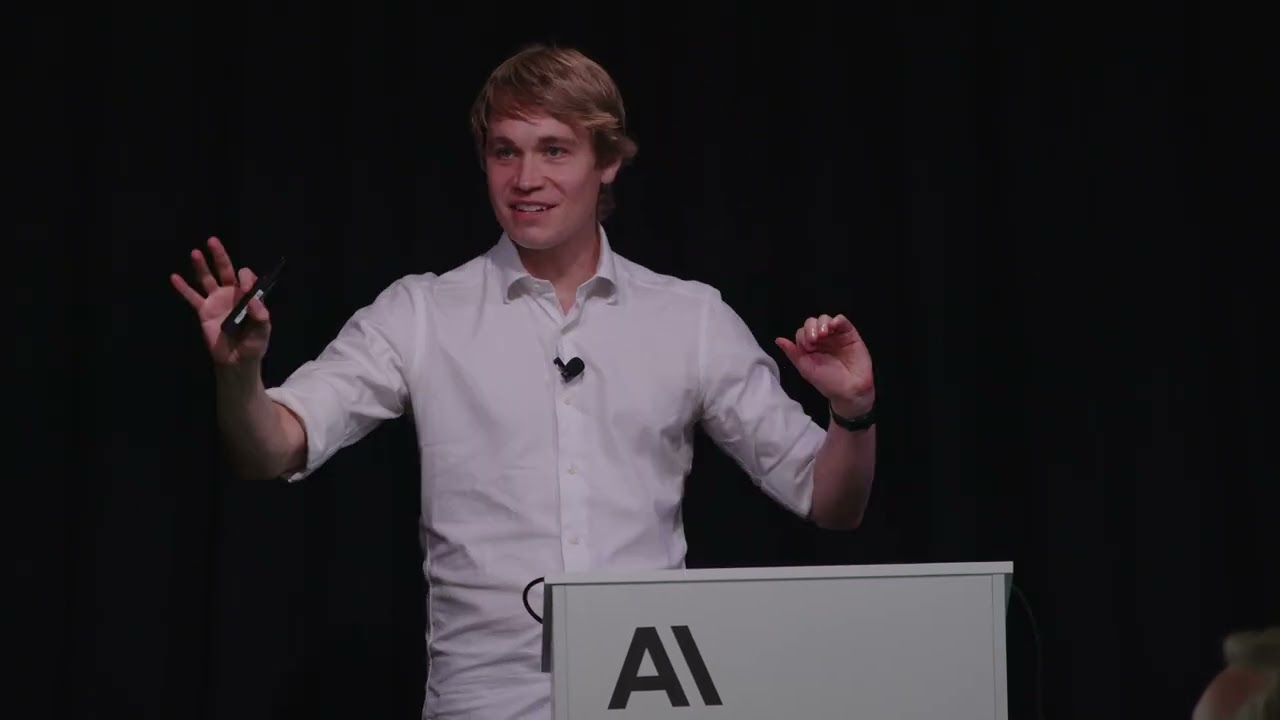
All right. Hey everybody, how are you doing? Uh, my name is Greg. I lead student outreach here at Anthropic, and I am so excited to be sharing the stage with some of the brightest young minds in AI. Um, just a little context for this panel. So, uh, at Anthropic, we've given out, uh, API credits to thousands of students to help them build things at school. Um, and so what you're about to see is a very small glimpse at what students have been creating with those API credits. Um, it's a very wide variety of things, as you're about to notice. Some of these projects are very humorous and funny. Some of these projects are very serious and important. Um, some of these students are working on one project, and some of these students have been building an app every single week throughout all of 2025. Um, so, uh, I think if I was going to sum up what I've learned from running this program, it's that the future is really, really bright in the hands of these students. So, without further ado, I'm going to invite up our first speaker, Isabelle from Stanford.
00:23
Speaker A
to thousands of students to help them build things at school. Um, and so what you're about to see is a very small glimpse at what students have been creating with those API credits. Um, it's a very wide variety of things as you're about to notice. Some of these projects are very humorous and
00:40
Speaker A
All right, thank you for having me. It's a privilege to be here. My name is Isabelle. I'm a senior at Stanford where I study aeronautics and astronautics, and I'm doing my honors in international security. Today, I'm here to talk to you about my honors work, which is on finding nuclear weapons in outer space and how I used Claude to help me do it. Um, so for those of you that may not know, Article 4 of the Outer Space Treaty bans the placement of nuclear weapons in outer space. Now, other arms control agreements that you may have heard of, like START and New START, include provisions for verification and monitoring. So nations are shown to be compliant with their treaty obligations using inspection systems. We have on-site inspections where inspectors will go and look at each other's delivery vehicles and inspect for the presence of nuclear warheads. We don't have anything like that for outer space, mostly because we signed the Outer Space Treaty in 1967 and there were no technologies to do that kind of inspection. Right? How would you go about approaching a satellite in orbit that might be carrying a nuclear weapon and inspecting it for the presence of such a device? Daunting for the 1960s, daunting today. Um, and this became a problem recently in 2024 in April of last year. Um, the Biden administration announced that the United States assesses that Russia is developing a space vehicle that carries a nuclear weapon. Now, this was pretty destabilizing for the international community. We've had a lot of dispute in the UN Security Council recently about how to handle this potential violation of the Outer Space Treaty. Given that we don't have a verification mechanism for compliance with the Outer Space Treaty, I started to wonder if it would be possible to implement such a system, particularly given that the US Space Force tracks 44,800 space objects today. How would you begin to know which one of those is the suspected nuclear weapon? So this brings me to my research question. Is it feasible to perform an in-space inspection mission where you inspect a target satellite for the presence of a nuclear warhead on board? Daunting question. Um, has a lot of interesting technical and political facets to it. Um, but for one particular aspect of it, I was able to use Claude to my advantage. Um, so I looked at specifically the feasibility of detecting the nuclear weapon with an X-ray system. So you fly an X-ray source and detector on two different inspector satellites in space, have them rendezvous with the suspected nuclear warhead target, and scan it for the presence of a nuclear weapon on board. I wanted to know if this was ever would ever be possible. No one's ever tried using X-rays in space. There are interesting questions around whether the space background environment is—there's too much noise in space to detect the source signal. Um, so I built a computational simulation to see if this would ever be possible, and to do it I used Claude. I used this very complicated CERN, um, software package called Geant4. I am not a particle physicist. I did not know how to approach this software package, um, and write this C++ code. But I was able to make a desktop application to do my simulation using Claude. Um, and it was incredibly exciting. It worked. So what you're seeing in this picture is like a very, very quick snapshot of an X-ray image taken in space. Um, and you see a little hole in the middle that shows you that there's very, very dense file material on board the target of the scan. So indeed, in this simulation, there was a simulated nuclear warhead on board this satellite target. Um, the outcomes for this are pretty significant and interesting, right? There are a lot of, um, people in the national security intelligence community in this country that are interested in developing this kind of capability to inspect adversary spacecraft on orbit to understand their capabilities, particularly whether they might carry a weapon of mass destruction. Um, so having done this research, I actually am going to be able to brief it in Washington, DC to some policymakers at the Pentagon, um, and State. I'm really thrilled about that opportunity. Um, and certainly the desktop application with this level of fidelity would not have been possible without modern AI tools, um, to make this kind of research accessible to an undergrad in less than a year. My takeaways for you, um, kind of as a student, um, doing research in the era of AI is just that primarily there is no learning curve that is too steep any longer. Right? Even the toughest problems, space technologies, notoriously hard, nuclear weapons, existential threats. Um, we can address these critical crises, um, with the tools that we have today with emerging technology. Um, and so I want to challenge all of the minds here and other students to think about like what are the world's toughest problems, like what are the problems that you thought were unaddressable, um, that feel like existential crises to you, um, for the next generation? Those are the ones that we should be using our brand new shiny exciting AI assistants, um, to work on, um, because that's how we're going to help make the world safer and more secure or at least outer space more secure. So, thank you. I'm going to pass it off to the next presenter now, but if you have any questions, I'd love to talk after the presentation.
00:55
Speaker A
this program, it's that the the future is really really bright in the hands of these students. So, without further ado, I'm going to invite up our first speaker, Isabelle from Stanford.
01:11
Speaker A
Okay, so it's kind of tough to follow up finding nuclear objects in space. So I'm going to tell you about how I did not know the difference between the terminal and the code editor and why Claude is the reason why I was able to learn how to code. I'm a student at UC Berkeley. My name is Mason Arditi, and I'll go ahead and get started. So I want to talk about what we think of as the traditional way to approach learning how to code. I'm going to call this the bottom-up way where we start by taking basic classes, learn our basic skills, and then build apps with those skills. Slowly but surely, we level up our skill set and build apps that are more complicated. I learned a little bit differently. I'm going to call this the top-down approach where I had an idea as I get inspired, and I had no idea how to solve it. It was software I've never coded before. So, I try to have AI make it for me. Hey, make this app for me. And then when it inevitably fails, I learn how to do it myself. Slowly but surely, learning through different layers of abstraction until I actually understand what's going on. Now, where did this leave me seven months ago? It left me not knowing what the terminal—uh, what the difference between the terminal and the code editor was. I put npx create next app latest, uh, in my page file. I had no idea what I was doing. But slowly but surely, I asked, why is this happening? What am I doing wrong? And I was able to learn more complicated skills. Let me show you a demo of something I'm capab—
01:23
Speaker A
finding nuclear weapons in outer space and how I used Claude to help me do it. Um so for those of you that may not know article 4 of the outer space treaty bans the placement of nuclear weapons in
01:37
Speaker A
outer space. Now other arms control agreements that you may have heard of like start and new start include provisions for verification and monitoring. So nations are shown to be compliant with their treaty obligations using inspection systems. We have on-site inspections
01:52
Speaker A
where inspectors will go and look at each other's delivery vehicles and inspect for the presence of nuclear warheads. We don't have anything like that for outer space mostly because we signed the outer space treaty in 1967 and there were no technologies to do that kind of inspection. Right?
02:06
Speaker A
How would you go about approaching a satellite in orbit that might be carrying a nuclear weapon and inspecting it for the presence of such a device? Daunting for the 1960s, daunting today. Um, and this became a problem recently in 2024 in April of last year. Um,
02:25
Speaker A
the Biden administration announced that the United States assesses that Russia is developing a space vehicle that carries a nuclear weapon. Now, this was pretty destabilizing for the international community. We've had a lot of dispute in the UN Security Council recently about how to handle this
02:41
Speaker A
um potential violation of the Outer Space Treaty. Given that we don't have a verification mechanism for compliance with the Outer Space Treaty, I started to wonder if it would be possible to implement such a system, particularly given that the US Space Force tracks 44,800 space objects
02:56
Speaker A
today. How would you begin to know which one of those is the suspected nuclear weapon? So this brings me to my research question. Is it feasible to perform an inspace inspection mission where you inspect a target satellite for the presence of a nuclear warhead on board? Daunting question. Um
03:15
Speaker A
has a lot of interesting technical and political facets to it. Um but for one particular aspect of it, I was able to use claude to my advantage. Um so I looked at the specifically the feasibility of detecting the nuclear weapon with an X-ray system. So you fly an X-ray source and detector on
03:34
Speaker A
two different inspector satellites in space, have them rendevous with the suspected nuclear warhead target and scan it for the presence of a nuclear weapon in board. I wanted to know if this was ever would ever be possible. No one's ever tried using X-rays in space. There are interesting questions
03:49
Speaker A
around whether the space background environment is there's too much noise in space to detect the source signal. Um so I built a computational simulation to see if this would ever be possible and to do it I used claude. I used this very complicated CERN um software package called Gant
04:07
Speaker A
4. I am not a particle physicist. I did not know how to approach this software package um and write this C++ code. But I was able to make a desktop application to do my simulation using claude. Um and it was incredibly exciting. It worked. So what you're seeing in this picture is like a very very
04:25
Speaker A
quick snapshot of an X-ray image taken in space. Um and you see a little hole in the middle that shows you that there's very very dense file material on board the target of the scan. So indeed in this simulation there was a simulated nuclear warhead on board this satellite target.
04:44
Speaker A
Um the outcomes for this are pretty significant and interesting, right? There are a lot of um people in the national security intelligence community in this country that are interested in developing this kind of capability to inspect adversary spacecraft on orbit to understand
04:57
Speaker A
their capabilities, particularly whether they might carry a weapon of mass destruction. Um so having done this research, I actually am going to be able to brief it in Washington DC to some policy makers at the Pentagon um and state. I'm really thrilled about that opportunity. Um and
05:12
Speaker A
certainly the desktop application with this level of fidelity would not have been possible without modern AI tools um to make this kind of research accessible to an undergrad in less than a year. My takeaways for you um kind of as a student um doing research in the era of AI is just that primarily
05:32
Speaker A
there is no learning curve that is too steep any longer. Right? even the toughest problems, space technologies, notoriously hard, nuclear weapons, existential threats. Um, we can address these critical crises um with the tools that we have today with emerging technology. Um, and so I
05:49
Speaker A
want to challenge all of the minds here and other students to think about like what are the world's toughest problems like what are the problems that you thought were unadressable um that feel like existential crises to you um for the next generation? Those are the ones that we should be
06:03
Speaker A
using our brand new shiny exciting AI assistants um to work on um because that's how we're going to help make the world safer and more secure or at least outer space more secure. So, thank you.
06:21
Speaker A
I'm going to pass it off to the next presenter now, but if you have any questions, I'd love to talk after the presentation.
06:33
Speaker A
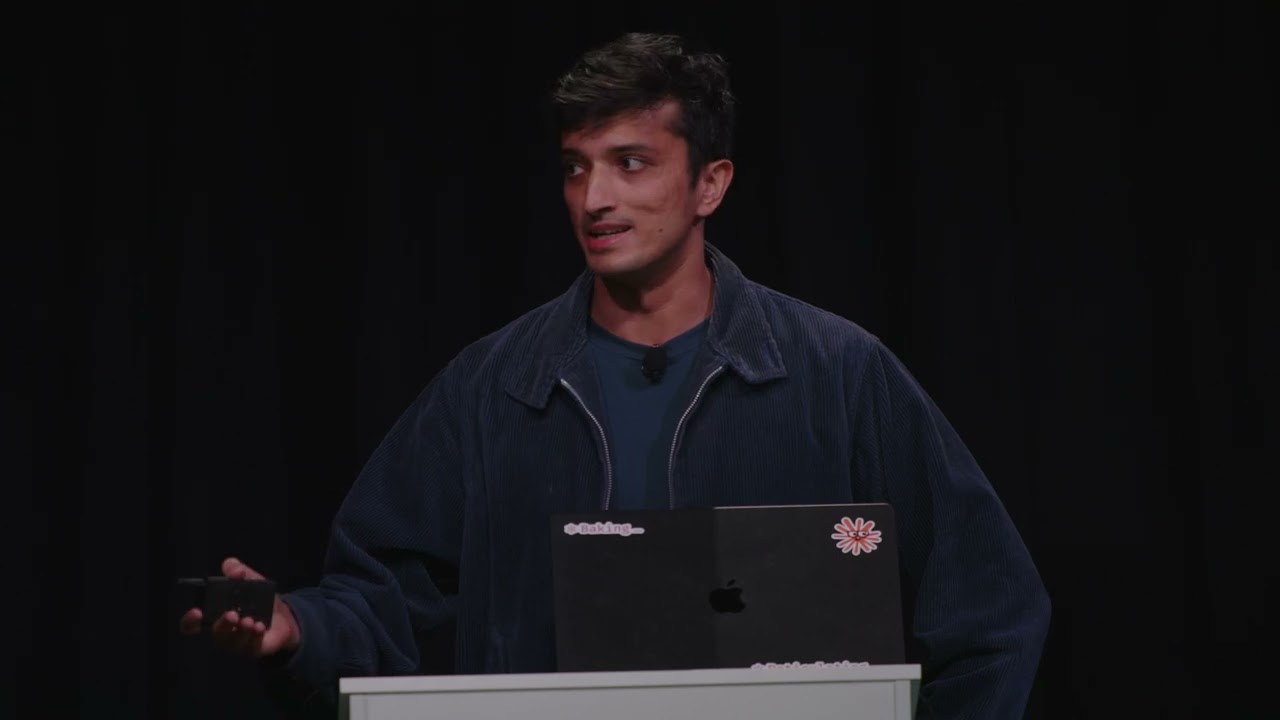
Okay, so it's kind of tough to follow up finding nuclear objects in space. So I'm going to tell you about how I did not know the difference between the terminal and the code editor and why claude is the reason why I was able to learn how to code. I'm a student at UC Berkeley. My name is
06:46
Speaker A
Mason Arditi and I'll go ahead and get started. So I want to talk about what we think of as the traditional way to approach learning how to code. I'm going to call this the bottom up way where we
06:57
Speaker A
start by taking basic classes, learn our basic skills, and then build apps with those skills.
07:02
Speaker A
Slowly but surely, we level up our skill set and build apps that are more complicated. I learned a little bit differently. I'm going to call this the top down approach where I had an idea as I get inspired and I had no idea how to solve it. It was software I've never coded before. So, I try to
07:20
Speaker A
have AI make it for me. Hey, make this app for me. And then when it inevitably fails, I learn how to do it myself. Slowly but surely, learning through different layers of abstraction until I actually understand what's going on. Now, where did this leave me 7 months ago? It left me not knowing
07:36
Speaker A
what the terminal uh what the difference between the terminal and the code editor was. I put npx create next app latest uh in my page file. I had no idea what I was doing. But slowly but surely, I asked, why is this happening? What am I doing wrong? and I was able to learn more complicated
07:52
Speaker A
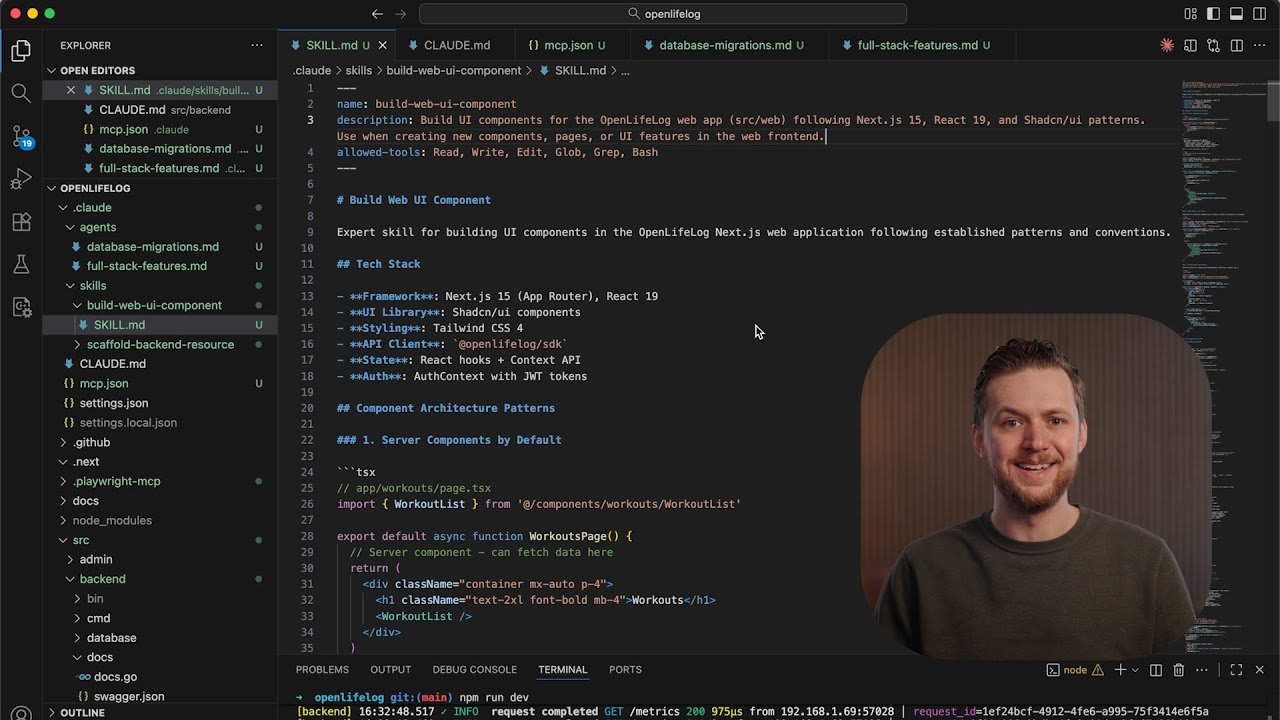
skills. Let me show you a demo of something I'm capable of doing now. Okay. Welcome to CalgBt, which is a better way to schedule your Cal courses using AI. Asking a question like, "Show me math classes with a high average grade since I want to be lazy in my math and get an easy curve." Here,
08:10
Speaker A
it's going to show us five different classes that have an average of A or more. And in fact, it even showed us classes with a grade point average of 4.0. Can't really get much better than that. Now, let's say it's getting late in the enrollment cycle and I want to see classes that still have
08:23
Speaker A
open seats. Show me history classes that still have open seats. And this is drawing directly from Berkeley time. So, it's live data. And here it is. It's showing you history classes, five seats, 20 seats, or three seats. We can even ask it questions that are more deep like what is
08:40
Speaker A
the meaning of life? And do with that answer as you will. But this is CalgBt. My name is Mason and enjoy your day. I'll show you another one which I developed at the pair and anthropic hackathon as well. Okay, welcome to get ready which is a new way to visualize and understand new code
09:03
Speaker A
bases. Let's take a look at anthropics uh SDK for TypeScript for example. You'll see soon and we'll be able to interact with the chart and see how all of these files interact with each other.
09:17
Speaker A
So here we have a mapping of some of the most important files. We chose not to display all of them. Uh just the most important ones that the user will interact with the most.
09:26
Speaker A
And we have these lines to show how they're interconnected. And we do this through the function calls that are actually like in each file. So like if this demo TypeScript file is uh referencing the batch results, that's where the line comes in. And then over here we have
09:40
Speaker A
just a quick description on what the file actually does. And we have our comments on the codebase.
09:48
Speaker A
Okay. And on top of these two, I built many projects over the course of my learning how to code. Uh, now what is the point of me showing you all of this? I'm not here to brag. I'm here
09:57
Speaker A
to say that Claude is the reason why I was able to learn how to code. Without Claude, without these AI tools, including Cursor, Windsurf, whatever you guys want to use, none of this would have been possible. And the key takeaway for me is that you can build anything you want nowadays.
10:12
Speaker A
You just have to ask the right questions, learn through the different layers of abstraction. I think this is representative of a new style of building and a new class of builders. Uh where my flow personally is I find a problem that I'm inspired by and want to fix. I realize the
10:29
Speaker A
solution is something that I have no idea how to do. Uh, and then I have a highle chat with Claude, execute steps in the actual editor. Uh, and then record and post a demo when it's not perfect, hopefully bringing users and revenue later on. But this iteration cycle instead of taking years
10:45
Speaker A
for an undergraduate degree or doing other things uh can be one day to one week maximum if you really want to. So I'll keep it short and sweet and leave you guys with a couple of things to think about which are on my mind right now. uh which is how can we build to get users and revenue
11:01
Speaker A
uh not for technical perfection and impressiveness uh how can I build things as fast and as simply as possible as demonstrated by this prompt uh give it to me in the simplest and most concise way possible is what I'm always doing uh what ideas actually inspire you
11:17
Speaker A
and how can we build it today and lastly not on the slide but what does it mean to really know how to code does it mean understanding every single line and every single function or does it mean being able to build something that actually improves people's lives? Uh,
11:32
Speaker A
I'm going to continue to post more information. If you want to connect with me, you can scan this QR code. Uh, but my name is M. My name is Mason. Uh, thank you guys. And, uh, yeah. [Applause] All right. What is up, everyone? How are we all doing? We good? Yeah. Um, my name is Rohill. Um,
11:54
Speaker A
I'm a freshman or just finished freshman year at UC Berkeley in the ME program studying EEKES and business. So, CS and business and I'm here to talk to you guys today about SideQuest, which is a project that a couple friends and I made at uh the pair xanthropic hackathon recently. So,
12:12
Speaker A
let me tell you guys about a big problem today is AI embodiment. So, we see like in hacker news, in the newest news all around that we're trying to create bots that interact with our world. And most recently, we've seen these robot dogs that are able to like deliver you a water cup or something
12:30
Speaker A
like that. But these systems like do not compete with humans ourselves. Humans are like built to interact with our world. And that brings me to here, which is that today we have humans hiring AI agents to do their work for them. I'm sure all of you guys have probably employed some sort of AI
12:53
Speaker A
agent to do your work for you. But today with Side Quest, we are flipping the script. And we have AI agents hiring humans to do their work for them. So AI agents obviously are amazing at interacting with the digital world and humans are amazing at dig at interacting with the physical world. So
13:17
Speaker A
why can't these AI agents just hire the humans? So that brings me to the architecture of side quest which is basically like let me give you a hypothetical example. Let's say an AI agent is trying to host a hackathon. So now they have all the logistics covered, but they need to um
13:37
Speaker A
put some advertising material up. They need some flyers up so that people can find out where this hackathon is, where to go. Um but they don't have any physical means to do that. So what they do is that they ping the nearest human to that area and tell them, "Oh, pick up this flyer, put it in this
13:52
Speaker A
location, and live stream that video to me, and as soon as I can see that you did it, then I'll give you money." So, that's exactly what's happening in Side Quest. And I I'll show you a short demo.
14:10
Speaker A
Hello world. My AI friends and I are hosting an hackathon. Let's check if the flyers are up. So, we see a flyer here. Flyer detected. But we do not see a flyer here. No flyer detected. Bro, I need a human to put on some flyers in room two. Let's do this. Baring baram.
14:36
Speaker A
It looks like there's a quest. So, I have to collect three posters from table 8. Let's do it. So, over here there's a live video stream that Claude is actively looking at and verifying whether you're doing I found table eight. Let's see the posters.
14:58
Speaker A
Boom. Scanned. It says I have to set them up in Strong. Yes. We're here at Strong. Yes. Now, let's set up the poster. And perfect. I think that should be good. Let's scan it. Booyah. I made 100 bucks. Let's go. And boom. We're done. We're
15:22
Speaker A
ready for the hackathon. Yep. And that's side quest. So, let me talk a little bit about what I learned with building with Claude is that first Claude is really smart as with like any of these AI systems these days and they can reason through many messy edge cases. So, we as humans,
15:42
Speaker A
we don't need to prompt every little nitty-gritty thing. We can start thinking about bigger picture um parts of building products. Secondly, we should design um like with a back and forth workflow with these AI systems. Like originally we are thinking like upfront, oh, how should I
16:01
Speaker A
build this whole big thing? But that's a really big task. You can break it down, ask Claude, oh like what are the different things that I need to do to to work on something and let's build this step by step. So with this iterative process, you can build um like very robust systems.
16:18
Speaker A
So bottom line is that you should trust AI and trust claude. Um that they aren't things that you have to micromanage. They can think on their own as well. And now some takeaways for builders to be like this cool guy, not this grumpy guy. Is that um is that you should think of AI as
16:38
Speaker A
a system rather than just a feature builder. that this is someone that you can like talk to, reason with. And secondly, as like thinking bigger picture about us as humans is that we should be system designers first or architects um of like the things that we're building because in
16:58
Speaker A
the future we aren't going to be the ones writing the small code. We'll be the ones dictating what code to write. So that brings me to the end. Um thank you guys so much. Have a great day. Byebye.
17:14
Speaker A
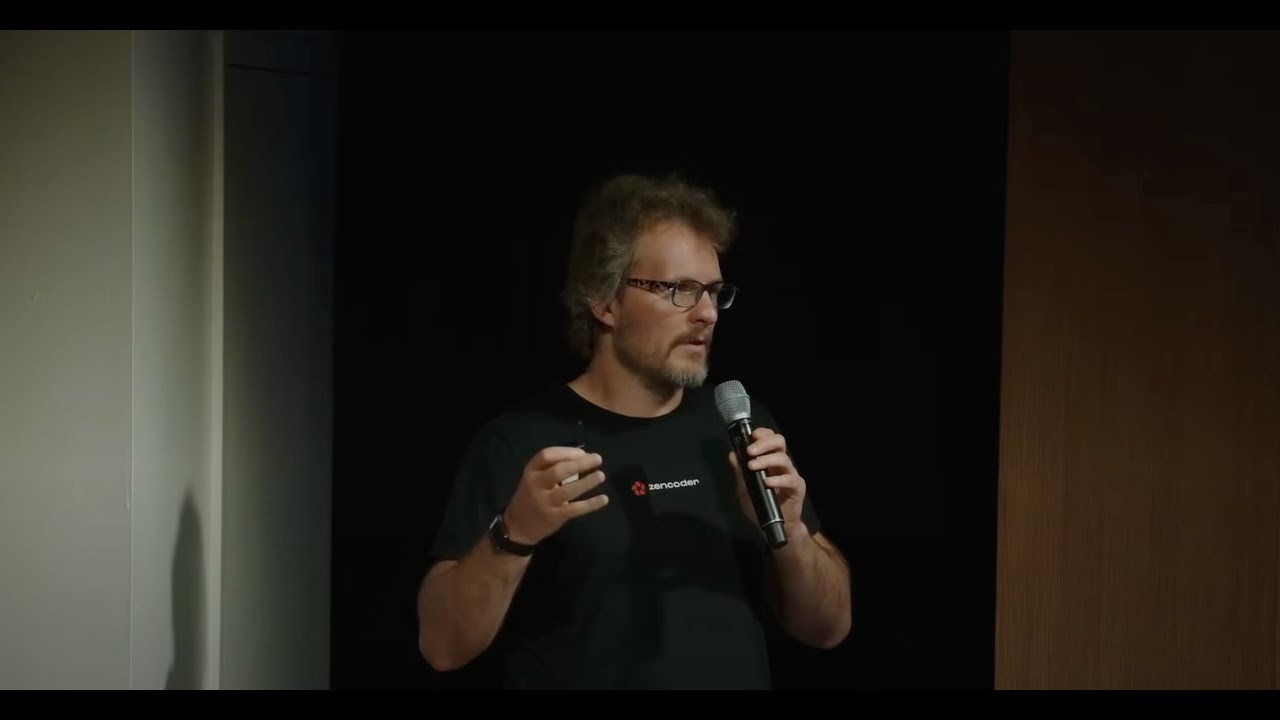
All right, good afternoon everyone. I'm Daniel. I study computer science at USC and I've also built projects across Amazon, IBM and various startups. Um, yeah, very honored to be here as a student speaker today. For more context, I help USC lead some
17:28
Speaker A
of the entrepreneurship programs and over the past year, Claude has been integral to many of our projects, powering innovative solutions across various domains. When Anthropic announced the hackathon at USC, a lot of the students, including my teammates Vishnu, Shabbayan,
17:43
Speaker A
and myself were naturally very eager to join in and explore new directions with Claude. Today, I'm honored to share our journey and insights with you. So, let's first start by looking at the problem. Current LLMs are great at giving answers, but when decisions really matter,
17:59
Speaker A
one general response just isn't enough most of the time. Whether it's business, healthcare, or policy, high stakes decisions require diverse input and deep analysis. Today, getting those perspectives means prompting an LLM multiple times, which could be slow, inconsistent,
18:17
Speaker A
and very manual. Knowing that Claude excels at complex reasoning as one of its most impressive capabilities, that's the gap that we aim to solve for our hackathon. Introducing Claude Cortex, a system designed to emulate a panel of experts. each analyzing the problem from a different angle.
18:34
Speaker A
It dynamically creates specialized agents tailored to your problem context and enables parallel processing for diverse insights. The output here is a more synthesized and well-rounded recommendation enhancing output quality for decision-m. It's basically like having your own strategy team for each prompt. So yeah, let me show you how it works with a really simple
18:57
Speaker A
example to test out the agents. So let's say I want to learn how to use langraph specifically by researching its documentation. I also want to share that finding with my teammates. I would type that in as a single prompt and let the master agent interpret that request and spin
19:10
Speaker A
a different agents which in this case will need a browser agent to search and extract relevant information from langraph documentation. a research agent to summarize the key concepts in plain link language as well as a notes agent to generate clear explanations which it then shares
19:27
Speaker A
with my teammates automatically. Each agent will work independently but they can communicate with one another creating a multi- aent system that gives more comprehensive insights.
19:38
Speaker A
Now for sectors where data security and compliance are paramount cloud cortex offers a secured mode by integrating with AWS bedrock. It ensures that all operations meet privacy standards making it ideal for sensitive environments. The rest of our architecture is also very straightforward.
19:55
Speaker A
The front end was built with Nex and Tailwind. The backend leverages fast API in lane graph for orchestrating multi-agent workflows. And claude of course powers our agents reasoning with the addition of browser use which allows agents to fetch real-time web data and enhance
20:09
Speaker A
their analytical capabilities. Claude Cortex represents a shift in the way we use language models. Moving away from simply generating responses to structuring parallel reasoning pathways and delivering more comprehensive insights. It's versatile making it valuable across various sectors from corporate strategy to public health safety. Now the key takeaways
20:32
Speaker A
from building cloud cortex are very intuitive. But the main two points here that I want to emphasize are that when agent outputs were more focused and well structured like JSON format um cloud synthesis became more nuanced and high high quality. It struggled however when upstream agents
20:49
Speaker A
were more vague and just dumped text blobs into the into the uh stream and then uh dynamic task creation allows for flexibility. What that means is we first started off by creating um five predefined agents for every scenario. However, we later realized that having a master
21:06
Speaker A
agent to decide what tasks and agents to create allowed for more accurate and relevant information. What we're building with Claude Cortex sets at a broader trend.
21:16
Speaker A
Claude is powering a large number of studentled products at USC. We've seen tools for lawyers to process case files faster, apps that help people retain and connect knowledge more effectively, and software that can automate documentation and progress updates. Claude's ability to read deeply,
21:32
Speaker A
summarize clearly, and follow structure is what makes all of this possible. Looking ahead, as a student building with Claude, the most powerful applications I've seen aren't just asking Claude for answers. They're using it as infrastructure, something that you can wire into your workflows
21:47
Speaker A
and something that you can orchestrate like a system. And that's the shift that we see as well.
21:52
Speaker A
We we imagine agent agents that can collaborate with one another, tools that can reflect and context that can compound. In summary, Claude Cortex isn't another AI tool. It's a leap towards a more intelligent, secure, and multi-dimensional decision-making process. As we
22:08
Speaker A
continue to refine and expand its capabilities, we invite you to explore its potential and join us in shaping the future of AIdriven solutions. Here's the team behind Cloud Cortex. We're all student builders and we're all Yeah. builders and student leaders at USC and we would love to
22:23
Speaker A
discuss more. So, please feel free to reach out to us whenever. I'm Daniel Gao and it's been a pleasure sharing our work with you. Thank you for your time and attention today.
22:34
Speaker A
Thank you.
Topics:Claude AIAnthropicstudent projectsnuclear weapons detectionOuter Space TreatyAI-assisted codingmulti-agent systemsAI in educationspace securityAI research

Frequently Asked Questions

What is the main purpose of the student projects featured in the video?

The projects showcase how students use Claude AI to build diverse applications, ranging from serious research like nuclear weapon detection in space to learning coding and creating practical tools.

How did Isabelle use Claude in her research?

Isabelle used Claude to help write C++ code for a complex CERN software package to simulate an X-ray inspection system for detecting nuclear weapons on satellites in space.

What is the significance of multi-agent AI systems mentioned in the video?

Multi-agent AI systems, powered by Claude Cortex, enable collaboration, reasoning, and real-time data fetching, enhancing intelligent and secure decision-making processes beyond traditional AI tools.

Get More with the Söz AI App

Transcribe recordings, audio files, and YouTube videos — with AI summaries, speaker detection, and unlimited transcriptions.

Or transcribe another YouTube video here →