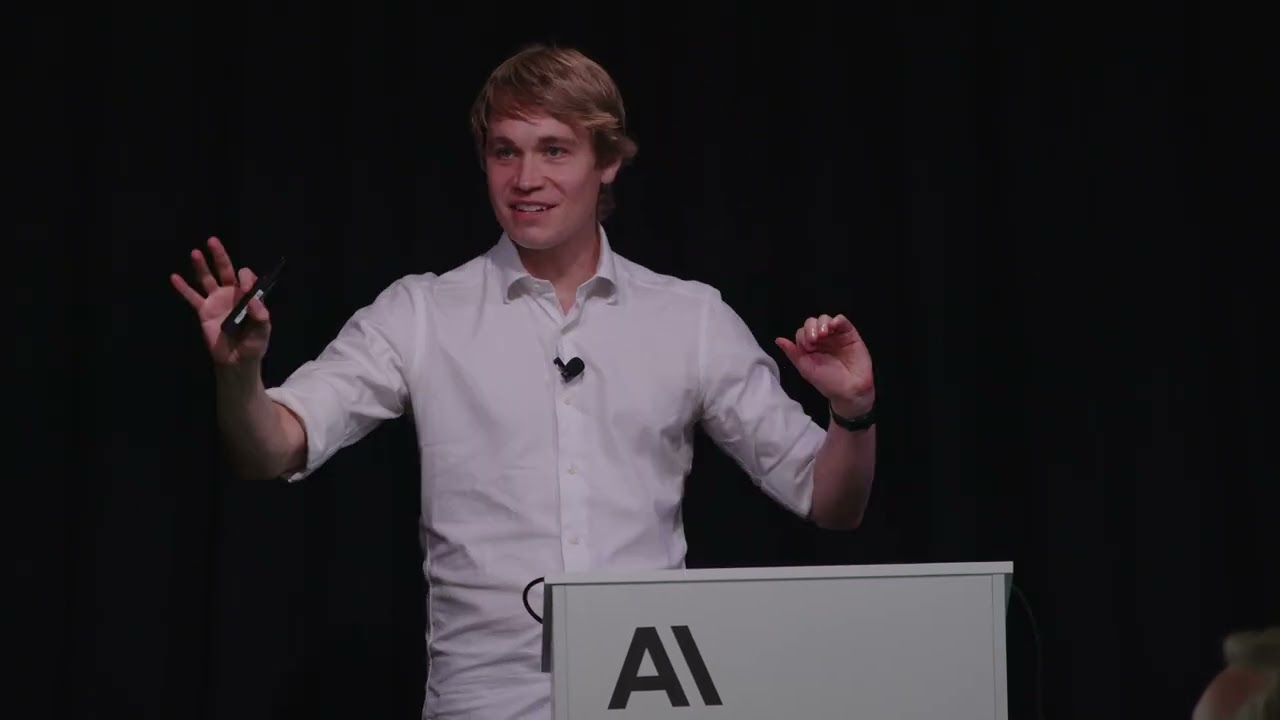
Startups building new products with Claude | Code w/ Cl… — Transcript

Startups showcase innovative products built with Claude, focusing on collaborative coding, design, and AI-powered development tools.

Key Takeaways

  • AI tools like Claude are enabling non-engineers such as PMs and designers to collaborate directly on code, changing traditional development workflows.
  • Tempo Labs offers a cloud-based collaborative IDE that integrates AI to facilitate design-to-code workflows and pull request generation.
  • The AI coding assistant landscape has rapidly evolved from simple code completion to sophisticated autonomous coding agents.
  • Contextual understanding and verification in AI models are critical for scaling AI-driven software development.
  • Anthropic is actively expanding Claude’s capabilities and ecosystem to support more advanced and collaborative AI coding solutions.

Summary

  • Anthropic hosts a session featuring six founders who have achieved product-market fit using Claude across various industries including coding, design, and music generation.
  • Kevin, CEO of Tempo Labs, presents Tempo, an IDE designed for PMs and designers to collaboratively create and edit code with AI assistance, reducing engineer involvement.
  • Tempo enables designers and PMs to generate and refine front-end code collaboratively with Claude, allowing pixel-perfect adjustments and pull request creation.
  • Tempo runs code editing in the cloud, supports live collaboration similar to Figma, and is gaining rapid adoption with a growing customer base.
  • Approximately 10-15% of front-end pull requests are now opened directly by designers using Tempo, showcasing a shift in traditional coding workflows.
  • Andrew Ph shares insights on AI's transformative impact on software development, highlighting rapid progress from basic code completion to autonomous coding agents.
  • The video discusses the evolution of AI coding tools, the importance of context in large codebases, and the emergence of specialized AI agents for software engineering.
  • Startups demonstrate diverse AI applications including personal finance assistants and AI-driven app creation tools available on app stores.
  • Anthropic announces upcoming support for Claude 4 and multi-cloud platform (MCP) integration to enhance AI model accessibility and collaboration.
  • The session emphasizes the future of AI in automating routine tasks, accelerating development cycles, and enabling non-engineers to contribute directly to codebases.

Full Transcript — Download SRT & Markdown

00:05
Speaker A
Welcome, welcome everyone. I'm Joe. I'm from the startups team here at Anthropic, and we're so thrilled to have all of you here today. We have a breakout of six amazing founders that have really found product-market fit building on cloud across a bunch of different industries, across agentic coding, across design, across music generation.
00:21
Speaker A
a bunch of different industries across agentic coding across design across music generation. And a lot of these startups have really seen that zero to multi-million user journey within the past 12 months. And I know in this crowd there's a lot of, you know, really great founders too.

00:38
Speaker A
And a lot of these startups have really seen that zero to multi-million user journey within the past 12 months. And I know in this crowd there's a lot of really great founders too.
00:50
Speaker A
So without further ado, I want to bring up Kevin uh who is the CEO and uh co-founder of Tempo Labs.
01:02
Speaker A
And so we want all of you to stay until the end of the session. We have a little surprise for all of you to be able to spin up quicker on Claude 4 in our new family of models.
01:16
Speaker A
I don't take that fact. Won't you let me go? No, you never come back. I'mma be the best that you never never hide. [Music] I like this. [Music] But there is one more thing. [Applause] [Music] I'm never awesome. So uh what is tempo? At tempo we're building cursor for PMs and designers. Uh,
02:21
Speaker A
So without further ado, I want to bring up Kevin, who is the CEO and co-founder of Tempo Labs.
02:37
Speaker A
pull request. Uh kind of pulling the engineer out of the loop in some cases, but if anything, making the process of working on code collaborative as it stands today, it's really non-engineers don't, you know, collaborate too much on code. So, I'll show you a bit of a live demo of what that looks like.
02:52
Speaker A
Awesome. Thanks, Joe. Everyone, nice to meet you. As she mentioned, my name is Kevin, one of the co-founders of Tempo, and it's an honor to be here. To kick off, I have a video that'll give you a little bit of a taste of what Tempo's all about.
03:04
Speaker A
uh, Claude, and you're like, "Okay, great. This looks, you know, it's a it's a it's a quick and dirty prototype demo. Uh, and then you pass it off to your designer, and your designer looks at uh, the real Airbnb, and it's kind of like, hm, this is kind of off. I need to get it pixel perfect."
03:17
Speaker A
I don't take that fact. Won't you let me go? No, you never come back. I'mma be the best that you never never hide. [Music] I like this. [Music]
03:36
Speaker A
my header over here. Uh, give that a second. There you go. We've got it in the header. Uh, and then what I can do is just rearrange this to get it in the middle. Um, and again, every change that I'm making is actually, you know, you can see editing the original source code
03:52
Speaker A
But there is one more thing. [Applause] [Music] I'm never awesome.
04:08
Speaker A
uh DOM tree over here, which shows me everything that's in the DOM. I'll find the new badge, and I'll I'll just click uh delete just like I would. Boom. Okay, we're getting somewhere close. Looks, you know, half decent. Now, let's compare to Airbnb. Okay, we've got some work to do. Clearly,
04:23
Speaker A
So, what is Tempo? At Tempo, we're building Cursor for PMs and designers.
04:34
Speaker A
And then I am going to let's compare again. I'm going to move my uh the elements in my property grid here to the center. I'm going to add a little bit of gap between them. And then maybe here I'm going to remove this uh Tailwind padding. And then I'm going to compare to core
04:54
Speaker A
Tempo is a new type of IDE that feels more like a design tool like Figma than it does VS Code. And the whole idea behind it is to give designers and PMs the ability to collaborate with Claude to create the first draft of pull requests and, in many cases, the actual end-to-end pull request.
05:09
Speaker A
this code isn't running locally on my machine. It's actually running on a Docker container in the cloud. So this whole thing is collaborative. I can send a link to someone just like Figma and they can come and collaboratively code uh with me and with Claude. There you go. Tempo is again
05:20
Speaker A
Kind of pulling the engineer out of the loop in some cases, but if anything, making the process of working on code collaborative. As it stands today, non-engineers don't collaborate too much on code. So, I'll show you a bit of a live demo of what that looks like.
05:35
Speaker A
engineers. And we're seeing that, you know, approximately 10 to 15% of front-end pull requests are actually being able to be opened by designers directly. They're often able to do uh pixel pushing themselves without involving an engineer. They can just
05:47
Speaker A
This is Tempo. Tempo, as you can tell, has three tabs: product, a PRD tab, a design tab, and a code tab. So, imagine you're a PM, right? You generate an Airbnb app with Claude, and you're like, "Okay, great. This looks, you know, it's a quick and dirty prototype demo."
06:03
Speaker A
uh in their process of going to production. And so that's tempo. Uh we are in the we're imminently about to release support for cloud 4. So I invite you all to uh give it a shot uh and empower your
06:14
Speaker A
And then you pass it off to your designer, and your designer looks at the real Airbnb, and it's kind of like, "Hm, this is kind of off. I need to get it pixel perfect."
06:21
Speaker A
Howdy everybody. Um my name is Andrew Ph. Um I will start uh with a little bit of a past history. I built and sold software business for more than$2 billion dollars. So I ran a team of more than thousand people and despite doing that I could tell that only about two to 5% of our ideas
06:38
Speaker A
So, you come in here and you realize that you spent some time working on this new animated tabs header. So, you can see, just like the core Airbnb, it's nice and pretty.
06:57
Speaker A
that routine work giving us opportunity to move 10 times faster and bring more of our ideas to life and um I personally uh believe that a lot of their of this transformation will happen this year and we're uh actually observing it as we speak including today I think that uh this week
07:15
Speaker A
So what I can do now is I can drag and drop this right into my header over here. Give that a second. There you go. We've got it in the header.
07:32
Speaker A
year um thanks to Entropic we got um cloud 3.5 and that was a gamecher and that allowed um us and Zen coder and cursor and windsurf and a lot of other players to build true coding agents inside of your ID. So that opened up a completely new uh use cases, completely new scenarios. We saw
07:54
Speaker A
And then what I can do is just rearrange this to get it in the middle. And again, every change that I'm making is actually editing the original source code in the correct position.
08:11
Speaker A
capabilities that kind of unlock all of that, right? uh there was also move in the models from coding quote unquote like Olympia style stuff to through software engineering and that was uh very very very important and then uh obviously context matters um software repositories are quite
08:28
Speaker A
So, okay, we're kind of like starting to make some progress. Now, clearly these little new badges are not great. Whoever designed or created that didn't do a great job.
08:44
Speaker A
is computer use. We saw rapid progress in those models and they uh allow us to build uh proper verification and verification is key to scaling AI uh and kind of delivering more fully autonomous cycle. And then the other thing is uh in real life in actual production work uh where you got
09:02
Speaker A
So, why don't we fix that up really quick? I'm going to open up my DOM tree over here, which shows me everything that's in the DOM. I'll find the new badge, and I'll just click delete just like I would. Boom.
09:19
Speaker A
um DNA. And so super happy to announce a couple of weeks ago uh came with Zen agents. So taking that concept of um coding agent and extending into custom agents that you can share across your whole organization with full support for MCP with specialized coding tools and whatnot
09:36
Speaker A
Okay, we're getting somewhere close. Looks, you know, half decent. Now, let's compare to Airbnb. Okay, we've got some work to do.
10:02
Speaker A
[Music] Heat. [Applause] We're looking forward for Entropic to bring us MCP registry. Uh but while that's not available, we offer you ours. So we got 100 um I believe about 100 MCP servers out there and obviously you can configure your own. And also as we launch Zen agents, we're excited to launch the community
10:43
Speaker A
Clearly, Claude thought we need this little text header. I'm just going to delete that like I normally would in a design tool, a traditional design tool like Figma. I'm going to delete this over here.
10:59
Speaker A
coding use uh truly across the whole software development life cycle. So thank you all. Hi, my name is Jordan. I'm the head of AI engineering at Gamma. And at Gamma, our mission is to help bring your ideas to life. Whether that's presentations,
11:16
Speaker A
And then I am going to, let's compare again. I'm going to move the elements in my property grid here to the center. I'm going to add a little bit of gap between them.
11:36
Speaker A
user satisfaction for deck generation. The first was when sonnet 3.5 came out and the second was when sonnet 3.7 came out. Um we actually saw an 8% increase in this metric which is something that we spent hundreds of hours trying to prompt engineer around and could not get such improvements. Um and
11:55
Speaker A
And then maybe here I'm going to remove this Tailwind padding. And then I'm going to compare to core Airbnb and then the site that I built in Tempo.
12:11
Speaker A
with web search and one without. So this is gamma. Gamma used AI to generate this. It used sonnet 3.7 but it did not use web search. And as you can see got a lot of things wrong. This conference
12:24
Speaker A
And now you get an idea of how PMs and designers can collaborate together with Claude. And then again, I can enter a commit message, push this to GitHub.
12:52
Speaker A
And it's going to first create an outline for me. It's going to search the web to figure out what should be in this outline. and it will inevitably find details about the CL code with Claude conference and put them there. So, as you can see, we're already off to a better start where
13:07
Speaker A
And actually, the really cool thing is that this code isn't running locally on my machine. It's actually running on a Docker container in the cloud.
13:31
Speaker A
So now that we have the outline generated, Gamma will take that outline and it will take the other information it has and create an entire presentation for us with hopefully the correct details. So let's check.
13:49
Speaker A
So this whole thing is collaborative. I can send a link to someone just like Figma, and they can come and collaboratively code with me and with Claude.
14:08
Speaker A
It's not going to be perfect, but it'll get you to a point where you have the correct information and you're at a good starting point to actually finish your presentation.
14:19
Speaker A
There you go. Tempo is, again, an IDE for designers and developers to collaborate together on code. We already have a number of customers and have been growing extremely, extremely quickly.
14:39
Speaker A
you can go to careers.gamma.app. Thank you. Hi, my name is Omar Goyel. I'm the CEO and co-founder of BTO. We're building the hopefully the world's best AI code review platform. So as we all know, we're using all these cursor windserve cla uh um claude code to write massive massive amounts
15:00
Speaker A
And what we're seeing for customers that adopt Tempo is designers truly are turning into design engineers. And we're seeing that approximately 10 to 15% of front-end pull requests are actually being able to be opened by designers directly.
15:16
Speaker A
fits into your architectural design patterns and that's still left to the code review process. But code review is not going to scale teams have trouble keeping up today. It's not going to scale for 10x the amount of code. BTO's built an AI code review that plugs into GitHub, GitLab,
15:32
Speaker A
They're often able to do pixel pushing themselves without involving an engineer. They can just work with Tempo and with Claude directly.
15:48
Speaker A
suggestions? Let me show it to you. So, we've got a a PR here. This is GitLab. It works kind of the same in in all the platforms. So once you create a PR uh BTO's fired bid gets called and we first
16:03
Speaker A
And in about 60% of pull requests, we see that a sizable chunk of the front-end code has been generated by designers, by PMs, and by Claude.
16:19
Speaker A
resources uh a cache implementation that needs to be impacted and then a class cast exception error which we'll talk about. Um next we provide a change list. This change list gives you it's kind of a double click on the summary summarizes the key changes in your PR and then looks at what
16:36
Speaker A
And it actually accelerates useful code that accelerates a true front-end engineer in their process of going to production.
16:50
Speaker A
permanent resource leak uh if you don't fix this. So we give you a detailed code suggestion which you can then oneclick apply as a commit or you can batch those commits. Uh the next suggestion uh that we'll look at really briefly is um this non-thread safe static cache implementation. Uh
17:09
Speaker A
And so that's Tempo. We are imminently about to release support for Claude 4. So I invite you all to give it a shot and empower your PMs and your designers to start to collaborate with your engineers on code. Thank you.
17:25
Speaker A
that human-like code review and those reasoning capabilities. We've done a lot of work to really understand your codebase and that's where sonnet kind of comes in. So, if you look here, what we've got is this network data fetcher um class. It has been cast to a link list. Uh this is Java. If
17:42
Speaker A
Howdy everybody. My name is Andrew Ph. I will start with a little bit of a past history. I built and sold software businesses for more than $2 billion.
17:58
Speaker A
how did we find this? Well, what Bid has done is that it looked through the code and said, "Hey, for this network data fetcher, you were trying to instantiate this data processor object. this data processor object. Then well, what is that? We went and looked, crawled your code, understood it
18:14
Speaker A
So I ran a team of more than a thousand people, and despite doing that, I could tell that only about two to five percent of our ideas ever came to life.
18:28
Speaker A
even find, let alone, you know, most systems. Now, if we want to shift this left, we can even bring this to your IDE. So, here's the same changes in your IDE. uh you can easily kind of rightclick and
18:37
Speaker A
Because the majority of the time we spent on fairly routine work, and the larger the company, the more of that routine is in your kind of the bigger that routine makes part of your day job.
18:58
Speaker A
it works uh maybe I'll just mention one last thing so we hundreds of customers and you know the question is well what impact is this really having so PRs are closing in onetenth the time so that PR that used to close take 50 hours to go from open to merge now goes open to merge in five
19:18
Speaker A
So I fundamentally believe that we can automate at least 90% of that routine work, giving us opportunity to move 10 times faster and bring more of our ideas to life.
19:34
Speaker A
instead of one or two days. Thank you. Let's talk about something different. So, my name is Hike and I want to talk about Refusion. So, Refusion is a generative music startup here in San Francisco and we work on training frontier music models and then create an incredible product experience for
19:58
Speaker A
And I personally believe that a lot of this transformation will happen this year, and we're actually observing it as we speak, including today.
20:17
Speaker A
speed, for controllability. And as a fun anecdote, this square of pixels here represents 30 seconds of music in our latent space. Um, it's kind of crazy to think about how compressed that is, but uh, writing fantastic song lyrics is a crucial part of great songs. Um, and current LLMs are um,
20:39
Speaker A
I think that this week actually demarks their transition into the next generation.
20:56
Speaker A
diversity, humor, taste, what flowing with the music itself. And this is a crucial tool um in our product. Uh it's been used tens of millions of times now to to write song lyrics. So, let's go demo some stuff. U if we pop over to my computer. So, this is our homepage for fusion.com.
21:14
Speaker A
So only 12 months ago, the whole industry was on the first generation of AI coding assistants. So a code completion, it kind of was a very nice convenience but not a game changer to anybody.
21:18
Speaker A
Um, I will just punch in something here. Uh, let's say experimental indie trip hop about the feeling of getting better after being really sick. There's a song concept. So, we'll pop in a couple of those. Um, in the meantime, let me just play a song. And there's
21:43
Speaker A
And then October last year, thanks to Anthropic, we got Claude 3.5, and that was a game changer.
22:00
Speaker A
[Music] Don't downplay my grind. I've been clocking kills since the ink dried on that line. You ain't these souls now. Limited supply. Too many lost left cold in the breeze. Then they mama selling gumbo just to cover the fees. Please flip the corner cash the equity that's the creed
22:18
Speaker A
And that allowed us and Zen Coder and Cursor and Windsurf and a lot of other players to build true coding agents inside of your IDE.
22:41
Speaker A
Let's see what the lyrics look like here. Written by a ghost with my muscles forotreng [Music] to move.
23:10
Speaker A
So that opened up completely new use cases, completely new scenarios. We saw usage skyrocket 10x, 100x, and we saw people being able to do amazing things that they haven't been able to do before.
23:38
Speaker A
know a folk song that might be storytelling um and that process of just trying to get something that actually fits with the music is is actually really hard and subtle and requires a lot of iteration and and refinement. So an example of some of the kind of deep editing stuff we can do here. So we
23:56
Speaker A
And part of that revolution was the model support for tools and environment because behind a lot of those generational changes there are some technical capabilities that kind of unlock all of that, right?
24:14
Speaker A
to prompt instead of text. So you can mix and match these things and just get really deep in your refinement. And then with Ghost Rider, let's say if we were to use a prompt here, um, or we were to use the lyrics here, actually, throw them up. Then we could type in here like
24:31
Speaker A
There was also a move in the models from coding, quote unquote, like Olympia style stuff to true software engineering, and that was very, very, very important.
24:51
Speaker A
come talk to me. Come talk to Henry if you're interested in music and uh thanks.
24:57
Speaker A
And then obviously context matters. Software repositories are quite large, so it's good to have larger support.
25:17
Speaker A
go end to end uh on building things. So we got our start in web apps and claude is one of the base models that powers a lot of our code writing for the agent. Um, but we're really excited about
25:29
Speaker A
And I think that this year we'll actually see transition to the next generation. For me, one of the biggest enablers there is verification. So I'm sup-
25:39
Speaker A
Um, and we're in beta, but uh, somebody just actually emailed me an idea a few weeks ago for a family memory app that lets people uh, basically store their memories on their phone, uh, upload their uh, different images and oops, live demos.
26:10
Speaker A
uh store their different images and uh get going on building their family memories app.
26:15
Speaker A
So let me actually go create a new project and type this in and say make an iOS app for this.
26:26
Speaker A
Um, and as you type creates agent starts getting to work, um, it's going to start building out all the core pages, um, as well as the backend functionality for what you need. Um, and so it will also pull in other, uh, integrations you you might need to use. Um, and go ahead
26:43
Speaker A
and get set up. I, uh, am actually going to go ahead and switch to some pre-loaded things. So, the basic idea is you prompt, uh, and you're able to actually generate full applications. Um, uh, the cool thing about create. Oh, there we go. Starting to build a little bit. Um, is that, um,
27:00
Speaker A
it also comes built in with backends and frontends and everything you kind of need from the, uh, from the database to the actual core O. Um, and so here it's actually building out my family memories front end. U, but then in a second, you'll see that it also issues the like schemas uh,
27:16
Speaker A
for the database and goes ahead and deploys a full database and hooks up all the functions needed to talk to this front end. Um, we are really excited about the fact that non-technical users in the hundreds of thousands are starting to pour into create to actually fully build apps um, without
27:32
Speaker A
needing to go to the ID and truly just work from promptland. Um, and so one of the biggest things that we've been working on is actually the ability to also fully submit from create as well. Um, create after your app is done then goes ahead and submits your app straight to the app store
27:47
Speaker A
and builds a build for you. Um there's actually an app we built uh in a day. Um you can just in one click publish it and submit to the app store. Um and this will go ahead and kick off a build.
27:59
Speaker A
Um we actually already started uh got this app in the app store. So if anyone here wants to download it and play with it, it's an AI app that lets you very quickly take drawings and turn it into
28:09
Speaker A
uh AI images called Draw Daily. Um and then in the beta, the thing that's been the most exciting uh for us is just seeing all the cool apps that are being created. We just hosted a demo day and
28:19
Speaker A
this is William um and he is making an app to help you memor memorize meaningful connections um and details of uh people's lives uh and pull it up. And so you just talk to the app um and it pulls up special information about your contact info um and uh and helps you remember anything for
28:39
Speaker A
sales calls or anything else you want. Um or uh we also had a student at Berkeley who's building the scholarship app that he's always wanted um where he's constantly filling out grants um and unable to kind of do it automatically and so he's building scholar GPT um and a lot of these like
28:58
Speaker A
the core agent of how they built were using you know prompt caching tool calling a lot of the core primitives that enthropic makes available to actually get them to success u and just to show a few more um blaze is actually a basketball coach and for the first time ever he's using create to
29:13
Speaker A
get rid of all of these spreadsheets and drills he does for his uh coaches. Um and instead uh you build a full player coach app that lets them uh download uh drills uh put their lesson plan out and then uh see animations um in the app of how they uh should be uh getting used. Um and then
29:35
Speaker A
finally uh we've also had personal finance apps being created. Um, so like a personal AI money coach for Gen Z with full rag um that also has a cloudpowered uh assistant that can figure out your monthly income and give you personalized financial recommendations. And so part of what we're like
29:53
Speaker A
most excited about is just the explosion of who and how uh software will be made um when you give people these tools and very excited to partner with uh Claude to power all this. Thank you.
Topics:AnthropicClaude AITempo LabsAI coding assistantcollaborative codingproduct-market fitsoftware developmentAI design toolsagentic codingcloud IDE

Frequently Asked Questions

What is Tempo Labs and how does it use Claude?

Tempo Labs has developed a cloud-based IDE that allows PMs and designers to collaboratively create and edit front-end code with AI assistance from Claude, enabling faster and more collaborative software development.

How does Claude change the traditional software development workflow?

Claude enables non-engineers like designers and PMs to contribute directly to codebases by generating and refining code collaboratively, reducing the need for constant engineer involvement and accelerating development cycles.

What are some key advancements in AI coding tools discussed in the video?

The video highlights the shift from basic code completion to autonomous coding agents, the importance of context and verification in AI models, and the emergence of specialized AI agents that support complex software engineering tasks.

Get More with the Söz AI App

Transcribe recordings, audio files, and YouTube videos — with AI summaries, speaker detection, and unlimited transcriptions.

Or transcribe another YouTube video here →