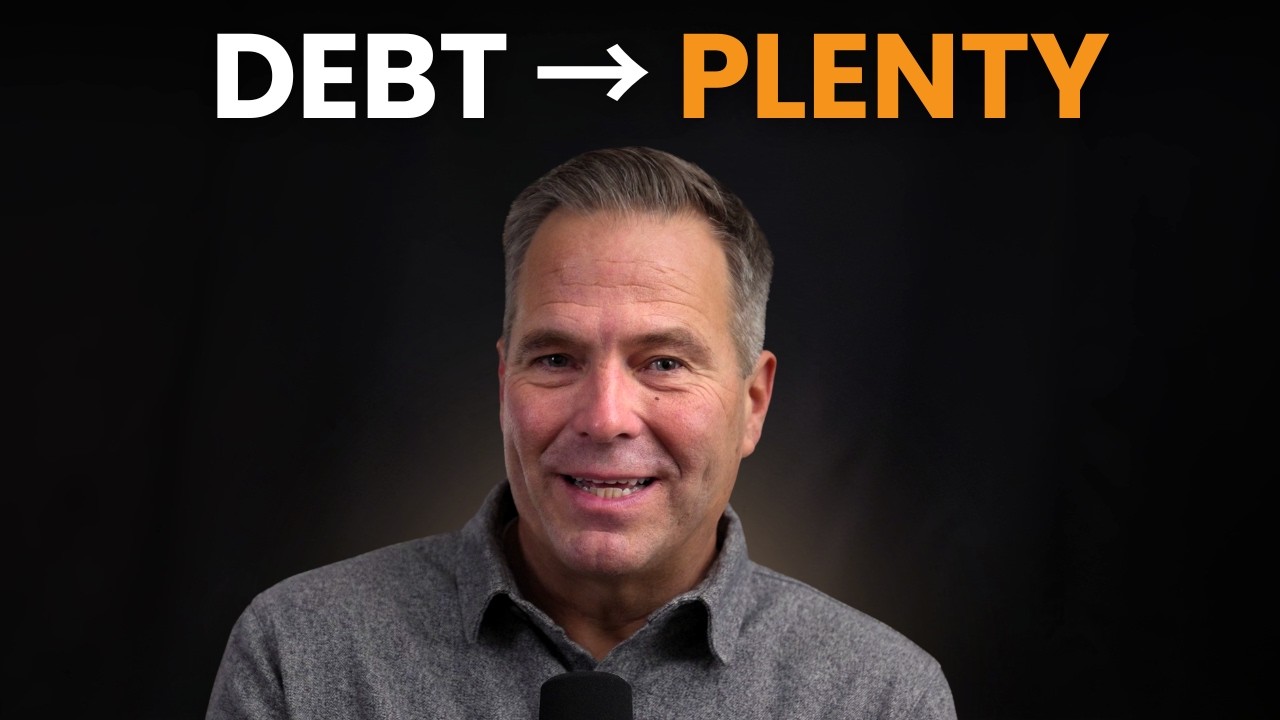
The Reason You Hold Yourself Back Financially | Coachin… — Transcript

Explore how limiting beliefs about money and work hold you back financially and how to shift your mindset for freedom and security.

Key Takeaways

  • Money is often associated with luck and not solely earned through hard work.
  • Beliefs about money are deeply rooted in childhood and family experiences.
  • Wanting money and freedom is not selfish but a natural desire for security.
  • Enjoying money and work can reduce resistance and increase fulfillment.
  • Reframing money as a positive force can transform financial mindset and behavior.

Summary

  • A woman initially felt selfish wanting money but transformed her mindset through coaching.
  • The session explores common money restrictions tied to childhood experiences and societal beliefs.
  • Discusses the idea that money is often linked to luck rather than earned merit.
  • Highlights the emotional connection between money, freedom, and safety.
  • Addresses the pain and resistance around wanting money and working hard.
  • Challenges the belief that wanting money or freedom is selfish.
  • Explores how childhood and family narratives shape money beliefs.
  • Encourages reframing money as a tool for security and freedom, not guilt.
  • Emphasizes the importance of enjoying money and work rather than struggling with it.
  • Ends with a powerful exercise of apologizing to money for past projections and recognizing its role as a teacher.

Full Transcript — Download SRT & Markdown

00:00
Speaker A
A woman came to me and told me that wanting money made her feel selfish. But by the end of the coaching session, something completely different happened.
00:08
Speaker A
This is one of our earliest coaching sessions, and people come back to it over and over and over again. So, we thought we would share it for everybody new to the channel.
00:17
Speaker A
So, since master class and everything's over, um, at first I was kind of like, well, I don't feel any different. And, you know, yeah, typical. Um, and then like as you have said, everything is starting to like happen for me, like things are happening
00:37
Speaker A
out of nowhere, and it's been amazing, and I'm so like grateful and thankful and all these things, but I find that I'm still having like such a restriction around money, like yeah, it just keeps, you know, these things are
00:54
Speaker A
happening, I'm really excited about them, can't wait to do it, can't wait to pursue this, but it always comes back to money.
01:01
Speaker A
Yeah. And I so want that to stop. How much money do you have to have for you to think that you're selfish?
01:18
Speaker A
Any makes sense that you don't want any money then. Wow. Yeah. Yeah. So, what makes you selfish for wanting, let's be ridiculous, let's say $100 million.
01:34
Speaker A
What makes that selfish to have $100 million or to want $100 million? Because other people deserve it as well.
01:47
Speaker A
So, if you have $100 million, other people can't have $100 million. No. Okay. So, then what?
02:02
Speaker A
I haven't earned it. So, let's just say being born into this country makes it more likely for you to have $100 million than being born in Sub-Saharan Africa.
02:20
Speaker A
So, in a weird way, none of us have earned it. Like there's a certain amount of fortune or luck in all of it. I, having coached quite a few billionaires, I think they would also recognize that there's a
02:35
Speaker A
certain amount of luck, timing to it. So what's wrong with being lucky, not earning it?
02:49
Speaker A
You got lucky to be here. You got lucky to be picked. You didn't earn it.
02:58
Speaker A
You're going to seed your time for someone else. No. H Yeah. There's just a lot of like Yeah.
03:12
Speaker A
from my childhood of um Yeah. So much was luck. Yeah. So what's wrong with being lucky around money instead of earning it?
03:29
Speaker A
What's wrong with the fact that there's just huge gifts in the world like our time together right now?
03:39
Speaker A
Nothing. So, if you'd say out loud, I want a ton of money out loud in front of all these people and then tell me what happens when you say it.
03:55
Speaker A
I want a ton of money. It's like an electric like right in my chest.
04:04
Speaker A
Yeah. And what does money give you? Freedom. So, say I want a ton of freedom. I want a shutdown of freedom.
04:15
Speaker A
What else does money give you? The ability to feel safe. I want a ton of security. Or I want a ton of an ability to feel safe.
04:30
Speaker A
Whatever the words are. I want a ton of safety in my life. Yeah. So tell me if we asked everybody in this group, do you want freedom and do you want security? I would assume most people would raise their hands.
04:55
Speaker A
They all selfish. Not at all. Not at all. Yeah. So what if any constriction is left around money?
05:13
Speaker A
Yeah. It's not about that. It's about the safety. Tell me more. What is that that you just discovered?
05:27
Speaker A
It's a couple of things. It's like um It's my childhood of um my dad was a farmer and you know there was no safety in that. You got hailed out in 30 seconds and it was all over for the
05:40
Speaker A
year. Yeah. So, there was that from my childhood and then more recently it's my divorce and having to like completely start over again. Yeah.
05:51
Speaker A
Yeah. How does that not prove your safety? Um, here you are after a divorce and after probably countless hailstorms.
06:18
Speaker A
Yeah, I'm still here. Okay, last thing is let's reverse it for a second. What's dirty about money? What's wrong with money?
06:30
Speaker A
What's bad about money? Probably something your farmer father said about rich people, whatever, like what I don't know many farmers who really liked rich people. I've worked with a lot of farmers. It was probably more my mother than my
06:47
Speaker A
father. Um, yeah, there was oh yeah there was a lot about like they didn't deserve, they didn't work as hard, they didn't deserve it, we got hailed out. They didn't.
07:05
Speaker A
Right. Yeah. So, luck is related to somehow. I know some of the people who started the big Silicon Valley companies, they didn't work any harder than the farmers that I know. It's true.
07:24
Speaker A
Yeah. So, is that a problem with money or is that a problem with people?
07:33
Speaker A
Definitely people. Yeah. So, try this one. I don't want to work hard. Yeah. That's uh Wow.
07:52
Speaker A
That's like viscerally restrictive. No. Yeah. Right. You haven't even said it yet. Oh, you really want me to say that?
08:04
Speaker A
Okay. Umh, I don't want to work hard. What's wrong with I don't want to work hard?
08:18
Speaker A
You, I know you have kids. Yeah. Yeah. Three. How many of them wanted to work hard when they were like three years old or seven years old or 14 years old?
08:31
Speaker A
Not at all. Yeah. And what's wrong with you if you don't want to work hard or them if they don't want to work hard or me if I don't want to work hard?
08:48
Speaker A
Yeah, there's like a you're not good enough if you don't work hard. Oh, wow. How about if How about me? I work a lot, but I don't work hard.
09:02
Speaker A
I'm not even sure if I can call it work. Here I am. I'm working currently, but then what does that say about me if I don't want to work hard? But I love to work.
09:20
Speaker A
Yeah. If you enjoy what you're doing, somehow that's not work. Right. Right. So, probably having money isn't even enjoyable then.
09:39
Speaker A
Let's try. I want to enjoy my money. I want to enjoy my money.
09:48
Speaker A
Okay. Not Yeah. What is it that you really have to work hard for? What did you really get taught you had to work hard for if it wasn't money? Because it's not true about money.
10:10
Speaker A
If you didn't work hard as a kid, what did you not get? Attention, right, from your parents.
10:30
Speaker A
Yeah. So, I just want to prove for a minute that even that's not true. How hard did you work for the last seven minutes with us being together on the call? How hard was that work?
10:55
Speaker A
It wasn't hard. It was fun. And what do you think when we're done? How many things in the chat are going to give you praise and attention?
11:07
Speaker A
And what happens when you let that in for a minute that you don't even have to work hard for praise and attention?
11:22
Speaker A
It feels like kind of painful a little bit. Yes. So go right into that pain.
11:36
Speaker A
What? What is that pain like? Being seen? Not being seen? Yeah. But I just want you to apologize to money for the projection you projected in whatever words that you that are most aligned in you. Like how
12:09
Speaker A
would you apologize to money for the projections that you put onto it? Like you made it about attention. You made it like whatever the strongest thing is. How would you apologize to money?
12:29
Speaker A
I'm sorry for making you the most important thing in my life. Yeah. And because that being seen as painful, whatever the most important thing in your life is something that you make something that you have to earn and
12:52
Speaker A
therefore push it away. Yeah. Very much so. Yeah. What's really the most important thing in your life?
13:08
Speaker A
My kids, my family, the people I love. Yeah. How well do they see you?
13:21
Speaker A
Actually, pretty well sometimes. Nice. Yeah. And the feeling that you have right now in your system when you think of your family and being seen by them, see what it's like to feel that same way about money.
13:43
Speaker A
I love that look on your face. You're like, "What the fuck?" Yeah. What a teacher money has been. I mean, there's no way money could have taught you so much if it wasn't seeing you on some level or reacting to some truth in
14:13
Speaker A
you. I see that. There it is. Thank you. Yeah.
Topics:financial coachingmoney mindsetlimiting beliefsfinancial freedommoney and emotionswealth mindsetself-worth and moneycoaching sessionovercoming financial blocksJoe Hudson

Frequently Asked Questions

Why did the woman initially feel selfish about wanting money?

She associated wanting money with selfishness due to her upbringing and societal beliefs that money desire is greedy or undeserved.

How does the coaching session suggest reframing money beliefs?

It encourages viewing money as a tool for freedom and safety rather than something to feel guilty about, emphasizing luck and external factors in acquiring wealth.

What role does childhood play in financial mindset according to the video?

Childhood experiences, such as family attitudes toward money and safety, deeply influence beliefs about money, work, and self-worth.

Get More with the Söz AI App

Transcribe recordings, audio files, and YouTube videos — with AI summaries, speaker detection, and unlimited transcriptions.

Or transcribe another YouTube video here →