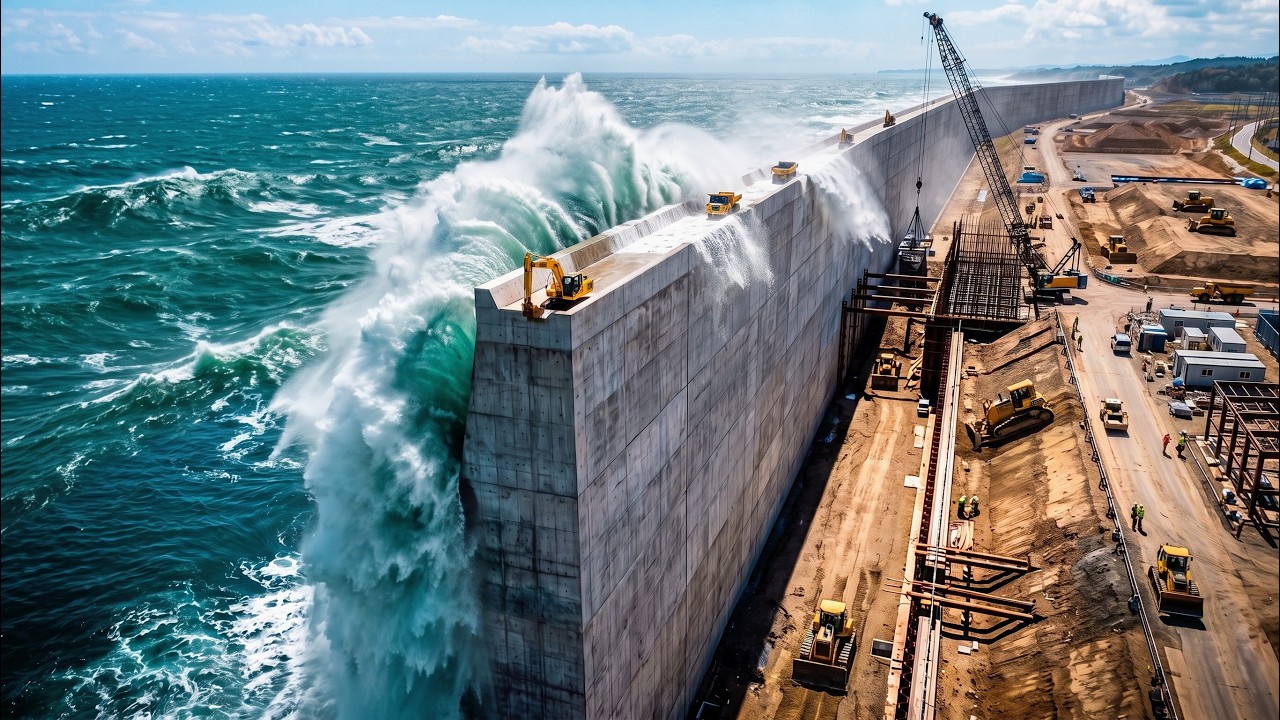
Inside the World’s Longest Underwater Tunnel: How the $… — Transcript

Explore the $15B Channel Tunnel, the world's longest underwater tunnel, built with unmatched engineering precision beneath the English Channel.

Key Takeaways

  • The Channel Tunnel is a monumental engineering achievement connecting two nations beneath the sea.
  • Precision tunneling through challenging geology was critical to the tunnel’s success.
  • Safety systems and design proved effective during emergencies, validating the three-tunnel concept.
  • The project faced significant financial and human costs despite its technical success.
  • The tunnel revolutionized travel between the UK and France, fostering economic and political ties.

Summary

  • The Channel Tunnel connects the UK and France beneath 22 miles of the English Channel, overcoming 200 years of challenges.
  • Construction involved two rail tunnels and a central service tunnel, tunneling through a narrow 20-meter chalk marl layer 75 meters underwater.
  • Eleven custom-built tunnel boring machines (TBMs) operated under extreme pressure and temperature, with precision guided by gyroscopes.
  • Massive logistical efforts included creating new land from spoil and managing flood risks and geological challenges.
  • The breakthrough in 1990 achieved less than half a meter alignment error over 39 kilometers, a feat of engineering precision.
  • British TBMs were sealed underground due to size, while French TBMs were dismantled and recovered.
  • Safety systems include ventilation, fire suppression, and emergency escape routes, proven effective during a major fire incident.
  • The tunnel supports high-speed trains traveling up to 160 km/h, reducing London-Paris travel time to just over two hours.
  • Despite engineering success, the project faced severe financial difficulties and a tragic human cost of 11 lives.
  • The Channel Tunnel remains a symbol of international cooperation and human ingenuity, with future infrastructure challenges anticipated.

Full Transcript — Download SRT & Markdown

00:00
Speaker A
The busiest shipping lane in the world. Twenty-two miles of freezing, unforgiving water separates a continent.
00:16
Speaker A
For 200 years, they dreamed of building a bridge. The first plan was in 1802.
00:25
Speaker A
Horses and oil lamps. In 1880, they actually started digging a test tunnel. But the sea always wins.
00:41
Speaker A
After four failed starts, the British and French governments finally agreed. Two nations, one incredible risk.
00:56
Speaker A
They weren't just building a tunnel. They were fusing two economies. Two rail tunnels and one central service tunnel.
01:11
Speaker A
On the French side, the village of Sangatte became ground zero. In England, they dug from the legendary cliffs of Dover.
01:25
Speaker A
The biggest problem? Geology. They had to tunnel through this, the chalk marl. Hard, but mostly watertight.
01:40
Speaker A
If they drifted a few meters high, they hit porous rock and guaranteed flooding. Drift too low and the clay would seize the machine.
01:55
Speaker A
They were aiming for a layer only 20 meters thick. Seventy-five meters under the sea.
02:02
Speaker A
Years of seafloor testing narrowed down the route. The UK problem: how do you build a massive portal into a vertical cliff face?
02:21
Speaker A
They dynamited 250,000 cubic meters of rock just to create a flat base. A new piece of Britain was made from chalk and dynamite.
02:37
Speaker A
The French built a vast 60-meter deep circular pit near the coast. This allowed their tunnel boring machines to launch underground.
02:51
Speaker A
The French pits were deep. The pressure was already immense. The tunnel machines were not bought.
03:06
Speaker A
They were manufactured. Eleven tunnel boring machines, each one a self-contained subterranean factory. The cutter head alone weighed 600 tons.
03:27
Speaker A
This thing has to grind through 20 miles of solid rock. Cut, clean, line, a simultaneous, continuous process.
03:41
Speaker A
Hydraulic arms would lift and seal the prefabricated tunnel segments. These segments are watertight. The only thing standing between the workers and the ocean.
03:54
Speaker A
The UK launched six machines, three for the land, three for the sea. The French machines were different. They were sealed-face excavators.
04:14
Speaker A
The temperature inside these unventilated tunnels could hit 50 degrees Celsius. The French side had wetter, looser rock, so they used pressure to hold them up.
04:26
Speaker A
A pressure cooker. Miles from the sun. The service tunnel took the lead. Every meter was a gamble.
04:57
Speaker A
They were looking for water seepage, the earliest warning of trouble. Every leak had to be found and grouted immediately.
05:26
Speaker A
Massive floods threatened to trap entire TBM crews. The pressure was crushing. Not just the sea, but the schedule.
05:42
Speaker A
To stay in the chalk marl, they needed absolute precision. A beam of light kept them on the 20-meter path.
05:56
Speaker A
The primary guide was a gyroscope, an electronic compass that knew every turn. The operator steered the 1,000-ton machine like a car.
06:10
Speaker A
The logistics of removing 7.5 million cubic meters of spoil was monstrous. The British spoil was dumped into the sea, forming a new 90-acre coastal platform.
06:30
Speaker A
They literally pushed the English Channel back. When you don't know where to put the dirt, you build an island.
06:46
Speaker A
The main rail tunnels followed, larger and faster. The rail tunnels had to be perfect to handle high-speed trains.
07:01
Speaker A
The track was specially designed to withstand the heat and pressure. After 39 kilometers, the service tunnel faces were only meters apart.
07:24
Speaker A
Two separate worlds drilling blindly toward a common point. They relied on the gyroscope. Any error and they would miss completely.
07:39
Speaker A
Final moment of truth, the first pilot hole. Breakthrough. December 1, 1990. The handshake heard round the world.
07:59
Speaker A
The final alignment error, less than half a meter. Thirty-nine kilometers apart, 75 meters down.
08:12
Speaker A
That is impossible precision. The chalk marl held. The risk paid off. The main rail tunnels followed, meeting over the next few months.
08:50
Speaker A
But what happened to the tunnel boring machines? The UK TBM was too big to turn around.
09:00
Speaker A
They sealed it up. Six huge British machines were buried beneath the English Channel. A 1,000-ton engineering tomb.
09:24
Speaker A
They sacrificed the machine to save the time. The French TBMs were dismantled and brought back to the surface.
09:38
Speaker A
The tunnels needed air, light, and safety. Giant fans push fresh air through the length of the tunnels.
09:55
Speaker A
A failure in ventilation means a catastrophe. The system cycles the air every few seconds.
10:03
Speaker A
Power and signal cables for the 25 kV electric trains. The track was precision welded for high-speed operation.
10:26
Speaker A
Trains travel at up to 160 kilometers per hour underwater. Touching that 25,000-volt line is a permanent mistake.
10:49
Speaker A
One problem. The train pushes a wall of air ahead of it. Fire was the greatest fear.
11:07
Speaker A
Every 375 meters, an escape route. The service tunnel is the lifeline. A complete fire suppression system lines the entire tunnel.
11:30
Speaker A
Emergency lighting is redundant and powerful. The first train runs, but the project is in chaos.
12:02
Speaker A
The cost had ballooned from 4.7 billion pounds to 9.5 billion. The engineering was a miracle.
12:13
Speaker A
The finances? A disaster. The terminals in Folkestone and Coquelles were finally complete. They built a massive logistics hub.
12:35
Speaker A
A city for cars. Forty minutes in a custom-designed ferry on wheels. It's a high-speed underground cruise.
13:01
Speaker A
The political dream was ready to be realized. The cost in human lives, 11 people in total, was tragically real.
13:15
Speaker A
The final official act to open the link is completed. The Channel Tunnel was open for business.
13:28
Speaker A
The impossible had become reality. No longer separated by water, but joined by steel.
13:47
Speaker A
Two years later, the ultimate fear, a fire inside a truck shuttle, fueled by tires and cargo.
13:54
Speaker A
The fire suppression systems activated. The service tunnel became a sanctuary, saving every life aboard the truck shuttle.
14:03
Speaker A
The safety system worked. It proved the three-tunnel design was correct, even under the worst-case scenario.
14:11
Speaker A
With the completion of HS1, travel time from London to Paris was finally cut to just over two hours.
14:22
Speaker A
Faster than flying, without the security lines or the airport stress. The seamless crossing of the English Channel, made possible by a century of planning.
14:36
Speaker A
The physical link is permanent. An unbreakable bond of steel and chalk. It remains one of the greatest collaborative engineering feats in human history.
14:51
Speaker A
They said the sea was a wall. The Channel Tunnel proved that human ingenuity can conquer natural barriers.
15:03
Speaker A
The next impossible challenge is already underway. This is the true connection. Don't miss what's next. Subscribe. NEXT GEN MANUFACTURING.
Topics:Channel Tunnelunderwater tunneltunnel boring machineengineering featUK France connectionchalk marl geologyhigh-speed railtunnel safetyinfrastructureNextGen Manufacturing

Frequently Asked Questions

What geological challenges did builders face during the Channel Tunnel construction?

Builders had to tunnel through a narrow 20-meter thick layer of chalk marl, which was hard but mostly watertight. Deviating from this layer risked flooding or machine seizure due to porous rock or clay.

How was the precision of the tunnel alignment ensured?

The tunnel boring machines were guided by gyroscopes, electronic compasses that tracked every turn, allowing operators to steer the 1,000-ton machines with extreme accuracy, achieving less than half a meter error over 39 kilometers.

What safety measures are in place to protect against fires in the tunnel?

The tunnel features a three-tunnel design with a central service tunnel acting as a sanctuary, powerful ventilation systems cycling air every few seconds, redundant emergency lighting, and a comprehensive fire suppression system, all proven effective during a major fire incident.

Get More with the Söz AI App

Transcribe recordings, audio files, and YouTube videos — with AI summaries, speaker detection, and unlimited transcriptions.

Or transcribe another YouTube video here →