Speaker A
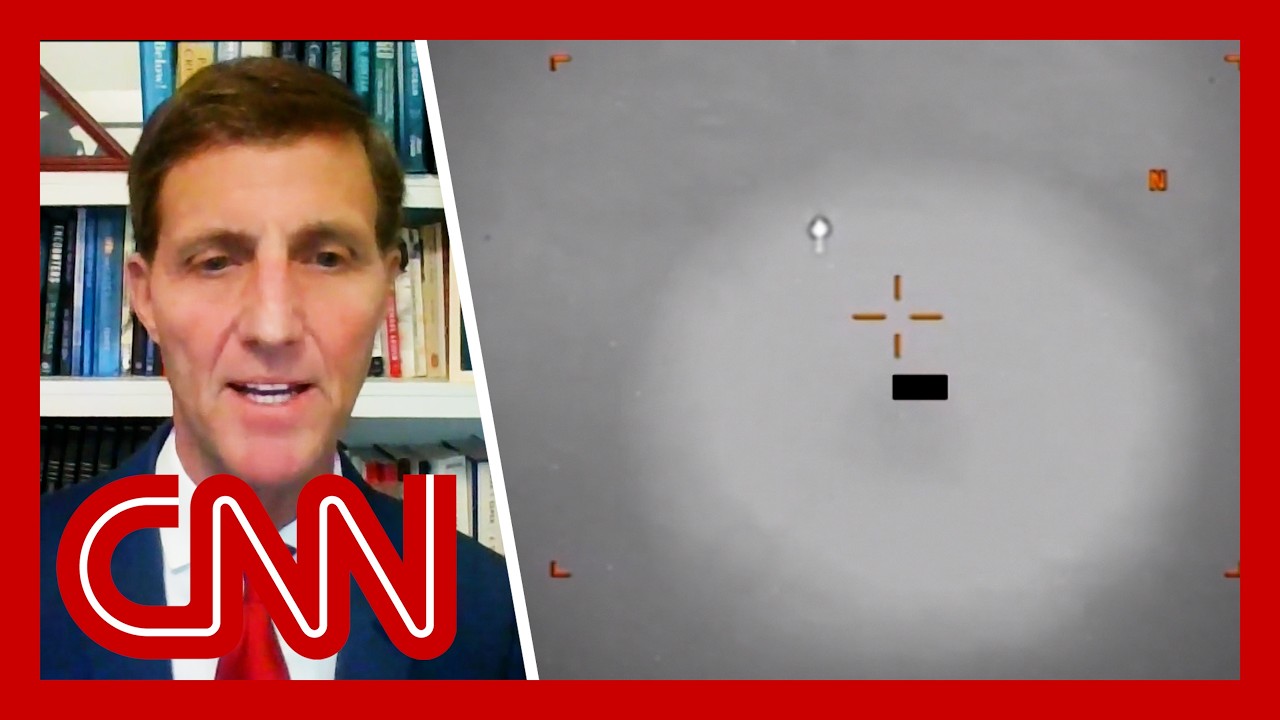
It is a rare, pointed insight into one of the starkest secrets in Russia: President Vladimir Putin's security protocols. And it, a detailed intelligence report given to CNN by a source close to a European intelligence agency, portrays, predictably, a Kremlin in deep crisis. Cooks, bodyguards, and photographers working with Putin must have surveillance systems installed in their homes, it says. Putin has stopped visiting military sites this year entirely, it says. In contrast to last year, often spending time in fortified bunkers and keeping clear of some of his main lavish residences, like Valdai. A tactic aided by many of his appearances, and he is in the media a lot, being pre-recorded. His staff cannot use smartphones or public transport, the report adds. Visitors must be searched twice. Putin is increasingly isolated. These fears grow. I mean, just how paranoid is he right now? What are you learning? Well, I think you don't really have to look very far. Just look at the plans for the Victory Day Parade, celebrating the Soviet victory over Nazi Germany in World War II for May 9th on Saturday. It's going to be the first time the Russian Defense Ministry announced in the middle of the night last week trying to bury the news. In 20 years, they've done it without the usual tanks, armored vehicles, ballistic missiles. The usual tanks, number of vehicles, and ballistic missiles they usually trundle past Putin on Red Square because they're worried about Ukrainian drone strikes. Ukraine has really improved its ability to strike deep, deep in the heart of Russia. They had a luxury high-rise building just earlier today in Moscow with a drone strike. And that's clearly something that Putin is worried about. He's only had really two fully fledged public appearances all year, and that is something that is an increasing concern in Russia just today. It is something that is an increasing concern in Russia just today. Putin replaced the head of the aerospace forces, which among other things is in charge of air defense, and a suggestion there—we don't know all the reasons—but they clearly haven't been doing everything they could with air defense in Russia. Ukraine has been very successful in striking Russian energy facilities, both supporting the war and all in Ukraine, and also Russia fueling Russia's energy exports to fund the war. And that's something that they really have to be worried about. Yes. And you're—I mean, all of this is just incredible that the fact that the cooks and people who work around Putin can't use smartphones. I mean, what kind of devices are they even using? They have to be surveilled in their homes. That he himself is spending time in a bunker. Sure. Yeah, well, the joke about Putin ever since coronavirus, the peak of the pandemic where—ever since coronavirus, the peak of the pandemic where he basically went on lockdown with all but his very, very, very closest intimate circle, and that was where he came up with the whole plan for the Ukraine invasion. You may remember these really ludicrous scenes where he was beating foreign dignitaries at opposite ends of this giant three-foot-long table. The joke was that he was the old man in the bunker, and really that's become true. You talk to people who know him; they say that he's been so fast become true. You talk to people who know him; they say that he spends the vast majority of his time in these secure facilities micromanaging the war, obsessing over which village Russia may or may not take on the battlefield in Ukraine in the coming weeks. He's becoming increasingly detached from the normal affairs of state. And you started to see this actually create some political blowback for him because the economy is not doing very well. Russia has been shutting down mobile internet in Moscow and all across the country, and that's why people in Moscow and all across the country are unhappy. Putin's proof already took a hit. So the fear and security measures reportedly increased after a Russian general was killed by a car bomb in Moscow. You talk about the drone strikes. This was a car bomb. And apparently, in a heated meeting at the Kremlin, Putin's top military and security personnel blamed each other. So it sort of devolved into a finger-pointing exercise. So, you know, what is the stability right now? What is the stability right now of Putin's inner circle? I think the real lesson from this reporting and this intelligence report is that Putin doesn't really have an inner circle anymore, even of the very tight circle of intimates that he had over the previous 20, 25 years that he's been in power. The civilian officials who were told at all that he was planning the war, most know. Of all that he was planning the war, most of the oligarchs that he built up who were among his closest friends, with very few exceptions, they're not really involved in this. They don't see him really very often at all because he's totally reclusive, regularly who are in his immediate family or they're directly involved in planning the war. And when you see these generals who are being blown up, unlike Putin, they don't have anything like the kind of security that Putin has. Many of them were hit with bombs right at their homes, at their front doors, at their buildings, and there wasn't a dedicated security agency that was really working on protecting these people. The defense ministry didn't have one. And so that obviously is going to lead to a lot of squabbling, and that certainly does not make for a cohesive work. Fascinating what Max is saying at this point: Putin doesn't even really have an inner circle anymore. Is this all just paranoia? An inner circle anymore? Um, is this all just paranoia or does Putin have reason, do you think, at this specific moment to be this afraid? No, he's of course paranoid, but fears are real. Putin knows from Russian history that there's one thing that led to massive changes, sometimes revolutions: it's a bad war. If the war goes well, the Russian public never cared about the price to pay for victory, but cost was just irrelevant. But bad wars, unwinnable wars, led to change. The Russo-Japanese war in the beginning of the 20th century led to the constitutional monarchy. The bad war of World War I, so the stalemate, led to the collapse of the Romanov dynasty. 1989, the retreat from Afghanistan and basically the failure in a Cold War led to the collapse of the Soviet Union. And while I may disagree about this, it's the inner circle making decisions about war against Ukraine. There was a kind of concern. Circle, making decisions about war against Ukraine, there was a kind of consensus that Russia would easily win. But this war now looks unwinnable. And we can just hear it by just reading, you know, just even pro-war bloggers now, they express doubts that Putin can deliver. And that's, you know, that's the greatest threat to the Russian dictator. If people believe he's weak, weakness is something that always leads, always led to disaster. So your piece today was titled "Putin is in Trouble." You're writing about those militias. Your piece today was titled "Putin is in Trouble." You're writing about those military bloggers. You're also talking about, I mean, what is the impact, and Max referenced this, but to the internet suddenly being shut down, to having this big May 9th thing that is usually, you know, massive troops and tanks and all of these things be this small, pared-back thing. Yeah, look, as bad wars led to the trouble, good wars, one wars always created, you know, the good wars, one wars always created, you know, this special aura for the regime. That's why Putin and before him, Soviet leaders always tried to capitalize on World War II, the victory. So that's why the May 9th...