1,000 Hours of studying the Best Digital Product Busine… — Transcript

Richard Yu shares 1,000+ hours of insights on building successful digital product businesses with tactical, up-to-date strategies for 2026.

Key Takeaways

  • Market research is critical and must be done before launching any digital product.
  • Content quality and specificity drive sales more than complex funnels or paid ads.
  • Instagram is currently the most effective platform for selling impulse-priced digital products.
  • Simplicity in funnels and direct engagement through DMs increase conversion rates.
  • Recurring revenue and customer relationship management are essential for sustainable growth.

Summary

  • Richard Yu spent over 1,000 hours studying top digital product businesses and helped 3,000+ students build theirs.
  • The digital product market has evolved; old strategies like high-ticket launches and sales teams are outdated.
  • Market research is the foundational step; understand your buyer deeply through audience polls or AI research tools.
  • Simpler funnels generate more revenue; content does 80% of the selling, funnels just facilitate the purchase.
  • Instagram is the best platform for digital products in 2026 due to speed, volume, buyer audience, and ease of content creation.
  • Specific, targeted content outperforms broad topics; specificity drives engagement and sales.
  • Use direct messaging and free consultations to validate product ideas and build customer relationships.
  • Offer pricing should balance accessibility and value; low enough to avoid hesitation but high enough to respect your work.
  • Follow-up after initial sales page visits is crucial; most sales close in DMs and conversations, not just on the page.
  • Building recurring revenue, email lists, and relaunching products to existing customers are key to scaling beyond initial sales.

Full Transcript — Download SRT & Markdown

00:00
Speaker A
Over the last seven years, I've spent well over 1,000 hours studying the best digital product businesses in the world.
00:06
Speaker A
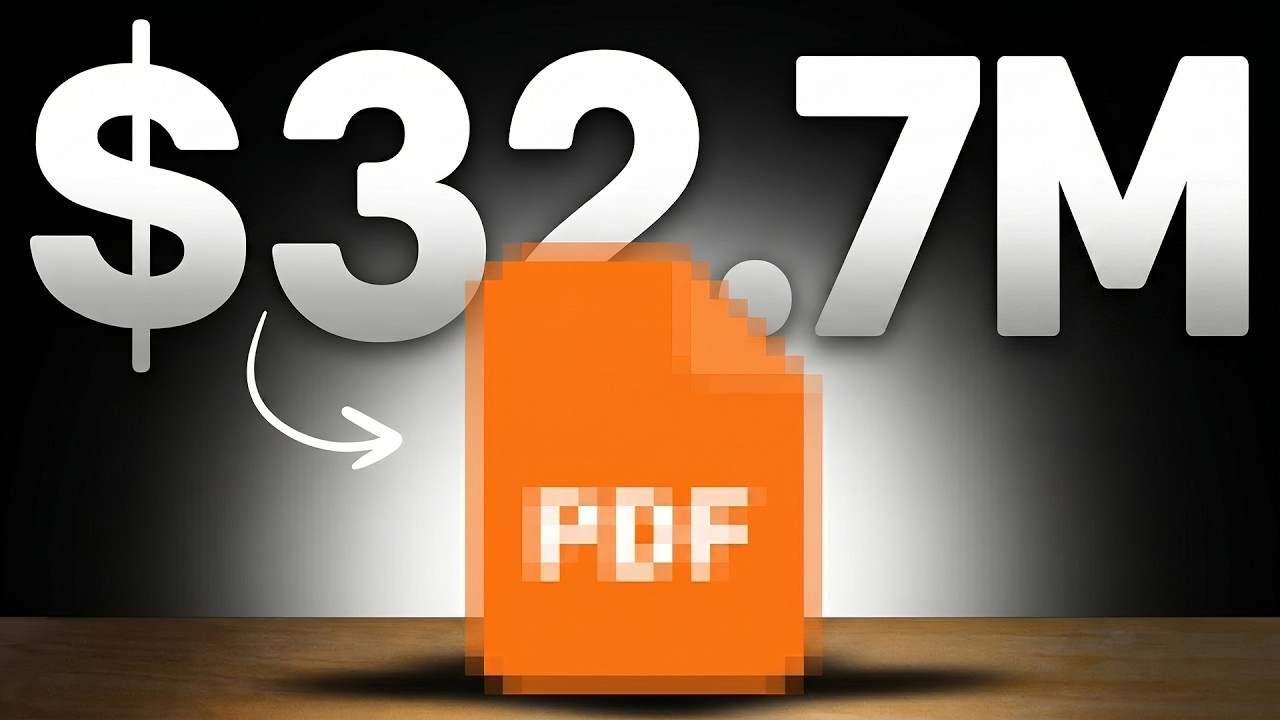
From normal people doing their first $500 in sales, all the way up to digital product businesses like mine that have done over $32 million in digital product sales. And along the way, I've worked with over 3,000 students helping them
00:18
Speaker A
build thriving digital product businesses. This is what got me featured in New York Times Square for the impact that I've had and invited to speak at the largest online marketing conference in North America.
00:28
Speaker A
Just a couple weeks ago. So, in this video, I'm going
00:40
Speaker A
to share every single lesson that I've pulled from that in extreme detail so you can apply it to your business right now today. Because here's the thing, in 2026, the digital product info game has completely changed. If your strategy
00:51
Speaker A
still looks like launch a course, sell something high ticket, use a sales team, run paid ads, slap a money-back guarantee on it, and repeat, you're playing a 2020 game in a 2026 marketplace. And the market has moved on
01:06
Speaker A
without you. So, each lesson I share with you today is going to be extremely tactical, specific, something that you can apply immediately this week. Let's get into it. Lesson number one. The reason 95% of digital product businesses fail before they ever get a single sale
01:19
Speaker A
is not the product. It's that the founder missed this one step: market research. Your offer, your funnel, your content, every single thing in your business sits on top of this one foundational step. How well do you actually understand who you're selling
01:28
Speaker A
to? So, here's exactly how to do it. There's two paths. Pick the one that fits where you are. Path one is you already have an audience, even if it's small. 200 people, you do realize that 200 people is a massive auditorium of
01:38
Speaker A
people, right? Doesn't matter. So, here's the move. Open up your Instagram stories and put up a simple poll. The question is, "What are you struggling with the most right now?" And give them three or four options that map to
01:46
Speaker A
different types of people who follow you. Let's say you're in the fitness niche and you want to make a fitness digital product. Three options might be, "I want to lose fat, I want to build muscle, or I want to fix my diet."
01:57
Speaker A
Whatever your niche, just choose three real options that you think would be the most common problems or pains that people would have. Once people vote, Instagram shows you exactly who voted for what. So, you can actually swipe up
02:01
Speaker A
on your poll and DM every single person who voted and start a real conversation.
02:11
Speaker A
Something simple like, "Hey, I saw you voted on the poll. Quick question. What's the actual problem behind why you chose that option?" And the reason why this works is because they've already metaphorically raised their hand.
02:20
Speaker A
They've already engaged with you. And so, the DM that you send to them is not cold. They're the ones that reached out to you first. And so, the conversation flows. And your goal is to have 30 to 50
02:26
Speaker A
of these conversations. On top of that, what would be really valuable is actually jumping on a quick 15-20 minute phone call with at least 10 of them.
02:36
Speaker A
Record the calls. You're going to need them. And the way you position those calls is as a free consulting or coaching call. You could literally DM them saying, "I'm actually giving away five free consultations to help you achieve
02:45
Speaker A
XYZ benefit, to help you lose your first 15 lbs, to help you map out a custom meal plan. Would you be down for that sometime later this week?" And the moment they say yes, just drop them over your Calendly link, which you can sign
02:50
Speaker A
up with a free calendar scheduling, and boom. Now, you got some calls that you can do even more market research on.
02:53
Speaker A
Path number two, you do not need to have an audience, and that's totally fine.
03:02
Speaker A
Here's what you're going to do instead. Open up Claude. It's free. Turn on the research mode and the web search mode and give it this prompt: "I'm building a digital product business in X niche.
03:13
Speaker A
Research the top three to five biggest pain points that this audience has, the language that they use to describe these pain points, and the products that they're already buying. And find out what the gaps are in the current
03:25
Speaker A
market." Claude is going to pull from real forum posts, real Reddit threads, and real reviews. And it will come back with the exact language that your future customers are using right now. Then, run a second prompt: "Based on this data,
03:38
Speaker A
give me three potential digital product ideas, who they're for, and why someone would buy each one." And now, you have a starting hypothesis. From there, you validate it the same way path one does, by talking to actual humans.
03:49
Speaker A
Everything else in this video depends on you knowing your buyer. Now, step number two, this one's going to feel counterintuitive if you spent any time on the internet. The simplest funnels make the most money. Now, be honest, I
04:03
Speaker A
learned this the hard way. For years, I overcomplicated all of my website funnels and acquisition systems, and it barely moved the needle. The thing that actually moved revenue every single time was sharper content. So, here's what an actual winning funnel looks like right
04:14
Speaker A
now. You have your content, which leads you to a landing page. Then, they click on a buy button. Or, you have content that leads to a direct message, so people DM you on Instagram, and then in Instagram, you send them the checkout
04:26
Speaker A
link. It's simple. And the reason why this works is because your content is already doing 80% of the selling before they ever click on anything. If your content is good, if it's specific, if it actually solves a real problem, if
04:38
Speaker A
it actually shows that you know what you're talking about, by the time they hit your landing page, they're already 80% sold. The page just needs to not screw it up. Now, on the flip side, if your content is weak, no funnel on Earth
04:44
Speaker A
is going to save you. Put 90% of your effort into your content, because that's where the actual selling happens.
04:54
Speaker A
Funnels don't sell. Content sells. And quick thing, we're trying to hit 100,000 subscribers by the end of July. And so, if you're getting value from this video or from any of my other ones, I'd really appreciate if you hit the subscribe
05:07
Speaker A
button. It genuinely helps us a lot more than you know. So, let's go to lesson number three. If you're selling a digital product in 2026, Instagram is the printing machine. Not YouTube, not LinkedIn, not Twitter, it's Instagram right now. There are four things that
05:22
Speaker A
make Instagram the right platform for digital products specifically. Reason one is speed. Digital products are impulse priced. $27 PDFs, $47 guides, $97 mini courses. And that kind
05:31
Speaker A
of price point doesn't need 10 hours of nurturing before someone buys. Someone
05:45
Speaker A
can watch a 7-second reel, click your link in bio, buy a $27 PDF in less than 2 minutes. It's a complete sales cycle in the time it takes to make a coffee.
05:49
Speaker A
No other platform does that. And reason number two is volume. Instagram's algorithm in 2026 pushes new accounts harder than at any point in the platform's history, which means you can post a reel from a brand new account with zero followers, and if the content
06:02
Speaker A
is good, you can hit tens of thousands of views in 24 hours or less.
06:15
Speaker A
Other platforms make you earn that audience for months before they show you to anyone. Instagram will show you to thousands of people on day one if your content earns it. And reason number three, the audience. The people who
06:26
Speaker A
actually buy digital products live on Instagram. Mobile first, scroll culture, they're already in a buyer's mindset because the entire
06:37
Speaker A
platform is designed to put products and content in front of them. They scroll, they see something good, they buy. That's just
06:50
Speaker A
how the platform is wired. And reason number four, it's the easiest content to make. And this one matters more than people
06:59
Speaker A
realize. There's no studio involved. There's no thumbnail designer. You don't need any compli
07:12
Speaker A
still operating like it's 2022. Here's the old model. You spent two years building an audience. You finally hit 50,000 followers. You launch a course.
07:18
Speaker A
You ride your audience to your first $100,000. And that was the playbook. Doesn't work anymore. Here's what's happening right now. The algorithm has changed. It's not a social graph anymore. It's an interest graph. The algorithm does not care who follows you.
07:30
Speaker A
It cares whether your content you just posted is interesting to the specific person it's deciding whether it should show it to. In other words, you can have 47 followers right now and still have a real hit 100,000 views. I see this every
07:43
Speaker A
single week with my top clients. Accounts with a thousand followers doing tens of thousands of dollars in digital product sales because their content speaks directly to a specific problem.
07:52
Speaker A
And on the flip side, big accounts with 200,000 followers posting generic content are getting buried. The algorithm doesn't care about the follower accounts. It cares whether the content earns attention from the people it's shown to. Ask yourself this, if a
08:05
Speaker A
stranger watched this for five seconds, would they say this is for me? If yes, [music] post it. If no, scrap it.
08:12
Speaker A
Specific beats broad every single time. Productivity tips for entrepreneurs loses to how to get out of bed when you have ADHD and a full inbox. That's the level of specificity that wins. Lesson number five, and this one's going to be
08:25
Speaker A
uncomfortable for you even if you've been doing what most online coaches have been telling you for last five years.
08:30
Speaker A
Guarantees are dead. I'm sorry to say it, but they are. Proof is the new promise. I used to stack guarantees on my own offers. Big claims, money-back guarantees, it used to work. And then, in 2023, it started losing steam because
08:42
Speaker A
everyone started using them and basically guarantees lost their weight and value. And by 2025, it was actively hurting conversions because they sounded all too good to be true. Here's why. For five to six years, the standard play was
08:52
Speaker A
make a super aggressive claim, give them a money-back guarantee, run paid ads, make 100k in your first 30 days or you get your money back. Lose 20 pounds or it's free. And the market has been burned by this repeatedly. Your buyer
09:02
Speaker A
this year has about five, seven different courses, programs that came with complicated, extensive guarantees.
09:07
Speaker A
And almost none of those guarantees were honored the way that they were promised. And I made this mistake four years ago.
09:12
Speaker A
Refund processes were a nightmare. Companies hid behind long clauses in complicated contracts, and the customer got screwed. So now your audience has formed an association in their head. Big guarantee equals bad product. And the thinking goes, if your product was
09:24
Speaker A
actually that good, you wouldn't need to promise me to give me my money back. I want you to sit with that for a second.
09:29
Speaker A
So, what do people do instead? You replace promises with proof. Don't tell people what's going to happen, show them what has already happened with your previous customers. Post screenshots of student wins on your stories. Pin a results-focused post on your profile.
09:42
Speaker A
Share video testimonials in your reels. Have a highlight reel literally called results with 50 different wins. Promises require trust. Proof creates trust.
09:52
Speaker A
Promises can be faked. Specific, verifiable proof cannot. [music] Drop the guarantee, build the proof stack.
09:57
Speaker A
And lesson number six, the messaging your content gives off is more important than the content itself. And what I mean by that is every piece of content you post is sending a signal about who you are, what kind of person you attract.
10:10
Speaker A
And if you don't control that signal, the wrong people end up following you, and then your business never works, no matter how good your offer is. Let me make this concrete for you. If you're only posting yacht and supercar content,
10:20
Speaker A
buying bottles at the club, day in the life of a millionaire type stuff, you're going to attract a very specific type of follower. People who just want the lifestyle, not the work. If you're posting flexing content, you'll attract
10:30
Speaker A
people who just want to flex. And people who just want to flex are the hardest people to sell to. But if your content shows you breaking down how a business actually works, if it shows you teaching one specific concept clearly, if it
10:41
Speaker A
shows you sharing what you've learned from real experience, you'll attract real operators, people who actually want to build something. Those are the people who actually buy. There are basically three stages of every relationship someone has with you online. First, they
10:54
Speaker A
have to know who you are. That's awareness, [music] your first piece of content, the reel that hit their feed.
10:58
Speaker A
Then, after consuming enough content, they have to start to like you. They feel they get to know who you are. They identify with you. And then eventually, they trust you. They've seen the proof.
11:06
Speaker A
They watch you be consistent. They believe that you can actually help them. And people only buy at stage number three. But you can't get them to stage three without going through stages one and two. So here's the takeaway. Don't
11:17
Speaker A
be the guru with the rented supercar in Miami. Be the person who teaches one specific thing clearly, consistently, in your own voice. The market [music] is way smarter than it was five years ago.
11:28
Speaker A
They're not buying some lifestyle guru anymore. They're buying you, your authentic perspective, and your way of seeing the problem and your way of solving it. Be a real person with a real point of view. Next lesson, your Instagram profile is your sales page.
11:41
Speaker A
Every piece of it has a job. And if you're treating it like a vibe board or motivational board instead of a conversion asset, you're leaving most of your revenue on the table. Your reels are basically the ad. They reach
11:51
Speaker A
thousands if not millions of people. That's it. They grab attention and get you traffic from someone who's never heard of you before. Their entire job is to get a stranger to stop scrolling for 7 seconds and feel like, "Wait, who is
12:02
Speaker A
this person? I'm interested." That's the only job of the reel. Not to sell, not to close, just to earn the click to go to your profile. But with reels, you're able to get attention for free. Your bio is the headline. And when someone clicks
12:13
Speaker A
your profile after watching one of your reels, the bio is the first thing they read. It needs to do one thing. Tell [music] them in one line who you help and what the outcome you help them get.
12:23
Speaker A
I help busy parents lose 20 lbs without giving up carbs. I help freelance designers land 5K clients without cold outreach. Be specific. [music] Specificity wins. Your link in bio is the checkout button. This one depends on your setup. If you only have one digital
12:35
Speaker A
product right now, your link in bio should go directly to the sales page for that person. No intermediate page, no tap here to see options, straight to the buy button. Reduce the steps. And if you have multiple products, use a simple
12:47
Speaker A
link in bio page, Stan, all that store, Linktree, or basic landing page on your own site. Three links max. The product, the free thing, and one other CTA. Do not put 12 links on there. Every extra link cuts the conversion of the ones
13:01
Speaker A
above it. Your pin posts are your above the fold social proof. You get three pin slots at the top of your feed. Most people waste them. Use them strategically. Pin one, your best performing piece of content. The thing
13:12
Speaker A
that proves that you make content worth following. Pin two, a results post. Could be a student win, it could be your own results, it could be a transformation, something that says, "This works." And pin number three, your highest converting CTA post. The post
13:25
Speaker A
that directly tells people what to do next. Usually, pointing them at your product or your free resource. Your highlights are the FAQ section. They sit right under your bio. Use them. One for testimonials, one for what I do, one for
13:37
Speaker A
your product, one for behind the scenes, evergreen. And your stories are the follow-up. This is where the actual selling happens. Reels get strangers to your profile and your profile turns strangers into followers. Stories turns followers into buyers and most of your
13:51
Speaker A
sales are going to come from people who watch your stories, not your reels. So, here's the takeaway. Build the profile like it's the most important sales page you'll ever have because it is. Lesson eight, give away the information for
14:03
Speaker A
free and then sell the implementation. I know that sounds backwards. Most people gateway their best stuff because they think, "If I would give it away, why would anyone pay me?" That's the wrong way to think about it. The information
14:12
Speaker A
is not what people pay for. The implementation is. Information is the what and the why. You should be doing market research before you build your product. That's information, free.
14:23
Speaker A
Anyone can find it on YouTube. Implementation is the how and the with what, the actual templates, the actual scripts, the actual step-by-step system, the done-with-you support when you get stuck, the community of people doing alongside you. That's what people pay
14:38
Speaker A
for. So, in your content, give away the information freely. Tell them exactly what to do and don't hold back the what.
14:46
Speaker A
That's how you build authority. Tell them the steps, the principles, the framework. But the implementation, the templates, the swipe files, the systems, the support, [music] that lives inside your paid offer. And the way that you actually do this on Instagram is with
14:59
Speaker A
lead magnets. A lead magnet is just a free thing that you offer in exchange for someone DMing you or joining your email list. It doesn't have to be complicated. Now, here's the structure that works this year. You post a reel
15:09
Speaker A
about a specific problem your audience has. At the end, you say, "I made a free PDF guide that walks you through this entire thing step-by-step. Comment guide and I'll send it to you." Now, people comment. You DM them the guide and once
15:20
Speaker A
you're in their DMs, you have a real conversation. You ask them questions, you understand where they are, and eventually, naturally, you mention that you have a paid product that solves the next problem. That's the engine. Your lead magnet options, keep it simple. A
15:34
Speaker A
PDF guide, easiest to make, 5 to 10 pages of some best of a really quality framework, a training video, 5 to 15 minutes hosted on YouTube or sent privately, higher trust because they see you, or a swipe file, template, scripts,
15:46
Speaker A
prompts, whatever your audience would copy and use right now. Pick one, make it great. Use it as your lead magnet for the next 3 months. That's the lead generation engine. Lesson nine, this is the one that changed everything in the
15:57
Speaker A
last 18 months. AI now does 90% of the work that used to take months. I'm going to walk you through the actual workflow, from idea to product in a single weekend. Step one, research. We covered the principle in lesson one. Here's the
16:08
Speaker A
AI version. Open Claude, prompt, I want to build a digital product in this niche. Research the biggest pain points, the language the audience uses, the products that are already selling, and the gaps in the market this year. 20
16:18
Speaker A
minutes later, you have a research document that would have taken a marketing agency 2 weeks to put together. Step two, validate. Take the top two to three ideas that Claude gave you. Go to Instagram, search the niche, look at what's getting views. Are people
16:29
Speaker A
already making content on this problem? Are they getting engagement? If yes, the demand is real. If no, pick a different angle. This step takes 15 minutes, do not skip it. Step three, build the product. Back [music] to Claude, new
16:41
Speaker A
prompt. I want to create a digital PDF guide on this specific topic with this audience. Write me a full outline of six to eight chapters, and then write content for each chapter. You're adding your voice, your example is your
16:51
Speaker A
perspective, but the structure and the heavy lifting is done. Step four, package it. Drop the content into Canva, one of the PDF templates, add a cover, add your branding, 20 minutes, and now you have a professional-looking product.
17:02
Speaker A
And step five, sell it. Upload it to a digital product platform, there's a bunch, Stan, Gumroad, Wix has an e-commerce now, allen.store, Pick one of them. They handle the checkout, the delivery, and the receipts. You don't need a website, you don't need a
17:14
Speaker A
developer. Total time from idea to product, a weekend. And the people who win this year are the ones that move at that new speed. If you don't have your own product yet, and building one doesn't feel comfortable for you yet,
17:25
Speaker A
there's actually a faster path. You can use this exact same AI workflow to promote products that already exist.
17:31
Speaker A
Products that are already built and proven, and keep up to 85% of the sale.
17:35
Speaker A
No product creation, no customer support, no delivery. I cover the full system in my free masterclass. It's the first link in the description. It's built specifically for people who don't have their own product yet, but they want to start right now. And it's worth
17:45
Speaker A
checking out if that's where you are. Now, back to the workflow. Lesson 10, pricing. People obsess over should I charge 47, 97, or 197? They burn weeks deciding. The $27 to $47 product entry point is incredible right now. This is
17:57
Speaker A
the sweet spot for a PDF guide, a swipe file, or a template pack. Low enough that nobody hesitates. High enough that you're not undervaluing your work. And if you're brand new, start here. Big companies like Masterclass or Skillshare
18:09
Speaker A
prove out this principle. A small monthly or one-time digital product price drives massive volume. And the $97 to $197 mid-tier, this is where your more substantial digital product lives.
18:20
Speaker A
A mini course, a 30-day guide, a starter kit with multiple components. This is the price point where most six-figure creators sell at because it's the perfect intersection of accessible enough for a cold buyer and high enough to actually build a business with. The
18:32
Speaker A
$297 to $497 zone, this is your flagship digital course. Multiple modules, real depth, strong outcome promise. This is what most successful course creators settle on for the main offer. The $997 to $2997 zone is the high-ticket zone.
18:45
Speaker A
This is where high-ticket courses or short coaching programs are. You need more substantial sales process here, like a video sales letter or a discovery call. And anything over $3,000 is the mentorship territory. This usually requires a sales call, not where you'd
18:57
Speaker A
start. Two strategy points. Don't go from 27 directly to a $5,000 coaching program. Your buyers need to climb up the ladder. Each step should feel like the next logical move. A $27 PDF can go to a $197 course to a $997 coaching
19:10
Speaker A
program. That's a ladder. When you're starting out, charge one time. Subscriptions are harder to convert cold buyers into. And once you have an audience and trust, then you can layer in a monthly community or membership.
19:20
Speaker A
Lesson number 11, the boring offer wins. Most people pick a niche that's way too broad. They want to help entrepreneurs make more money. They want to help people be more productive. They want to teach mindset. It's too broad and very
19:32
Speaker A
forgettable. The bigger your idea, the broker you stay. The offers that are winning this year are absurdly specific.
19:37
Speaker A
How to make friends in your 20s even when you've left college and your social circle just disappeared. That's a real offer. Specific person, specific moment, specific outcome. How to get ranked in Rocket League from gold to diamond in 30
19:48
Speaker A
days. By the way, one of my clients made 187,000 in a single month with this offer. How to buy and resell sneakers.
19:54
Speaker A
Some One of my students made over $50,000 a month selling a $3,000 coaching program on that. None of these are sound impressive at a dinner party.
20:01
Speaker A
They're kind of like, "What? That's so strange, right?" They're all narrow, they're specific. They're boring in a sense that they don't try to be everything to everyone. That's exactly why they work. The boring offer wins because it speaks directly to one person
20:13
Speaker A
with one problem in one moment of their life. And when that person sees your content, they don't think, "Oh, this might be for me." They think, "This is for me." Take your current offer, read it out loud. You can't picture one
20:23
Speaker A
specific person in a one specific situation who would say, "That's me right now." If that's the case, your offer's too broad. Narrow it down. Niche down. Lesson 12, DM follow-up is where 80% of your revenue actually closes.
20:34
Speaker A
Most people think that sales happen on the sales page. They do, but most don't.
20:39
Speaker A
The sales page closes maybe 20% of the people that land on it. The other 80% closes in the DMs, in the follow-up, in the conversation that happens after the initial click. There are a few different ways to handle this, and you have to
20:50
Speaker A
figure out what fits your business here. The entry point is the DM keyword automation. Someone comments a specific word on your reel, an automation triggers and DMs them a free resource.
21:00
Speaker A
That opens the conversation. Now you're in their inbox. Now you can build a relationship. The second play is a story CTA. Every few days, post a story with a soft call to action. DM me launch if you want my Instagram launch checklist.
21:11
Speaker A
People who watch your stories are warm. [music] They already trust you a little. A soft CTA in your stories converts way better than the same CTA in a feed post.
21:20
Speaker A
The third play is manual DM outreach. Go through most of your engaged followers, people who like your posts, people who view your stories every day. Send them a real non-templated message. Ask them a real question. Build the relationship.
21:30
Speaker A
It doesn't scale forever, but in the first 6 to 12 months, this is where most of your revenue is going to come from.
21:34
Speaker A
And then, there's the email. Once people opt in for your lead magnet, you need a simple email sequence. Three to five emails, each one delivers value, each one positions your paid offer at the end. This is the engine that closes the
21:45
Speaker A
sales that the DMs didn't. Every business is different. Some niches work better in DMs, some work better in email, some require sales call for higher ticket stuff. You're going to have to test and find out what fits. If
21:55
Speaker A
you're not following up, you're leaving most of your revenue on the table. Lesson 13, and this is the most important one if you're already making some money, but you've hit a ceiling.
22:03
Speaker A
Why most creators die at $5,000 a month. If you're stuck at 5 to 10 grand a month, I want you to hear me. It's not because you're not working hard enough.
22:10
Speaker A
I'm sure you are working hard. It's not because you're not smart enough. It's because you're solving the wrong problem. I see this pattern over and over. Someone launches a digital product, they start posting on Instagram, they get traction, they hit 3
22:19
Speaker A
grand, 5 grand a month, and then they feel like they're about to break through. And then they plateau.
22:23
Speaker A
Sometimes for a year, sometimes forever. The plateau happens for three reasons. Reason one, they scale content, but not the offer. They post more reels, they post more content, they double their effort on the front end, but their offer
22:34
Speaker A
is still a $27 PDF. So, even if they double their views, they're still going from 5 grand a month to 10 grand a month if everything goes right. More content doesn't fix a low ticket only business.
22:44
Speaker A
And reason number two, they don't have a back end. They have one product, and that's it. Someone buys a $27 PDF, and then the relationship ends. There's nowhere for that customer to go to next.
22:54
Speaker A
No higher ticket course, no coaching offer, no community, and so they have to acquire a new customer for every single dollar that they want to add. And [music] acquisition is the most expensive part. They never get the compounding effect of selling more to
23:07
Speaker A
people who already trust them. And reason number three, they don't compound. They don't build an email list. They don't relaunch old products to existing customers. They don't have a recurring offer that generates predictable monthly revenue. Every month starts from zero. Whatever they sold
23:20
Speaker A
last month doesn't carry over. Now, here's the fix for each one. To fix the offer, add a higher ticket offer above your current products. If you have a $27 PDF, build a $297 course. If you have a $297 course, build a $1997 program. Give
23:33
Speaker A
people somewhere to go next. And to fix the back end, you need to fix the ascension. Front lead magnet, mid-ticket product, high-ticket offer, three tiers minimum. To fix the compounding, build the email list from day one, even if
23:44
Speaker A
[music] it's small. And that list is the most valuable asset in your business, and it's the only one you actually own.
23:49
Speaker A
The day Instagram changes the algorithm, your email list is the only thing that keeps your business alive. If you're at five grand a month and you've been stuck, it's one of those three things.
23:57
Speaker A
Probably all three. Fix them in this order. Offer first, back in second, compounding third. That's everything. 13 lessons from well over a thousand hours of studying digital product businesses.
24:08
Speaker A
If you got any value from this, if any of this changed how you think about your business, there's one more thing. I put together a full step-by-step masterclass for completely free that goes deeper on lesson nine through 13 specifically. The
24:19
Speaker A
AI workflow of how to break the five to $10,000 a month plateau and scale to $100,000 a month. It walks you through the full AI arbitrage path I mentioned earlier, the fastest path to start if you don't have your own product yet.
24:31
Speaker A
It's the same system that over 3,000 of my students have gone through to build thriving digital product businesses.
24:36
Speaker A
It's the link right here, also the first link in the description. It's completely free, so tap right here and I'll see you on the other side.
Topics:digital product businessmarket researchInstagram marketingcontent marketingsales funneldigital products 2026online business growthproduct validationdirect messaging salesentrepreneurship

Frequently Asked Questions

What is the most important first step before launching a digital product?

The most important first step is thorough market research to deeply understand your target audience’s pain points and language, either through direct audience engagement or AI research tools.

Why is Instagram recommended as the best platform for digital product sales in 2026?

Instagram offers speed with impulse-priced products, high volume reach even for new accounts, a buyer-ready audience, and easy content creation without complex production requirements.

How should digital product funnels be structured for maximum effectiveness?

Funnels should be simple, with content doing most of the selling. Effective funnels lead from content to a landing page or direct messaging, where the actual purchase happens with minimal friction.

Get More with the Söz AI App

Transcribe recordings, audio files, and YouTube videos — with AI summaries, speaker detection, and unlimited transcriptions.

Or transcribe another YouTube video here →