Diet and Nutrition for Ankylosing Spondylitis — Transcript

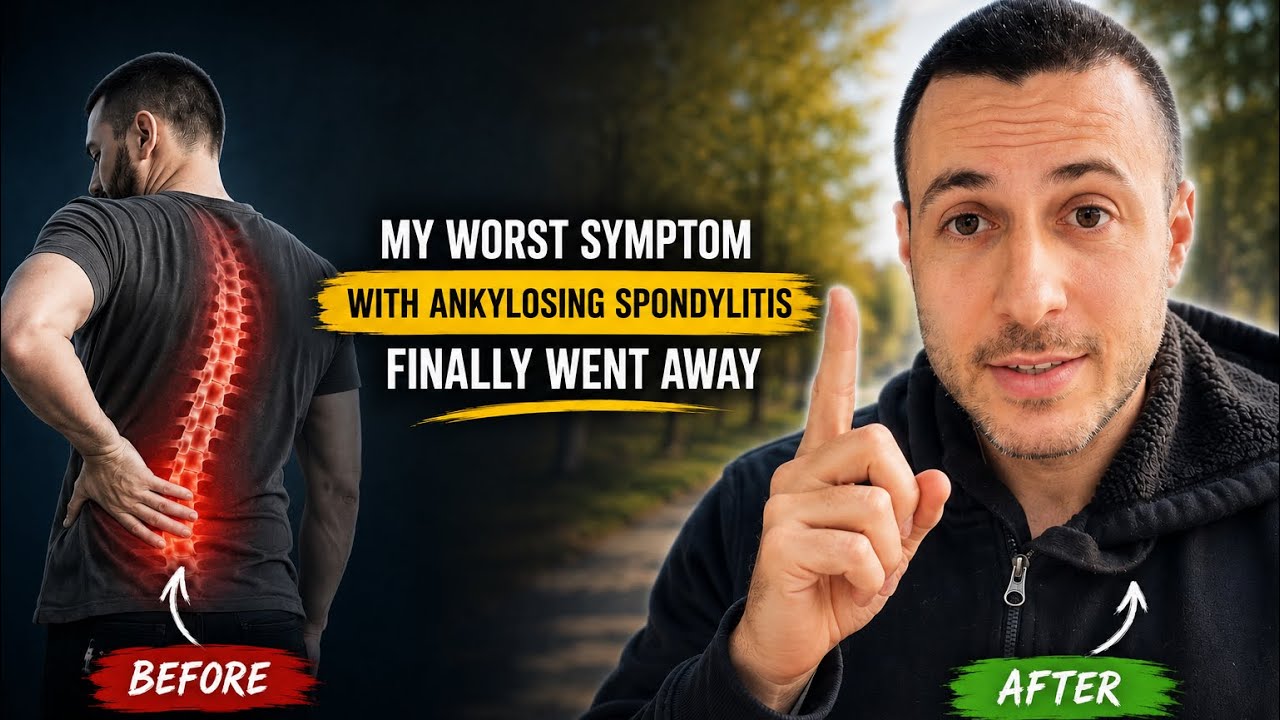
Alexander Levine shares his personal diet and nutrition strategies to reduce inflammation and manage ankylosing spondylitis symptoms effectively.

Key Takeaways

  • No one-size-fits-all diet exists for ankylosing spondylitis; personalization is essential.
  • Eliminating processed carbs, sugars, and gluten can help reduce inflammation.
  • Small, gradual dietary changes and elimination trials are effective strategies.
  • Monitoring symptoms and inflammation markers helps guide dietary decisions.
  • Sustainability and long-term commitment are vital for managing autoimmune disease.

Summary

  • Alexander Levine, a personal trainer with ankylosing spondylitis, discusses how diet helped reduce his inflammation and improve symptoms.
  • He emphasizes eliminating processed carbs, sugars, breads, pastas, and gluten as initial dietary changes.
  • Levine recommends trying elimination diets by removing one food group at a time for 1-2 weeks to monitor effects.
  • He notes that inflammation markers like ESR and CRP significantly improved after dietary changes.
  • There is no single best diet for ankylosing spondylitis; individual responses vary widely.
  • Sustainability and a long-term approach are crucial for managing autoimmune conditions like ankylosing spondylitis.
  • Small, incremental dietary changes are more manageable than eliminating everything at once.
  • Levine highlights the importance of paying attention to how foods affect energy levels and symptoms.
  • He advises making personalized tweaks over time to find what works best for each individual.
  • Avoiding sugary drinks and processed foods was key in his dietary approach.

Full Transcript — Download SRT & Markdown

00:00
Speaker A
What's going on, everyone? My name is Alexander Levine. I'm a personal trainer and fitness nutrition specialist with ankylosing spondylitis. Diet and nutrition have played a huge role in my fight against ankylosing spondylitis, and they've really helped me reduce inflammation over the years. That's why I put a huge emphasis on it.
00:12
Speaker A
inflammation over the years and that's why I put a huge emphasis on it so today I want to talk about what I do specifically for diet some of the things I focus on over the years is there one
00:21
Speaker A
So today, I want to talk about what I do specifically for diet, some of the things I focus on over the years. Is there one best diet for ankylosing spondylitis? That's going to be one of the main questions I answer today. Also, I want to share some small tips for anyone who's looking to make some diet changes and what they should focus on specifically for joint health for ankylosing spondylitis. Let's get into it.
00:32
Speaker A
health for enclosing spondylase let's get into it so to start with my journey when I was first diagnosed with inclusion spondylase my inflammation markers were really high the ESR the CRP a lot of folks with as know those
00:43
Speaker A
So, to start with my journey, when I was first diagnosed with ankylosing spondylitis, my inflammation markers were really high—the ESR, the CRP. A lot of folks with AS know those numbers because when they're diagnosed, they have really high inflammation. So my inflammation markers were really high. I was having a lot of trouble with my stomach, with my gut. I was dealing with stomach ulcers, and this all went together when I was first diagnosed. So I was really struggling; inflammation was high.
00:54
Speaker A
and this all went together when I was first diagnosed so I was really struggling inflammation was high so the first thing I did was I changed my diet right away so once I change my diet I actually lost about 15 to 20 pounds
01:06
Speaker A
So the first thing I did was I changed my diet right away. Once I changed my diet, I actually lost about 15 to 20 pounds, which might have something to do with this, but also my inflammation markers went all the way down just from that diet change. So from that point on, early on, I knew I had to focus on diet. And again, this might be different for you. Everyone is going to be completely different. One person might react completely differently than another person.
01:18
Speaker A
everyone is going to be completely different one person might react completely differently than another person so some of the things I did early on is first I tried to eliminate some things one two three week weeks even I
01:30
Speaker A
So some of the things I did early on is first I tried to eliminate some things for one, two, three weeks even. I think you have to give it a little bit of time. And some of the things, you know, some of these are things that we think about getting rid of: the grains, the wheat, the gluten, maybe dairy, maybe eggs. So kind of these larger food groups are some of the things you can think about getting rid of.
01:42
Speaker A
or some of the things you can think about getting rid of the things I focused on early on were the grains the wheat the gluten so the breads the pastas and especially the sugars and processed carbs so those were my main
01:53
Speaker A
The things I focused on early on were the grains, the wheat, the gluten—so the breads, the pastas—and especially the sugars and processed carbs. So those were my main approach early on because if you look online, that's kind of the main thing that people talk about: the processed carbs, the breads, the sugars. And that kind of is universal for the most part, right? Some people do keep some grains in their diet, but for the most part, I really think the breads and the sugars, you have to really be careful about, and that should be the first thing you think about getting rid of—that stuff.
02:07
Speaker A
some grains in their diet but for the most part you know I think I really think the Breads and the sugars you have to really be careful about and that should be the first thing you think about getting rid of that stuff so once
02:17
Speaker A
So once I got rid of that stuff, I was feeling much better. My gut inflammation went way down, my energy levels went up. Also, like I said, my inflammation markers went way down. So that really gave me a lot of hope, and I was like, I need to focus on this. And then over time, I started tweaking my diet more and more. But those were the main things I did: the processed carbs, the sugar, no more sugary drinks, no more soda.
02:28
Speaker A
Hope and I was like I need to focus on this and then over time I started tweaking my diet more and more but disturb those were the main things I did the processed carbs the sugar no more sugary drinks no more soda the things
02:40
Speaker A
The things that I saw getting rid of really benefited me were definitely the breads, the pastas. And you know, I'll get into more of how I tweaked this over the years, but that was early on, the first things I did. So no matter what diet you're choosing, I would first start making some small goals. Try to get rid of bread for one or two weeks, get rid of sugar for one or two weeks, see how you feel. And then when you bring that back into the diet, see if it affects you.
02:52
Speaker A
matter what diet you're choosing I would first start making some small goals try to get you know rid of bread for one two weeks get rid of sugar for one or two weeks see how you feel and then when you
03:02
Speaker A
You know, what I really noticed over the years is when I bring these foods back in, if I'm doing a cheat meal, I feel horrible the next day. And you know, that's good motivation to keep up with it, right? We want to feel good. It's not just about the inflammation markers; we want to feel good. And I could really tell the difference when I start getting rid of those things.
03:12
Speaker A
and you know that's good motivation to keep up with it right we want to feel good it's not just about the inflammation markers we want to feel good and I could really tell the difference when I start getting rid of
03:22
Speaker A
So the elimination diet is kind of the first thing I would say to people if you're looking—if you're really looking to make some changes diet-wise, try eliminating something. Don't eliminate everything at once. I think that's a tough approach. That can be hard to do everything at once. Choose one thing: dairy, even one or two weeks; bread, one or two weeks; sugar, one or two weeks. See how you feel. Make some small changes over time. Take note of everything. Start putting together your own foundation.
03:33
Speaker A
that's a tough approach that can be hard to do everything at once choose one thing Dairy even one two weeks bread one two weeks sugar one two weeks see how you feel makes some small changes over time take note of everything start
03:45
Speaker A
So this is the second thing I want to get into: is there a best diet for ankylosing spondylitis? Definitely not. There's no one way everyone should eat. And I believe this for fitness too: there's no one best approach. It's going to have to meet you. Everyone has different circumstances. Everyone's completely different. They're dealing with different symptoms. Their bodies are different. The amount of calories they need is different. And you're going to have to tweak it to you over time.
03:57
Speaker A
approach it's gonna have to meet you everyone has different circumstances everyone's completely different they're dealing with different symptoms their bodies are different the amount of calories they need is different and you're gonna have to tweak it to you
04:09
Speaker A
Sustainability has to be part of this. There's no quick fix, especially with autoimmune disease, with ankylosing spondylitis. There's no quick fix. We need a long-term approach. So think of it that way: think long term. Make some small changes so overall you can put it all together.
04:22
Speaker A
changes so overall you can put it all together so in my mind there is no one best diet if you're choosing to be vegan vegetarian paleo keto low carb there's no one best diet but there is definitely approaches that we can think
04:36
Speaker A
So in my mind, there is no one best diet. If you're choosing to be vegan, vegetarian, paleo, keto, low carb, there's no one best diet. But there are definitely approaches that we can think about. And I think sugar is one of the main approaches: get rid of the sugar or really lower the sugar to start, just to get going with that. And the processed carbs—chips, candy, all that stuff—get rid of that stuff, lower that stuff. That's universal in my mind.
04:48
Speaker A
that stuff lower that stuff that's Universal in my mind so there's no one best diet for sure but there's been a lot of evidence on low starch for enclosing spondylites there's been studies out there I think they're looking to study it more so I've seen
05:02
Speaker A
So there's no one best diet for sure, but there's been a lot of evidence on low starch for ankylosing spondylitis. There have been studies out there. I think they're looking to study it more. So I've seen online, and this is me personally, I've had a huge benefit with going low starch. That's been a big part of my approach.
05:12
Speaker A
the processed carbs the breads the grains but then I want to talk a little bit about how I went a little more low starch over the years so we'll get back to the low starch but my second tip for
05:21
Speaker A
I'm going to get into how I went more down that path because I just talked about in the beginning how I got rid of the processed carbs, the breads, the grains. But then I want to talk a little bit about how I went a little more low starch over the years. So we'll get back to the low starch.
05:35
Speaker A
talk a lot about this in my videos because we're so stiff and tight it can be hard to strength train without getting injured without tweaking something so we want to make sure we're eating in protein especially after strength training after going to the gym
05:49
Speaker A
But my second tip for everyone is, and this is one of my main focuses today, is protein—adequate amount of protein, quality protein sources. Especially with ankylosing spondylitis, it can be really hard to strength train, to gain muscle. You know, strength training is a really difficult part of this. And I talk a lot about this in my videos because we're so stiff and tight, it can be hard to strength train without getting injured, without tweaking something.
06:03
Speaker A
it's best to aim for about one gram of protein per body weight or per desired body weight so I'm not 150 pounds that's a little lower than what I weigh but I try to focus 140 150 I don't always get
06:15
Speaker A
So we want to make sure we're eating enough protein, especially after strength training, after going to the gym, after lifting weights. We want to make sure we're getting enough protein to help build muscle, protect the joints, strengthen the bone. So protein is my number one goal. I usually aim for about 140 to 150 grams of protein a day. I think it's best to aim for about one gram of protein per body weight or per desired body weight.
06:27
Speaker A
digestible protein sources maybe a protein shake whey protein powder if you're vegan or vegetarian you can do vegan or vegetarian protein powder but I like whey protein isolate it seems to be easier on the gut just protein in there
06:40
Speaker A
So I'm not 150 pounds; that's a little lower than what I weigh, but I try to focus on 140 to 150. I don't always get to that number. I'm probably generally between 100 and 150 grams of protein a day. So to get to that number, it can be difficult.
06:51
Speaker A
grams of protein that's another good way to get protein in especially if you're feeling that fatigue you need a little bit of energy some of those sources are a great way so protein is my number one approach and what so today what protein
07:03
Speaker A
And one small tip I have for you guys is think about adding some easily digestible protein sources—maybe a protein shake, whey protein powder. If you're vegan or vegetarian, you can do vegan or vegetarian protein powder, but I like whey protein isolate. It seems to be easier on the gut. Just protein in there, 20 to 25 grams of protein. So that really helps me get to that number.
07:19
Speaker A
you know one of the biggest arguments is should we be eating high fat meat and I do just because my numbers are good I feel good that way but a lot of people do get rid of red meat and that's helped
07:30
Speaker A
Also, over the years, I'll get some protein-infused drinks that have some of them just have 10 grams of protein, some of them have 20 grams of protein. That's another good way to get protein in, especially if you're feeling that fatigue and you need a little bit of energy. Some of those sources are great.
07:42
Speaker A
greatest things we can eat too just because if you're thinking about the calories you're thinking about being a little leaner that's definitely a good approach but I do it all eggs are a big um part of my diet too and dairy so I'll I'll talk a
07:56
Speaker A
little more about Dairy but I keep dairy in a little bit what I noticed over the years is I can get a little carried away like many people can with certain Dairy like cheese I can get really carried
08:05
Speaker A
away and I can gain weight easily so one of the factors for me was I want to be you know as Slim as I can with muscle but I want to be as Slim as I can so I
08:16
Speaker A
can protect the joints better I can move better if I'm trying to play pickup basketball and early on when I lost that 15 to 20 pounds I felt much better so Dairy was one of the main things that I
08:26
Speaker A
looked at because I was really eating too much cheese um so I'm careful about that but today I do have some Dairy sources in my diet for the most where I do cottage cheese I do yogurt but I do sources that call our
08:39
Speaker A
culture and so they're a little easier on the stomach I stay away from milk I do cheese but not as much so I do cheese more on the weekends and during the week um I try to get rid of it so Dairy is
08:50
Speaker A
one thing to look at a lot of people get rid of dairy and feel much better for me I know Dairy affects me but again sustainability wise I needed a little bit in my diet to keep this up right so
09:01
Speaker A
I think that's a that's something too for me I can't go Full Throttle all the time and I talk about this all the time I need some cheat meals in there I want to enjoy food from here from time to
09:11
Speaker A
time so over time I've tweaked my diet to address that right to make it sustainable so Dairy is one thing to look at for sure maybe get rid of it one or two weeks maybe there's some Dairy you can keep in one of my protein
09:22
Speaker A
sources today is dairy just because it gives the diet a little freshness um cottage cheese is a big part of my diet and there's some yogurt out there that I use that's low sugar low carb it's just good protein and it's kind of
09:36
Speaker A
I choose yogurts that are lower calorie some people like the full fat yogurts but I choose a little lower calorie yogurt because again Weight Wise I've just been keeping track of those things over the years and that's best for me so
09:47
Speaker A
protein very important I want everyone to think about ways to address their protein check on those levels see how much you're getting jot down how much protein you're getting a day you know generally it's going to be a lot less
09:59
Speaker A
than you think so that's one thing to focus on add in some of those protein shakes adding some protein powder there's some other sources that can help you boost that protein level up so approach this is going to be very
10:11
Speaker A
long-winded video today there might be some more videos in the future about nutrition if you all want it let me know in the comments if you want more nutritional talk nutrition I haven't made this video yet because there's so many different Avenues
10:24
Speaker A
nutritionally right but it's played such a huge role for me I wanted to share that with everyone so hopefully you can take something away from this take some small tips so I talked about protein I talked about how I got rid of the
10:35
Speaker A
processed carbs fried foods the sugars the breads for the most part right so low Stars we're going to get back into low starch there's been some great evidence out there a lot of people have benefited from low starch not everyone
10:47
Speaker A
though like I said it's not going to fit everyone but um low starch to me has made a lot of sense so over the years I started to get rid of more of the starchier things and even the starchier vegetables and I
10:59
Speaker A
start to feel better so low charge for me has been very good I don't always go low starch I kind of go up and down so for the most part my diet today I want to get into my diet today
11:09
Speaker A
because again I've tweaked it I first got rid of the processed stuff the sugars the carbs and overtimes I've tweaked it the best I feel if I was to stick to one thing and again forgetting about sustainability the best I feel is
11:21
Speaker A
when I'm going good protein so meat fish with the protein powder some Dairy also I got rid of most of the vegetables I'm eating a little bit but for the most part I got rid of a lot of the vegetables just
11:33
Speaker A
because it was really irritating my stomach I'm still doing salads I'm still doing cucumbers and different vegetables but some of these Starcher vegetables I got rid of I just wasn't feeling great afterwards so I do do a little bit of
11:44
Speaker A
fruit mostly berries because they're a little lower sugar some avocado but what I realized is I had to get rid of some of the fruit because again it was just too much sugar so good protein fruit a little bit of vegetables for me I'm
11:59
Speaker A
doing some Dairy like I said the cottage cheese the yogurt and I do some fat I was overdoing I talked about the cheese earlier I was overdoing the fat for a long time it was really affecting my weight like I said I was eating too much
12:11
Speaker A
cheese I was eating too much nuts nuts are one of those things if you do do low carb keto it can be hard to stay away from the nuts for me particularly it was really hard for me to stay away from
12:20
Speaker A
that stuff so I try to keep the nuts at a minimum when I really want to feel my best and I really want to feel good reduce inflammation feel energy so I try to stick away from too much fat but some
12:32
Speaker A
of my fat sources olive oil olives avocado again some nuts and then most of the fat I get are going to come from meat and dairy that's gonna be most of my fat so I'm not doing too much
12:44
Speaker A
additional fat I realized Weight Wise I had to reduce that a little bit so that's what changed for me over the years the low starch and I was really into keto early on I'm still pretty much keto but I was really into keto early on
12:56
Speaker A
and I was doing a lot of fat and what I realized was again my weight was going up so I got rid of a lot of that fat I chose for more protein and maybe a little more of the of carbs with the
13:07
Speaker A
fruit so I've tweaked it over the years so I'm not completely keto I'm keto-ish I would say I go in and out I'm most I'm definitely low carb keto-ish um but I've tweaked it over the years again to fit me so it was sustainable
13:21
Speaker A
and I could have join enjoy it um so that's when I'm feeling my best the protein um the protein some vegetables fruit a little bit of fat but really protein based you know my diet is mostly protein based also I try not to eat too many
13:41
Speaker A
meals a day you know there's a lot of talk out there about how many meals should you eat a day should you be eating more from metabolism and this is just what works for me right it's better for me if I'm just eating two three
13:51
Speaker A
meals a day sometimes I was doing intermittent fasting over the years and that really did help me just feel better overall just keeping the gut healthy again but it's hard to sustain it so generally I do eat breakfast with the
14:02
Speaker A
eggs a little avocado maybe some sort of meat on the side but I've done intermittent fasting tour over the years so what worked for me is reducing the meals a little bit and over time my body really adapted to it and I felt a lot
14:14
Speaker A
better I was still getting definitely enough calories a day but it was more just maybe eating later in the day not eating so much five six meals so I've tweaked this over the years I'll continue to tweak this over time
14:26
Speaker A
depending on how I feel let's get into another subject here so when I do have some of these things that I got rid of for the most part if I do do a cheat meal Friday Saturday night the next day I can definitely tell I
14:39
Speaker A
feel horrible right this is a great indicator that food is probably not best for us I can feel especially when my guts irritated my low back always hurts more the next morning I try to keep track of these things you can't overdo
14:50
Speaker A
it of course you have to enjoy some of these things you have to enjoy life you have to be sustainable but I can definitely notice and that's another indicator if you get rid of foods and you bring them back and you that you can
15:00
Speaker A
really tell they irritate you you know that's a good motivation that you should probably stay away from that food so I definitely feel that way and that's why I pretty much stick to this over time so my next tip is make small goals try to
15:14
Speaker A
really stick to something small and once you feel a little better you'll want to stick with it over time that's one of the things for me with movement with Fitness and with nutrition once I found a little bit of Hope and motivation I
15:25
Speaker A
wanted to stick with it because I felt better so start small don't go all all out don't go I have to do this I have to go low starch I have to go keto I have to go vegan you know try just
15:35
Speaker A
eliminating a little bit here and there and see how you feel start small work on it over time also there's many ways to do this don't give up on it I say this with Fitness too if something doesn't
15:45
Speaker A
work don't give up on it nutrition inflammation um with the diet with nutrition is so important we know that inflammation is with the gut we know it's all connected it's gonna be different for everyone but we know it's all connected don't give up
15:58
Speaker A
on it start with small goals in different areas here think about some different things so that was a very long video about nutrition hopefully I got to everything today my diet today is there a best diet I actually don't think there's the best
16:11
Speaker A
diet for enclosing spondylase but we're starting to see some really great evidence and there's definitely some things that everyone should think about the processed foods the sugars are number one and then everything else is going to be different for everyone
16:22
Speaker A
um there's definitely no one best diet I would never say you know do this only do this everyone's gonna be different also sustainability matters everyone's going to be different so that's my story right there I got my inflammation markers down early on eight
16:39
Speaker A
nine years ago so I knew I wanted to stick with it but I've tweaked it over the years I didn't just stick with it because there's there's so many different ways that we can think about this we can change this over time I want
16:49
Speaker A
to let I want you guys to um in the comments let me know have you gone low starch have you seen a benefit from it do you do low carb keto vegan vegetarian I want to know from you all get a good
17:00
Speaker A
conversation going about diet it's so important I want to bring some different tips diet wise there's so much online there's so many enclosing spondylase stories regarding diet so many beneficial enclosing spondylae stories regarding diet I want to take a little
17:13
Speaker A
uh different approach because I know there's no one size fits all so I'm going to continue to share some different tips over time you know like I said with the protein I'm sure it's an electrolyte collagen tips over the years
17:23
Speaker A
I want to share some different tips so whatever diet you're choosing maybe you can just think about some different things to help you out I want to think about everything there's no one best way but find what's best for you let me know
17:34
Speaker A
in the comments what you thought there you go
Topics:ankylosing spondylitisdiet and nutritioninflammation reductionelimination dietautoimmune diseasepersonalized nutritionprocessed carbsgluten freesugar eliminationjoint health

Frequently Asked Questions

Is there one best diet for ankylosing spondylitis?

No, there is no single best diet for ankylosing spondylitis. Each person reacts differently and needs to find a personalized approach that suits their symptoms and lifestyle.

What foods did Alexander Levine eliminate first to reduce inflammation?

He focused on eliminating processed carbs, sugars, breads, pastas, and gluten initially, which helped lower his inflammation markers and improve symptoms.

How should someone start making dietary changes for ankylosing spondylitis?

Start by eliminating one food group at a time for one to two weeks, such as bread, sugar, or dairy, and observe how your body responds before making further changes.

Get More with the Söz AI App

Transcribe recordings, audio files, and YouTube videos — with AI summaries, speaker detection, and unlimited transcriptions.

Or transcribe another YouTube video here →