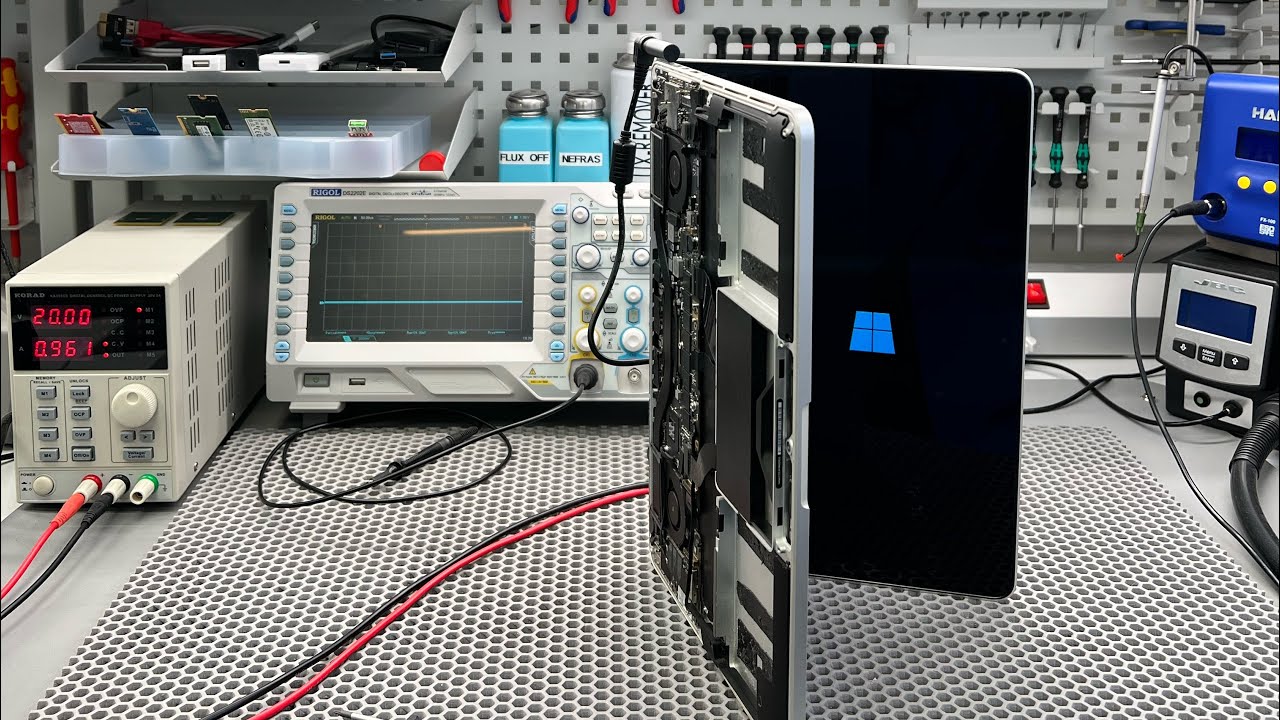
I’m Building A Free Energy Pulse Generator — Transcript

Building a free energy pulse generator using open-source tech and precise mechanical engineering for scalable, vibration-free operation.

Key Takeaways

  • Free energy pulse generators can operate without violating thermodynamics by utilizing open system energy sources.
  • Precision mechanical design and assembly are critical for achieving vibration-free, scalable operation.
  • Open-source collaboration accelerates development and knowledge sharing.
  • Careful magnet selection and rotor balancing are essential for device performance.
  • Heavy-duty construction and mobility solutions are necessary due to the weight of components and batteries.

Summary

  • The channel focuses on open-sourcing free energy devices that operate within the laws of thermodynamics by harnessing energy from open systems like vacuum or air.
  • The pulse generator works by sending high voltage spikes through coils to spin a rotor with magnets and capturing excess energy from collapsing magnetic fields.
  • Collaboration with an expert named Joe, skilled in silicon carbide components, is helping to develop the electronics for the device.
  • The current phase involves mechanical engineering to build a precise, vibration-free rotor and stator assembly using clear acrylic for visibility and demonstration.
  • Detailed techniques for drilling and assembling acrylic housing with stainless steel screws are shared to ensure structural integrity.
  • Oval ceramic magnets are carefully measured and paired for balanced placement on the rotor to ensure uniform performance.
  • The rotor and stator alignment is adjustable to achieve perfect centering and spacing for optimal operation.
  • The entire assembly is heavy (200-350 pounds) and will be mounted on a plywood base with heavy-duty caster wheels for mobility.
  • Additional heavy lead-acid batteries will be housed on a separate cart to power the system.
  • The creator aims to produce weekly updates and looks forward to integrating the electronics and testing the first coil soon.

Full Transcript — Download SRT & Markdown

00:00
Speaker A
Welcome everyone, another video from Limitless Potential Technologies.
00:03
Speaker A
In 1080p, I might add this time.
00:06
Speaker A
High def.
00:07
Speaker A
For those of you who are new here, this channel's purpose is to release and open source new technologies that produce excess energy.
00:16
Speaker A
Free energy devices and they do not break laws of thermodynamics.
00:21
Speaker A
They simply operate in an open system, there's energy in the vacuum, there's energy in the air, if you type this in on chat GPT or Google, it'll show you that zero point energy is the quantum fluctuations in vacuum.
00:32
Speaker A
So space itself has energy within it, I'm not saying the quantum fluctuations are what is producing the excess energy in these pulse motors.
00:39
Speaker A
But nevertheless, the pulse motors operate by putting a large voltage spike through a coil, which causes a wheel to spin, a rotor with magnets on it.
00:50
Speaker A
And then by capturing the energy that comes back from that collapsing field, there's more energy coming back from a very sharp high voltage impulse function.
01:00
Speaker A
A sharp gradient than what was used to create it.
01:03
Speaker A
So we get excess energy.
01:06
Speaker A
And it's coming from an open system.
01:10
Speaker A
We're not violating laws of thermodynamics.
01:12
Speaker A
It's proven tech.
01:14
Speaker A
It has been built before.
01:15
Speaker A
It just hasn't been released to the people.
01:20
Speaker A
And in order to do so, I feel like it needs to be done without fear or greed.
01:25
Speaker A
As the underlying intention.
01:27
Speaker A
So that's what we're doing.
01:28
Speaker A
We're open sourcing it.
01:29
Speaker A
We're working together.
01:30
Speaker A
I had somebody, Joe, I'll put his link in the channel, amazing guy from Ontario.
01:37
Speaker A
He reached out after the last video.
01:40
Speaker A
And he's volunteered to help build the electronics for this device.
01:43
Speaker A
So that takes a huge load off my plate.
01:45
Speaker A
The guy's incredible, just as knowledgeable as I am in this field.
01:50
Speaker A
So he knows exactly what's going on and exactly how to replicate the effects that Bedini, Paul Babcock and all these other guys who were passed away did in the 70s, 80s, 90s.
01:56
Speaker A
So amazing, thank you so much, Joe.
01:59
Speaker A
I cannot wait to put this together.
02:02
Speaker A
The guy's a genius with silicon carbide components.
02:05
Speaker A
So amazing.
02:07
Speaker A
Anyways.
02:08
Speaker A
We're going to get right into it.
02:10
Speaker A
Right now we're doing the mechanical engineering portion of this.
02:15
Speaker A
So we're building a foundation that we can build upon and test and refine this technology.
02:20
Speaker A
We need to have a solid foundation, we need to have the rotor spinning very precisely.
02:26
Speaker A
We can't have any vibrations in this.
02:28
Speaker A
We have to be able to rotate this thing as fast as possible with no vibrations and we need it to be scalable and modifiable.
02:35
Speaker A
And that's the whole point of prototyping and figuring this out.
02:37
Speaker A
You got to plan ahead as best as possible.
02:40
Speaker A
And that's what I'm trying to do here.
02:41
Speaker A
So since the last time, I've built the stator or the housing out of three quarter inch clear acrylic material.
02:47
Speaker A
It looks beautiful.
02:48
Speaker A
I've used stainless steel number eight machine screws to secure this material together.
02:53
Speaker A
Harder than you would think.
02:55
Speaker A
If you do this yourself, I suggest you get some practice pieces to work on.
03:00
Speaker A
Because you have to pre-tap before you drill these machine screws in.
03:03
Speaker A
And you can see here this one cracked on me.
03:05
Speaker A
Not a big deal.
03:06
Speaker A
But overall, basically, I, I clamped everything together.
03:11
Speaker A
Made it super secure.
03:13
Speaker A
Then pre-drilled the holes.
03:15
Speaker A
What I ended up having to do was when I pre-drilled a 1/8th hole for the number eight machine screw.
03:20
Speaker A
It cracked.
03:21
Speaker A
And then when I went up a size, a 64th in size to a 964th drill bit, it didn't really have enough meat to get the bite on it.
03:28
Speaker A
So what I ended up doing was drilling 100% of the way with a 1/8th drill bit pre-drilling, then I went in 90% of the way with a 964th drill bit.
03:36
Speaker A
And this allowed the screws to go in easily to the last three threads, had had still had the 1/8th drill bit pre-drill there.
03:44
Speaker A
So basically, easy most of the way and then that last little bit got some bite.
03:48
Speaker A
So it pulled everything together really securely.
03:50
Speaker A
So that's how I recommend drilling acrylic material.
03:52
Speaker A
If you end up going that way.
03:55
Speaker A
We could have built this out of plywood.
03:56
Speaker A
It would have been, it would have been just fine.
03:57
Speaker A
It's just I want to have it clear so you can see through again when we're demonstrating this to people.
04:02
Speaker A
The less potential for them to claim hidden batteries and stuff, the better.
04:05
Speaker A
So this is the back side of the case.
04:07
Speaker A
All of the coils are going to be mounted on the inside.
04:10
Speaker A
But just just for purposes here, I'll show you.
04:13
Speaker A
The coils are going to be mounted on these two holes and then these slots allow the coils to be adjustable.
04:20
Speaker A
So we can adjust the distance from the face of the coil to the face of the rotor or the magnets that are passing by.
04:28
Speaker A
And again, we're going with oval coils.
04:30
Speaker A
We've got three inch, 75 millimeter wide by 25 millimeter, sorry, 75 in length, 25 wide and then 12.5 millimeter thick magnets.
04:40
Speaker A
Ceramic C8 magnets, Y30 designation.
04:44
Speaker A
If you're ordering them from China.
04:46
Speaker A
Which I ended up doing after the last video, I ordered another 100 magnets.
04:50
Speaker A
Which will be here in a week or so.
04:52
Speaker A
And I did that because none of these magnets are exactly the same size, exactly the same weight.
04:54
Speaker A
So I'm going to weigh out and measure all of the magnets and put them into pairs.
05:00
Speaker A
Equal pairs.
05:02
Speaker A
So we'll take ones that are the same size and the same weight and put them across from each other on this rotor.
05:08
Speaker A
We need to find 16 of them.
05:10
Speaker A
So eight pairs that are basically the same size and then we'll epoxy them into the rotor.
05:15
Speaker A
The next thing I want to touch on is how we're going to assemble this.
05:17
Speaker A
So basically, this housing weighs like almost 200 pounds right now.
05:21
Speaker A
I'm going to tip it down horizontally, so this is laying flat.
05:25
Speaker A
Then I'm going to take spacers all about an inch and a half.
05:29
Speaker A
Take the rotor.
05:30
Speaker A
Put the rotor down on the spacers, so then it's perfectly uniform, equal distance away, plumb from the face of this stator housing.
05:38
Speaker A
Then the very final stage.
05:40
Speaker A
Once we've got the shaft perfectly straight, the rotor exactly where we want it, the bearing and the shaft through this hole here.
05:46
Speaker A
Is we'll take this back piece.
05:50
Speaker A
This is the final piece of acrylic.
05:52
Speaker A
You can see here with another hole.
05:54
Speaker A
And this piece mounts on the back.
05:57
Speaker A
So then we will have the shaft going through there, the rotor, the exact distance we want away from this face and then this piece here, I'm going to make it so this back piece is adjustable a little bit up and to the side horizontally and vertically.
06:09
Speaker A
And that'll allow us to, like I say.
06:12
Speaker A
Get the shaft perfectly centered where we want it and we'll move the back piece according to where the shaft is.
06:19
Speaker A
Versus trying to put the back piece in first and then seeing that the shaft is, you know, a couple millimeters out of alignment.
06:24
Speaker A
And then the face of the rotor slightly closer to this side than it is down here.
06:30
Speaker A
So that's why we're doing it that way.
06:31
Speaker A
The final piece of the puzzle that we put in needs to have a little bit of play in the horizontal and vertical.
06:35
Speaker A
Then the final thing I want to show you is that because this thing already weighs 200 pounds.
06:40
Speaker A
Probably 350 pounds by the time we put the rotor and the magnets on there.
06:44
Speaker A
Is we're going to build a base out of plywood for this to sit on.
06:48
Speaker A
I've got some nice caster wheels there.
06:52
Speaker A
They take 200 pounds a piece.
06:54
Speaker A
So four of those, we should be able to put three or four or 500 pounds on the base quite easily.
06:58
Speaker A
We'll roll it around.
06:59
Speaker A
The batteries, we need another 18, 16 to 20 batteries.
07:03
Speaker A
Lead acid batteries, large lead acid batteries.
07:06
Speaker A
Each one of those has to weigh 40, 50 pounds.
07:09
Speaker A
So there's another 8, 900 pounds of batteries that we're going to have to have on a separate cart.
07:13
Speaker A
Which is fine.
07:14
Speaker A
And I think that's basically where I'm at for the for the stator.
07:20
Speaker A
It's looking amazing.
07:21
Speaker A
I'm going to get the base done by the time I show you the next video here in the next week.
07:26
Speaker A
I'm going to try and crank out a video once a week.
07:29
Speaker A
This one took me about nine days.
07:31
Speaker A
But moving forward, I'd like to have a video for you once a week.
07:34
Speaker A
And yeah, I cannot wait for this to be to the point where we're putting Joe's electronics into it.
07:40
Speaker A
And testing the first coil.
07:41
Speaker A
Basically what's going to happen is there's two battery banks, one is the run battery bank, one is the charge battery bank.
07:47
Speaker A
They flip flop every three minutes.
07:50
Speaker A
So one, the charge becomes the run, becomes the charge.
07:52
Speaker A
Initially with one coil and lower voltages, the batteries will slowly die off.
07:57
Speaker A
Then we'll add higher voltages.
08:00
Speaker A
And the slopes are going to get to the point where eventually.
08:03
Speaker A
When we add, you know, four, eight coils at 100 volts, 96, 120 volts.
08:09
Speaker A
Eventually there's going to be a point where those slopes no longer die off.
08:11
Speaker A
The charge, the battery remains charged.
08:14
Speaker A
We can pull excess energy off the rotor.
08:16
Speaker A
So this is where I'm at with the stator, the build.
08:20
Speaker A
Everything's coming together nicely.
08:22
Speaker A
I've got 100 magnets coming from China, Y30 grade.
08:26
Speaker A
And oh, I also ordered some more bearings of the 6960s.
08:31
Speaker A
These are the NSK bearings that I have right now.
08:33
Speaker A
I ordered some ceramic, full ceramic and hybrid ceramic.
08:37
Speaker A
6960 bearings.
08:39
Speaker A
So can't get any less friction than that.
08:41
Speaker A
Everything's going to come together nicely on the mechanical portions.
08:46
Speaker A
Should be by the end of June, we have this thing ready to put the electronics into it.
08:50
Speaker A
I'm going to be winding coils into June.
08:52
Speaker A
The coils are going to have six windings per coil wound together just like the traditional Bedini.
08:58
Speaker A
So 16 coils with six windings per coil, that's 96 circuits that we need.
09:05
Speaker A
Each one of those circuits is going to take high-end silicon carbide components that could be anywhere from 30, 40, 50, $100 a circuit.
09:13
Speaker A
So that could be another $10,000, $5 to $10,000 I need there just for the batteries.
09:20
Speaker A
Are going to be another $4,000, $5,000.
09:22
Speaker A
So overall, probably another $15 to $20,000 Canadian I need to raise and come up with for this build.
09:27
Speaker A
But we'll figure that out as we go.
09:29
Speaker A
So thank you so much for the subs, the likes.
09:32
Speaker A
All of your comments, negative, positive, leave it.
09:35
Speaker A
It's amazing.
09:36
Speaker A
I love it all.
09:37
Speaker A
And I look forward to sharing this with you guys in the future.
09:43
Speaker A
And showing the limitless potential in this technology and all of us.
09:48
Speaker A
There's nothing we cannot do together.
09:50
Speaker A
Let's keep working together.
09:52
Speaker A
Thank you so much, Joe.
09:53
Speaker A
Thank you for everyone who's reached out.
09:55
Speaker A
And anytime you can donate, whatever you can donate in the future, I am going to be needing monetary donations.
10:00
Speaker A
Know that's not a scam, it's called a science project that costs a lot of money.
10:04
Speaker A
And I could use some help with it.
10:06
Speaker A
So we'll get to that point down the road.
10:09
Speaker A
But nevertheless, this is going forward regardless.
10:11
Speaker A
Nothing's going to stop us.
10:12
Speaker A
We're the only ones that can stop us.
10:14
Speaker A
We all have limitless potential in ourselves.
10:16
Speaker A
And I love you all.
10:18
Speaker A
Thank you so much.
10:20
Speaker A
Like and subscribe.
10:21
Speaker A
Share this with your friends.
10:22
Speaker A
I'll see you very soon.
Topics:free energypulse generatoropen source technologyenergy harvestingquantum vacuum energymechanical engineeringrotor designmagnet balancingsilicon carbide electronicsDIY energy device

Frequently Asked Questions

How does the free energy pulse generator produce excess energy?

The generator sends a high voltage spike through a coil to spin a rotor with magnets, then captures more energy from the collapsing magnetic field than was used to create it, drawing from an open system energy source.

Why is clear acrylic used for the housing?

Clear acrylic is used so viewers can see inside the device during demonstrations, reducing skepticism about hidden components like batteries.

What is the purpose of pairing magnets by size and weight?

Pairing magnets ensures balanced weight and size distribution on the rotor, which is crucial for smooth, vibration-free rotation and optimal device performance.

Get More with the Söz AI App

Transcribe recordings, audio files, and YouTube videos — with AI summaries, speaker detection, and unlimited transcriptions.

Or transcribe another YouTube video here →