Madinah Arabic course | Book 1 – LESSON 4 (part 3) — Transcript

Learn basic Arabic grammar and vocabulary with Madinah Arabic Course Book 1, Lesson 4, focusing on pronouns, noun endings, and sentence construction.

Key Takeaways

  • Arabic pronouns are categorized by person, number, and gender and are essential for sentence construction.
  • Most Arabic nouns have changing endings (mo'arab), but some have fixed endings (mabni), affecting their grammatical usage.
  • Correct use of prepositions with verbs is crucial for conveying accurate meaning in Arabic sentences.
  • Pronunciation details, such as silent letters and absent sounds in Arabic, must be learned for proper communication.
  • Consistent practice through homework and exercises helps reinforce understanding of Arabic grammar concepts.

Summary

  • The lesson begins by reviewing answers from the previous lesson's homework involving dialogues and questions about origins and locations.
  • Students practice answering questions as the character Muhammad, learning phrases like 'Ana mine' (I am from) and negations with 'La'.
  • The lesson covers Arabic pronunciation nuances, such as the silent alif in 'Ana' and the absence of the letter 'P' in Arabic.
  • Homework exercises include reading and writing with correct vowel endings and understanding prepositions linked to verbs.
  • Introduction to Arabic pronouns categorized by person (first, second, third), number (singular, plural), and gender (masculine, feminine).
  • Explanation of the pronoun table with examples like 'Huwa' (he), 'Hiya' (she), 'Anta' (you masculine), and 'Ana' (I).
  • Discussion on noun categories based on whether their endings change (mo'arab) or remain fixed (mabni), with examples like 'Muhammadun' and 'Allah'.
  • Clarification on the importance of memorizing verbs with their corresponding prepositions to maintain correct sentence meaning.
  • Emphasis on the grammatical concept of vowel changes (harakat) at the end of nouns and their significance in Arabic grammar.
  • The lesson encourages students to copy and fill out tables to reinforce learning of pronouns and noun classifications.

Full Transcript — Download SRT & Markdown

00:10
Speaker A
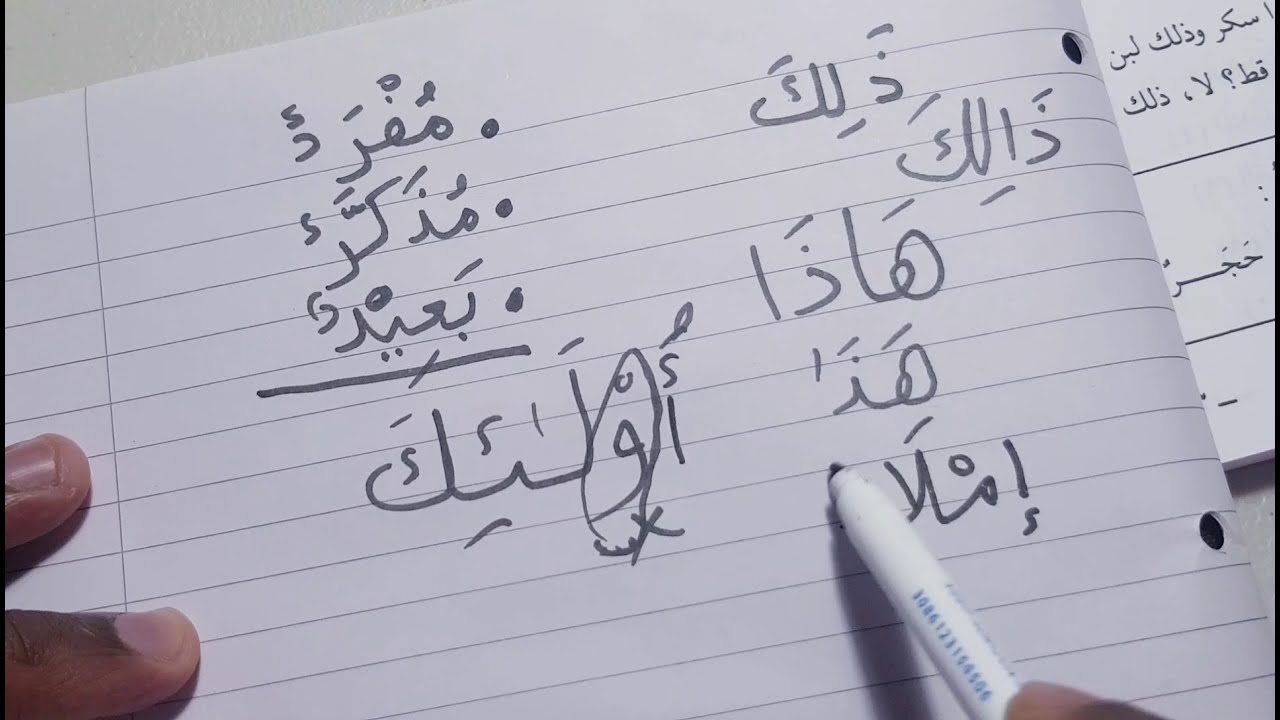
[Music] We're going to begin today's class by completing last lesson's answers to the following questions. These questions are based on the text that we read last lesson, the dialogue between the teacher and Muhammad, and we're going to answer these questions as though we are Muhammad. The first question means, "Where are you from?" When he was asked, Muhammad said, "Ana mine, I am from Japan." Anna, this is how we write Anna. The alif is written, but it's not read, so we don't say Ana. [Music] Ana. [Music] I'm from Japan. Antamino, Philippe bean. The question was asked to Muhammad once again, "Are you from the Philippines?" Muhammad is from Japan, so he can't be from the Philippines, so we'd say La. Because the question is posed with the hamza, hamza Stefan, the hamdu Stefan, we have to answer with Allah or Nam. In this case, no. "Are you from the Philippines?" No, Ana milban. Who is from China? Where was Muhammad from? Mudarus. When he was, he was asking, he said, "I mean, Mohammed said who? I mean, so Hamid is from Hindi." He went to the director, the headmaster. So you see another person he went to, he went to the mudir, the headmaster. Uh, he went to the toilet. This was homework number one. Homework number two says, "Read and write with the correct violations of the last or the endings of the words." This is just to test us whether we have understood the concept of men and illah being from the horror. So let's do this one. The first one says, then we have min. The min is supposed to take a sukun, as we mentioned, but it takes a fathah if it's followed by a sukun. So here we have sukun, so we have to give it a fathah, or it's going to end with the kasra because main is a half jar fatty. [Music] Me from the bathroom. Next one is the toilet. Then we have al to the toilet. Then we have Ali. [Music] Mean in Arabic, we don't have the letter P. They have ba instead of per. Pepsi, they'll say bib c. That's why they say Philip B instead of Philippine. But Philip to China, to China Dave. This was the second homework. The third homework says, "Foreign, she is from India." Here I mean Hindi, she's from India. Second one is from the classroom, weather herber. [Music] And he went to the mudir, to the head teacher. Three, the merchant went to ila, to the can. Let's do Keaney to the shop before left, left from the room where the herber me, and he went to the mom. He went to the bathroom. That's number four. Number five, man raja, who exited from the classroom. Number the student left, me left from the school. [Music] And he went to the supermarket. The seventh one, may not. [Music] In the empty space, in the following empty space, a suitable, and we have men, we have to choose one of these four to fill in the empty space so that the sentence makes sense. The book, I'm going to choose Allah. A little MCTV. The book is on the desk. Number two, Atari is in the classroom. That's what makes the most sense. The student is in the classroom. Number three, Hamid went. Hamid went to the university, and we're hoping this universe the Hamid attends is one where there's no free mixing, insha Allah. So you notice that the habba, this verb usually comes with the preposition illa somewhere after it. It is very important to memorize the verbs with their corresponding prepositions. Like this usually comes with min because these affect the meaning. He went to, and so on. It's very important to remember what their most common preposition is that comes after the verb. So the habbah comes with illa usually. Headmaster left from the school. Number five. [Music] Muhammad went to China from Japan. Mohammed went to China from Japan. Babe. So this was last week's homework. Let's begin today's class. As we mentioned last lesson, we're going to cover what we've missed out in lesson four. There are several things, concepts that we did not discuss last lesson. Okay, the first thing we're going to be speaking about in this lesson is the singular is. [Music] A pronoun. The pronouns are a type of nouns. They fall under the category of isman, the noun, and just like the noun, the maya are divided into three categories in terms of number: mufradun, plural, and likewise in terms of gender, they are divided into two types, masculine and feminine. But the pronouns are different to the nouns in that they refer to three different categories of people. So we have third person, where you're talking about someone, he, she, they, you're talking about them. Second person is when you're talking directly to them, and you're talking to someone, you, you, you're directing your speech to someone, you know, you're speaking to them directly. First person is when you're talking about yourself, I and we, and so on. So I want everyone to draw this table out in the books somewhere and keep it safe, and inshallah, we're going to be filling this out as we go along. So far, from the matter that we've taken here, enter Anna, so we can fill these ones out because we've taken them. So Huwa, this damir, this pronoun refers to a singular, singular male third person. So you're talking about someone. Who are you talking about? You're talking about a masculine. How many? One. You're talking about one masculine third person or third person masculine singular, whichever way you want to arrange it. Here, she refers to that person, feminine singular, third person, feminine singular. Anta, which we took last lesson, means you. Anta, you, second person masculine singular. We haven't taken the feminine version of this yet, so we leave it blank. Then we also took Ana, and I can refer to two different things. So it's first person. First person means you're talking about yourself singular. Ana is singular. The masculine madakar, he says Anna, and the she also says Anna. So Anna is used for both the mudakar and the mount when they are referring to themselves, a singular person, one person speaking about himself. He would say Anna, whether he's masculine or feminine, and for both. So we've taken one, two, three, four, so in total, inshallah, we should have 12. So copy this out, and inshallah, we're going to fill in this table as we go along. The second thing that we need to know is that the noun is moon, the ismune, is categorized into two categories, and this categorization is in terms of the last letter. Does the last letter of the noun change, or does it remain the same? Does it change, or does it remain the same? So for example, we have this word Muhammadun. Sometimes we see it Muhammadun, sometimes we see it Muhammadin, sometimes we see it Muhammadan. This noun falls under the category of ones where the endings change, and this is known as is a noun whose ending changes. The name of Allah, Allah, is it mo arab? Does it change? We find that yes, it does change. So in the Quran, we have Allah, Allah Ahad. Sometimes we have it with the kasra, Bismillahi. Sometimes we have it with the fathah. In fact, most of the nouns, they fall under this category where the endings change, the endings change. So Arab means changing of the last haraka, of the last letter, changing of the last vowel of the noun. The opposite of Arab is fixed, fixed and marab. We say changes or unfixed, not fixed, and this is fixed, was fixed, mabny basically means its ending will never change. It's always going to remain the same. So it's not going to become like this, where don't think of something for 13, it changes. So we said most nouns are mo, the endings change. Some of them are magni, and these magni nouns, there are a few of them which are categorized into categories from the nouns. Is a demonstrative pronoun from the ones that we've taken so far have the liquor herder and the liquor had anthalica are nouns. What type of nouns are they? They are magni nouns. What does mabney noun mean? The ending is fixed. The fat on the cuff is not going to change. This alif is always going to remain alif with the sukun. It's never going to change. So for example, we took harful jar. We said fee enters upon a noun and it causes the noun's ending to change, become a kasra, right? We said that previously. This is only if we have a mo arab noun here because it's only the mother of nouns which accept change. These ones don't accept change. So if we had valika for...
00:34
Speaker A
questions as though we are muhammad the first question means where are you from when he was asked muhammad said anamine i am from japan anna this is how we write anna the alif is written but it's not red so
00:59
Speaker A
we don't say ana [Music] ana [Music] i'm from japan antamino philippe bean the question was asked to muhammad once again are you from the philippines muhammad is from japan so he can't be from the philippines so we'd say la
01:24
Speaker A
because the question is posed with the hamza hamza stefan the hamdu stefan we have to answer with allah or nam in this case no are you from the philippines no anna milban who is from china where was muhammad from mudarus when he
02:25
Speaker A
was he was asking he said i mean mohammed said who i mean so hamid is from hindi he went to the director of the headmaster so you see another person he went to he went to the mudir the headmaster
03:31
Speaker A
uh he went to the toilet this was homework number one homework number two says read and write with the correct violations of the last or the endings of the words this is just test us whether we have understood the
04:03
Speaker A
concept of men and illah being from the horror so let's do this one the first one says then we have min the min is supposed to take a sukun as we mentioned but it takes a photo if it's
04:26
Speaker A
followed by a socon so here we have sukhoin so we have to give it a future or it's going to end with the kasra because main is a half jar fatty [Music] me from the bathroom next one is
05:05
Speaker A
the toilet then we have a l to the toilet then we have ali [Music] mean in arabic we don't have the letter p they have ba instead of per pepsi they'll say bib c that's why they say philip b instead of philippine
05:50
Speaker A
but philip to china to china dave this was the second homework the third hallmark says foreign she is from india here i mean hindi she's from india second one is from the classroom weather herber [Music] and he went to the mudir to the head
07:29
Speaker A
teacher three the merchant went to ila to the can let's do keaney to the shop before left left from the room where the herber me and he went to the mom he went to the bathroom that's number four
08:41
Speaker A
number five man raja who exited from the classroom number the student left me left from the school [Music] and he went to the supermarket the seventh one may not [Music] in the empty space in the following empty space a suitable
10:35
Speaker A
and we have men we have to choose one of these four to fill in the empty space so that the sentence makes sense the book i'm going to choose allah a little mctv the book is on the desk
11:06
Speaker A
number two atari is in the classroom that's what makes the most sense the student is in the classroom number three hamid went hamid went to the university and we're hoping this universe the hamid attends is one where there's no free
11:58
Speaker A
mixing insha allah so you notice that the habba this verb usually comes with the proposition illa somewhere after it is very important to memorize the verbs with their corresponding propositions like this usually comes with min because these affect the meaning he went
12:25
Speaker A
to and so on it's it's very important to remember what their most common proposition is that comes after the verb so the habbah comes with illah usually headmaster left from the school number five [Music] muhammad went to china
13:39
Speaker A
from japan mohammed went to china from japan babe so this was last week's homework let's begin today's class as we mentioned last lesson we're going to cover what we've missed out in lesson four there are several things concepts that
13:58
Speaker A
we did not discuss last lesson okay the first thing we're going to be speaking about in this lesson is the singular is [Music] a pronoun the pronouns are type of nouns they fall under the category of isman the noun and just like the noun
14:24
Speaker A
the maya are divided into three categories in terms of number mufradun plural and likewise in terms of gender they are divided into two types masculine feminine but the pronouns are different to the nouns in that they refer to
14:48
Speaker A
three different categories of people so we have third person where you're talking about someone he she they you're talking about them second person is when you're talking directly to them and you're talking to someone you you you're directing your
15:08
Speaker A
speech to someone you know you're speaking to them directly first person is when you're talking about yourself i and we and so on so i want everyone to draw this table out in the books somewhere and keep it safe and inshallah
15:24
Speaker A
we're going to be filling this out as we go along so so far from the matter that we've taken here enter anna so we can fill these ones out because we've taken them so huwa this damir this pronoun refers
16:01
Speaker A
to a singular singular male third person so you're talking about someone who are you talking about you're talking about a masculine how many one you're talking about one masculine third person or third person masculine singular whichever way you want to arrange it
16:24
Speaker A
here she refers that person feminine singular third person feminine singular anta which we took last lesson means you anta you second person masculine singular we haven't taken the feminine version of this yet so we leave it blank then we also took ana and i can refer to
16:46
Speaker A
two different things so it's first person first person means you're talking about yourself singular ana is singular the masculine madakar he says anna and the she also says anna so anna is used for both the mudakar and the
17:03
Speaker A
mount when they are referring to themselves a singular person one person speaking about himself he would say anna whether he's masculine or feminine and for both so we've taken one two three four so in total inshallah we should
17:20
Speaker A
have 12. so copy this out and inshallah we're going to fill in this table as we go along the second thing that we need to know is that the noun is moon the ismune is categorized into two categories
17:48
Speaker A
and this categorization is in terms of the last letter does the last letter of the noun change or does it remain the same does it change or is does it remain the same so for example we have this word muhammadun
18:07
Speaker A
sometimes we see it muhammadun sometimes we see it muhammadin sometimes we see it muhammadan this noun falls under the category of ones where the endings change and this is known as is a noun whose ending changes the name of allah allah is it mo arab
18:41
Speaker A
does it change we find that yes it does change so in the quran we have allah allah ahad sometimes we have it with the kasra bismillahi sometimes we have it with the father in fact most of the nouns they fall
19:00
Speaker A
under this category where the endings change the endings change so arab means changing of the last haraka of the last letter changing of the last vowel of the noun the opposite of arab is is fixed fixed and marab we say changes
19:34
Speaker A
or unfixed not fixed and this is fixed was fixed mabny basically means it's ending will never change it's always going to remain the same so it's not going to become like this where don't think of something for 13 it
19:49
Speaker A
changes so we said most nouns are more the endings change some of them are magni and these magni nouns there are a few of them which are categorized into categories from the nouns is a demonstrative pronoun from the ones
20:23
Speaker A
that we've taken so far have the liquor herder and the liquor had anthalica are nouns what type of nouns are they they are magni nouns what does mabney noun mean the ending is fixed the fat on the cuff
20:42
Speaker A
is not going to change this alif is always going to remain alif with the sukkone it's never going to change so for example we took harful jar we said fee enters upon a noun and it causes the nouns ending to change
20:58
Speaker A
become a kasara right we said that previously this is only if we have a ma arab noun here because it's only the mother of nouns which accept change these ones don't accept change so if we had valika for example
21:19
Speaker A
the kerf is going to remain how it is with the fatah it's not going to change and become kasra why is that because this is a mabney noun a noun whose ending never changes that just means that this noun doesn't
21:38
Speaker A
accept change it's not moral if it was a moral noun would and so on but if it's a mabney noun then it's not going to change why am i explaining this i'm explaining this because from the categories of mabny nouns is
22:01
Speaker A
aina aina is a ismolestiffham the nouns that we use to ask questions and so on from them is aina from them is in fact all of the interrogative pronouns the nouns that we use to ask questions all of them
22:38
Speaker A
ai na ma all of them they are madni they are fixed they are never going to change inshallah the exceptions will come later but we need to know that all of the asma al-ishara the amabni all of the ismail estefam asmalista farm the
22:54
Speaker A
amabni they never change this is why here min came what is the half jar supposed to do it enters upon a noun and it causes the noun's ending to end with the kasra but here we don't see that it's min
23:10
Speaker A
we didn't say i mean any why do we say mean any because aina is it's a noun that's fixed whose endings is fixed it's never going to change that's where the fatah remains afata so this is very important to bear in
23:29
Speaker A
mind that we have nouns which are more arab and nouns which are mabney nouns whose endings change and nouns with endings do not change they remain fixed this is the assal this is the origin most nouns fall into this
23:46
Speaker A
category some nouns fall into these categories and they are confined to a few categories that we're going to mention as they come along so from the ones that i've mentioned so far the demonstrative pronouns and the interrogative pronouns also
24:09
Speaker A
and we're going to learn more insha'allah is molest all of these they are also magni fixed so don't get confused when we come across coming before a noun and then the noun not changing you need to ask yourself why isn't it
24:26
Speaker A
changing is it not changing because it's magni or is it not changing because men is not or the letter the harf is not actually so you should ask yourself two questions is it not changing because it's not or
24:44
Speaker A
is it not changing because this is madni so this is something that we need to recognize also okay once we've understood that once we've understood that we need to remember that the changes also the more arab noun there are three possible changes
25:06
Speaker A
for the noun the more arab noun there's three possible changes we have one we have two and we have three three possible changes change number one change number two change number three three possible changes the first possible change is the word
25:24
Speaker A
could end with damma [Music] so three possible changes that the arab noun can have we have names for these endings we have names for these endings and this is what we're going to mention now when the noun ends with we refer
26:00
Speaker A
to this noun as being full we say this noun is marphur this is just a technical name that's given in nahu to describe a noun that is more and his case ending at the moment has adam attain at the end we say this noun
26:23
Speaker A
is marphur if the noun has a fatha of a titan at the end we call it man so bon so we have marforon mansour and if he has a castle we say it is and we've taken this sofa when does it
26:49
Speaker A
become major if we have so these names only apply if the word is more these names are only applicable to a noun that is more arab so if if we have the lika for example just because dalika ends with the fatha
27:17
Speaker A
we don't say this is mansoob no because thalika enters into the category of mabney it doesn't even enter into the category of arab so arab is the one that is subdivided into marfa mansour major these names only apply to a word if it's
27:37
Speaker A
i hope this is understood so we have to summarize nouns endings change if they change then they are called ma arab and if the noun's ending does not change it's called magni then we said the moral nouns the ones
27:54
Speaker A
that change we have three possibilities it could either end with ban mother mate so smart father of a titan is this is something that we have to memorize also another thing that we need to bear in mind is that
28:15
Speaker A
we have two type of sentences joomla is said to construct a joomla smear we need a mob and a harbor muppet being the subject of the sentence and khabar being the information which comes to complete the sentence we said that the comes first
28:41
Speaker A
the is marifa definite and we said that the is a noun it's an ism okay today we're going to add a third or fourth thing and that is the is mark on what does mean we just mentioned that
29:08
Speaker A
it's a noun which ends with dhamma or the mate the is going to be so albeit albeit ii ends with one dhamma because it's smart for estimated so we added a fourth criteria for the mutated so noted that comes first it's definite
29:30
Speaker A
it's a noun and it's okay we said that they come second we said that it's indefinite and we said that it's a noun so far we have three criteria for the for the khabar three criteria for the khabar okay
30:00
Speaker A
we're going to learn different types of khabar there are going to be a total of five khabars there are five types of haber these five are divided into three the first is the single worded we have a single
30:47
Speaker A
it's indefinite and it's a noun likewise the khabar which is single worded is also going to be mark4 so we could add this as well ends with one dhamma or dhamma so we have four things there are four criterias
31:07
Speaker A
likewise for the khabar these four criterias are only if the khabar is single worded if the khabar is single worded then we say that it's come second it's indefinite it's a noun there's a second type of khabar which is
31:23
Speaker A
not a jim la but it is a ship joomla is a phrase it's a phrase and this phrase there are two types so we have one which is a phrase there are two types of phrase there's two and there's three
31:49
Speaker A
and the fourth one is also number four and five is going to come here inshaallah afterwards we're going to explain that so the second type of haber is a sheba joomla phrase made up of jar and essen there's a shorter way of expressing this
32:17
Speaker A
by saying [Music] a ja run together which is a phrase it's a ship joomla coming as khabar and this is what we've witnessed in this lesson from the start until the end so from the start of the lesson
32:57
Speaker A
we had aina muhammadun he is in the room who i feel hamami so this half jar and this major heart jar is what has come to complete the sentence on the desk in the on the bed in the toilet in the
33:16
Speaker A
kitchen and so on so let's give an example we had a this is a sentence what type of sentence is this it says joomla say joomla is a gymnasmia because it starts with a noun where's the khabar do we say fee alone
34:08
Speaker A
is the khabar the book is in does that make sense no do we say al-maktabi the desk the book the desk does that make sense no how about if we add these two together and say in the desk the book is in the desk
34:25
Speaker A
does that make sense now yes it makes sense so any part which is added to the khabar to complete the sentence this is what is referred to as habbar so the khabar is coming as a phrase this phrase
34:39
Speaker A
is the khabar jar and it's major [Music] is major and this major is it's a phrase and this phrase comes so we'd say it's a phrase and this is [Music] so this is a basic analysis of the sentence
36:01
Speaker A
so when we have this type of hover this doesn't apply that it's indefinite that it's a noun and that is more for these three things don't apply but it still comes second the first criteria still applies so and then we have khabar so he still
36:19
Speaker A
comes second here comes second after the mother okay the final thing that we need to speak about is the joomla because in this lesson the first time that the author has introduced us to the verbs and he's created a joomla for aliyah how
36:41
Speaker A
do you construct a joomla failure so just as the joomla smear requires two components the geometry earlier also has to have two components we have to have a feral a fair alone which is a verb and we have to have the
36:57
Speaker A
fair elon fair alone and failed there is no action which exists except that there is a cause person who does the action so we have to have a failure and we have to have a violin for example the
37:15
Speaker A
[Music] means to go this is the field who is the file who went the person who went is hamidon this is a joomla we have a fair loon and we have a fair alone the action and the dua
37:47
Speaker A
to the end the file the dua is always going to be a noun and it's going to come after the fill and it's going to be merfoln three conditions file is going to be a noun it's going to come after the fill and
38:16
Speaker A
it's going to be merfolk what does merfolk mean it ends with adam i would say we're going to speak about them in more detail as we continue on with this book but today it was just to quickly cover the things that we had missed
38:51
Speaker A
previously like
Topics:Madinah Arabic courseArabic grammarArabic pronounsArabic nounsArabic prepositionsArabic language learningArabic vocabularyArabic sentence structureArabic pronunciationIslamic education

Frequently Asked Questions

What are the three categories of Arabic pronouns explained in this lesson?

Arabic pronouns are categorized into first person (speaking about oneself), second person (speaking directly to someone), and third person (speaking about others).

How does the lesson explain the difference between mo'arab and mabni nouns?

Mo'arab nouns have endings that change depending on grammatical case, while mabni nouns have fixed endings that do not change.

Why is it important to memorize verbs with their corresponding prepositions in Arabic?

Because the prepositions affect the meaning of the verbs and the overall sentence, memorizing them ensures correct and meaningful communication.

Get More with the Söz AI App

Transcribe recordings, audio files, and YouTube videos — with AI summaries, speaker detection, and unlimited transcriptions.

Or transcribe another YouTube video here →