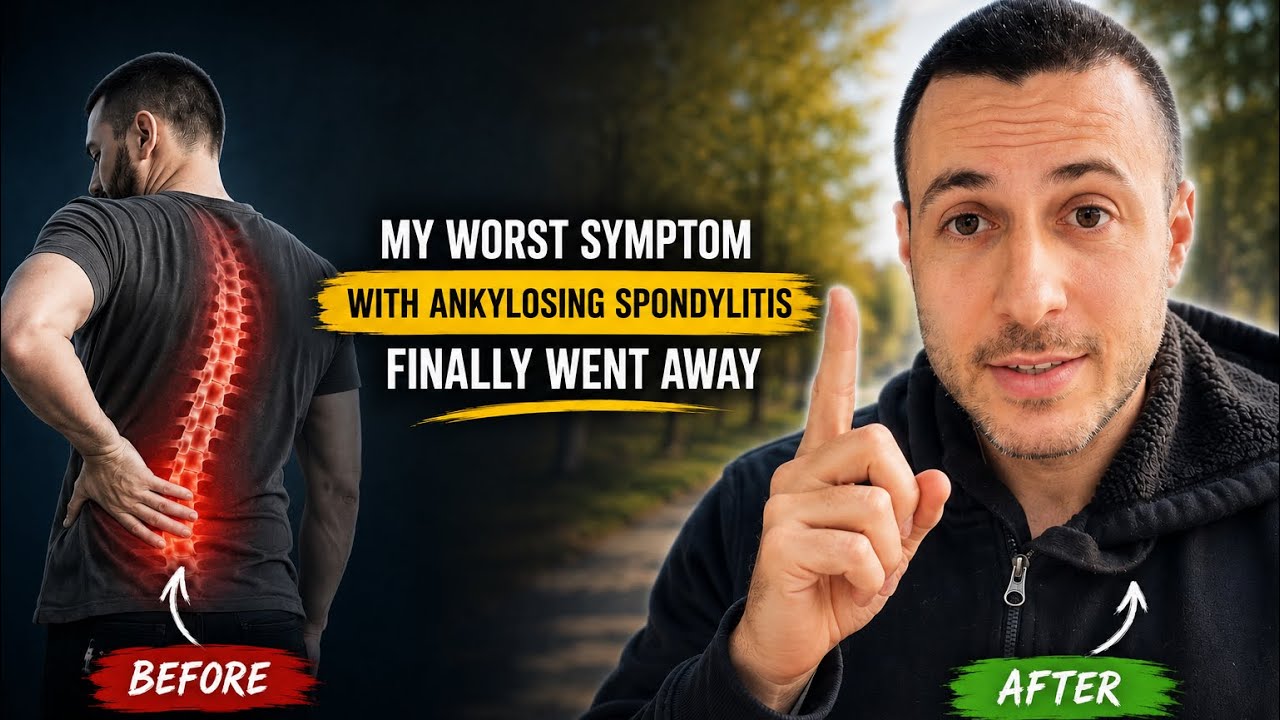
I Was at ROCK BOTTOM From Ankylosing Spondylitis — Transcript

Alexander Levine shares his journey managing ankylosing spondylitis flares, emphasizing gentle movement, blood flow, and avoiding aggressive stretching.

Key Takeaways

  • Avoid aggressive stretching during ankylosing spondylitis flares to prevent worsening inflammation.
  • Focus on gentle, pain-free movements that promote blood flow and gradual activation of muscles.
  • Incorporate core strengthening to help manage rib pain and improve posture.
  • Balance strength and flexibility training, adjusting range of motion based on pain levels.
  • Consistency in daily movement and finding individualized routines are crucial for managing AS symptoms.

Summary

  • Alexander Levine describes severe mobility restrictions caused by ankylosing spondylitis flares, especially in the low back and rib areas.
  • He experienced a major flare that drastically reduced his ability to bend, lie on his stomach or back, and move freely.
  • Aggressive stretching during flares worsened his pain and inflammation, highlighting the need for careful movement.
  • He emphasizes finding the right daily movement routine focused on gentle activation and blood flow rather than forcing painful stretches.
  • His morning routine includes exercises that avoid stressing the low back, such as supported stretching, knee lifts, and hamstring activation.
  • For rib pain, he uses core strengthening exercises to reset posture and reduce flare intensity.
  • He advises avoiding lying down on the couch during flare mornings as it increases stiffness and inflammation.
  • Strength training with resistance bands and weights targeting unaffected areas helped improve overall mobility without aggravating pain.
  • He stresses the importance of balancing strength and flexibility, reducing range of motion when necessary, and gradually increasing it safely.
  • The key to managing ankylosing spondylitis is finding individualized, pain-free movement patterns that promote circulation and gradual improvement.

Full Transcript — Download SRT & Markdown

00:00
Speaker A
I've had so many moments with ankylosing spondylitis where I felt like my body would never be able to move this way freely, especially during flares in the mornings. I've had periods of severe, severe restriction due to flares, high inflammation,
00:19
Speaker A
and in the mornings, I move differently. And what happened to me a year ago is I had a horrible flare. I was doing pretty good beforehand, but the flare was so bad that my mobility went from being able to touch the ground to barely
00:34
Speaker A
being able to bend over because the low back was so restricted. Also, I could barely lay on my stomach, this position.
00:43
Speaker A
I couldn't even, I could barely lift up here. And my mobility today is really good through here. Also, I couldn't lay on my back because of the restriction in the low back. I had so much pain.
00:57
Speaker A
And I kept trying to aggressively stretch the area, stretch the low back, stretch through the flare, aggressively rotate through the back, and I kept making it worse and worse and worse. And I found the key to ankylosing spondylitis comes
01:15
Speaker A
each day seeing where we're at and seeing the perfect place to get moving. So, when I was struggling here, anytime I forced this, the low back just hurt. Or anytime I tried to open up the posture when I was dealing with the rib
01:30
Speaker A
pain or the neck pain, and I was feeling pain through there, but I was forcing it because I didn't want to lose my mobility, it always got worse. Forceful stretches with ankylosing spondylitis when there's pain always make it worse. So, the
01:44
Speaker A
first key for me in the mornings is if I'm moving not as well as I might later in the day, I have to do different things. It's about finding motion in the body through simplicity to get activation.
02:00
Speaker A
So, when I was really struggling with the low back pain during the flare, I said forget about the low back, forget about it. I need to find ways to get the body blood flow circulation, stay away from that problem area, and see what
02:13
Speaker A
happens. So, I started really thinking about the rest of the body, calves, some hamstring curls. I would do this with no weight at first.
02:24
Speaker A
And I started to find ways to first get blood flow, kind of some supported stretching where the low back feels good here, and I can gradually work my way into this range of motion.
02:38
Speaker A
And this became my morning routine. Standing knee lifts, so I'm thinking about getting the whole body moving, no low back at all. And then sometimes I can hit these things.
02:50
Speaker A
Get some gentle mobility laterally. Sometimes I would hit these, and then I would check on some. All right, is this a little easier to lay on my back? Maybe I can now stretch the back.
03:03
Speaker A
I can now work some mobility in this position, getting blood flow into the hamstrings.
03:14
Speaker A
So, starting with other things and seeing if it affects that problem area. Especially for me, the rib pain over the years where you might go to physical therapy for AS, and we'll do a ton of rotations.
03:31
Speaker A
And these are all great, I do them, but when the ribs are aggravated, that strong rotation, that really intense stretch can usually make it worse. For me, it would extend the flares, extend the pain, make fatigue worse. So, I
03:46
Speaker A
learned that I had to find different ways when I was dealing with the rib pain to reset the posture, the core, get everything activated around it, keep everything strong. And what I came up with was some core work.
04:04
Speaker A
One of my favorite ab exercises for AS, slowly dropping the heel down, so we're feeling the abs working. We're taking pressure off the ribs. So, I started to do more strength training into all these different areas.
04:25
Speaker A
So, the most important thing is when we're dealing with pain, this could be anywhere with AS, the low back, the mid back, the neck's tight. You've tried stretching it, it's not working, stay away from it. Try different things.
04:39
Speaker A
That became my routine in the morning. All right, if I wake up with the low back pain, I'm not going to go lie down on the couch because it always makes it worse.
04:46
Speaker A
That area just gets really inflamed, and then everything around it gets tight. So, I started hitting the rest of the body. Now, this flare I had really set me back big time after I was doing so well. And a lot of it was I was
05:02
Speaker A
extending the flare by messing with the area that was impacted, the low back for me, that SI joints were impacted, and I just kept trying to stretch it, stretch it, stretch it, rotate. That inflammation kept building and building
05:14
Speaker A
and building. So, that movement though when I got to just moving, getting everything going, blood flow in the body, get some upper body stuff that had nothing to do with the low back, curls with weights, resistance bands, pull-aparts, doing different stuff with
05:32
Speaker A
the legs, different stretches. All these things opened up the low back without messing with it. So, you have to find that perfect range of motion and things you can do when you're really struggling.
05:43
Speaker A
Now, some areas with AS can become just excruciatingly tight where it can be hard to know where do I start.
05:55
Speaker A
If the hip flexor you're going to do, you can't seem to release the hip flexors or the hamstrings, one thing I think about is bringing some activation, something like a straight leg raise, keeping track of everything, bringing some strength to this hip flexor quad,
06:16
Speaker A
and then seeing the impact. Okay, that loosened up a little bit. Maybe I need strength, maybe I need activation. We're always thinking of different scenarios to build strength and flexibility.
06:26
Speaker A
That's the key to AS. If something's not working, aggressive hamstring stretches, if they're not working, we think about strength. Aggressive hip flexor stretches, not working, we think about reducing the range of motion and finding ways to gradually show that area that it can be safe and
06:45
Speaker A
that it can lengthen over time. So, finding your variation where there's no pain. Especially with these hamstring stretches causing low back pain, we reduce the range of work motion, and we work on some flosses here where you're really
07:10
Speaker A
pressing back through the knee. So, every day, the most important thing for AS is we find that perfect starting point, circulation, blood flow, and we keep feeding the body with movement and circulation, and we help loosen things up, and we find that
07:31
Speaker A
perfect spot for each individual. That's how we build with AS.
Topics:ankylosing spondylitisAS flare managementmobility exerciseslow back paincore strengtheninginflammation reliefgentle stretchingphysical therapyblood flowpain management

Frequently Asked Questions

What should I avoid during an ankylosing spondylitis flare?

Avoid aggressive or forceful stretching of painful areas during flares, as this can increase inflammation and worsen symptoms.

How can I improve mobility during severe AS flares?

Focus on gentle, pain-free movements that promote blood flow and activate unaffected muscle groups, gradually increasing range of motion.

What exercises help with rib pain caused by ankylosing spondylitis?

Core strengthening exercises, such as slow heel drops that engage the abs without stressing the ribs, can help reset posture and reduce rib pain.

Get More with the Söz AI App

Transcribe recordings, audio files, and YouTube videos — with AI summaries, speaker detection, and unlimited transcriptions.

Or transcribe another YouTube video here →