Dog Body Language 101 — Transcript

Learn to read dog body language to understand their emotions, from relaxed to fearful states, and improve communication with your pet.

Key Takeaways

  • Dogs use body language as their main form of communication.
  • Recognizing relaxed, happy, alert, and fearful signals can improve human-dog interactions.
  • Fear responses escalate through identifiable stages that owners should learn to recognize.
  • Ignoring early fear signals can lead to aggression and dangerous situations.
  • Being attentive to dog body language promotes better care and safer relationships.

Summary

  • Dogs communicate primarily through body language and facial expressions rather than vocalizations.
  • A relaxed dog has neutral ears, soft eyes, and a natural tail position.
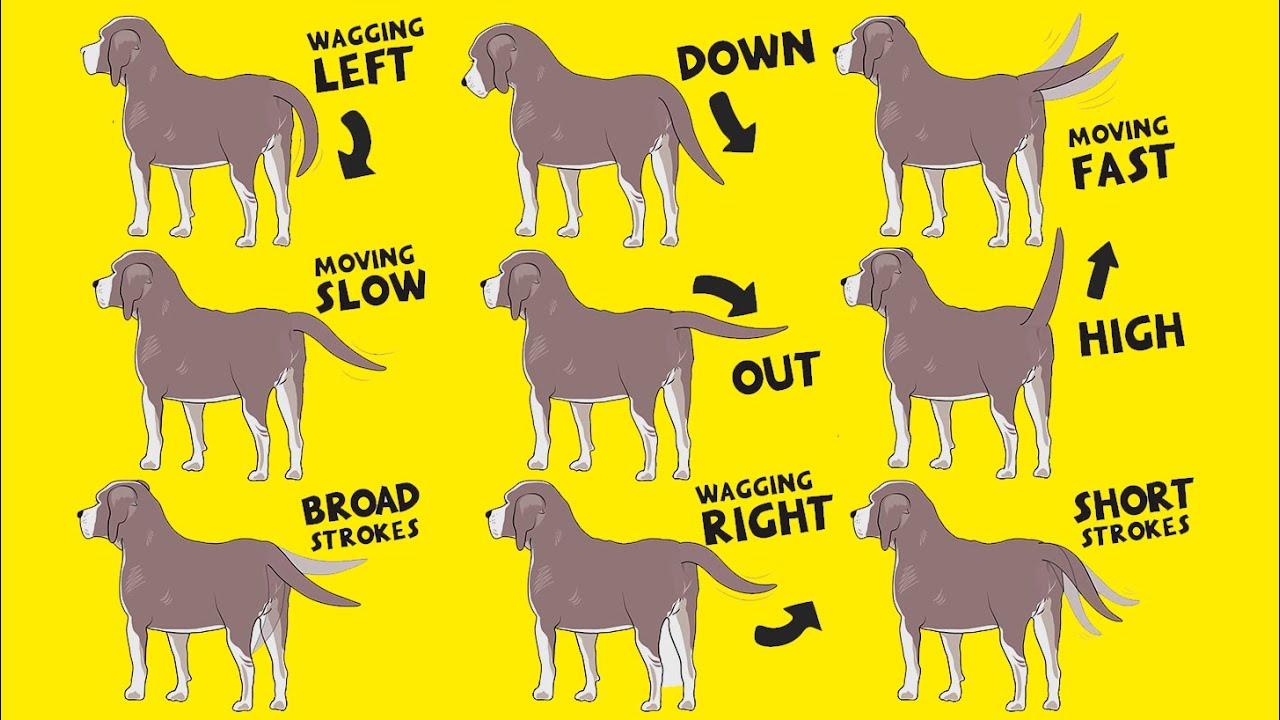
  • Happy dogs show loose, wiggly bodies and wag their tails at medium height.
  • Alert dogs perk their ears forward, may dilate pupils, and have a relaxed mouth.
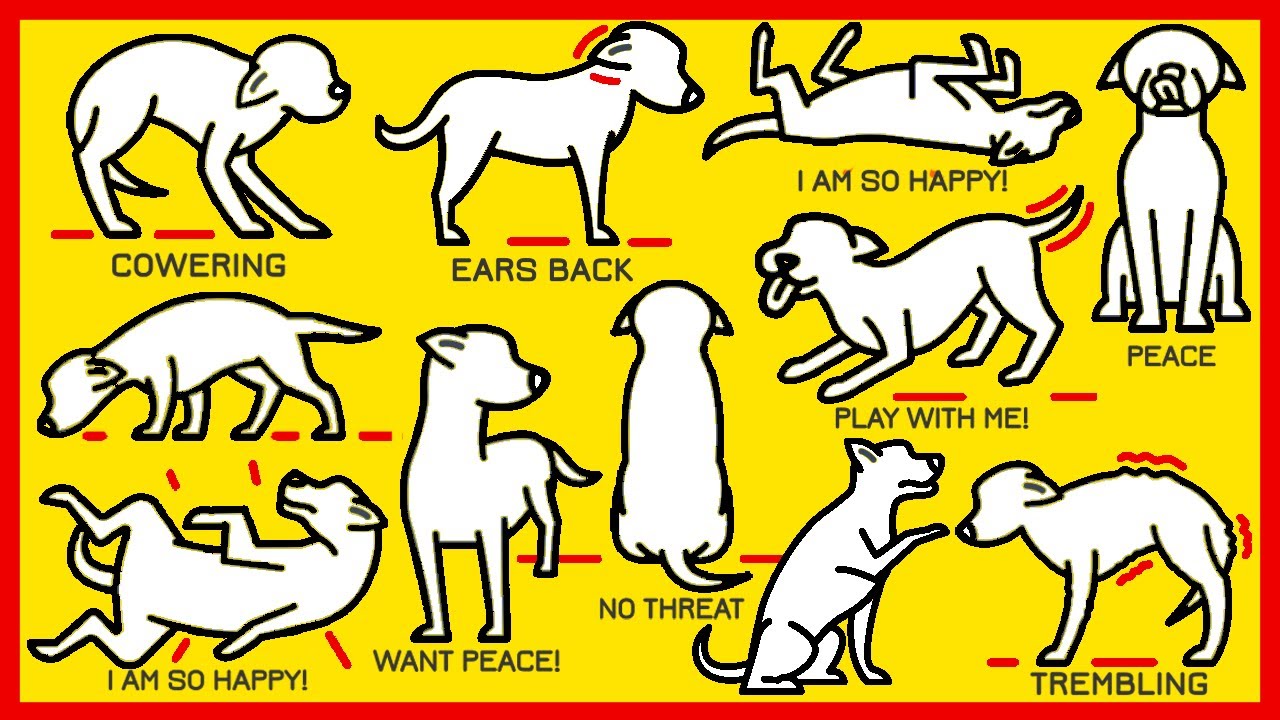
  • Fear and anxiety in dogs progress through four stages: fret/fidget, freeze, flight, and fight.
  • Signs of fret/fidget include avoiding eye contact, lip licking, panting, and slow or overly active movements.
  • Freeze involves a hunched body, lowered ears and tail, rapid breathing, and possible trembling.
  • Flight is characterized by attempts to escape with a tucked tail, ears back, and tight mouth.
  • Fight stage shows defensive or offensive aggression with lowered or raised ears and tail, bared teeth, growling, and lunging.
  • Understanding these signals helps owners respond appropriately and prevent escalation.

Full Transcript — Download SRT & Markdown

00:03
Speaker A
Hey there, we dogs communicate a lot of information with our body movements and facial expressions.
00:10
Speaker A
Sure, we might bark, yip, howl, or growl, but our main way of talking to you,
00:16
Speaker A
through non-verbal signaling.
00:18
Speaker A
That's why I want you to be one of those people who can communicate with animals by reading our body language.
00:24
Speaker A
When we are just chilling, we put on our neutral and relaxed pose.
00:29
Speaker A
Our ears are in their natural position, mine are floppy, and hers stick up, but aren't perked forward when she's chillaxing.
00:37
Speaker A
Our eyes are soft, and we aren't looking nervously in another direction, making the whites of our eyes show.
00:44
Speaker A
We carry our tails in their natural state.
00:47
Speaker A
Sure, dogs have a wide variety of tail types, but you'll learn what our tails communicate by watching them.
00:53
Speaker A
When we catch some Z's, some dogs prefer to curl up or stretch out,
00:57
Speaker A
or even sleep in weird positions.
01:01
Speaker A
Just like you, we don't like to be startled when we're sleeping.
01:04
Speaker A
When we are happy to see you, we make our bodies wiggly and loose,
01:09
Speaker A
and wag our tails in a wide sweep back and forth at medium height.
01:13
Speaker A
Some of us do a whole butt wiggle.
01:16
Speaker A
When something gets our attention, we perk our ears forward,
01:20
Speaker A
and our pupils might dilate.
01:22
Speaker A
Maybe you're holding a tennis ball or a treat for us.
01:26
Speaker A
Our mouth might be a little open, but our mouth and tongue are relaxed, not tense.
01:31
Speaker A
We might progress from slightly interested to alert and intense,
01:36
Speaker A
and our ears and tails go up even further.
01:39
Speaker A
And we might close our mouth.
01:41
Speaker A
Hold our breath.
01:43
Speaker A
She gets excited too.
01:44
Speaker A
But often feels a little bit worried.
01:47
Speaker A
Notice how the hair on the back of the neck and tail start to get poofy.
01:50
Speaker A
Have you ever had the hair on the back of your neck stand up?
01:53
Speaker A
This can happen when something startles us, or has us really excited or amped up and alert.
01:58
Speaker A
Just like how we act when we're excited or interested, there are varying levels to how we act when we feel upset or anxious.
02:04
Speaker A
An easy way to think of them is the four F's.
02:07
Speaker A
Fret or fidget.
02:09
Speaker A
Freeze.
02:10
Speaker A
Flight.
02:11
Speaker A
Fight.
02:12
Speaker A
Think of these stages as survival-based reactions.
02:15
Speaker A
It's no fun to be scared, especially when the people around us don't realize we're not okay and feeling nervous about something.
02:22
Speaker A
So, if you see these signs, take a look around,
02:26
Speaker A
and see if you can figure out what is concerning us.
02:30
Speaker A
At the fret or fidget stage, we might avoid eye contact and turn away,
02:35
Speaker A
but not necessarily move away.
02:38
Speaker A
We might lick our lips, or we might pant even when we're not hot.
02:43
Speaker A
We might move slower than normal, like we are tiptoeing around.
02:47
Speaker A
Or we could be overly active.
02:51
Speaker A
Our ears might start to go to the side or move back a little,
02:55
Speaker A
and we might lift one of our front paws up.
02:59
Speaker A
If our fear continues to escalate, our tail and ears go down.
03:03
Speaker A
Our bodies become hunched,
03:05
Speaker A
and our brow wrinkles.
03:08
Speaker A
Our mouth might pull back into a tight smile as we pant,
03:12
Speaker A
or our lips might begin to close and press together.
03:15
Speaker A
We might snatch treats from your hand really hard.
03:19
Speaker A
This is because we're nervous.
03:21
Speaker A
We don't mean to do it.
03:23
Speaker A
We might even be so scared that we refuse treats, or become so frightened that we freeze.
03:29
Speaker A
Think of a deer in the headlights situation.
03:32
Speaker A
Ears, tail, and head are down.
03:36
Speaker A
This might make the whites of our eyes show more.
03:39
Speaker A
We breathe rapidly, but we'll probably have a closed mouth.
03:43
Speaker A
Some of us will even tremble in fear.
03:46
Speaker A
Flight takes place when we try to escape a situation.
03:50
Speaker A
We might try to scramble away quickly, or slink away slowly with our tails tucked, ears back, and body hunched.
03:57
Speaker A
If we are panting, our mouth is tight, and our tongue will be tucked up tight in our mouth,
04:02
Speaker A
instead of hanging out like when we are hot.
04:05
Speaker A
If our previous attempts at communication have not been received, we might have to speak even louder.
04:11
Speaker A
This is when people often label us as a bad dog, but we're just trying to tell you we are afraid.
04:17
Speaker A
At the fight stage, we might display defensive aggression.
04:21
Speaker A
Our ears, tail, and body are lowered, and we pull our gums all the way back,
04:25
Speaker A
and show our teeth.
04:28
Speaker A
We may warn audibly with vocal communication, such as a growl or deep bark.
04:33
Speaker A
Sometimes, dogs go unheard for so long that they learn offensive aggression.
04:40
Speaker A
We lean forward, our ears and tail are up, and our body will look really stiff and rigid.
04:47
Speaker A
Our eyes may look dark and have a set gaze.
04:50
Speaker A
When we show our teeth, we pucker our lips so you can only see the front teeth.
04:55
Speaker A
We might even lunge and bark.
04:58
Speaker A
Please hear us before we get to this point.
05:01
Speaker A
Don't ignore what we are trying to say.
05:04
Speaker A
Now you know what we look like when we are relaxed, happy, alert, and excited.
05:10
Speaker A
As well as how we might communicate fear through fret or fidget, freeze, flight, or fight.
05:17
Speaker A
When you know what to look for, you'll realize just how much we say to people on a daily basis.
05:23
Speaker A
Please listen to what we are saying and give us help when we need it.
Topics:dog body languagecanine communicationdog behaviorfear signals in dogsdog anxietydog aggressionpet traininganimal communicationfear freehappy homes

Frequently Asked Questions

What are the main ways dogs communicate with humans?

Dogs primarily communicate through body movements and facial expressions rather than vocal sounds like barking or growling.

How can I tell if my dog is relaxed?

A relaxed dog has neutral ears, soft eyes without showing the whites, a natural tail position, and a loose, calm body posture.

What should I do if my dog shows signs of fear or anxiety?

Recognize the signs such as lip licking, panting, avoiding eye contact, or freezing, and try to identify and remove the source of stress to help your dog feel safe.

Get More with the Söz AI App

Transcribe recordings, audio files, and YouTube videos — with AI summaries, speaker detection, and unlimited transcriptions.

Or transcribe another YouTube video here →