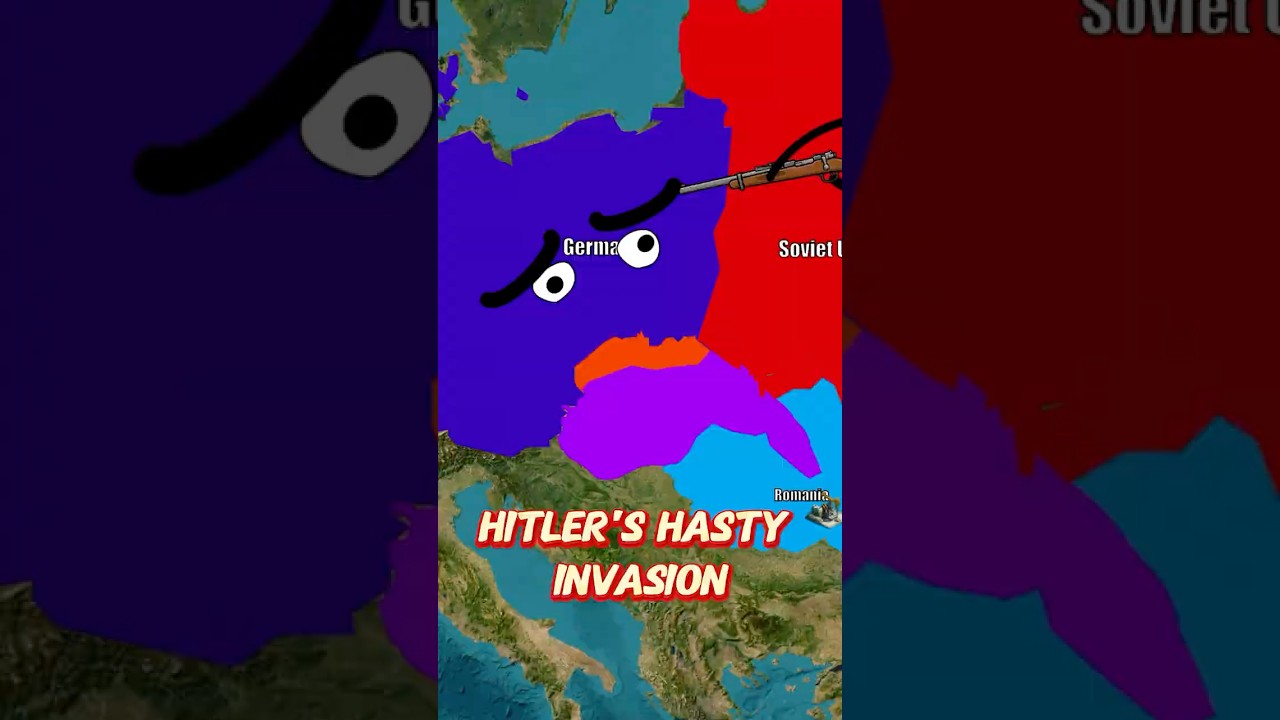
Explores the deceptive Gleiwitz Incident and the Blitzkrieg invasion of Poland, revealing the geopolitical betrayal Poland faced in 1939.
Key Takeaways
- The Gleiwitz Incident was a false flag operation used by Germany to justify invading Poland.
- Blitzkrieg was a fast, armored warfare strategy that overwhelmed Polish defenses.
- Poland was caught between two invading powers: Nazi Germany and the Soviet Union.
- Allied powers declared war but failed to provide timely military support to Poland.
- The invasion of Poland marked the beginning of World War II in Europe.
Summary
- Germany used the armored Blitzkrieg strategy to rapidly conquer European countries.
- Poland was the first victim of this tactic, framed by Germany through the staged Gleiwitz Incident.
- On August 31, 1939, German forces disguised as Polish troops attacked a German radio station to fabricate evidence of Polish aggression.
- Hitler used this false pretext to justify launching a full-scale invasion of Poland on September 1, 1939.
- 1.5 million German troops attacked Poland with overwhelming air and tank power, quickly breaking Polish defenses.
- Poland attempted a counterattack at the Bzura River but was ultimately overwhelmed.
- The Soviet Union invaded Poland from the east on September 17, 1939, trapping Poland in a two-front war.
- Poland surrendered on October 6, 1939, after being divided between Nazi Germany and the Soviet Union.
- Britain and France declared war on Germany on September 3 but took no immediate military action to aid Poland.
- The video highlights the betrayal and abandonment Poland experienced from supposed allies during the invasion.