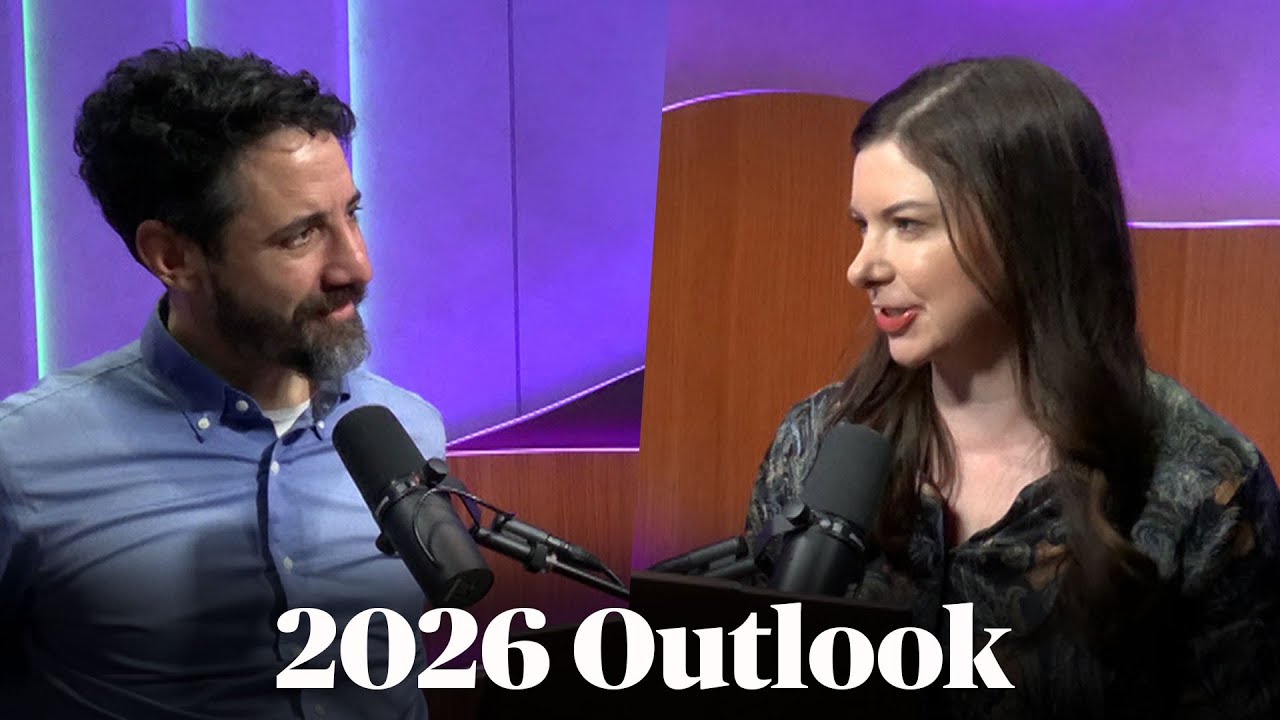
Jeffrey Gundlach Says Almost All Financial Assets Are N… — Transcript

Jeffrey Gundlach discusses why almost all financial assets are overvalued amid changing bond market dynamics and inflation concerns.

Key Takeaways

  • Jeffrey Gundlach believes most financial assets are currently overvalued.
  • Bond market dynamics have shifted significantly with rising yields and inflation.
  • Long-term consistency in investment performance is crucial to fund survival.
  • Credit spreads tightening may indicate lower risk premiums despite persistent risks.
  • Market concerns from a decade ago, such as bond vigilantes and US Treasury demand, remain relevant today.

Summary

  • Jeffrey Gundlach claims a 70% hit rate in his investment career spanning over 40 years.
  • He highlights the importance of performance consistency, noting fund closures after multiple years of underperformance.
  • The Odd Lots podcast celebrates its 10-year anniversary while reflecting on market changes over the past decade.
  • Significant shifts in the bond market are noted, especially the rise in benchmark 10-year Treasury yields from 2% in 2015 to above 4% in 2025.
  • Inflation has returned as a major factor influencing fixed income markets, a shift from the previous decade.
  • Concerns about who will buy US Treasuries and fund the US deficit remain persistent topics.
  • The concept of 'bond vigilantes' continues to be relevant in market discussions.
  • Credit market spreads on junk bonds have tightened from 7.2% in 2015 to 6.4% in 2025, raising questions about risk compensation.
  • Despite changes in yields and inflation, many market discussions and concerns remain consistent over the last ten years.
  • The overall message suggests that financial assets are largely overvalued given current market conditions.

Full Transcript — Download SRT & Markdown

00:00
Speaker A
I have a 70% hit rate. I've got a long enough career in enough strategies where it's statistically significant, and I have a 70% hit rate, which means I'm right 70% of the time, which means I'm wrong 30% of the time. So, I've been at this for over 40 years, so I've been wrong for more than 12 years.
00:18
Speaker B
Right?
00:20
Speaker A
But thank God they haven't been in a row.
00:22
Speaker A
Really, three years is when everyone pulls the plug. If you're if you're wrong, if you underperform your one, your two and your three, you're gone. You know, if you're if you're wrong five years in a row, they they shut your Janice unconstrained bond fund.
00:36
Speaker B
Because you can't have sequential years of out performance like that.
00:40
Speaker C
It's a very specific example, Jeff. I wonder where that came from.
00:50
Speaker C
Hello and welcome to another episode of the Odd Lots podcast. I'm Tracy Alloway.
00:55
Speaker B
And I'm Joe Weisenthal.
00:56
Speaker C
Joe, we are still in celebratory mode.
00:58
Speaker B
Yes.
00:58
Speaker C
Ten year, ten year anniversary.
00:59
Speaker B
It's ten year anniversary month, really. And even next month, kind of ten year anniversary month. So we can just extend this for a long time.
00:10
Speaker C
We could just make this, well, we should have made 2025 the Odd Lots ten year anniversary year.
00:13
Speaker B
Yeah, yeah.
00:13
Speaker C
But we're almost at the end of the year, so we failed in that respect.
00:15
Speaker C
But obviously, we're sort of reflecting on the past decade or so at Odd Lots and things that have or haven't changed in markets.
00:22
Speaker B
Yeah.
00:23
Speaker C
And one thing I've been thinking about a lot is what's been going on in the bond market.
00:26
Speaker B
Yeah, you can't, well, I think, look, there is nothing that's more different in 2025 versus 2015 than what's going on in fixed income, right?
00:35
Speaker C
So, you say that, and it is true, you know, if you look at, if you look at the benchmark ten year yield, okay, sure, we're at 4% now, above 4% and in 2015, we were at like 2%, right?
00:46
Speaker C
That's changed, and we went through inflation, which is something we hadn't experienced for a pretty long time in, you know, previous years.
00:50
Speaker B
That's right.
00:50
Speaker C
But I also feel like it's changed, but a lot of it hasn't. A lot of the discussions haven't changed. If I think about what we were discussing, uh, back in 2015, it was stuff like, who's going to buy US Treasuries?
00:58
Speaker B
Sure.
00:58
Speaker C
Who's going to fund the US deficit? Bond vigilantes. I mean, how many years have we been talking about bond vigilantes now? Uh, the credit market, it was whether or not investors are being adequately compensated for the risk they're taking on. And the funny thing is now, you know, if you look at spreads on junk rated bonds, if if you didn't think they were being adequately compensated at like 7.2% in 2015, I wonder what you think when you look at spreads of 6.4% in 2025.
Topics:Jeffrey Gundlachfinancial assetsovervaluedbond marketinflationUS Treasuriescredit spreadsjunk bondsOdd Lots podcastinvestment performance

Frequently Asked Questions

What is Jeffrey Gundlach's reported hit rate in his career?

Jeffrey Gundlach states he has a 70% hit rate, meaning he is right 70% of the time and wrong 30% of the time. He has been in the industry for over 40 years, accumulating more than 12 years of being wrong.

According to the transcript, how many consecutive years of underperformance typically lead to a fund being shut down?

The transcript suggests that if a fund underperforms for three consecutive years, it is typically shut down. An example given is a fund being closed if it is wrong five years in a row, like the 'Janice unconstrained bond fund'.

What is one significant change in the fixed income market between 2015 and 2025 mentioned in the discussion?

One significant change highlighted is the difference in the benchmark ten-year yield, which was around 2% in 2015 and is now above 4%. This change is also attributed to the experience of inflation, which was not prevalent in previous years.

Get More with the Söz AI App

Transcribe recordings, audio files, and YouTube videos — with AI summaries, speaker detection, and unlimited transcriptions.

Or transcribe another YouTube video here →