The Bayeux Tapestry - all of it, from start to finish

Full Transcript — Download SRT & Markdown

00:00
Speaker Narrator
The tapestry story starts in 1064 with this man.
00:03
Speaker Narrator
Edward the Confessor, who is clearly very important as he gets the biggest and most elaborate depiction of any character in the tapestry.
00:10
Speaker Narrator
Sitting here with his crown and scepter and generally being King of England, but at this point having no heirs, he's having a talk to presumably Harold and a companion in what we think is Westminster Palace.
00:21
Speaker Narrator
Harold Godwinson was the Earl of Wessex and the most powerful noble in England and Edward's brother-in-law.
00:29
Speaker Narrator
The King is presumably sending them on some unspecified mission to Normandy.
00:33
Speaker A
Right you, with your different colored hands and your legs of different sizes, go on some unspecified mission to Normandy. Go on, off with you. Oh, uh, right ho.
00:42
Speaker Narrator
It says in Latin, Harold, leader of the English and his soldiers ride to Bosham. He's the one with the hawk and the magnificent mustache.
00:51
Speaker Narrator
And Bosham was his family estate.
00:53
Speaker B
It's great being canine.
00:57
Speaker Narrator
We then get a tree. Yes, seriously, that's meant to be a tree.
01:40
Speaker Narrator
And these are used to divide up the scenes a bit like the gutters between the pictures of a comic book.
01:45
Speaker Narrator
He and his pal go into an Ecclesia or church for a quick pray. That church is still there today, by the way.
01:51
Speaker Narrator
And then we see a banquet scene.
01:54
Speaker Narrator
Next, it says, Hic Harold Mare Navigavit. Here Harold travels by sea.
02:00
Speaker Narrator
You can see him having stripped his legs bare, wading out with his hawk and dog.
02:05
Speaker Narrator
Some rather wonky oars there.
02:08
Speaker Narrator
And comes with full sail to the land of Wido. Wido is a chap we generally call Count Guy, spelled Guy.
02:14
Speaker Narrator
A smaller boat apparently in tow there, perhaps a dinghy for making landfall. Lots of shields, so all looking rather military.
02:21
Speaker Narrator
Tiny lookout at the top of the mast.
02:24
Speaker Narrator
Then, what's this affrontry?
02:27
Speaker Narrator
Hic apprehendit Wido Haroldum. Here Guy apprehends Harold.
02:32
Speaker C
Seize him, I say.
02:33
Speaker B
I'm warning you, I have a magnificent mustache.
02:35
Speaker Narrator
Et duxit eum ad Belrem et ibi eum tenuit. And leads him to Beau Rain and holds him there.
03:23
Speaker Narrator
Things don't look too bad though, as he gets to keep his hawk.
03:26
Speaker D
We got him. Look, look, look, it's him, it's him, it's him.
03:29
Speaker Narrator
Ubi Harold et Wido parabolant. Here Harold and Guy have a bit of a chat.
03:35
Speaker B
Ah, now my point is...
03:37
Speaker C
I'm in charge here.
03:38
Speaker C
I do the pointing.
03:39
Speaker Narrator
There is a lot of pointing here.
03:40
Speaker Narrator
Lots of pointing, yes.
03:41
Speaker Narrator
There are people farming in the lower border there, see?
03:44
Speaker Narrator
It doesn't help that the characters keep changing their clothes. Here's Guy in yet another natty outfit.
03:50
Speaker Narrator
Where Duke William's messengers came to Guy, it says.
03:54
Speaker Narrator
Above a figure holding a horse, normally interpreted as a dwarf, is the name Tyrold, but it could be the name of the messenger standing left of the text.
04:01
Speaker Narrator
Anyway, messengers from the Duke arrive, and then the timeline goes a bit haywire as we go back in time to see the messengers on their way.
04:06
Speaker Narrator
In something of a rush, see the wind in their hair.
04:10
Speaker F
Ooh, the drama.
04:13
Speaker G
William to the rescue.
04:14
Speaker Narrator
And there's someone watching from a tree.
04:16
Speaker Narrator
Which is always nice.
04:18
Speaker Narrator
Here the messengers come to William. The tapestry is devoting a lot of space to this incident, so clearly it is a very important part of the story that it wants to tell.
05:05
Speaker F
We delivered the message, sir.
05:08
Speaker G
Well done.
05:09
Speaker G
Are you hiding a dwarf behind that shield?
05:12
Speaker F
Uh, no. Uh, no, no, it's me. I stand oddly.
05:14
Speaker G
I'll say.
05:16
Speaker Narrator
Here Guy takes Harold, mustache and hawk there, to William, Duke of Normandy.
05:22
Speaker C
I've brought him, sire. He's fine, he's got his hawk and everything.
05:26
Speaker H
That's good. Now I'll have your hawk.
05:30
Speaker C
Oh!
05:31
Speaker H
A gentleman would seldom travel without his hunting bird.
05:35
Speaker Narrator
Are those camels do you think in the top border? Some of the animals definitely look quite fantastical.
05:40
Speaker Narrator
Now another of those amazing surreal trees. It says, Here leader William with Harold came to his palace.
05:45
Speaker C
Ha ha, I got his hawk.
05:46
Speaker H
Um, the palace has come out a bit wonky and a bit smaller than you might like it, sir.
05:56
Speaker C
Is this our new kennel?
05:59
Speaker Narrator
Now a man with a great mustache, Harold presumably, sporting yet another set of clothes, talks to a man on a throne in a palace. Next, two characters are named Unus Clericus, a particular cleric, and Aelfgyva.
06:49
Speaker Narrator
Literally Elf gift.
06:55
Speaker Narrator
A common Anglo-Saxon woman's name. Just what in the world is going on here? We simply do not know.
07:00
Speaker Narrator
Is the cleric hitting her or blessing her? Is this some reference to a sex scandal?
07:06
Speaker Narrator
Is that why there's a naked man in the lower border, the only figure displaying genitals in the whole tapestry?
07:12
Speaker Narrator
Harold had a sister with this name. Was she betrothed to someone?
07:16
Speaker Narrator
It is thought that she died shortly before the Battle of Hastings. It's a story lost in time.
07:21
Speaker Narrator
Now it says, Here William the leader and his army come to Montem Michaelis, today known as Mont Saint-Michel.
07:29
Speaker Narrator
And there it is at the top there, a fortified abbey on top of a small island.
07:32
Speaker Narrator
Et Hic Transierunt Flumen Cosnonis. Et venerunt ad Dol et Conan. And here they crossed the river Cosnon.
07:37
Speaker Narrator
Here Harold the leader pulled them out of the sand. He's rescuing two men at once and carrying a shield.
08:23
Speaker B
Yes, well, with a mustache like mine, it's easy.
08:26
Speaker Narrator
Mont Saint-Michel was on the border of Normandy and Brittany, and they had to cross a river to attack Duke Conan at his place called Dol. Conan flees.
08:35
Speaker Narrator
Is that him climbing down a rope?
08:38
Speaker Narrator
Then, they ride past what we today call Rennes, you can see R E D and N E S either side of it there, in a hurry to do some more fighting.
08:46
Speaker Narrator
Did cavalry ever attack raised fortifications like this? I think it's very unlikely, so we have to imagine that a certain amount of artistic license is being used.
08:54
Speaker Narrator
Here, it says, The soldiers of William fought against, contra means against, the inhabitants of Dinan, the Dinantes, and Conan handed over the keys. You can see the keys there on the spear tip of the surrendering defender.
09:06
Speaker I
There's a bit of a knack to them. You have to pull towards you as you turn and then jiggle a bit. Right ho. Got him. Thanks.
09:15
Speaker Narrator
Hic, it says, meaning here, William gave Harold weapons.
10:00
Speaker Narrator
An important and symbolic gift one thinks, a leader bestows arms on a follower, not the other way round.
10:08
Speaker Narrator
Now, William, Wayne it, he came, Bagias to Bayeux, where, Ubi, Harold Sacramentum fecit. He made an oath. Very important to leader William.
10:21
Speaker Narrator
You can see him swearing with his hands on some sacred items. Does this mean that Harold swore loyalty to William, or perhaps to support his claim to the English throne? That's what's being implied.
10:32
Speaker Narrator
Here, Harold the leader, or you could say Earl Harold, but Dux refers to all manner of leader figures, reversus est Anglicam Terram, goes back to English soil. And came to Edward the King.
10:45
Speaker Narrator
Now then, what's going on here? The King, who is clearly wearing a false beard, is he wagging a finger at Harold? Harold has no weapons in this picture and is bent forward oddly.
10:57
Speaker Narrator
Is he being told off for something? Perhaps he's showing worry at the frailty of the King because the next scene shows the King's funeral, with the hand of God there blessing the proceedings.
11:40
Speaker Narrator
And the body in a casket in procession to a big church, Westminster Abbey. Accompanied by bell ringers. This was January the 5th, 1066.
11:52
Speaker Narrator
The text reads, Here King Edward's body is carried to Saint Peter the Apostle.
11:57
Speaker Narrator
He had ordered the rebuilding of the Abbey, intending to be buried there, but had been too ill to attend its consecration just the week before he died.
12:04
Speaker Narrator
Then, we get a bit of the story in reverse again. These were the early days of graphic novels.
12:09
Speaker Narrator
We see Edward twice here. Upstairs it says, Here King Edward in bed speaks to his faithful.
12:15
Speaker Narrator
One we think is his Queen, Edith, and another might be Harold. Is he saying something significant here, naming an heir?
12:23
Speaker Narrator
Downstairs it says, And here he died.
12:26
Speaker Narrator
Next, Here, they gave the King's crown to Harold, and the King's axe too.
12:33
Speaker B
No, it's all right. I've got this axe that William gave me.
12:36
Speaker K
What?
12:36
Speaker B
Oh, uh, nothing. Oh, great, a crown.
12:39
Speaker Narrator
So, here we see on the throne, Harold II, King of England.
13:21
Speaker Narrator
The figure to the right of him is labeled without explanation, Archbishop Stigand.
13:29
Speaker Narrator
This controversial cleric had been excommunicated by the Pope, so, if he has performed the coronation, that might make it null and void.
13:36
Speaker Narrator
But English sources suggest that he was crowned by Ealdred, Archbishop of York, whom the Pope thought was fab. So, is this a bit of fake news?
13:45
Speaker Narrator
The crowd seems happy enough.
13:47
Speaker L
King Harold the Second!
13:51
Speaker Narrator
Next we see a group of people marveling at the star.
13:55
Speaker Narrator
This is the first depiction of Halley's Comet, which passed overhead at this point in history and was supposed to be an ill omen.
14:03
Speaker Narrator
Although I don't see how that works because it would be an ill omen for William too, wouldn't it, and everyone else.
14:07
Speaker Narrator
Anyway, news of the comet is perhaps being related to Harold here, and beneath him in the lower border, you see a lot of ships, a ghostly foreshadowing of the invasion to come.
14:16
Speaker Narrator
New panel, tree, new scene.
14:19
Speaker Narrator
Here, it says, an English ship came to Duke William's land. Why does it say this? Bringing news of the coronation, I'm guessing.
15:03
Speaker Narrator
Next we go to William's palace, which would have been perhaps in the old seat of the Dukes of Normandy at Rouen, or possibly at Caen, where it had moved.
15:15
Speaker Narrator
Anyway, he's not happy, and the text tells us that he ordered the building of ships. The seated figure on the right is Bishop Odo, William's half-brother, and the probable patron of this tapestry. We'll see him a lot.
15:27
Speaker Narrator
Now we get a strong clue that those things that look not a lot like trees are trees. Men chopping them down.
15:33
Speaker Narrator
Men forming the trees into planks with carpentry axes.
15:38
Speaker Narrator
Then we see men forming the planks into the hulls of ships.
15:41
Speaker Narrator
Here the ships are pulled to the sea.
15:43
Speaker Narrator
Next, we are shown arms and armor being carried to the ship, mail hauberks carried on poles, swords and is that a barrel on the wagon along with spears and helmets?
15:49
Speaker Narrator
Yet it is, because the text tells us so. It says, And here they pull a cart loaded, cum vino et armis, with wine and weapons.
15:54
Speaker Narrator
Here William crosses the sea in a big ship. Sometimes they could perhaps let the pictures do more of the talking, or they could have told you that the ship he sailed in was a gift from his wife Matilda and was called Mora.
16:43
Speaker Narrator
You can see shields hanging on the ends of the ships. Tiny horses there too. Fancy carved heads on the prows and sterns.
16:56
Speaker Narrator
No rudders yet, you'll notice, they're still using steering oars.
17:06
Speaker Narrator
Their sails were, so far as we know, square, so this is probably an inaccurate depiction of how they would look in use.
17:14
Speaker Narrator
And he came to Pevensey.
17:17
Speaker Narrator
In the word Pevensey, you can see the Pope's banner on the mast of William's ship, so he was proclaiming to have the backing of the Pope. Possibly a bit naughty of him.
17:26
Speaker Narrator
Here the horses disembark. Taking the mast down too, you'll notice.
17:31
Speaker Narrator
And here the troops, milites, rushed to Hastings to pillage for food. And you can see men carrying off and slaughtering livestock.
17:38
Speaker M
I think you're holding it the wrong way round.
18:20
Speaker N
My axe is red.
18:22
Speaker O
I got me a blue-green pig. What did you get?
18:26
Speaker P
Hope.
18:28
Speaker Narrator
Right, now I have to stop things here to explain why the landings were unopposed. The tapestry has missed out a massive part of the story, and it would be an injustice to Harold not to mention it now.
18:38
Speaker Narrator
Harold had in fact been waiting with an army on the south coast for ages, but Harold had not one but three armies to worry about.
18:44
Speaker Narrator
There was William the Bastard's army in Normandy, also there was Harald Hardrada, who was King of Norway, but was keen to add England to his portfolio, and Tostig Godwinson, Harold's own younger brother, who was cooperating with Hardrada.
18:57
Speaker Narrator
This pair defeated the Earls of Northumbria and Mercia at the Battle of Fulford on the 20th of September, which left England at the mercy of the Norsemen. What was more, Harold's militia had to be released from military service so that they could harvest their crops.
19:09
Speaker Narrator
Harold raced north and marched 185 miles to York in four days with just the core of his army, surprised and decisively defeated the invaders at the Battle of Stamford Bridge, killing both pretenders to the throne in the process, and then marched all the way back to Hastings where he found that William's army had landed when he wasn't looking.
20:05
Speaker Narrator
So, can we have just a bit of appreciation for that?
20:09
Speaker L
Hooray! Hooray! Hooray!
20:12
Speaker Narrator
Thank you. Yes.
20:14
Speaker Narrator
Right, back to the Bayeux tapestry. The next caption says, Here is Wadard.
20:18
Speaker Narrator
Why? Who was he? He's never mentioned again.
20:22
Speaker Narrator
Research in the Victorian era revealed that he was one of Bishop Odo's retinue, so the Bishop, patron of the work, was depicting his friends and underlings.
20:30
Speaker Q
Ha ha. Your horse is really small.
20:34
Speaker R
No. My horse is just far away.
20:41
Speaker Narrator
Here the meat is cooked. Lots of kebabs and a big cauldron over a fire.
20:45
Speaker Narrator
And here the servants serve.
20:49
Speaker Narrator
A man loading a plate using tongs, a fork.
20:53
Speaker S
Dead bird on the stick, sir.
20:56
Speaker T
Oh, I don't mind if I do.
20:58
Speaker T
I'll have the beige one.
20:58
Speaker Narrator
They seem to be using shields as trays or a makeshift table top. No, no, no, you drink out of the wide end.
21:40
Speaker U
No, no, no, you drink out of the wide end.
21:43
Speaker V
Here they dined.
21:44
Speaker Narrator
And here the Bishop blesses the food and drink.
21:48
Speaker Q
I'll keep blessing it as long as you keep bringing it.
21:51
Speaker W
I've been practicing my pointing.
21:53
Speaker Narrator
Here we see Odo again with his tonsure.
21:56
Speaker Narrator
William holding a sword, and also seated Robert, Robert, or Rotbert as he appears here, another half-brother of William's.
22:06
Speaker Narrator
He, presumably Robert, ordered defenses dug at Hastings.
22:10
Speaker Narrator
These men might be press-ganged locals.
22:12
Speaker X
And what's going on here? I'm not a Norman lackey. You take that back. What are you hitting me with? It looks a bit rude.
22:19
Speaker Y
Well, it will if you animate it like that.
22:20
Speaker Narrator
Oh, the spades.
22:21
Speaker Narrator
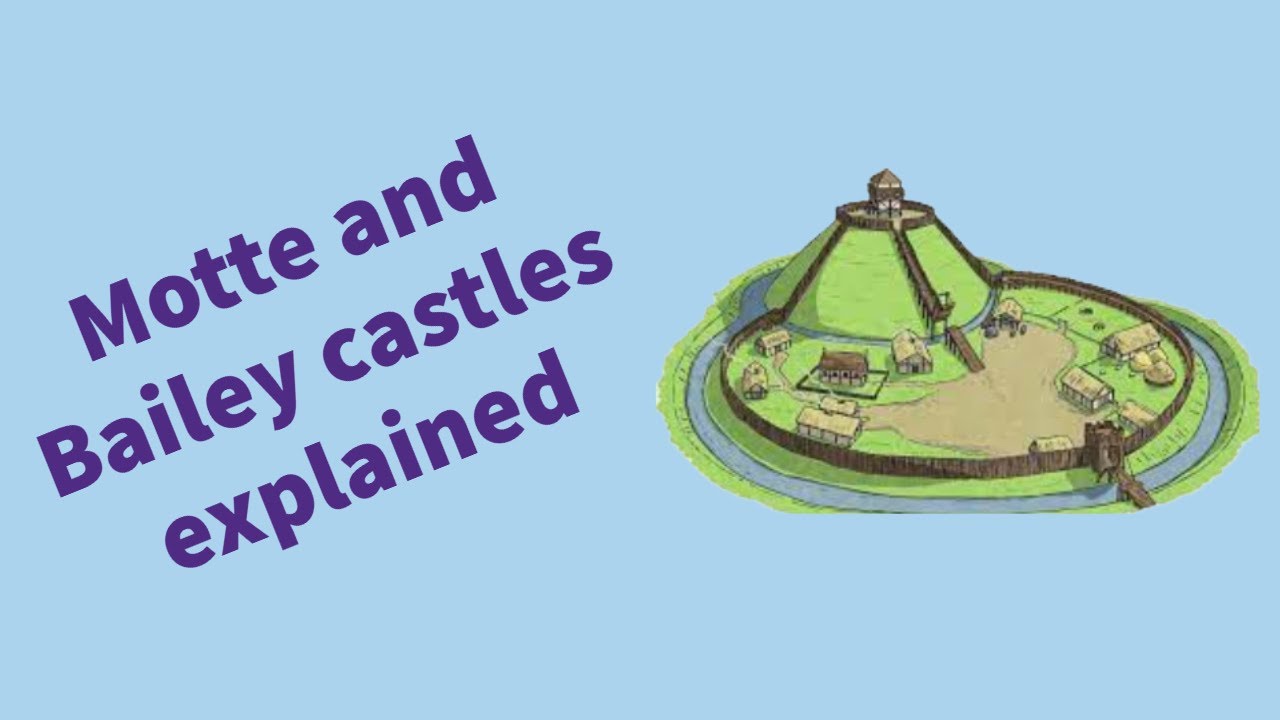
The men are throwing up an earth mound, a motte for a fort.
22:26
Speaker Narrator
Here William received news of Harold. A messenger reporting.
22:31
Speaker Narrator
And here a house is set alight.
22:35
Speaker Narrator
Now, you can see a woman there and a child. They are usually described as fleeing the house, although it could be that they are trapped in a burning house.
23:22
Speaker Z
Oh, the Frankish fiends!
23:23
Speaker Narrator
Here, it says, The soldiers set out from Hastings. A door, totally out of scale with its building, has opened and out has stepped a very tall William, with a pennant on his lance that will in no way help to identify him later.
23:35
Speaker AA
I brought you a horse, sir.
23:37
Speaker H
Yes, I know just that it's green and yellow. It's all right, we can change that later.
23:43
Speaker Narrator
And they went out to do battle with King Harold. It does call him King.
23:48
Speaker Narrator
Haroldum Regem.
23:50
Speaker Narrator
Wow, that horse is blue.
23:53
Speaker Narrator
Ah, a figure riding with a pennant just like William's. So, is it William? No.
23:59
Speaker Narrator
Another pennant, not William either.
24:00
Speaker Narrator
He's one of these two chaps with maces.
24:03
Speaker Narrator
Here, Duke William asks Wital if Harold's forces have been sighted. Who was Wital? Another of Odo's followers and friends, it seems, getting a mention.
24:15
Speaker BB
Yay, Wital!
24:16
Speaker Narrator
Some scouts riding over a hill, looking past the cellophane flowers of yellow and green at another man doing the classic, I'm looking for something pose. Terrible typesetting here. This man informs King Harold about Duke William's forces.
25:10
Speaker CC
You, yes, you!
25:11
Speaker DD
No, I'm not pointing at myself.
25:13
Speaker CC
Your shield!
25:14
Speaker DD
No, I'm pointing through myself.
25:16
Speaker DD
I'm, it's very difficult, but it's really awkward with this.
25:19
Speaker DD
The point is that the enemy's over there.
25:20
Speaker CC
I knew that.
25:21
Speaker Narrator
Back to William now, on a horse of yet another color, this time red, and carrying what looks like a simple wooden club.
25:27
Speaker Narrator
And we get a very long, strong out piece of text. It says, Here Duke William exhorts his troops to prepare themselves like men, and wisely for the battle against the English.
25:38
Speaker Narrator
We are three quarters of the way through the tapestry now, and the Battle of Hastings is about to start.
25:42
Speaker Narrator
There is a buildup of momentum. See how each horse has a more gallopy pose than its predecessor.
25:49
Speaker Narrator
Mmm, beige.
25:52
Speaker Narrator
William's men aren't listening. You can't gallop and listen.
25:56
Speaker Narrator
Here we see Norman archers, some wearing armor, adding support. And now the single line of horses becomes double, and the picture gets busier and noisier. From the way the horses' legs overlap, they seem to be competing to be the one closest to the viewer.
26:40
Speaker Narrator
Finally, the moment we've all been waiting for, the clash with the English. Javelins fly, as does at least one mace, and the English shield wall holds.
26:55
Speaker Narrator
And the ground becomes littered with the dead and dying. You can see one English archer in the foreground there.
27:03
Speaker Narrator
The English seem to have fewer archers than the Normans, but more foot soldiers.
27:10
Speaker Narrator
Now, we can see Norman cavalry coming in from the right. I don't think this arrangement is meant to show that the English were surrounded. I think it's just the designer's way of getting more figures battling each other.
27:21
Speaker Narrator
While most of the fallen lie anonymously in the lower border, two of the dead get named here. It was vital that people knew that the entire line of claimants had been extinguished.
27:32
Speaker Narrator
The text says, Here fell Leofwine and Gyrd. These were Harold's brothers. Presumably, they are the athletic figures doing the forward roll and the backflip. The text then adds, The brothers of King Harold.
28:28
Speaker Narrator
Just to hammer home the point. Now there is a scene of messy carnage.
28:32
Speaker Narrator
And the text says, Here fell simultaneously the English and the Franks in the battle. What looks like a disastrous cavalry charge, full of movement and pain, has come crashing to a halt. This horse has fallen so violently, it's lost its saddle.
28:48
Speaker Narrator
Holding a hill, a group of unarmored English militia suffers losses, and some appear to be running about the bottom of the hill in panic.
28:55
Speaker Narrator
Here, Bishop Odo, holding a club, encourages his boys. It's likely that they were following an old tradition of senior commanders using maces as badges of office.
29:05
Speaker Narrator
Here is Duke William, is all it says.
29:10
Speaker Narrator
William of Poitiers, writing in 1071, said that the Duke had had three horses killed under him during the battle, and that a rumor spread that he himself had been killed, and that to quash this, he raised his helmet in front of his army to show everyone that he was fine.
30:06
Speaker Narrator
So, it is thought that this picture represents this episode in the story.
30:08
Speaker H
It's all right, everyone.
30:11
Speaker H
It's me!
30:11
Speaker L
It's him! It's him! Hooray! Hooray!
30:14
Speaker H
Hooray!
30:16
Speaker H
Who are you then?
30:18
Speaker H
Oh!
30:19
Speaker Narrator
High up in the top border you can just make out the damaged word Eustace, above the man with the banner pointing to William. Count Eustace was another important knight who presumably deserved a mention.
30:29
Speaker Narrator
And so much more important than the tiny archers scuttling along the bottom border.
30:34
Speaker Narrator
Hic Franki Pugnant. Here the Franks do battle.
30:39
Speaker Narrator
Since both sides are pictured wearing identical kit, there's no way to be sure whether some of these are Norman or Saxon.
30:45
Speaker Narrator
These Saxon thanes have been fighting for some while now, as shown by the number of arrows in their shields. The battle lasted some nine hours, which was a long time by the standards of this period.
30:56
Speaker Narrator
This man is so tall, he's actually standing on the ground in front of his saddle, while astride his horse.
31:45
Speaker Narrator
And those who were with Harold fell. Armored thanes finally succumbing to the Frankish attacks.
31:52
Speaker Narrator
This mystery figure is under the name Harold and has his signature massive handlebar mustache, but isn't wearing armor and seems to be being tended to by a Norman, but one can't be sure. Is he having a head wound sewn up?
32:07
Speaker Narrator
And next, the most famous words on the tapestry. Hic Harold Rex interfectus est. Here Harold the King is killed.
32:18
Speaker CC
Yes, that's it, men. Hold steady. And watch out for the... Oh, I say!
32:24
Speaker Narrator
But which figure is the King? Hitherto the word Hic, here, has often indicated a figure referred to by the text.
32:28
Speaker Narrator
But names have often, but not always, been above the named figures. The arrow in this figure's eye was sewn on in the tapestry's repairs, but holes on the back of the cloth show that there was something there before, so there probably was originally an arrow there.
33:28
Speaker Narrator
But figures being killed have often been shown in the act of falling, and that would make Harold the figure under the words the King is killed. Does it matter?
33:38
Speaker Narrator
Both the arrow in the eye death and the King's being hacked up by Norman knights are mentioned in contemporary accounts.
33:45
Speaker Narrator
And so the fate of a nation was decided. The Norman yoke would be on our shoulders, and there it remains to some degree. The upper classes of Britain today still tend to have Norman surnames.
33:55
Speaker Narrator
There are stripped, robbed, and cut up bodies in the lower border.
34:01
Speaker Narrator
There's just one more caption to go, and you may see that the art style and lettering change noticeably.
34:07
Speaker Narrator
The end of the tapestry has been restored a lot, and it has been suggested that the last words were added during the Napoleonic Wars. And the English fled.
35:00
Speaker Narrator
Then it peters out. Some say that it was never completed, but more likely the end has been lost, perhaps to fire, rot, recycling as a wagon cover, or any of a thousand natural shocks that cloth is heir to.
35:08
Speaker Narrator
It is generally speculated that the tapestry ended with the coronation of William.
35:13
Speaker Narrator
History gets written mostly by the winners, and this tapestry does seem to be an attempt to make it look as though William's claim to the throne was stronger than perhaps it was.
35:21
Speaker Narrator
William the Bastard of Normandy became King William I of England. He was still a bastard though.
35:28
Speaker H
Oh!
35:29
Speaker Narrator
Now I fear that some people will cry foul when they realize that the artwork shown in this video is not the Bayeux Tapestry in the museum at Bayeux today.
35:40
Speaker Narrator
What I have been showing you is in fact a facsimile, made by 35 embroiderers in 1885 to 1886.
35:46
Speaker Narrator
It isn't a forgery, they made it very clear that it wasn't the original by adding a border along the bottom which includes their modern English names.
35:51
Speaker Narrator
Other copies exist, including one by a Canadian called Ray Duggan, another by a Danish reenactment group called Lindholm Høje, and in New Zealand there is a half-sized mosaic version.
36:42
Speaker Narrator
One minor difference between the version I've shown you and the original is that the man's genitals I mentioned earlier have been covered up with a pair of underpants.
36:50
Speaker Narrator
If you want to see this work, it is in the Reading Museum, where you can view it for free at your leisure, but if you prefer, you can go to France, queue up with thousands of tourists, and pay nine and a half euro to see it instead.

Get More with the Söz AI App

Transcribe recordings, audio files, and YouTube videos — with AI summaries, speaker detection, and unlimited transcriptions.

Or transcribe another YouTube video here →