Madinah Arabic course | Book 1 – LESSON 2 — Transcript

Learn Arabic demonstrative pronouns 'hadha' and 'dhalika' with usage rules and basic question forms in Madinah Arabic Book 1, Lesson 2.

Key Takeaways

  • 'Hadha' is used to point to singular, masculine, close objects and means 'this'.
  • 'Dhalika' is used to point to singular, masculine, far objects and means 'that'.
  • Question words 'Ma?', 'Man?', and 'A?' are essential tools for forming basic Arabic questions.
  • Arabic spelling can include letters that are pronounced but not written and vice versa, important for correct writing and reading.
  • Understanding these foundational concepts is critical for progressing in Arabic language learning.

Summary

  • Review of homework from Lesson 1 involving simple Arabic sentences using 'hadha' to indicate close masculine singular objects.
  • Explanation of 'hadha' as a demonstrative pronoun meaning 'this' used for singular, masculine, and close objects.
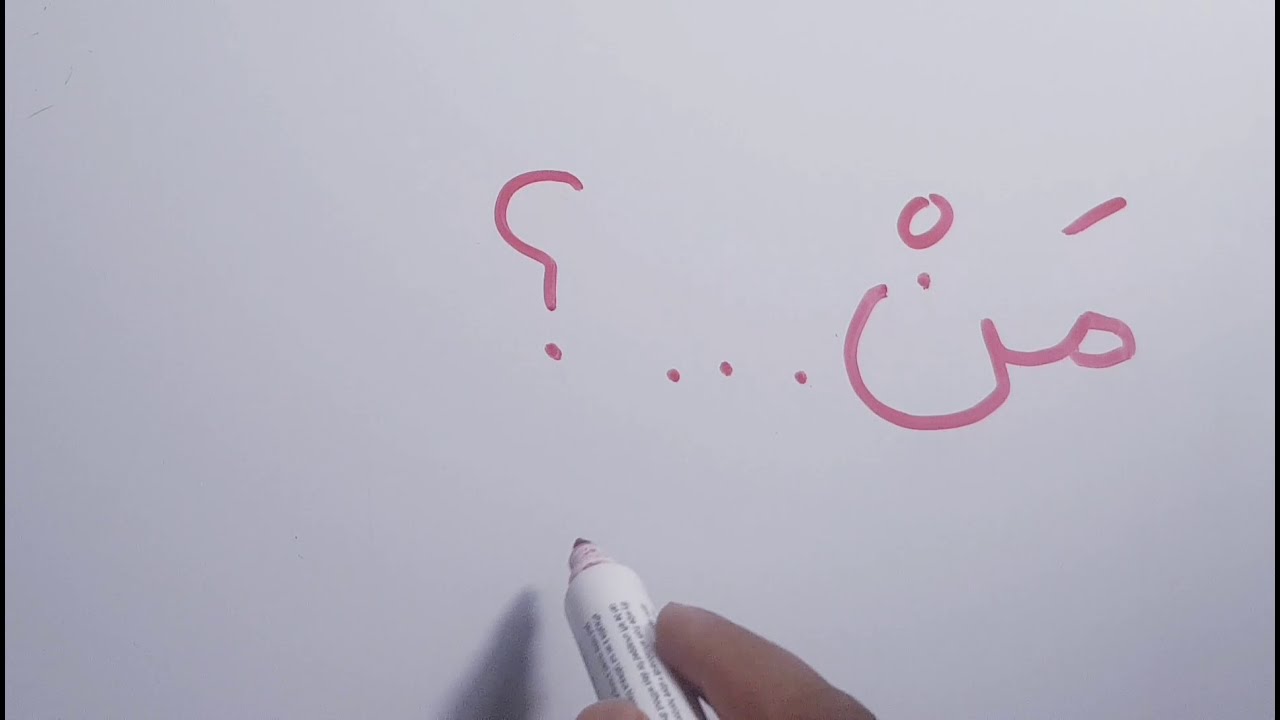
  • Introduction of question words 'Ma?' (what), 'Man?' (who), and 'A?' (question particle) and their usage.
  • Introduction to Lesson 2 focusing on 'dhalika', a demonstrative pronoun meaning 'that' for singular, masculine, and far objects.
  • Comparison between 'hadha' (this, close) and 'dhalika' (that, far) with their respective grammatical conditions.
  • Explanation of Arabic spelling rules where certain letters are pronounced but not written, or written but not pronounced, using 'hadha' and 'dhalika' as examples.
  • Mention of the Arabic linguistic subject 'al-imla'' which studies these spelling rules in detail.
  • Examples of sentences using 'dhalika' and 'hadha' to describe objects and beings at different distances.
  • Clarification on the gender of nouns in Arabic, including non-living things, which affects demonstrative pronoun usage.
  • Brief note on conjunction 'wa' (and) and how it is used separately from demonstrative pronouns in compound phrases.

Full Transcript — Download SRT & Markdown

00:11
Speaker A
Bismillahir Rahmanir Rahim. Alhamdulillahi hamdan kathiran tayyiban mubarakan fihi kama yuhibbu rabbuna wa yardah.
00:19
Speaker A
Last lesson was part three of lesson one, so we completed lesson one of this book, alhamdulillah. All that's left is to do the final piece of homework, and this is what we're going to begin this lesson with.
00:31
Speaker A
The first sentence, and this is a reading and writing exercise, says, "Ma hadha? Hadha qalamun."
00:56
Speaker A
Number two says, "Hadha kalbun." This is a dog. Number three says, "Man hadha?" Who is this? The answer is, "Hadha tabibun." This is a doctor.
01:48
Speaker A
Number four says, "Hadha jamalun." This is a camel.
02:23
Speaker A
Number five says, "Ahadha kalbun?" Is this a dog? The answer is, "La, hadha qittun." This is a cat.
03:30
Speaker A
Number six says, "Ahadha dikun?" Is this a rooster? The answer is, "Na'am." Yes, this is a rooster.
03:47
Speaker A
Number seven says, "Ahadha hisanun?" Is this a horse? The answer is, "La, hadha himarun." No, this is a donkey.
04:12
Speaker A
Number eight, "Hadha mindilun." This is a handkerchief.
05:04
Speaker A
Number nine, "Ahadha waladun?" Is this a boy? "Na'am." Yes.
05:20
Speaker A
Number ten, "Man hadha?" Who is this? "Hadha rajulun." This is a man. So this was the homework from last lesson.
05:36
Speaker A
Before we begin today's class, I'd like to summarize the main topics that we covered in lesson one.
05:45
Speaker A
The first main point that the author wanted to teach us in lesson one was this, "Hadha." Hadha means this. Use it to point out objects. If you want to use hadha to point to an object, the object that you're pointing out has to be "mufradun", it has to be "mudhakkarun", it has to be "qaribun". It has to be mufrad, which means singular. It has to be mudhakkar, which means masculine. It has to be qarib, which means close.
07:32
Speaker A
So if the object fulfills these three conditions, you can say "hadha". Tamam? So this was point number one.
08:12
Speaker A
The other thing which we learned in lesson one is how to ask questions, and we learned how to ask questions using three tools: "Ma?", "Man?", and "A?".
08:35
Speaker A
These three things are what we use to ask questions that we've learned in lesson one. "Ma?" is used to ask about things which are non-intellectual, non-intellectual beings. "Ma?" means what? So non-intellectual, we say "ghayru 'aqilin". Ghayru 'aqilin means non-intellectual, a non-intellectual being, something which has no intellect. "Man?" means who?
09:17
Speaker A
And this is used for the opposite of this. So if this is ghayru 'aqilin, non-intellectual, this is used for "aqilun", something or a being which has intellect, "li'aqil". Tamam?
09:57
Speaker A
"A?" turns a statement into a question. So this is the two main concepts that we should have taken with us from lesson one, and everything that we learn, we need to make sure that we build onto it, we'll build on top of it and not forget it, because this is a basis upon which we're going to build more concepts, insha'Allah.
10:26
Speaker A
Tayyib, let's begin today's class. "Ad-darsu ath-thani." Ad-darsu ath-thani. The lesson, the second. Ad-dars, the lesson, ath-thani, the second. We read it together, we say, "Ad-darsu ath-thani." Ad-darsu ath-thani, the second lesson.
10:49
Speaker A
So this is the second lesson. The first lesson was "Ad-darsu al-awwal". This is "Ad-darsu ath-thani", the second lesson. In the second lesson, the main point which the author wants us to learn is this noun here. It says, "Dhalika." Dhalika, which means that.
11:52
Speaker A
This is another "ismul isharah". This is another demonstrative pronoun, something that we use to point something out. Dhalika is similar to hadha in that they are both "ismul isharah". Let's say it five times. Dhalika, Dhalika, Dhalika, Dhalika, Dhalika. Dhalika means that.
12:26
Speaker A
This is an "ismul isharah". In order for us to use dhalika, just like hadha, there are conditions. So let's write those conditions here. So for us to use dhalika, the object that we're pointing out must fulfill three conditions. The first two conditions are going to be exactly the same as hadha. It has to be "mufradun". The object that we're pointing out has to be singular. Secondly, the object that we're pointing out has to be masculine, "mudhakkarun". This is where the difference lies. Here, with hadha, we said it has to be close, "qaribun". But with dhalika, the object has to be "ba'idun", which means far. So three conditions: the object has to be singular, it has to be masculine, and it has to be far away.
14:15
Speaker A
If these three conditions are met, then you can point to that object using dhalika. You can say, "Dhalika rajulun," that is a man, if he's far away. Tamam? Okay.
15:02
Speaker A
The other thing is there is a special spelling rule, just like hadha. We said with hadha, it is read like this, "hadha". The ha is stretched two counts. It's read like this. However, it's written like this. We omit this alif after the ha, it's not, it's not written. It's only read but not written. And the same with dhalika. Dhalika, we read the dhal two counts. So we're actually reading it like this, "dhalika". We read it like this, but we write it like this. So there's an alif here which is pronounced but not written. So this is the second spelling rule that we've learned. Usually, in Arabic, you write whatever you pronounce.
16:40
Speaker A
Everything that you pronounce is written. However, there are some special rules with certain words where the letter is pronounced, however, it's not written. And the opposite is also true. Sometimes a letter might be written, but it's not read. For example, the waw here in "ulaika", just for an example. "Ulaika". We have example of two things. We have a written a letter, this letter here, which is written but it's not read. You don't read it, you just go "ula". You don't say "uul". And we have a letter which is, yani, not written but read. There's an alif here. I've just represented it with a small alif. "Ulaika". So this stuff, yani, letters which are read which are written but not read, or read but not written, these are studied in a subject which is called "al-imla'". "Imla'". It has its own subject where you study this, "imla'". The subject of imla'. This is where you study this rule.
18:30
Speaker A
So in Madinah Book 1, so far, we've learned two spelling rules. These two spelling rules are studied in this subject in more detail. The first is hadha, the alif is pronounced but not written. And dhalika, the alif after the dhal is pronounced but not written also. So two spelling rules that we have to bear in mind. And you find many people who have not studied, they write dhalika like this, and some of them write hadha like this, because this is how it's pronounced, so they think that this is how it's written, which is a mistake that we need to bear in mind and be careful not to fall into that mistake. Okay.
19:10
Speaker A
So this is our main point that we need to focus on in this lesson, "Ad-darsu ath-thani". Dhalika means that, and it's used to point at things which are far away. Yeah? The opposite of hadha. Hadha for things which are close, dhalika for things which are far.
20:10
Speaker A
Okay. "Ma?" means what? We're asking about something which is non-intellectual, "ghayru 'aqilin", non-intellectual things or beings, like animals and objects and so on. "Ma dhalika?" means what is that? "Ma dhalika?" means what is that? He's talking about a star. It's far away. And this star, as we mentioned, its gender is that it is "mudhakkar", it's masculine. We said everything has a gender in the Arabic language, whether it's a living thing or a non-living thing, they have genders. So, "Ma dhalika?" What is that? The answer, "Dhalika najmun." That is a star. So the words that we've already covered, we're not going to repeat them. We're just going to carry on reading.
20:59
Speaker A
"Hadha masjidun." This is a masjid. So we assume that the masjid is close, and the house is far away. "Hadha masjidun." This is a masjid. "Wa dhalika baytun." Wa dhalika baytun. So this waw is not part of dhalika. So this is one of the things which helps us when we study the Arabic language, we have words which are written together. It's actually two separate words. We have the waw, which is separate, means and, and dhalika, which means that. Wa dhalika. So dhalika is a separate word, waw is a separate word. Wa dhalika, and that is a house. Wa dhalika baytun. "Hadha masjidun wa dhalika baytun." This is a masjid and that is a house.
22:29
Speaker A
Next one. "Hadha hisanun wa dhalika himarun." "Hadha hisanun wa dhalika himarun." This is a horse, and that is a donkey. I'd like to give you guys a benefit. A crossbreed between a horse and a donkey gives us a mule in English.
23:36
Speaker A
In Arabic, a mule, this is a new word that we should also learn. We say, "Baghlun." Baghlun is a mule. A mule. Okay, let's say this five times. Baghlun, Baghlun, Baghlun, Baghlun, Baghlun. Baghl is a mule.
24:05
Speaker A
Okay. We try and pick up as many words as we can, insha'Allah. So a crossbreed between a hisan and a himar gives us baghlun. Tayyib, next word, or next sentence. "Adhalika kalbun?" Is that a dog? "La, dhalika qittun." No, that is a cat.
25:15
Speaker A
Next one. "Ma dhalika?" What is that? "Dhalika sarirun." That is a bed.
25:25
Speaker A
Next page. "Man hadha wa man dhalika?" Who is this and who is that? "Man hadha wa man dhalika?" Who is this and who is that? "Hadha mudarrisun wa dhalika imamun." This is a teacher, and that is an imam. So imam means leader. Imam is a leader. Could be a leader of the Muslims, as a presidential leader, or leader in prayer, any sort of lead, leader is referred to as imamun. This is a new word, so let's say it five times. Imamun, Imamun, Imamun, Imamun, Imamun. Imam is a leader.
26:53
Speaker A
"Hadha mudarrisun wa dhalika imamun." Mudarrisun. There's, I think, a more common word for this, which we're going to learn now. Another word which means mudarris, teacher, which I think is more common, is "mu'allimun". Mu'allimun, teacher. Mu'allimun. Five times. Mu'allimun, Mu'allimun, Mu'allimun, Mu'allimun, Mu'allimun.
27:37
Speaker A
This is a teacher. Another word for mudarrisun. Tayyib. Let's continue. So hadha mudarrisun, this is a teacher, and that is an imam. So one's closer than the other. "Ma dhalika?" What is that? "Dhalika hajarun." That is a rock. Rock. Hajar means rock. So let's say this new word five times. Hajarun, Hajarun, Hajarun, Hajarun, Hajarun. That is a rock. So this is a new word.
29:01
Speaker A
Next sentence. "Hadha sukkarun wa dhalika labanun." "Hadha sukkarun wa dhalika labanun." This is sugar, and that is milk. This is a new word, sukkar means sugar. Sukkarun, sugar. Sukkarun, sugar. Sukkarun, sugar. Sukkarun, sugar. Sukkarun, sugar. Labanun is milk. Milk. So we have hadha sukkarun, and we have wa dhalika labanun. That is milk. This is sugar and that is milk. This is a new word, so let's say it five times, sugar. Sukkarun, Sukkarun, Sukkarun, Sukkarun, Sukkarun. And this is a new word, milk. Labanun, Labanun, Labanun, Labanun, Labanun.
30:38
Speaker A
You find that with laban, this is usually used for the thick yoghurty milk. The thick milk, yogurt, they use this word, laban. But the normal milk, the normal milk, they use this word instead. "Halibun". Halibun is the normal milk. Halibun, Halibun, Halibun, Halibun, Halibun. Halibun is the normal milk. And laban, they usually use that for the yogurt type of milk. Labanun and halibun.
31:58
Speaker A
Okay. So this is today's class. If you've understood today's class, then we should be able to do the homework. Tamrin, exercise. Iqra wa uktub, read and write. And we have four questions. So this is going to be the homework for next lesson, insha'Allah. As well as memorizing the words and understanding the main concept of today's class, which was dhalika. Dhalika means that, and it's an ismul isharah, demonstrative pronoun, which is used for masculine, singular, objects which are far away. This is the main thing. So this is something that goes without saying, that you need to understand the concept of what's being taught in the new lesson, memorize the new words, and then do the homework. This is something which will test your understanding in terms of reading and writing. So these four questions.
33:34
Speaker A
Al-kalimatul jadidah. Al-kalimat. This is the plural of "kalimatun". If you remember in lesson one, we said in the Arabic language, words are divided into three: ismun, fi'lun, harfun. We said kalimatun, a word, is either ismun, fi'lun, or harfun. Al-kalimat, or kalimatun. Kalimatun. This is the plural of kalimatun. A word, words. Words. Okay. So, the, this al that's attached at the beginning means the. So the words. Al-jadidah, the new. Al-jadidah, jadidah means new. And this is a description of something which is feminine. Jadid means new. Jadidah, we're describing something feminine to be new. Al-kalimatul jadidah. Al-kalimatul jadidah, the new words. Imamun is a leader. Hajarun is a rock. Sukkarun, sugar. Labanun, milk.
35:52
Speaker A
Tayyib, this is our lesson for today. Subhanakallahumma wa bihamdika, ashhadu an la ilaha illa anta, astaghfiruka wa atubu ilaik.
Topics:Arabic languageMadinah Arabicdemonstrative pronounshadhadhalikaArabic grammarArabic spelling rulesbasic Arabic questionsArabic lessonArabic beginners

Frequently Asked Questions

What does 'hadha' mean and when is it used?

'Hadha' means 'this' and is used to point to singular, masculine, and close objects in Arabic.

How is 'dhalika' different from 'hadha'?

'Dhalika' means 'that' and is used to point to singular, masculine objects that are far away, unlike 'hadha' which is for close objects.

What are the three question words introduced in Lesson 1?

The three question words are 'Ma?' meaning 'what' for non-intellectual things, 'Man?' meaning 'who' for intellectual beings, and 'A?' which turns statements into questions.

Get More with the Söz AI App

Transcribe recordings, audio files, and YouTube videos — with AI summaries, speaker detection, and unlimited transcriptions.

Or transcribe another YouTube video here →