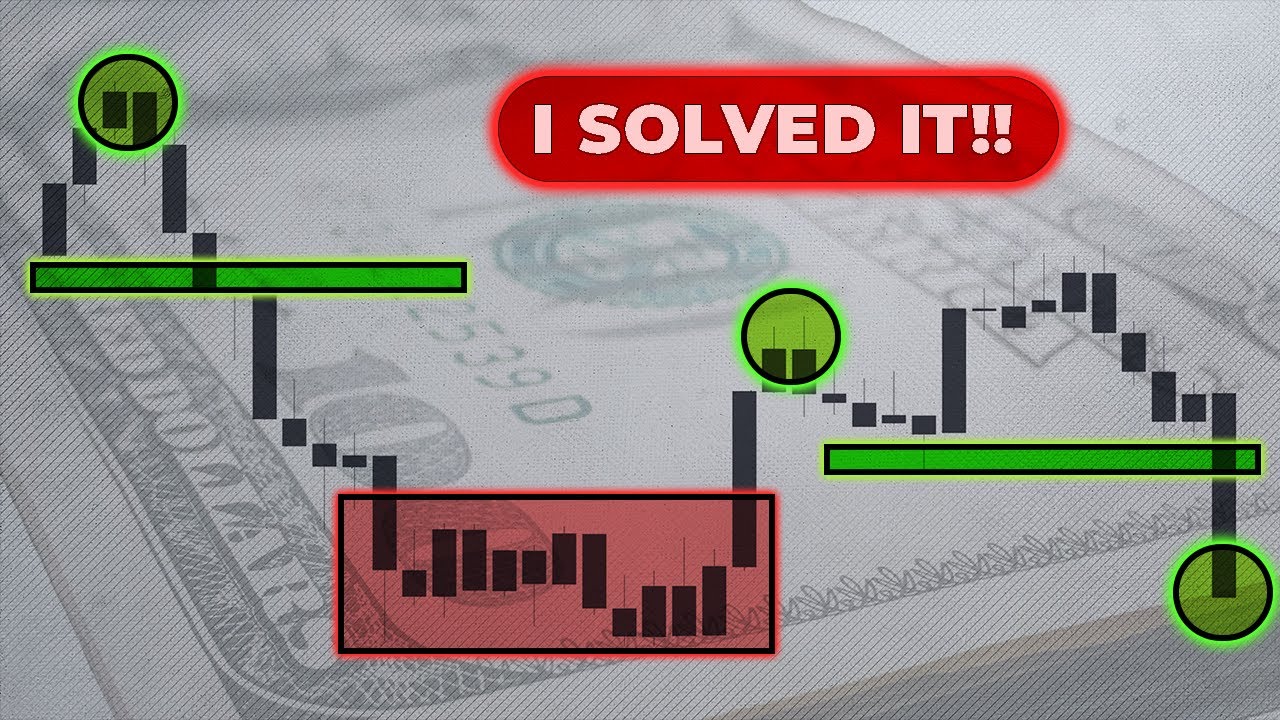
My Scalping Strategy Just Hit Its Cleanest Win Rate Yet… — Transcript

Discover a scalping strategy focused on smart money footprint zones, pivot points, and liquidity runs for higher win rates on 5-minute charts.

Key Takeaways

  • Smart money footprint zones are more reliable than traditional support/resistance for scalping.
  • Breaks of structure define valid zones and signal institutional activity.
  • Footprint zones have a limited active window of 2-4 hours for best results.
  • Pivot points combined with footprint zones increase trade probability.
  • Liquidity runs trap retail traders’ stop-losses and fuel institutional moves.

Summary

  • The scalping signal occurs 3-4 times daily and requires identifying a zone, a line, and a liquidity sweep move.
  • Smart money uses algorithms to build positions in specific zones, creating supply and demand areas rather than traditional support and resistance.
  • Institutions break large orders into small pieces, forming tight consolidation zones before major price moves.
  • Smart money operates on all time frames, scalping alongside retail traders but with superior size and information.
  • Retail traders use stop-losses, while institutions hedge by holding long and short positions simultaneously, creating mitigation zones where price returns.
  • Valid scalping zones must cause a break of structure or change of character, signaling trapped traders covering positions.
  • These footprint zones have an expiration window of 2 to 4 hours, after which they become stale and less effective.
  • Pivot points add a second layer of confluence, increasing the probability of price reaction when aligned with footprint zones.
  • Liquidity runs occur when price spikes beyond obvious stop-loss levels to trap traders before reversing, fueling the smart money’s move.
  • Identifying footprint zones, pivot confluence, and liquidity runs can significantly improve scalping win rates by aligning with institutional activity.

Full Transcript — Download SRT & Markdown

00:00
Speaker A
This scalping signal happens three to four times per day. All you need are three specific conditions: a zone, a line, and a liquidity sweep move. Here's the first one right now. Let me ask you a question. Have you ever noticed those
00:17
Speaker A
levels on your chart? Price hits them and instantly reverses. Most scalpers call it support and resistance, but they are missing the real story. You see, smart money doesn't guess. They use algorithms. These algorithms are designed to build positions in very
00:36
Speaker A
specific zones, creating the supply and demand areas you see on your chart. But here's the part most traders will never understand. Institutions can't just dump millions into the market. They'd move the price too fast and hurt their own
00:53
Speaker A
entry. So, what do they do? They break their orders into tiny pieces, creating those tight consolidation zones you see right before a major move. Watch this.
01:06
Speaker A
See this tight compact area right before the explosion? That isn't random noise. That is a footprint. It's the signature of smart money quietly building their position before the next phase of their attack. Once you learn how to read this,
01:23
Speaker A
you will never look at the market the same way again. Now, most traders get this next part wrong. They think institutions only care about the daily chart. Wrong. Smart money algorithms are active on all time frames, scalping right alongside you. They just have
01:42
Speaker A
bigger size and far better information. And this brings us to the single most important insight of this video. Retail traders use stop-losses. Institutions don't. They use something far more powerful, hedging. They'll hold long and short positions at the same time. And
02:03
Speaker A
when one side moves in their favor, they have to come back to unwind the losing hedge. This creates what we call mitigation zones, areas where price is almost guaranteed to return so they can balance their books. This is why you get
02:20
Speaker A
stopped out. You are busy analyzing micro patterns and lagging indicators. Meanwhile, smart money is orchestrating fakeouts to hunt your stop-loss before they make their real move. You just learned the fundamental truth of the market. It isn't random. It's
02:39
Speaker A
algorithmic. And algorithms have rules. They leave footprints. And once you know what to look for, they become predictable.
02:49
Speaker A
Let me show you how to identify the exact zones where these algorithms operate. Forget everything you've been taught about support and resistance. On the scalping time frames, we're looking for something much more specific. I call them footprint zones, areas where smart
03:08
Speaker A
money has left unmistakable evidence of their activity. The mistake most scalpers make is marking every level where price bounced. Do that on a one-minute chart and you'll have 50 zones by noon. It's useless noise that will destroy your decision-making.
03:27
Speaker A
Here's what actually works. A valid scalping zone must meet one non-negotiable condition. It must cause a break of structure or change of character. This isn't some arbitrary rule. It's the exact moment where trapped traders realize they're wrong and start covering their positions. Let
03:48
Speaker A
me break this down. In an uptrend, you're looking for areas where price breaks above the previous high. In a downtrend, you need price to break below the previous low. This structural break is smart money's signature, their way of
04:04
Speaker A
announcing that they've gathered enough liquidity to push price in their intended direction. See how this demand zone caused an immediate break above the previous high.
04:17
Speaker A
That's not retail buying. That's algorithmic execution pushing price through resistance. So how do you mark these zones? First, find the explosion, the break of structure. Then trace it back. Find the single candle that started it all. The last candle that moved in the opposite
04:38
Speaker A
direction. That is your zone. But here's where most traders mess up the execution. They think these zones work forever. Wrong. On the scalping time frames, you have a small window of opportunity. Here's a rule that will save you from countless bad trades.
04:59
Speaker A
Write this down. These zones have an expiration date. The highest probability setups happen when price returns within just 2 to 4 hours. After that, the footprint is stale. The money has moved on. Think about it logically. Smart money creates these zones by taking
05:20
Speaker A
large positions or closing existing ones. They bring price back to these areas because they have unfinished business, more orders to fill or hedge positions to mitigate. But why would they wait days or weeks to complete their operations? It makes no sense for
05:39
Speaker A
them to wait around when they have the power to move price whenever they want.
05:45
Speaker A
The newest zones represent active institutional interest. The oldest zones represent completed operations that smart money has moved on from. Focus your attention on the areas where the smart money is still active, not where they used to be. This single insight
06:04
Speaker A
will improve your win rate more than any indicator. Now, let's add the second layer that transforms good setups into great ones.
06:13
Speaker A
Pivot points. Most scalpers completely ignore pivots, and that's a massive mistake. These levels represent mathematical zones where big players expect price to react. Here's how they use these levels. As price approaches a pivot point, their algorithms increase activity. If price comes from below, the
06:36
Speaker A
pivot acts as resistance. If price comes from above, it acts as support. But you're not trading the pivot alone.
06:45
Speaker A
You're looking for confluence with your supply or demand zone. When a pivot point aligns with your footprint zone, you found a high probability scalping setup.
06:57
Speaker A
Let me show you why this works. Banks are not using secret formulas. They're using standard pivot points and other common levels. The difference is they have better execution and size. When you align your zones with their reference points, you're essentially frontrunning their next move. That's the edge that separates profitable scalpers from the rest. Pay attention to this zone.
07:15
Speaker A
The demand area aligns perfectly with the S1 pivot point. This isn't coincidence. This is institutional precision at work. The key insight is this. Pivot points don't guarantee price reactions, but they increase the probability when combined with footprint zones.
07:24
Speaker A
Now, we get to the part that makes or breaks scalpers. Reading liquidity runs is what separates those who consistently profit from those who get chopped up by market noise. Every time you place a stop-loss, you're adding liquidity to
07:45
Speaker A
the market. Multiply that by thousands of traders and you create concentrated liquidity pools at obvious technical levels. Smart money algorithms are programmed to identify these pools and run them before executing their real moves. This is why traditional chart
08:01
Speaker A
patterns fail so often in scalping. The obvious levels are traps. Here's what to look for. Look for areas where traders would naturally place stops above obvious resistance, below obvious support, beyond trend line breaks. These are liquidity magnets. You want to see
08:21
Speaker A
price spike beyond an obvious level where stops would be placed, then quickly reverse back into your zone. This spike and reversal is the liquidity run. The beauty of this pattern is that it traps traders on the wrong side of the move.
08:42
Speaker A
If you're looking for a buy setup, you want to see a liquidity run that traps sellers. If you're looking for a sell setup, you want to see a liquidity run that traps buyers. Watch this carefully.
08:59
Speaker A
Price approaches our demand zone, spikes below it to grab the stops, then immediately reverses higher. Those sellers who got stopped out are now watching price rocket away from them.
09:13
Speaker A
Their forced buying becomes fuel for your trade. This is optional but powerful. Not every setup will have a clear liquidity run. But when you can identify one, it dramatically increases your win rate. Think about the psychology. You're entering exactly
09:27
Speaker A
where other traders were forced to exit at a loss. Their pain becomes your gain.
09:45
Speaker A
This isn't cruel. It's simply how markets work. You now have
09:52
Speaker A
This isn't cruel. It's simply how markets work. You now have all the pieces. The footprint zones, the pivot point filter, and the liquidity pattern. This is your step-by-step process for finding trades on the 1 minute and 5-minut charts.
10:12
Speaker A
First, scan for footprint zones. These must be compact consolidation areas or single candles that caused immediate breaks of structure. Mark only the freshest ones that haven't been touched in the last 2 to 3 hours.
10:30
Speaker A
Second, check for pivot point confluence. Your zone should be near a daily pivot level. This adds institutional confluence.
10:40
Speaker A
Third, identify potential liquidity runs. Look for areas where other traders would place obvious stops. Then wait for price to run those levels before returning to your zone. When all three conditions align, you have a complete setup. For buy setups, place your entry
11:01
Speaker A
at the top of the demand zone. Your stop loss goes slightly below the zone. Your target is the next major supply level, recent swing high or opposing pivot point.
11:14
Speaker A
For sell setups, enter at the bottom of the supply zone. Stop loss slightly above the zone. Target the next major demand level, recent swing low, or opposing pivot point. You now have the ability to see what most sculbers miss
11:33
Speaker A
entirely. You can identify institutional footprints, confirm them with pivot confluence, and enter with the backing of big players.
11:44
Speaker A
Let's walk through a complete long trade using this system. I'm looking at the 5-minute chart of gold market during the London session. First, I spot a demand zone. Here's a tight candle consolidation followed by a strong bullish breakout that smashes through
12:02
Speaker A
the previous swing high. This qualifies as a break of structure. So I mark the last bearish candle before the surge.
12:12
Speaker A
Second, I check for pivot confluence. Perfect. The demand zone sits right at the S1 pivot point. This gives me two layers of institutional support. Third, I wait for the entry trigger. Price retraces back to my zone over the next
12:30
Speaker A
hour. As it approaches, I see a classic liquidity run. Price spikes below this zone, triggering stops and reaches our confluence zone. This is my signal. I enter long at the top of the demand zone. My stop loss sits just below the
12:50
Speaker A
zone. My target is the next resistance level, giving me a good risk-to-reward ratio. The trade worked exactly as planned because I waited for all three conditions to align.
13:04
Speaker A
Now, let's look at a short setup. I'm analyzing the 3minut chart of pound dollar during the New York session.
13:13
Speaker A
First, I identify a supply zone. Here's a tight consolidation at the highs followed by a violent breakdown that breaks below the previous swing low.
13:24
Speaker A
This is a clear change of character from bullish to bearish. Then the pivot confluence check. The supply zone aligns perfectly with the R1 resistance level.
13:36
Speaker A
Step three. As price approaches my desired zone, I see a liquidity run. Price spikes above the supply zone, grabs the breakout buyer stops, then immediately reverses lower. Those trapped buyers are now forced to sell at a loss. Their selling pressure becomes
13:56
Speaker A
fuel for my short trade. So, I enter short at the bottom of the supply zone.
14:02
Speaker A
My stop-loss sits just above the zone and my target is the next support level.
14:08
Speaker A
The beauty of this approach is its consistency. You're simply identifying where institutional money is active and joining them.
14:18
Speaker A
Now, I need to show you something crucial. Even with perfect setups, you will have losing trades. I found what looked like a perfect demand zone on the 2minute Euro Dollar chart. tight consolidation, break of structure, pivot confluence, and a liquidity run. Price
14:39
Speaker A
returned to the zone, and I entered long. But price didn't hold. It sliced through my zone like it wasn't there and stopped me out for a 10 pip loss. This happens, and it's normal. Here's what I learned. The zone was created during
14:56
Speaker A
light volume hours. Institutional footprints are strongest during high volume sessions. London open, New York open, session overlaps. These are when smart money is most active. But here's the more important lesson. Risk management is everything in scalping.
15:16
Speaker A
You can't control when you lose. You can only control how much you lose. My rules are simple. Never risk more than 1% of my account on any single scalping trade.
15:29
Speaker A
If I have a $10,000 account, my maximum loss per trade is $100. You now possess a complete scalping system that works. You can identify footprint zones where smart money has left their signature. You understand how to use pivot points as confluence
15:49
Speaker A
filters. You know how to wait for liquidity sweeps that provide maximum fuel for your trades, but more importantly, you understand the progression. You find the zones with structural breaks. You add pivot confluence for increased probability and you wait for the liquidity pattern. The
16:10
Speaker A
entry decision comes down to reading price action in real time. Look for rejection candles, liquidity runs, or other signs that institutional money is defending the level. Your exit strategy is equally important. Take profits at logical levels. Don't get greedy. In
16:30
Speaker A
scalping, it's better to take consistent small wins than to hope for home runs. This system works because it's based on market structure, not indicators. You're reading the actual language of institutional activity. And if you're ready to fit this into a full a toz
16:50
Speaker A
trading system, that's what our academy is for. Link is in the description.
Topics:scalping strategysmart moneyfootprint zonespivot pointsliquidity runsalgorithmic trading5 minute chartsupply and demandstop-loss huntinginstitutional trading

Frequently Asked Questions

What are the three specific conditions needed for the scalping signal?

The three conditions are a zone, a line, and a liquidity sweep move, which together identify high probability scalping setups.

Why do footprint zones have an expiration date?

Footprint zones expire after 2 to 4 hours because smart money completes their operations quickly and moves on, making older zones less relevant.

How do liquidity runs affect retail traders?

Liquidity runs spike price beyond obvious stop-loss levels to trap retail traders, forcing them out of positions and providing fuel for smart money’s real move.

Get More with the Söz AI App

Transcribe recordings, audio files, and YouTube videos — with AI summaries, speaker detection, and unlimited transcriptions.

Or transcribe another YouTube video here →