Raising Your Standards Is a Moral Act — Transcript

L.S. Author discusses how raising personal standards is a moral act influenced by environment, social connections, and responsibility to others.

Key Takeaways

  • Personal standards and growth are influenced by social environment and upbringing.
  • Positive relationships and community support are essential for resilience and self-improvement.
  • Isolation limits growth; humans are inherently social and thrive in connection.
  • Raising your standards benefits not only yourself but also those around you.
  • Choosing your environment wisely can scaffold your success and well-being.

Summary

  • The author survived a serious health crisis in 2019 due to being physically fit, highlighting the impact of upbringing and environment.
  • Fitness habits and positive influences from parents shaped the author's resilience and survival.
  • Our environments and social circles deeply influence our values, beliefs, routines, and behaviors through proximity and peer pressure.
  • Choosing positive environments and friendships is crucial for personal growth and maintaining high standards.
  • The author emphasizes the importance of supportive friends during difficult times and encourages cultivating such relationships.
  • Even if real-life positive environments are limited, media and mentors can provide vicarious positive influences.
  • The psychological scaffolding effect shows how being around high achievers lifts individuals up, while negative environments drag them down.
  • The author rejects the 'lone wolf' myth, stressing that humans thrive through social connection and mutual support.
  • A metaphor compares the world to a garden where nurturing others helps everyone grow, while isolation harms growth.
  • Raising your standards is framed as a moral act because your efforts impact and influence others around you.

Full Transcript — Download SRT & Markdown

00:00
Speaker A
They told me I would have died right then and there.
00:04
Speaker A
The doctor said if it weren't for the fact that I was in shape, that I was working out at the time, I would have been dead back in 2019 when I got the clots in my heart, lung, and legs.
00:16
Speaker A
That was a complication due to my heart condition when I got Valley Fever, and that's what the doctor said, they said, hey, you got lucky, this would have been the end of the road.
00:27
Speaker A
And that kind of thing sticks with you, you know what I mean, if a doctor says that to you, you're going to keep that in the back of your head, you're going to be thinking about that, you're going to follow that trail of thought.
00:37
Speaker A
And I certainly, certainly did.
00:41
Speaker A
And where the trail of thought led me was to the exact conclusion he said on the day, that you are so lucky.
00:50
Speaker A
I was privileged enough to have been born to those parents I had that cared about fitness, that fostered those good habits in me.
01:00
Speaker A
Right, I grown up with a jacked dad who showed me Rocky and I saw him working out all the time, saw my mom working out all the time and she, you know, gave me healthy food options, all of that was absolutely a factor in where I ended up in 2019, the fact that I was able to live.
02:00
Speaker A
Our environments are so contagious, so much of identity is spread through proximity.
02:13
Speaker A
These are the kind of things that that it made me think about, um, certainly there are times in our lives and situations and circumstances that are out of our control.
02:24
Speaker A
Right, I couldn't pick my parents, got lucky, got privileged.
02:28
Speaker A
But that doesn't mean there aren't environments that we can foster for ourselves, there aren't positive pockets of influence that we can bring into our lives to help us.
02:40
Speaker A
Right, we don't have to just be a victim of circumstance.
02:44
Speaker A
We can take responsibility to to further our our self and our growth when we realize how much our social sphere and stuff influences us and how how impactful it is.
03:37
Speaker A
Think about just how much does spread through proximity, some of the stuff I had written down was values, beliefs, standards, efforts, routines, our mirror mirror neurons in our brain, they're set up for that kind of connection and imitation.
03:52
Speaker A
And then we all know about peer pressure, right, we've been hearing about peer pressure.
03:59
Speaker A
And that works in every which way, every which way, man, the people you hang out with, the stuff they care about, the stuff they talk about, the stuff that matters to them, doesn't matter to them, the stuff they clown on.
04:17
Speaker A
It's all going to factor and influence into what you care about, what you clown on, what matters to you, what you speak about.
04:58
Speaker A
Rocky said it back in 1976 when he walked Little Marie home in the first movie, and he said, you hang out with yo-yo people, you get yo-yo friends.
05:07
Speaker A
We have to choose our environments very, very wisely.
05:12
Speaker A
Uh, and then just a side tangent off the notes real quick, uh, away from the notes real quick, is just a a message and a thank you to my friends.
05:24
Speaker A
Right, my friend group, I lost my grandmother last week and I've got this stress test coming up next week for for my heart.
05:36
Speaker A
It's an existential, existentially messy time for me right now, and been struggle city here and there, right.
05:54
Speaker A
I I told my friend Nathaniel that I do the Men's Adventure Fiction podcast with, I told him, you know, I Saturday I was in sweatpants just eating all the sweets, this is just not how I am, like this is not right, um, and he was there to listen, you know, not immediately judge me and throw the hammer down and make fun of me or something, but be there for me, talk to me about it, and then be that quiet anchor, uh, that hand reaching out to to pull me back into my standard, to help me reorient myself.
06:53
Speaker A
So I'm thankful to him and, you know, Kaden, my friend, um, and I, we've got together on Sunday and we walked and just cleared my head and talked and it's good to have good people around you.
07:06
Speaker A
It's important to have good people around you, and I really encourage that to be in the real world for sure.
07:19
Speaker A
And I think it's more possible than a lot of people make it out to be to to make new friends and to get plugged into good environments, I think it is possible.
07:37
Speaker A
But even if it's not, I think we can bring in these vicarious ideals, we can pull uh, mentors towards us with the media we, you know, intake, the types of movies and books and, um, you know, people on people on freaking YouTube, the mindsets that we bring close to us, just like the algorithm video I did, the algorithm of the mind.
08:25
Speaker A
Like it matters, it matters.
08:28
Speaker A
And so just make sure you choose your environment wisely because there's a concept in psychology that's like the scaffolding effect that you'll see with, um, like students a lot of the times, I think is where they do this research, but you'll see like if they're if they're in a classroom with people who are achieving at a higher level and behaving at a higher level, it's going to drag them up a bit.
09:00
Speaker A
The scaffolding is going to bring them up.
09:01
Speaker A
Same thing like if they're with people with a bunch of bad behaviors and maladaptive things going on, it'll drag them down.
09:03
Speaker A
Like the group rises or falls together.
09:06
Speaker A
Um, that's why I reject the lone wolf thing.
09:09
Speaker A
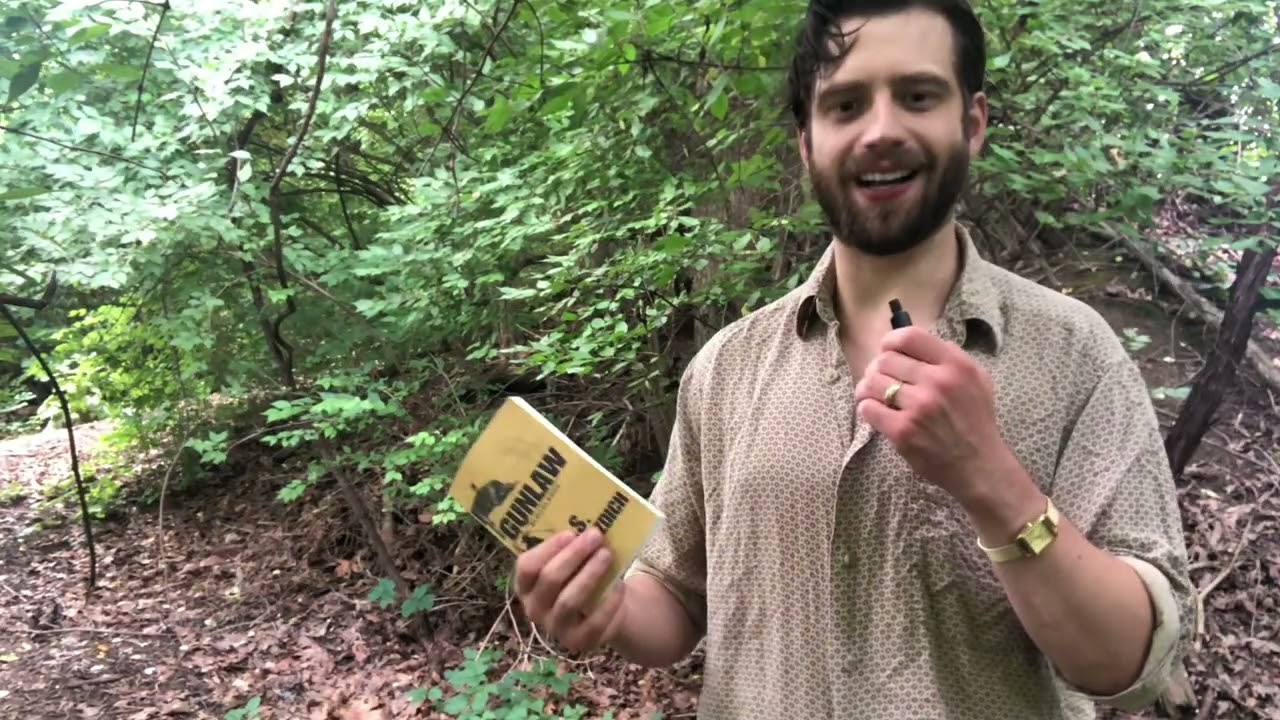
Right, so much of I'm a counselor and I'm also a Men's Adventure Fiction author.
09:16
Speaker A
Which we'll get to, I got my uh, my book came out today.
09:20
Speaker A
My my newest book.
09:22
Speaker A
But uh, you know, so much of my genre has just perpetuated this idea of the lone wolf, this fallacy of the lone wolf, this one man army that can just be uh, always always resilient, always um, independently sufficient.
10:22
Speaker A
And it's just not how we were meant to operate, that's not how the human being is, um, self-improvement and the human experience is more tribal.
10:35
Speaker A
We're we're meant for social connection and we're meant.
10:40
Speaker A
And uh, actually we become our best when we are surrounded by others.
10:44
Speaker A
There's this metaphor that came up to me on the podcast, it just like kind of popped in my mind when Nathaniel and I were recording this morning, where the world is like this big garden, right, we got all these flowers and these beautiful things around, these are other people and their thoughts and and their values and their beliefs and their philosophies, all of it is around here for you to take your attention to with your little water spout, right, and you can water those and you can all grow each other and make this bigger and beautiful, or you can sit there isolated and just pour your attention into yourself with yourself and your little echo chamber, and your flower's not going to grow.
12:01
Speaker A
You keep watering it, it's going to die.
12:05
Speaker A
It's going to flood out and it's going to be bad.
12:06
Speaker A
So you're not meant to be so singularly focused on you.
12:12
Speaker A
Focus on others, help others, be that good friend to somebody else, and then they'll be that good friend to you when you need it.
12:23
Speaker A
Right, if Nathaniel or Kaden or Dom or any of my friends, Jim, my man, if any of you guys were to stumble and fall, I would hope that I would be there for you just like you're there for me.
12:36
Speaker A
Yeah, man, raising raising your standards and becoming more is actually a moral act, right, because your effort affects others and your standards are contagious.
12:40
Speaker A
So, become better not just for you, but for all those people around you, all the people you'll influence, the people you'll touch, the people you'll impact.
Topics:raising standardspersonal growthsocial influencepeer pressurefitnessresiliencemental healthcommunity supportself-improvementL.S. Author

Frequently Asked Questions

How did the author's fitness impact their health crisis in 2019?

The author was told by doctors that being physically fit helped them survive clots in their heart, lung, and legs during a serious health crisis in 2019, which might have otherwise been fatal.

Why does the author reject the 'lone wolf' mentality?

The author believes humans are meant for social connection and mutual support, and that self-improvement is more effective within a community rather than in isolation.

What role do environments and social circles play in personal growth?

Environments and social circles influence our values, beliefs, and behaviors through proximity and peer pressure, meaning positive environments can elevate us while negative ones can hold us back.

Get More with the Söz AI App

Transcribe recordings, audio files, and YouTube videos — with AI summaries, speaker detection, and unlimited transcriptions.

Or transcribe another YouTube video here →