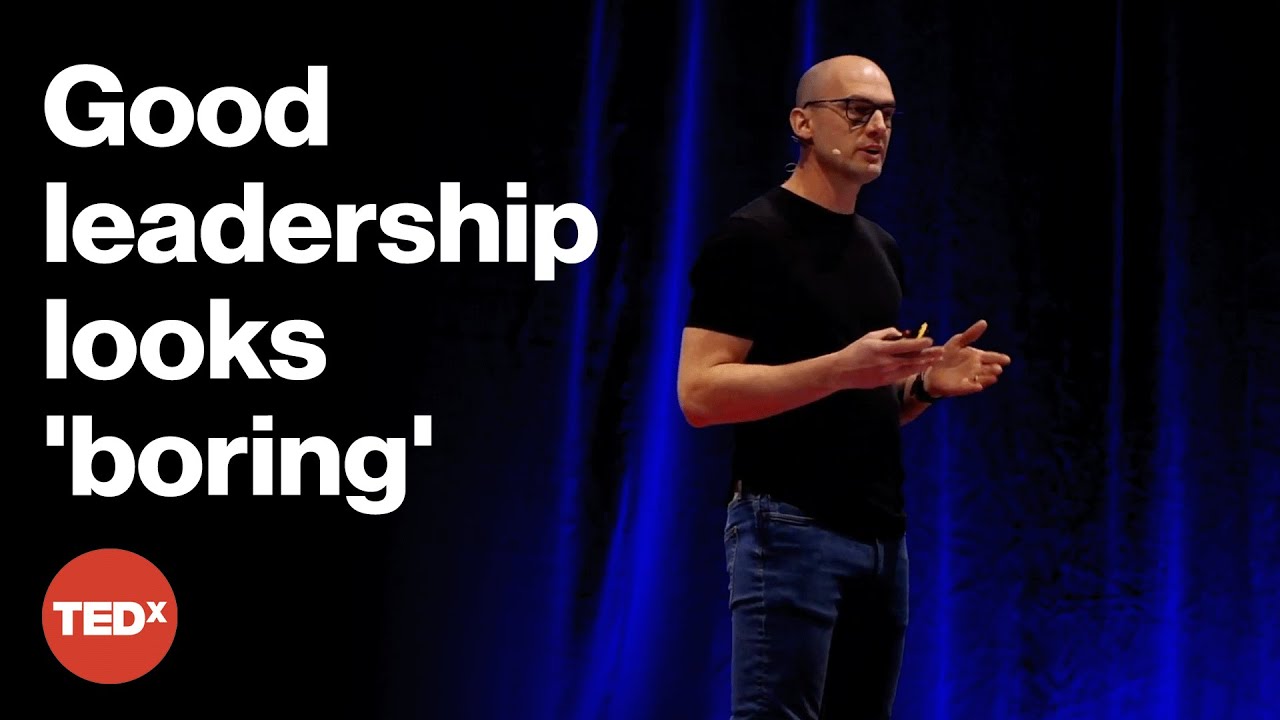
Learn how to interview almost anyone with practical tips on preparation, listening, and creating meaningful conversations from Mike Dronkers.
Ask about this video. Answers come from its transcript only — with the timestamp, so you can check them.
Generated from the transcript and can be wrong — check the timestamp.
Key Takeaways
- Do thorough prep including researching and listening to past verbal interviews.
- Use follow-up questions based on previous interviews to deepen the conversation.
- Icebreakers should be relevant and help guests relax.
- Listen actively and avoid interrupting or planning ahead during the interview.
- Embrace silence to encourage guests to share more candidly.
What the video covers
- Interviewing is an art but can be approached as a skill focused on listening and preparation rather than expertise.
- Preparation is key: research your guest via Google and find previous verbal interviews to understand their style and topics.
- Use the 'Terry Gross move' by following up on answers from other interviews to create engaging questions.
- Avoid relying on email interviews as they are often scripted; verbal interviews reveal more authentic responses and social cues.
- Icebreakers work well when relevant and help guests feel comfortable and open up.
- Active listening is crucial: focus fully on the guest without planning your next question or interrupting.
- Silence or 'dead air' can encourage guests to reveal unexpected insights, but use it carefully.
- The biggest tip is to shut up and give the guest space to talk at their own pace.
- These techniques help you fake competence and build meaningful conversations even without deep subject expertise.
- The goal is to create a casual, comfortable environment that encourages honesty and human connection.
Full Transcript — Download SRT & Markdown
Speaker A
So, interviewing is is an art, um, but I don't treat it that way.
Speaker A
So, let's put it like this, like this is basically a talk about not talking.
Speaker A
I work at a very eclectic community radio station and we're really lucky.
Speaker A
We talk to all kinds of people, yeah, there's bands that come through, that's great, I can hang with that, but authors, read a fucking book.
Speaker A
I don't know either.
Speaker A
But the thing is, I have to have this conversation with them and I want it to be good and meaningful.
Speaker A
I really do.
Speaker A
And I want to know what makes them tick.
Speaker A
The problem is, I'm not an expert in fluvial geomorphology.
Speaker A
And the truth is, in this life, you get to be an expert in like one, maybe two things, max, okay?
Speaker A
So how do you get through this?
Speaker A
What I want to talk to you today about is how to fake your way through an interview.
Speaker A
And hopefully have a great conversation on the other side of it, okay?
Speaker A
Now, I did get some on-the-job training, it was very sparse.
Speaker A
Um, and the the woman who was training me, she sort of walked me through the building.
Speaker A
I was going to be on the air in a week.
Speaker A
And she's like, here's how you do this, here's how you do this.
Speaker A
Oh, and you're going to be interviewing people.
Speaker A
And I'm like, oh, okay.
Speaker A
I get a pen out, right?
Speaker A
She's like, here's how you do that, you just shut up.
Speaker A
I put the pen away.
Speaker A
She's like, you just shut up, you got that?
Speaker A
I got that.
Speaker A
Uh, and that was 15 years ago, I still got that.
Speaker A
It's fantastic advice.
Speaker A
And there's a couple other tricks that I want to share with you.
Speaker A
There's there's about six little ones and then one massive one.
Speaker A
So let's do this.
Speaker A
Here's how you interview almost anyone.
Speaker A
Trick number one, do some prep.
Speaker A
Come on, don't be that guy who is like, I'm just going to wing it, man.
Speaker A
And I'm looking at podcasters mostly for this.
Speaker A
There's this scourge of people who think that they can sit down and hold their own.
Speaker A
And they can't.
Speaker A
Uh, nobody is that good.
Speaker A
Nobody is that good, okay?
Speaker A
And secondly, it's a little arrogant and vain to think that you are.
Speaker A
So show your guest, it's true.
Speaker A
Show your guest the basic dignity of a Google search.
Speaker A
It's not hard, do it on your phone.
Speaker A
I don't care when you do it, just do it.
Speaker A
Okay, so number two.
Speaker A
You are going to be doing some prep.
Speaker A
I suggest, since that author is coming in and you may not have read the whole book.
Speaker A
Or like maybe even half of it.
Speaker A
They're going to need you to know about it.
Speaker A
So what you do is you find interviews they already did.
Speaker A
And somebody else can do the work for you.
Speaker A
Now, I'm not saying, I'm not saying steal their questions.
Speaker A
Because that's wrong.
Speaker A
But I am saying you can use the answers that they gave earlier.
Speaker A
As your jumping off point, okay?
Speaker A
We call this the Terry Gross move.
Speaker A
You guys know who Terry Gross is.
Speaker A
Okay, she's fantastic.
Speaker A
And she said this was a stealable move, I was in the room.
Speaker A
She said you can have it, okay?
Speaker A
Um, so what that looks like when you take, you're basically following up on somebody else's question.
Speaker A
So if that person is on NPR.
Speaker A
And that person says, well, my workflow goes like this, I wake up at 7:05.
Speaker A
Then I do hot yoga.
Speaker A
Then I'm in the office by nine.
Speaker A
You can use that answer and you can pick it apart.
Speaker A
You can say, 7:05?
Speaker A
Like, what normal person sets an alarm for 7:05?
Speaker A
It's 7:00, 7:30.
Speaker A
Why that?
Speaker A
And then they will tell you, well, you know, I did the math, this is how long it takes me to get to the bathroom.
Speaker A
And then the shower takes this long.
Speaker A
And then you're off to the races, okay?
Speaker A
So 7:05, that's the Terry Gross move.
Speaker A
Follow up.
Speaker A
All right.
Speaker A
Now, um, if you're going to be finding interviews with people.
Speaker A
This is, uh, my personal favorite.
Speaker A
And I hope that you remember this and steal it.
Speaker A
You can have it.
Speaker A
It goes like this.
Speaker A
Find verbal interviews.
Speaker A
When you read in Rolling Stone or some blog, an interview, the odds are very high that that interview was done over email.
Speaker A
So they're thinking their answers out.
Speaker A
It's all calculated.
Speaker A
It's tactical.
Speaker A
You don't want that.
Speaker A
You want the verbal things where you get the social cues and the intangibles that they're going to bring to you.
Speaker A
Like a normal human in a normal human conversation.
Speaker A
Where you know if they're nervous and you can help them.
Speaker A
If you know that they're going to be nervous.
Speaker A
You can see it and you can predict it.
Speaker A
Okay, so another thing they'll telegraph to you, uh, in these other interviews that you're listening to.
Speaker A
Do they speak too fast?
Speaker A
Are they walled off?
Speaker A
Do they have a stutter, a lisp?
Speaker A
Like you want to know all this going in.
Speaker A
So find verbal interviews.
Speaker A
Now the sidebar to that, this is a great thing.
Speaker A
As an interviewer, you really, really want to hear these words.
Speaker A
How did you even know that?
Speaker A
That's what you want to hear.
Speaker A
And if you can find these sort of, uh, small-time interviews.
Speaker A
These verbal interviews that they've done, right?
Speaker A
If you're going on NBC in the morning, you are going to stay up all night practicing.
Speaker A
But if you were going on a high school radio station in Tuscaloosa, Alabama.
Speaker A
You were going to phone it in from your car on your way to pick up your kids, right?
Speaker A
You're going to forget everything you said on that interview.
Speaker A
So those are the ones you want to find, the little tiny ones where the stakes are very low and they're very casual.
Speaker A
Because all these tips that I'm trying to give you set a stage for a person to be casual, comfortable and human.
Speaker A
So find the little ones because when you bring up the thing that they forgot they told the high school DJ in Tuscaloosa, Alabama.
Speaker A
They will tell you, how did you even know that?
Speaker A
And then they loosen up even more because things are going good.
Speaker A
First three tips, that's all beforehand.
Speaker A
Second three tips are going to be during the interview.
Speaker A
Number one.
Speaker A
I hate to even say it, but icebreakers.
Speaker A
They totally work.
Speaker A
Your summer camp counselor was right, okay?
Speaker A
And the trick that you want to do is when you are breaking the ice with somebody you don't know.
Speaker A
Especially when they're way out of your league.
Speaker A
Is make it relevant, camouflage it.
Speaker A
So if you're talking to a fluvial geomorphologist.
Speaker A
I and I have.
Speaker A
She was awesome.
Speaker A
It's great.
Speaker A
You can ask things like, what was your major in college?
Speaker A
It's relevant, but not really.
Speaker A
It's an icebreaker.
Speaker A
And they go, oh yeah, you know, I, well, I went into college as a poetry major, but then I switched to geology.
Speaker A
What?
Speaker A
Like, how how do you connect that?
Speaker A
And you ask her that and she will connect poetry to geology.
Speaker A
And it's beautiful, okay?
Speaker A
So don't fear the icebreaker, it'll work for you.
Speaker A
Last two little things before we get to the big one.
Speaker A
Number one.
Speaker A
Is, uh, listen, which is harder and harder and harder.
Speaker A
Everything in this world is trying to shorten your attention span.
Speaker A
And everything is winning at that.
Speaker A
Everything is winning.
Speaker A
And if you're not listening to me right now, I feel you.
Speaker A
Um, but try to focus in and and don't do these corny things.
Speaker A
Of like trying to think of your next question while they're still talking.
Speaker A
Listen completely and be there.
Speaker A
Be present.
Speaker A
Uh, don't try to get a joke in.
Speaker A
And certainly do not step on their answer.
Speaker A
Give them the time, okay?
Speaker A
So, so you want to listen and you can only listen if you, last one.
Speaker A
Shut up.
Speaker A
She was right.
Speaker A
It comes back to shutting up and giving them some breathing room.
Speaker A
So that they can say their piece at a tempo they're cool with.
Speaker A
And there's a fun sidebar to the shut up thing, which is this.
Speaker A
Uh, dead air chicken.
Speaker A
Does that make sense just right off the bat?
Speaker A
No, okay.
Speaker A
So dead air chicken works like this.
Speaker A
It can go on.
Speaker A
And I will win.
Speaker A
Because when you create an awkward pause that is awkward enough.
Speaker A
The thing that they will desperately fill it with burbles up from a wild part of their psychology.
Speaker A
That they cannot control at all.
Speaker A
And this is where you get your unpredictable stuff.
Speaker A
So dead air chicken, do proceed with caution though.
Speaker A
All right.
Speaker A
So now these things will get you through an interview.
Speaker A
They will get you through to the other side and you will kind of appear competent.
Speaker A
Because you kind of are at this point.
Speaker A
But it won't give you the conversation that you want to have.
Speaker A
The one that people will email you later about and say, man, I didn't think fluvial.
Speaker A
What is it?
Speaker A
I didn't know that was my thing.
Speaker A
So they will email you this if you can set the table for your guest to be comfortable.
Speaker A
You know when you're at a party.
Speaker A
And you are explaining your job to somebody else or your passion to somebody else.
Speaker A
And they're just leaning in and in and in and they're like, bring it, bring it.
Speaker A
I want to know everything you can tell me.
Speaker A
That is the real trick.
Speaker A
Bored people are boring.
Speaker A
Interested people are interesting.
Speaker A
So what I'm trying to tell you is be interested in everything possible, right?
Speaker A
Everything at all.
Speaker A
Curiosity is a muscle.
Speaker A
And I'm not the most curious person by any stretch.
Speaker A
But I have found that the ROI on curiosity, man, that pays for itself.
Speaker A
Because you, if you can put yourself in uncomfortable positions, if you can, like for me, it looks like, um.
Speaker A
You know, sort of cultivating curiosity, I, I try to diversify my media.
Speaker A
I try to listen to genres of music I don't like.
Speaker A
Free jazz.
Speaker A
What the hell, free jazz?
Speaker A
I want to know what people see in free jazz.
Speaker A
I don't get it.
Speaker A
But I listen to it sometimes.
Speaker A
And and it's it's sort of rewarding.
Speaker A
But it gives me practice at being uncomfortable with things I don't know about.
Speaker A
So, I guess what I'm trying to say here is that if you can be interested in everything.
Speaker A
As much as possible.
Speaker A
It makes your life better.
Speaker A
Not just when you're at work having to interview fluvial geomorphologists, right?
Speaker A
Uh, because you will find that you can hang with most conversations.
Speaker A
Because you are bought in, you are genuinely interested in what you are being told.
Speaker A
You are learning.
Speaker A
And there's an Emerson quote.
Speaker A
He says.
Speaker A
Every man I meet is my superior in some way.
Speaker A
And in that I learn from him.
Speaker A
And that is in my experience completely true.
Speaker A
I think about it a lot.
Speaker A
And I have talked to Oscar winners.
Speaker A
Um, I have talked to hobos who live in a bush.
Speaker A
And like.
Speaker A
They're equally interesting to me.
Speaker A
Their narrative matters.
Speaker A
And if I can sort of set the table for them to to tell me how they are the good guy in their own movie.
Speaker A
That's all I want.
Speaker A
And that's all they want.
Speaker A
And time after time, if you can get to that point in your your discussions and your interviews.
Speaker A
You will find that you walk away a better person.
Speaker A
So, to conclude.
Speaker A
Um, do the tips, you know, do some, do some prep.
Speaker A
Seriously, do that.
Speaker A
Use the icebreaker, find the verbal interviews.
Speaker A
Do all that stuff.
Speaker A
But if you can make curiosity your hobby.
Speaker A
If you can become an expert in curiosity.
Speaker A
If that's your one area of expertise, you will find that every single person is worth listening to.
Speaker A
And you're going to walk away better.
Speaker A
And don't forget to shut up.
Topics:interviewinginterview tipsMike DronkersTEDx Talksconversation skillsactive listeningpreparationicebreakersdead airTerry Gross move