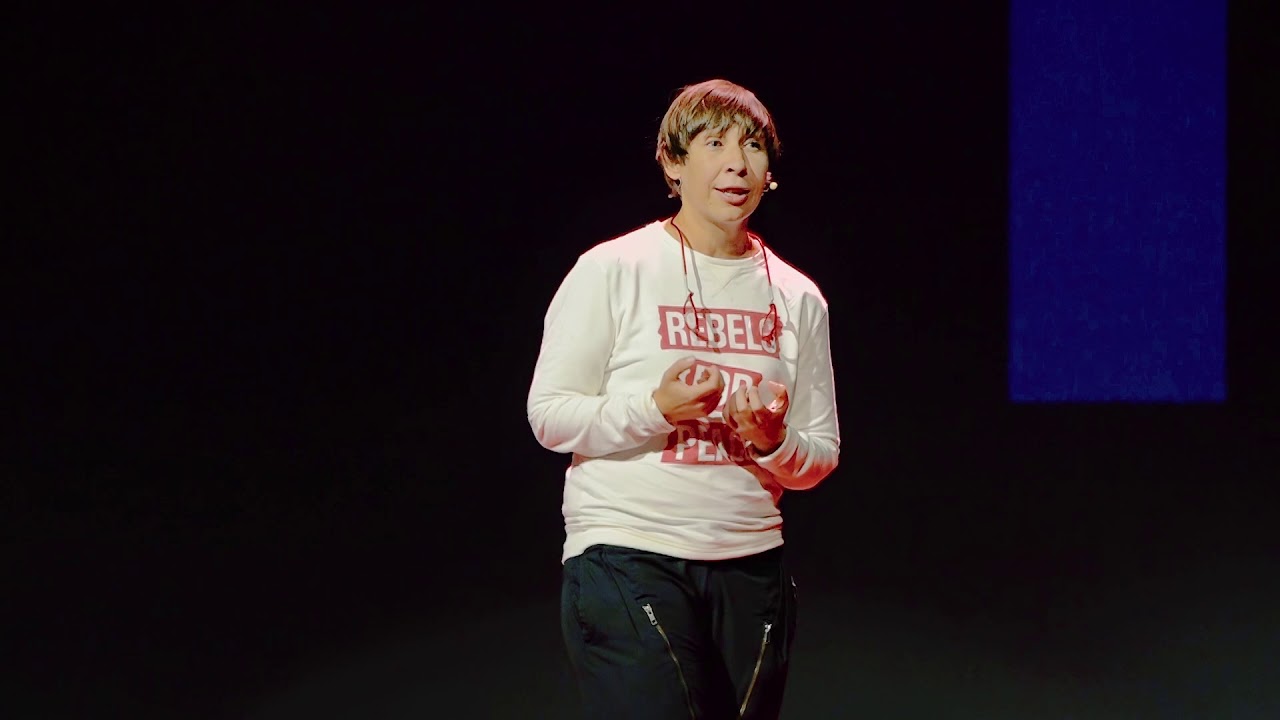
Five Minutes to Fix Our Broken Healthcare System | Eva … — Transcript

Eva Lana Minkoff shares a 5-minute tool to improve doctor-patient relationships and fix the broken healthcare system through respect, communication, and trust.

Key Takeaways

  • Doctor-patient relationships need respect, communication, and trust to be effective.
  • A brief, structured conversation can reveal critical patient context beyond symptoms.
  • Both doctors and patients often feel misunderstood, which harms care quality.
  • Technology like compatibility matching can help align patients with suitable doctors.
  • Fixing healthcare starts with improving human connections, not just systemic changes.

Summary

  • Eva compares her experiences with doctors to online dating, highlighting the importance of being treated as a person, not an objective.
  • She spent 10 years seeking a diagnosis, finally diagnosed with fibromyalgia after a doctor asked about her life beyond medical history.
  • Successful relationships, including doctor-patient ones, require respect, communication, and trust.
  • The healthcare system is broken not due to technology or funding but due to a foundational crack in doctor-patient relationships.
  • Doctors and patients both feel misunderstood and unheard, creating a gap in communication and trust.
  • Eva created a tech company using compatibility matching to help chronic illness patients find ideal doctors.
  • A simple 5-minute structured conversation can provide a 360-degree view of a patient's life, improving understanding and diagnosis.
  • She shares a study showing happiness is defined by expectations and the importance of understanding patients' broader life context.
  • A poignant story of Joe, a patient whose emotional pain was overlooked until the right questions were asked, illustrating the power of empathy.
  • Improving healthcare relationships quickly and efficiently is possible without legislative change by fostering better communication and trust.

Full Transcript — Download SRT & Markdown

00:15
Speaker A
So I went on this date with a guy I met online, good on paper.
00:20
Speaker A
Worst date ever.
00:24
Speaker A
He shows up late, barely says hello, hardly lets me talk before probing me with a barrage of questions.
00:32
Speaker A
And then he just walks out, and who gets left with the bill?
00:39
Speaker A
Worst date ever.
00:42
Speaker A
Undeterred, I continued online dating.
00:45
Speaker A
And I go out with this other guy, also good on paper, but this one led to a long-term relationship.
00:54
Speaker A
He shows up with a warm smile, asks me about something he found interesting on my profile, and then we engage in meaningful conversation about each other's histories.
01:45
Speaker A
The difference is clear, one treated me like an objective, the other treated me like a person.
01:58
Speaker A
These are true stories about experiences I've had, but I did lie about one little detail.
02:04
Speaker A
These weren't dates with men, they were appointments with doctors.
02:12
Speaker A
I spent 10 years doctor dating, searching for a diagnosis to make sense of my mixed bag of chronic symptoms.
02:22
Speaker A
It wasn't until this last doctor that someone had intentionally asked me about my life outside of my standard medical history, and therefore was properly able to diagnose me with fibromyalgia.
02:35
Speaker A
So what's the message here, that a good on paper guy can be misleading? Definitely true.
03:24
Speaker A
But deeper than that, whether a relationship is romantic or clinical, research shows that there are three essential qualities to every successful relationship.
03:37
Speaker A
Respect, communication, and trust.
03:46
Speaker A
This is true for couples, friends, partners, parents, and yes, doctors too.
03:50
Speaker A
Unfortunately, doctor-patient relationships aren't prioritized like our other relationships, it's not the doctor's fault, it's not the patient's fault.
04:06
Speaker A
It's the nature of our faulty healthcare system.
04:15
Speaker A
Now, it's not news that our healthcare system is broken.
04:20
Speaker A
And it is a multifaceted issue.
04:24
Speaker A
But deeper than the obvious complexities and disconnects, there is a crack in the foundation that we often ignore, a crack that can't be patched up by better technology, more money, a private or a single-payer system.
05:14
Speaker A
But it can be fixed by us, doctors are people, patients are people, we as people can take part in fixing our broken healthcare system because we make up that system.
05:29
Speaker A
We don't need legislative change to have better doctor-patient relationships, although many would argue that we need more time.
05:39
Speaker A
A doctor's appointment rarely is longer than 15 minutes.
05:44
Speaker A
So the question to fix our foundation of healthcare isn't only how do we build stronger healthcare relationships, but also how do we do so quickly and efficiently?
05:57
Speaker A
Today I'm here to share with you a tool that takes only five minutes.
06:45
Speaker A
My professional experience in healthcare as a researcher and my personal experience as a patient led me to create a tech company that uses compatibility matching, just like a dating site, to help people with chronic illnesses find their ideal doctor-patient relationships.
07:06
Speaker A
In preparing for today, I asked our doctor and patient users what their issues are with the healthcare relationship as it is.
07:15
Speaker A
The majority of our patients agreed upon this sentiment, I feel like doctors don't care to understand me.
07:27
Speaker A
Now I want you to imagine for a second that we're talking about a marriage or a life partnership, if your partner said to you, I feel like you don't care to understand me, wouldn't that be a giant red flag that something's wrong? Of course.
08:24
Speaker A
But would we ever say that to our doctors? So, let's look at it from the doctor's side, what's their experience?
08:32
Speaker A
Well, doctors have spent 10 plus years in grueling training, in which they have had almost no money, time, autonomy, and then as they grow into their professions, they have to retain an ever-growing encyclopedia of medical knowledge.
08:58
Speaker A
They have to emotionally engage and detach from dozens of people each day, and at the same time keep in mind financial, legal, and time constraints, they have dedicated their lives to helping others.
09:11
Speaker A
People don't become doctors to self-serve.
09:16
Speaker A
They become doctors because they have a passion to help those in need, so our doctors, what did they, what were their greatest complaints? Their comments all boil down to, I feel like patients don't understand my limitations.
10:05
Speaker A
They're in a tough place, patients are in a tough place, they don't understand me versus they don't understand my limitations, both feel misunderstood and unheard.
10:17
Speaker A
Respect, communication, and trust are absent, no relationship can thrive like that.
10:24
Speaker A
So how do we close this gap in understanding?
10:30
Speaker A
When I was in college, as a neuro-psych major, my family cardiologist let me set up a study, a summer study internship in his spare office.
10:46
Speaker A
I was interested in studying the definition of happiness based on expectations.
10:50
Speaker A
So it went like this, I'd go up to people in the waiting room, introduce myself, hey, I'm Eva, Dr. Smith's intern, would you be interested in joining me for a few minutes to answer some questions?
11:42
Speaker A
They'd follow reluctantly and confused, clearly thinking, why is this girl bothering me?
11:54
Speaker A
So I'd usher them in, have them sit across from me, and then I'd have them choose a happy level face that best identifies how they feel the majority of the time.
12:02
Speaker A
I'd then explain, I'm going to have you reflect on 10 different life circumstances, please tell me if at this time your expectations, whether or not they have been met, unmet, or exceeded, I'd ask them about their career, their family life, their health.
12:24
Speaker A
And then I'd ask them to review each again and rate each in terms of importance.
12:29
Speaker A
Basically,
12:30
Speaker A
how much
12:31
Speaker A
did
12:32
Speaker A
them
12:33
Speaker A
how
12:34
Speaker A
much
12:35
Speaker A
do
12:36
Speaker A
they
12:37
Speaker A
matter
12:38
Speaker A
to
12:39
Speaker A
you
12:40
Speaker A
in
12:41
Speaker A
the
12:42
Speaker A
first
12:43
Speaker A
place.
12:44
Speaker A
And lastly, I would ask if there are any extenuating circumstances, extreme things going on in their lives, positive or negative, that would greatly influence how they currently feel, things like divorce, a promotion, a baby.
13:27
Speaker A
My study supported my hypothesis, one's level of happiness is defined by their expectations.
13:33
Speaker A
Boom.
13:35
Speaker A
Success.
13:36
Speaker A
But the real success came from the outcome of conducting the study itself.
13:45
Speaker A
In five minutes, in a simple questionnaire-based conversation, I had a 360-degree view of each person's world, way beyond their health concerns.
13:59
Speaker A
One woman even admitted to me, now you know me better than my best friend.
14:07
Speaker A
Is that all it takes, five minutes, structured conversation, active listening?
14:15
Speaker A
What if our doctors knew us better than our best friends?
14:19
Speaker A
What if my doctor had, would I have been diagnosed sooner?
14:26
Speaker A
There's one interview I'll never forget.
14:30
Speaker A
This man, Joe, a recent immigrant from South Africa.
14:36
Speaker A
He was actually intrigued when I asked him to participate in the study.
14:41
Speaker A
But despite his cheery disposition, Joe chose this face.
14:52
Speaker A
So, when it came time for the last part of the study, extenuating circumstances, I said to Joe, you seem to be a relatively happy guy, Joe.
15:37
Speaker A
Your expectations have been met or exceeded in almost every aspect of your life.
15:46
Speaker A
Except family life, which you've also rated of high importance.
15:52
Speaker A
If you don't mind me asking, what is it about your family situation that seems to have negatively impacted your happiness so much?
16:42
Speaker A
Last year, my family moved from the US to South Africa to protect my daughter from the rising crime in our country, shortly after we moved to the US, my daughter was killed.
17:05
Speaker A
Yes, I am a generally happy and positive guy, but the pain of losing my daughter inevitably impacts my happiness, so I try not to talk about it.
17:17
Speaker A
Joe came to see his doctor that day for unexplained chest pain, tests weren't showing any signs of physical issues, so his doctors had recommended that he take aspirin in the meantime until they figured out what was going on, Joe hadn't told any of his doctors about his daughter, he didn't think it was relevant, and doctors didn't know to ask, he seemed so happy.
18:32
Speaker A
But in five minutes, Joe trusted me, an intern, a stranger he didn't know, because I had asked the right questions to trigger a trusting relationship, which made him feel comfortable enough to divulge helpful context to his chest pain.
18:49
Speaker A
Relationships, whether they're at home or in the workplace or wherever, are the greatest contributors to our happiness.
19:04
Speaker A
If our happiness affects our health, and our relationships affect our happiness, how can we ignore the necessity of relationships in our healthcare?
19:15
Speaker A
The answer is, we can't.
19:19
Speaker A
Doctors, patients, all of us are equally responsible for the healthcare relationship, just like any relationship.
20:11
Speaker A
Knowing that, how do we take action at better addressing this responsibility? How do we bring respect, communication, and trust back to the healthcare relationship, and how do we do it in five minutes?
20:27
Speaker A
Patients, you can take action by first recognizing that your life outside the exam room matters, you don't have to tell your doctor your whole life story, but if it matters to you, it's important, even if it seems medically irrelevant.
20:46
Speaker A
Advocate for yourself, don't be intimidated, that's just another person with a stethoscope around their neck, a person who does care, who does want to help and understand, so do it together, you're in a partnership.
21:42
Speaker A
And doctors, you can take action by using this tool, an in-person, brief, but inclusive questionnaire method, it could save you countless hours, dollars, and frustrations when you do.
22:00
Speaker A
But you can adapt it to your own style, adapt it to your patients, for instance, pediatricians, you can ask kids to give a thumbs up or a thumbs down when asking them about school, siblings, bedtime, ask more, listen more, be curious, there's more to a person than what's on their chart, and often they won't share with you unless you ask.
22:29
Speaker A
If Joe had never exposed his heartbreaking story, he would have been prescribed even more unnecessary tests and medications, instead, he shared his emotional pain with his doctor and found the proper relief in therapy.
23:27
Speaker A
When the qualities of a successful relationship, respect, communication, and trust are present between a doctor and a patient, the impact is astounding.
23:41
Speaker A
Quality of life improvements, better treatment outcomes, fewer readmissions, more efficient time appointments, when we get to the true problem faster, there's a financial benefit to the individual and the system, and true understanding may only take the time of a few curious questions.
24:05
Speaker A
Yes, we would all love more time with our doctors, with our patients, but regardless of when or if that ever happens, we can fix our broken healthcare system now by bringing human care back to healthcare, thank you.
Topics:healthcare systemdoctor-patient relationshipfibromyalgiachronic illnesscommunicationtrustrespecthealthcare innovationpatient experiencecompatibility matching

Frequently Asked Questions

What is the main problem with the current healthcare system according to Eva Lana Minkoff?

The main problem is the lack of respect, communication, and trust in doctor-patient relationships, which leads to patients feeling misunderstood and unheard.

How does Eva suggest improving doctor-patient relationships quickly?

She suggests using a simple, five-minute structured conversation that allows doctors to understand patients' lives beyond their medical history, fostering trust and better diagnosis.

What role does Eva's tech company play in fixing healthcare?

Her company uses compatibility matching, similar to dating sites, to help people with chronic illnesses find doctors with whom they can build ideal, trusting relationships.

Get More with the Söz AI App

Transcribe recordings, audio files, and YouTube videos — with AI summaries, speaker detection, and unlimited transcriptions.

Or transcribe another YouTube video here →