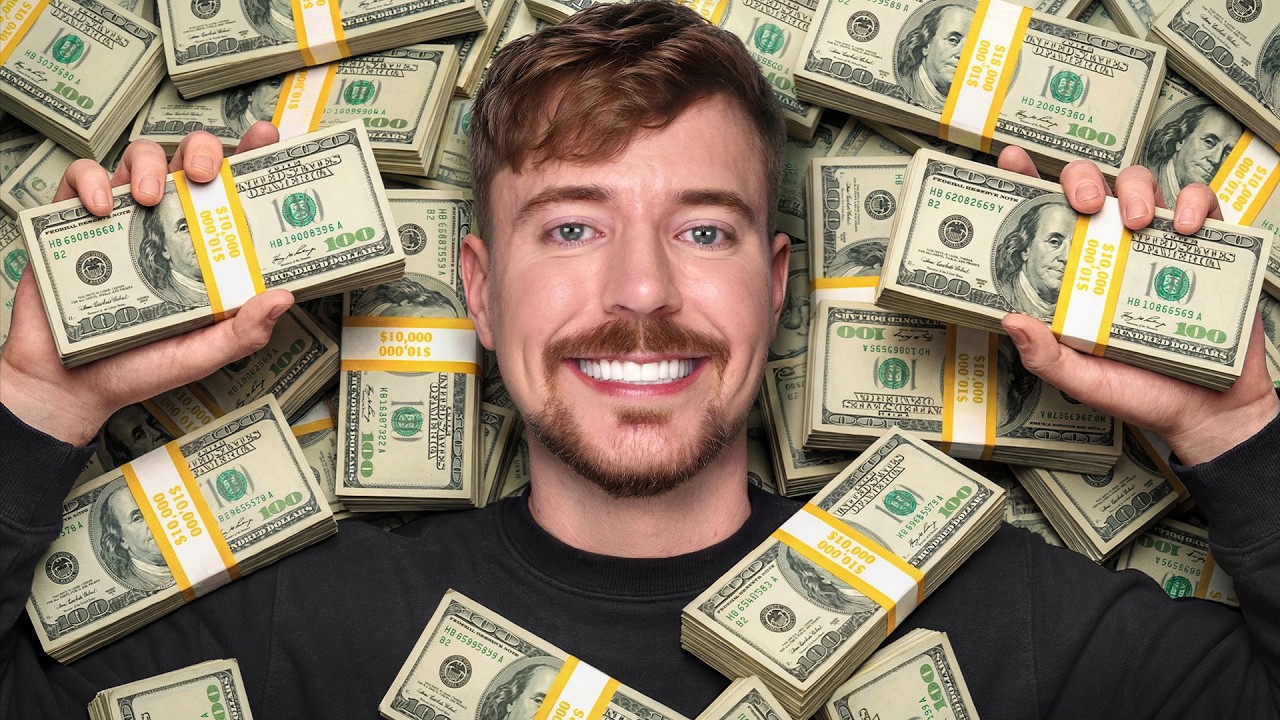
Meet Steven Bartlett: The College Dropout Who Built A Podcast Empire (Diary Of A CEO Origin Story)

Full Transcript — Download SRT & Markdown

00:00
Speaker A
I'm Stephen Bartlett and we are here at Flight Story HQ in Central London. I'm an investor, I'm an entrepreneur, and I'm the host of the Diary of a CEO podcast.
00:12
Speaker A
Diary of a CEO is me following my wide-ranging curiosity to find answers to things that I care about. And I think actually there's much of the clues in the name, the diary of a CEO. So when I started it, I was a CEO, and I asked myself, what would one find in the diary of a person in that position? And one might think it's like P&Ls and scribbles about numbers and stuff like that, but actually you'd find a really human story. You'd find someone who's in an interesting role and a position, but struggling with all the same things that you're struggling with in your life. And so in the in the podcast, I endeavor to go a little bit deeper with people to understand why it is that they do what they do, what's really behind the scenes, and ultimately, I guess, what would be written in their diary if we were lucky enough to be able to see it. Um, and it's really expanded beyond there because the things that I think about in my diary are everything from my gut health to my mental health, to my neuroscience, to my relationships, to my love life, to my sex life. And so the show's ended up exploring all of these wide-ranging subjects and um, yeah, I love it. It's really a passion project that turned into something much more.
02:01
Speaker A
I was born in Botswana, which is near the South of Africa. Um, and I came to the UK when I was a kid. My mother's Nigerian and my father is English. Um, I moved to Plymouth in the southwest of the UK, which is kind of like a very rural area. Um, we were the only black, pretty much the only black family I ever came across growing up, but we're also, we moved to a middle-class area and we were, um, we struggled with money for various reasons and, um, I always had this orientation towards business and making money and building stuff. When I think back to being a kid, I used to go to my dad's printer, take his paper out of the printer, and take a Biro and write ones on the first sheet of paper, twos on the second sheet of paper, threes on the second sheet. I'd then cut it up into dollar bills, and then I'd give it to my brothers, and I'd tell them that they could come back to my bunk bed and spend that money on getting their feet massaged, their their back tickled. I'd take my mom's like moisturizer and I'd give them like massages on my bunk bed just to get all that paper back that I just gave them. And this is what I would do for fun. Um, what I wouldn't do for fun is school. So I found it extremely hard to pay attention in school. Um, I, I went back and spoke there once and my, I think her name was Mrs. Burchnall came up to me and said, you're a lovely guy, but you still owe me homework. You never did your homework. And that's a reflection of reality. I struggled to pay attention, which led me to be spend so much of my time in school in exclusion, the little unit where you just look at the wall, um, and then to get expelled, but then unexpelled, um, in the words of my headmaster because I made the school a lot of money from like the business stuff that I was doing, from the vending machine deals that I did for the school and from the school trips and stuff. Went to university, dropped out after one lecture because it was school again, and I can't pay attention in school, and started my first business at 18. Um, and that took me,
05:05
Speaker A
that was Wall Park, which, um, I did for about two years up until the point that I discovered that the best way to get traffic to Wall Park was using this thing called social media,
05:20
Speaker A
which people were quite pessimistic about at the time. Um, so left my company abruptly to focus on social media content, this new attention economy, and that took me all over the world. So, um, took me to San Francisco where I worked in technology, helping them use social media to grow applications, took me back to London, and ultimately it was a client of mine that turned around to me one day when I was 18, 19 and said, what you're doing for us is amazing. Do you want to turn into a business? Um, I I said no for the first couple of months because I'd been through a startup and I there was still a little bit of startup PTSD there. Um, but about four months later, I said yes, and took the check, walked downstairs, paid it to the bank, um, and started what would become social chain and that for the next five, six years took me all over the world. Um, we had offices in Berlin, in London, in Manchester, in New York, and and then I resigned from that at 27, joined Dragon's Den, decided to focus on the podcast when I was 27, um, started Flight Story, um, started my fund, and here I am now.
06:54
Speaker A
I saw it as the only way, my only chance to live the life that I wanted to live. Because objectively, I had what I'd consider bad grades relative to even my brothers who were absolute boffins. I'm not sure that word in a couple of you probably didn't even know what that word means, do you? Do you know what a boffin is? No. Okay, don't worry about it. Um, they were very smart. And so you're always comparing yourself to the context in which you are. So I I thought of myself as not being smart because they were really smart, and I'm not that good at maths, I'm not that good at English, um, in terms of writing and spelling, or at least I wasn't then. So I thought, well, the only way that I'm going to get to live a free life is if I create it myself. And this is also part of the reason why I dropped out of university because I asked myself the question, who am I going to show this piece of paper to if I want to work for myself? Um, and also the other thing which kind of speaks to what you're saying is I just didn't know. I didn't know what the word entrepreneur was when I started my first business. I didn't know how hard it was. Maybe there was a element of like necessary delusion in thinking that I could have an idea, and then there was nothing between me and the realization of that idea. And it's probably the single thing I always think about is the single most important trait I had wasn't like smarts or intelligence, or I didn't have parents that could give me any money or anything like that. The single trait I had was a a healthy dose of delusion. And that delusion is sometimes also referred to as self-belief. Like, I didn't think there was anything between where I am now and where I wanted to be. I couldn't see a thing. It was just whether I wanted to whether I wanted it or not. Um, so that's why I started the first time, um, and it was I would say painful. Um, but I just I just never felt like I had a plan B. I've always in my head thought that my life would go one way, and there was never an alternative path. So, I funny because I think back to the way I was behaving when I was 18. So I called my mother, I've told her I'm dropping out of university. I'm the only child that did that. So I'm disowned, and I'm in Manchester, I'm broke. I've got two CCJs I managed to collect, which is it sounds like a qualification. It's like the closest thing I came to a qualification. It's actually a county court judgment, which is when the the they're coming for you because you owe them a lot of debt. And, um, in that moment, I was videoing the bailiff letters that I had. I was documenting. I was like, look how many bailiff letters I've got. I was opening my fridge, and I was going, look, there's nothing in it. And then I was filming myself as if I was shooting a documentary. And in that, it's like bizarre behavior because you'd expect someone in such a situation to be like despairing, but because my mindset was that this was an interesting story I was going to tell one day. And actually, I think it's that mindset that gets you out of that situation because I really think you can make heaven out of hell or hell out of heaven, depending how you think about a situation. So, my favorite quote ever, because it just like hit me like a ton of bricks many years later, is those that think they can and those that think they can't are both usually right. And people think, well, if you're capable, you believe you can. No, it's because belief itself is the escape velocity of any hell or prison that you're in for for many of us. So, I started because I I didn't have a plan B, and I was desperate for maybe through shame or insecurity because of what I said earlier about being the black kid or the poor kid in my context. Um, I was desperate to fill that gap, that hole in me, um, which was the sort of like subtle background murmur of shame my whole childhood. And the way that I thought I could fill it was was the validation from like doing something great with myself or getting the money that was always like the the thing causing me awkwardness as a kid, like not having the money or So, whatever the like motivation was, whether I was being dragged or I was driven, I think the two are like indistinguishable. There was enough energy that pushed me through all of those, um, the hard stuff, where like people tell you no, and you and you don't feel like you're making any progress at all.
13:20
Speaker A
So I started social chain when I was 21 years old in London, and then very quickly we moved to Manchester for a variety of reasons. Most it was a talent-centric business. The most of the talent that we were looking for were in Manchester. In fact, um, Lad Bible, Unilad, Jungle Creations, Social Chain, and our sister company Media Chain, we all literally came from the same street. So like Jungle Creations was my first employee at Wall Park. He met me in a pub and said, can I use those social media pages, says Jamie Bolding, to build my own social media pages. That became a new media empire. Solly and Aryan were down the road building Lad Bible. Alex built, um, Unilad and Lad Bible, then sold one of them to Solly, and then Alex came and worked at Social Chain. So there was like five people that built this whole like new media ecosystem in the UK, and we all knew each other. So we went to Manchester, built that business for a couple of years, and then an investor came along and invested more money. He became a majority shareholder. The business got to around 25 million in revenue between the UK team and the New York team, and then we merged with a company called Lumaland, making us a public company. I then became co-CEOs with the guy called Wanja Oberhof, and for the next three to four years, we went on an acquisition spree, acquiring companies all over the world. Um, in 2020, 2019 or 20, I'm thinking about the pandemic is like how I know everything. So, I I resigned in 2020. So, in 2020, um, we were about to uplift again to another stock exchange called the Frankfurt Stock Exchange, and right before then, I resigned because I'd lost control of the company. So I could no longer make the decisions that I wanted to make, and, um, and that was the end of my journey. And Social Chain by the at the point when I'd left was a marketing empire and an e-commerce business that were endeavoring to work together. So the social media, the marketing empire was trying to accelerate all of our e-commerce companies. Um, and that was the mission when I stepped down in, um, in 2020, yeah, 2020, roughly around August.
16:50
Speaker A
It was like this little side project that I had, um, that I wasn't paying much attention to. So we weren't videoing it then, and, um, I was uploading once in a while. So there was no there wasn't really an upload schedule. There also really wasn't a team. At the start, it was me in my bedroom speaking into a camera every Sunday night in the early hours of the morning to myself when I could find time. And it was when I resigned from Social Chain that I asked myself a really important question, which is, if I could do anything now, because now I have the money, and I can do what I want with my life. I could I could retire, I could go and do something philanthropic, or I could, you know, I don't know, play sew or knit or whatever. Um, if I could do anything, what would I do irrespective of money? And the answer that was like loud and clear in my brain was that little podcast thing you started would be the thing. Because you enjoyed it the most. It's the thing that made you feel like you were in like a state of flow and So I called a guy called Jack, who had, I think, recorded a few episodes with me previously as a production, uh, assistant. And I said, what are you doing with your life? Do you want to I'll I'll find a place in London. Me and you will go there. We'll basically live there. Um, and we'll start the Diary of a CEO. So we've I found a place on Rightmove. I didn't necessarily even view it. I just knew that it looked like it would be a good set. Moved myself there in 2020, 2020 or 2021. Um, Jack came to me with a list of camera equipment that we would need, and it was like £4,000. And I was like, I don't think you understand. We are going all in. So, you come back to me again with a real budget. And he came back to me with a budget of like £50,000. And I was like, you are fired. I'm joking. I was like, I was like, let's do this. And so we had like eight cameras, like a robot camera that just like moved itself up and down the floor. Like we had GoPros in the lift and everything. And I think that was important because it told me, it told him, and it told Sophie who was there as well, who's my assistant over there, that we were really serious about this thing. And that was about four years ago.
27:09
Speaker A
Your testing journey is going to start very simple. And it's going to start simple because you probably don't have many many people or many resources when you're first starting out. But at the very top of that testing journey is we've we build our own testing platforms. So we've bought something called Prewatch, where before the conversation comes out, we have a thousand people watch the conversation. We're we're they've signed up to have their eyes tracked, and if they hit the space bar on the keyboard, then it means that they found that part interesting. But if they look away, we also get that data as well. And so from that, what we get in the back end is we get the YouTube retention graph before we publish, which means we can edit to make the conversation more compelling. So that's the very top end. But at the very bottom end, what you can do is you can just send something to your friends in WhatsApp. Um, this is a very simple way, and ask them in the in your friends' WhatsApp group to individually message you directly. Don't respond in the group because a group think. Individually message you directly and tell you which they prefer. Very simple. And actually, the most important thing is to embody the mentality of just whenever you have a decision to make as it relates your content, your book, your business, your marketing, your social media, your products, anything, product design, whatever it might be, your first thought should be, the first thing that your brain says is, how can I test this? And it doesn't it doesn't necessarily mean that you just you go with whatever the test says, but you get the test data back, and you say, okay, so this is the top 10. Maybe I want the third one. Maybe the first one doesn't resonate, maybe the second one isn't quite right, maybe the third one works for me. Um, and it's all about making sure that your work reaches its potential. Because I've having been in the creative industries for a long time, so much great work, so many great artists never get the credit they deserve because there's a tiny decision made with how it's packaged or with how it's presented that holds the world back from being able to experience the true value of that art or creativity. So we just want to get that out the way. When we first started testing the Diary of a CEO, when I first started the show, we put my face in the thumbnail, and after doing a a bunch of tests, we actually figured out that having my face in the thumbnail made people click less because, um, people didn't at this point in the early days really know who I was as much because the show wasn't big. So that's what we'd we'd always believed. And then in the last four months, um, putting me back into the thumbnail, which you would have seen on my channel, means that that's flipped now, and people click more. But even small things like which side am I on? Am I on the left side of the thumbnail or the right side of the thumbnail? Has a big impact consistently. If I'm smiling or if I'm not smiling. A weird one from last week is if you can see my hand in the thumbnail, it performs better. Like, so usually the thumbnails are this, you just see faces, but if you can see a little bit of my hand, it performs better over and over and over and over again. I'd say the other thing we've come to learn from our testing is just testing is almost a reflection of the human brain in an interesting way. So you you learn a lot about humans human beings by running thousands of tests a week, and we run thousands of tests a week. One of the things I've learned is that the more specific something is, the more compelling it is. So if I said 70%, it is less compelling than if I say 69.3%. And the variance on anything that's specific, um, is tremendous. So even when you're thinking about this particular interview we're having now, the more specific the title is, to the point that it like perks the like cognition of the brain, the better it the better it's performed over time. And that's surprising to me. And then also, I've just learned that the brain is very good and is actually endeavoring at all times to not pay attention to things. It's trying to find themes and words that are cliché, so it can conserve its energy. So like the word revolutionary, for example, is something that I I'd learned from just studying it. The word revolution, when it first came out like 50, 60 years ago, and people started using it in like, um, the public discourse, it was incredibly effective as a word. But then if you go forward 50 years, and they study, and they start looking at magazines, and they eventually 50 years later, people are using it to describe sofas, and the word no longer works. And so I I just I'm quite fascinated by how words have this emotional power over us and this resonance over us, but also words have an expiration date. And, um, that's something I've learned from from the from the testing that we see as well. Um, it's just the power of words and just small differentiations to words can have a profound impact.
35:04
Speaker A
The most important thing is, do I want to sit down with this person for four hours and speak to them? Because, um, I'm very, very busy. There's lots of things going on. So for me to sit down for four hours and have a conversation where I am transfixed, and I'm not like falling asleep like I used to in school, um, because I'm not interested. The most important thing is that I'm really interested in the subject. I've got a set of questions about this person and what they do, or what they studied, or what they know, that I am desperate to find out. That's number one. And then the other circle that comes into my thinking is based on everything I know about my audience and all the feedback that they've given me, what is it that they really want? The third thing is the what what the data tells us that the audience consistently respond to. And I always say to my team, I kind of see it like these three circles. And where they overlap, my curiosity, what my audience want, and what the data says, that sweet spot in the middle is the perfect cast. And this is what I'd tell my kids if I had kids today, hopefully I'll have some some soon. I will tell them, I'm really not that bothered about like what you study or whatever, but the most important thing to own a rapidly accelerating future is to lean into bizarre behavior. When something makes you feel a bit weird, when it goes against what you think you know, lean in. And especially if there's lots of pessimists, because pessimism correlates to disruption. I.e., the more people that are slightly pissed off and criticizing the thing, probably relates to the amount of people who are experiencing the cognitive dissonance of, oh my God, I think this thing's going to kill my job. So there's probably a big opportunity for disruption there. Um, so yes, I am scared. But what do you do with that energy? Do you like ostrich in the sand it, or do you do something about it? Anyway, TLDR, we started experiments here with our experimentation team, and a team a separate team that I call Flight X, which is my little special projects team, who are trying to kill the main business. So their job is to disrupt the main business. Because if you don't disrupt yourself, then someone else is going to. That's what history tells us. Um, they call it the innovator's dilemma. So their job has been to build AI podcasts that are better received, better retaining in terms of retention than our current shows. So one of the things they did, and it goes back to these three points that I said, is they started a new show using me, although I didn't record it, I didn't write it. Even the artwork wasn't created by me, wasn't published by me, and it's live, and it's doing very, very well. And again, you just play forward any expected rate of improvement. Let it improve, let the writing part, the content writing part that AI did, improve by 5% a year, or 5% a month. It's really improving by about 10% a month. Um, and eventually you have yourself in a place where it is incomparable and equal to me sat with nine cameras around me flying across the world to interview someone. And actually, if I can literally play it for you, could you pass me my phone? So, I play this for my girlfriend, um, and I didn't tell her that it wasn't me, and that I hadn't recorded it. And she had no idea. So I'd be pretty surprised if you could tell the difference. But this is live. This podcast is made purely with AI. It's live on Spotify now. It has a fantastic rating on Spotify. It's got like 4.6 stars on Spotify. The comments are great. The retention is 60% of people get to the end of it, and it's an hour-long podcast in my voice, written by AI, voiced by AI, but in my voice, um, and published by AI. And so when you think you again, you play this forward, you go, well, we could create theoretically, using this technology, thousands of shows from one computer, theoretically, with one person. And these things always seem like they're never going to happen, but, um, because new innovations, they in many ways, they start worse than the current, um, dominant innovation. So when you think about the horse and car industry, the reason why every horse CEO back in the 1800s dismissed the cars was because they were way more expensive, way slower. There was a law called the Red Flag Law where you had to walk in front of it with a red flag. They broke down all the time. So people dismissed it and said it will never get there. But the key thing to look at in these moments is the rate of improvement. How much more can Stephen Bartlett improve as a human host? Not much. How much more could the AI improve? And will it improve? Over just the next five years, profoundly. So when the new S curve comes in, it's always below the old S curve. And then, so this is the older the older one goes like this. This is Stephen Bartlett is the host and using normal cameras. The the new S curve comes in below. It starts worse, but the rate of improvement significantly out exceeds it, which means ultimately it becomes the dominant technology. So if you if you play this podcast, this is the one that AI did. of a revolution. Inside that garage, a whirlwind of activity unfolds. The scent of solder and fresh wood mingles in the air, illuminated by the soft glow of hanging fluorescent lights. Amidst a lab, That's me. It's got 4.6 stars on Apple. They know it's AI. And this is the crazy part because it literally says on the thumbnail, made by AI. And all the comments are like, can you slow the AI down just a little bit? Does that scare you at all? Okay, good question. Good question because absolutely yes. But what's even more scary is someone else doing it. And this is always the thing with innovation. You've got to realize that there's always a bulldozer coming for you. It's coming for you, it's coming for me, it's coming for everybody listening. And you have a choice history shows us to either be hit by the bulldozer or to drive the bulldozer and run and run all you over. And as they look back through history in one of my favorite books called The Innovator's Dilemma, really irrespective of industry, whether it's digging excavators or micro memory discs or whatever, whoever's currently dominant and doing well at the thing, they always focus on what their current customer base are asking for. So if we go back to the horse analogy, if I was the CEO of a horse company, every single one of my customers, what did they want? Faster, more comfortable horses. That's what they were demanding me for. And every single employee and team member I had, what did they know? What did they qualify in? Horses. And my supply chain is set up to do horses. So when my colleague comes to me and says, listen, there's this thing called cars. I go, are any of our customers asking for cars? No one in my comment section has ever said, by the way, Steve, can we have some AI podcasts? No one ever. None of my sponsors on the show have ever gone, we'd really love to sponsor some AI podcasts. So when I understand that, and I I have the full picture of like how history plays out, I go, we've got to lean in early when it feels bizarre, and we've got to start experimenting and messing around because Stephen Bartlett at 18 with those social with that little social media thing was naive. He didn't know how the old world worked of marketing. So he leaned in and started messing around. And this is what I'd tell my kids if I had kids today, hopefully I'll have some some soon. I will tell them, I'm really not that bothered about like what you study or whatever, but the most important thing to own a rapidly accelerating future is to lean into bizarre behavior. When something makes you feel a bit weird, when it goes against what you think you know, lean in. And especially if there's lots of pessimists, because pessimism correlates to disruption. I.e., the more people that are slightly pissed off and criticizing the thing, probably relates to the amount of people who are experiencing the cognitive dissonance of, oh my God, I think this thing's going to kill my job. So there's probably a big opportunity for disruption there. Um, so yes, I am scared. But what do you do with that energy? Do you like ostrich in the sand it, or do you do something about it?
Transcribe Another YouTube Video

Paste any YouTube link and get the full transcript with timestamps for free.

Transcribe a YouTube Video