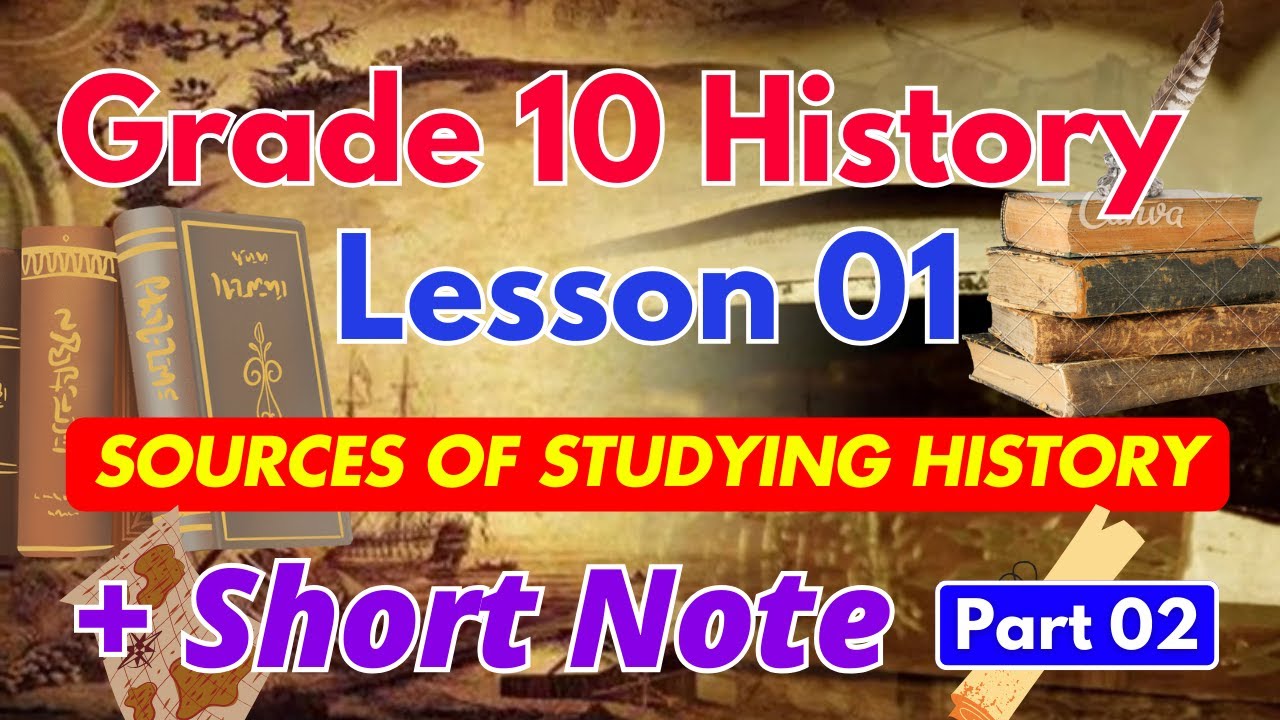
Grade 10 O/L History lesson on sources of studying history, focusing on literary and archaeological sources in Sri Lanka.
Key Takeaways
- History is reconstructed by logically studying literary and archaeological sources.
- Mahawamsa is a unique continuous historical text of Sri Lanka with credible events.
- Local and foreign literary sources complement archaeological findings for comprehensive history.
- Understanding the context, authorship, and purpose of sources is vital for accurate historical interpretation.
- Sri Lanka’s historical knowledge is enriched by Buddhist religious texts and foreign trade records.
Summary
- History studies past human activities through various sources.
- Sources are classified into literary and archaeological types.
- Literary sources include local and foreign texts, such as Deepawamsa and Mahawamsa.
- Deepawamsa is the oldest local literary source, written around the 4th century A.D.
- Mahawamsa, composed by Bhikkhu Mahanama in the 5th or 6th century A.D., is a continuous historical chronicle.
- Archaeological sources include relics, monuments, coins, inscriptions, and ruins.
- Local literary works span from the Anuradhapura to Kandyan eras, often with religious objectives.
- Foreign sources provide information due to trade and cultural ties, including Indian and Tamil texts.
- Caution is needed when using literary sources due to time gaps, author bias, and objectives.
- Important texts like Mahawamsa Teekawa provide annotations and additional historical information.