Don’t Do Cardio To Lose Weight | Understanding Cardio a… — Transcript

Kevin Richardson explains why he doesn't recommend cardio for weight loss, emphasizing muscle preservation and natural bodybuilding success without cardio.

Key Takeaways

  • Cardio is not necessary for fat loss or contest preparation, especially for natural athletes.
  • High-intensity weight training combined with proper diet is more effective for fat loss and muscle preservation.
  • Cardio plus dieting can negatively impact hormone levels, leading to muscle loss in natural bodybuilders.
  • Muscle mass is crucial for metabolism and sustainable fat loss.
  • Natural bodybuilding success can be achieved without cardio, relying on diet and weight training.

Summary

  • Kevin Richardson has never done steady-state cardio for fat loss or competition preparation in over 30 years.
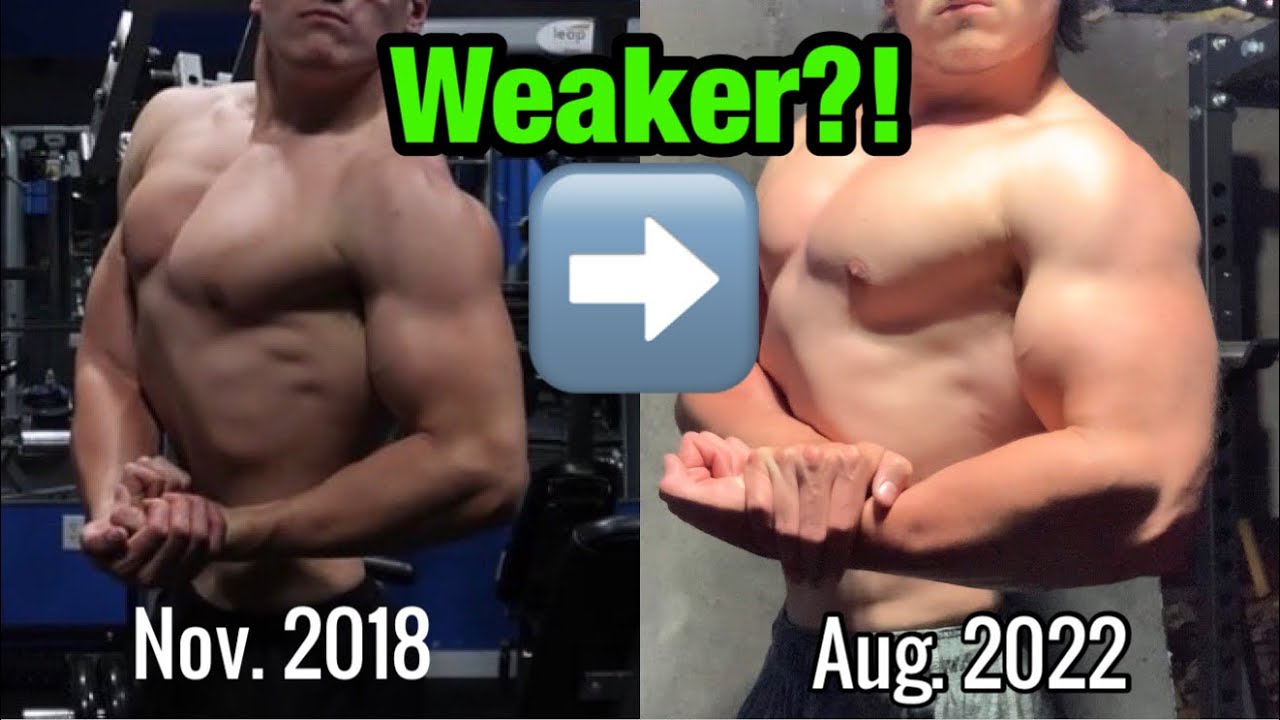
  • He maintains under 10% body fat at age 47 without any cardio, relying on high-intensity weight training and diet.
  • Cardio is not dismissed as beneficial but is considered inefficient for long-term weight loss and muscle preservation.
  • Natural bodybuilders who avoid cardio can achieve excellent results without losing muscle mass.
  • High-intensity training sessions are short, typically 12-25 minutes, done three times per week.
  • His coach advised against cardio because it can cause excessive muscle loss in natural athletes.
  • Combining cardio with a fat-loss diet can lower hormone levels (testosterone and estrogen), harming muscle retention.
  • Kevin's clients have lost significant weight and achieved competition shape without cardio, proving the method's effectiveness.
  • Steroid users do not face the same hormone-related muscle loss issues as natural athletes.
  • Controlled observations show natural competitors who avoid cardio maintain better muscle mass and hormone balance.

Full Transcript — Download SRT & Markdown

00:01
Speaker A
So in this video, I'm going to talk a little bit about why it is I don't recommend cardio.
00:07
Speaker A
So, when people meet me in person, or they see my pictures, or they see videos of me, the first question that tends to come up is how much cardio do I do.
00:20
Speaker A
And they're usually very surprised when I say zero. And, it's not that I say zero now, I've always said zero.
00:28
Speaker A
In all my years, I've never done any form of steady state cardio to get ready for anything, or to reduce my body fat, and yet, I'm able to, at 47 years old, maintain a body fat percentage that's under 10%.
00:47
Speaker A
And I've been able, not just with me, because we don't want to ever get into the error of small numbers, and be one of those people who say, "Well, it works for me, so it should work for you."
00:59
Speaker A
Over the past 30 years of my career as a personal trainer, I have helped people do as much as lose a hundred pounds, to winning their pro cards in natural body competitions, all without any cardio whatsoever.
01:15
Speaker A
And this video, I'm going to explain why it is that not doing cardio can work better than doing cardio.
01:24
Speaker A
And also, why it is that I think that if you're really looking to maintain as much muscle mass as possible, and you're natural, that you might want to reconsider doing cardio.
01:37
Speaker A
Stay tuned. (Exciting, intense music playing) So in this video, I'm talking about why it is that I don't recommend cardio.
01:59
Speaker A
First off, thanks so much for tuning in. This channel has been really well-received since it started a couple of months ago.
02:08
Speaker A
And, do be sure to like, and subscribe, because there's going to be so much more content coming out.
02:14
Speaker A
And today we're talking about cardio. So, I'm going to preface this by saying that this video is not in any shape or form saying that cardio doesn't have any benefits, it's not beneficial to us.
02:32
Speaker A
What it does underline is that in terms of efficiency, for weight loss and long-term weight loss, I don't believe it's the most effective means of losing weight, nor do I recommend it.
02:48
Speaker A
Now, some people swear by it. That's fine. I don't. And there are a number of natural bodybuilding champions over the years, who do zero cardio, none whatsoever, and they do just fine.
03:01
Speaker A
We're going to talk a little bit about that as we go along. But first, talk about my own personal experience.
03:07
Speaker A
So, when I started bodybuilding and I had my first competition coming up at 17 years old, I had already been really into high-intensity training.
03:22
Speaker A
That was really my thing. I train, for those who don't know, three times a week, high-intensity.
03:29
Speaker A
The workouts are very, very short. Sometimes they are as short as 15 minutes. Sometimes, the longest they might probably be is 20, 25 minutes. If I'm training alone, a workout could be as short as 12 minutes, and I was really into [And Still Am 30 Years Later]
03:46
Speaker A
that form of training. And so when my first competition came along, I remember telling my coach that, after my workout, I was going to go on the stationary bike and do a half hour.
04:01
Speaker A
And I asked him, should I be doing a half hour or should I be doing 45 minutes?
04:07
Speaker A
And I asked him also, how important was it to get to my target heart rate?
04:12
Speaker A
Should I have a meal before my aerobics? And he looked at me, and he shook his head.
04:19
Speaker A
He shook his head and said, "You're not going to do any cardio at all." And I was a little bit puzzled because, again, growing up in the eighties, all we had were magazines and in all the magazines, all the bodybuilders
04:35
Speaker A
did cardio to get ready for competitions. And so I asked my coach, I said, "Well, but all the guys in the magazines, they do cardio.
04:45
Speaker A
How is it possible that I'm going to get into shape without doing any cardio at all?" And he said something that was really interesting.
04:54
Speaker A
He said, "Well, the guys in the magazines are on drugs, and you're not. And you also train at a really high-intensity.
05:02
Speaker A
And it's the most important thing to maintain as much muscle mass as possible, when you're trying to lean out.
05:11
Speaker A
And by adding cardio to a diet that's designed to help you lose body fat, it's going to be too much for your body.
05:21
Speaker A
You're going to lose a lot of body fat, yes, but you're also going to lose a lot of muscle mass.
05:26
Speaker A
So you're not going to be onstage looking your best." I was skeptical. I'm usually skeptical about a lot of things, but I'm also intelligent enough, and I was intelligent enough at 17, to understand that those who were mentoring me
05:50
Speaker A
had decades of experience, and it would be ridiculous to not at least give what they were saying a chance.
06:01
Speaker A
And so, his approach was to have me rely completely on my diet to get into shape.
06:09
Speaker A
He said it would take a little bit longer than if I was doing cardio, but all I needed to do, because I was training so hard, was just tweak my diet a little bit, and that would get me where I wanted to be.
06:22
Speaker A
And sure enough for my first competition, I did lean out considerably, and I did maintain a good amount of muscle mass.
06:32
Speaker A
That being said, my first competition, I did come dead last. But it gave me a template into understanding and realizing that I could get into contest shape, low body fat levels, without doing any cardio.
06:56
Speaker A
And so when I started training clients, not that long after my first competition, I had them train the way I did.
07:05
Speaker A
I had them do high-intensity training with weights, three times a week going to the point of momentary muscular failure, really ultra high-intensity, and four days resting, three days training.
07:26
Speaker A
And so, by my second year, I had my first client lose a hundred pounds.
07:35
Speaker A
He lost, in total, 105 pounds training three times a week, just with weights, for 10 to 15 minutes.
07:44
Speaker A
I was astounded. It's one thing to see yourself lose body fat training with such a short and small amount of volume, but something else to see somebody who is really on the obese side shrink down in front of your eyes,
08:07
Speaker A
by just following a combination of proper diet, that I made exactly for him, and kept on tweaking as we went along, and weight training.
08:17
Speaker A
As the years went by, I started training competitors and I had them getting into bodybuilding competition shape without any cardio.
08:26
Speaker A
My own success as a natural bodybuilder also cemented the idea that you didn't need cardio to get into shape.
08:35
Speaker A
Ian Mercer, one of the top natural bodybuilding coaches of all time, you know, he also seconded the idea that, if you're a natural competitor, if you're a pure natural person, you don't need to do cardio.
08:51
Speaker A
The combination of cardio and a restricted diet tends to drop hormone levels across the board, both estrogen and testosterone.
09:04
Speaker A
Which is one of the main reasons why someone doing both will tend to lose muscle mass.
09:10
Speaker A
Now someone on steroids doesn't have that problem because they have external testosterone coming into their bodies all the time.
09:17
Speaker A
Someone like me doesn't. And so you have to maintain as much muscle mass as possible because muscle mass burns more calories than any other tissue.
09:28
Speaker A
So any protocols you're doing where you're going to be losing muscle mass is one that's doomed to failure.
09:36
Speaker A
You're not going to look your best, you're not going to be your best, and also, not going to be sustainable.
09:43
Speaker A
You don't want your hormone levels to drop. And I can prove it. Over the years, I've trained a number of competitive bodybuilders, competitive natural bodybuilders, and there are always those who do things I tell them, and those who don't do things the way I tell them.
10:01
Speaker A
What that does, it creates this really insightful, controlled experiment, where we get to see what works and what doesn't, and how well different things work.
10:14
Speaker A
Preparing for competitions, I would, out of a group of as many as 10 competitors getting ready, both male and female, and there was the group of people who did zero cardio, and then there was the group, a smaller group,
10:31
Speaker A
that insisted that they had to do cardio. They had to do it. They absolutely had to.
10:36
Speaker A
They couldn't conceive of the idea of training, getting into shape without doing some sort of cardio.
10:43
Speaker A
And so they all did cardio, whereas others only trained three times a week, high-inte
10:52
Speaker A
The diets were the same. I'd made a dietary plan for them. They were all eating more or less along the same guidelines, based relative to their body weights, and genders.
11:05
Speaker A
But at the end of the period, there was a significant difference: those who did cardio did not lose as much body fat, as those who didn't do cardio.
11:20
Speaker A
In fact, those who did cardio lost less body fat, and lost more muscle mass.
11:28
Speaker A
So not only did they have more body fat, but they also lost more muscle mass.
11:33
Speaker A
They didn't have the same look as those who didn't do cardio. [And Didn't Do As Well In Their Contests} And that was, again, it's one thing for me to do it, for me to get ready for a competition
11:46
Speaker A
and not do any cardio whatsoever, and look fantastic, you don't really think about it 'cause it's you.
11:53
Speaker A
But when you see it in front of you, with people doing it and those not doing it, you really, you know, it really makes you step back and look and, you know, really consider that a lot of the protocols that people follow
12:08
Speaker A
in terms of losing weight, might not necessarily be the best thing to do. And, like all things, there's an evolutionary reason for it.
12:18
Speaker A
Our bodies are not hybrids. Are bodies are specialized. Our bodies are a result of an evolutionary environment, where the ancestors that we all have, or those whose bodies were best designed to survive in an energy scarce environment.
12:41
Speaker A
There was not the abundance of energy, food, calories, we have today, and so, our ancestors had bodies that were very conservative.
12:54
Speaker A
Our bodies were designed more or less to do what it needed to do to survive.
13:01
Speaker A
Everything your body does, every way your body changes, has some survival component to it.
13:08
Speaker A
Now, not today. Today you go to the gym, you work out, your muscles get bigger and stronger because you're muscles are getting bigger and stronger.
13:16
Speaker A
But back at the point in time when we were becoming what eventually became human, if you're doing an activity that required you to get bigger and stronger muscles, it's because you needed bigger and stronger muscles to do what you needed to do, to survive.
13:32
Speaker A
Whatever that was. Food probably, some form of procuring food, fighting for survival, somewhere along those lines.
13:41
Speaker A
And so your body specialized; it does everything possible to be the best it can be to do that activity because that activity was required for you to survive, back then.
13:55
Speaker A
The problem is, your body can't do everything. So if you're training with weights and you try to increase your muscle mass, which will help you, in the longterm, burn more body fat, your body is going to adapt to those workouts you're doing
14:11
Speaker A
by making your muscles bigger and stronger. And it will make your muscle fibers, grow through protein synthesis.
14:18
Speaker A
But it's also going to make your muscle fibers predominantly what's called type II. If you're doing any kind of anaerobic, high-intensity work, your muscle fibers will tend to start changing towards the muscle fiber type that gets bigger and denser.
14:40
Speaker A
If you look at a sprinter for example, the way a sprinter's body's built, it's not the same as how the muscles look on someone who's a long distance runner.
14:49
Speaker A
One is really thickly muscled because they are high in what's called type II muscle fibers. [Fast Twitch] The other one has what's called slow twitch muscle fibers, which are muscle fibers that are designed for endurance.
15:04
Speaker A
So you have fast twitch muscle fibers, which gets really, really big, you know, meaty, kind of like, if you think about biceps, for example, and then you have slow twitch muscle fibers, which aren't designed for rapid explosive movement,
15:17
Speaker A
they're designed for sustained activity. Now, when you start doing an endurance type movement, you start, at that point, changing over muscle fibers to be able to best accomplish what you're doing.
15:36
Speaker A
So you're going to have a reduction in fast twitch muscle fibers, which means your muscle will be smaller, more efficient, use less energy.
15:46
Speaker A
It means you'll also lose some muscle mass. And your body will start losing muscle mass in areas that are not required by the activity.
15:55
Speaker A
So if you're running, or you're cycling, or you doing StairMaster, your body's going to look at the rest of your body and says, "Well, we doing this to survive.
16:02
Speaker A
we don't need biceps, you don't need pecs, you don't need shoulders: start getting rid of that muscle mass.
16:06
Speaker A
Because you don't need it." Even on your legs, you're going to start to lose some muscle mass as well because your body is going to be trying to make itself as small as possible, to make it as efficient as possible,
16:17
Speaker A
to burn as little calories as possible. Look what I said, to burn as the little calories as possible.
16:24
Speaker A
Now, we also know that by doing aerobics, your muscles work in such a way where they need fuel and the amount of fuel that these muscles carry in the form of glycogen gets depleted very quickly.
16:38
Speaker A
and so your body starts going into fat stores, and to burning fat as the fuel.
16:43
Speaker A
Now the idea that cardio is great for fat burning, because if you do cardio for a certain amount of time your body starts using fat as a fuel.
16:51
Speaker A
But that's a problem. It's a problem because, evolutionarily, think about it, we are specialized machines.
16:58
Speaker A
So, your body starts adapting to hold on to more fat, to be able to continually do the activity it's doing.
17:09
Speaker A
So, the more cardio you do, the more your body starts tapping into burning body fat.
17:16
Speaker A
But it also makes your body more conservative and all the calories you're ingesting, you're going to find yourself holding on to more body fat.
17:28
Speaker A
Again, the sprinter and the marathon runner, look at their bodies. Look at the person who runs around the park all the time, and look at the one who just sprints.
17:37
Speaker A
The lean one is the one who only sprints; that's the one who's the leanest, has the least amount of body fat because the body doesn't need extra body fat for fueling their workouts and fueling what's your body thinks it's doing to survive.
17:52
Speaker A
That body is designed for fast, explosive movement. And that's the body that says, "We don't really need the extra fat: get rid of it, we need the muscle." That's the look you're going for and that's what you should be trying to maximize for.
18:06
Speaker A
By doing cardio you're throwing a monkey wrench into that, and putting your body in a place where it's trying to do both.
18:13
Speaker A
You're doing, your body is on one hand, trying to build muscle, on the next hand, it's trying to become an aerobic specialist, and endurance specialized.
18:24
Speaker A
It can't do that. And unfortunately, what we're seeing is muscle fibers begin to change almost immediately, once you start adding any form of extended, steady-state activity.
18:37
Speaker A
Now add to that, the fact that you're dropping your calories, to try and to maximize your fat loss, the combination of a low calorie diet, and, aerobic exercise, will severely drop your muscle mass, severely.
18:54
Speaker A
it will drop your muscle mass, it will change your muscle fibers, and will also, like I said earlier, it will drop your hormone levels.
19:03
Speaker A
Studies have found that testosterone levels drop rapidly and can stay decreased for months after natural bodybuilders, get ready for competition by using a combination of cardiovascular exercise and weight training.
19:21
Speaker A
It's too much; a body can't do that. Remember our bodies really benefit from exercise while we're recovering, when we're resting.
19:29
Speaker A
If we're constantly doing [Exercise], and breaking ourselves down, it becomes problematic. Interestingly enough, as bad as it might be with men losing testosterone and dropping testosterone, it also affects women as well.
19:44
Speaker A
Women also experience a drop in testosterone which makes them also lose muscle mass, but they also experience rapid drops in estrogen.
19:53
Speaker A
Over the years, I have found that those women who I have worked with getting ready for competition, the women who followed proper diet protocols, and not relying on aerobics, were the ones who were least likely to have interruptions in their menstrual cycle.
20:15
Speaker A
That's an important point. That's a very, very important point. Other thing, in both males and females, is an increase in fat storage.
20:26
Speaker A
When testosterone drops, with males and females, and there is a drop in overall muscle mass, there is going to also be a consequent increase in body fat.
20:36
Speaker A
And there are many more reasons why you shouldn't be doing cardio in terms of if you're trying to maximize your weight loss and, do so in a sustainable way.
20:47
Speaker A
Because once you stop doing the cardio and you're relying on this really low-calorie diet, and the cardio, which could cause some metabolic problems down the line for you as well, especially if you're female, you are going to put the weight back on.
21:00
Speaker A
So please, take it from me. You don't need to be doing the cardio. Forget about the marketing.
21:07
Speaker A
I know there is so much marketing out there, but that's kind of part of the problem.
21:12
Speaker A
There really isn't that much about people out there talking about what really works. They talk about what everyone does.
21:20
Speaker A
And we also have this huge number of really young, genetically gifted people telling everybody else what to do, and this really huge, like I had to experience, a number of people who use drugs, where what they do, doesn't apply to someone who doesn't use drugs.
21:38
Speaker A
So if you're natural, and you want a sustainable way to lose body fat, the best thing to do is to focus on high-intensity resistance exercise, and then combine that with a proper diet.
21:51
Speaker A
It will take longer, there's no if, ands, or buts, it will take a lot longer, to get your body fat level all the way down.
21:58
Speaker A
But when you do, you'll have more muscle mass, you'll look better, you'll feel better, and it will be sustainable.
22:04
Speaker A
Thanks again for tuning in and Excelsior!
Topics:cardioweight lossmuscle lossnatural bodybuildinghigh-intensity trainingfat losshormone levelssteroid-freedietKevin Richardson

Frequently Asked Questions

Why does Kevin Richardson not recommend cardio for weight loss?

Kevin believes cardio is inefficient for long-term weight loss and can cause muscle loss in natural athletes due to hormone drops when combined with dieting.

How does Kevin maintain low body fat without cardio?

He relies on short, high-intensity weight training sessions three times a week combined with a carefully managed diet.

Does cardio have any benefits according to Kevin?

Kevin acknowledges cardio has benefits but does not consider it the most effective or necessary method for fat loss and muscle preservation in natural bodybuilding.

Get More with the Söz AI App

Transcribe recordings, audio files, and YouTube videos — with AI summaries, speaker detection, and unlimited transcriptions.

Or transcribe another YouTube video here →