DNA Transcription Made EASY | Part 1: Initiation 🐣 — Transcript

Learn the initiation phase of DNA transcription, including promoter regions, transcription factors, and formation of the initiation complex in eukaryotes.

Key Takeaways

  • Transcription initiation involves promoter recognition by transcription factors and RNA polymerase recruitment.
  • The TATA box is a common promoter element in eukaryotic genes.
  • Regulatory elements like activators, repressors, and enhancers modulate gene expression levels.
  • RNA polymerase creates a transcription bubble by unwinding DNA to begin RNA synthesis.
  • Understanding initiation is critical for mastering transcription concepts on exams like the MCAT.

Summary

  • Transcription is the process of converting DNA into RNA, occurring in the nucleus of eukaryotic cells.
  • Transcription is divided into three phases: initiation, elongation, and termination.
  • The initiation phase begins at the promoter region of DNA, often containing the TATA box consensus sequence.
  • Transcription factors (TFs) bind to the promoter to form the initiation complex.
  • RNA polymerase is recruited to the initiation complex and unwinds the DNA to create a transcription bubble.
  • The template strand (antisense) is used by RNA polymerase to synthesize a complementary RNA transcript.
  • Upstream regulatory regions such as activators, repressors, and enhancers control the level of transcription.
  • Activators increase transcription by facilitating initiation complex formation, while repressors decrease it.
  • Enhancers, located further upstream, also enhance transcription by protein binding.
  • The initiation complex formation is essential before the elongation phase of transcription can proceed.

Full Transcript — Download SRT & Markdown

00:05
Speaker A
The first step in the central dogma is the conversion from DNA into RNA. And this is a process known as transcription. You transcribe an RNA from a DNA template.
00:19
Speaker A
This occurs in the nucleus in eukaryotes. And the reason for that is that DNA doesn't leave the nucleus. And so, in order for you to use DNA as a template, you have to have transcription occurring in the nucleus. Obviously, in prokaryotes, there is no nucleus, and so that occurs in the cytoplasm. But in eukaryotic cells, the transcription process occurs in the nucleus.
00:42
Speaker A
And like many other processes, transcription is divided into three phases: an initiation phase, an elongation phase, and finally a termination phase. So, how do you start the transcription process? How does it continue and produce this transcript?
01:00
Speaker A
And then how does it get the signal that the transcription process must end? With RNA, remember that you're generating a pre-mRNA, and eventually you will have to process that. So, for transcription, we can add the processing step as something that needs to happen before we move on to the next phase of the central dogma, which is translation.
02:00
Speaker A
But right now, we'll cover the initiation process, which is probably the most widely tested part of transcription on the MCAT.
02:15
Speaker A
So, what we have here is the DNA that is going to code for this RNA that will eventually be converted usually into proteins, although there are other uses of RNA.
02:29
Speaker A
The DNA has a promoter region that is very, very important. And this is how the initiation process begins. The promoter will often have some sort of promoter sequence that, uh, often it will be a consensus sequence, one that occurs throughout many, many different genes. And you may also see it referred to as the TATA box, where it has the thymine, adenine, thymine, adenine group there, because that is present in the promoters of over 25% of eukaryotic genes. And so, the TATA box may be used in place of the term promoter.
03:46
Speaker A
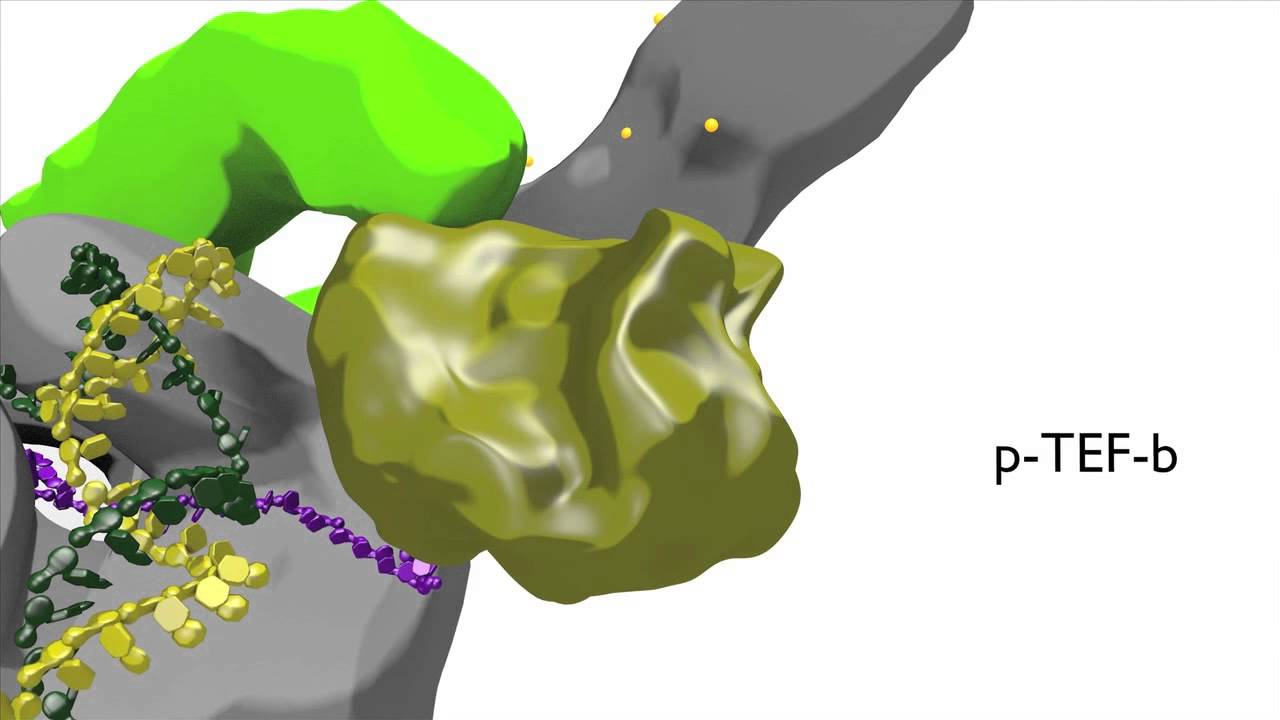
What happens at the promoter is that it's a DNA sequence that can be recognized by transcription factors. Uh, transcription factors are just proteins that bind specific sequences on the DNA. So, you'll have a few transcription factors show up here, and they'll bind to this sequence like that. And the transcription factors are usually quite easy to recognize because they are named TF something. Usually it's TF2, the Roman numeral two, and some letter. And there are several of them that you won't be explicitly tested on on your MCAT exam. But if you see TF, that's a transcription factor, also known as a transcription initiation factor. And what these do is they bind the promoter. They recognize the promoter region of the double-stranded DNA, and they bind it. And as they bind it, several of them gather together, and they form what's known as an initiation complex. And this initiation complex includes and attracts RNA polymerase, which will be the part that participates in the elongation phase when you make that RNA transcript.
05:57
Speaker A
And so, the initiation complex is also is started by transcription factors, which are known as TF something. And then that attracts and includes the RNA polymerase. And when that occurs, the RNA polymerase will help unzip this double-stranded DNA and form a transcription bubble. And the transcription bubble will include two different strands that are then very useful in the elongation process and are necessary for it to continue. But once we get to elongation, we'll discuss the meaning of those strands. There are two of them. There's a plus strand, also known as sense or the coding strand, because the transcript will resemble its code. And then there's the minus strand, which is anti-sense, and that is actually the template. That's the one that the polymerase will slide over and produce RNA that is complementary to it. So, it won't be the same sequence as the template strand, but the template strand is used to make your RNA transcript.
08:29
Speaker A
And so, the big things to know about initiation are that there is a promoter region. The transcription factors come in and bind it because they recognize some sequence, often the TATA sequence. And then they bind that, form an initiation complex. And then the RNA polymerase comes along, and it incorporates into that complex and unzips the double-stranded DNA, thus forming a bubble. There are some other things to be aware of. The downstream region, and keep in mind for here, because we're reading, we read up. So, we read from three to five, and then it will produce a new RNA strand that'll be five moving on to three. The complementary strand will look like that. But, um, it anything that is downstream, closer to the five end, this is the coding region, the part that will actually be transcribed into that RNA. However, there are upstream places that allow us to control the level of transcription that's occurring. You have activator and repressor regions, which are very, very close to the promoter, and perhaps proteins will bind there or something that facilitates formation of the initiation complex. So, if things bind the activator region, then you're more likely to see transcription. You may also have repressors, which are the opposite. Repressors are something where if a protein finds it and binds that repressor, you're less likely to see an initiation complex form.
10:17
Speaker A
Further upstream of that is going to be the enhancer region. And an enhancer is something that's not directly next to the promoter, but it is another thing that proteins can bind to and in that process, that can then increase the likelihood that you'll form an initiation complex and begin the process of transcription. And the importance of these are that a lot of times with gene expression, there's a need to control it. And so, these regions allow the human body to control the levels of expression that are going on. If you have some proteins that bind very well to an activator, you'll see more expression of this particular coding region. Similarly, if you can bind an enhancer, that will happen too. And so, the presence of these activators and repressors and enhancers all allow the human body to control the level of expression of certain genes. Some proteins are ones that you need a lot of. Others are ones that you won't be using as much. And so, this allows us to control the levels of expression. But the key thing about initiation is that you need to form this initiation complex at the promoter region, which is just upstream of the coding region. Once you form this, the RNA polymerase joins, forms that bubble, and then it can begin the process of elongation, which is the next phase in transcription.
Topics:DNA transcriptiontranscription initiationpromoter regionTATA boxtranscription factorsRNA polymerasetranscription bubblegene regulationactivators and repressorsenhancer region

Frequently Asked Questions

Where does transcription occur in eukaryotes and prokaryotes?

In eukaryotes, transcription takes place in the nucleus because DNA does not leave this organelle. Conversely, in prokaryotes, transcription occurs in the cytoplasm as they lack a nucleus.

What are the three main phases of transcription?

Transcription is divided into three distinct phases: initiation, elongation, and termination. These phases describe how the process starts, continues to produce the RNA transcript, and eventually ends.

What is the role of the promoter region in DNA transcription?

The promoter region on the DNA is crucial for initiating transcription, often containing a consensus sequence like the TATA box. This region is recognized by transcription factors, which are proteins that bind to specific DNA sequences to begin the transcription process.

Get More with the Söz AI App

Transcribe recordings, audio files, and YouTube videos — with AI summaries, speaker detection, and unlimited transcriptions.

Or transcribe another YouTube video here →