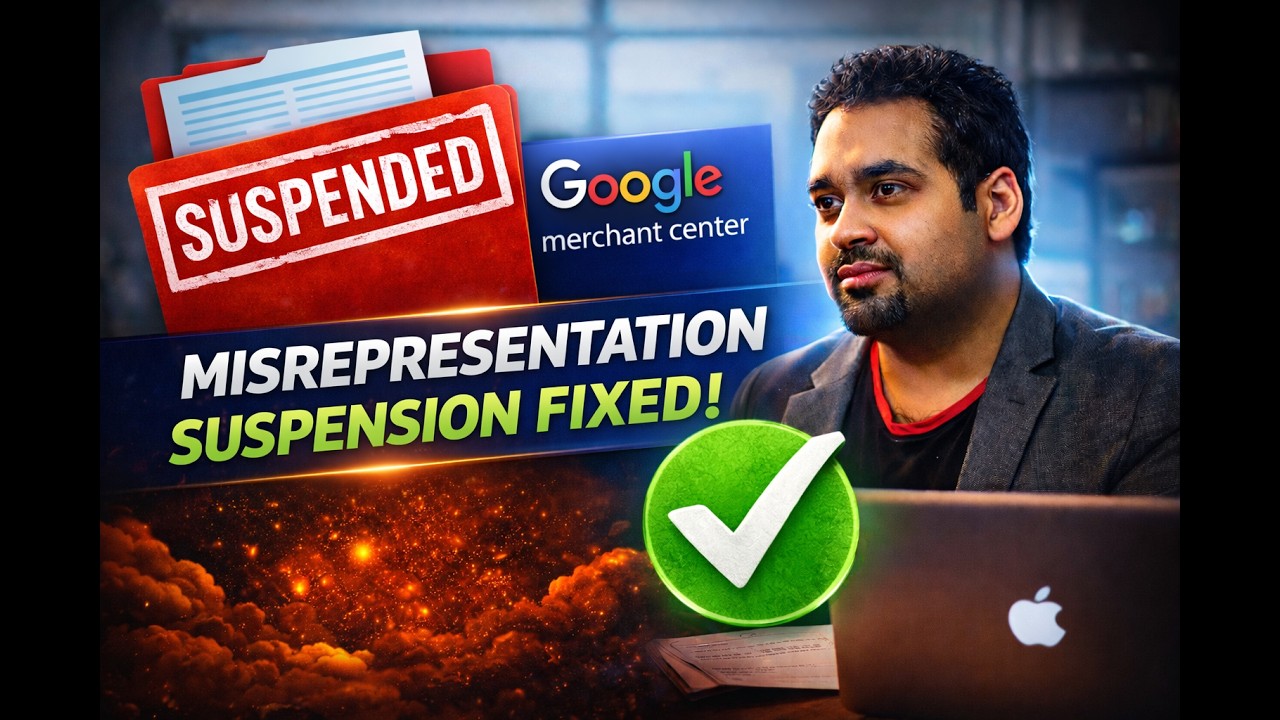
Detailed case study on fixing Google Merchant Center misrepresentation with a 160-point checklist and practical solutions.
Key Takeaways
- Google Merchant Center misrepresentation issues require detailed, multi-faceted compliance efforts.
- Small website errors like inconsistent payment info or placeholders can cause suspension.
- A comprehensive checklist and persistent follow-up with Google support are essential for approval.
- Technical website health and trust signals are as important as policy compliance.
- Patience is necessary due to delays from Google system updates and manual reviews.
Summary
- Ali Raza Marketing shares a comprehensive case study on resolving Google Merchant Center misrepresentation issues.
- The client faced repeated suspensions due to misrepresentation, requiring extensive technical and policy compliance work.
- Key fixes included website trust improvements, clickable contact info, footer updates, and policy page optimizations.
- Technical corrections involved removing placeholders, optimizing robots.txt, fixing malware issues, and improving site speed.
- Product descriptions were rewritten to meet Google standards, and payment and shipping policies were aligned across pages.
- Affiliate terms were added, and social media links were reviewed to avoid compliance conflicts.
- The team used a 160+ point checklist to ensure full compliance and worked closely with Google’s wider support teams.
- Approval was delayed partly due to Google Search Console updates affecting error resolution.
- Government-issued ID verification was required to resolve certain misrepresentation flags.
- The video includes real communication examples and emphasizes the complexity and persistence needed to fix such issues.


![[FIXED] Google Ads Suspension (Circumventing Systems/Cl… — Transcript](https://i.ytimg.com/vi/J03a_T50NSg/maxresdefault.jpg)